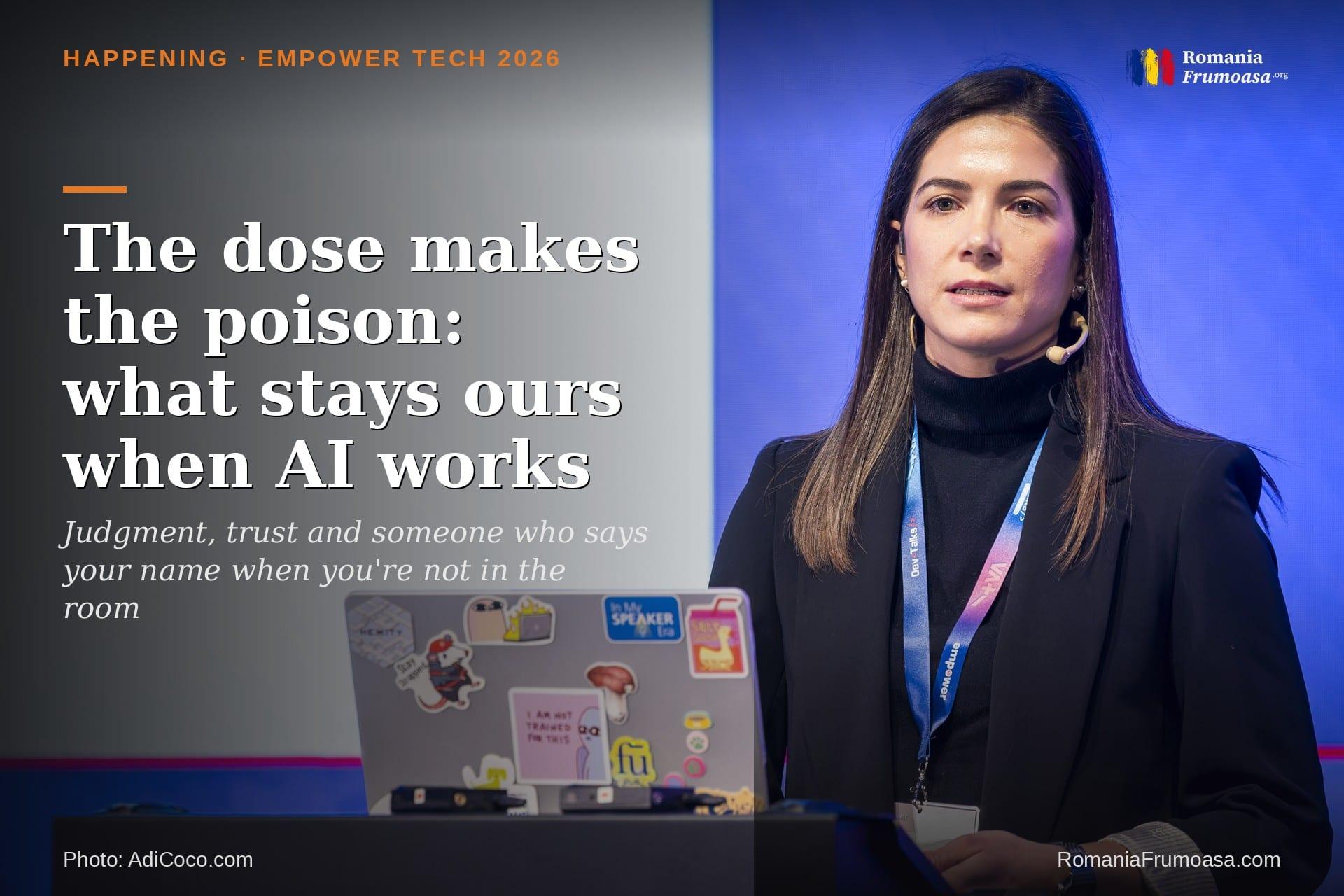
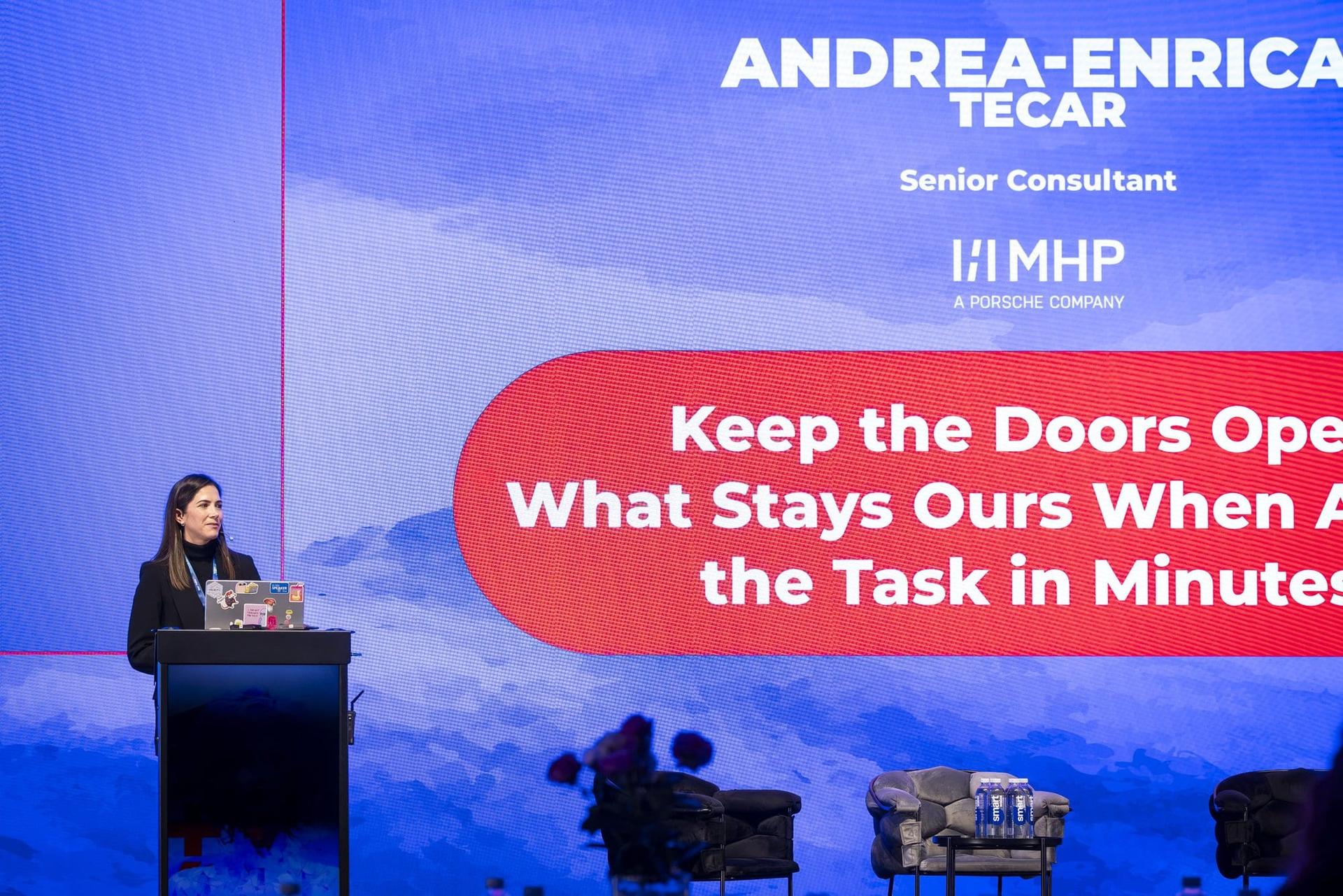
Andrea-Enrica Tecar started out as a pharmacist, behind the counter of a neighborhood drugstore. Seven months in, the pandemic hit: the lines, the fear, the customers who came in angry because they couldn't find what they needed. In those months, she says, nobody saw her — not the patients, frightened and exhausted, and not her manager, who was under pressure himself.
Pharmacists have a saying about medicine: the dose makes the poison. Tecar uses it for something else. One day when nobody sees you means nothing; months of it turn toxic. The crisis closed the pharmacy door for her, a door she says she would never have closed on her own. She took up programming from scratch, like a new language, surrounded by colleagues who had been writing code since they were teenagers. She failed a lot of interviews before landing her first developer job.
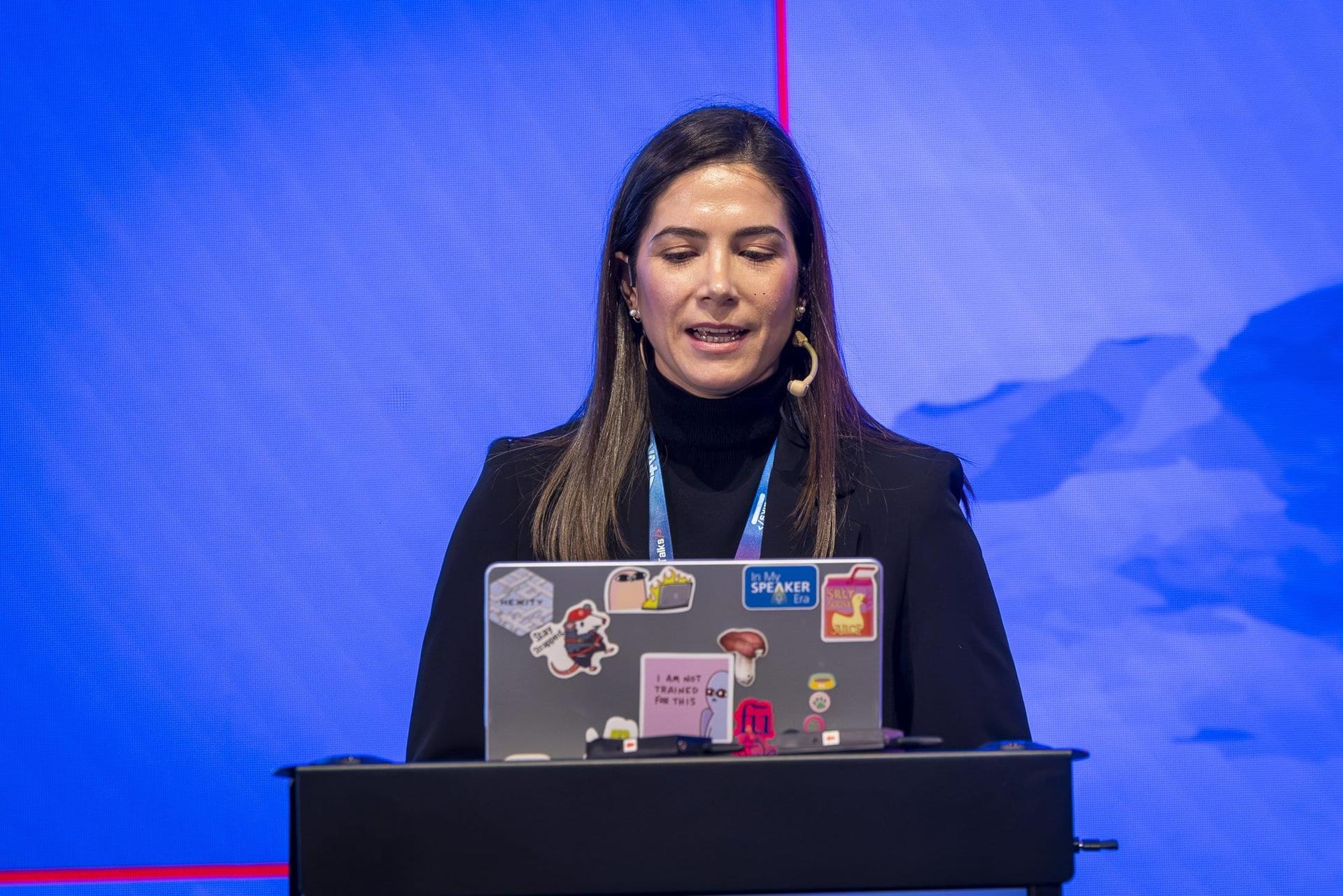
Today she works at MHP Romania, the consulting arm of the Porsche group. When she was first allowed to use AI on a real assignment, an investigation that usually took her several days was done in a few hours. The fix worked. At first she was thrilled. Then she was scared: the satisfaction of solving the problem herself was gone.
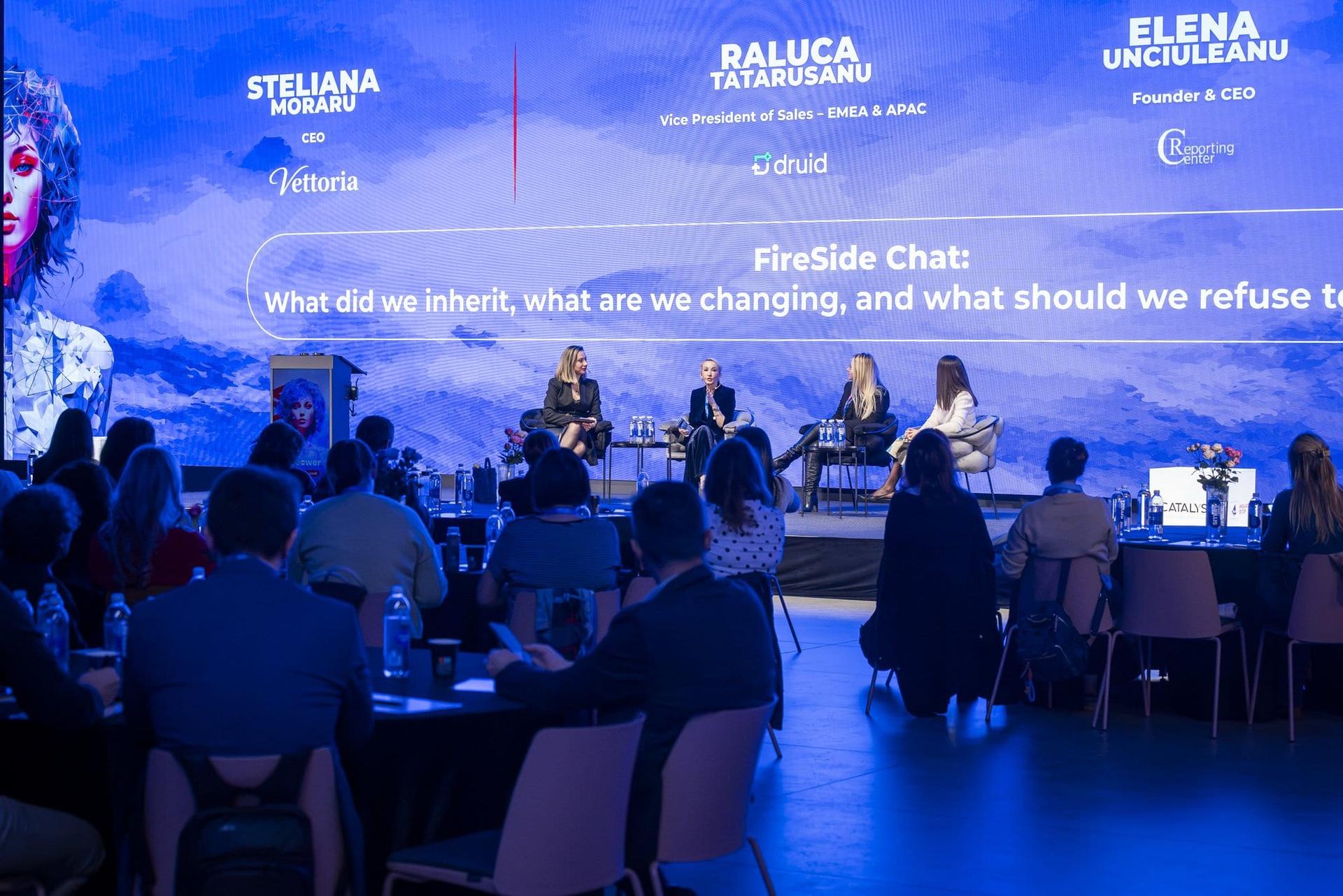
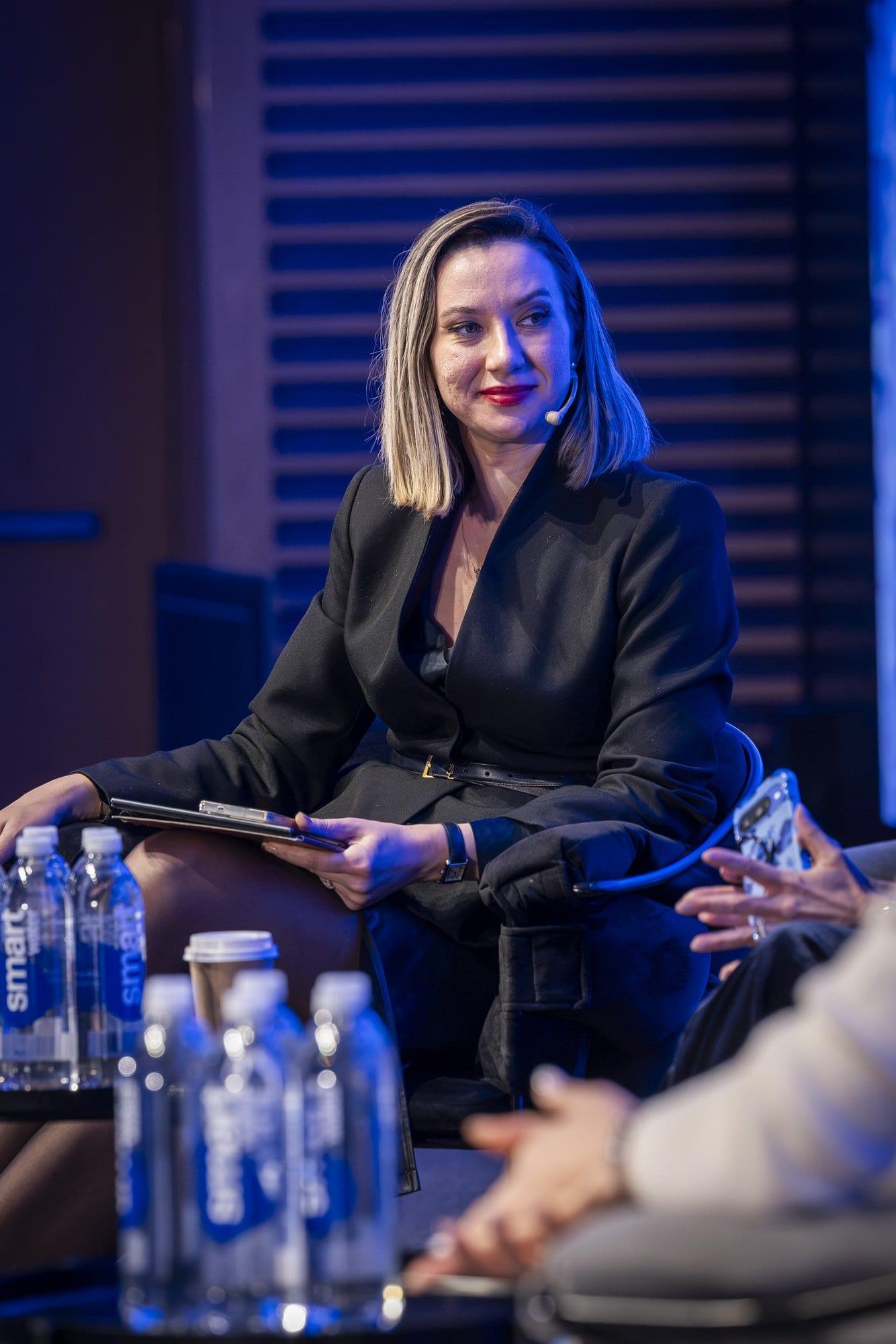
She told the story on Nov. 17 at Empower Tech, a conference for women in tech organized by the DevTalks team at NORD Events Center by Globalworth in Bucharest. Now in its third year, the event had announced 500 participants. Tecar's question — what stays ours when a machine does the task in minutes — came back, in other words, in almost every session of the day. The answers had less to do with technology than with people.
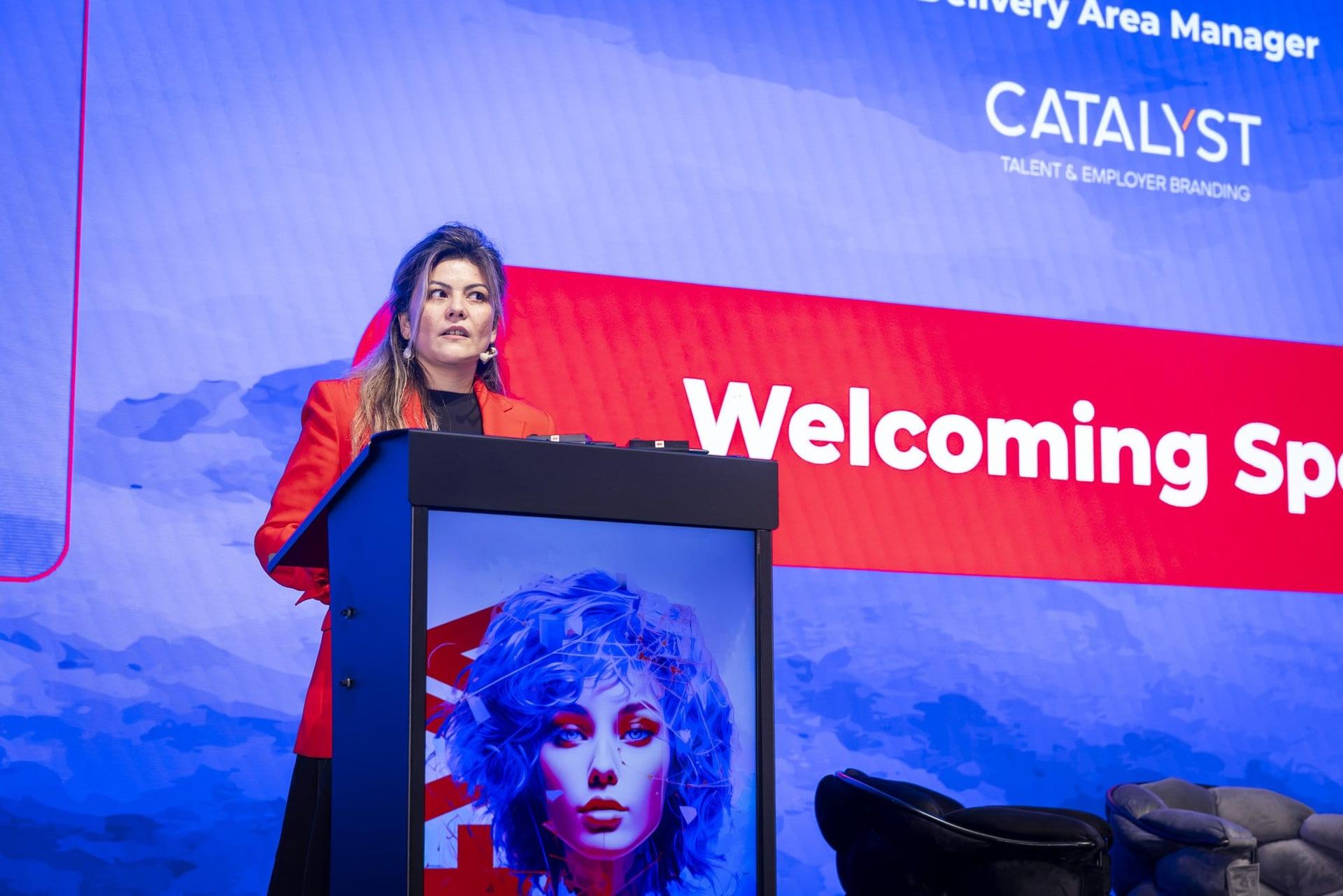
The day was hosted by Steliana Moraru and Marian Andrei, and Andreea Balaci-Buncianu, delivery area manager at Catalyst Solutions, opened it.
The part you sign
For Tecar, what's left is judgment. The machine can investigate and propose a fix, but someone has to decide whether the fix is any good. The part that stayed with her, she says, is not a small one: it's the part where she decides whether she can put her name on the result. She works on the company's internship programs and teaches at a university, and she asks her students to write the code by hand first, understand it, and only then judge what the agent suggests.
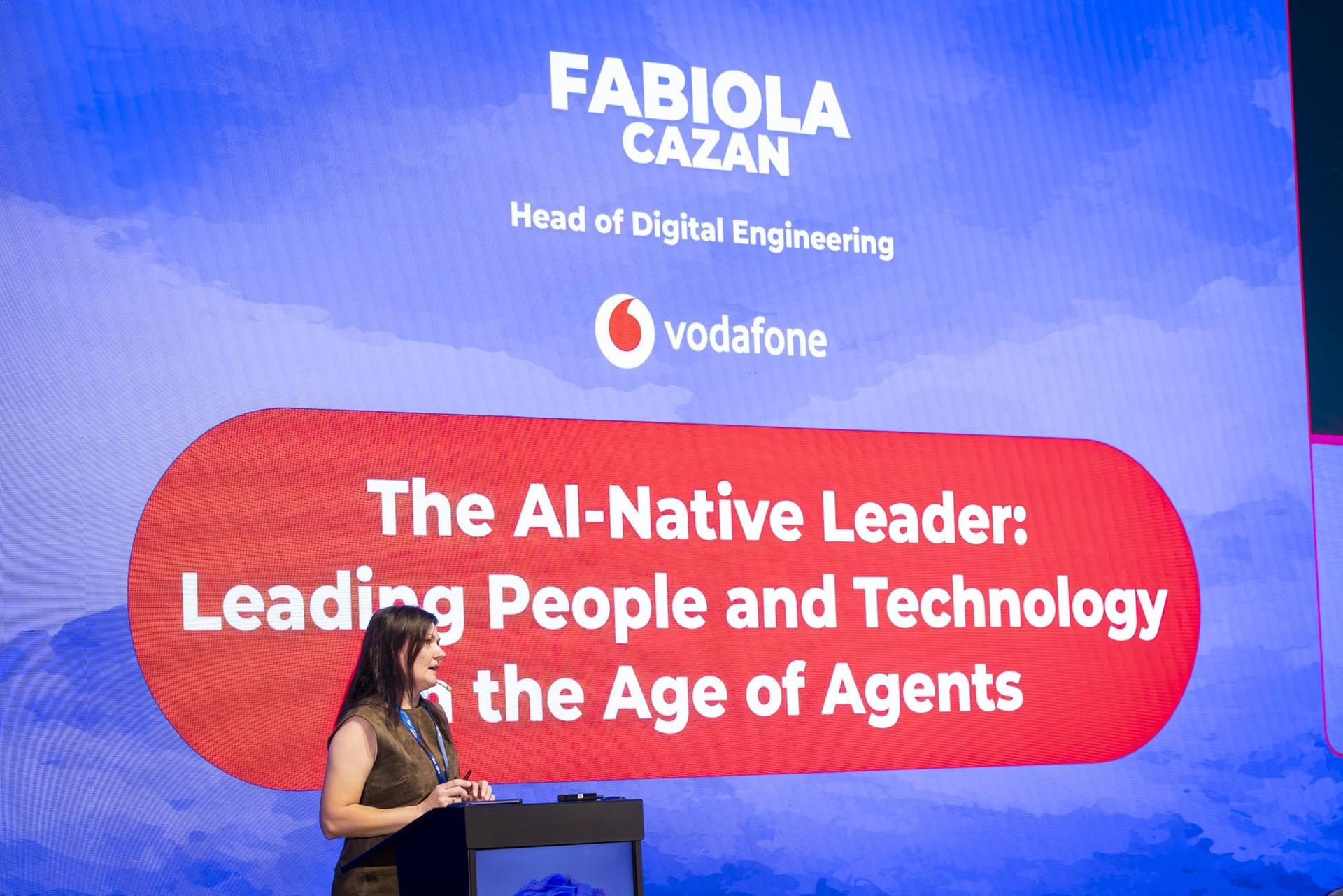
Fabiola Cazan, head of digital engineering at Vodafone Romania, got to the same place by a different road. She has no trouble delegating analysis, research, options and code. Judgment, accountability and the decision stay with people. She also owned up to a failure: an AI solution her team built that never got used, because the processes and the people around it hadn't changed. Since then, the first question she asks about any new idea is what value it brings.
Change has a dose, too. Mădălina Epure, organization and workforce transformation lead at Deloitte Technology Delivery Center, cited Deloitte's 2026 Global Human Capital Trends report: a third of employees went through more than 15 major changes in a single year. The key to any transformation, she says, is middle managers, the people who connect leadership and teams. Anda Antal, engineering delivery manager at Thales, oversaw the move of software development projects from France to Romania and came away with one rule: you don't need all the answers to give people clarity. Sometimes a single page is enough — what's been decided, what's known and what isn't known yet — updated every week.
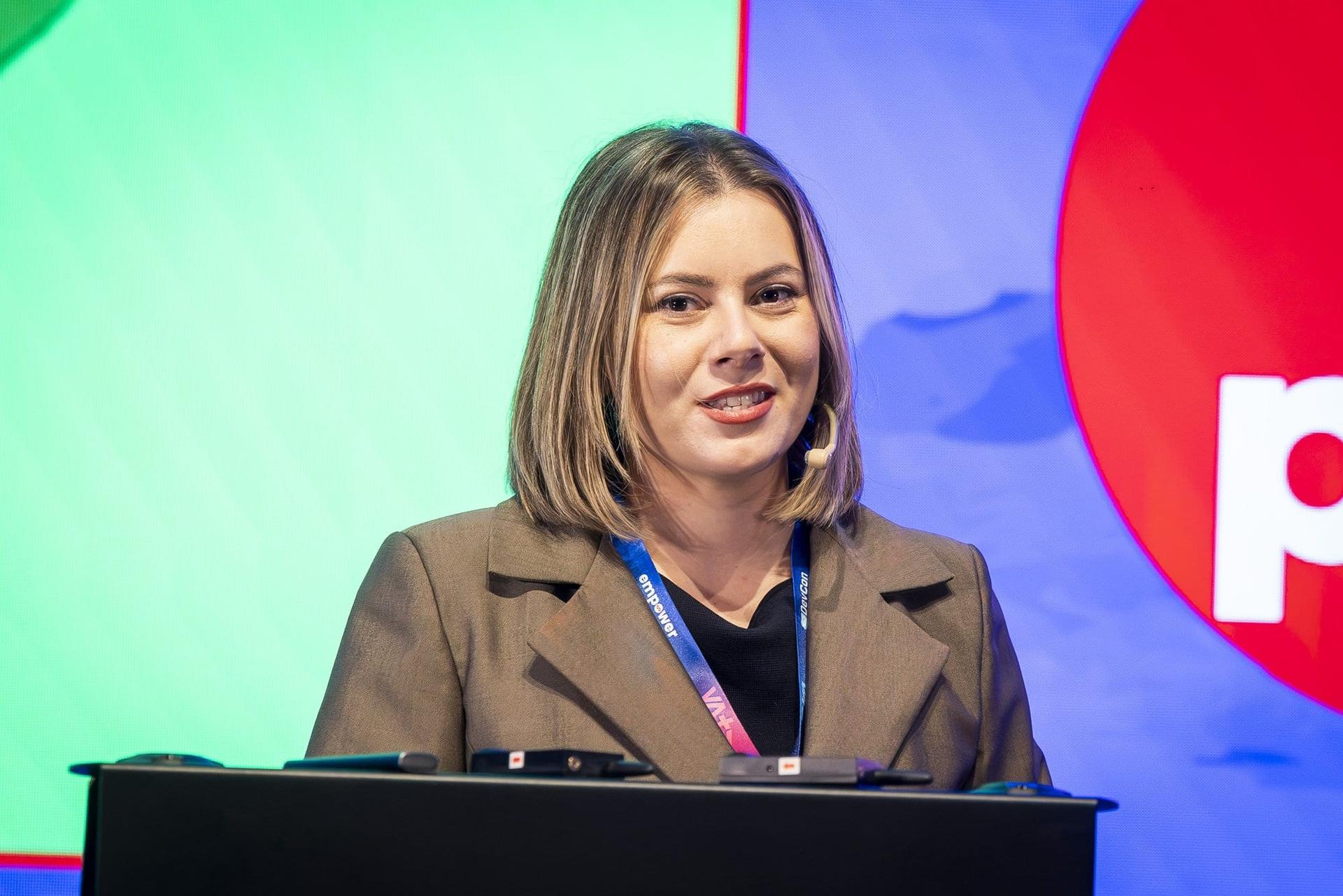
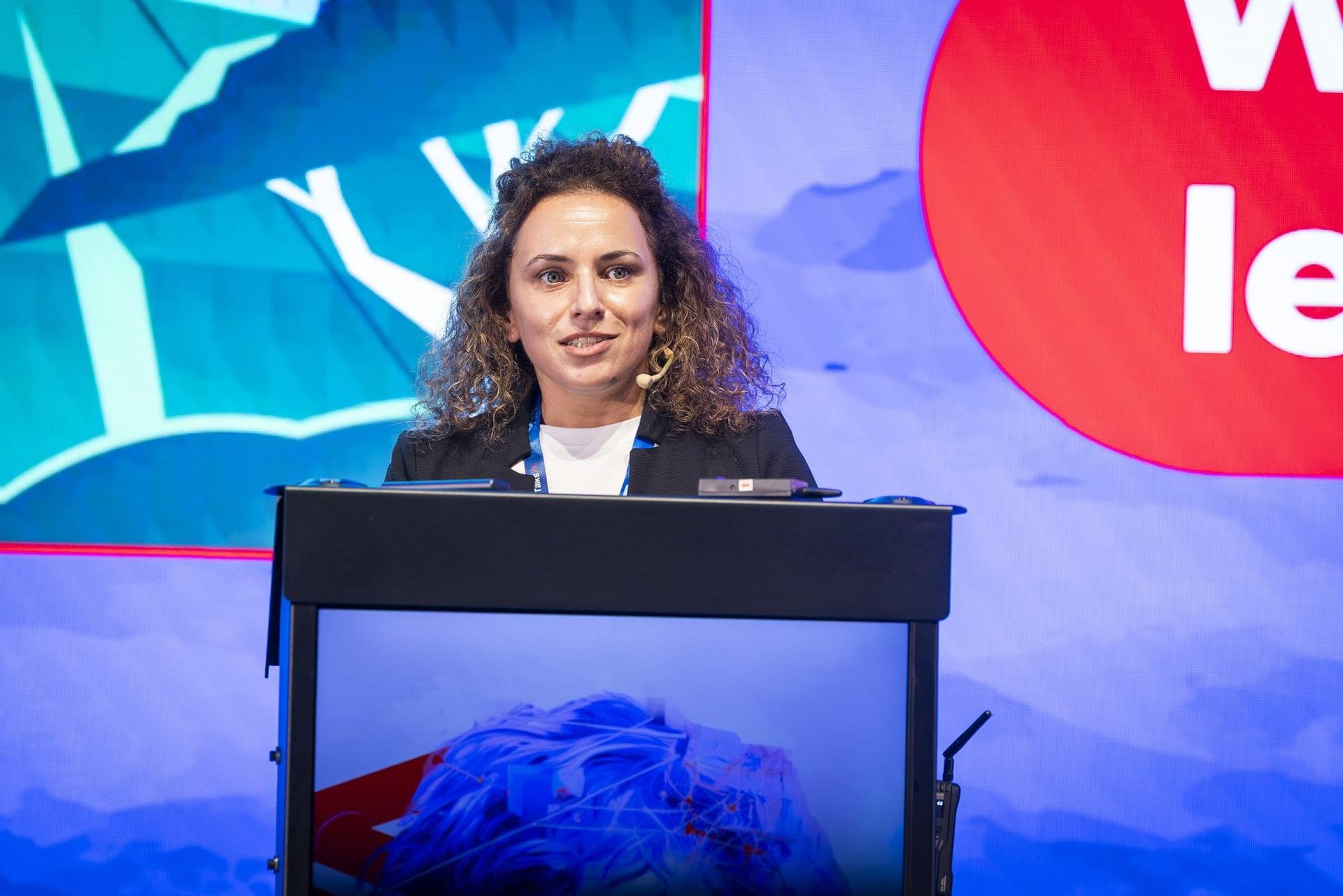
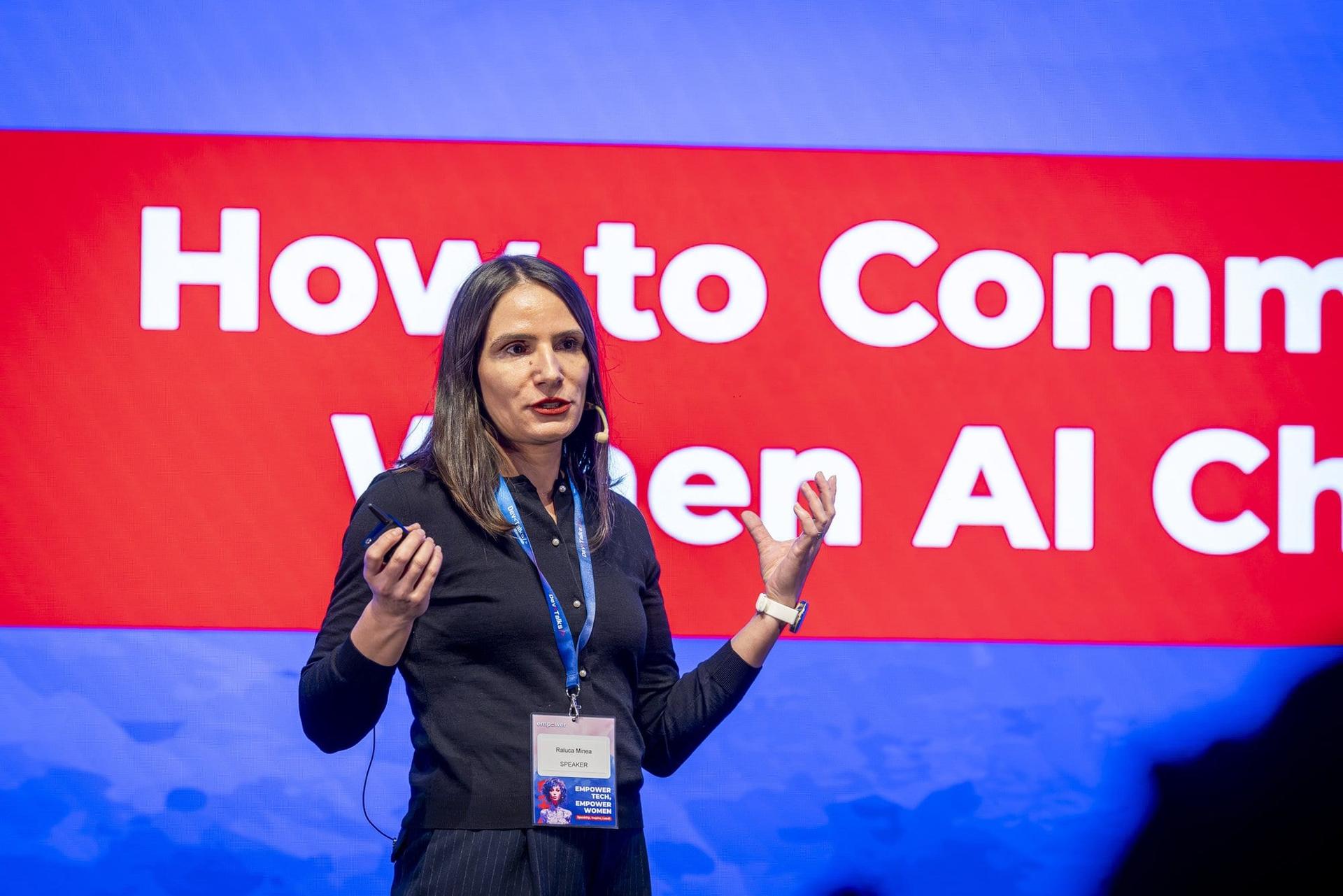
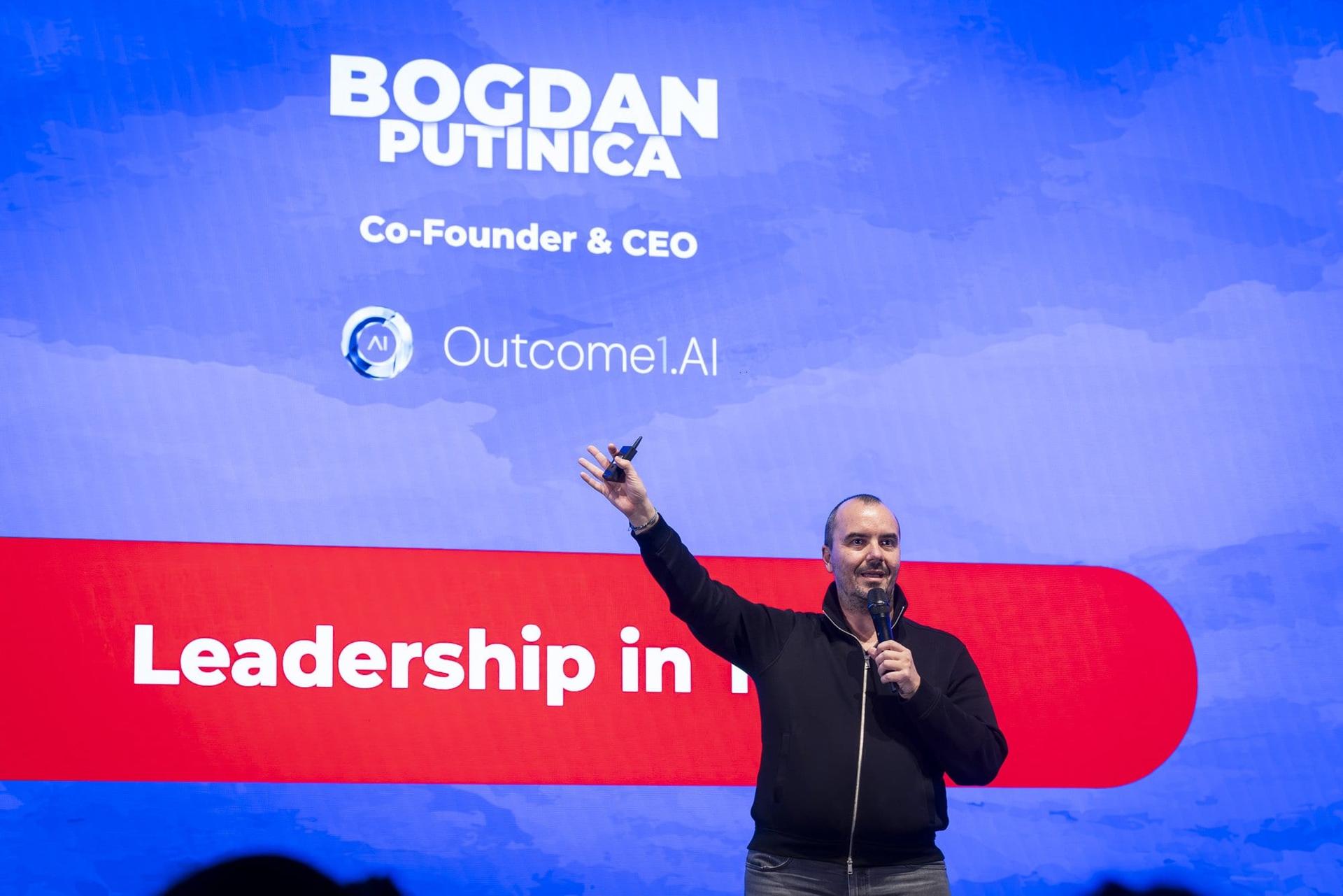
Raluca Minea, principal software engineering manager at Microsoft, brought a study. In 2025, researchers from Microsoft Research and Carnegie Mellon University surveyed 319 people who use AI tools at work every week and analyzed 936 real-world examples. The more people trusted the tool, the less critically they thought about what it produced. The more they trusted their own skills, the more they checked. Bogdan Puținică, a former general manager of Microsoft Romania and co-founder of Outcome1.AI, put it more briefly: AI won't replace us, but someone who uses it will.
A confidant without empathy
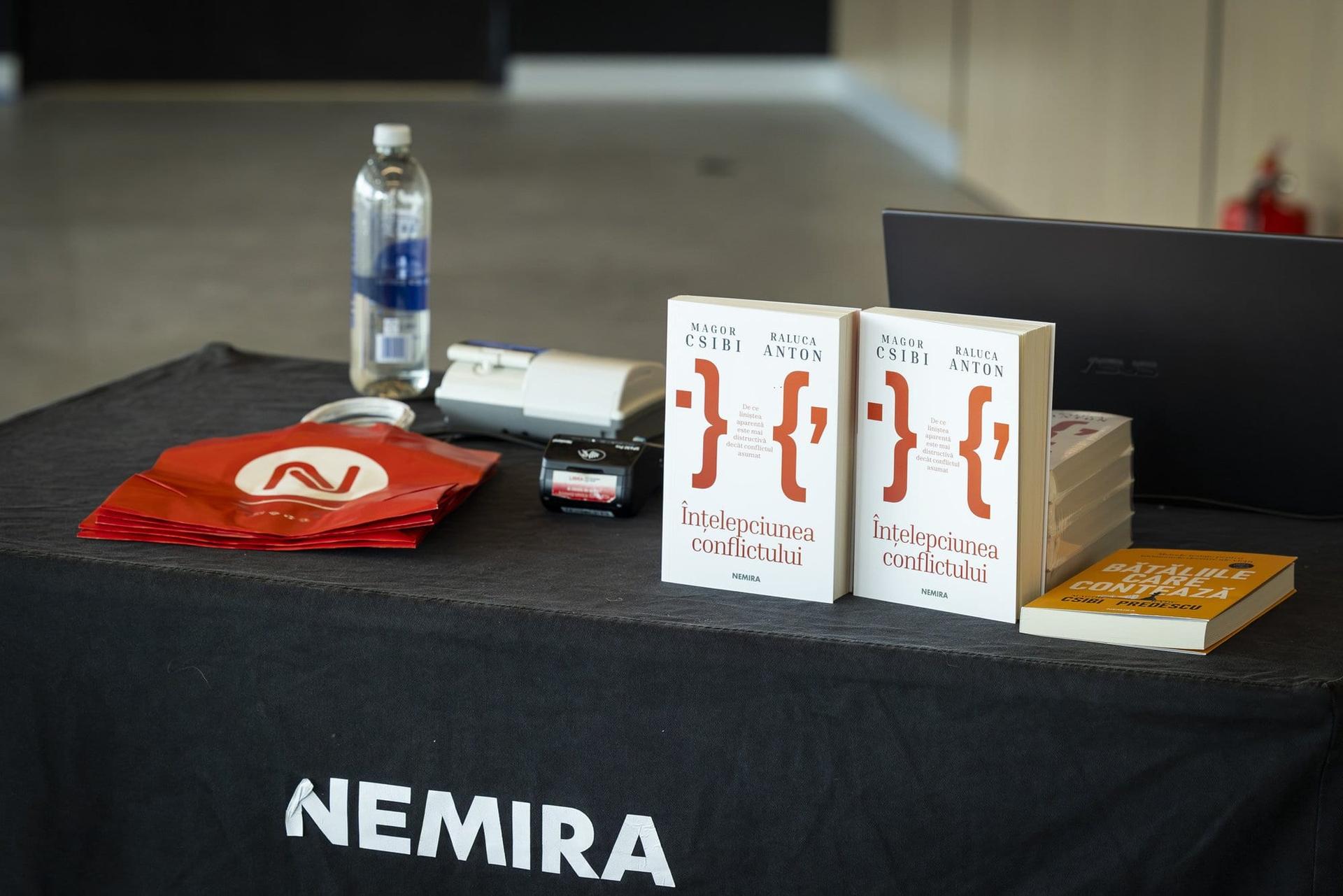
The most uncomfortable answer came in a session on conflict. Magor Csibi, a partner at Trend Consult and co-author, with Raluca Anton, of "Înțelepciunea conflictului" ("The Wisdom of Conflict"), published by Nemira five days earlier, turned the question around.
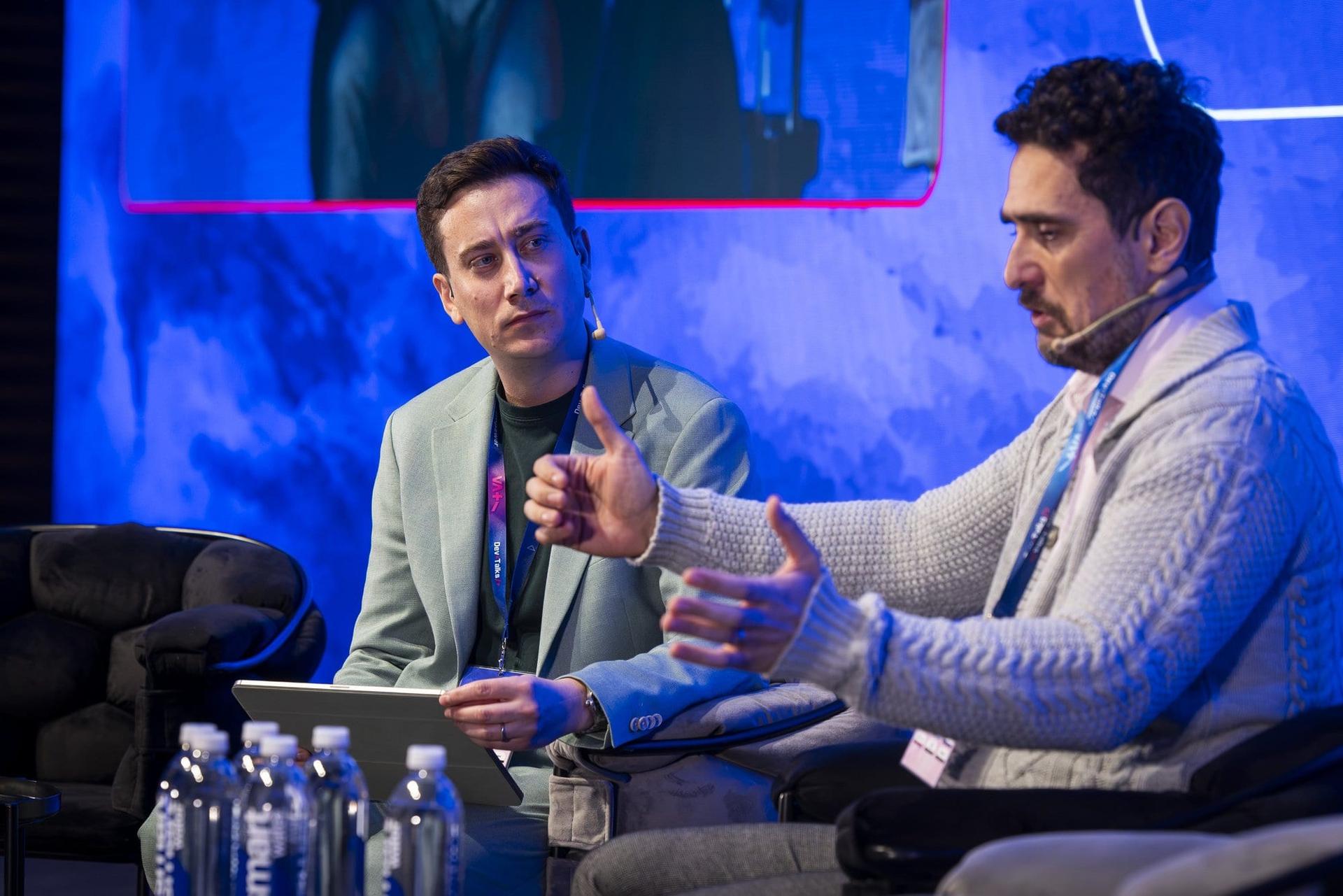
"What does it say about our level of psychological safety that we can discuss very intimate things with an AI that, by definition, would be a psychopath if it were a person?" he asked the room. An AI has no empathy and no feelings, and we tell it our deepest problems because we don't have people we trust enough. Before we work out what to do with AI, Csibi says, we should fix our relationships.
The numbers back him up. In Wave 7 of the World Values Survey for Romania, from 2017–2018, 11.7% of respondents said most people can be trusted, while 86.8% said you need to be very careful. Csibi rounds it off: one Romanian in 10.
The mechanism, as he describes it, starts with how hard we are on ourselves. On the Hofstede scale, used to compare national cultures, Romania scores 20 out of 100 on indulgence. "I rate myself at 20, I give myself 20 out of 100. I give you double, 40. But [...] you ask 60 or 70 of me. In my head, 60 or 70 doesn't exist." Conflict is inevitable. It just doesn't happen out in the open.
"What does a well-behaved child mean?" Csibi asked. Someone in the audience answered: "Doesn't make trouble." That's exactly what you don't want in a company, he went on. You want to hear about the burst pipe in the office and the big client getting ready to leave — not to say at the end of the day, "How well-behaved you all were, nobody said a thing," while the company goes under. "Conflict doesn't mean fighting. Conflict means differences of opinion that actually get voiced."
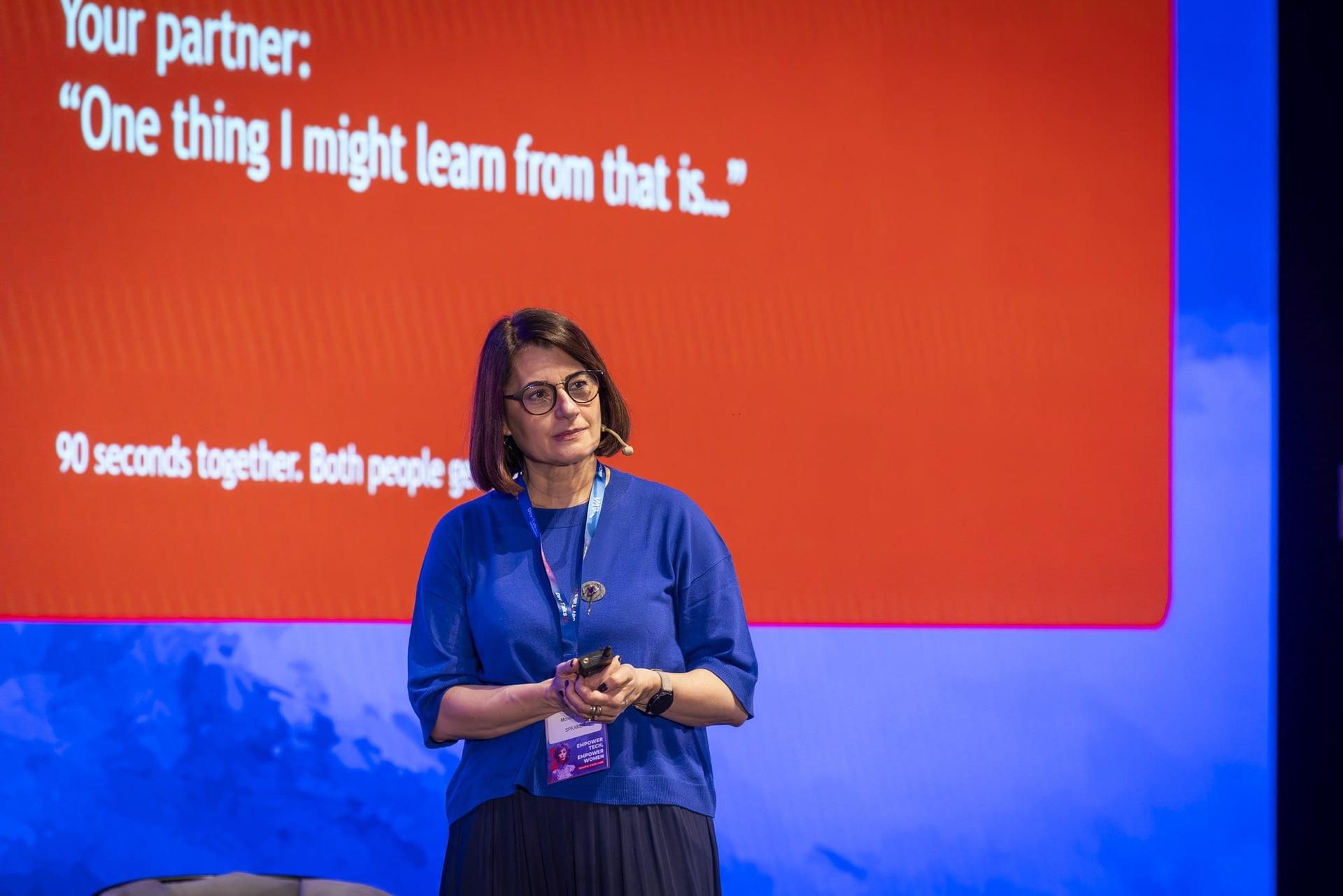
Monica Aliman, CEO and partner at Bravva Female Founders, turned the same idea into an exercise that afternoon. She asked the audience to write down on their phones their first reaction to a colleague saying the next day's deadline couldn't be met, even though he had seen the risk coming for months and kept it to himself. What makes the difference, she says, is where the conversation goes next: a conversation about the behavior leaves room for accountability, while one about the person produces shame, and shame makes you hide.
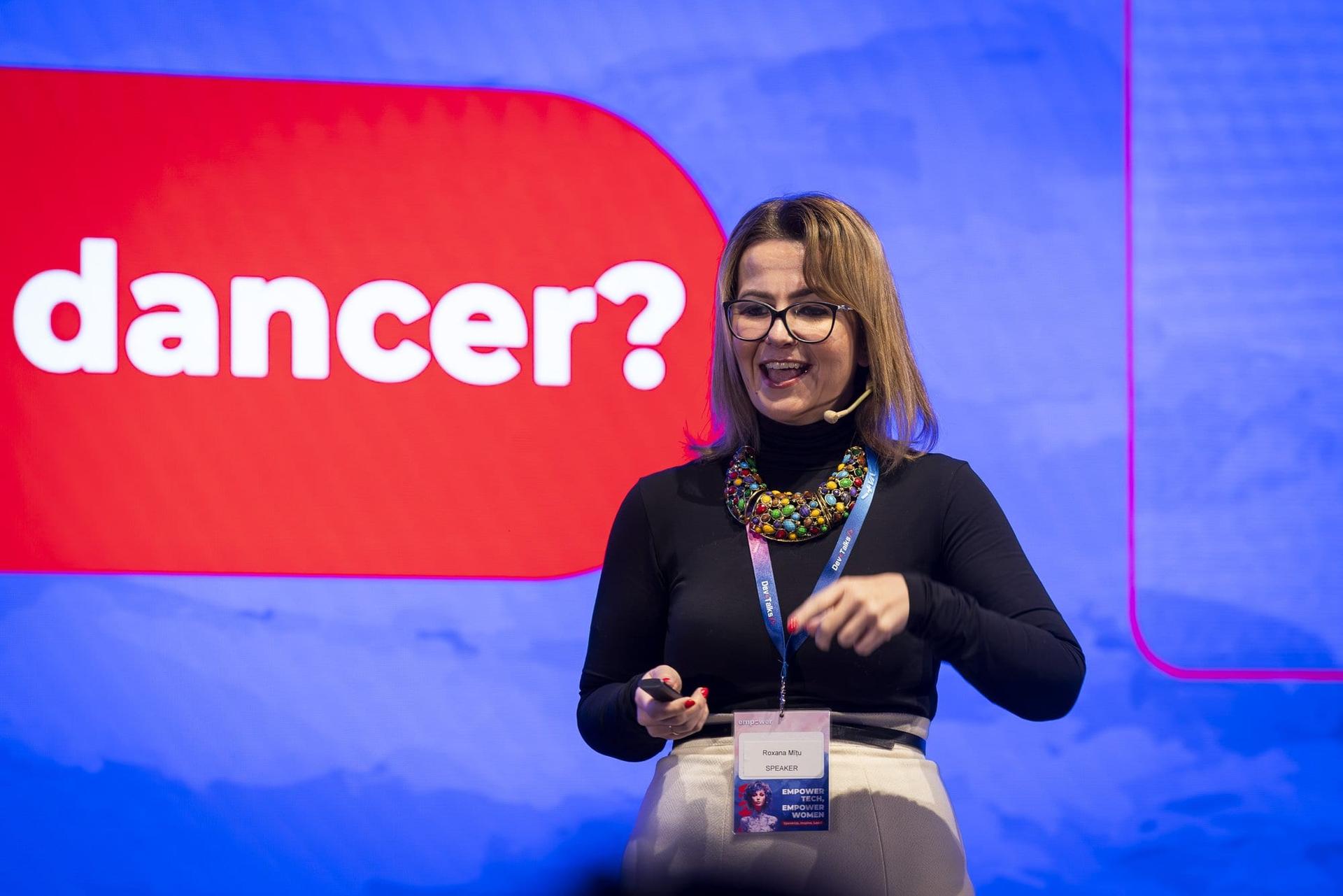
Roxana Mîțu, HR manager at Trend Consult, built her session around a line from The Killers' song "Human" and asked the same question from another angle: what stays human in us once we start optimizing everything.
Who says your name
Doina Costache, managing director for advertising solutions at Google, had to unlearn a rule she attributes to her generation in Central and Eastern Europe: keep your head down and let your work speak for you. She hoped someone would tap her on the shoulder and ask what opportunity she wanted. Leadership, she says now, isn't given; it's taken. She learned that in Singapore from her mentor at the time, Scott Beaumont, then Google's president for Asia-Pacific.
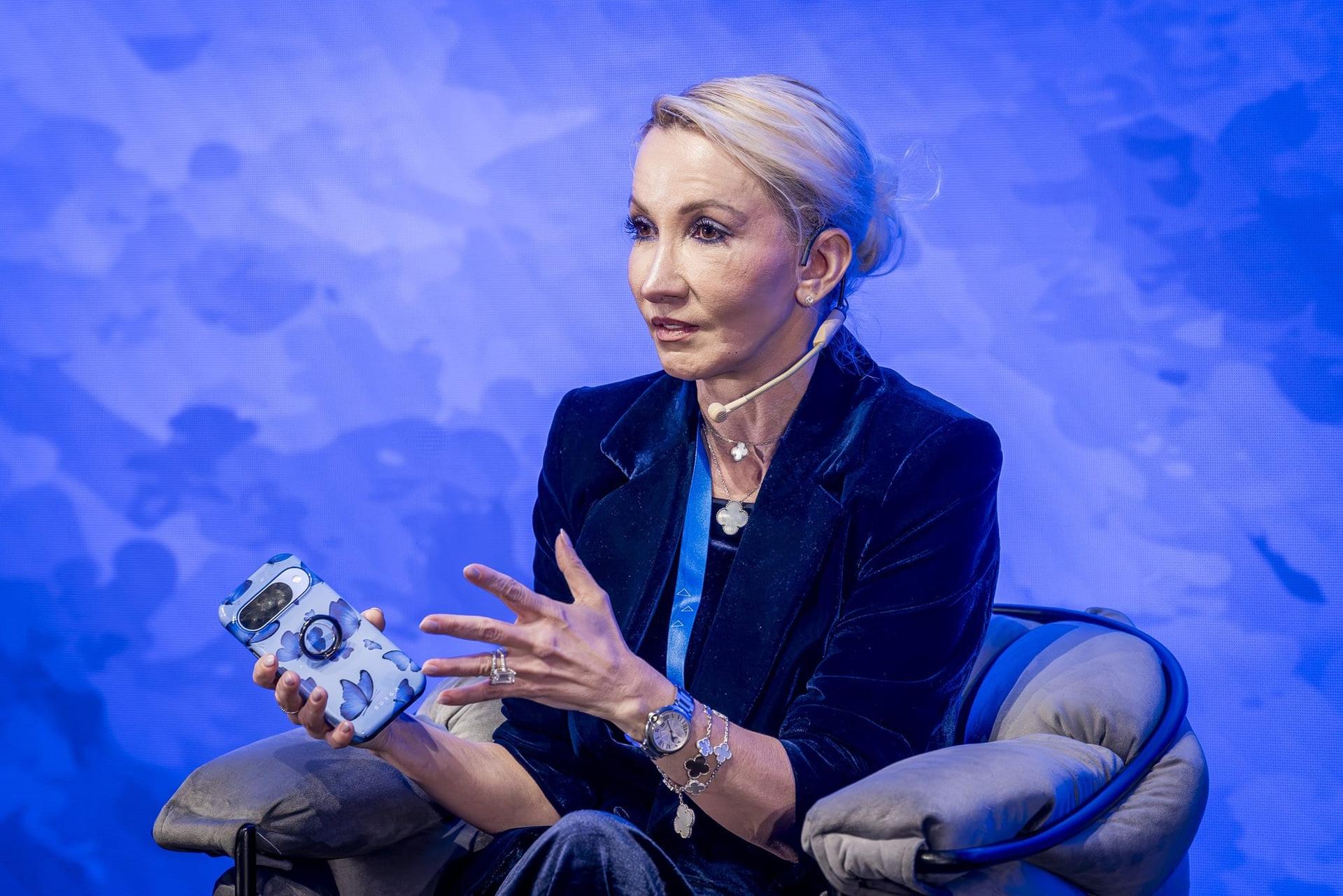
Tecar gave the audience two questions to ask any future employer. First: Can I learn here — do I have the time and permission to learn, not just a training budget? Second: Is there someone who says my name when I'm not in the room?
Puținică, the father of four daughters, answered with a story. The first employee of the software company he ran in its early days was the woman in charge of sales. They chose Japan as their market. With no Japanese and no contacts there, she signed the first client after a year and a half, and for years Japan accounted for nearly 30% of the business. Before every trip, she was the one who briefed him: how to bow, what gifts to bring to a meeting, how to look people in the eye.
People who aren't seen go quiet, and silence gets misread. Irina Ciucioi-Badea, who runs Equans' IT hub in Bucharest, recalls leading an Asian team in Singapore where nobody turned on a camera or spoke up on calls. She first had to build bridges and show that she was listening. Csibi says that in our culture a person's silence is more likely to mean withdrawal than contentment, and the people who stay quiet and observe often have the best contributions — if they're given room.
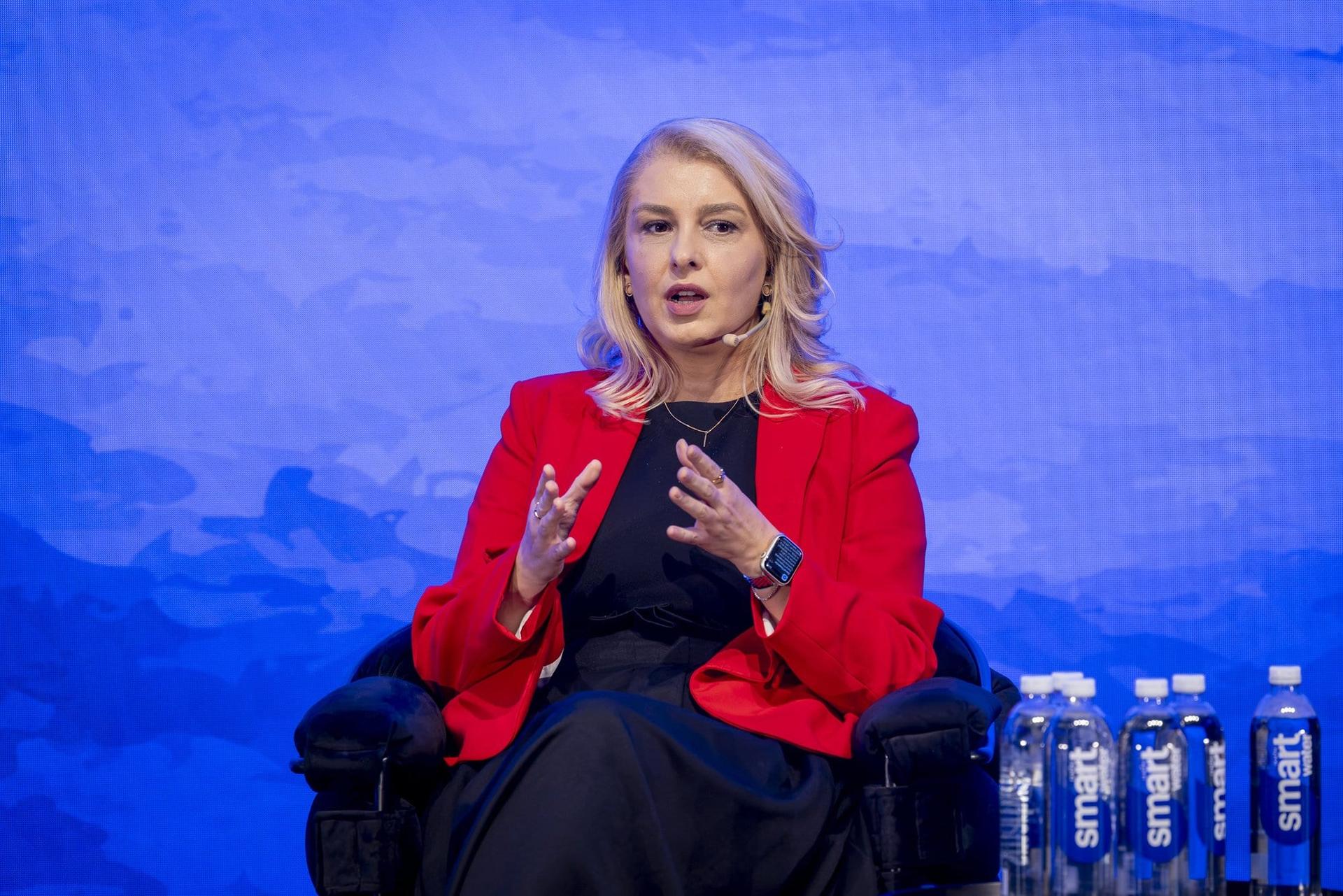
Ciucioi-Badea spoke on a panel about talent and diversity, moderated by Andrei. On the same panel, Raluca Negulescu-Balaci, executive director of the UiPath Foundation, explained that inclusion isn't something you add at the end: the foundation's AI curriculum for high school students was tested first with young people from villages and vulnerable families, and only then made available to everyone.
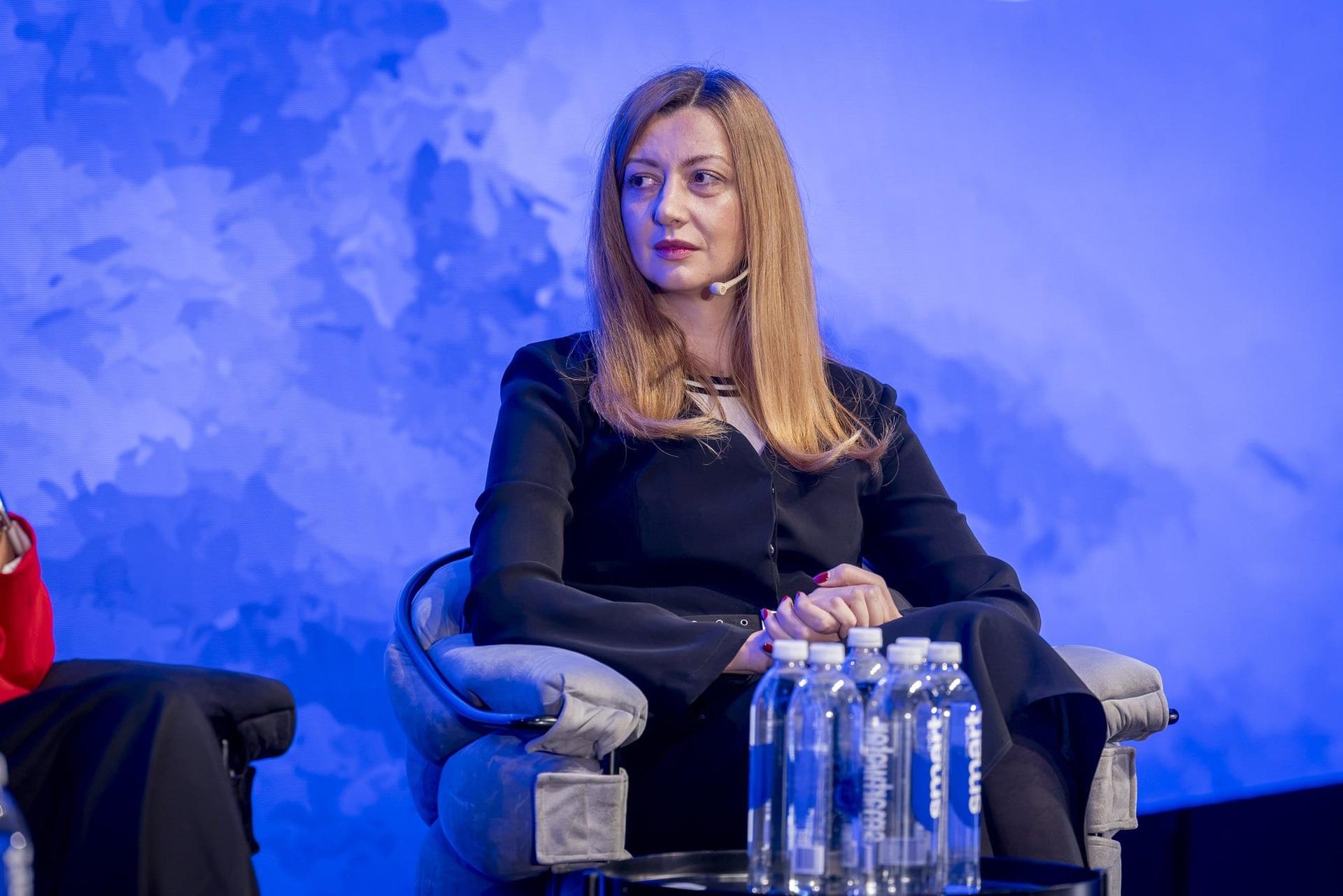
In that room, being a woman in tech is no statistical rarity. Romania has the highest share of women among ICT specialists in the European Union: 27.8% in 2025, compared with an EU average of 19.5%, according to Eurostat. The flip side gets mentioned less often. ICT specialists make up only 2.7% of the country's employed population, the second-lowest share in the bloc.
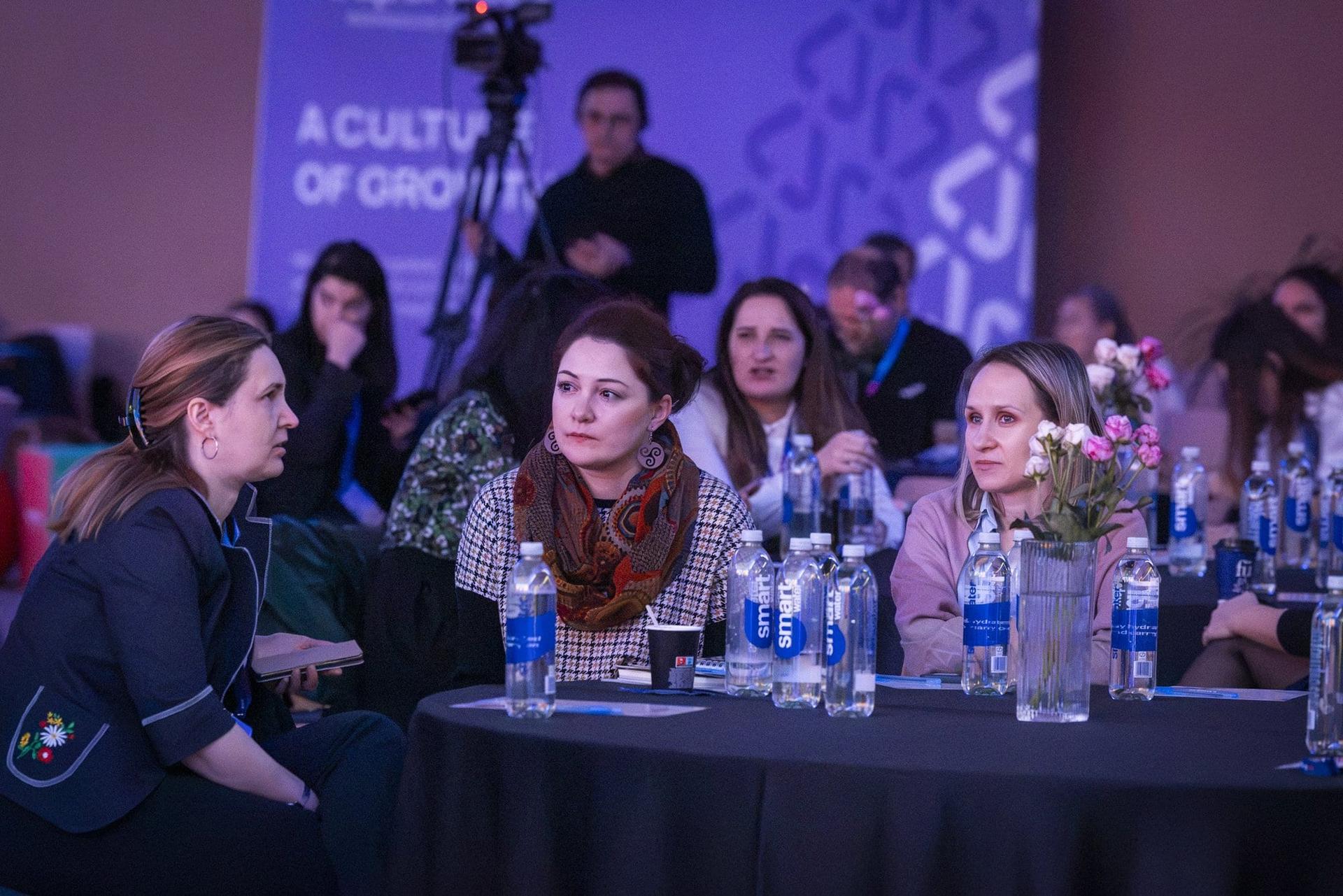
What I won't pass on
Raluca Tătărușanu, vice president of sales for EMEA and APAC at Druid AI, came up in a work culture where staying at the office until 10 p.m. and answering the phone at any hour were worn as a badge of honor. Her mentor made a point of leaving at 6, so his staff wouldn't think they had to wait for him.
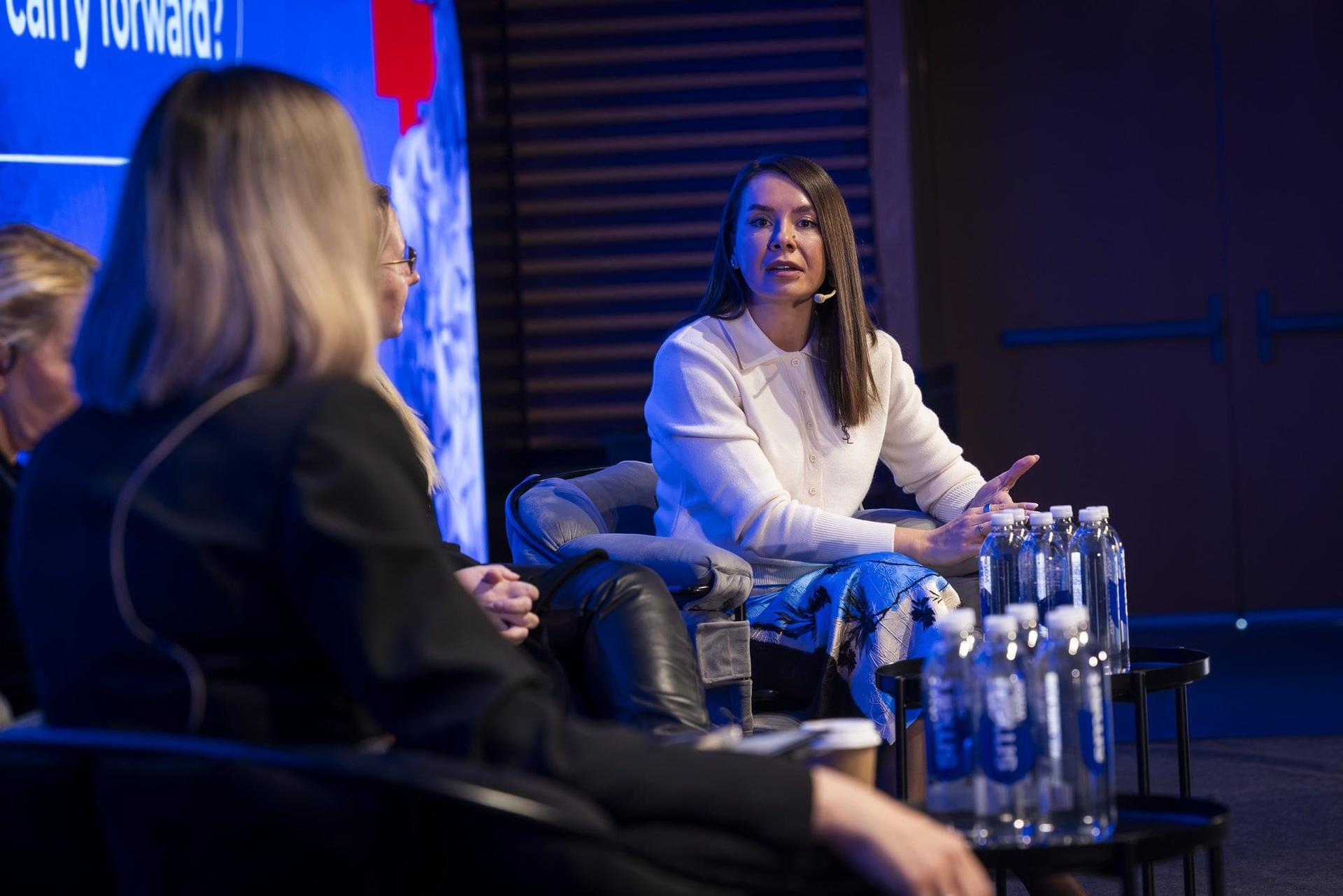
Sabina Mihăilescu, who heads C&A's Tech Capability Center, turned down a piece of advice she got early in her career: hide your emotions. It's fine, she says, to tell colleagues you're overwhelmed and need a 10-minute break; it's not fine to make decisions in that state.
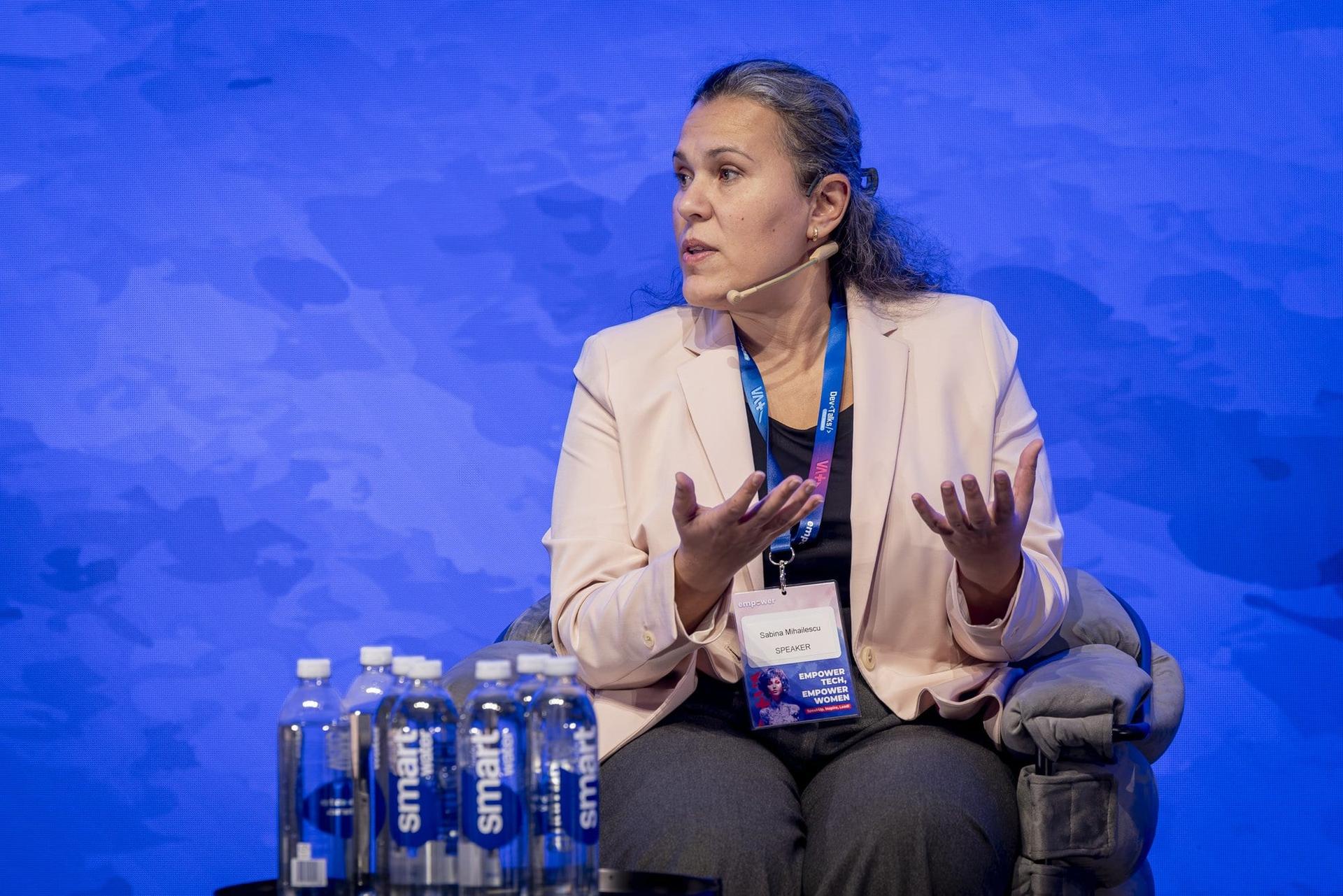
Costache calls it "performative endurance": work done to look like a lot of work. The slide with the perfect font is now made by her AI agent in five minutes, so the time goes to the conversation. She and Tătărușanu asked for one more thing: stop tolerating the brilliant but toxic person who gets a pass because of results. Csibi drew a useful line: "A mismatch is not the same as toxicity. Toxicity is when someone repeatedly violates your psychological needs or your physical integrity."
Elena Unciuleanu, founder of Reporting Center, is a programmer who sells software to large companies, and her firm, she says, has never had a sales department: she and the technical team do the demos. She also raised a subject she says she had never heard discussed on stage: corruption in the private sector. She has lost contracts because she wouldn't do what competitors did. What she refuses to pass on is the idea that you have to make yourself small for other people's egos.
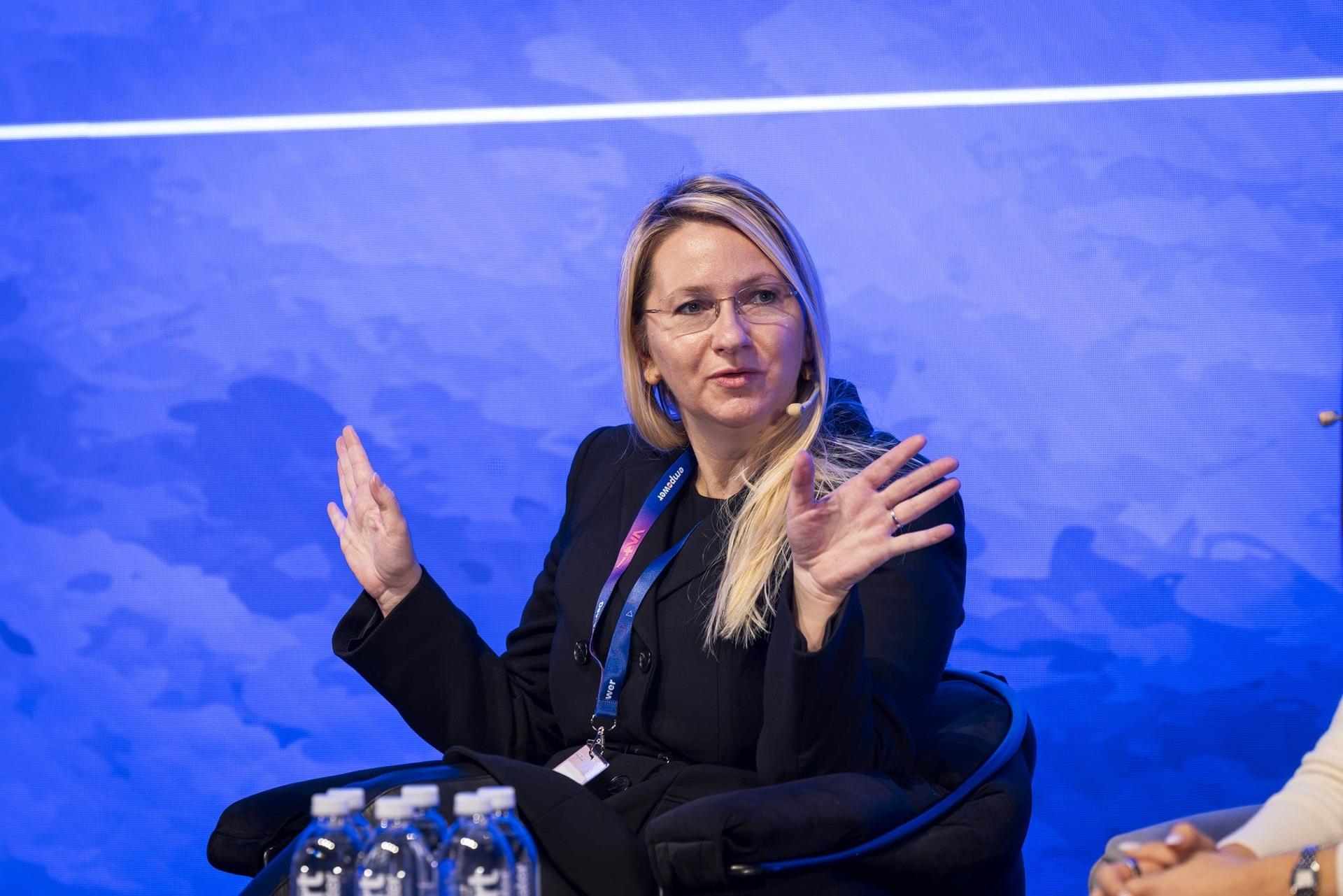
Costache no longer wants to hear the question "How do you do it all?" Her career has taken her from Bucharest to Singapore to the United States and back to Bucharest, and her 20-year-old son studies in London. Her example is Susan Wojcicki, who ran YouTube and raised five children and who, Costache says, nobody ever asked how she managed.
The medal
Csibi closed his session with a story about someone who had been in the same room. Ana Maria Brânză, an Olympic champion in team épée, once asked him at an event whether he wanted to see her gold medal. He noticed the medal wasn't uniform, and she explained: "You should know that the gold medal isn't made of gold." Olympic gold medals are, in fact, gold-plated silver.
Each of us, Csibi says, forges our own gold: the job, the house, the car, respect. When you get there, "you rub the surface of the medal you've won a little and say: it's not gold." His conclusion: success has to be personal, "because if you don't live your own success, you're living someone else's."
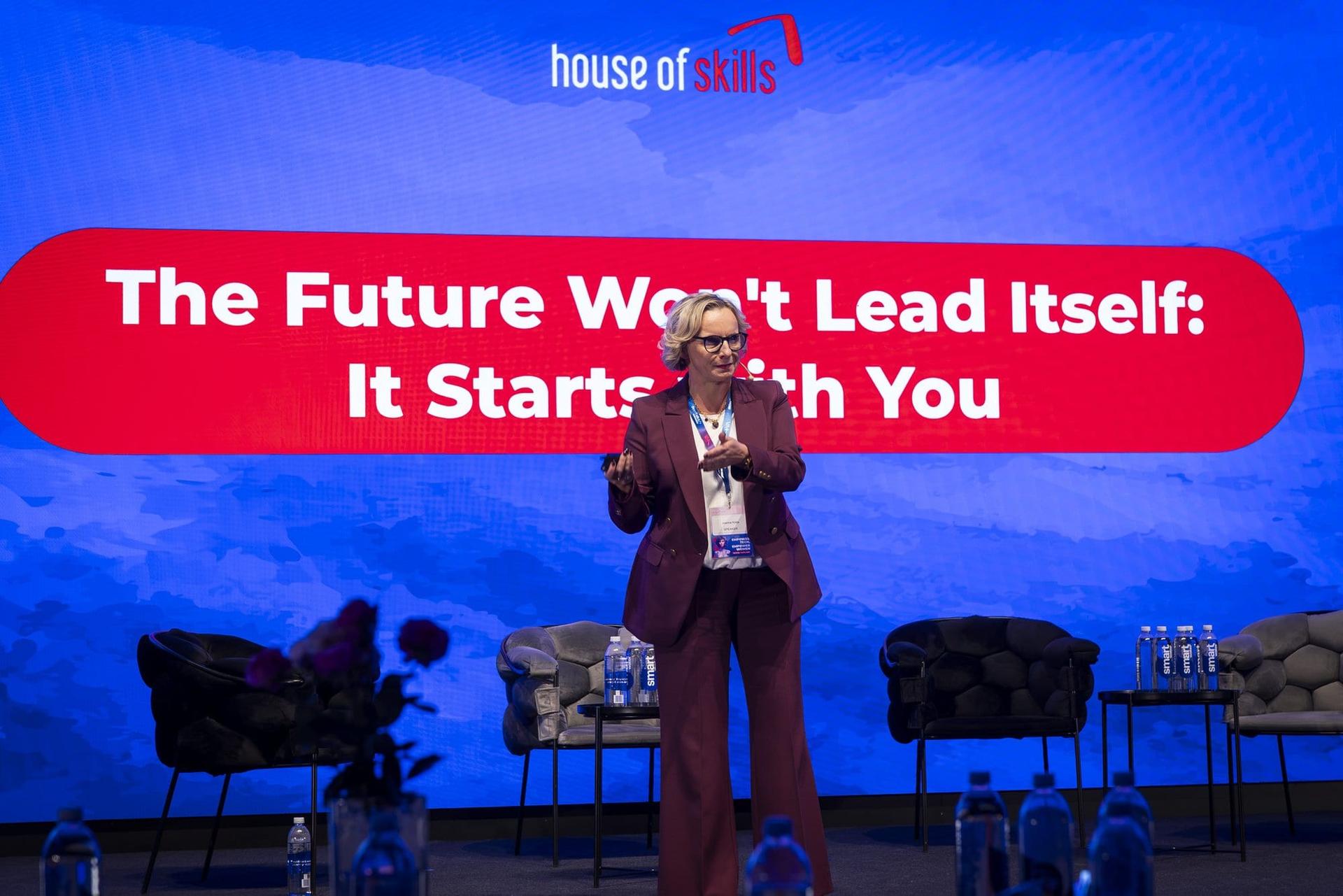
The last speaker on stage was Joanna Krejs, head of Blanchard Poland at House of Skills, who used a QR code to ask the audience what it takes to lead ourselves.
Tecar had ended her talk that morning with Hodor, the "Game of Thrones" character who holds the door. Someone held it for her, too, she says. Somewhere in the next stack of résumés there may be a pharmacist looking for an open door.
This piece is based on the author's own recordings of the Empower Tech sessions on Nov. 17, 2026. Remarks by speakers who spoke in English are paraphrased or quoted from those recordings; Magor Csibi's quotes are translated from his session in Romanian. The statistics come from the sources below, not from the presentations.