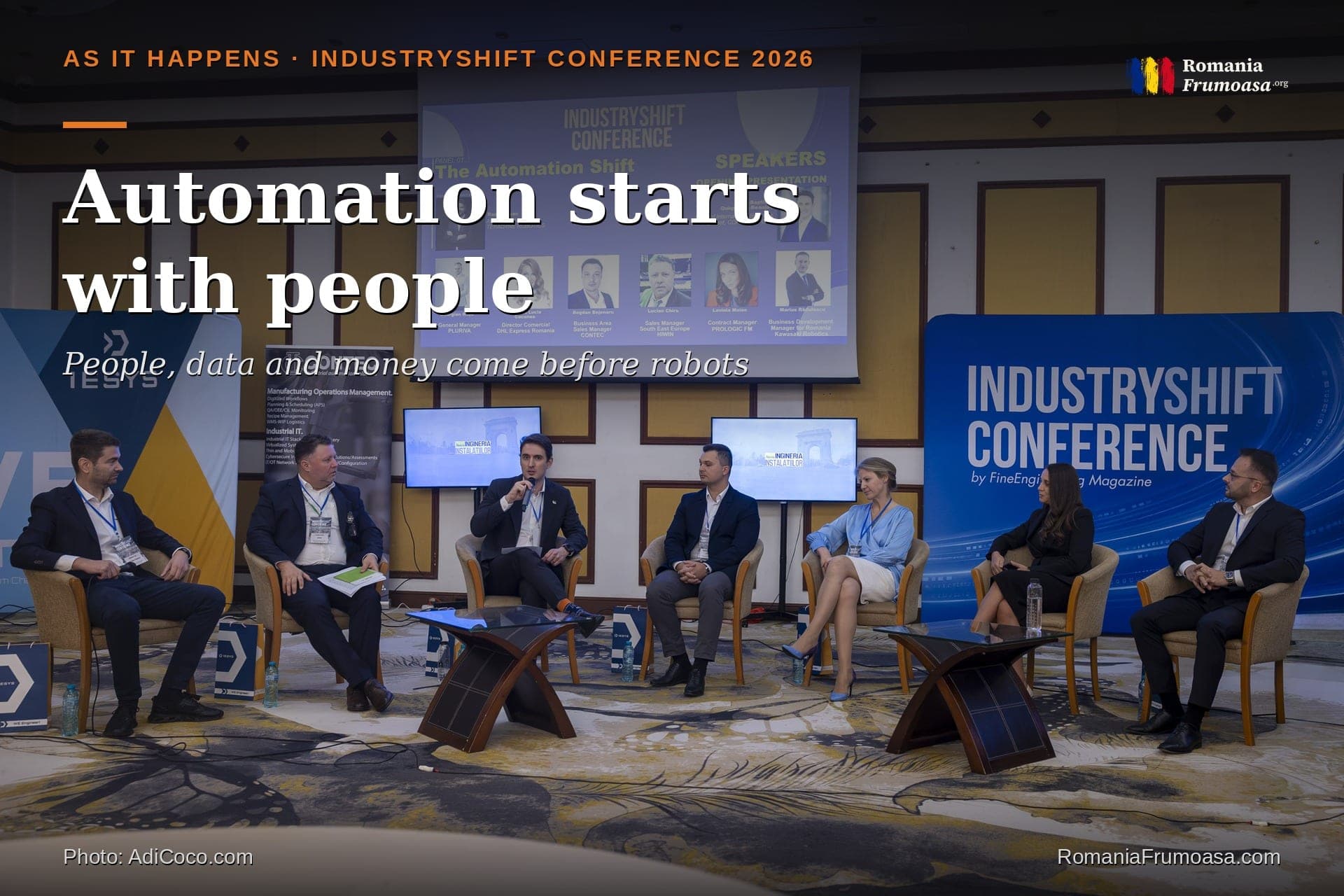
A cable manufacturer negotiated with one of its employees to retire a year later than planned. He was the only person left who knew how the manufacturing execution system, or MES, ran at one of the plant's workstations. Marius Dragomiroiu of SHE Information Technology told the story on Oct. 21 at IndustryShift Conference. Almost everything said about automation that day fits inside it: before robots and artificial intelligence, many factories have a more basic problem — people who leave and systems that don't talk to each other.
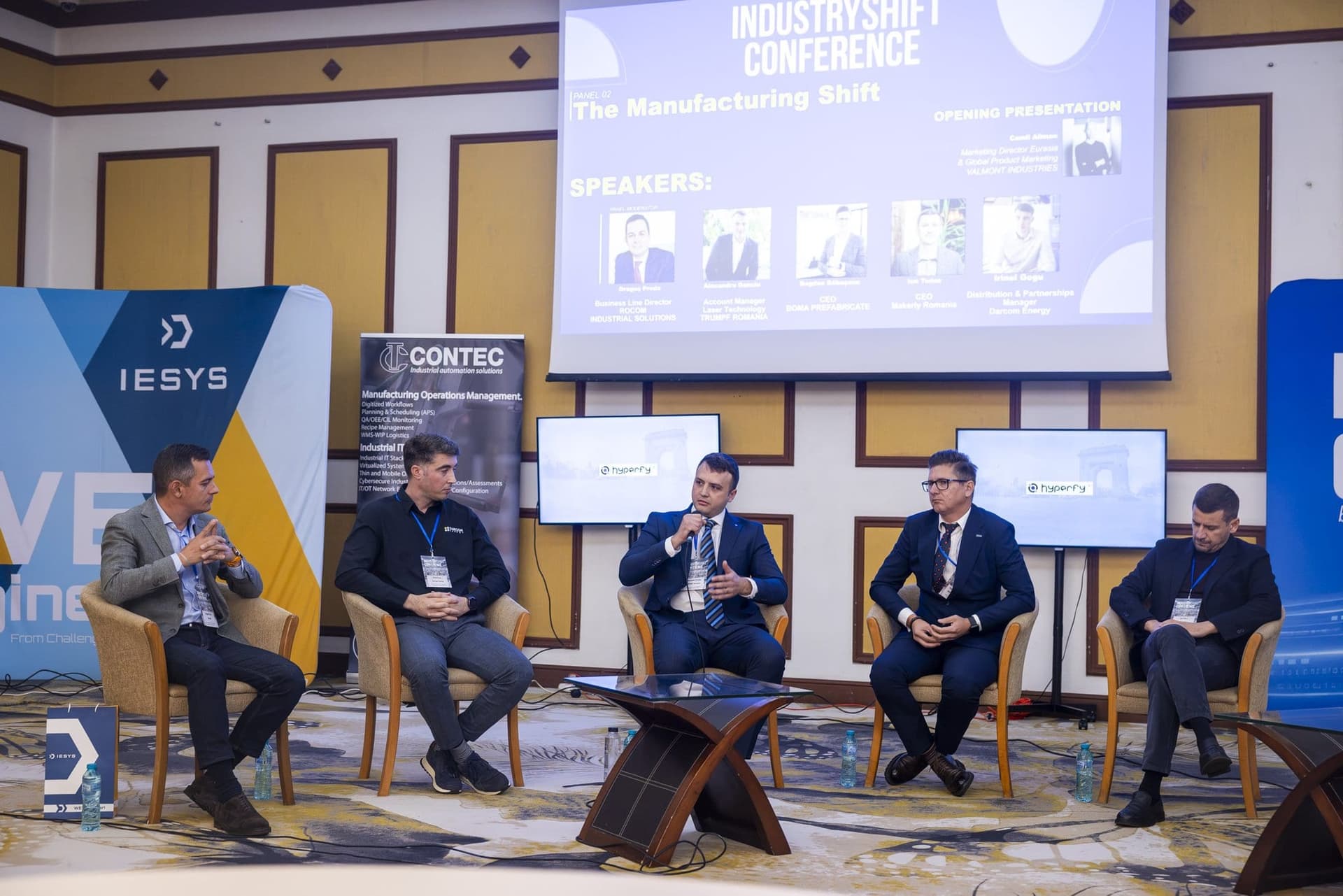
The conference, in its first year, was organized by FineEngineering Magazine at the Caro Hotel in Bucharest. The program had three panels — on automation, manufacturing and digitalization — along with company presentations and a hands-on energy workshop from Darcom Energy. The backdrop was not an enthusiastic one. Industrial output in Romania fell 3.4% in the first eight months of 2026, and manufacturing fell 4.4%, according to the National Institute of Statistics. For the second quarter, the National Commission for Strategy and Forecasting estimated that industry employed 3.9% fewer people than a year earlier. On stage, there was little talk of volumes and a lot about what a factory has to get right before its first robot.
Short on people before short on cash
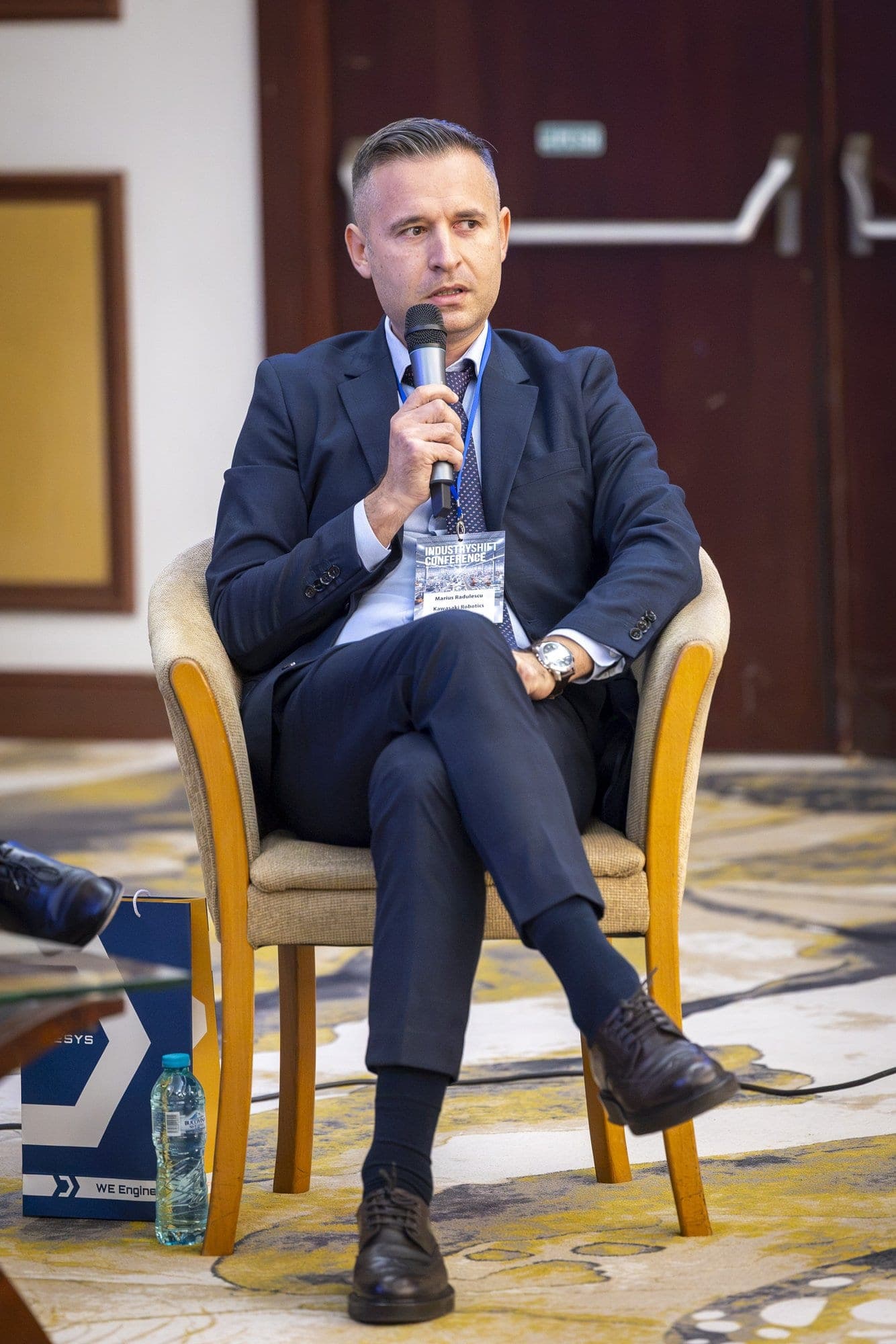
Asked about the challenges in the market, Marius Rădulescu of Kawasaki Robotics put the labor shortage first: "The main reason is the lack of staff. For some companies, automation is no longer just an option or a competitive advantage. It's becoming a necessity." In his experience, large companies set aside efficiency budgets year after year, while small and midsize firms need someone to walk them through it. Some call to ask how much a palletizing robot costs, unaware that a robot does nothing without a gripper and an integrator. Others want to automate everything at once.
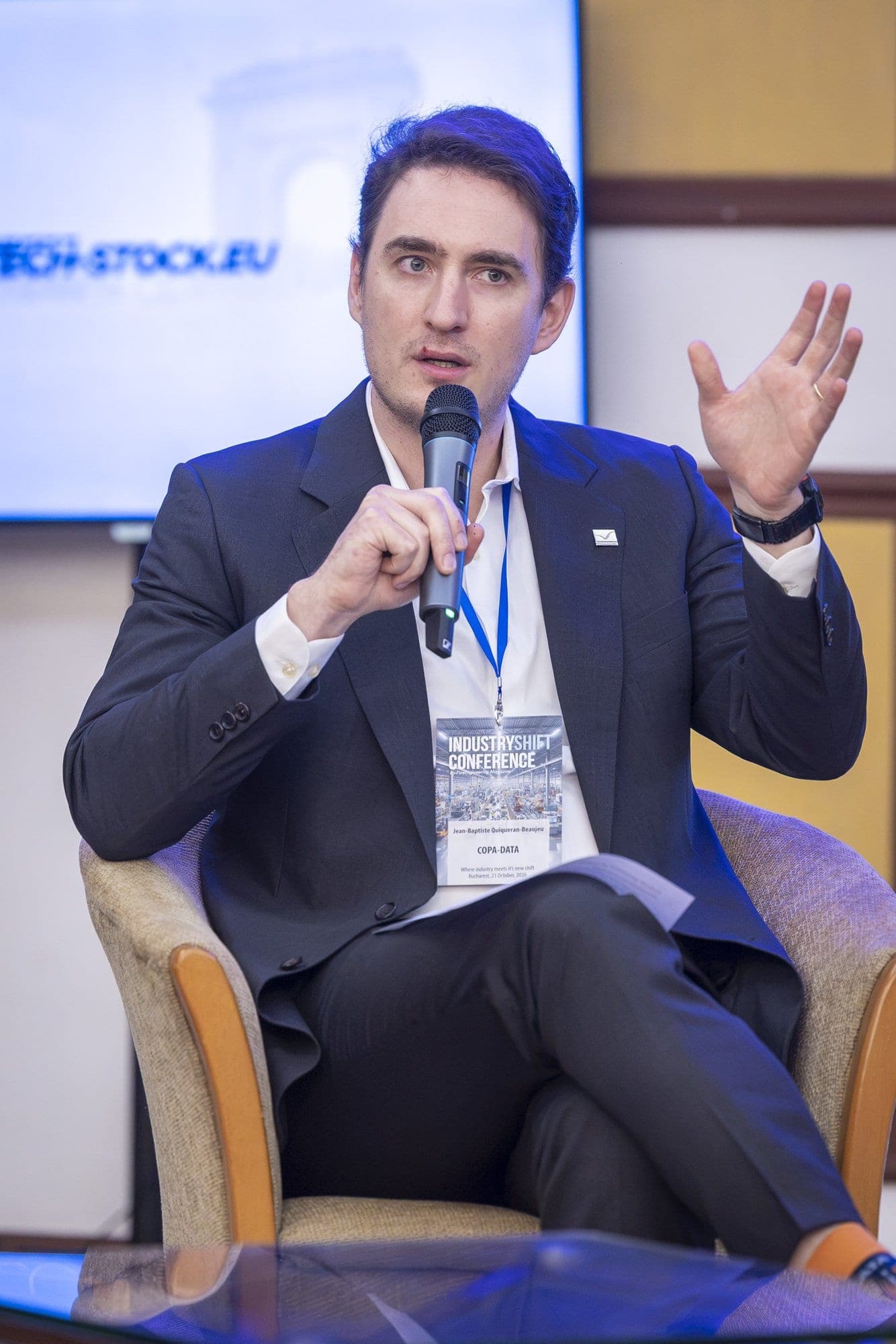
Jean-Baptiste Quiqueran-Beaujeu of COPA-DATA was more specific. His customers in Eastern Europe tell him they would automate as much as possible, but they don't have the engineers: "The demographics are not playing in our favor." His answer for his own team is simple: hire juniors and train them in-house. In software, he said, there is now a notion that companies don't need to hire juniors "because everything can be done by Claude." Stop hiring juniors, and in a few years there is no one to grow into the specialists you need.
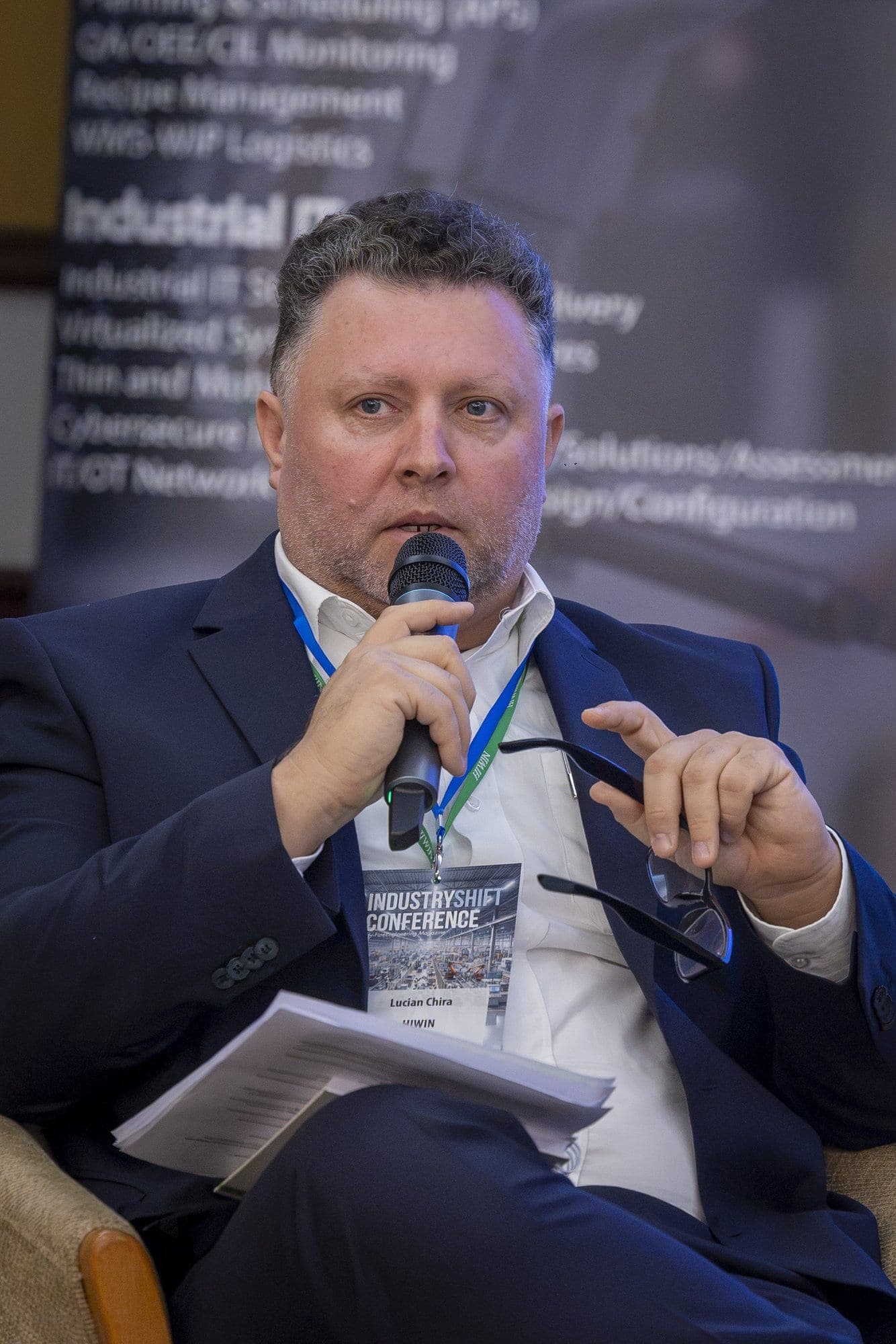
The bluntest account came from Lucian Chira, an engineer with HIWIN who recently returned from the United States, where he worked for the same company. He described managers at a factory in northeastern Romania who told him plainly they had made a mistake: they didn't automate two or three years ago, and now they are losing people and trying to catch up. "We started automating too late," they told him. Chira also admitted that in his first six months back he couldn't land a single project. The orders came only once he started spending time with customers and training them.
Patricia Coconea of DHL Express Romania turned the question around: what is left for people once the work is automated? DHL uses 4,000 collaborative robots across its Supply Chain division worldwide, she said, but a courier still hands the parcel to the customer. "Everything that can be automated will be automated. It's a matter of time. But the human touch becomes premium," she said.
Data before artificial intelligence
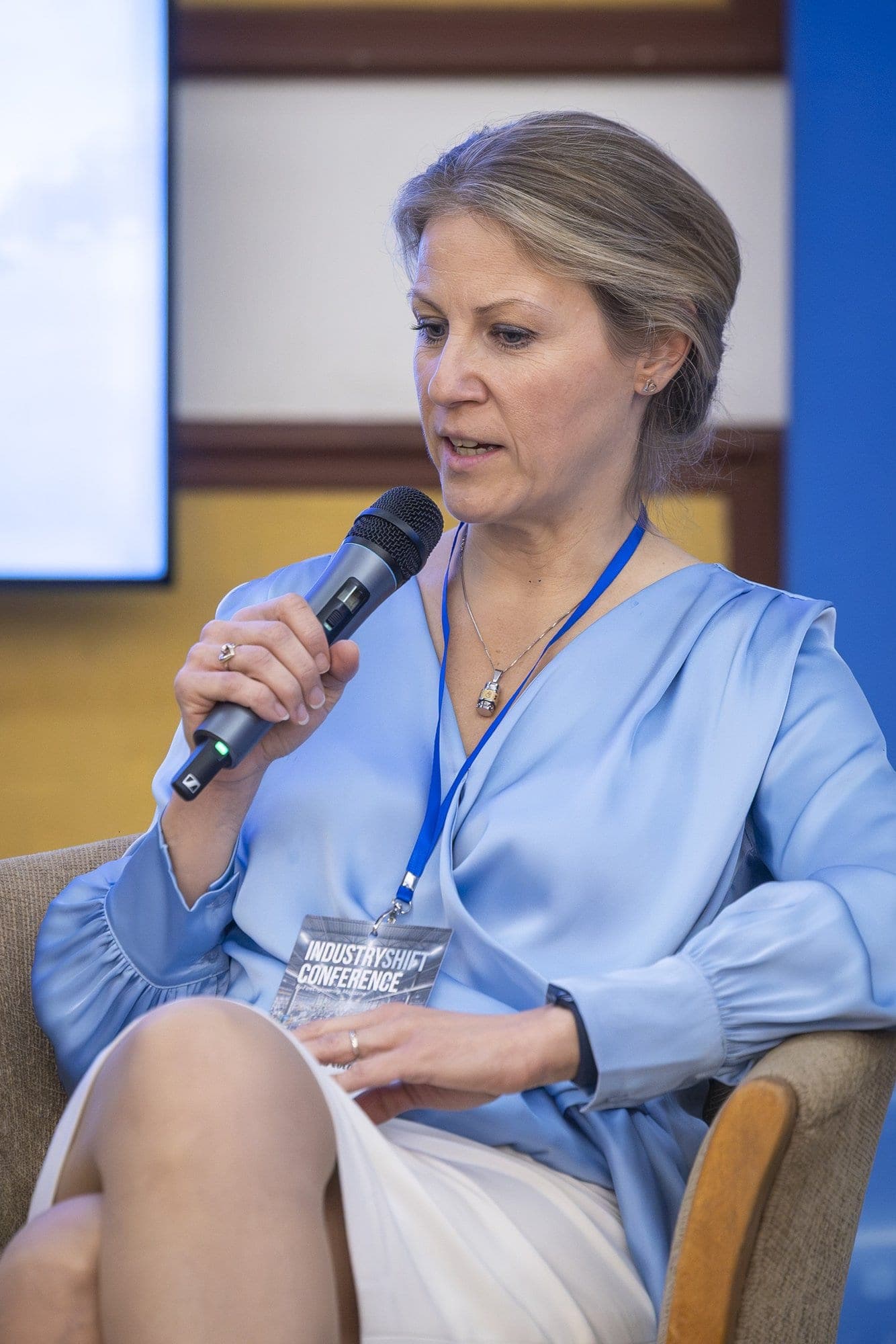
"Garbage in equals garbage out," Quiqueran-Beaujeu reminded the room, and the idea came up again on the digitalization panel. He described a pattern he sees with customers: companies that want AI agents but have five data silos that don't talk to each other. Dragomiroiu made the same diagnosis from the perspective of a software developer. In many factories, the production systems don't match, the documentation is missing and the people who built them are gone. Two or three people at most still know how they work, and companies have to make the most of them before starting any AI project.
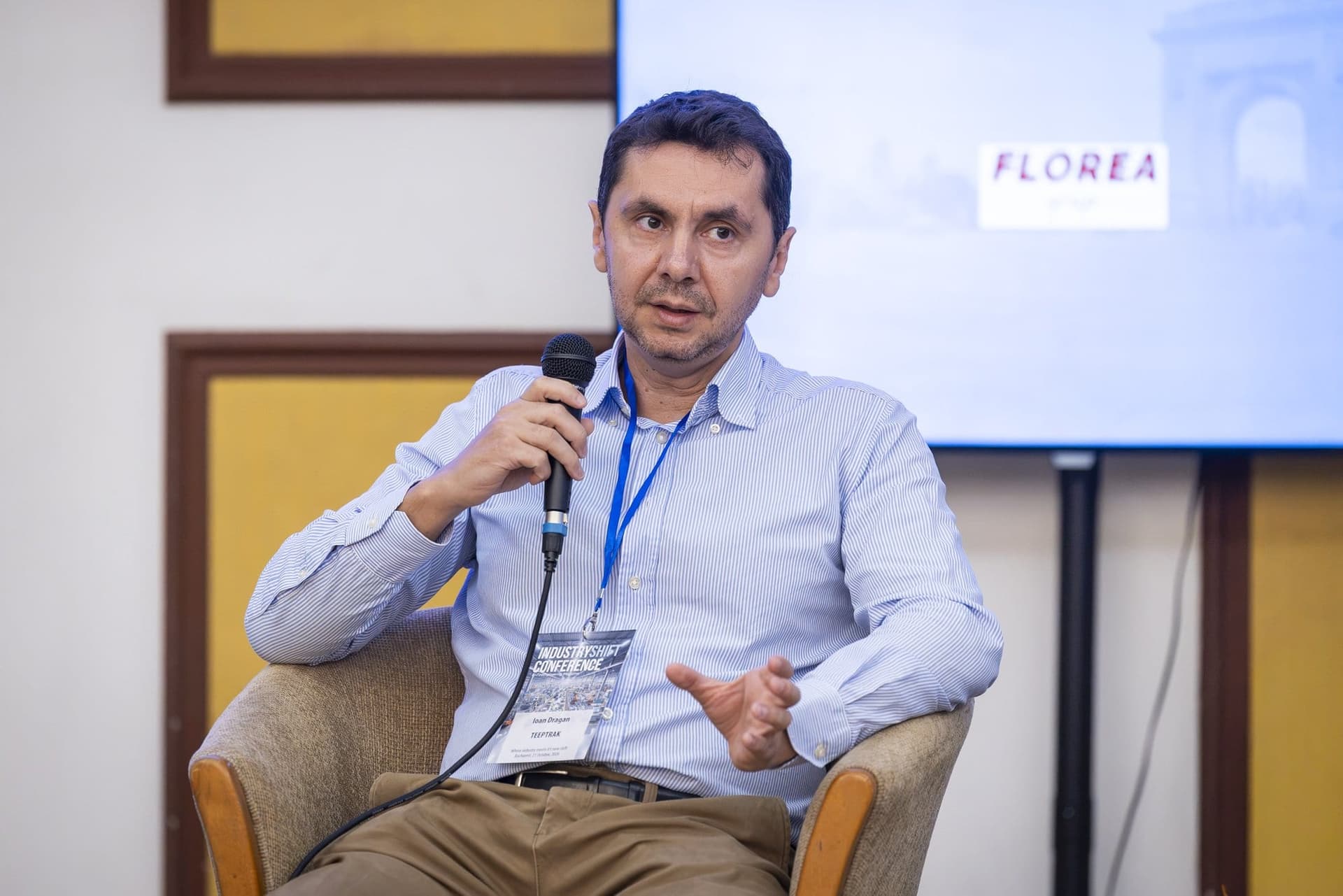
Ioan Drăgan of TEEPTRAK, a company that monitors production-line efficiency, said many Romanian factories still make decisions a day late, based on gut feeling or on Excel sheets filled in by operators "more or less accurately." At Hutchinson, according to figures he presented, simply seeing which machines were the bottlenecks raised productivity at the first plant they equipped by 30% within a few months. The system was then rolled out to all of the group's plants, he said.
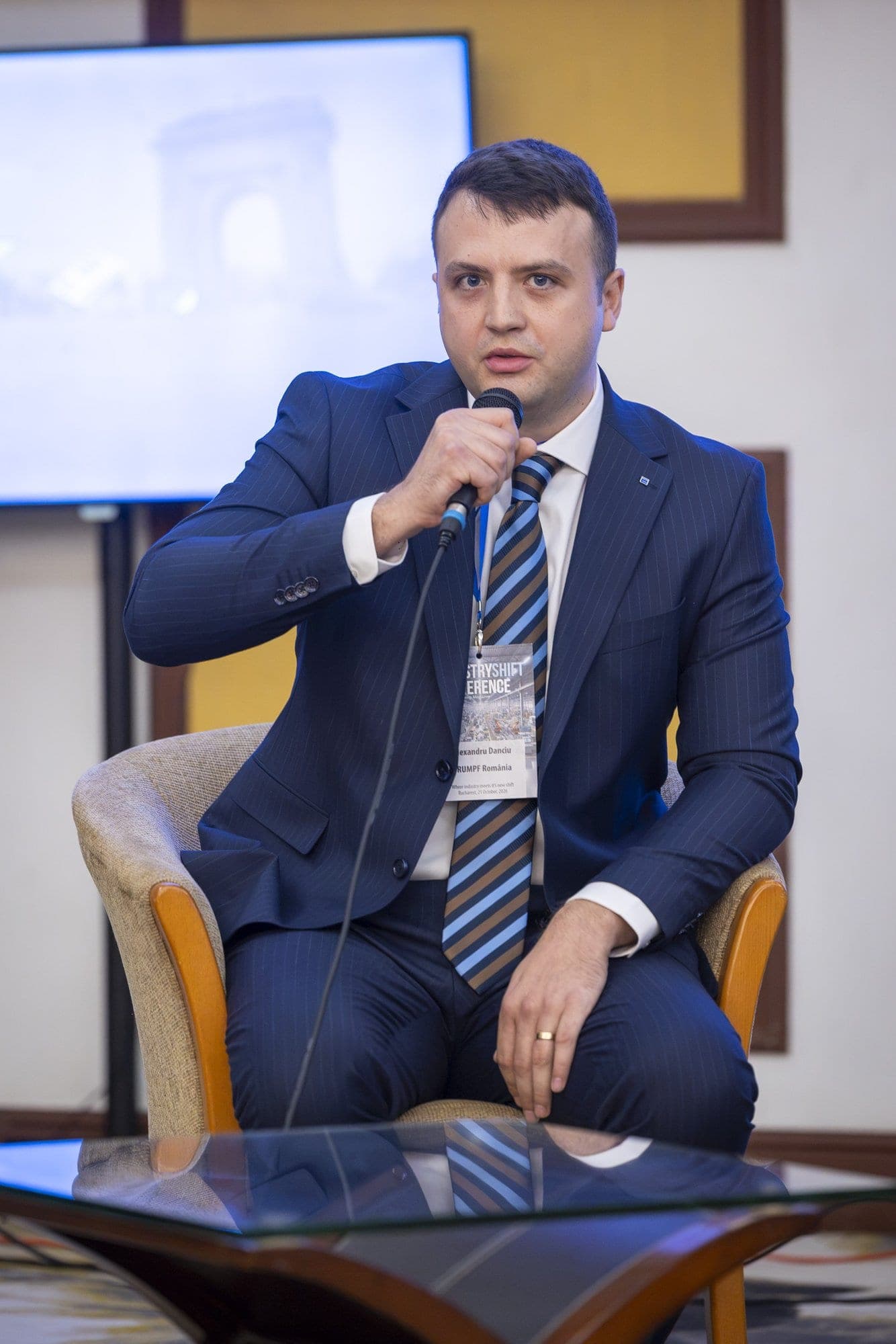
A concrete case of applied AI came from Alexandru Danciu of TRUMPF Romania. The company has done laser welding for about 20 years, and for the past two years the cameras that watch the weld seam have been backed by an AI agent. It learns to tell genuinely defective parts from ones that a glint of light made look like scrap. In one process, he said, scrap fell by 98%. The final call still belongs to the operator, who teaches the agent what is acceptable and what isn't.
The half-price robot
One question from the floor, asked by RomâniaFrumoasă, was about pressure from cheap Chinese robots. Răzvan Isac of Teradyne Robotics — the group that owns Universal Robots — who moderated the first panel, put a number on it: by his count, there are 35 copies of their collaborative robot in China. "Their main message is that they do the same thing we do, at half the price." Even so, he said, Universal Robots holds a share of Romania's collaborative-robot market of "somewhere around 80 to 90%." What makes the difference, he said, is local people, understanding on site what the customer actually needs, and reliability. In April 2026, a court in Hamburg issued a preliminary injunction barring the sale in Germany of software from Elite Robots, a Chinese cobot maker that Teradyne accuses of copying Universal Robots' software.
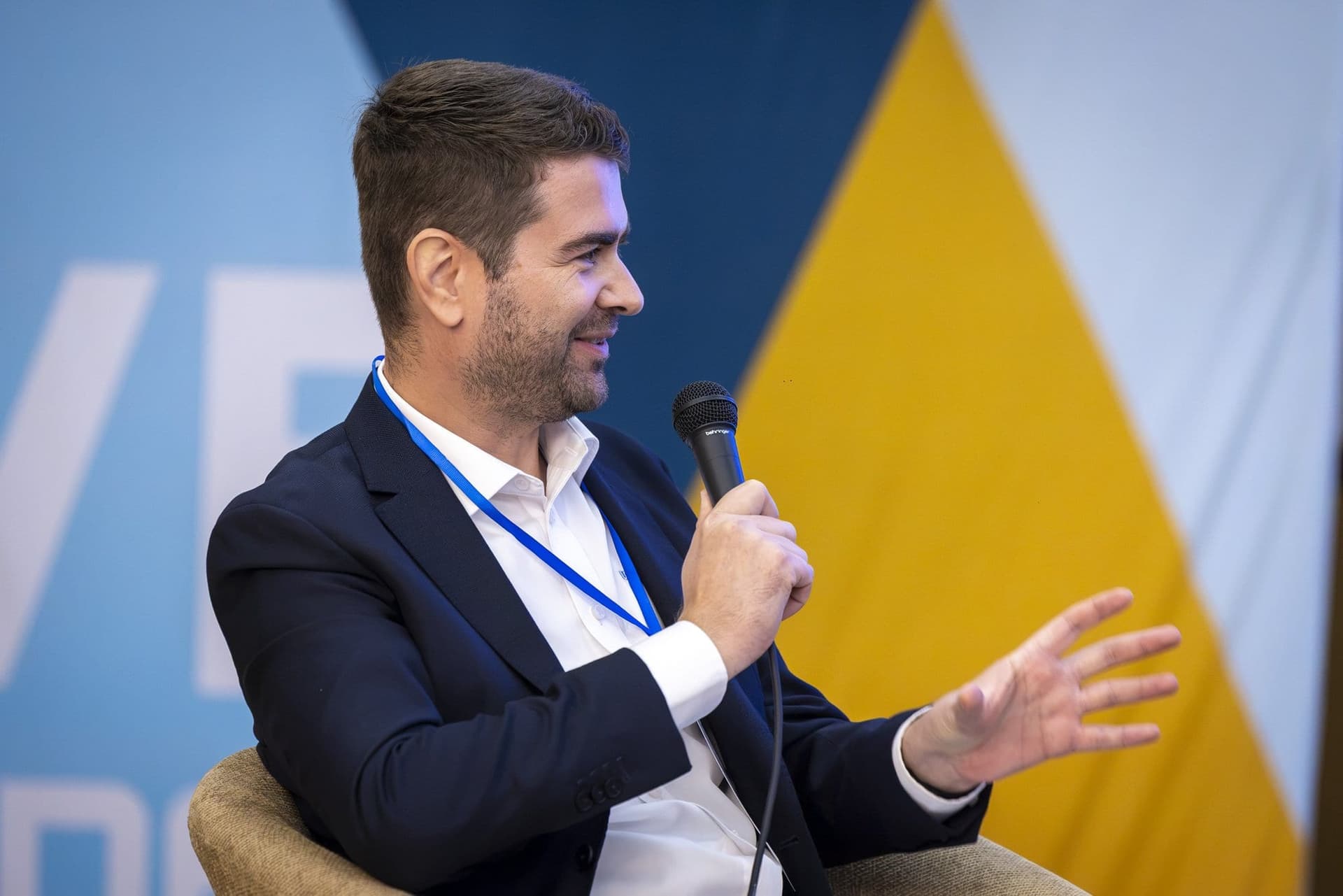
Rădulescu added a calculation that, he said, many companies on their first project miss: a stopped line costs more than any difference in purchase price. Danciu said the same about machinery: a low upfront price means nothing if the machine costs more to run.
Guards, fire safety and the cameras already on the wall
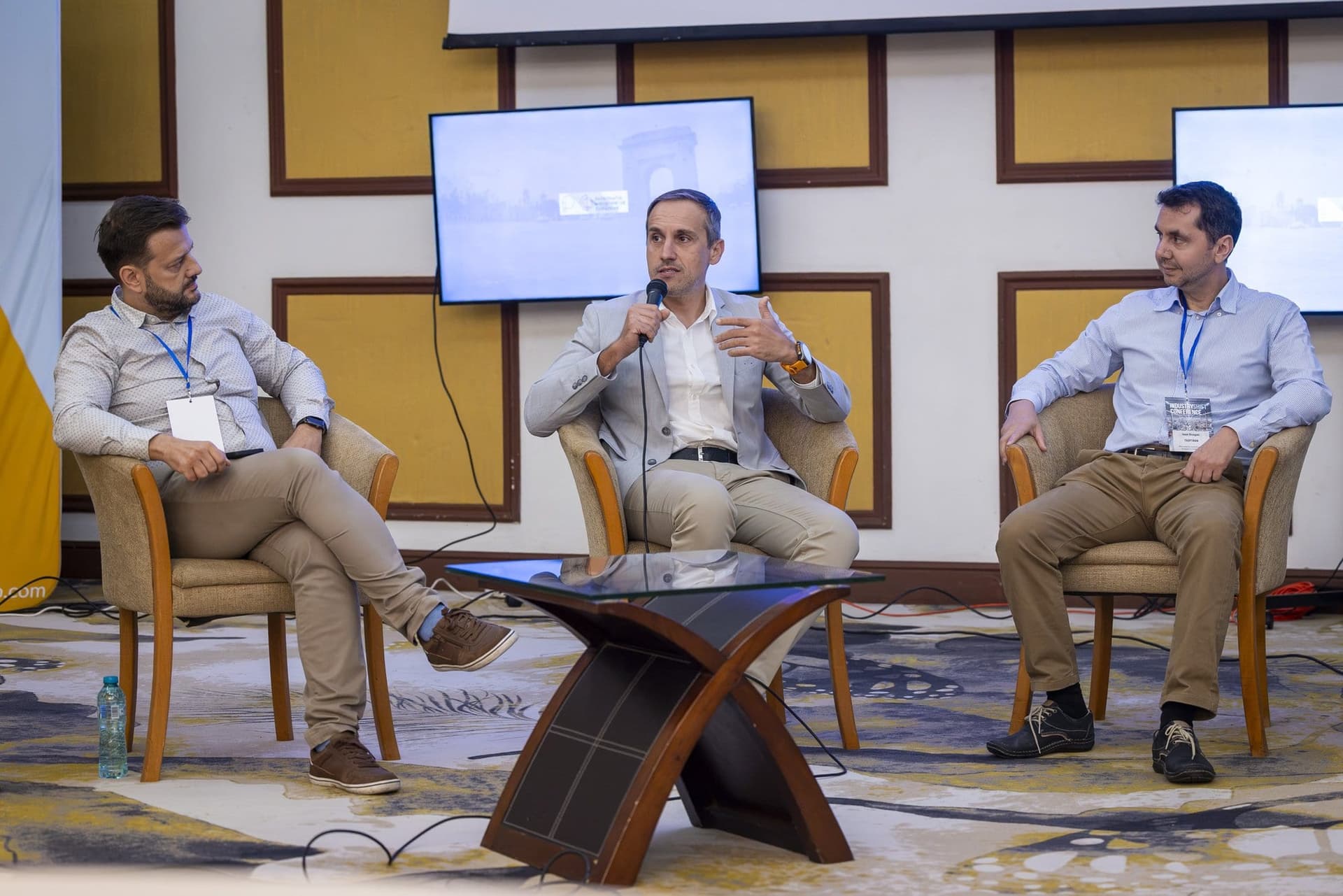
Many of the day's numbers came from Lucian Mățăoanu, CEO of Hyperfy, a company that started out writing software for security systems, used mostly by banks. Romania still has about 100,000 security guards, he said, and a single guard post costs around 4,000 euros a month. Hyperfy replaces or supplements guards with technology and delivers 25% savings on guarding costs to its clients. He said the company has more than 100 such deployments.
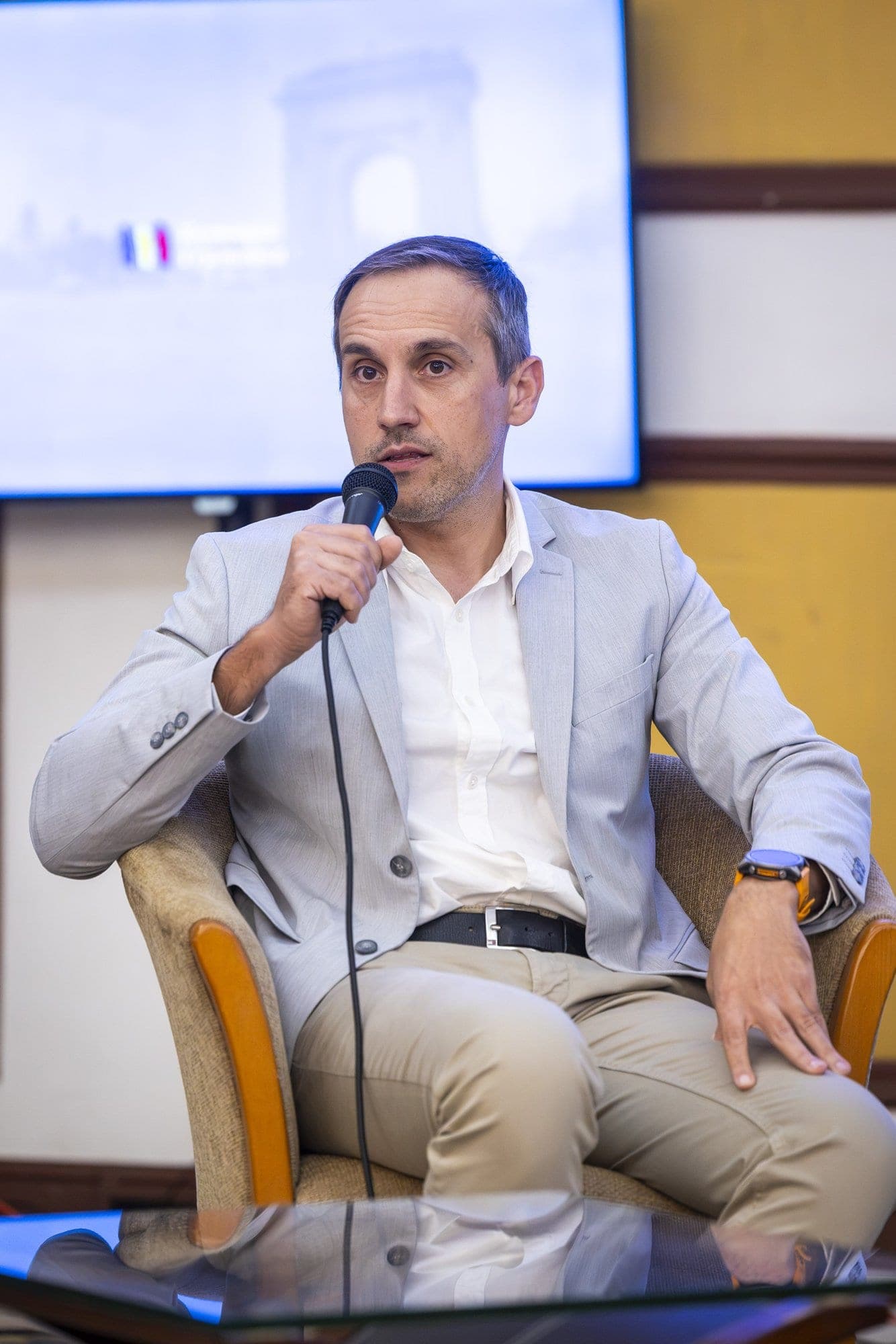
The second theme was fire safety. Emergency Ordinance 17/2026, in force since March, changed the conversations with clients. It requires operators to report failures of fire detection and suppression systems within 24 hours and allows fire safety permits to be suspended when the systems don't work. Since then, Mățăoanu said, the company has been integrating fire alarm panels from different manufacturers "at a speed we've never done before," so clients don't have to replace them all. By his estimate, 80% of fire systems in Romania have deficiencies or don't work.
His core idea is that large factories and warehouses already have thousands of cameras. "What the human eye can see, a camera can see," he said. Several algorithms run on the same video feed: one checks whether workers are wearing hard hats, another flags a blocked access route or a person who has fallen. Asked why the shift is happening now, he pointed to speed. Three or four years ago, an AI proof of concept took them four to six months; today it takes four to six weeks. Over four to six months, he said, the client's interest "would pretty much cool off."
Money, credit and orders wanted yesterday
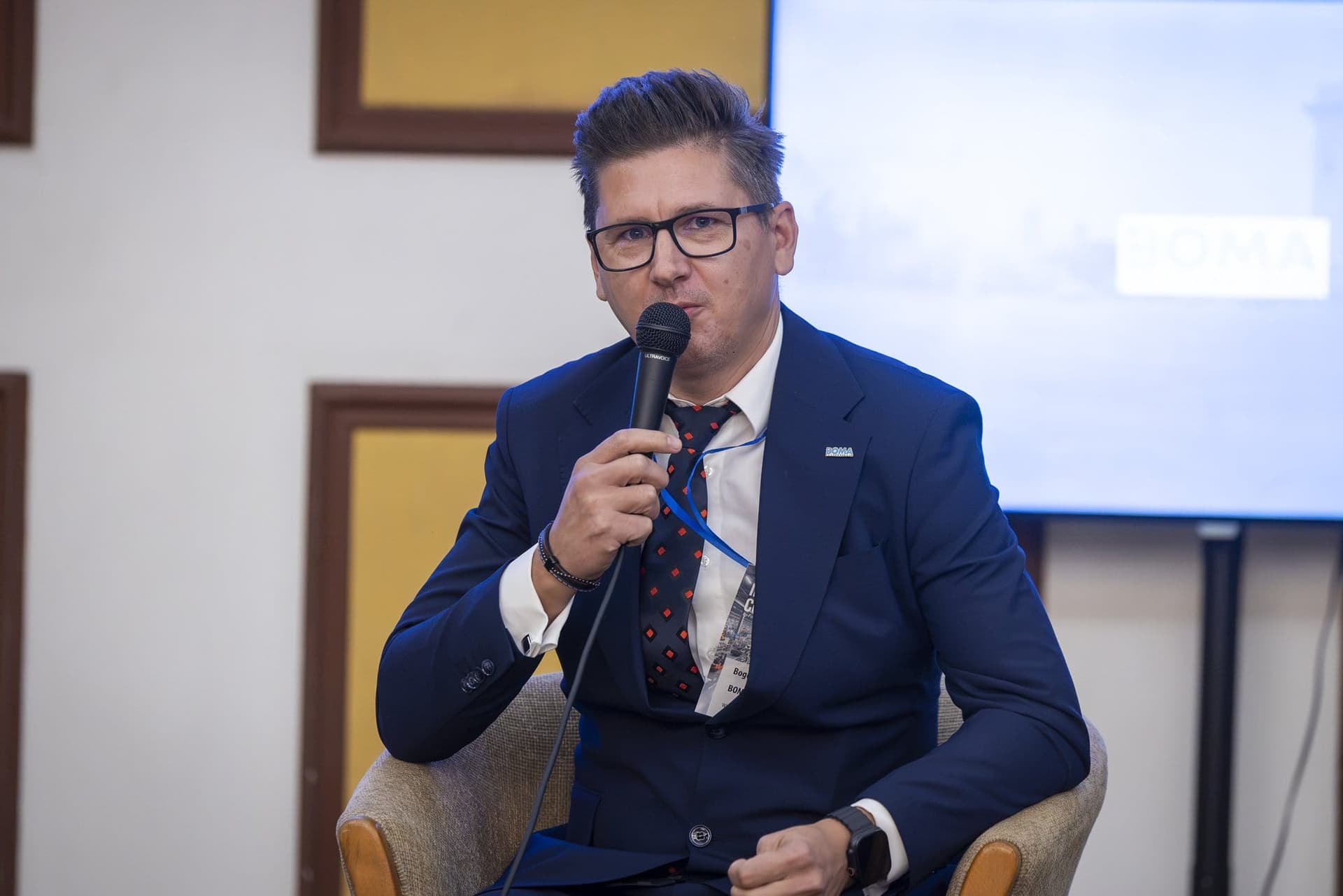
Chira named the biggest challenge without hedging: money — the investment, and the risk that it won't pay off. Bogdan Băbușanu, CEO of BOMA Prefabricate, described how that plays out. Construction clients want their goods "yesterday," but the money comes in slowly. High-value stock sits idle when funding for an infrastructure project stops midyear, and some clients go into insolvency. "The credit limit you're given and the payment terms matter several times more than the price of the product," he said. This year's tax changes, he added, can upend a company's investment plan and force it to start over. For his second challenge, the shortage of specialists, BOMA has set up a kind of in-house school, issuing diplomas together with outside firms.
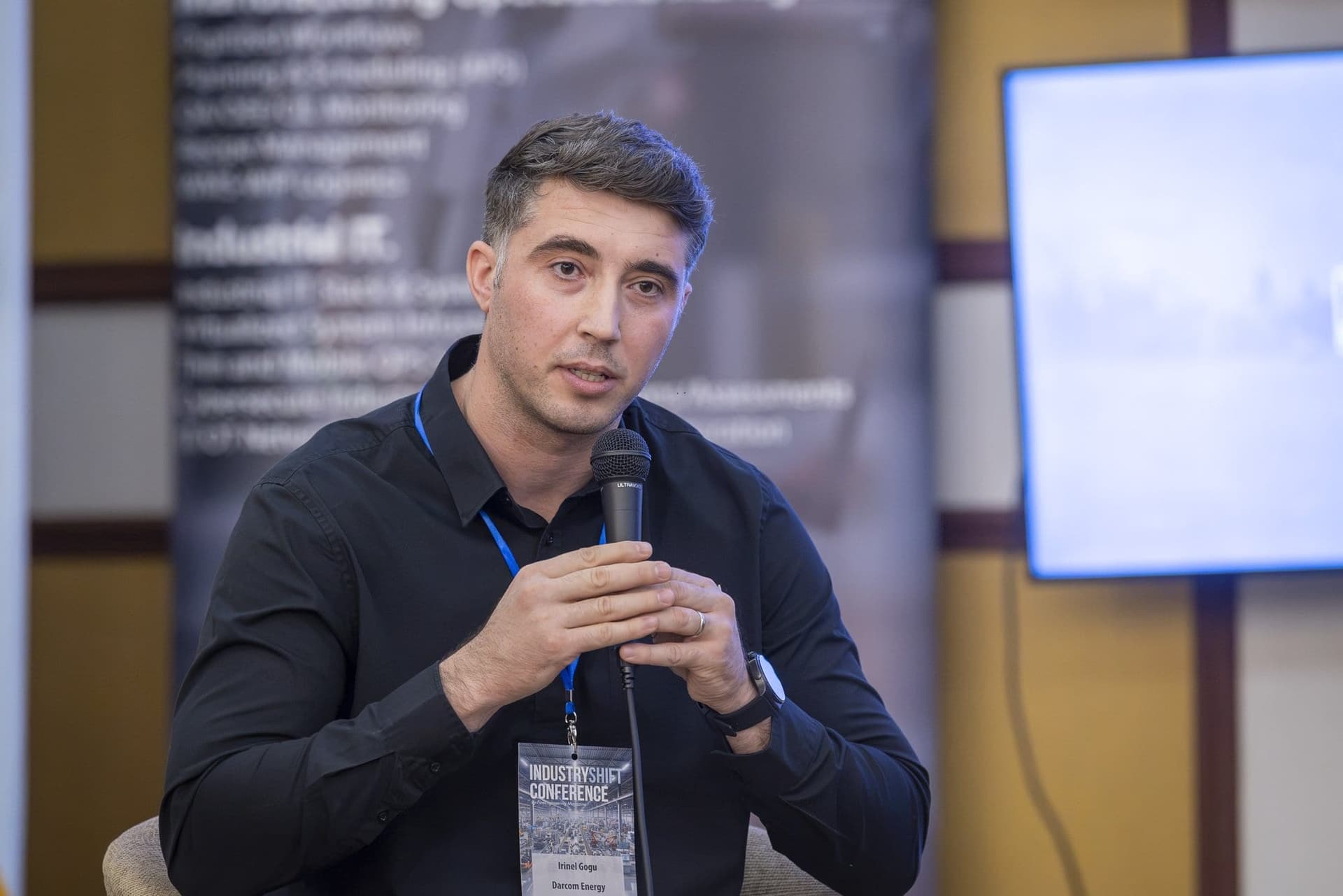
Irinel Gogu of Darcom Energy described the same instability in solar. Equipment prices out of China change from one day to the next, so a project that was quoted at one price can end up below its planned margin by the time it is built. And state funding programs don't run on a calendar anyone can plan around. Meanwhile, industrial clients are asking for something different than they did a few years ago: energy independence, self-consumption and the ability to trade electricity.
During the evening peak on one day in late June, the spot price of electricity in Romania reached 547 euros per megawatt-hour. Asked whether data centers still make business sense in Romania at those prices, two of the speakers on the digitalization panel said openly that they weren't the right people to answer. Mățăoanu still leaned toward "rather yes" and pointed to other costs: since the start of the year, he said, the price of servers, memory and graphics processors has risen so much that some projects are no longer viable. Drăgan drew a distinction: training large models is very expensive but rarely done in Europe, while running agents that have already been trained doesn't take enormous computing power.
The last person who knows the system
The first panel closed with a line from its moderator: "I'm glad we talked so much about people and not about products, technologies, services." The agenda said automation, manufacturing and digitalization. On stage, the question from the cable plant kept coming back: what do you do when the last person who knows how the system works walks out the door?
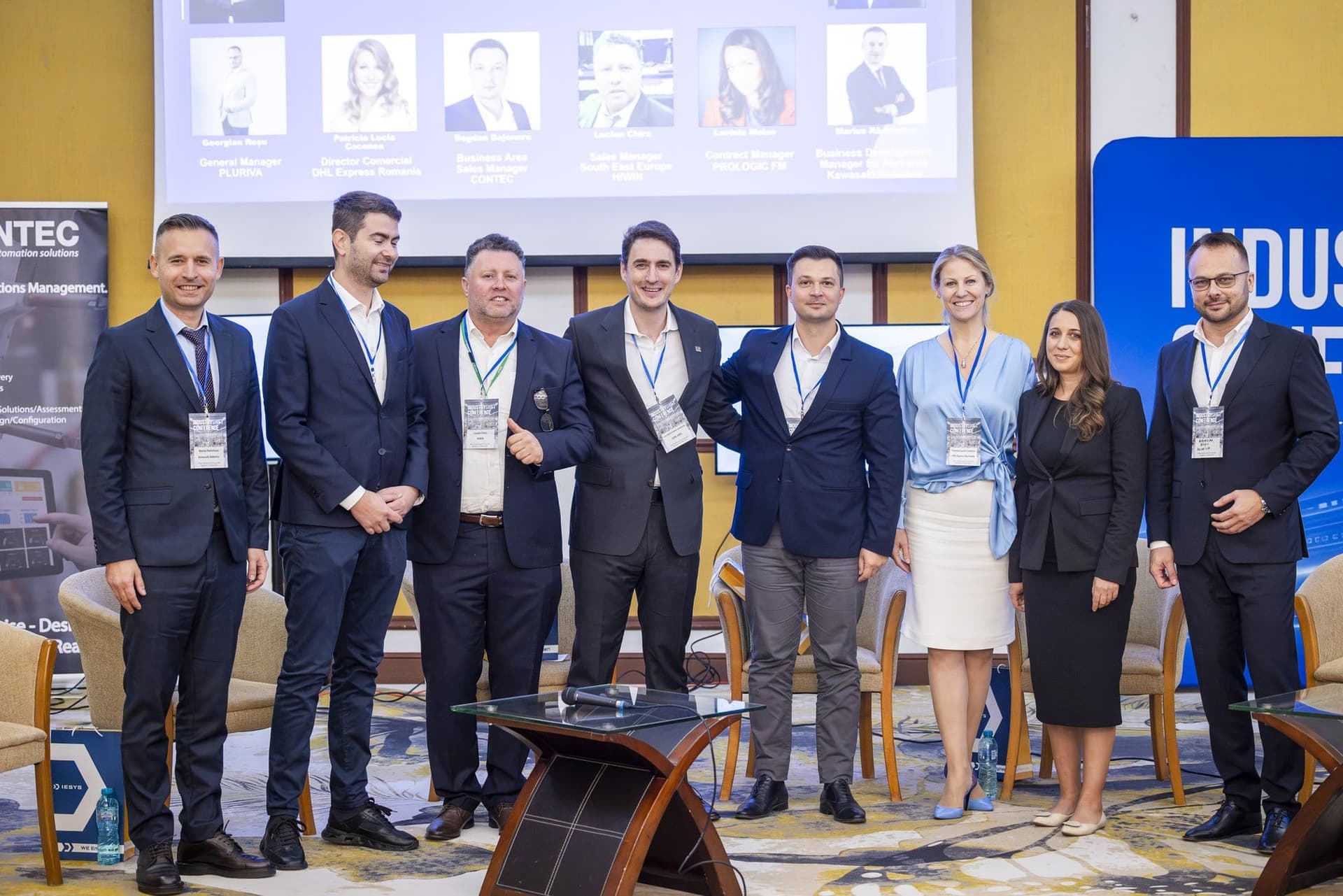
RomâniaFrumoasă was a media partner of the conference. Quotes come from our own recordings of the three panels on Oct. 21, 2026; remarks made in Romanian were translated into English, while Jean-Baptiste Quiqueran-Beaujeu's quotes are in his original English. This article was machine-translated from the Romanian original and edited.