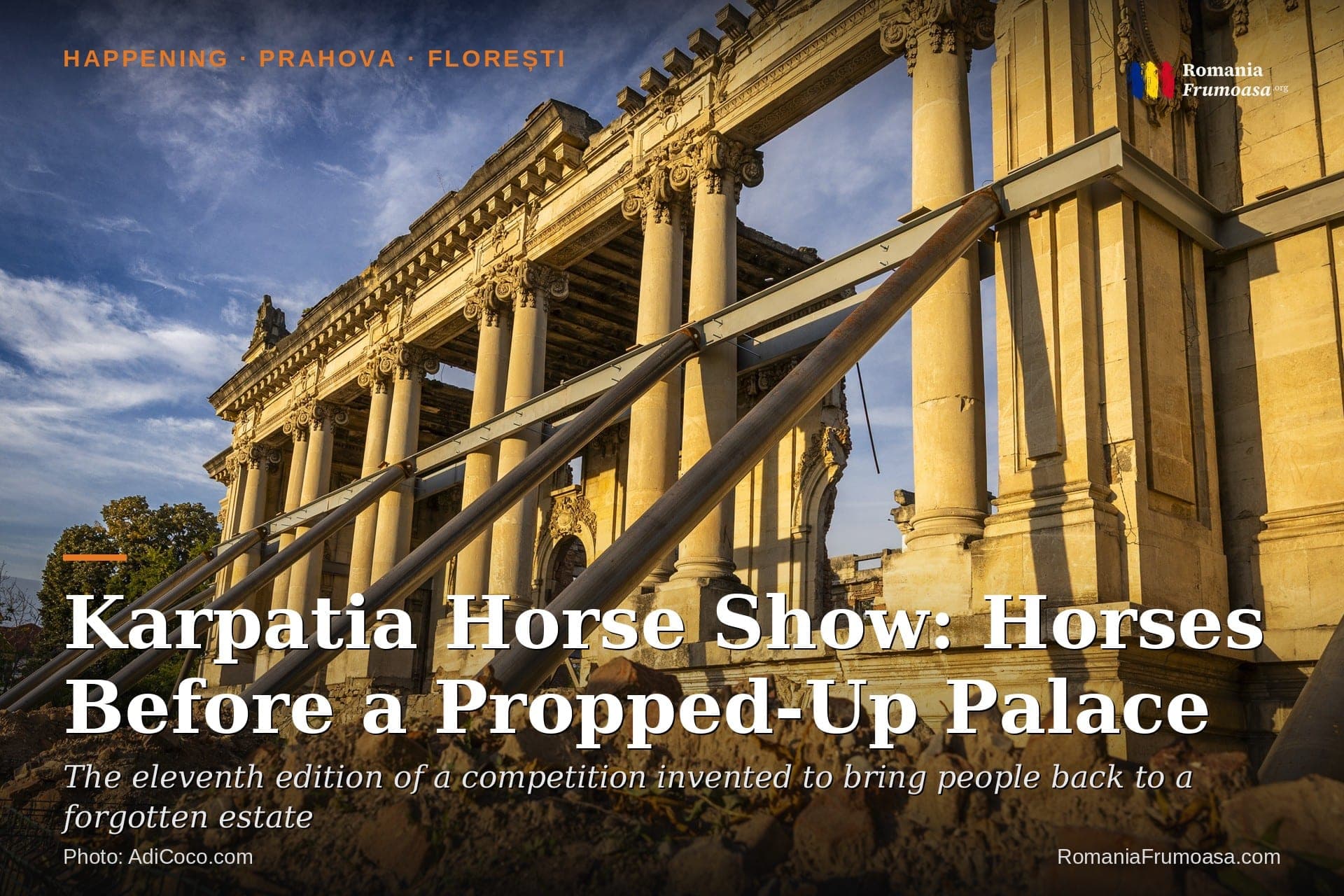
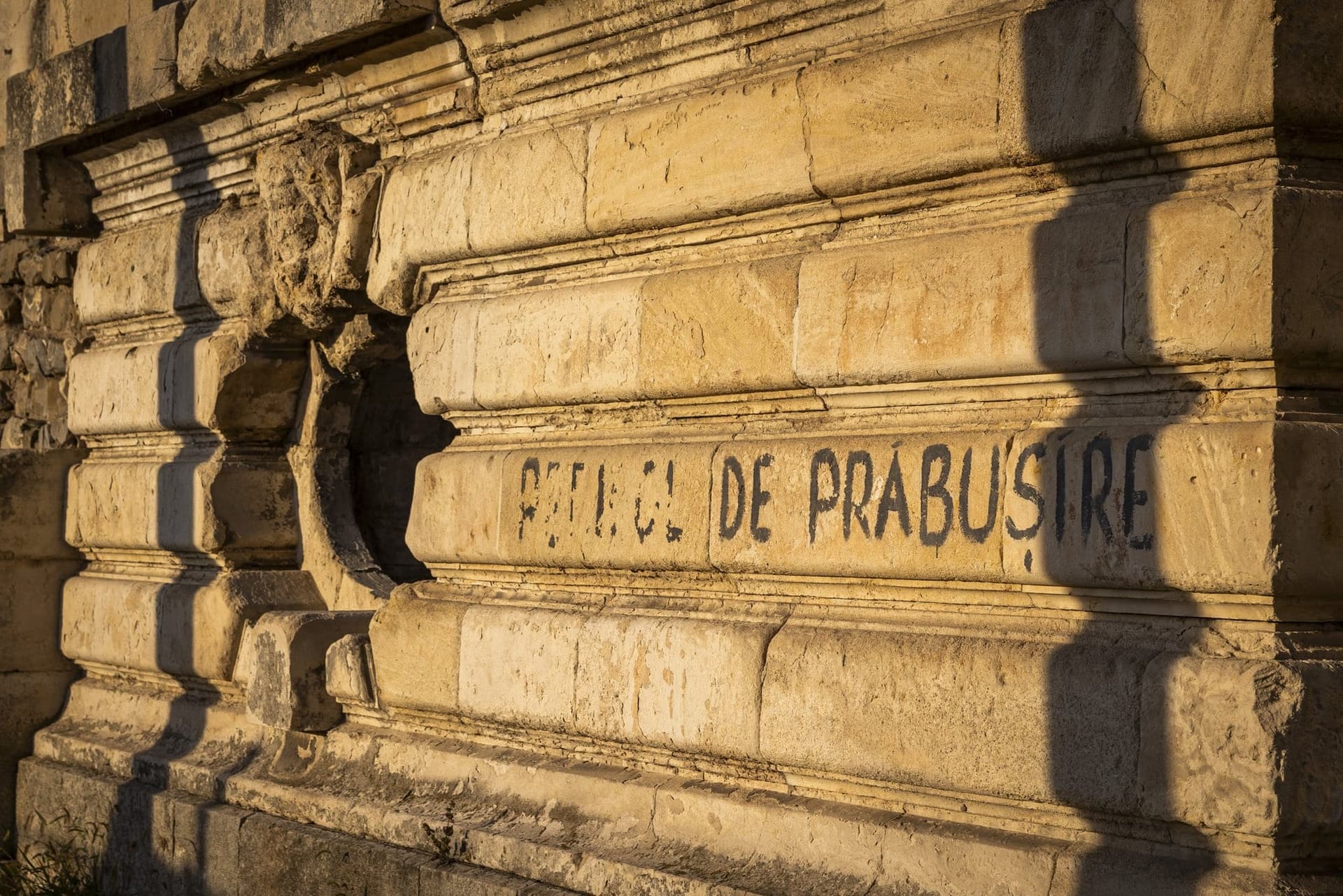
On the stone beside the palace entrance, someone has painted a warning in black block letters: "PERICOL DE PRĂBUȘIRE" — danger of collapse. The words sit on a wall of carved ornament, a few steps from the steel beams that keep the facade from falling. A little farther on, on the grass, a dressage test is underway.
The Karpatia Horse Show didn't move here for the scenery. It was invented for this place.
A pretext for an estate
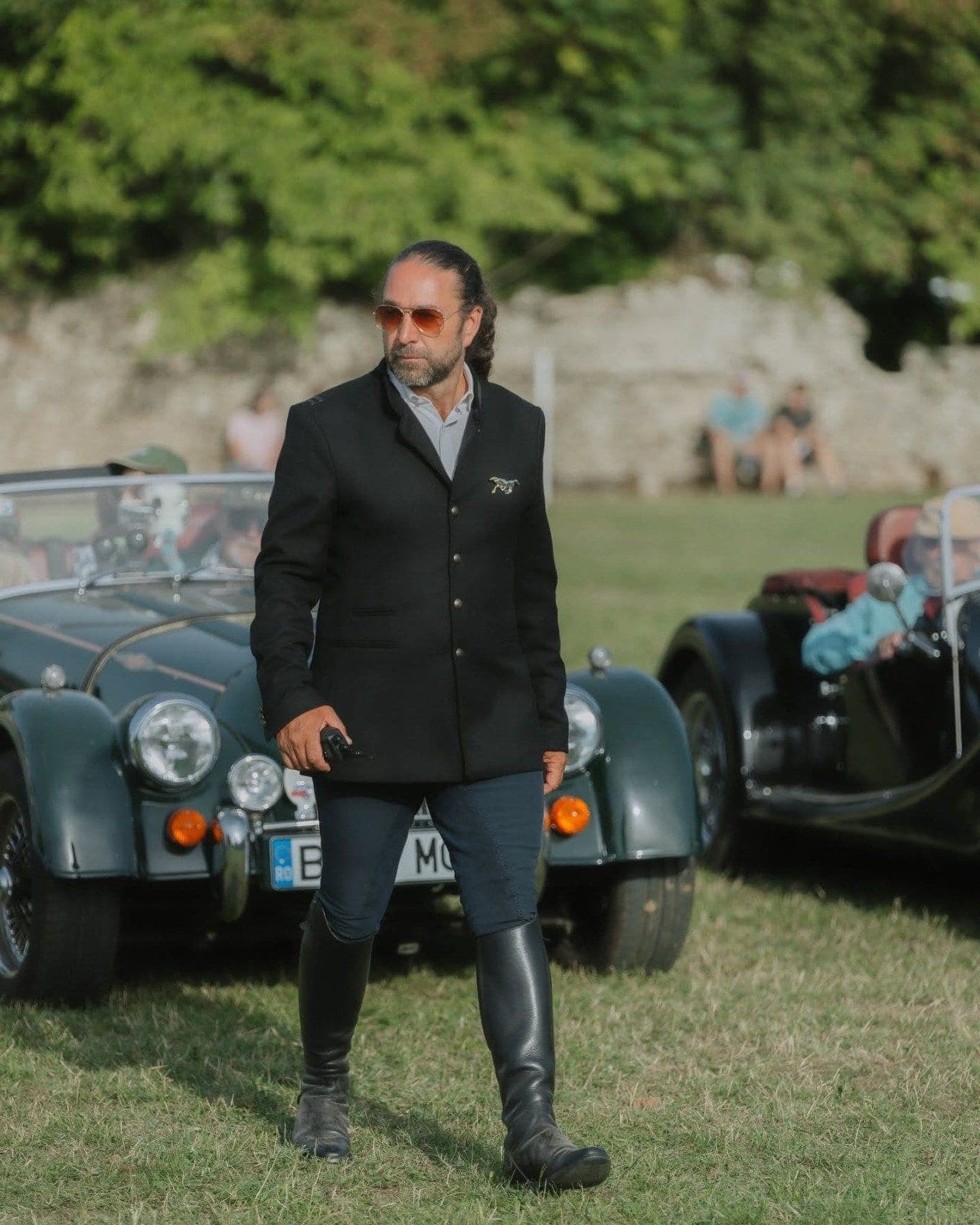
"Around 2014, the estate was in a kind of mothballed state. Nothing was happening here," says Mihnea Virgolici, the event's director. The owners, he says, were looking for "a story that would bring the estate back into the light." At the time, he was running the Transilvania Horse Show near Sighișoara. He came to see the place, found it extraordinary and started thinking about an event that would be tied to it.
"In a way, the event was also a pretext to change the estate and bring people here," Virgolici says. "A lot of people from Bucharest have been driving past two kilometers from here for decades, maybe like I did. I had no idea this estate existed."
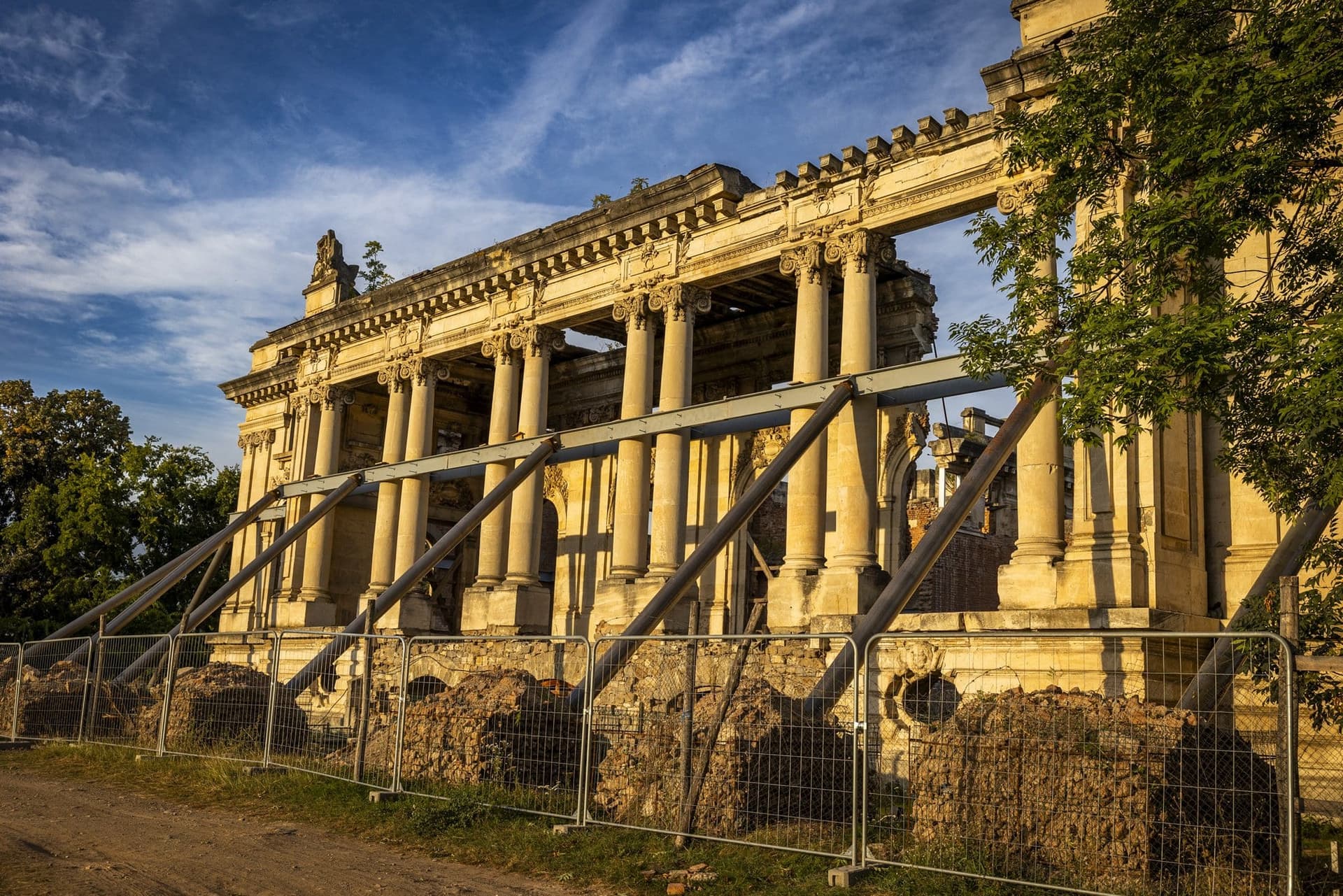
The palace the horses now circle was begun in 1911 for Gheorghe Grigore Cantacuzino, known as "the Nabob," to plans by architect Ion D. Berindei. Cantacuzino died in 1913, and the work was never completed. The 1940 earthquake damaged the structure. People call it "the Little Trianon."
This year, according to the organizers, visitors were able to go inside the ruin for the first time in 11 years, on tours led by architect Mihaela Lazăr. The organizers also say the rescue and consolidation of the palace are funded by Romania's National Heritage Institute through its Historic Monuments Stamp program. A share of the ticket money — a small one, Virgolici says — also goes to the palace.
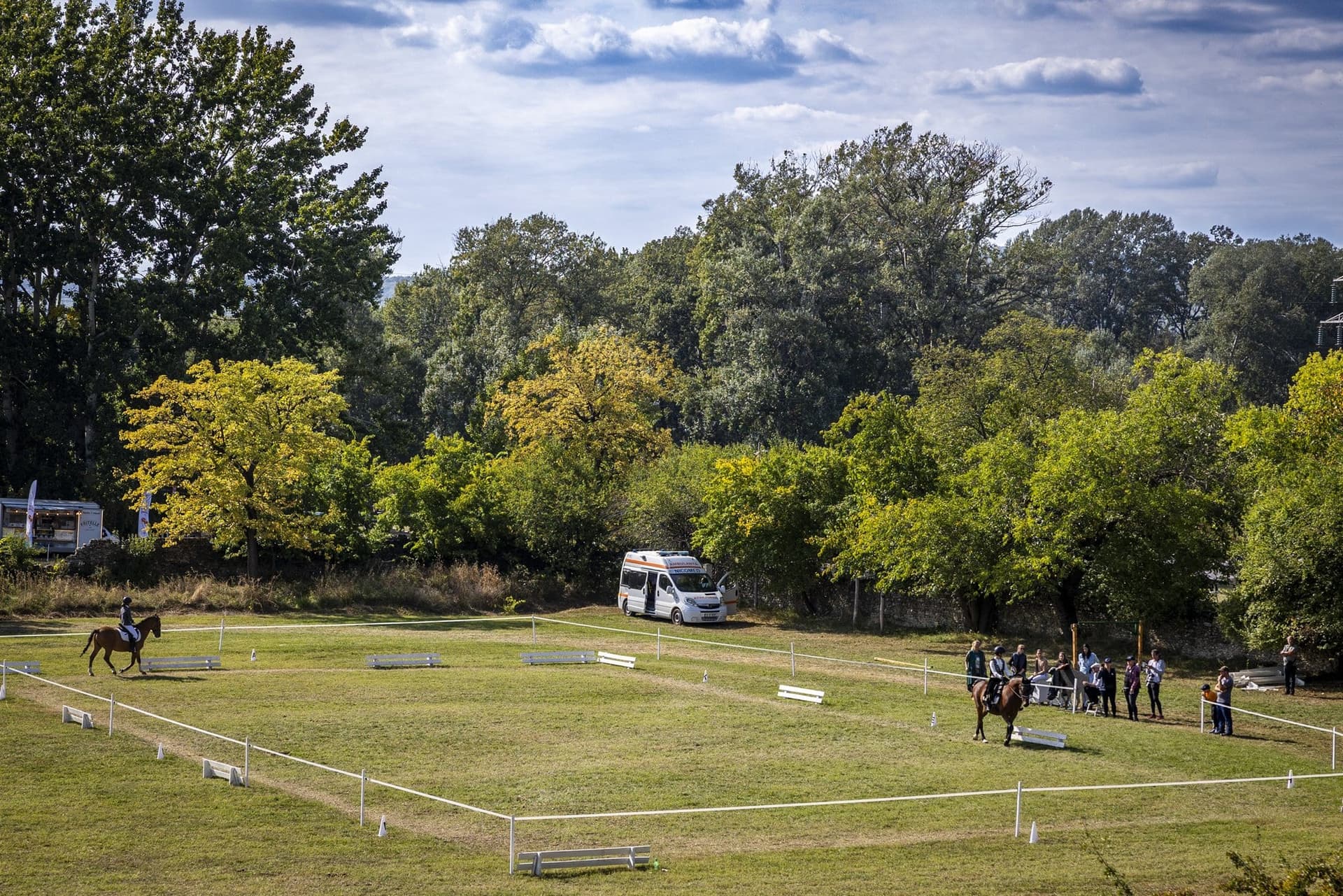
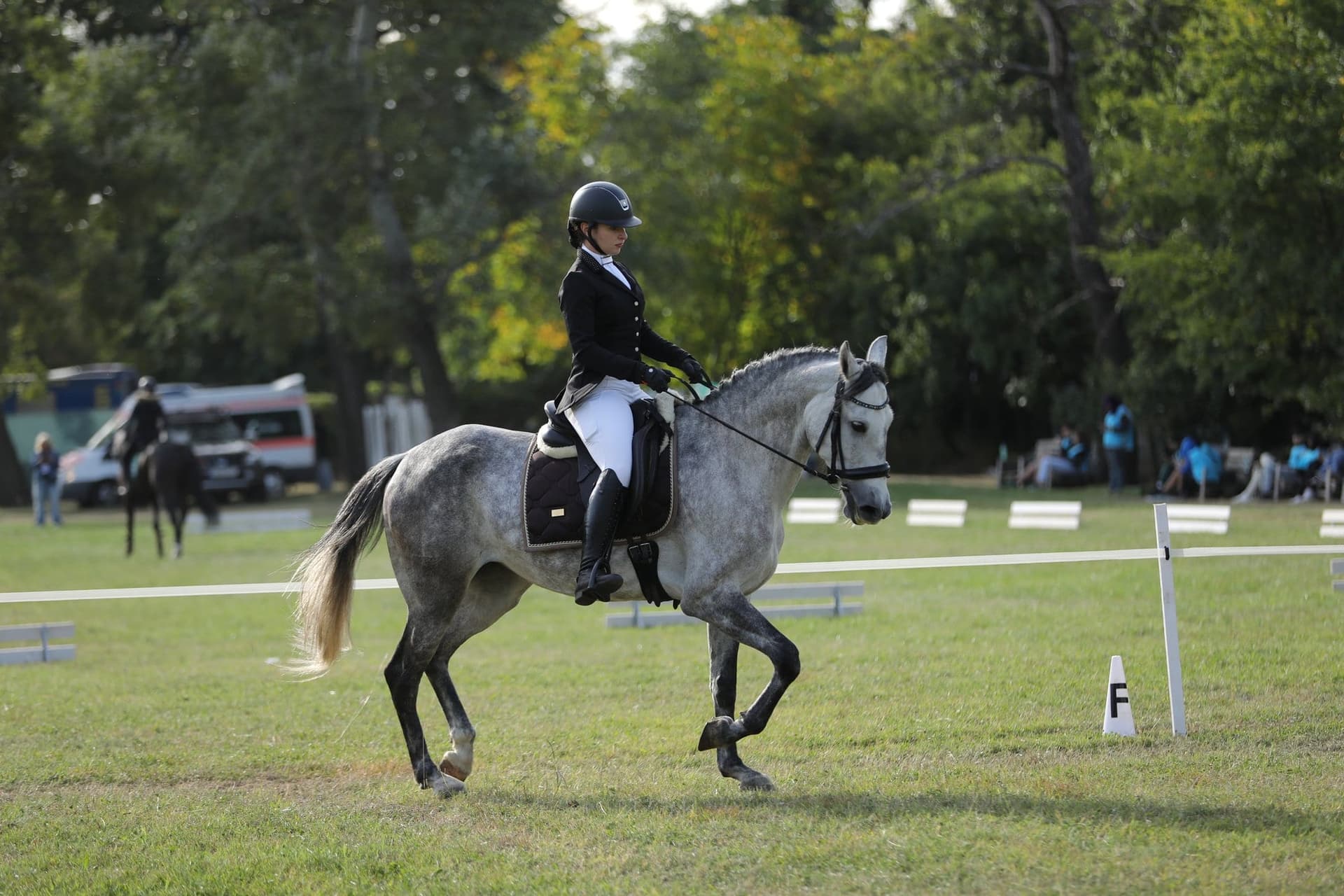
Friday is dressage day. The horse has to perform set movements in a grass rectangle marked with letters along its edge: circles, halts and, at the top level, lateral movements. "If the horse throws its head up, it means it isn't ready," Virgolici explains. From the stands, at the entry level, the test looks like a well-turned-out horse walking calmly. The differences show only at the higher levels.
In the stables
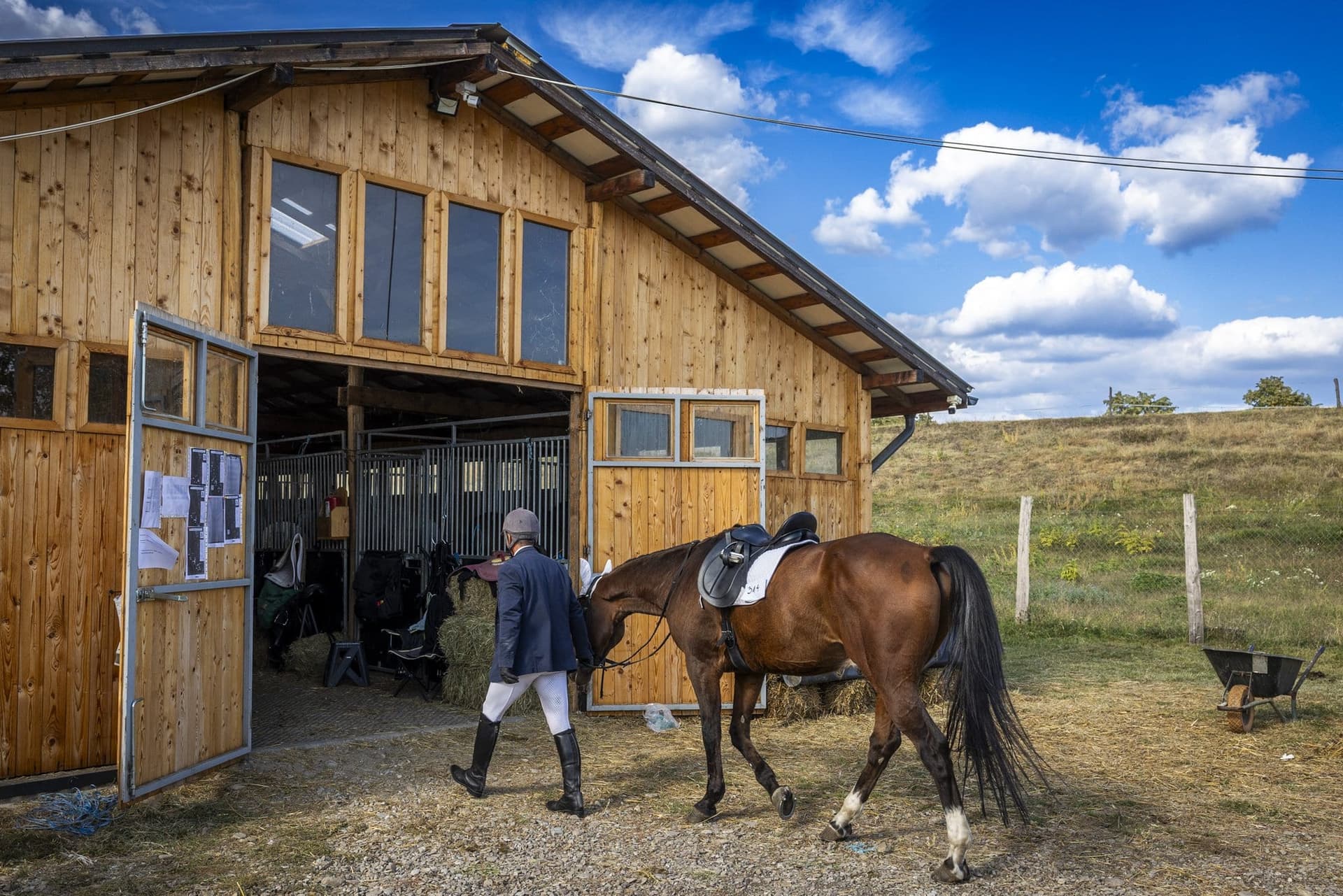
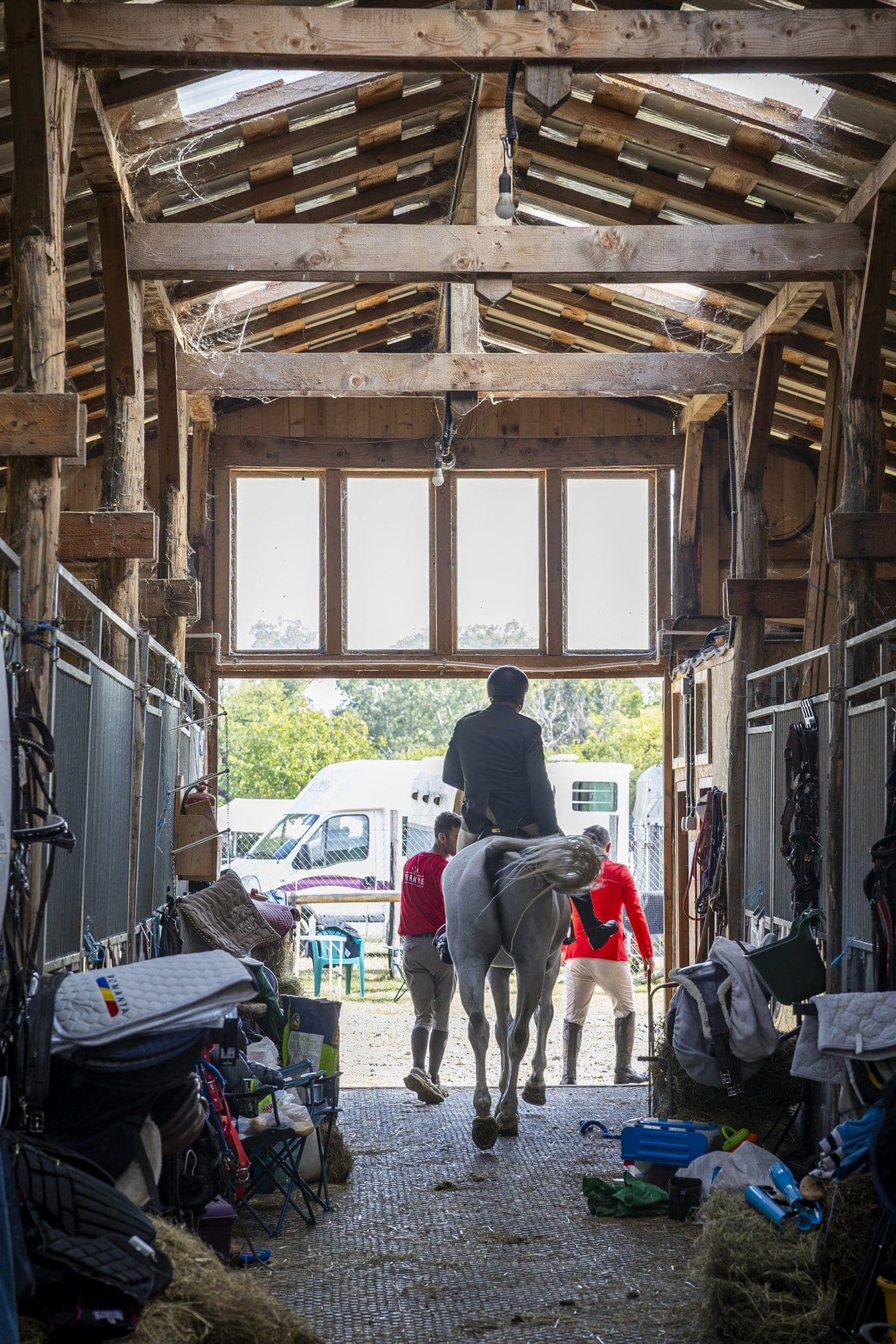
The stable is a wooden barn open at both ends. Light from the arena comes in through the back door, and the horses go out one at a time, led by the halter. Saddles, grooming boxes, buckets and bales of hay line the aisle.
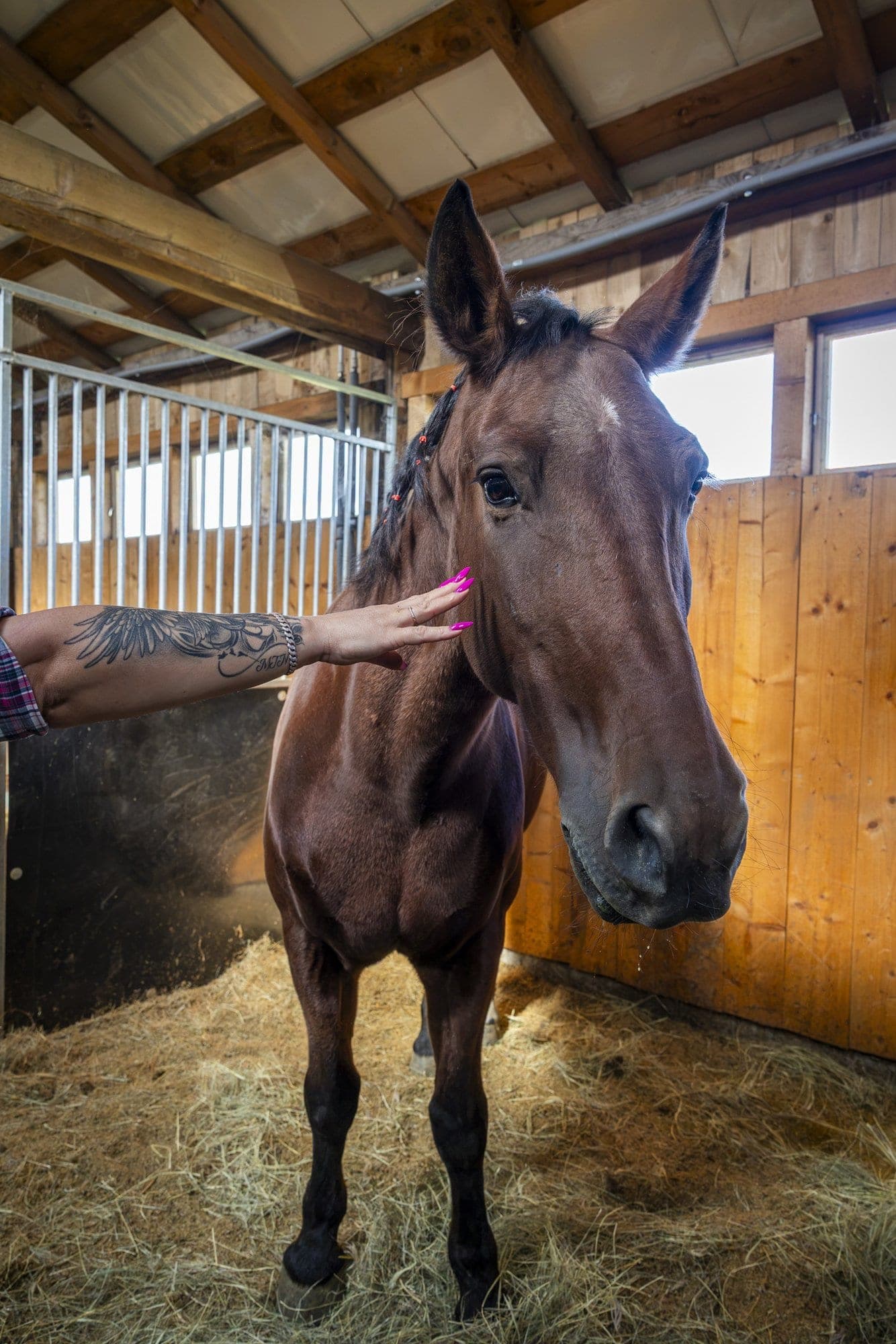
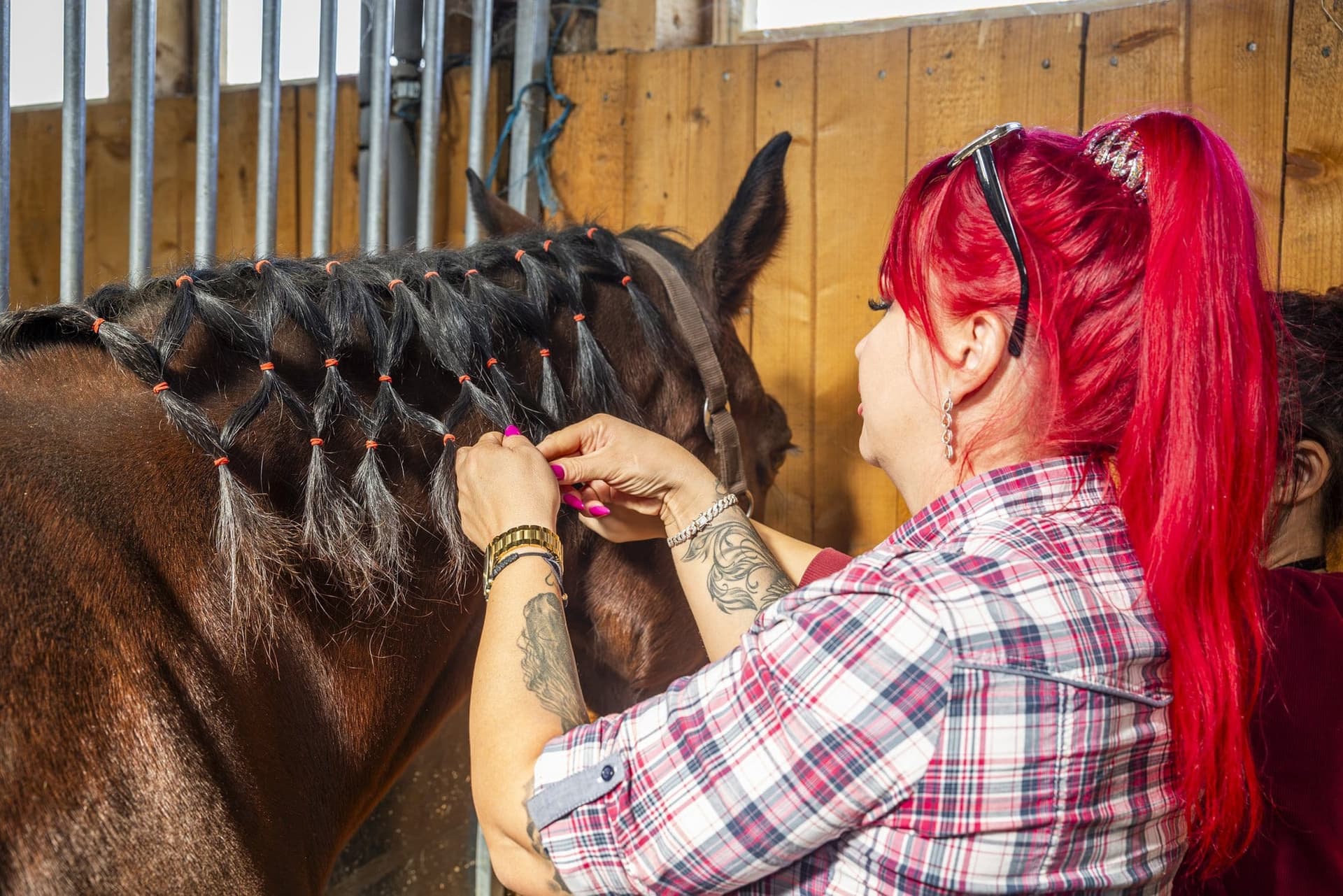
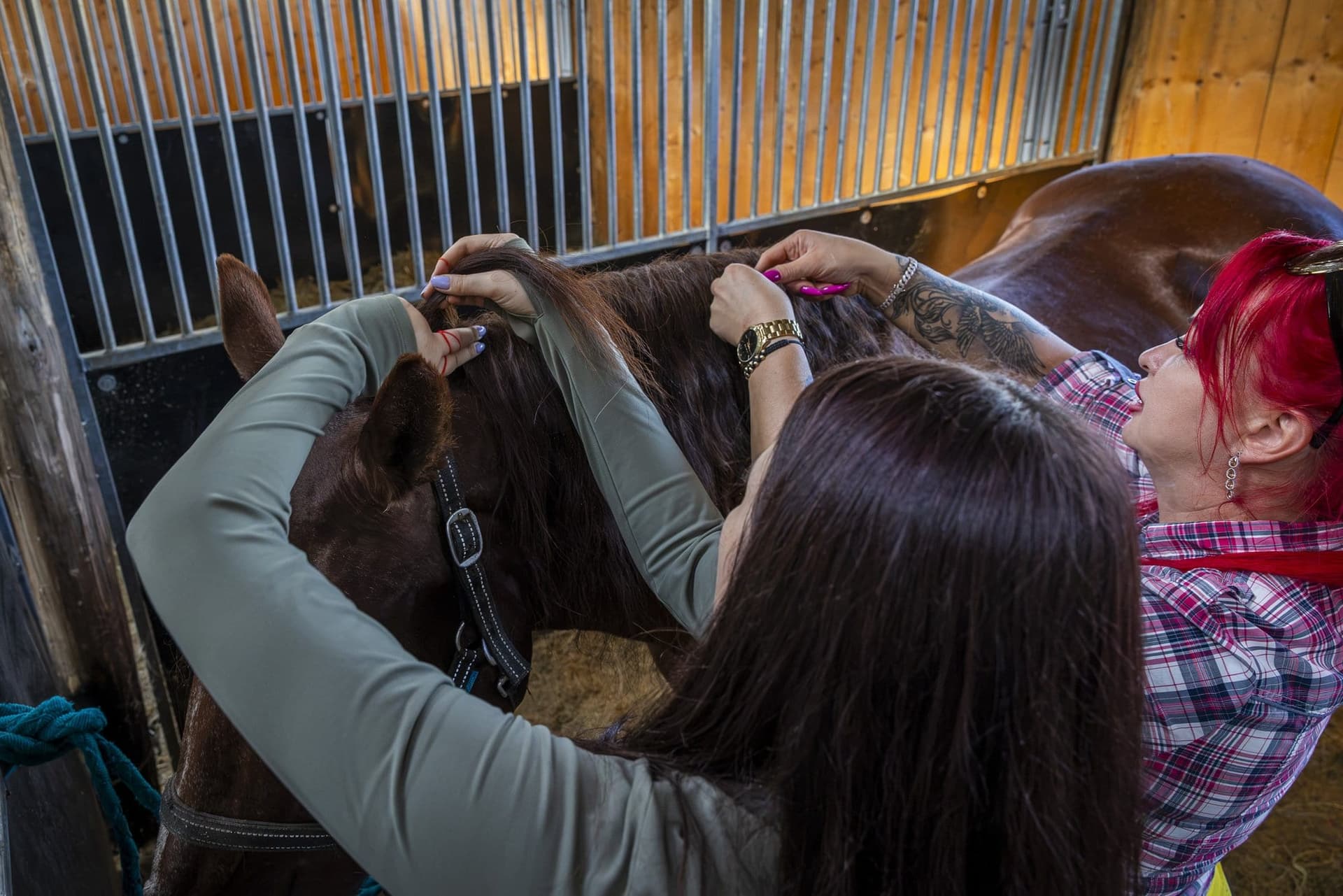
In one of the stalls stands a bay horse from a farm in Nana, in Călărași County, near Fundulea. Three women are getting it ready. One parts its mane into even sections and braids them tightly, one by one, with an elastic at the end. Another holds its head.
Among the girls from the farm, Ingrid is 15. She's from Bucharest but has been going there since she was 10. She now rents a horse for training, for 400 euros a month, and wants to train more seriously.
For reference, in Working Equitation, the more accessible discipline at the show, you can start on a club horse: "With about 1,000 euros you can go to a first competition, a very small one," Virgolici says. For anyone who wants a serious competition schedule, his math is at least 1,000 euros per event. If you go every week, that comes to 4,000 euros a month, plus the horse and the trainer.
Virgolici says there is another way: "Anyone, wherever they come from, if they are truly passionate and persistent, will find their way to the top." Either someone funds you, or you learn to train horses, become an instructor and end up getting paid for it. Two young people from modest families grew up around him. The boy came from a home with no electricity, started hanging around his yard at age 4 and went on to win competitions against fields of 40 riders. The girl is now a well-regarded competition official.
He started at 18 himself, with a horse that cost 600 German marks (about 400 euros in today's money, by his reckoning), kept in a kitchen out in the yard in Otopeni. He was secretly saving for a motorcycle; his mother said no, so he bought a horse instead. "By the time my mother found out I'd taken the fridge out and put the horse in the kitchen, it was too late."
Five people
Eventing, the show's central discipline, means three days and three tests for the same horse: dressage, cross-country and show jumping. It needs a lot of land and coaches who can pass on a love for it. In Britain, Virgolici says, 70,000 people practice it. In Romania, about 13 years ago, five people left their own yards to compete elsewhere.
Around 2019, he attended a seminar in Lausanne on safety in the sport, one with a high risk of accidents. Each country presented its situation. Britain, with its tens of thousands of athletes. Finland, "very small," with 3,000. Hungary, "microscopic," with 165 riders. Then it was his turn. "I told them: 'We don't really have accidents, because we don't really have riders.'"
By the 11th edition, by his estimate, 50 to 60 people in Romania compete in eventing. The show has been international from the start because, Virgolici says, "we couldn't make it a national event: we didn't have riders." At the first edition he rode too, alongside all the riders from his own yard.
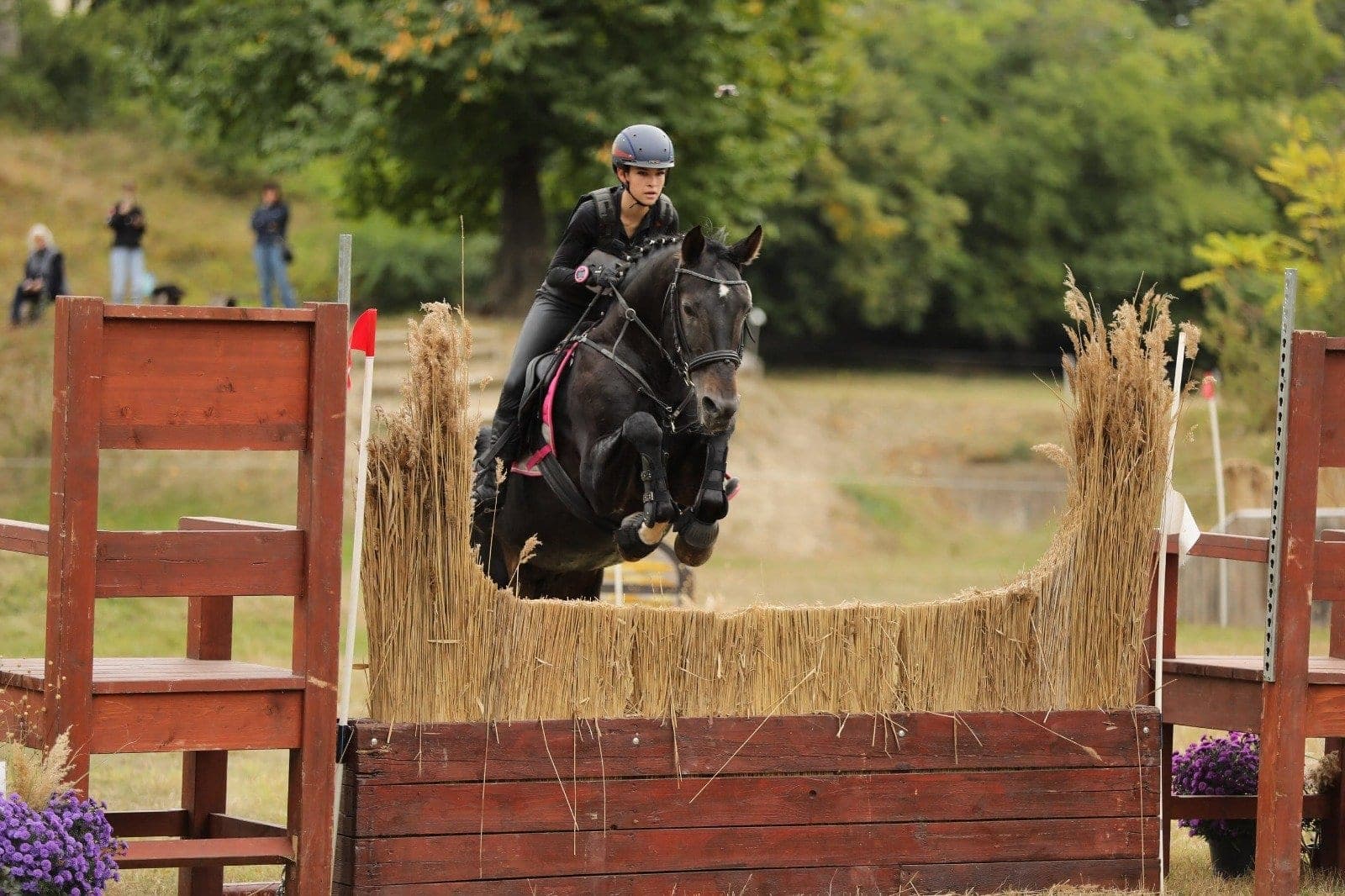
On Saturday, cross-country is held over varied terrain, against the clock. The obstacles are fixed; they don't fall. Last year the rules added a new category for novice riders and horses: a 900-meter course with six small logs. At the four-star level, it is 5,000 to 6,000 meters at a gallop, over obstacles that are "huge and very technical." This year the event was streamed on screens set up at several points around the estate.
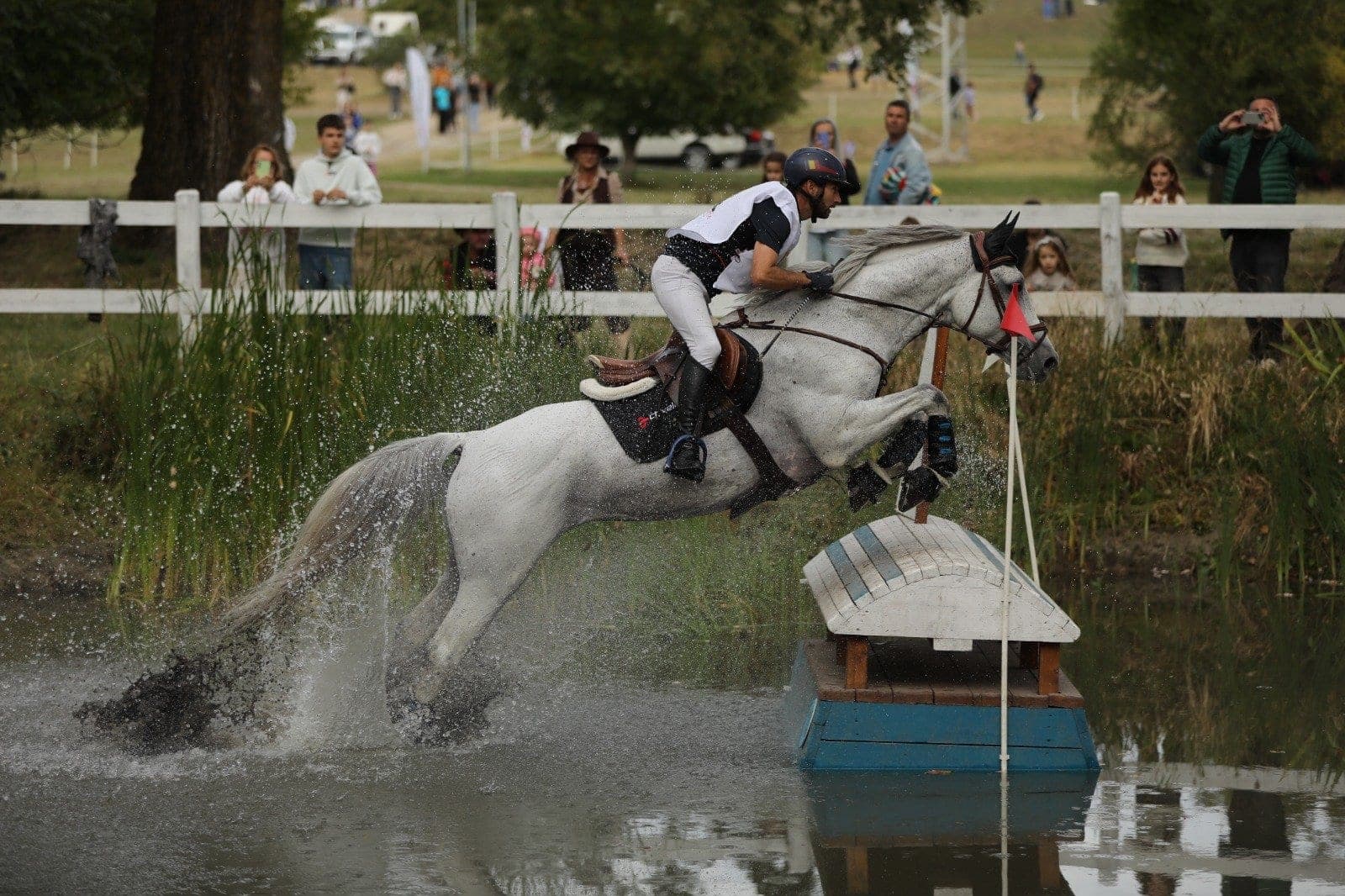
The Turkish team returned after 13 years. Its last eventing appearance had also been at a competition Virgolici organized, near Sighișoara. All the riders were military, from the army club. Now, he says, the team has been given a budget of $1 million and has bought new horses. In Florești, Turkey won the team Balkan Cup, ahead of Bulgaria. Romania took bronze.
Through the water, by carriage
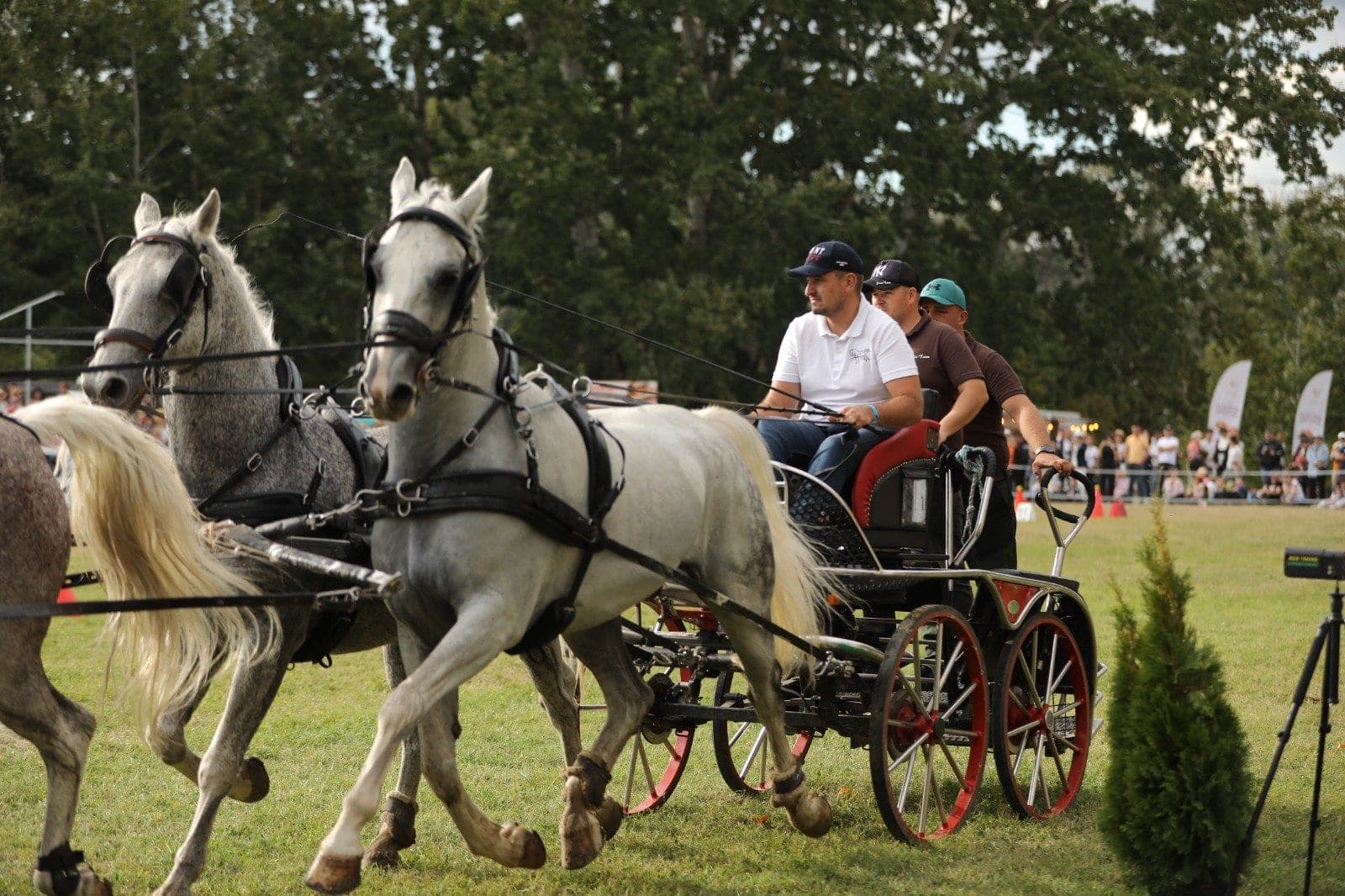
At the carriage-driving events, people stand several rows deep along the fence by the lake. The horses gallop into the water pulling the carriage, and the driver has little room between obstacles — just enough not to catch the wheels. "And you gallop through that thing and hope you don't tip over," Virgolici says.
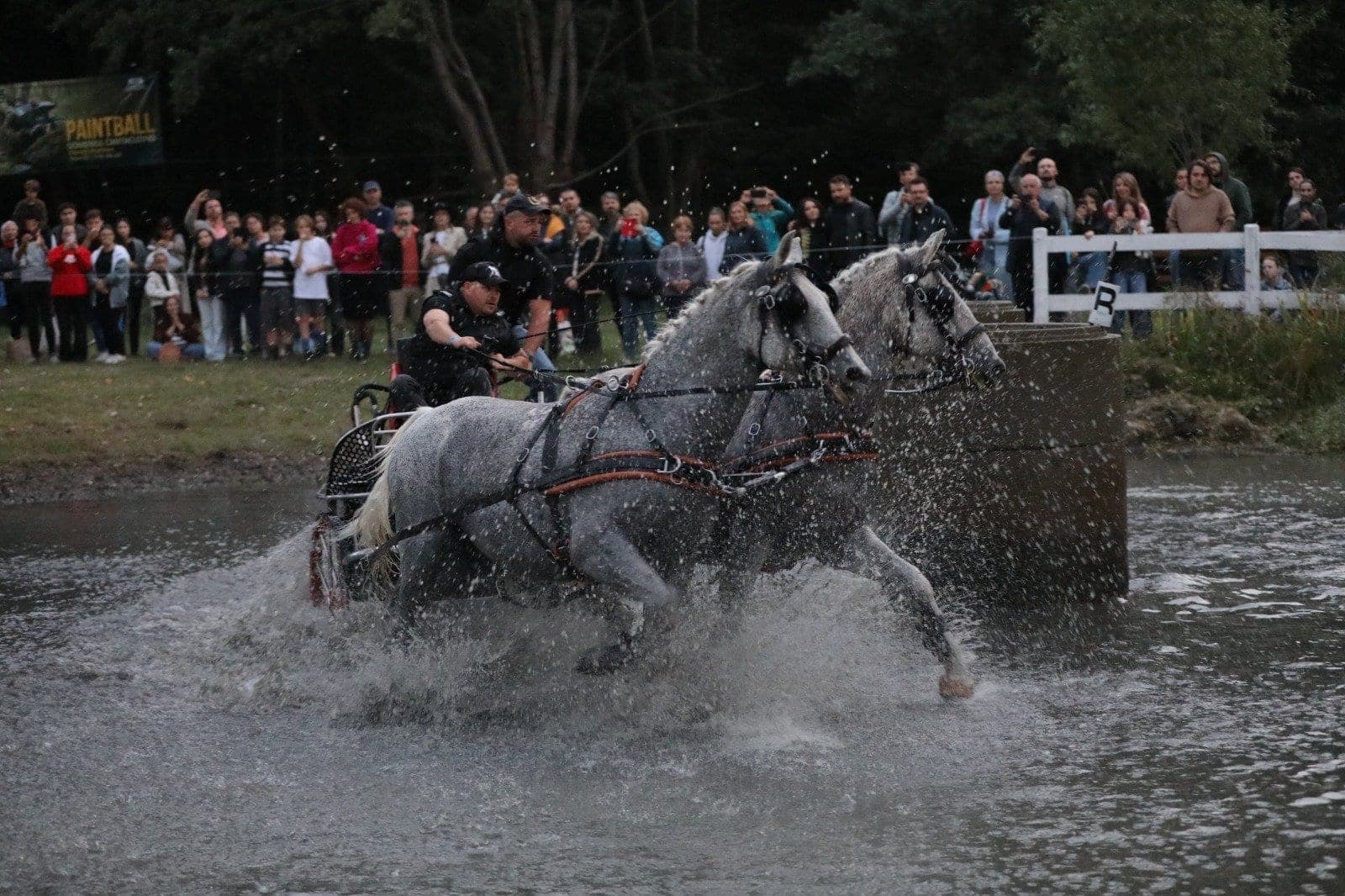
In Romania, carriage driving is practiced mostly in Harghita and Covasna counties and around Oradea, and hardly at all in the south. Virgolici organizes the driving competitions together with the Bartha family, father and son. Eduard Bartha won the cones phase at the 2015 World Pair Driving Championship, and the crowd here knows him. "When Eduard Bartha comes into the arena, you feel the crowd's energy: people applaud, they stomp," Virgolici says.
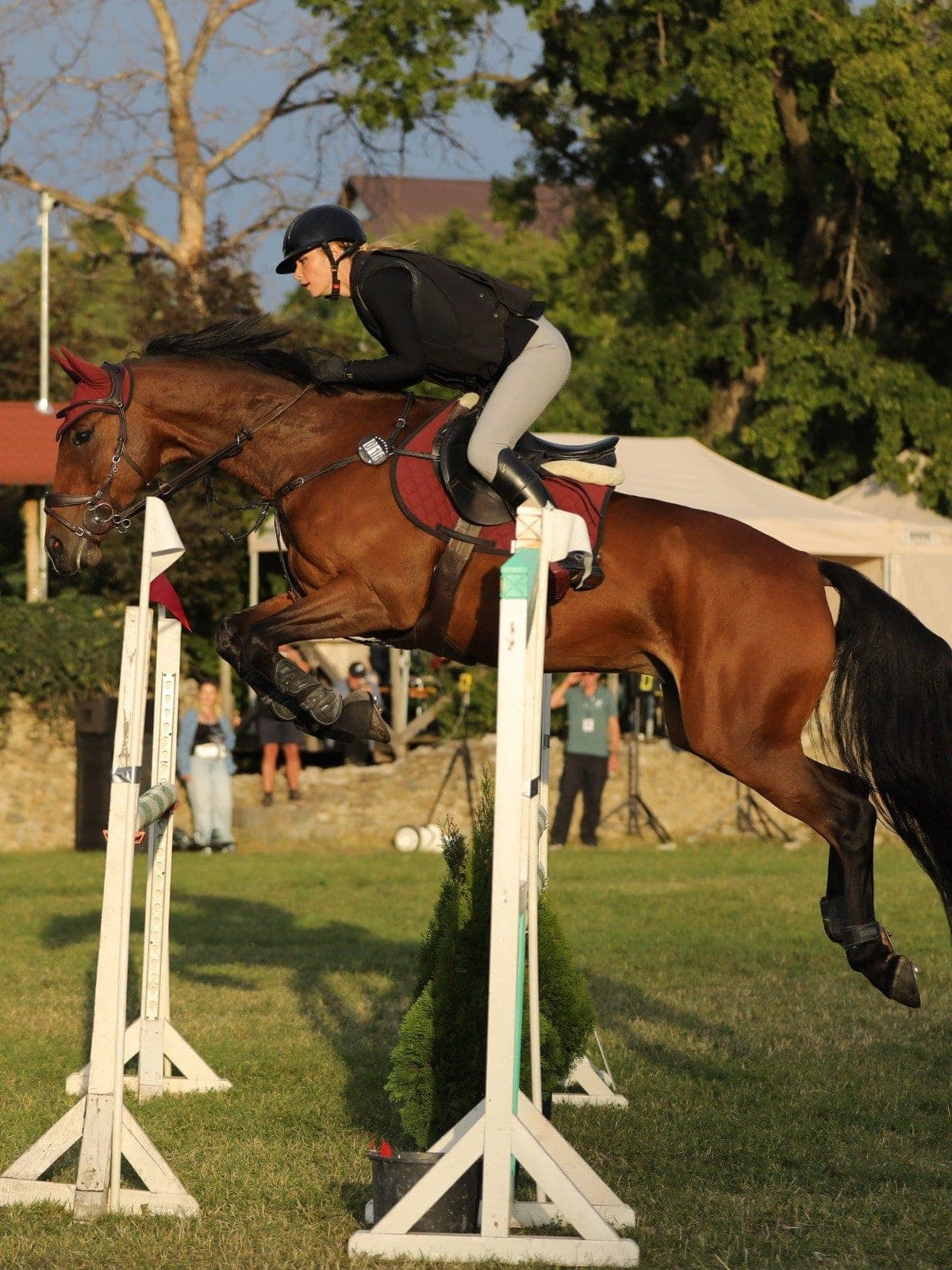
Sunday brings show jumping, with poles that fall. It is held next to the estate's old stone walls.
Who pays
At many carriage-driving competitions in Romania, the money comes from city halls and county councils. At Karpatia, Virgolici says, public money is symbolic — "1, 2, 3, up to 5% of the cost of the event" — and some years there is none. Karpatia is, he says, one of very few equestrian events in the country that sell tickets. "A ticket bought is the spectator's support for this event to exist."
The balance is fragile. "If we covered our costs and had one euro left over, we'd open the champagne," he says. Each year, according to the organizers, more than 100 volunteers work on the event.
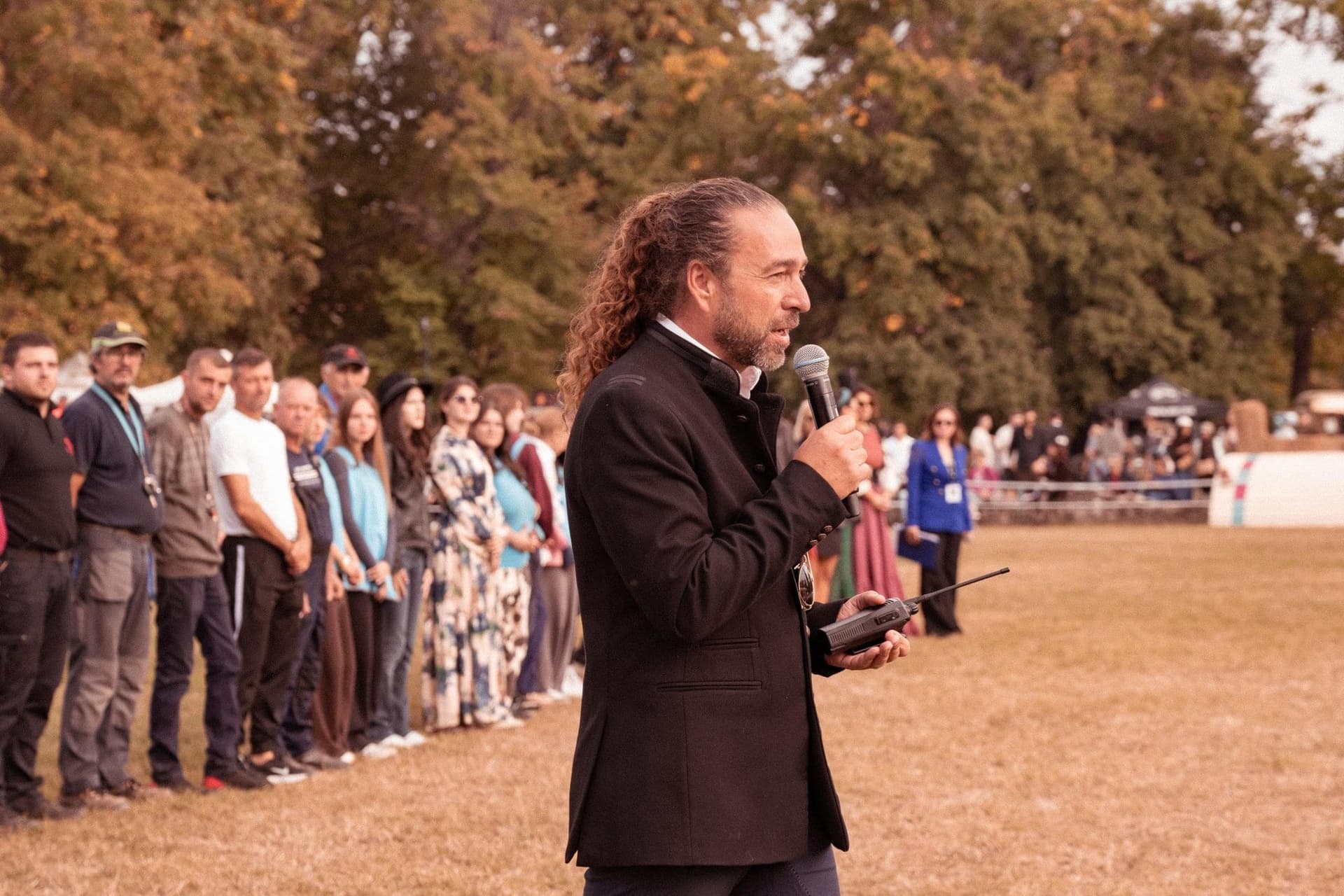
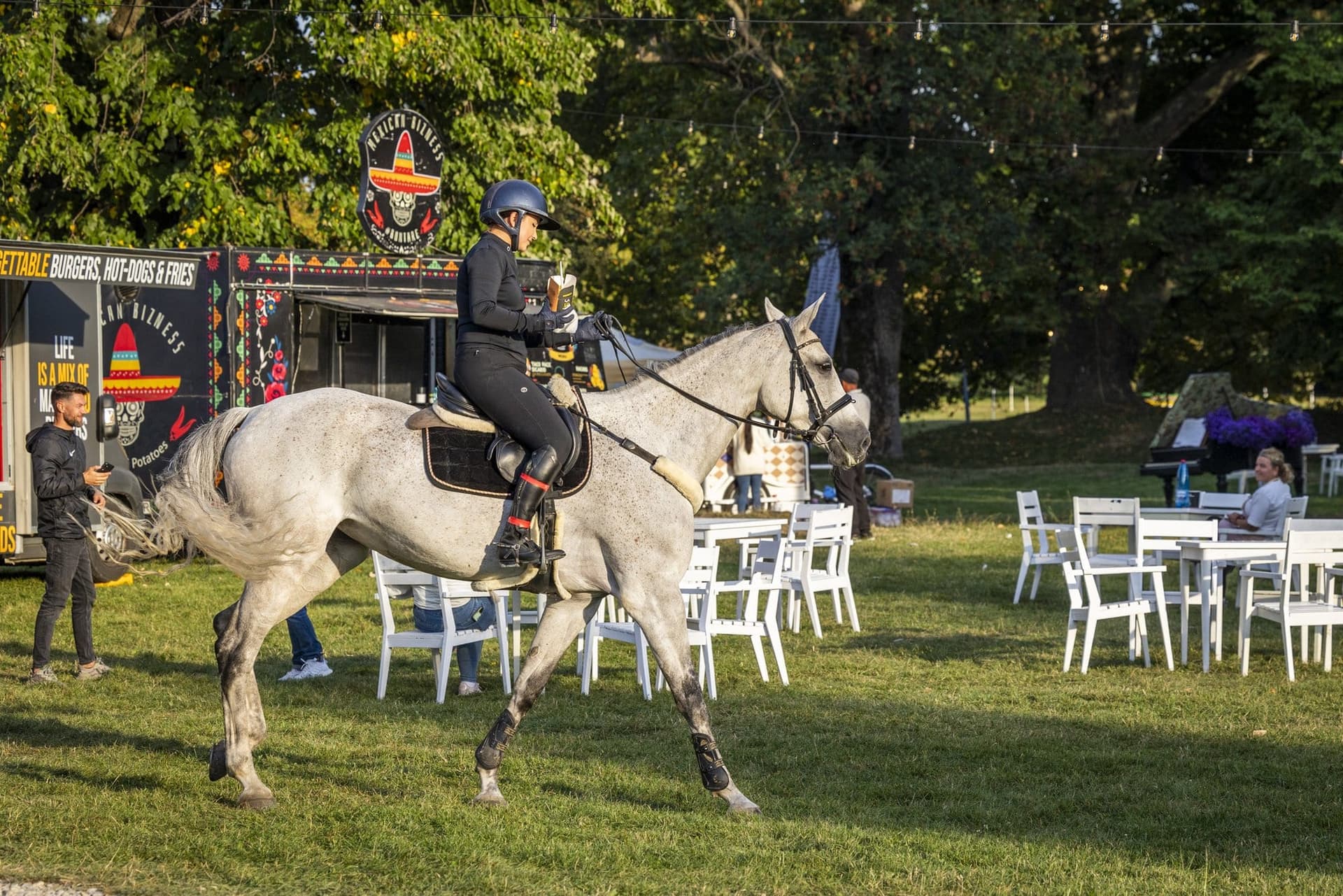
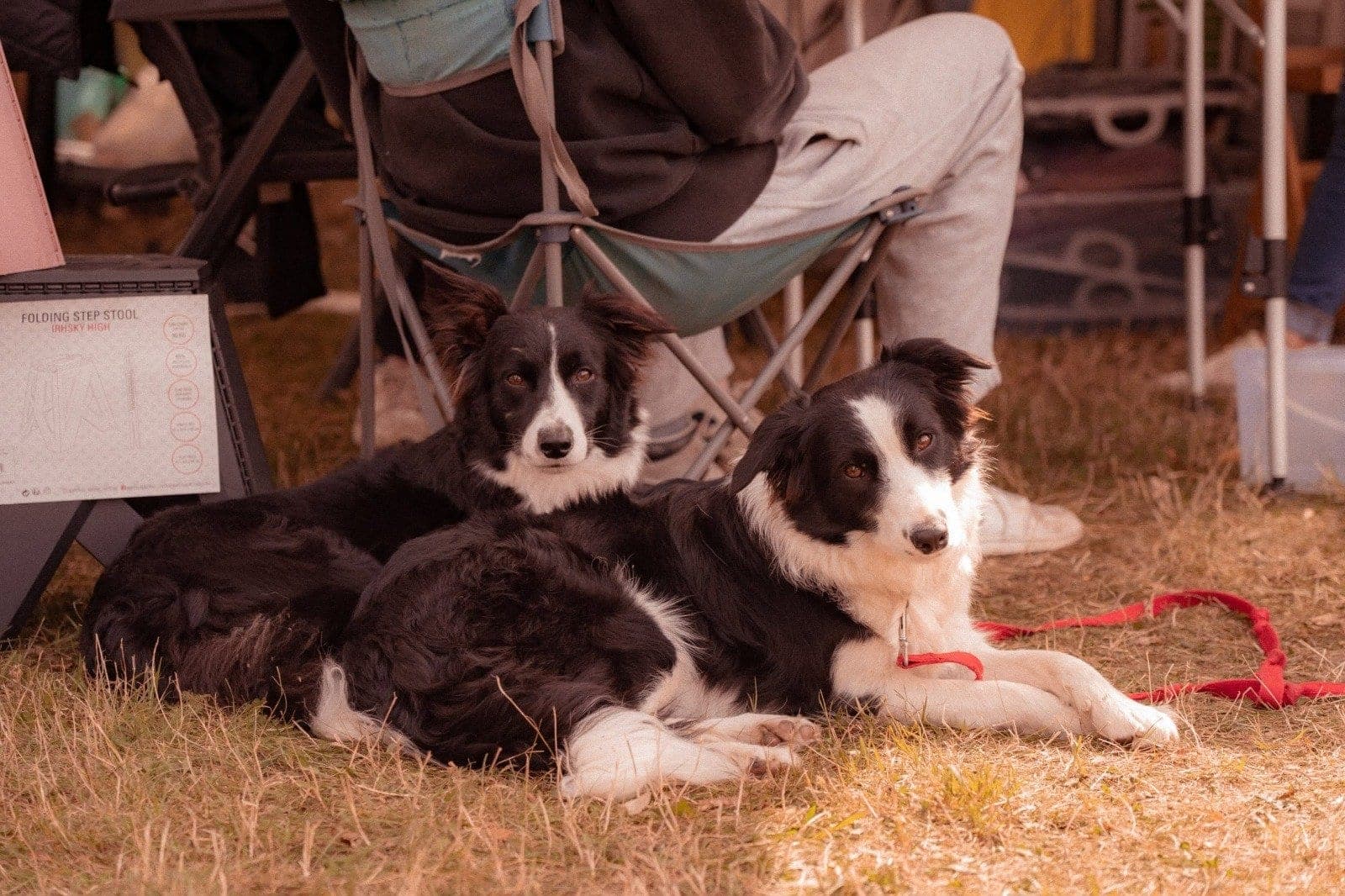
Between events, the estate looks like a park where a caravan has stopped. A gray horse walks past the burger trucks, its rider still in the saddle. Under a folding chair, two border collies sleep on straw.
Toward evening
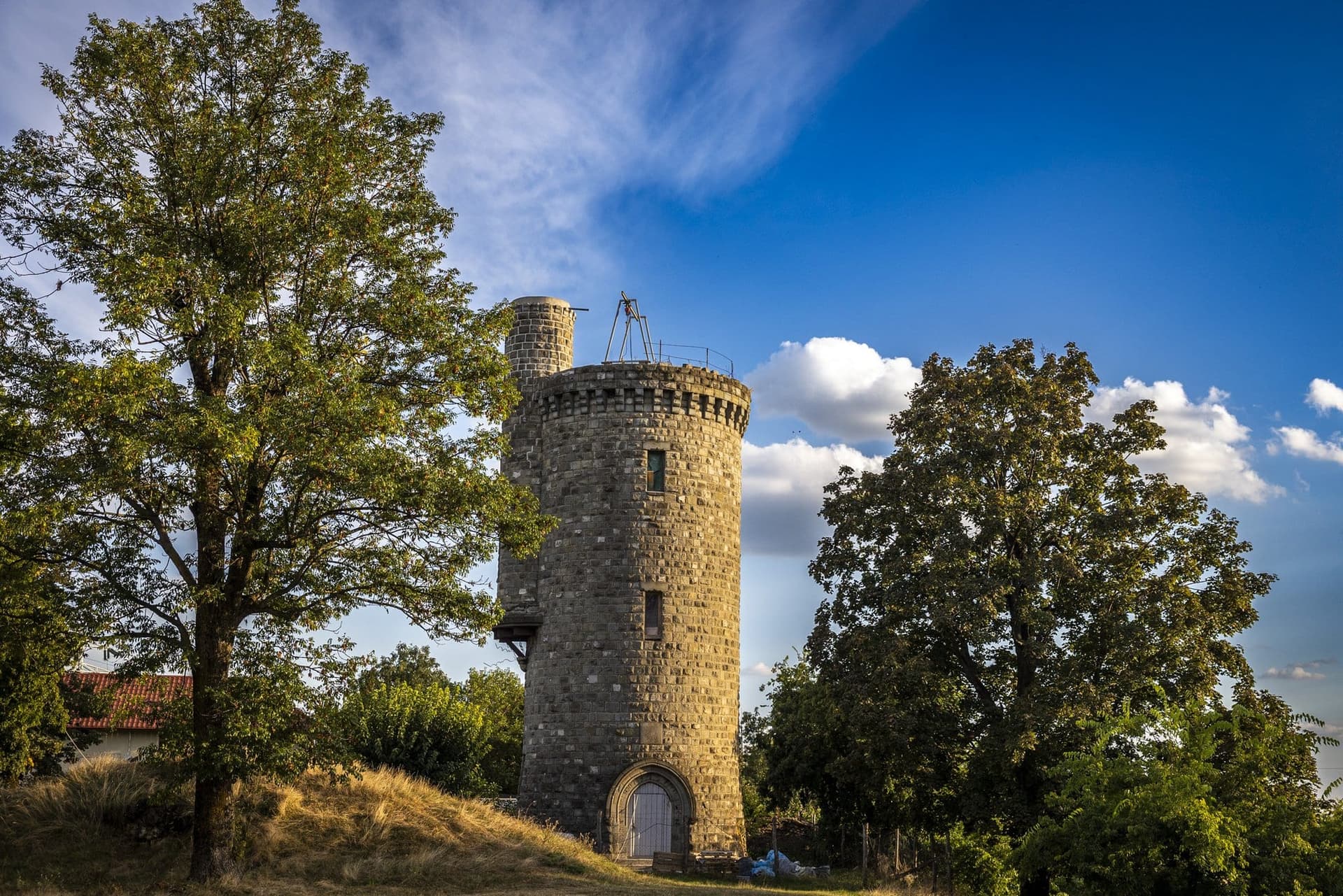
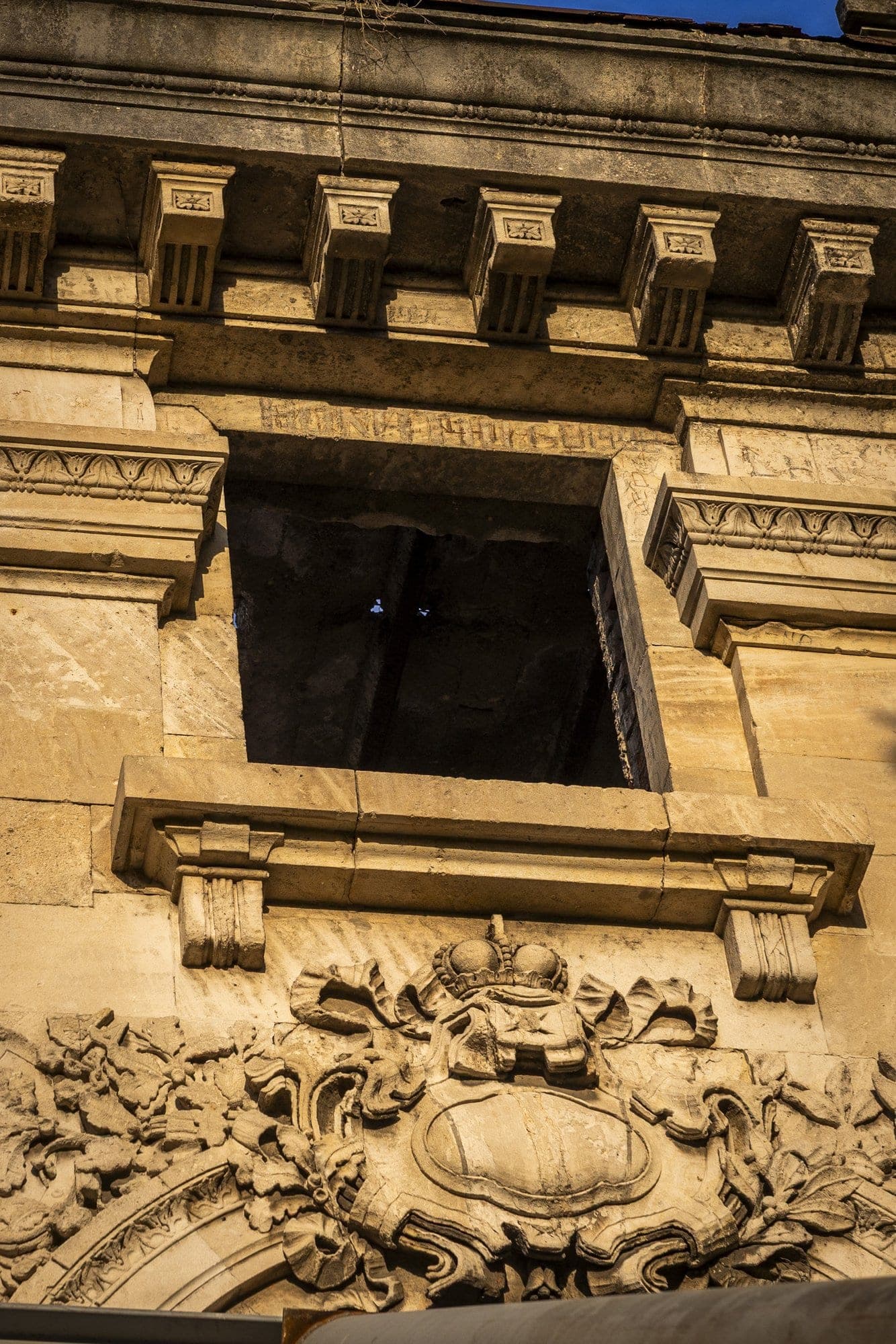
As the light drops, the palace stone turns yellow. In the park, beyond the trees, stands a round stone tower with an arched door. On the palace facade, above a window with no frame, the carved ornaments are still intact.
Next year, Oct. 1-3, 2027, the competition in Florești will be part of qualifying for the 2028 Olympic Games in Los Angeles. Virgolici says he is already in talks with riders from Finland and Germany who have competed here before. From Britain, he says, a horse's trip here takes at least three days.
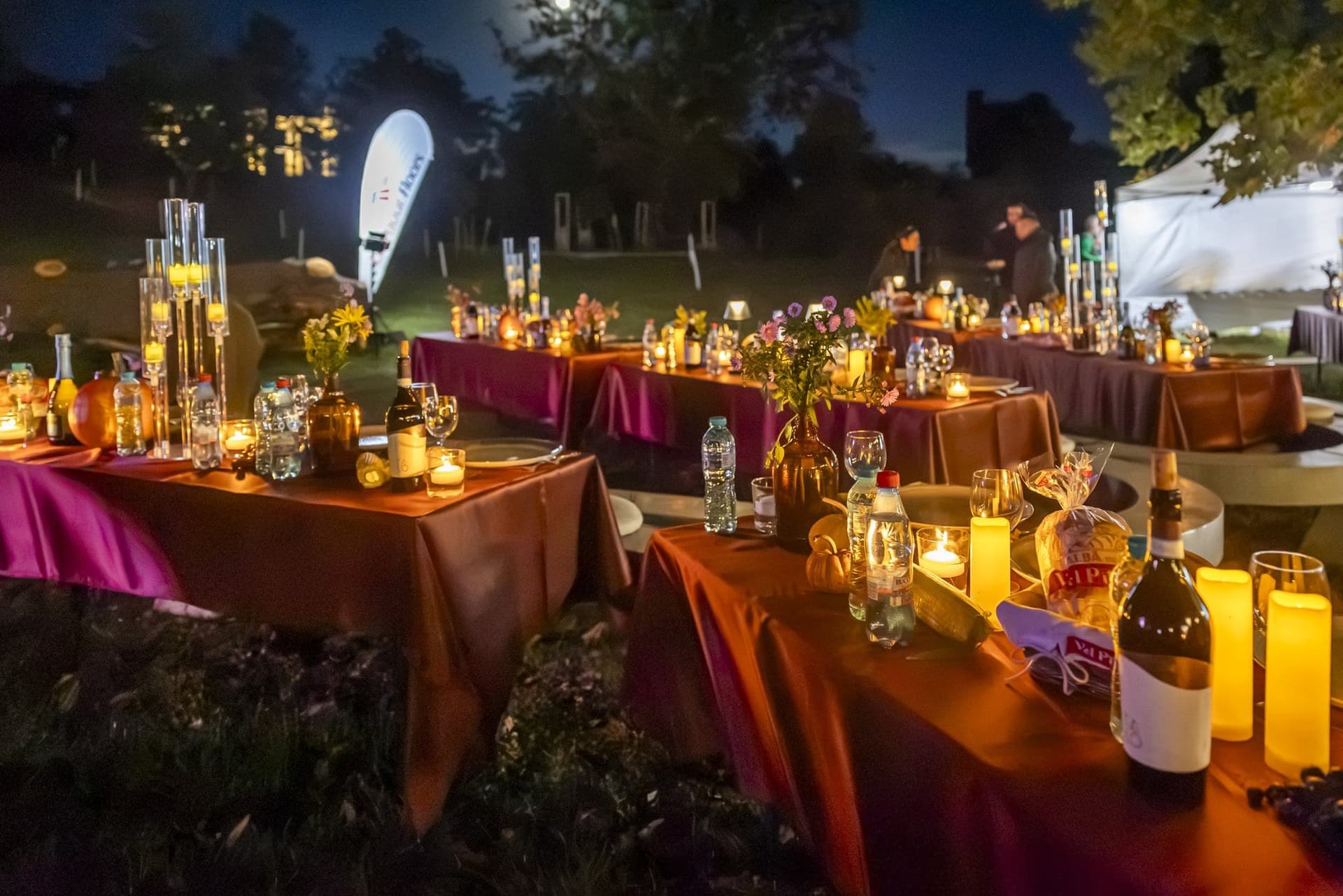
In the evening, tables were laid in front of the palace with wine-colored cloths and candles in tall glasses. The steel beams stayed where they were, in the dark.
RomaniaFrumoasa was a media partner of the 11th edition. The interview with Mihnea Virgolici was recorded in Florești on Sept. 25, 2026, in Romanian; his quotes are translated. Photographs credited to Ștefan Stoica and Diana Grigoriu are by the event's photo team; the rest are our own. Details of the palace's history come from the written sources below. This English version is an automated translation of the Romanian original.