
The Cauldrons at the Turk's Cut
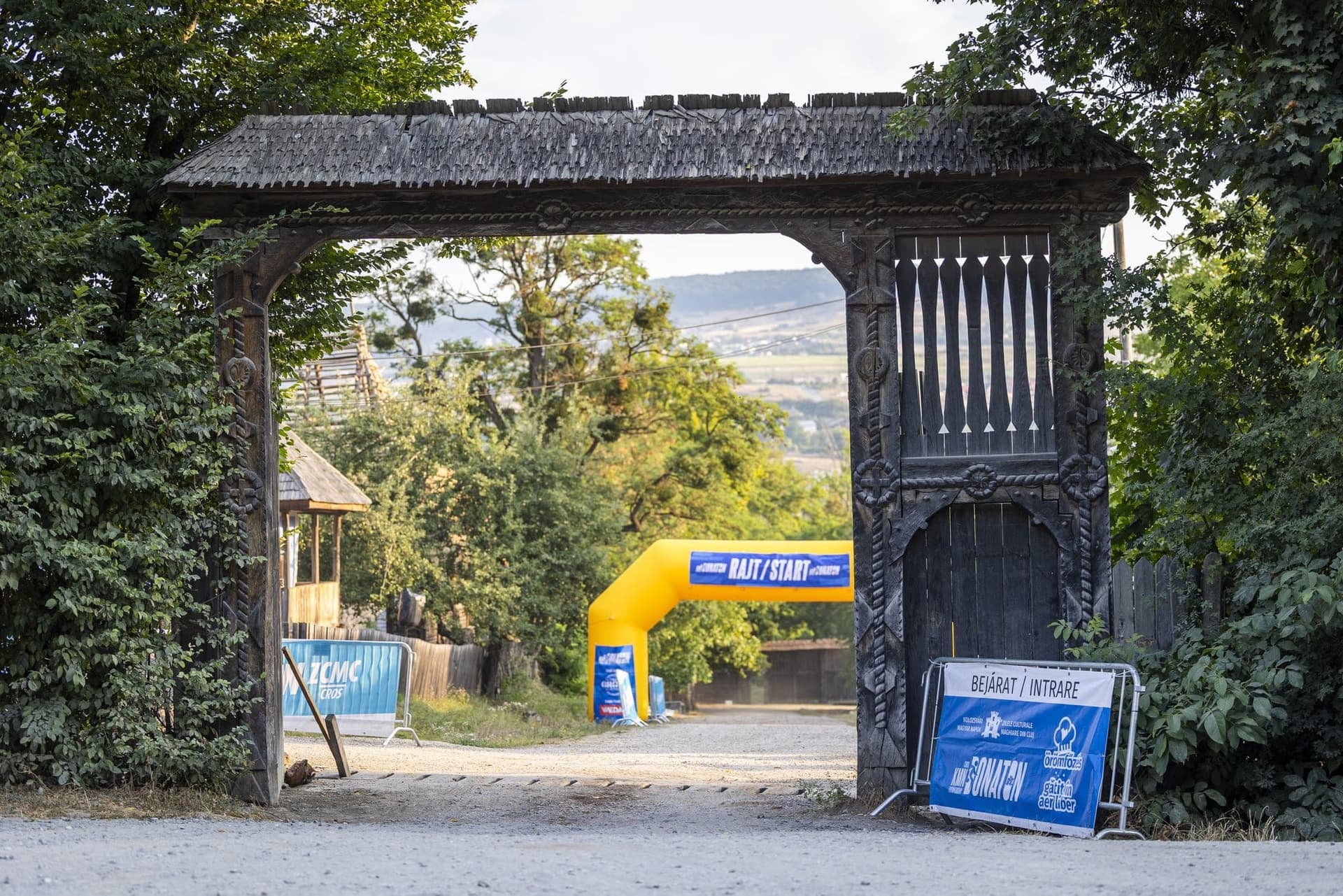
At half past seven in the morning, the road climbing towards the Ethnographic Park was still cool. The sun came in at a slant through the foliage on the left and fell in stripes across the lane. Under the wooden gate, blackened by weather, a blue sign announced the entrance in two languages. Beyond the gate, on the grass, the plastic arch of a starting line was inflating. The rest of the hill was silent.
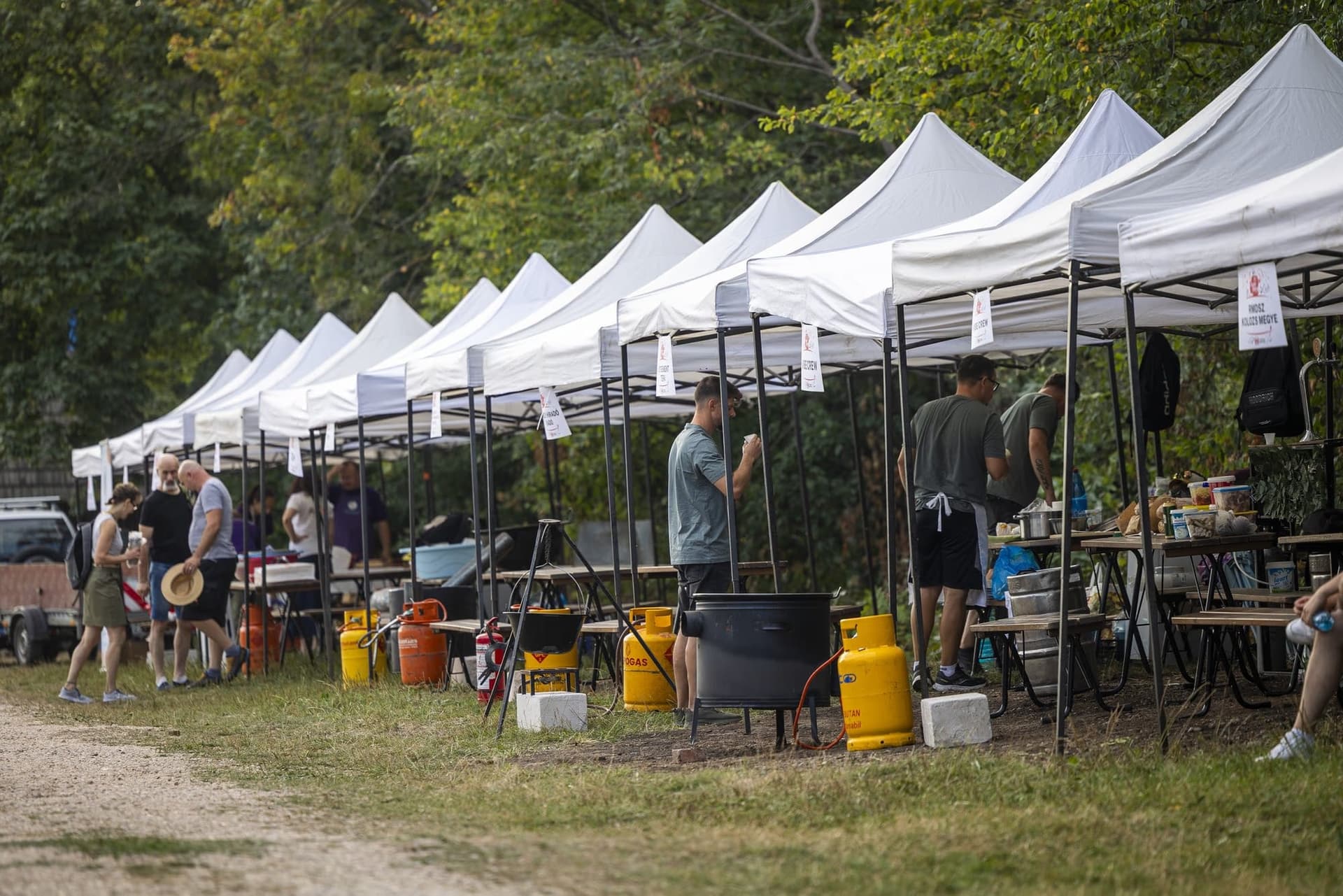
Higher up, on the plateau among houses moved here from all over Transylvania, the long row of white tents was already standing. Almost empty. You could hear gas bottles being shifted, cauldron lids set aside, and a hose running somewhere. Nobody was hurrying, and yet everyone had been at work for some time.
Eight o'clock: tomatoes, onions, cold water
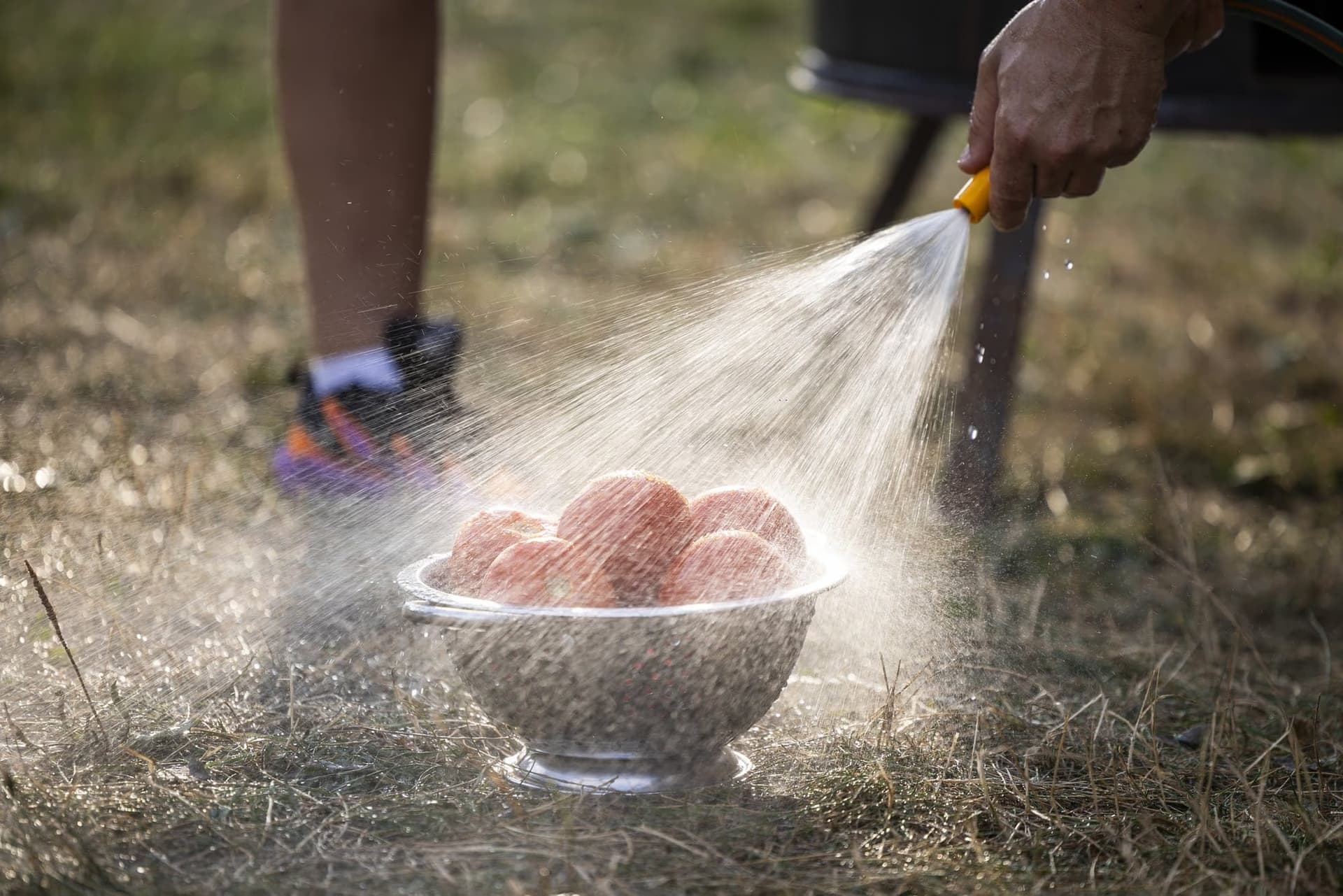
Tomatoes washed with a hose, in a stainless-steel colander set straight on the grass, backlit. The jet broke into droplets through the sun. The man holding the hose did not even look up at me.
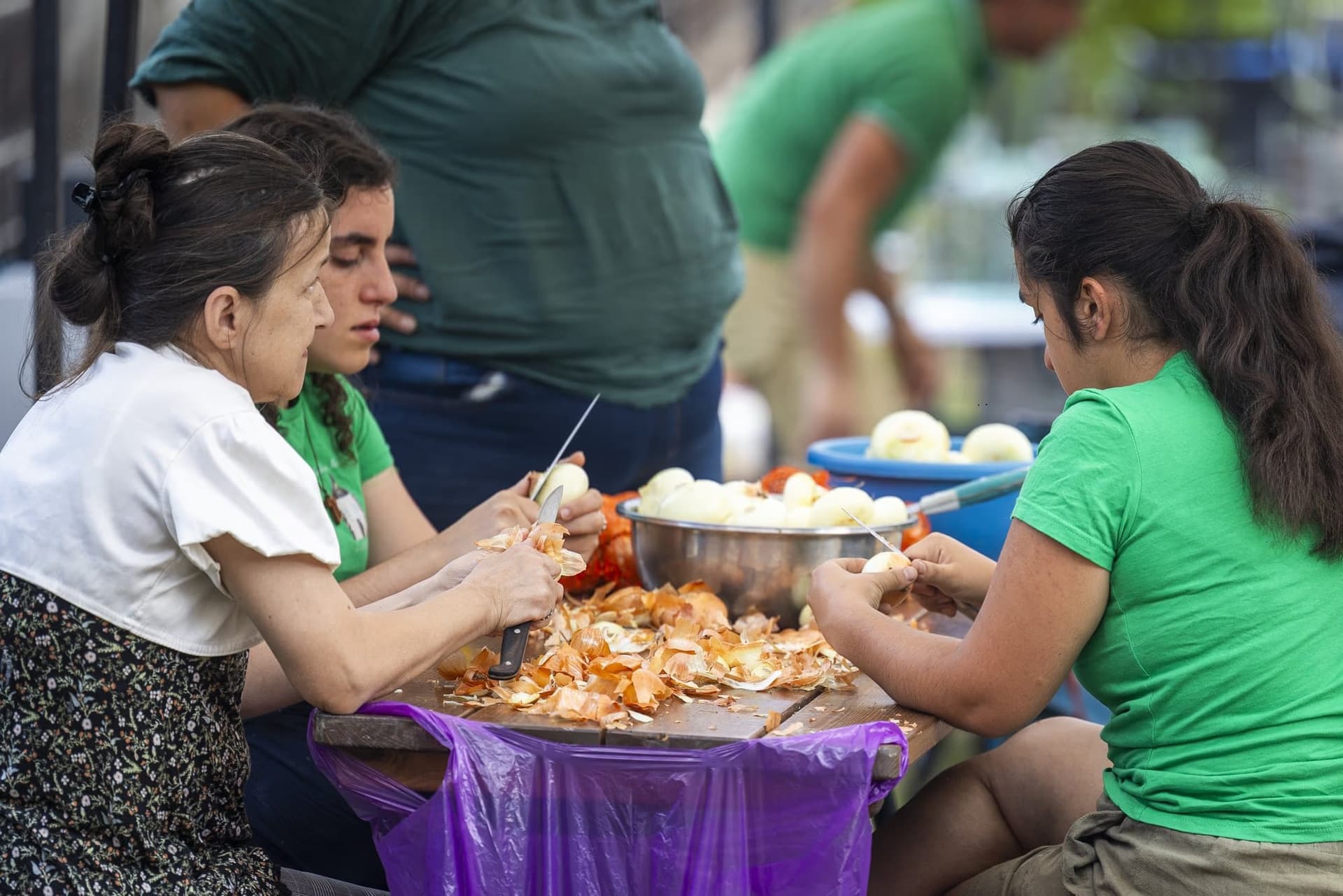
At the next table, four women were peeling onions. The skins gathered on the plastic sheet spread over the board, in a heap that grew as you watched, and the knives moved at a rhythm nobody has unless they have done this a few hundred times before. Nobody talked much. It was the hour for working, not for telling stories.
Everywhere, the same order of things: peel, chop, put on to boil. The cauldrons — big, black, some on tripods, others on gas bottles — stood empty and waited. Ten metres along, one was already simmering.
On paper, the programme said cooking ran from eleven to three. In fact, by eight, half the camp was on its second round of chopping. The mismatch was not an organisational slip: it is how a cauldron works. What needs four hours to cook cannot start at eleven.
It was not the only mismatch. Three metres apart, people in white chef's jackets, moving with professional kitchen economy, worked alongside groups of friends who represented nobody but themselves. No visible hierarchy, and nobody who seemed troubled by that. The competition was a pretext. People had come to cook together and to spend a day in each other's company. A starting time was the only thing it imposed.
Who was cooking
At one tent, black aprons with the crest of the Old Cluj Association. At another, green aprons reading Anyó — granny, in Hungarian. Further along, red aprons with "30+" and a small aeroplane in the logo. At one end, a team wore multiculturalism printed across the chest: Transilvania Noastră / Erdélyünk / Unser Siebenbürgen — Our Transylvania, in Romanian, Hungarian and German.
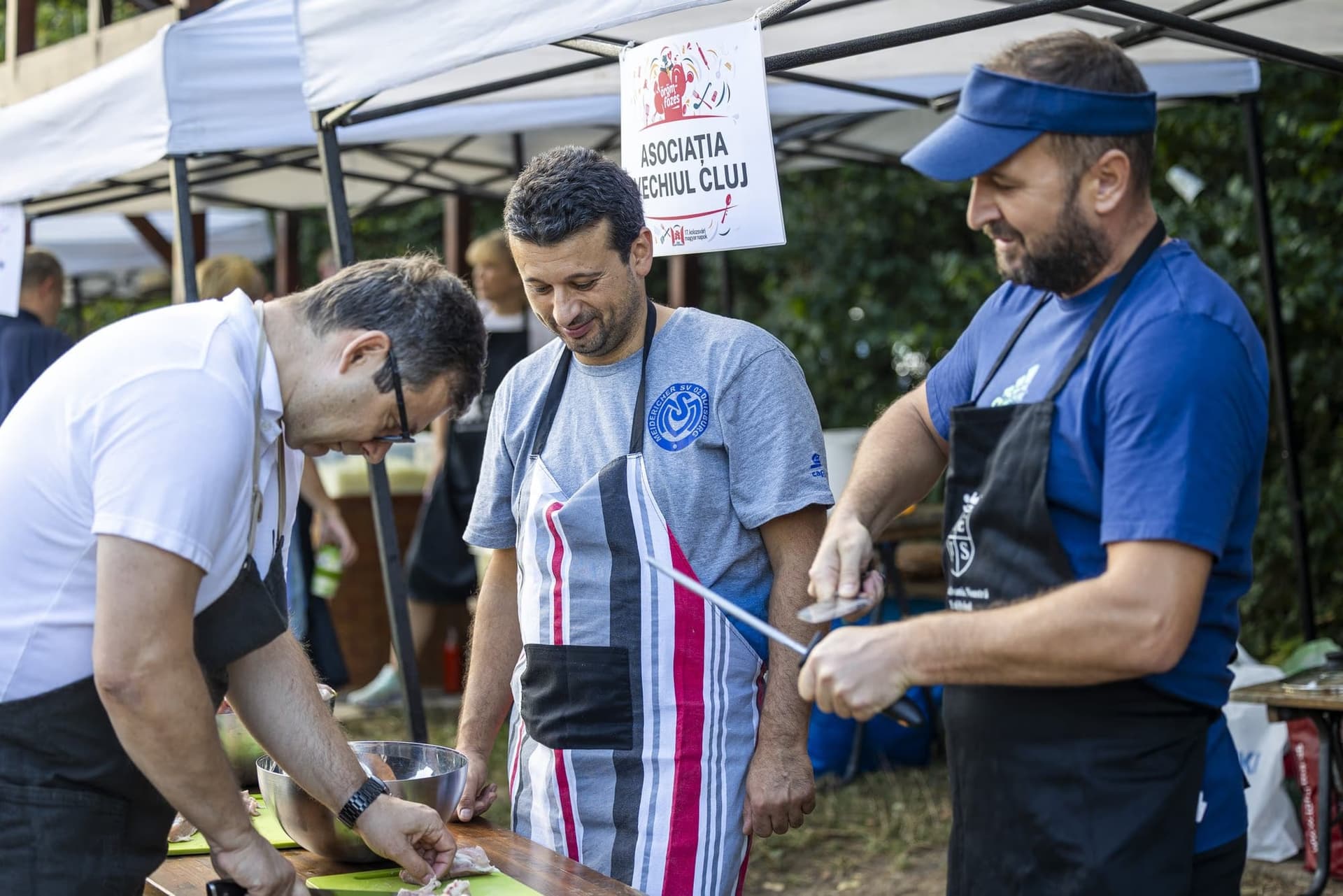
The difference between them showed in the hands, if you watched closely. Some cut without looking at the board. Others cut more slowly, consulted one another, tasted more often than they needed to. The tents stood two or three metres apart, close enough for everything said at one to be heard at the next. Nobody commented.
I was born in Târgu Mureș and I do not speak Hungarian. At no tent did this become an issue. People spoke Romanian to me, without effort, and without anyone making a subject of it.
At one of the tents, someone looked at the camera, saw the RomâniaFrumoasă sticker on it and said they read us. They asked why some of our Hungarian translations read fluently and others read oddly.
I told them the truth: the ones that read oddly have not yet passed through our Hungarian editor. The first version is produced automatically, he rewrites it afterwards, and some pieces get read before they reach him.
The glass before nine
At every tent where I stopped to photograph, the same thing happened. First room was made for me. Then a spoon, a corner of bread or a bowl was held out. And only after that, without fail, the glass.
Pálinka was going round from eight in the morning. Not much of it, and not for show — a small glass, an inch and a half of it, raised to eye level, looked at for a second against the light, and drunk. It was poured from unlabelled bottles, which in Transylvania is a form of guarantee, not of suspicion.
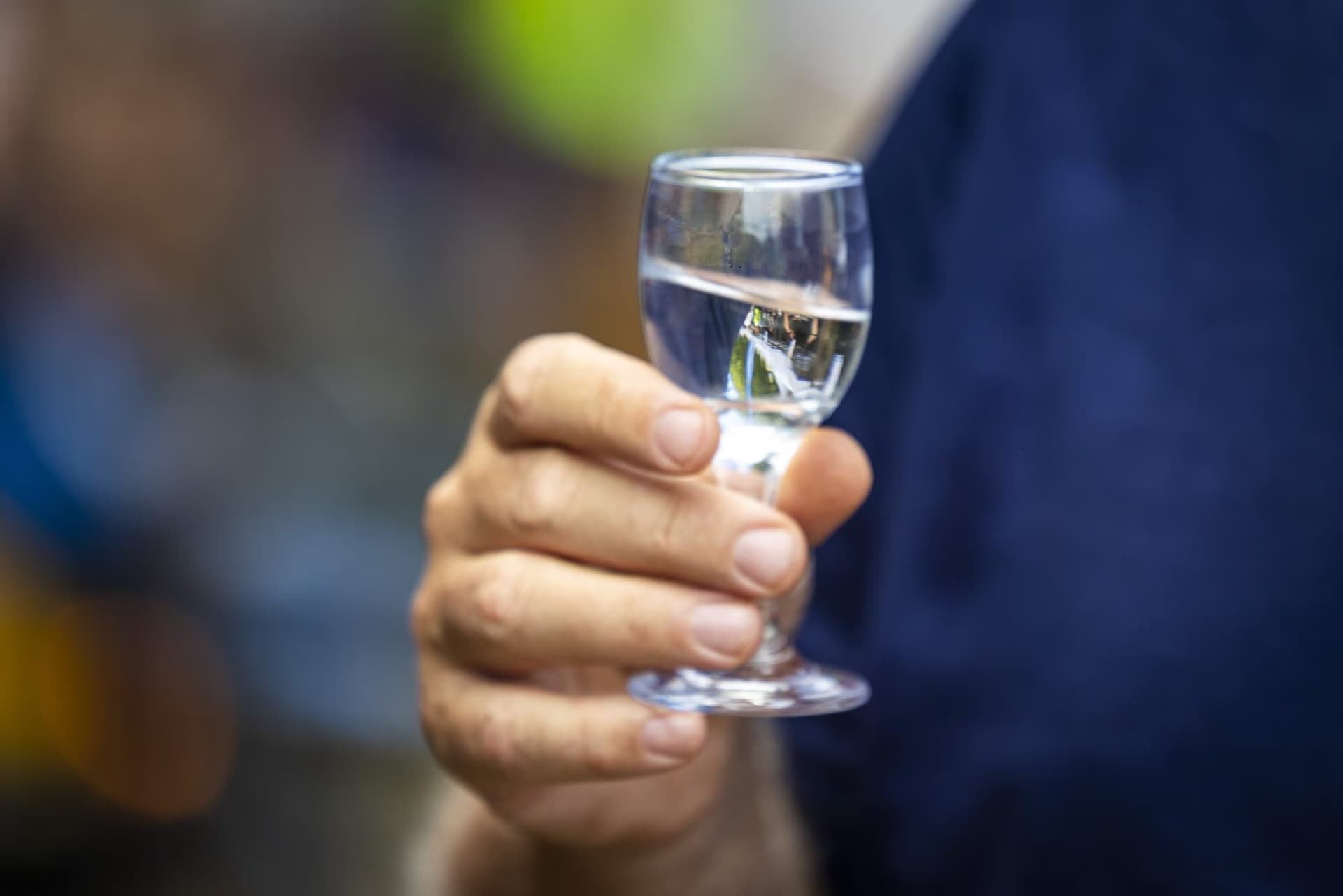
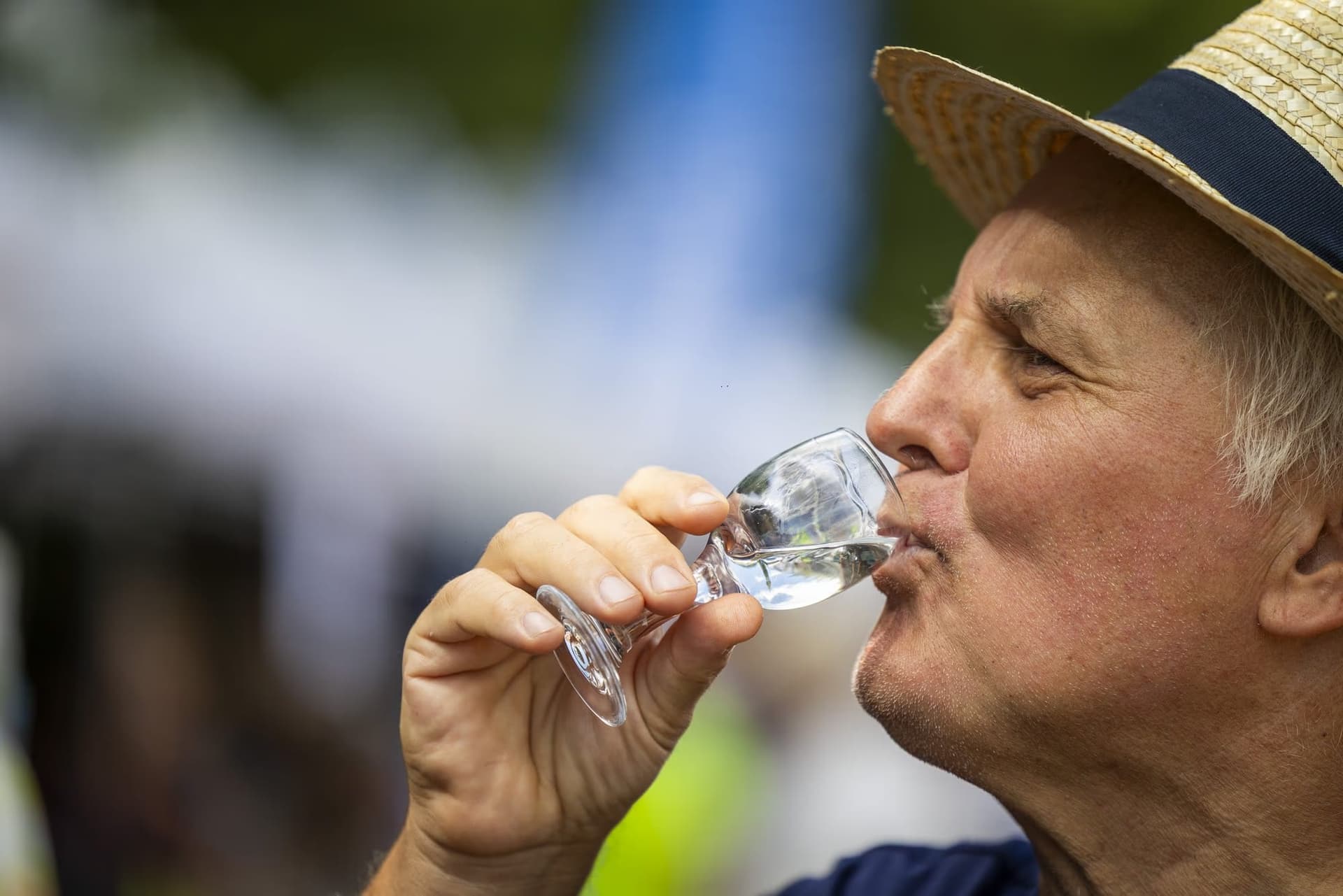
Refusing bothered nobody. What counted was the act of offering, and that act repeated itself at every tent with a consistency that, by the fifth time, stops being politeness and becomes cultural reflex.
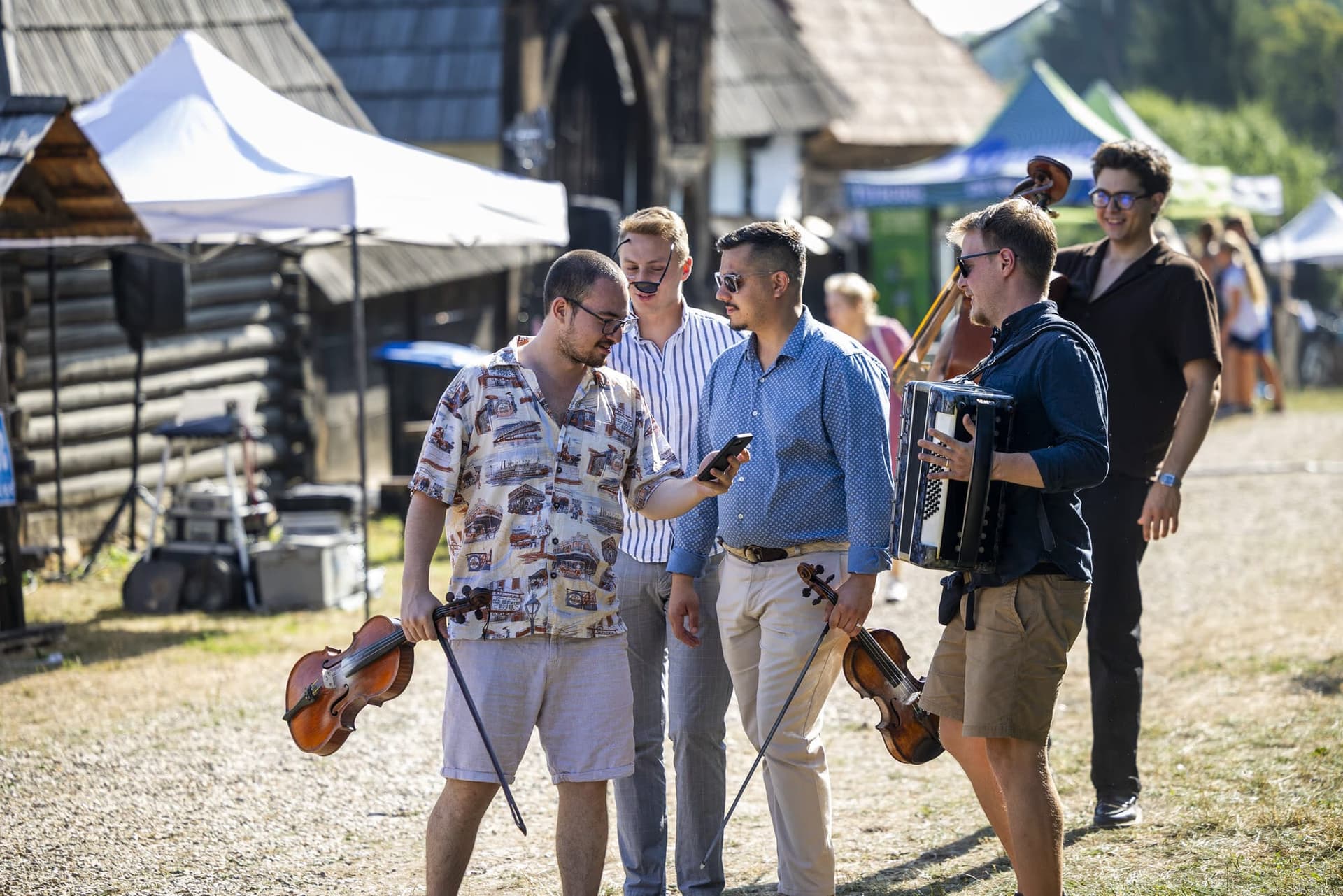
At about half past nine the music arrived. Five players — violins, viola, double bass and accordion — walked between the tents with their instruments in hand, stopped, played two pieces and moved on. It was not a concert. It was closer to the way people used to make merry with musicians in the yard.
Where this happens
The Romulus Vuia National Ethnographic Park is the open-air section of the Ethnographic Museum of Transylvania, at the foot of Hoia hill, on the western edge of Cluj-Napoca. It is the first open-air museum in Romania, founded in 1929 by the ethnographer Romulus Vuia. Of the 75 hectares it had then, some 16 remain, with farmsteads, peasant technical installations and wooden churches brought from different ethnographic regions.
The street at the gate is called Tăietura Turcului — Törökvágás in Hungarian, the Turk's Cut — and it is the pass over the ridge between two watercourses, linking what is now the Grigorescu district to the village of Baciu. A road through here is mentioned as early as 1377, in the document setting the boundaries of Cluj. Today's name, however, comes from a legend: an Ottoman army camped in the Nadăș valley is said to have begun cutting through the hill in order to divert the Someș and leave the town without water before a long siege. The cutting they started is said to have remained as a road.
Those people were chopping onions between a house from Țara Oașului and a barn from the Transylvanian Plain. It is the kind of setting that, if you build it for a festival, comes out false. Here it was the other way round: the festival had come to the setting.
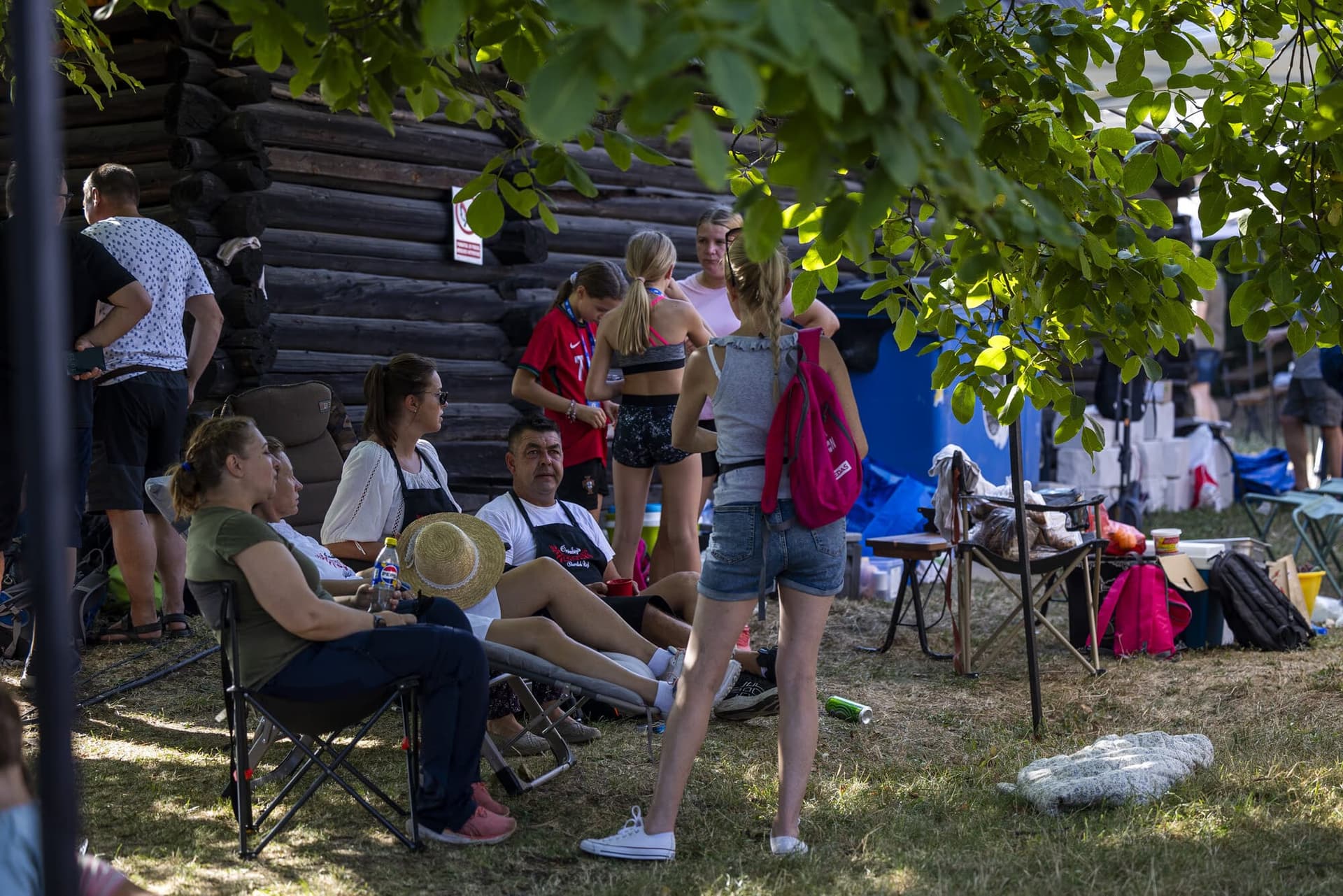
The event is called Örömfőzés — loosely, cooking with joy. The word "competition" does not appear in the festival's official programme. The name is written on every team's sign, under a logo of ladles and red whisks, above the emblem of the 17th edition of the Hungarian Cultural Days in Cluj. The 2026 edition runs from 16 to 23 August under the slogan "With the gates open". It closes today.
At ten, the hill filled with runners
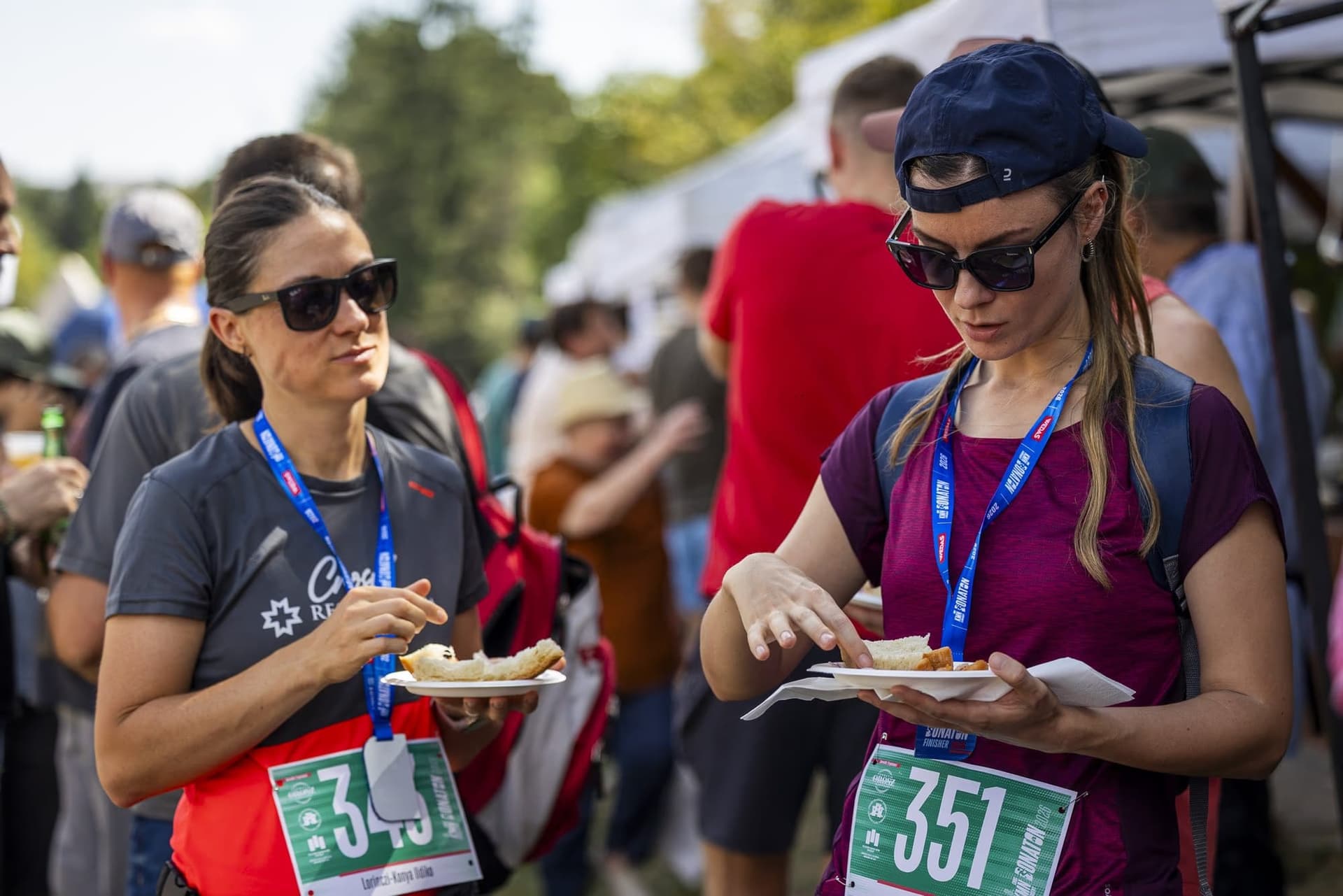
The day's two programmes overlapped on the same morning, in the same place, with an effect that became visible from about eleven: the runners came out of the forest and straight into the smell of dozens of cauldrons.
The race is called KMN-Donaton, it has four routes — the longest of twenty-one kilometres, on the paths of Hoia — and it starts at ten, from directly beneath the park gate. The name comes from Donát, the shepherd in the same legend that named the place. Watching his flock near the Hoia forest, he is said to have seen what was being dug into the hill and to have run all the way into town to raise the alarm — and there to have collapsed, dead from the effort. The people of Cluj believed him and repelled the attack.
It is legend, not document. The statue, on the other hand, exists. It stands in the park, moved there in 2014 — and it depicts, historians say, Saint Donatus, patron of vineyards. The shepherd was attached to it later.
But a race named after a man who died running to deliver news needs no justification.
What was boiling in the cauldrons
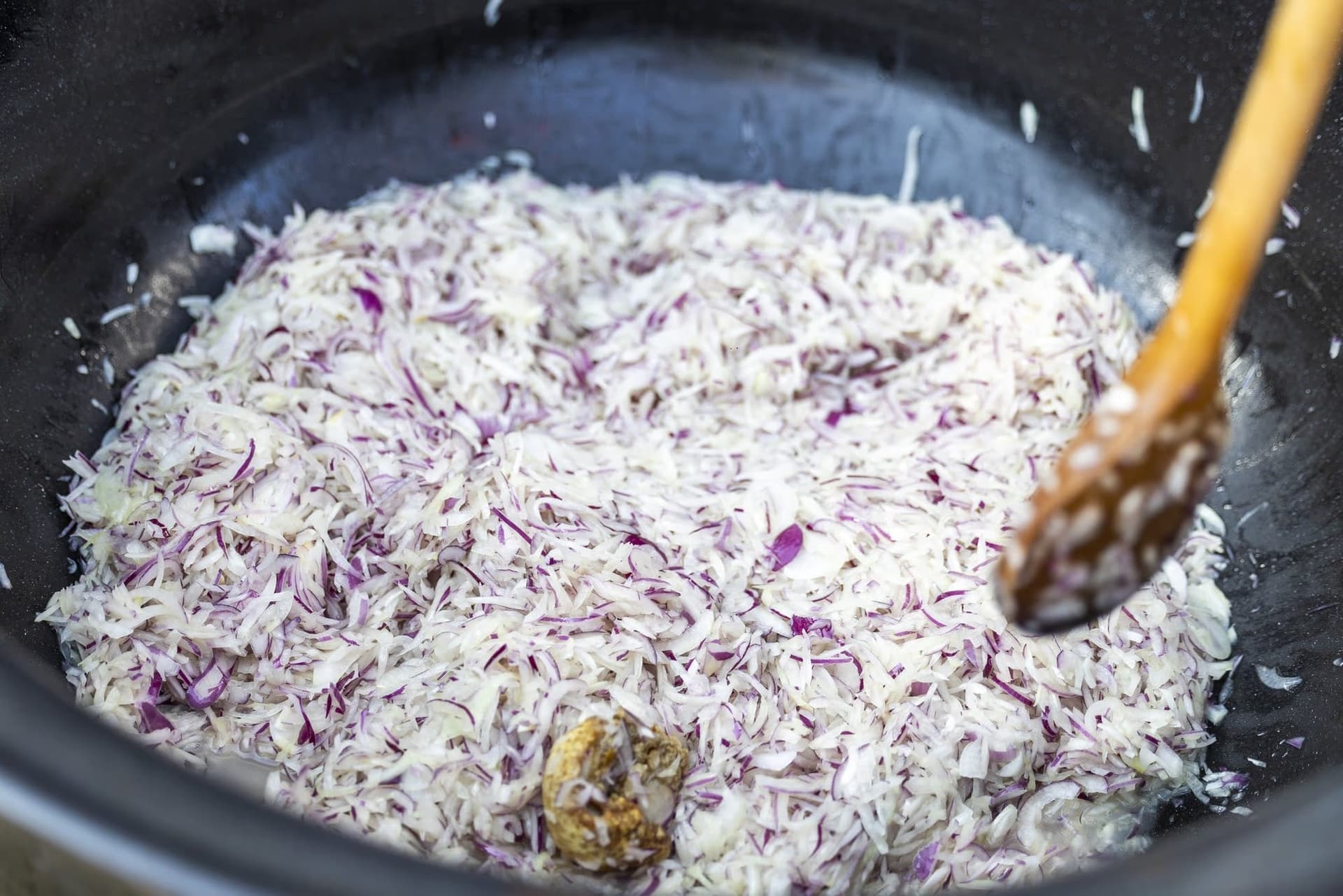
Around midday, if you walked slowly from one end of the row to the other, you could take the inventory of an entire kitchen. Red onion sliced thin, sweating in a cauldron the size of a cartwheel, stirred with a wooden spoon a metre long. Cabbage braised with smoked meat, already dark. Paprikash, goulash, aubergines, pork cracklings. A dough kneaded with herbs, in a stainless-steel bowl, for dumplings that would go in to boil half an hour later.
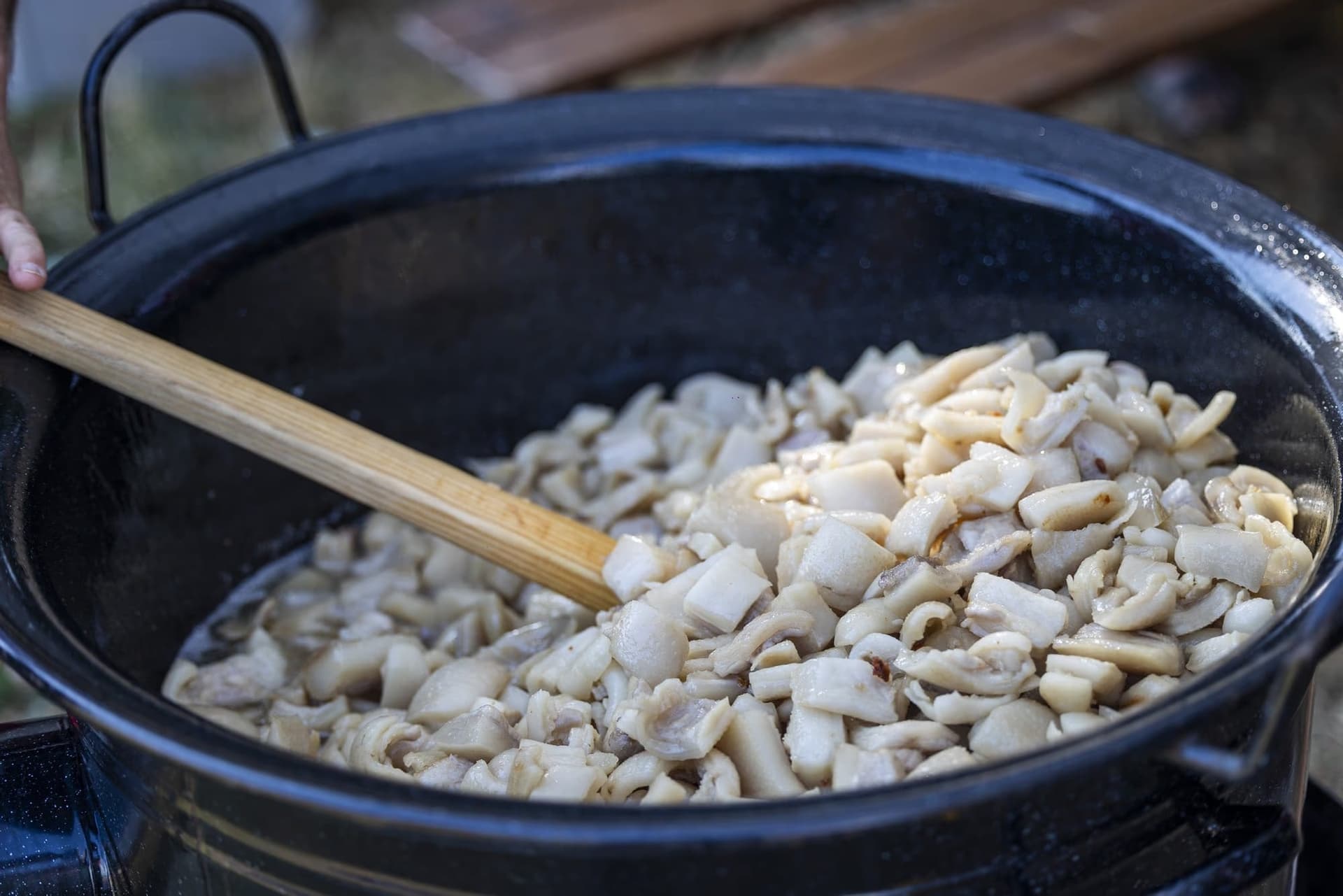
Pork cut into cubes, white with fat, in a black cauldron barely warmed — half for stew, half for cracklings. Out of a single cauldron came, some hours later, two different dishes. And a third, if you put the cracklings on bread.
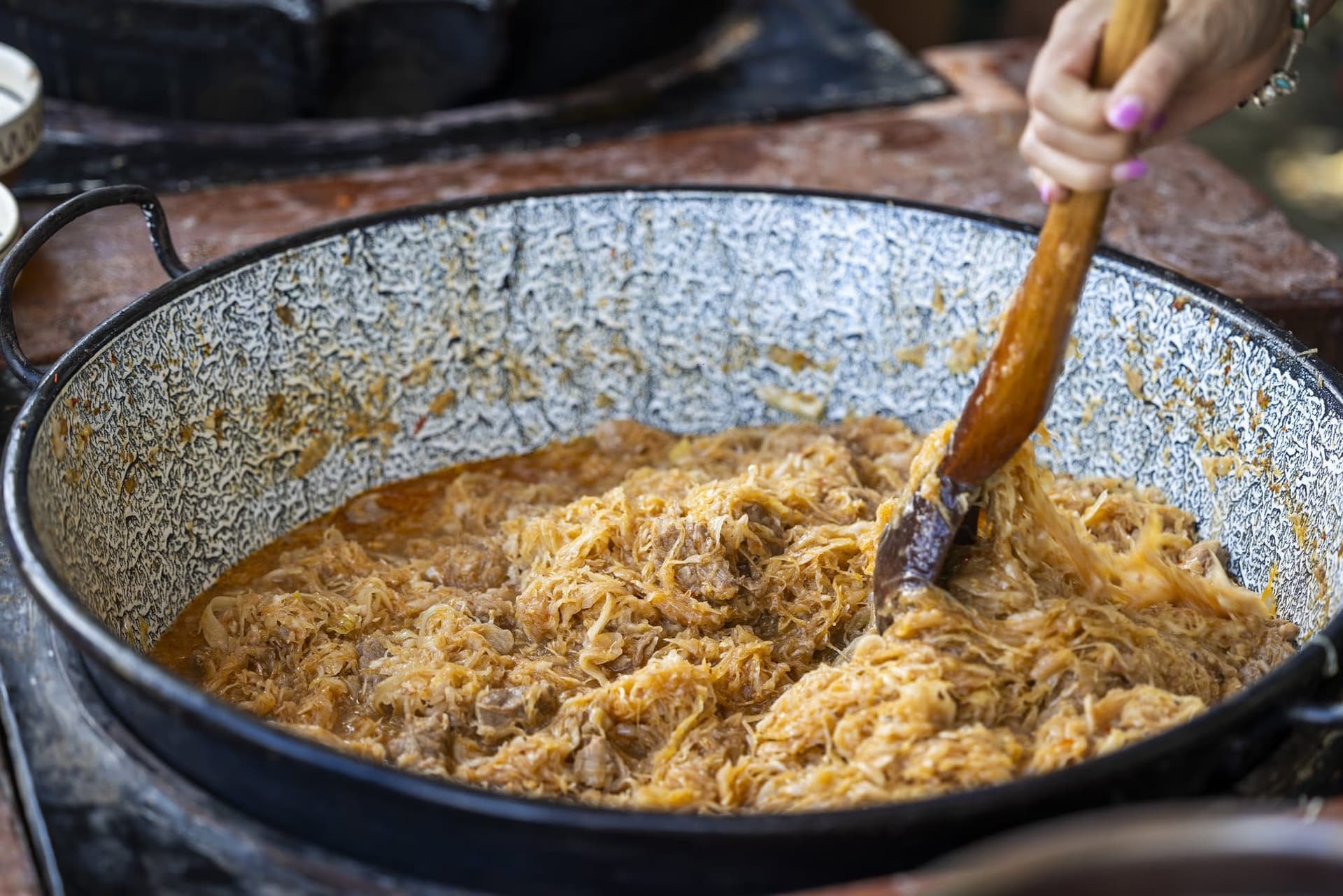
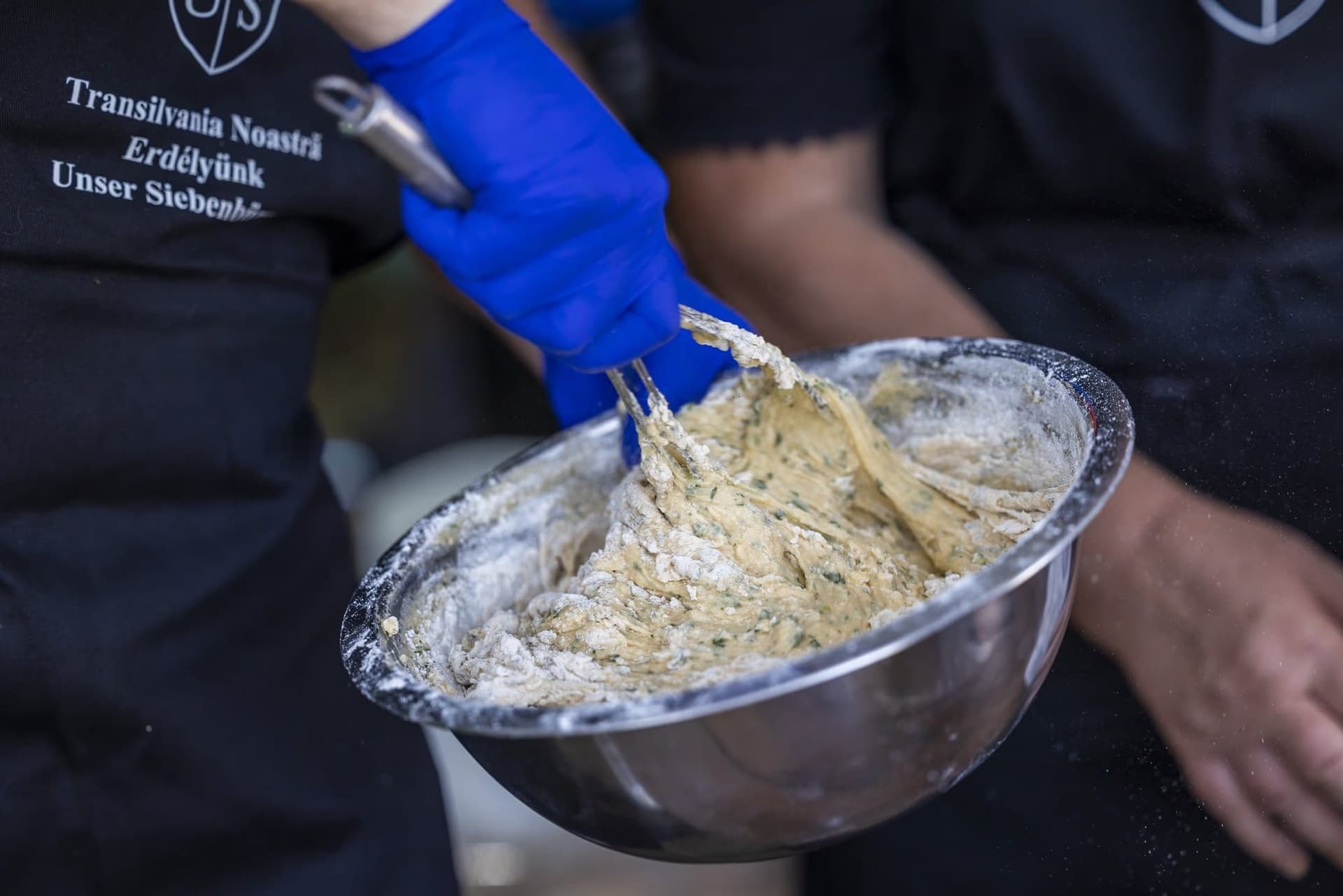
The smells did not mix. Each tent had its own air, and between them were two or three metres of nothing — exactly enough to take a breath of clean air before the next one.
The sun had risen above the trees and the shade of the tents had drawn in to a metre. Under the canopies it was comfortable; outside them the grass was dry and squeaked underfoot. You could hear, all at once, five or six conversations, the musicians somewhere at the end of the row and, now and then, the short hiss of a wooden spoon drawn across the bottom of a hot cauldron. It was not the noise of a festival. It was the noise of a large yard on the day the cooking is done for everyone.
All that food was given away free, to anyone, until it ran out.
The jury, around one
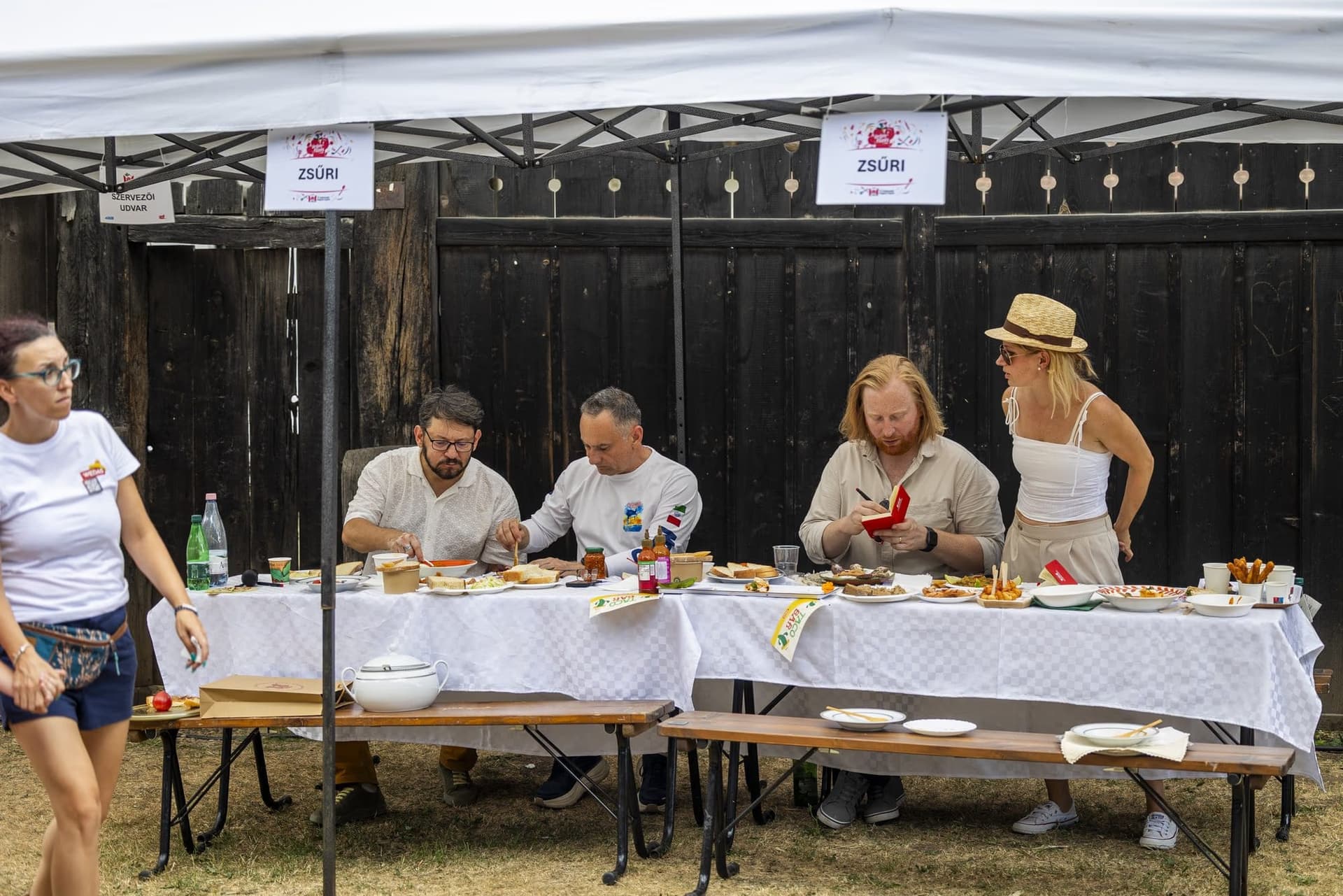
Towards one o'clock, white signs reading "ZSŰRI" — jury — appeared, hung from the beams of an old barn above two tables covered with white cloths. The competitors began carrying plates over.
A few teams had arranged them as in a restaurant: a wide-rimmed plate, polenta cut square, a quenelle of sour cream laid with a spoon, chopped herbs scattered, pickled cucumbers fanned out. Most had not. The rest were Sunday plates — good food, nicely set down, with no pretension to be anything other than good food.
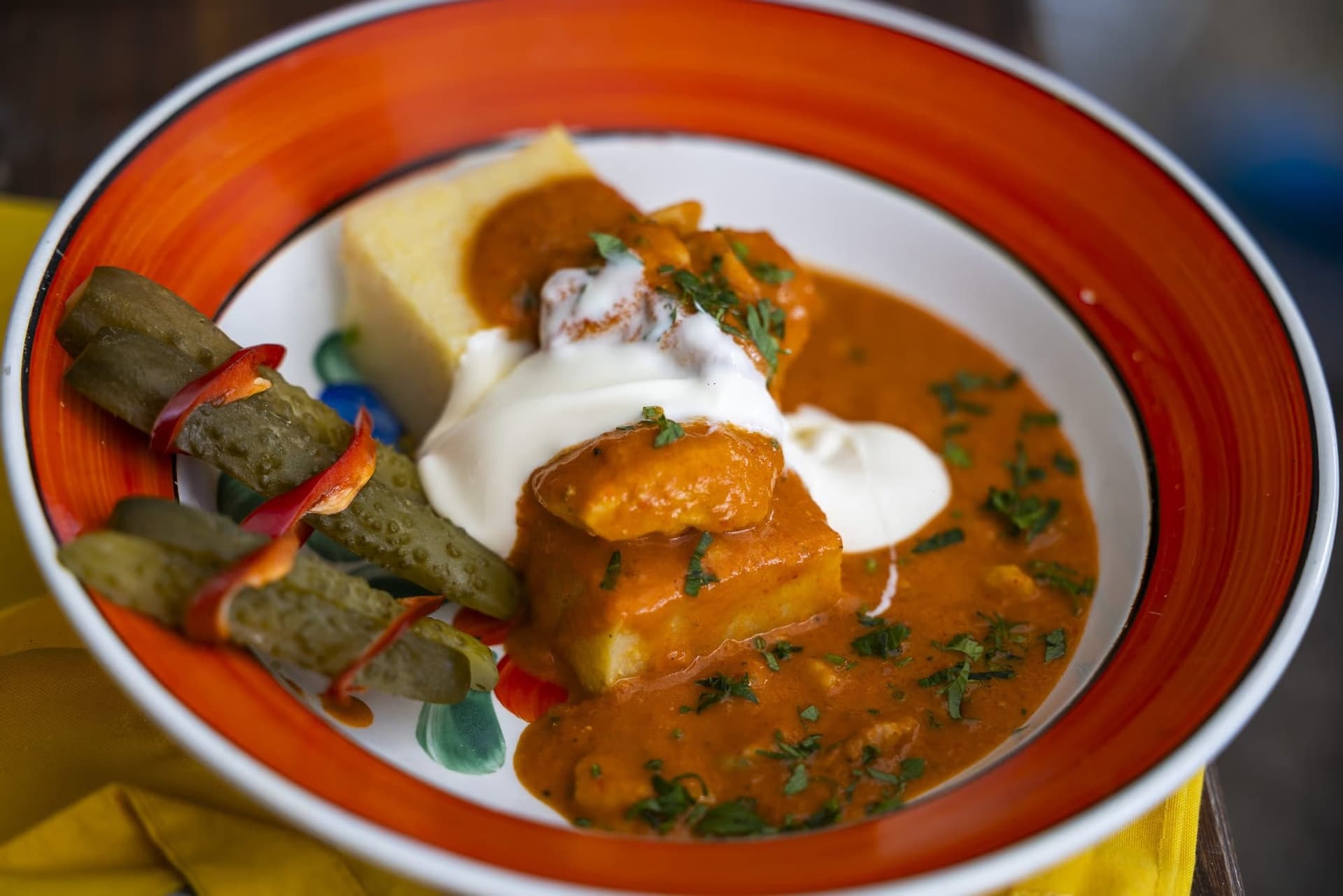
Bonanza wouldn't let me leave
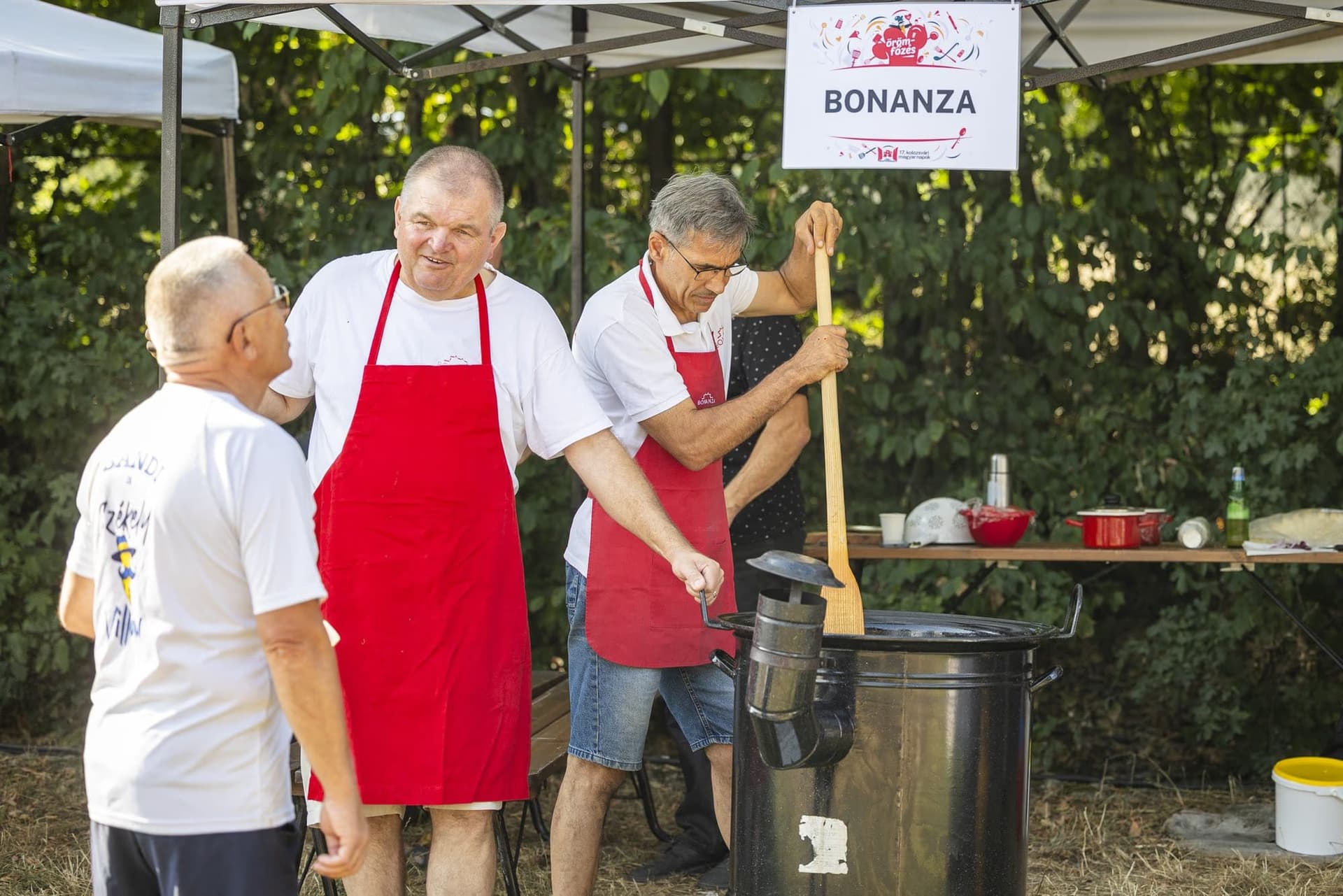
The Bonanza team's tent — the people from the guesthouse and restaurant of the same name, near Cluj, on the road towards Zalău. Around the cauldron, three men in red aprons were stirring and talking. I took the frames, said thank you and made to go.
It could not be done: you do not leave a tent without tasting. The woman spreading the crackling paste asked me how I liked it. Thicker, I said, so I could feel the texture of the meat left after it is rendered and minced. She spread a slice of bread the size of a palm and put it in my hand.
At the first bite all three came at once: the fresh bread, the meat in the paste and the big slices of red onion. Five or six bites and there was nothing left. I ate it standing there, with them watching me until the last mouthful.
I would have taken another. I looked at how many cauldrons were still on the boil along that row, and I stopped.
What nobody asked me
In the 1990s, when anti-Hungarian feeling was a routine political instrument in Romania, a story went round that everyone swore had happened to them personally: they had been in a majority Hungarian-speaking area and had not been served in a shop because they did not know how to ask for bread in Hungarian. The story always had the same skeleton and a different character each time — the classic sign of an urban legend. I never met a version with a name, a place and a date.
At Tăietura Turcului, on Saturday, nobody asked me whether I knew how to ask for bread in Hungarian. I was given bread, with cracklings on it, before I had a chance to ask for anything.
One day of reporting does not dismantle thirty years of politics. It is only what I saw. And the slogan of this year's edition — "With the gates open" — was explained to me by nobody. There was no need.
I don't know who won
I didn't find out, and I didn't ask.
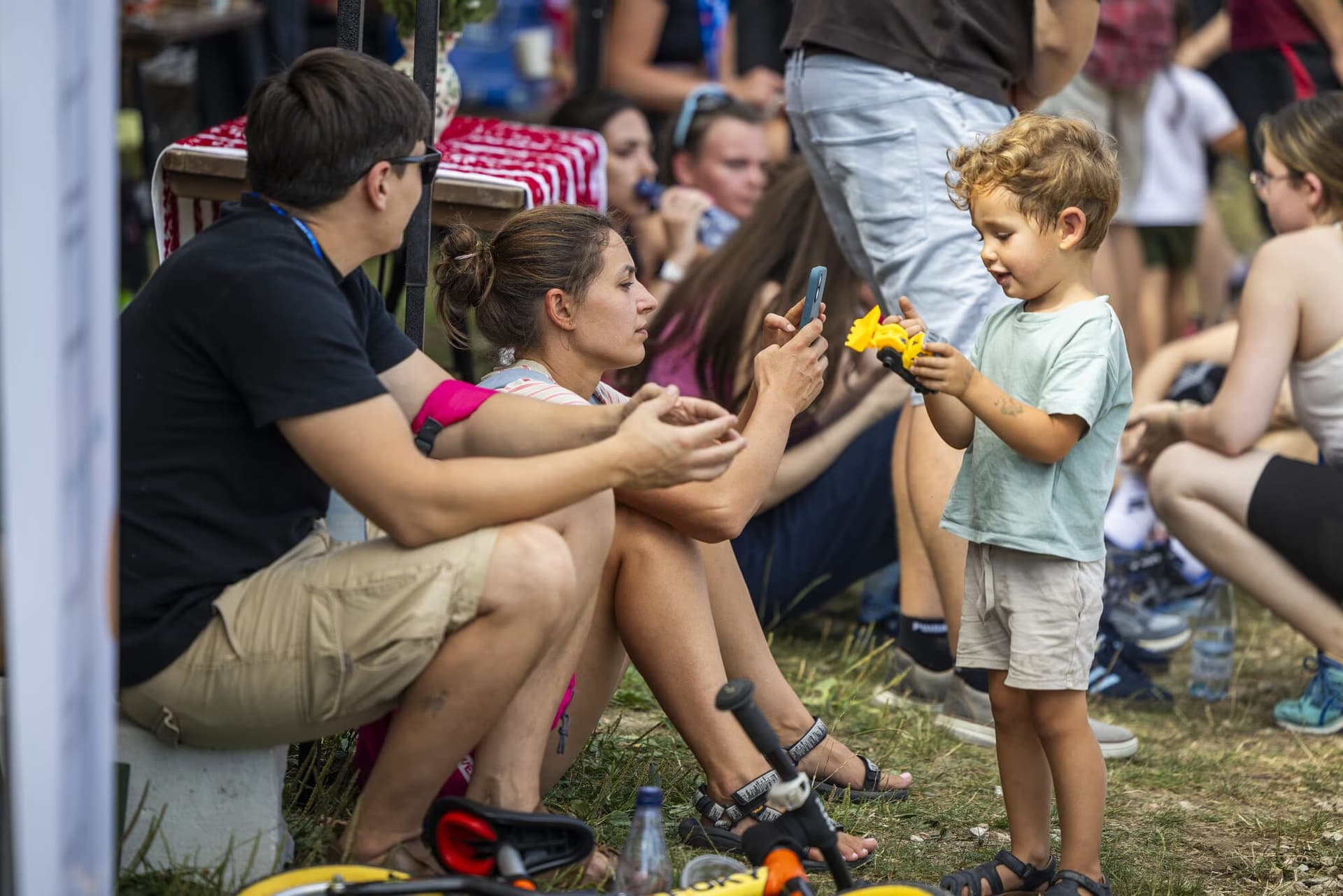
By half past one the lane was full — people with cardboard plates, children slipping between legs, runners still in their race shirts. At every cauldron, somebody was serving.
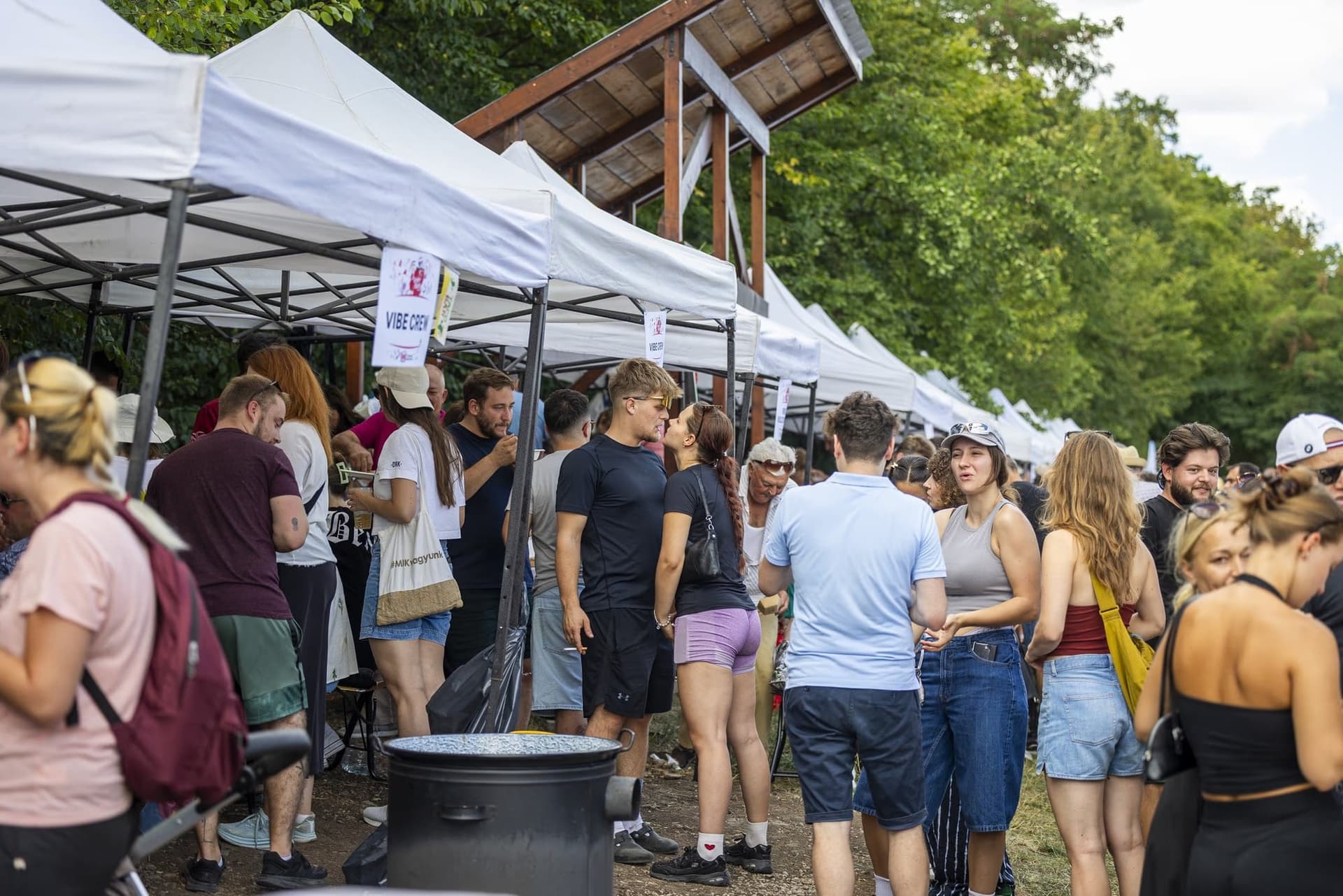
The people who had been cooking since eight in the morning stood beside their cauldrons and served from them with a ladle, wearing that particular expression of someone proud of what they have made and incapable of saying so out loud.
Beneath the barn, the jury was gathering up its score sheets. A few teams were looking that way.
Most were not.
Reported on location on Saturday, 22 August 2026, at the Romulus Vuia National Ethnographic Park in Cluj-Napoca. All photographs by the author, taken the same day.