
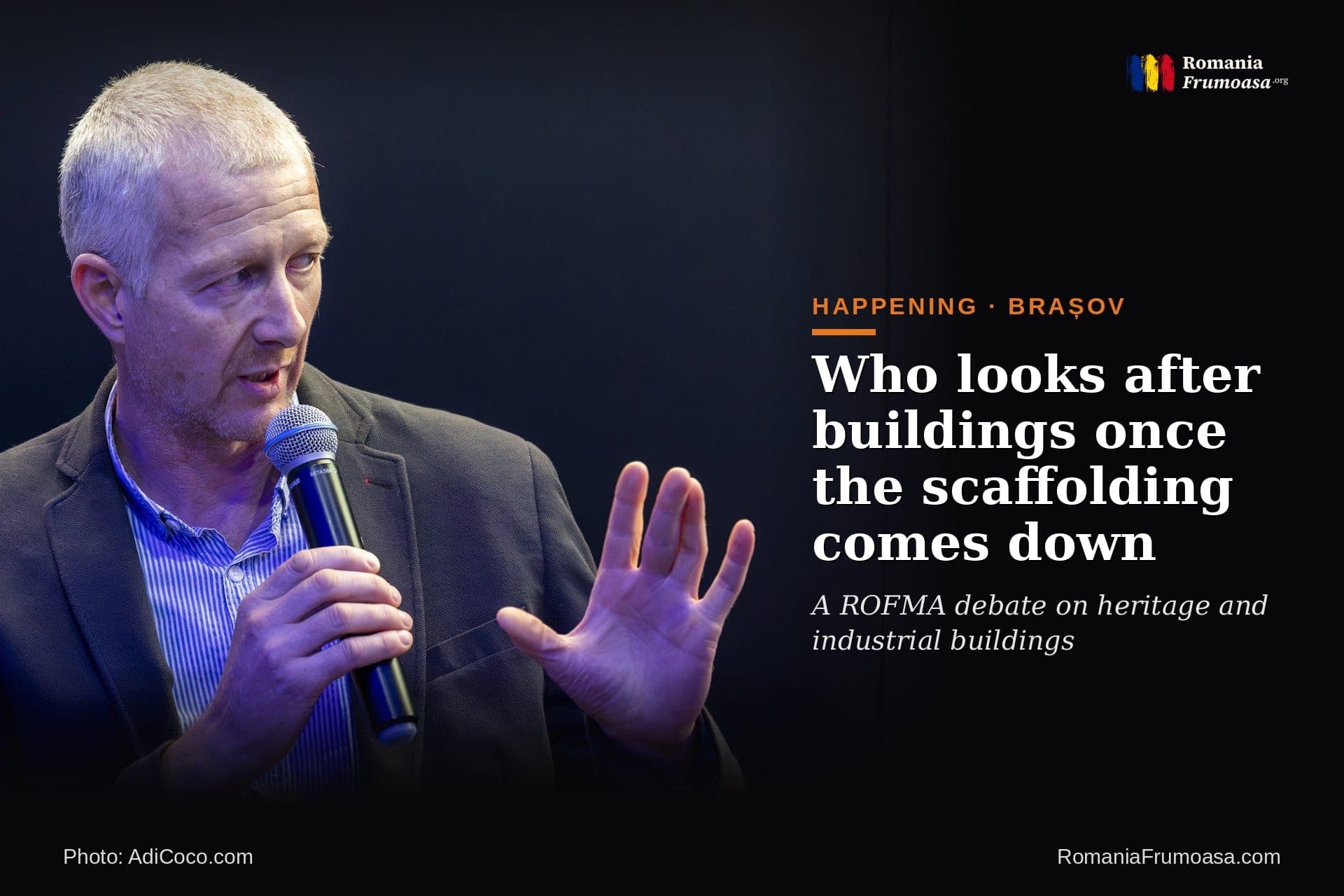
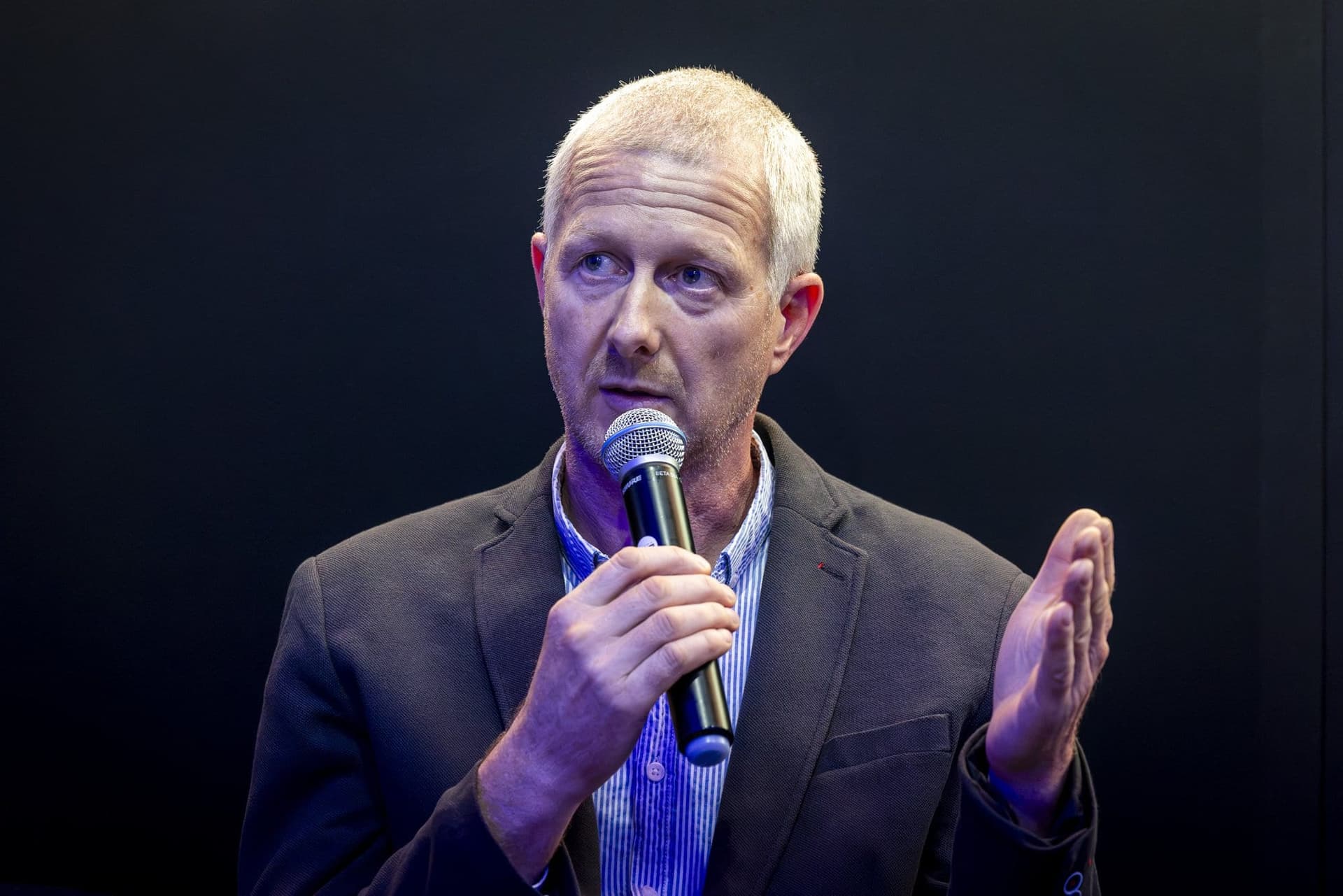
"Put your hands on everything, at least once over two years." Richard Sterner says it as a rule of the trade, not a figure of speech. He directs the management of heritage buildings for the Evangelical Church of the Augsburg Confession in Romania, the church to which Brașov's Black Church belongs, and the rule means exactly what it says: every element of a building — an eave, a window, a corner of masonry — has to be touched and looked at up close, and whatever is broken gets fixed on the spot, "so the water doesn't get in and do more damage."
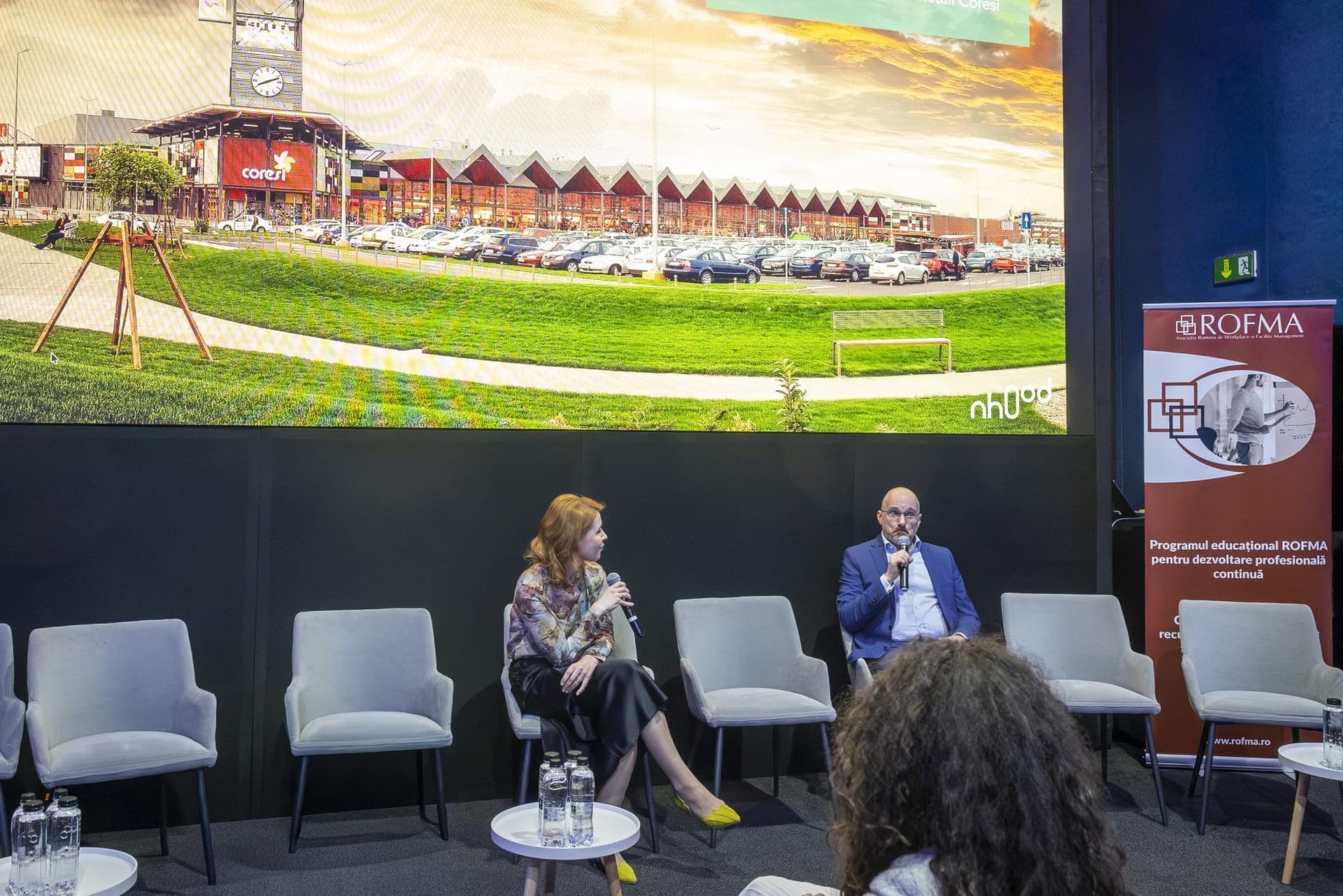
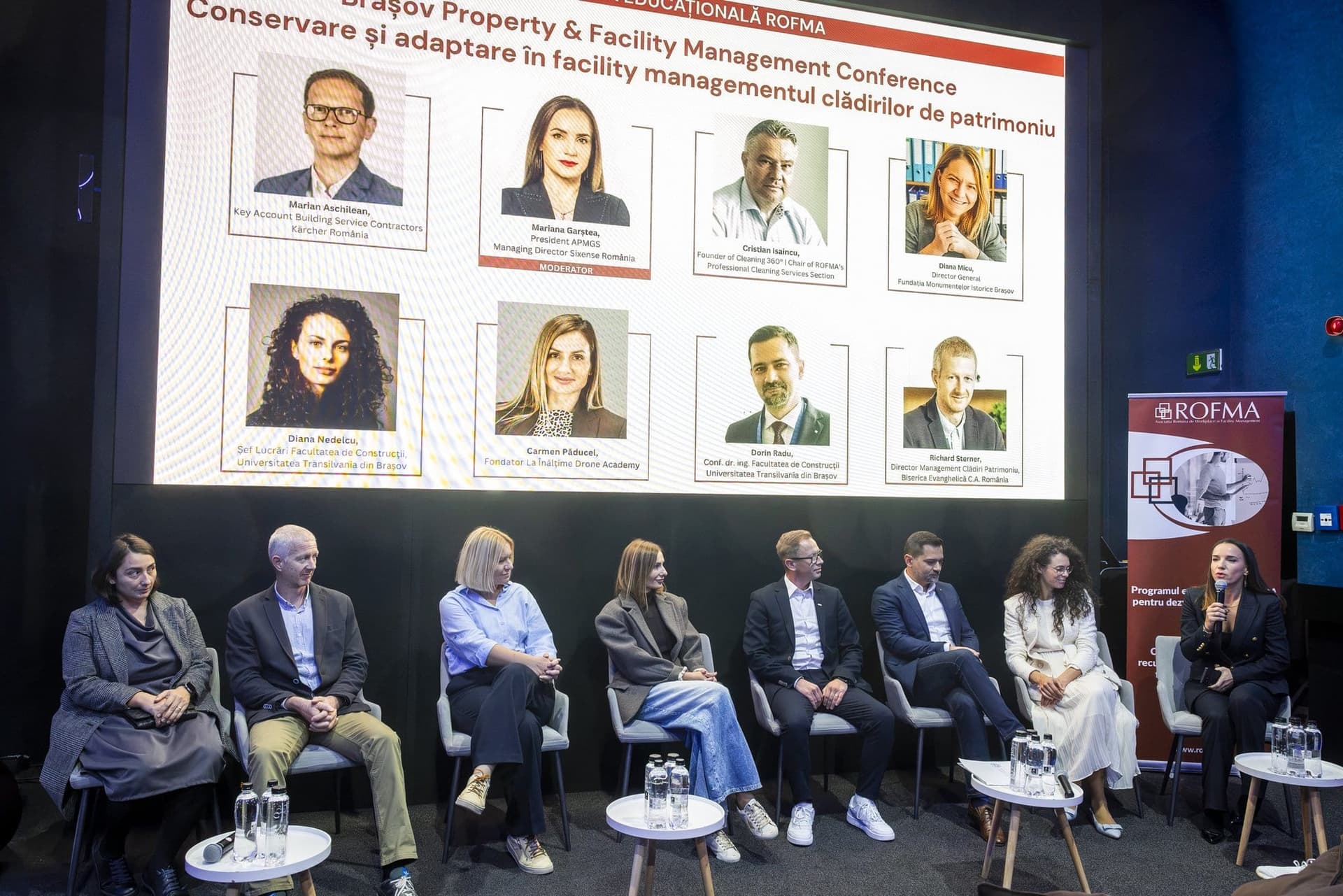
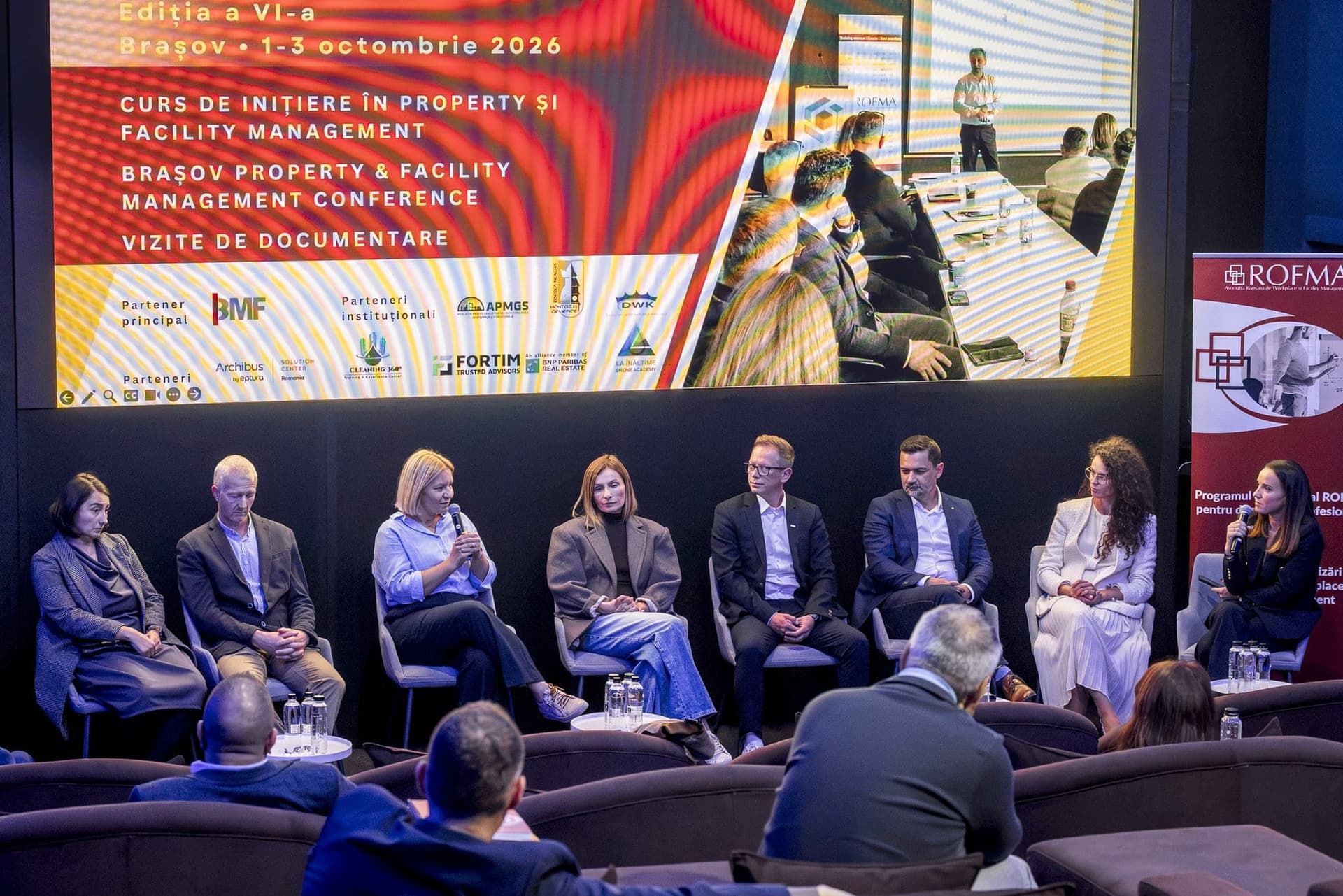
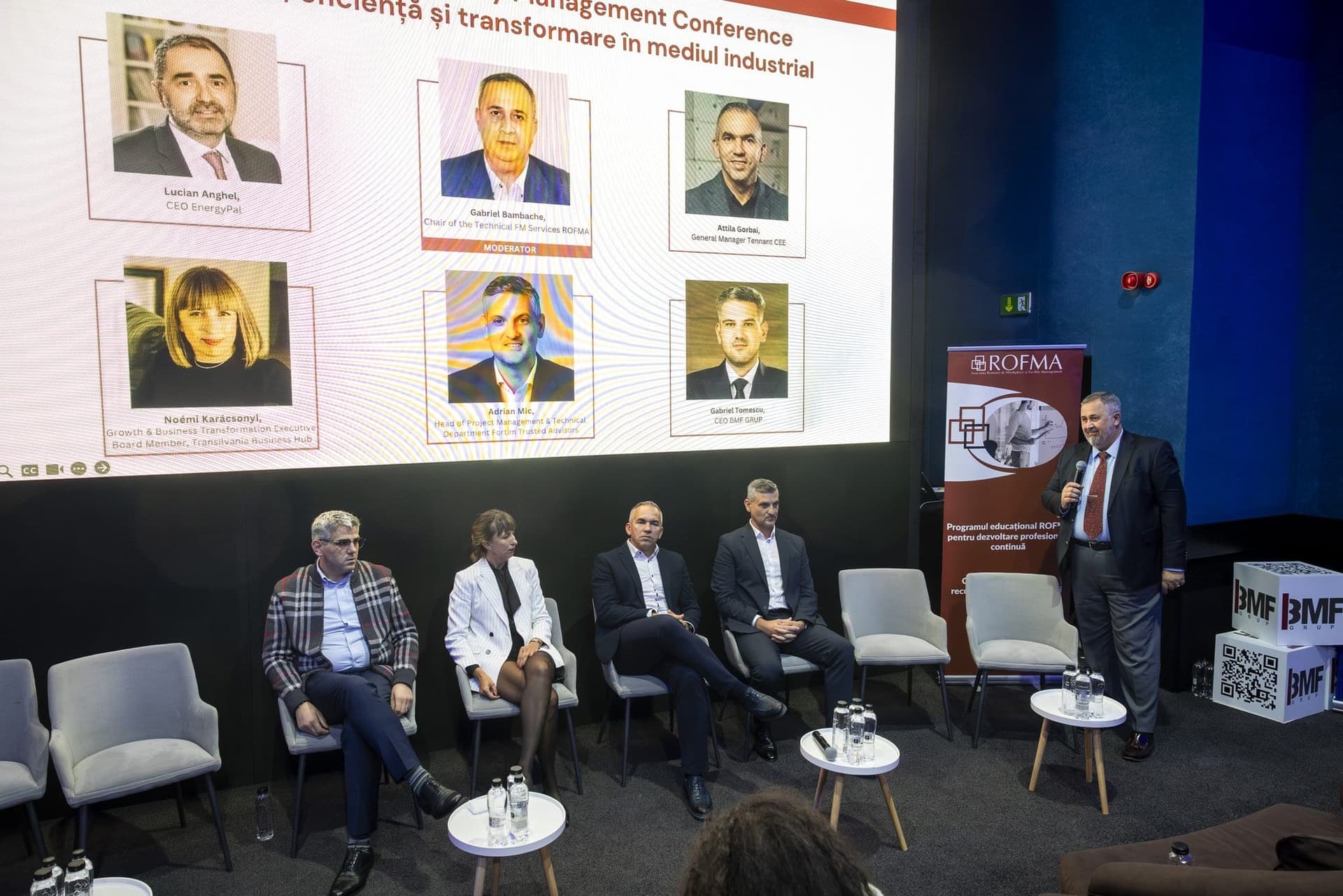
He said it on Oct. 2, in a cinema inside a mall. The VIP hall at Coresi Shopping Resort stands on the site of the old Tractorul plant, which built IAR aircraft before it built tractors. The Romanian Workplace and Facility Management Association (ROFMA) had brought together people responsible for very different buildings: a Gothic church, a mall, a cold-storage warehouse, a car factory. It was the second day of the association's traveling education program.
Over two hours and two panels, they reached the same conclusion separately. What Sterner is missing is "a maintenance plan for each building," approved once and followed for years. Lucian Anghel, CEO of EnergyPal, a company that maintains industrial buildings, is missing the same thing: a plan "set once and nailed down for good, not changed with every contractor." One was talking about a cathedral, the other about logistics space. The gap was the same.
Put your hands on everything
Sterner divides his buildings in two: architecture and structure on one side, building systems on the other. Systems can be replaced more easily; walls and roof timbers demand rigor and permits. For everything else, his recipe is three words: keep it simple. As little technology as possible, simple software, if there is software at all.
The hard part, he says, isn't the plan but the people who carry it out. Managing a historic building means knowing what to ask for, choosing between your own staff and outside firms and, among outside firms, between large and small ones. "There's no point asking a big firm to do a small job, and no point asking a small firm to do a bigger one."
He gave an example of what unplanned maintenance means: wooden windows. Clean and repaint them every 10 years and they last. Skip it, and after 20 you replace them. His proposal is a plan for each building, approved once every five years, that the owner can hand to any contractor. Without a plan, every job needs its own permit. His math: 10 jobs a year on one building, multiplied by the roughly 6,000 buildings he cited, would mean 60,000 permits. "My colleagues would slowly die."
There is another problem, one particular to old towns: where the craftsman parks. The historic center has pedestrian zones and narrow streets, and no place where a van can stop for half an hour while someone oils a floor. Marian Aschilean of Kärcher Romania confirmed it from the other side: to clean monuments, the company has needed the police to close off side streets.
The paperwork: less than people think
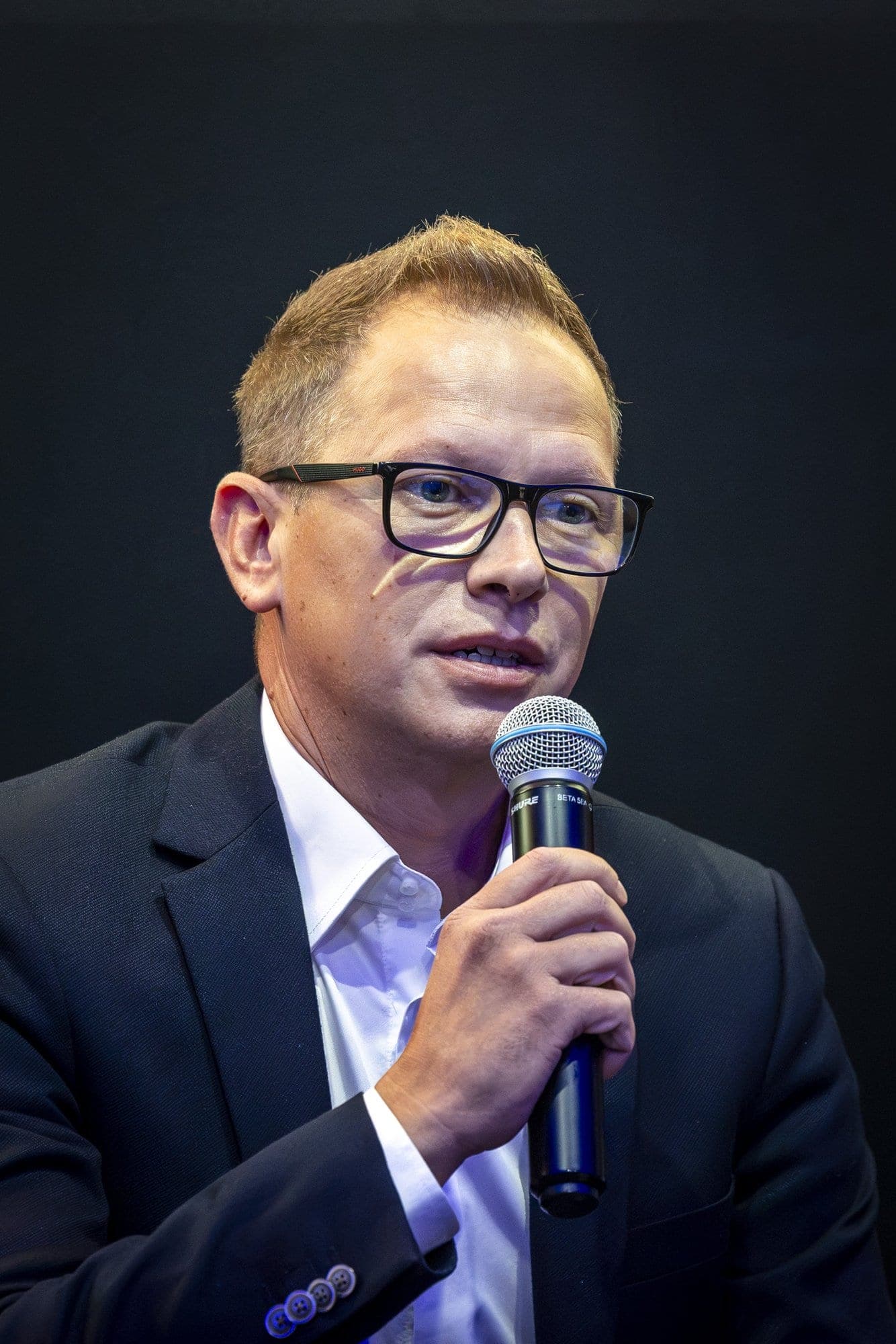
Ioana Brăiescu of the Brașov County Directorate for Culture, the Culture Ministry's local office, called the idea that permits are complicated "a myth." For several years now, she explained, repairs that don't change materials, colors or structure no longer require a building permit, only a notification filed with a lighter set of documents. What takes time is the building permit, not the culture authority's approval. On a listed historic monument, she added, any work must be supervised by specialists certified by the Culture Ministry, including a certified site supervisor. That requirement, she acknowledged, has not been enforced because there are very few such specialists, but under the ministry's latest guidance it will start to be.
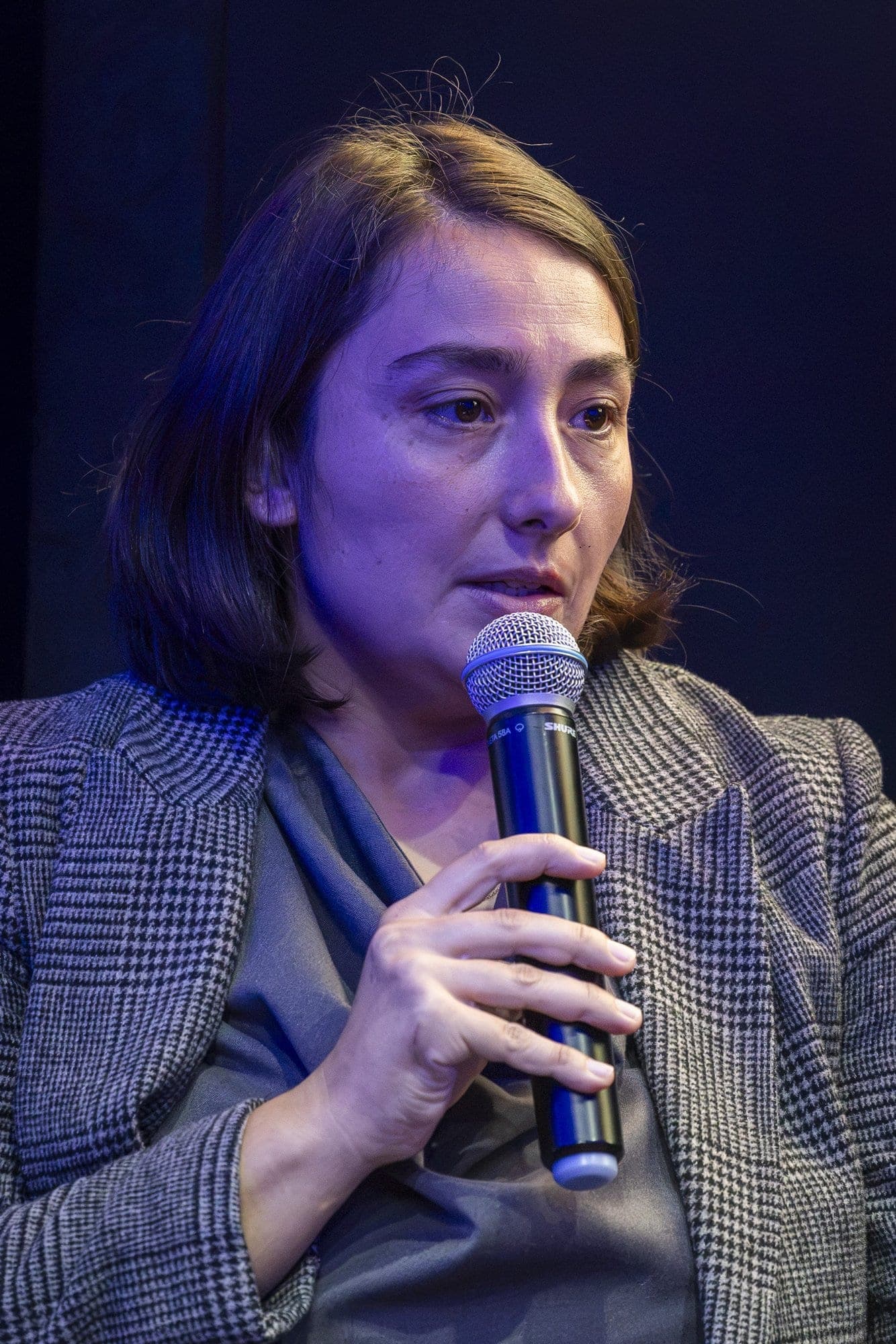
Diana Micu, director general of the Brașov Historic Monuments Foundation, described what happens when owners skip that route: they replace their windows themselves, in a different material and shape, and at the first major job that needs a permit, all of it comes back "like a boomerang." Restoring the original form is itself a change of material. In buildings with many owners, she said, the problem is fragmented responsibility: each owner fixes an apartment, but the building works as a whole.
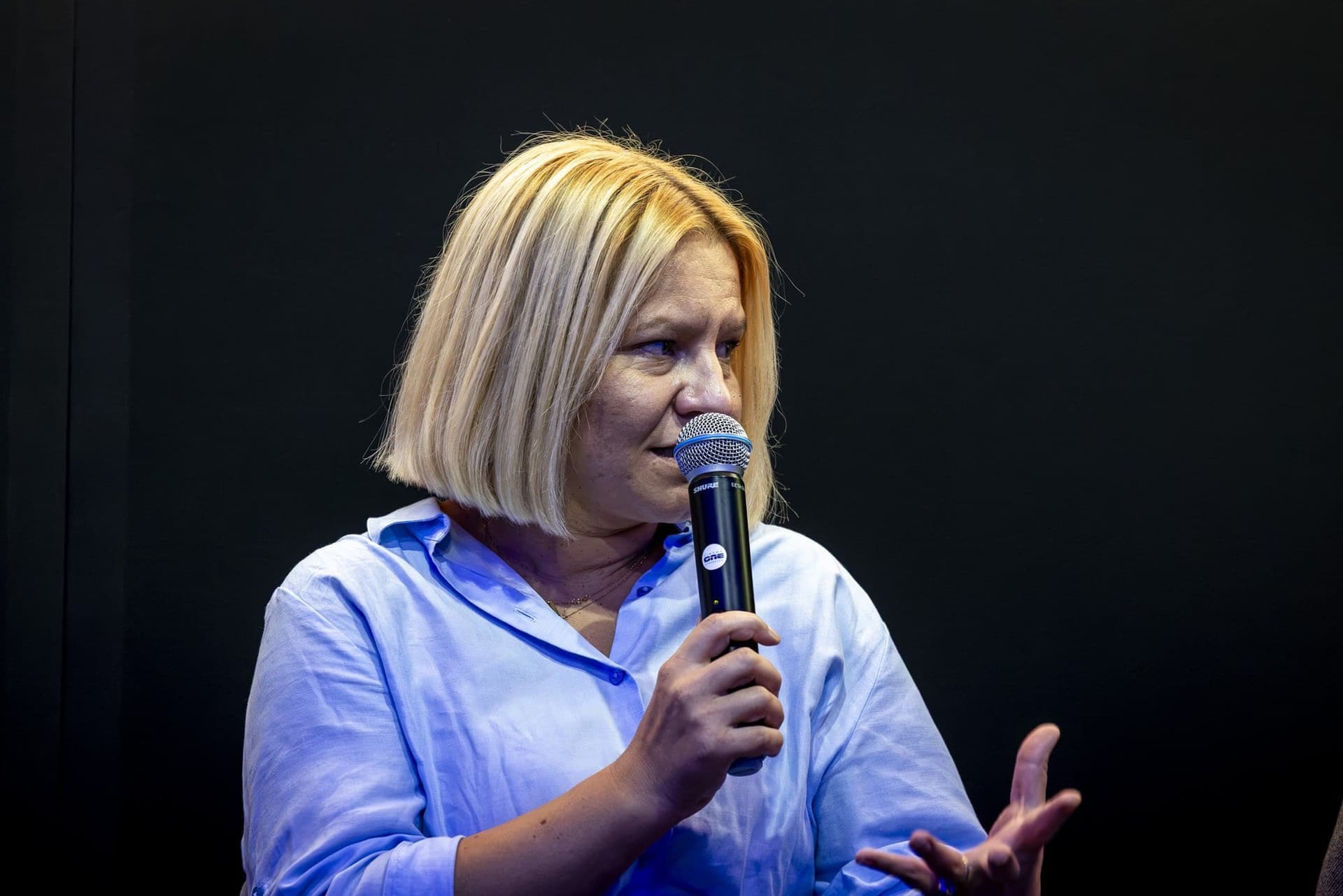
For facades and roofs, Brașov has a multiyear program for the historic center covering 2021 to 2030, based on Law 153/2011, under which the city pays half the cost of the work. According to Micu, 22 buildings were signed off between 2021 and 2026. She compared a building to teeth: neglect them, and in the end it's expensive. Just looking after the drainage system, she said, already saves a great deal of a building.
What nobody knows about the monuments
During the audience Q&A, RomaniaFrumoasa asked how many heritage buildings have an up-to-date technical logbook, the record of a building's construction and interventions that Romanian law requires, how many are monitored with instruments rather than by eye, and how many are insured. None of the speakers gave a figure.
Micu replied that when these buildings went up, the technical logbook didn't exist; at the first intervention, information has to be dug out of archives, including church archives. On monitoring, she ranked a technical assessment — calculations, digs at the foundation, lab tests on materials — above any instrument.
Sterner put the question in perspective. The medieval plans of Cologne Cathedral, displayed inside the cathedral, are in his view a technical logbook. On sensors, he recounted a conference in Toledo, Spain, he had just returned from: the teams monitoring St. Sophia Cathedral in Kyiv presented two hours of data, and when asked what they do with it, the answer, as he told it, was: "Well, we have it." "Why should every monument be monitored, over-monitored in that sense?" On insurance, his argument was that of a large owner: with hundreds of buildings, it can cost less to rebuild one every 20 years than to insure all of them every year. The objection, also raised by RomaniaFrumoasa, that the Twin Towers were unlikely to fall and were insured, did not change his position.
The answer that carried the most weight came from Brăiescu. Beyond sensors and drones, she said, Romania doesn't even have a properly compiled digital database of its monuments. The National Heritage Institute has started a pilot project in Buzău County to see how many people and what resources one would take. Many monuments were listed without a substantial file behind them, and studies done over the years, including those paid for with public money, sit in institutional archives, protected by the copyright of the people who wrote them. The chain is plain: without data on a building, every project starts from scratch, with archival research and many specialists. And without data, the maintenance plan Sterner called for has nothing to rest on.
Sensors, drones, dry ice
The tools exist. Dorin Radu, an associate professor at the Faculty of Civil Engineering of Transilvania University, coordinates HEIstorical, a European project in which the university monitors historic buildings in Brașov with sensors, among them the fortified church in Hărman. The sensors track temperature, humidity and vibration because, he explained, masonry doesn't have the same strength at different humidity levels. The project aims to collect more than 50,000 measurements, released as open data and used to train algorithms that predict how buildings behave. The question at the end of the chain remained open even for him: who pays.
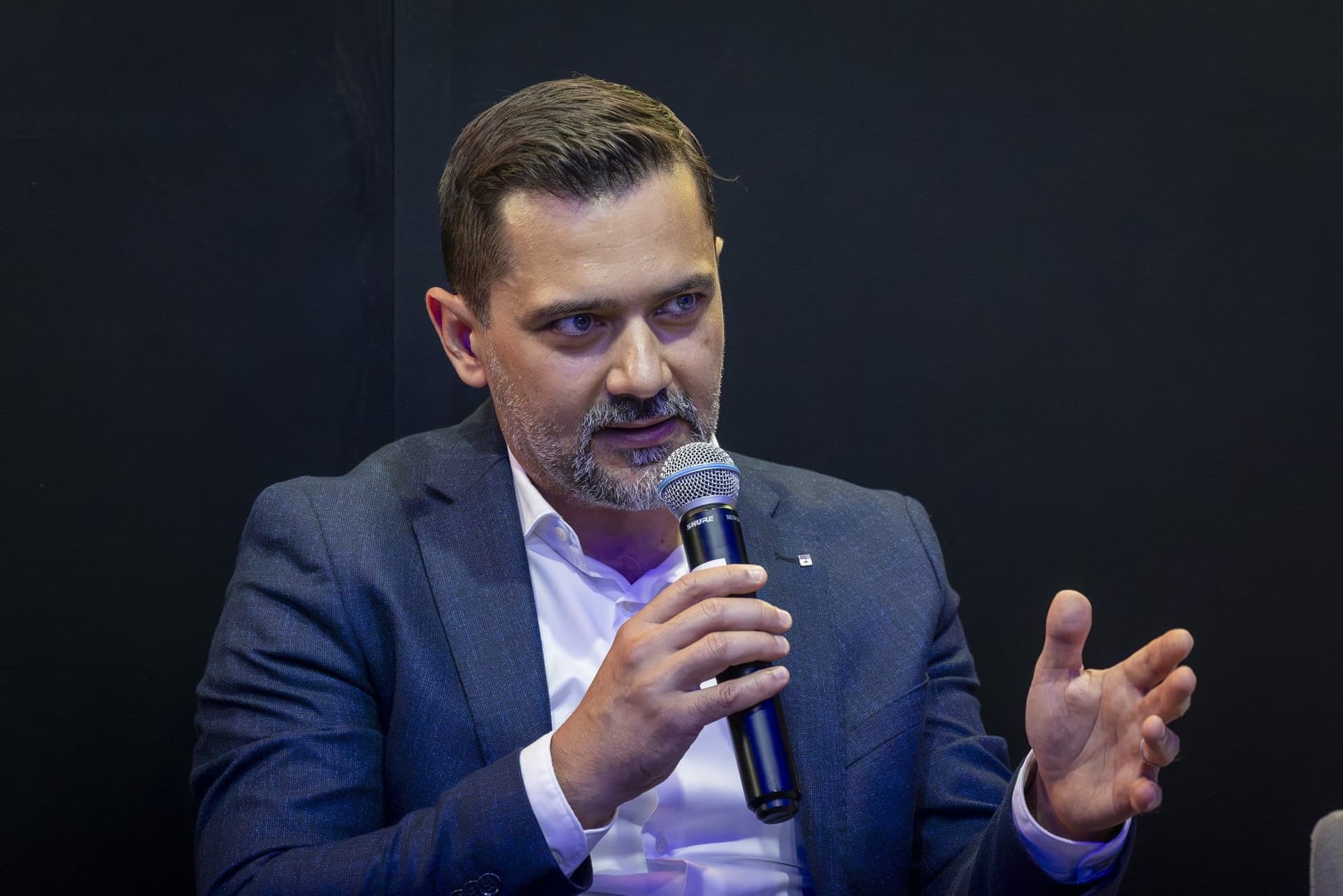
Mariana Garștea, the panel's moderator, is managing director of Sixense Romania, a geotechnical and structural monitoring company, and president of the field's professional association, APMGS. She raised the condition any instrumentation of a monument starts from: "any sensor placed on a building should be reversible and involve minimal intervention." She also raised the cost that comes after the purchase: the system has to be kept alive, with data, reporting and specialists to read it. For facility managers, she said, the point is to understand why monitoring is done, because otherwise the result ends up as "a report forgotten on a shelf or in an email."
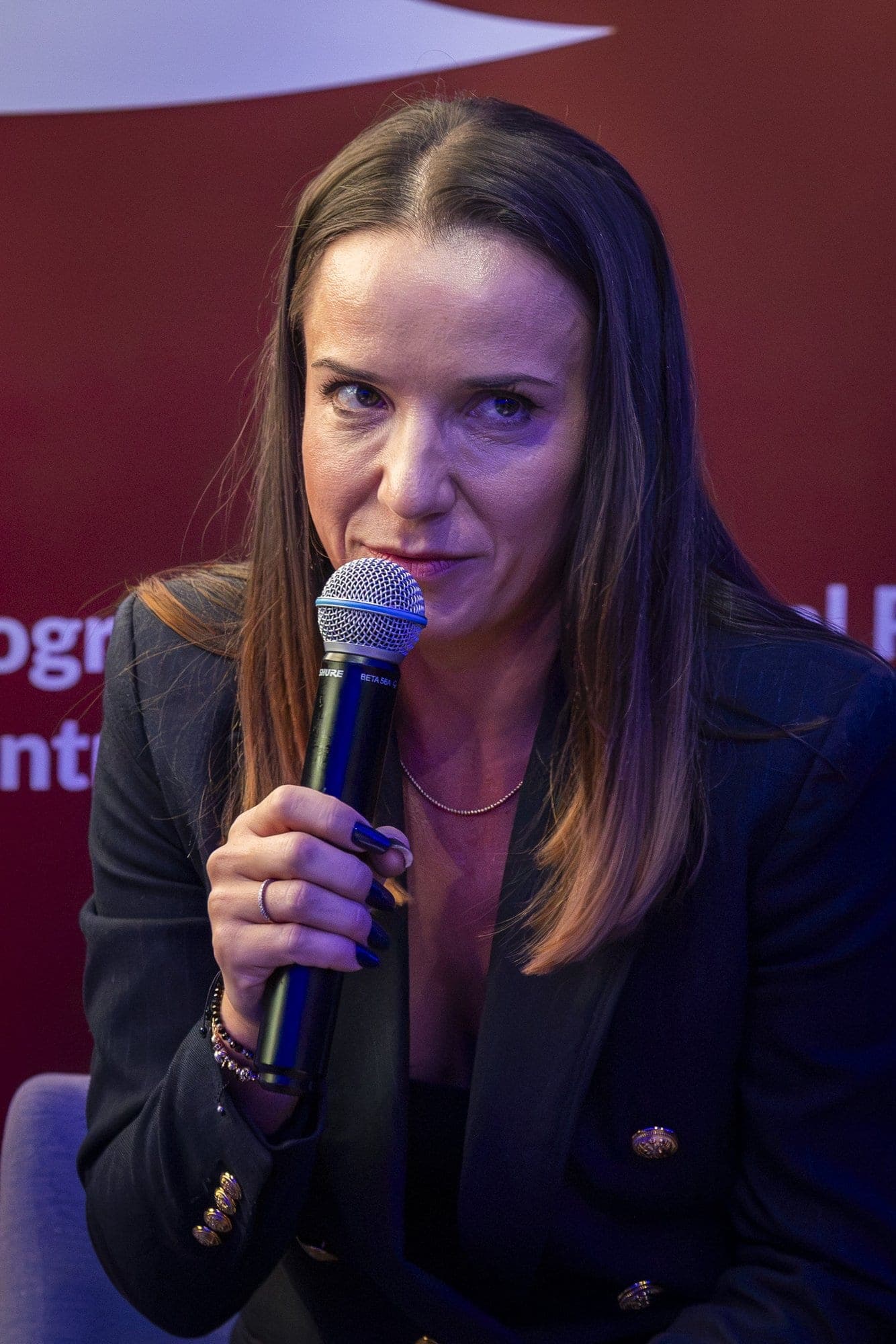
Carmen Păducel, founder of La Înălțime Drone Academy, trains pilots who wash facades with drones, using demineralized water. She started by saying what the method isn't: drones "are not a cure-all." Before any washing, her teams inspect the building with visual and thermal cameras, look for cracks and detachments and decide, together with an expert, whether a facade gets cleaned or needs repair first. She described a private client with an inherited building on Calea Victoriei who received a report with a single conclusion: no matter the water pressure, the building would not come clean. Her case for a digital file on every heritage building was Notre-Dame: after the 2019 fire, the laser scan made in 2010 by art historian Andrew Tallon was used to rebuild the vaults.

Kärcher, Aschilean said, has cleaned monuments around the world free of charge, including, in Romania, the Astra Museum and the Bridge of Lies in Sibiu, and the Sică Alexandrescu Theater and Council Square in Brașov. The method is the opposite of industrial cleaning: tests on small patches, overseen by the people responsible for the monument, dry ice instead of all-purpose cleaning agents.
Diana Nedelcu, a lecturer at the same faculty, proposed a different kind of tool: a 20-year calculation with two scenarios side by side. Prevention — inspections, small repairs — and reaction, with assessments, design, permits, a building closed to use and, in an old building, losses that can't be recovered: historic plaster ruined by dampness noticed too late.

From cathedral to warehouse
The same gap opened the second panel, on industrial buildings. Anghel started with the inventory: there usually isn't an accurate list of equipment, entered once into a management system and kept current. Hence the gap between what goes out to tender and what is actually found on site. Then the maintenance plan, rewritten by every new contractor. And the time standards: to win tenders, some contractors budget so little time that the equipment only gets dusted. Contracts, he said, carry only penalties, no bonuses: "There's no carrot, there's only the stick."
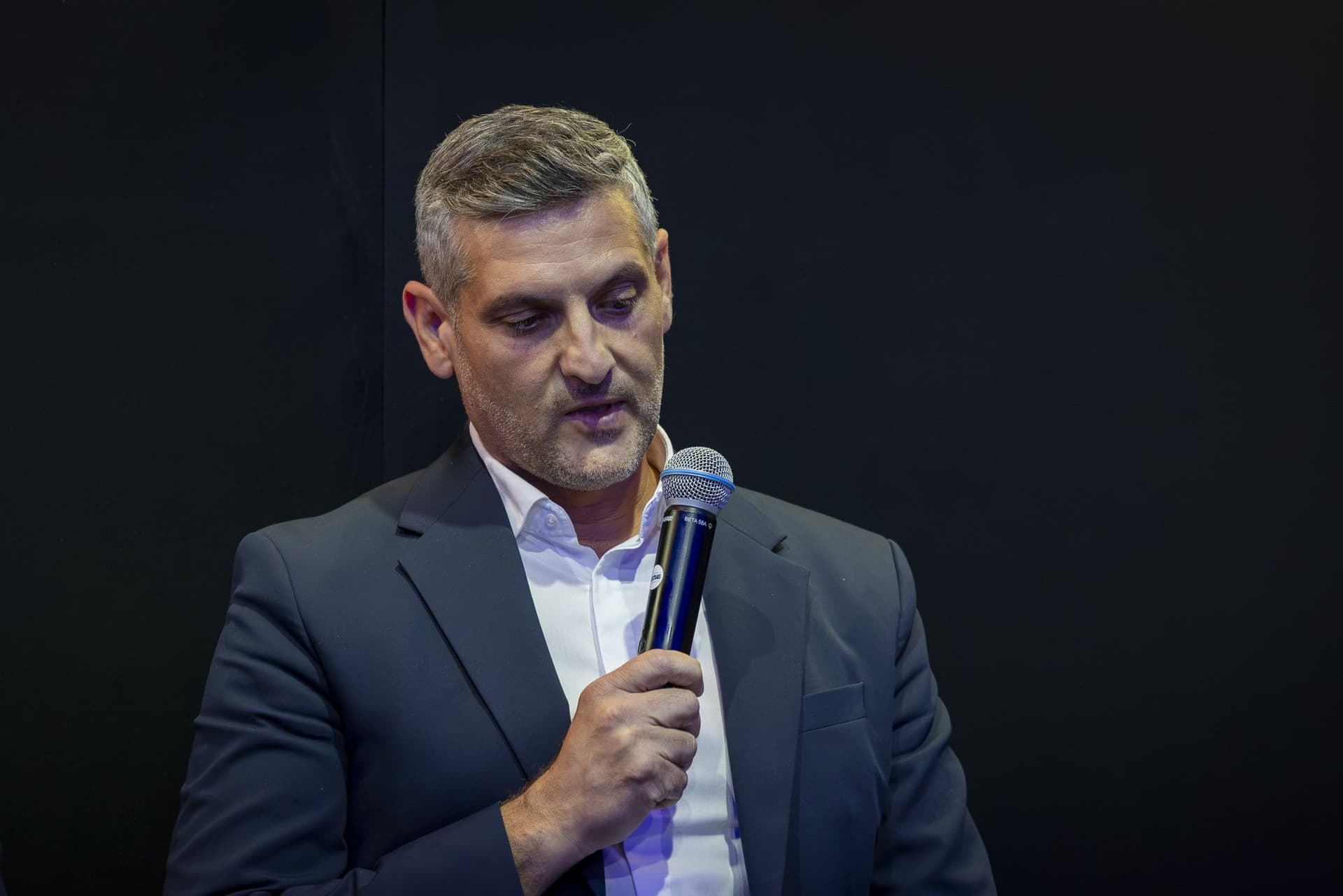
Adrian Mic of Fortim Trusted Advisors described a cold-storage warehouse in Bucharest run in-house by staff with no training in refrigeration, who dealt with several maintenance firms. The large cooling systems, which have to hold a constant 3 degrees Celsius, ran into problems.
Gabriel Bambache, the panel's moderator, explained why: with one contractor for refrigeration, another for power and another for ventilation, each can blame the next.

Noémi Karácsonyi, a board member of Transilvania Business Hub with experience mainly in cleaning services, moved the discussion from the contract to the decision behind it. "Outsourcing is a business-model decision, not a procurement decision," she said, yet contractors usually end up dealing only with the purchasing department. And she drew a line: "outsourcing does not mean outsourcing responsibility." The partnerships that last, in her experience, are those in which client and contractor track performance together, "shoulder to shoulder."

Gabriel Tomescu, CEO of BMF Grup, put the problem in money terms. If rooftop equipment breaks because in-house technicians didn't follow any protocol, the owner pays in full. If a facility management company's staff break it, the company pays. In a factory, he added, for a transformer substation or a bottling line, "you won't find that equipment at Dedeman": the lead time on a single part runs to months.

On cleaning robots, Attila Gorbai, general manager of Tennant for Central and Eastern Europe, spoke with unusual caution for a supplier. Clients ask him to cut three people from a contract with one robot, "but the robot doesn't do the work of three people," and a robot ordered today arrives from America in more than 12 weeks. The real gain, he says, is something else: data. Until now, proof of cleaning was a look at the floor or at the camera footage. He told of a client whose contract required a machine to run 10 or 11 hours a day — a run time that, he says, no machine reaches — and who had disconnected a brush motor to stretch the battery. On camera, the machine delivered.
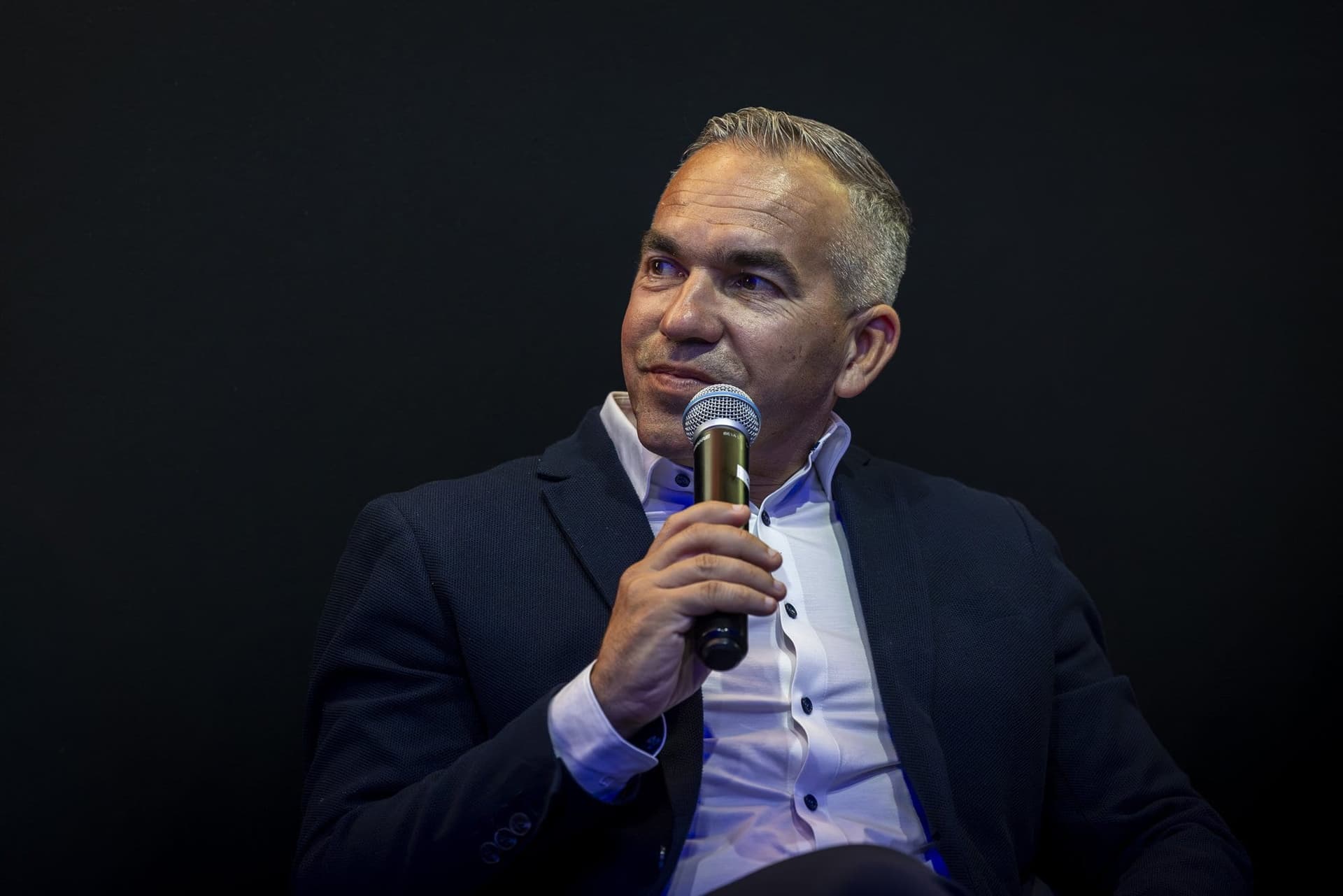
Data can do more. According to Anghel, at Coresi itself, an artificial intelligence system layered on top of the building management system produced, as its first result, a 19% cut in energy use in July. The figure is his; he invited the room to check it with the mall's technical team. Energy efficiency, he insisted, doesn't mean solar panels: "You don't make a boat go faster by fitting a bigger engine and sailing it full of holes."
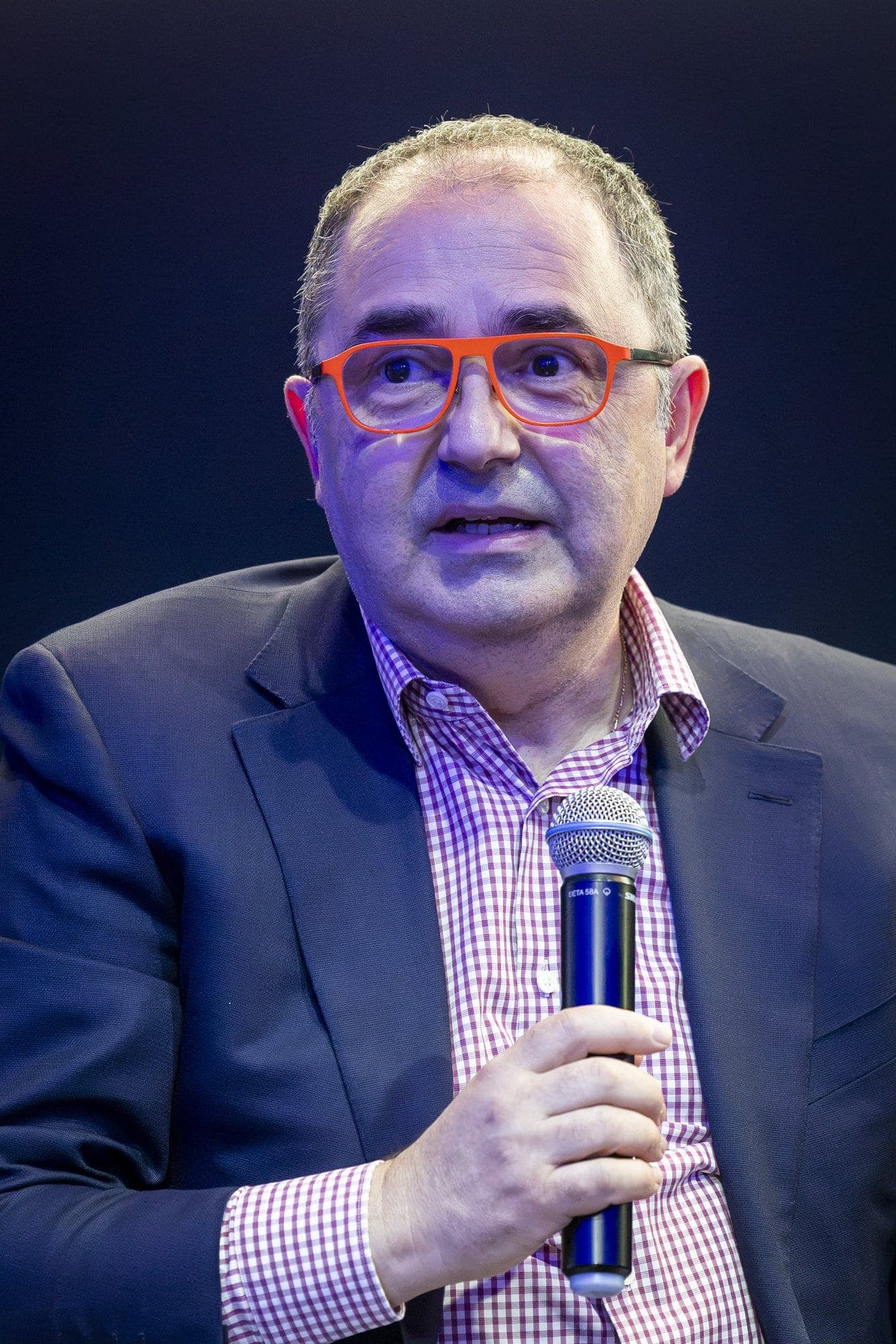
The hands
Toward the end of the first panel, Sterner asked to speak one last time. Throughout the discussion, he said, only the theorists had spoken: "We sit in offices and push pens." Monuments were built by craftsmen, not by architects, engineers or administrators, and today's craftsmen are neither protected, promoted nor organized. Shortly before, Micu had proposed a map of craftsmen with verifiable portfolios. The question of who would vouch for those listed was left for a discussion with the Order of Architects of Romania and the National Heritage Institute.
The rule he started with, putting your hands on everything at least once over two years, assumes there is someone who knows how to use them. "Until we do that," Sterner concluded, "we'll look at the monuments and see polystyrene going up on the facades."
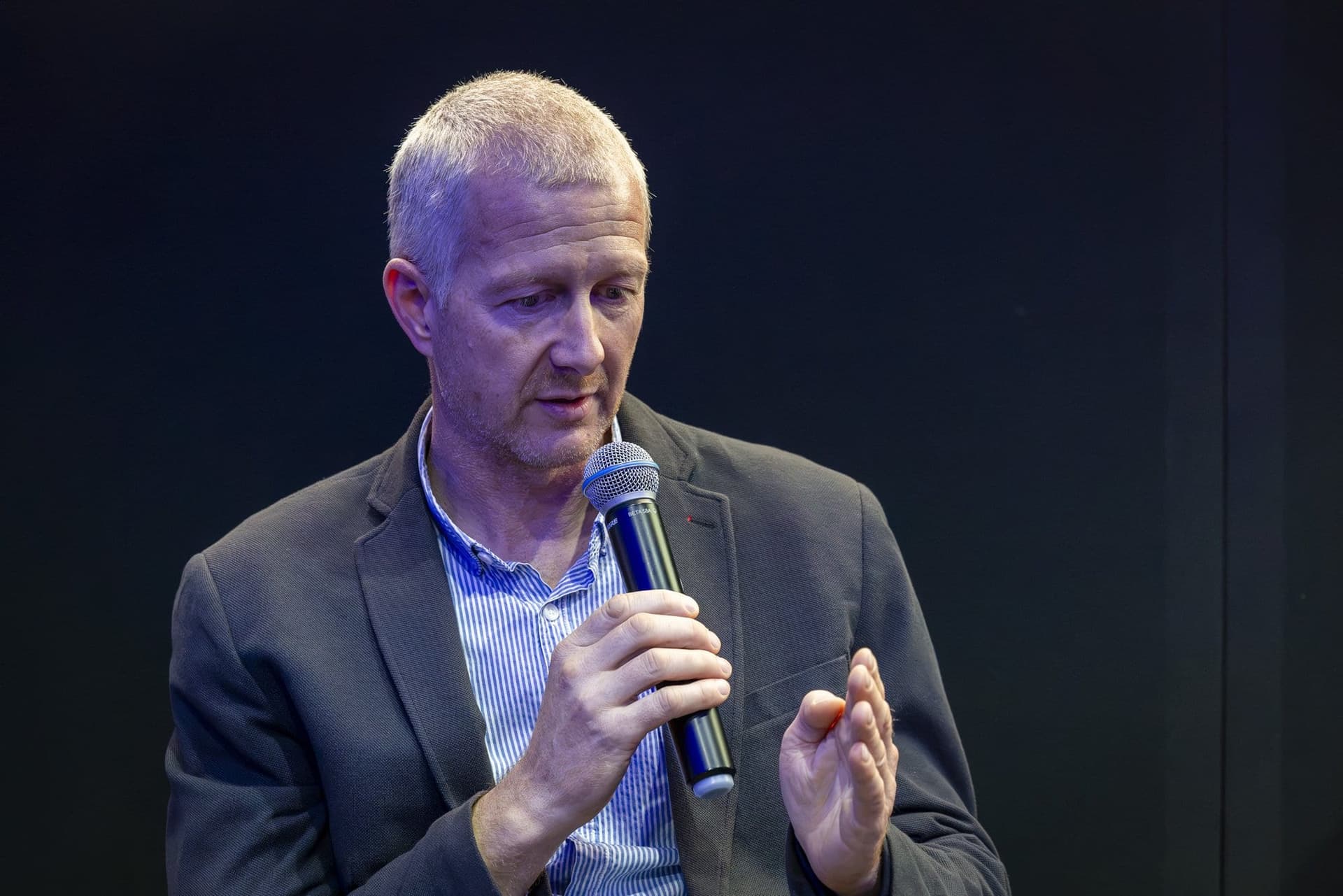
Reported at the Brașov Property & Facility Management Conference, organized by ROFMA on Oct. 2, 2026, at Cinema One Laserplex, Coresi Shopping Resort. Quotes were transcribed from our recording of the debate and translated from Romanian. The question about technical logbooks, monitoring and insurance was asked by the author. Figures attributed to speakers have not been independently verified, except those in the sources below.