In 2018, Estonia's population registry showed that one in five residents had no home. Another registry held that 40% of homes had no toilet. And the country's biggest cluster of traffic accidents appeared, on the map, in the middle of Africa.
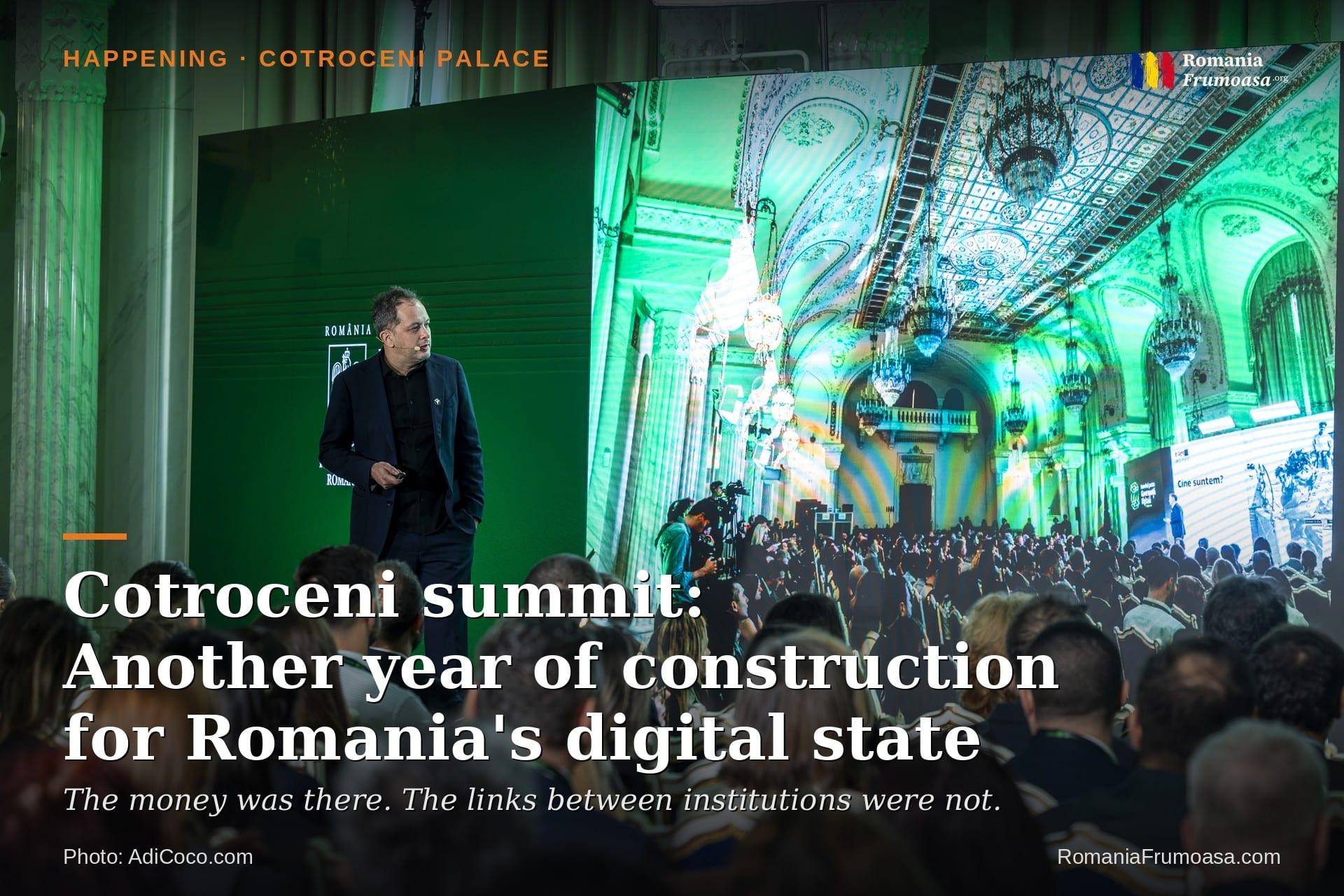
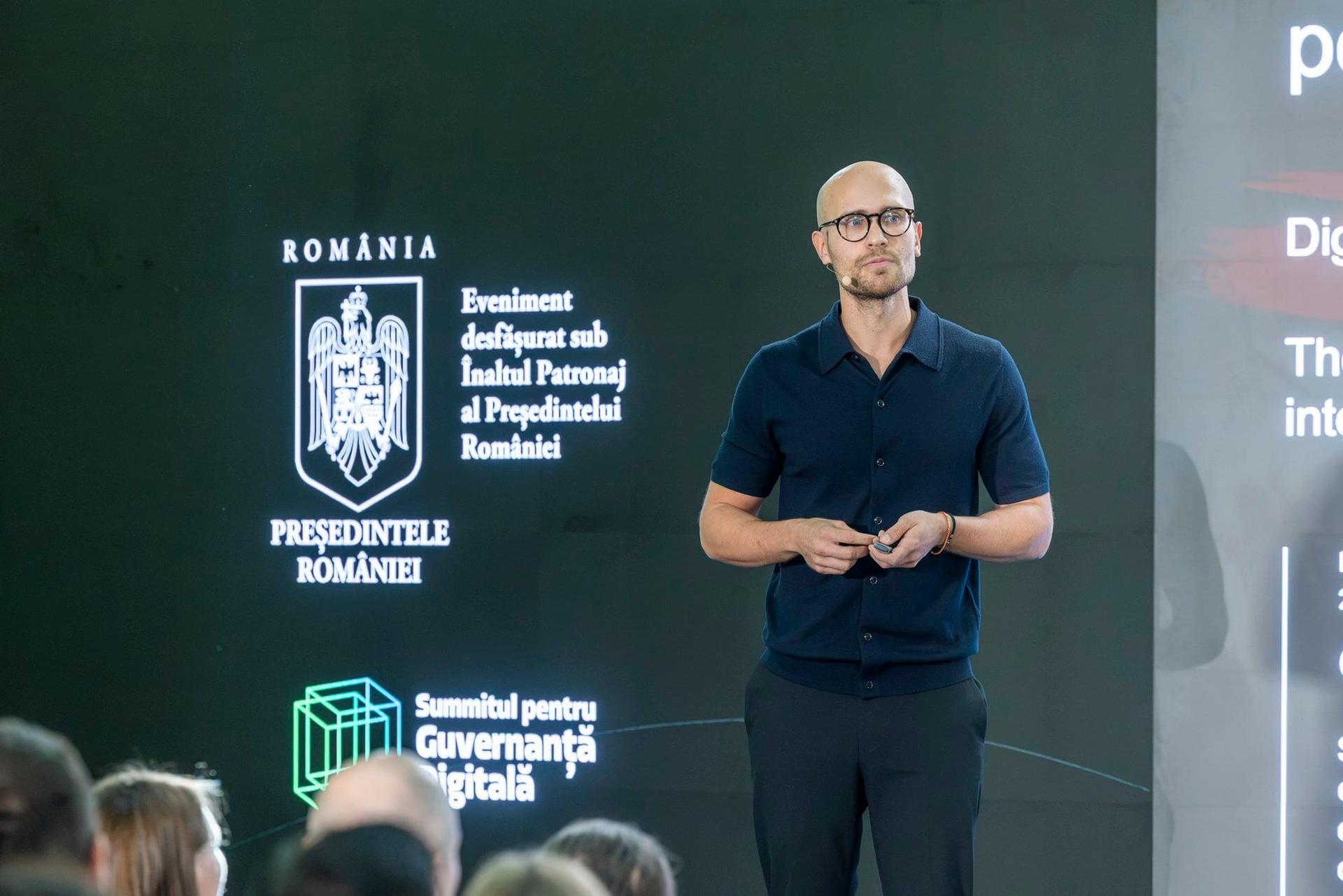
The story came from Ott Velsberg, the Estonian government's former chief data officer, speaking Thursday, Nov. 19, at Cotroceni Palace, the seat of Romania's presidency. "And this was the e-government we were proud of," he added. Then he said that Estonia in 2018 was exactly where Romania is today.
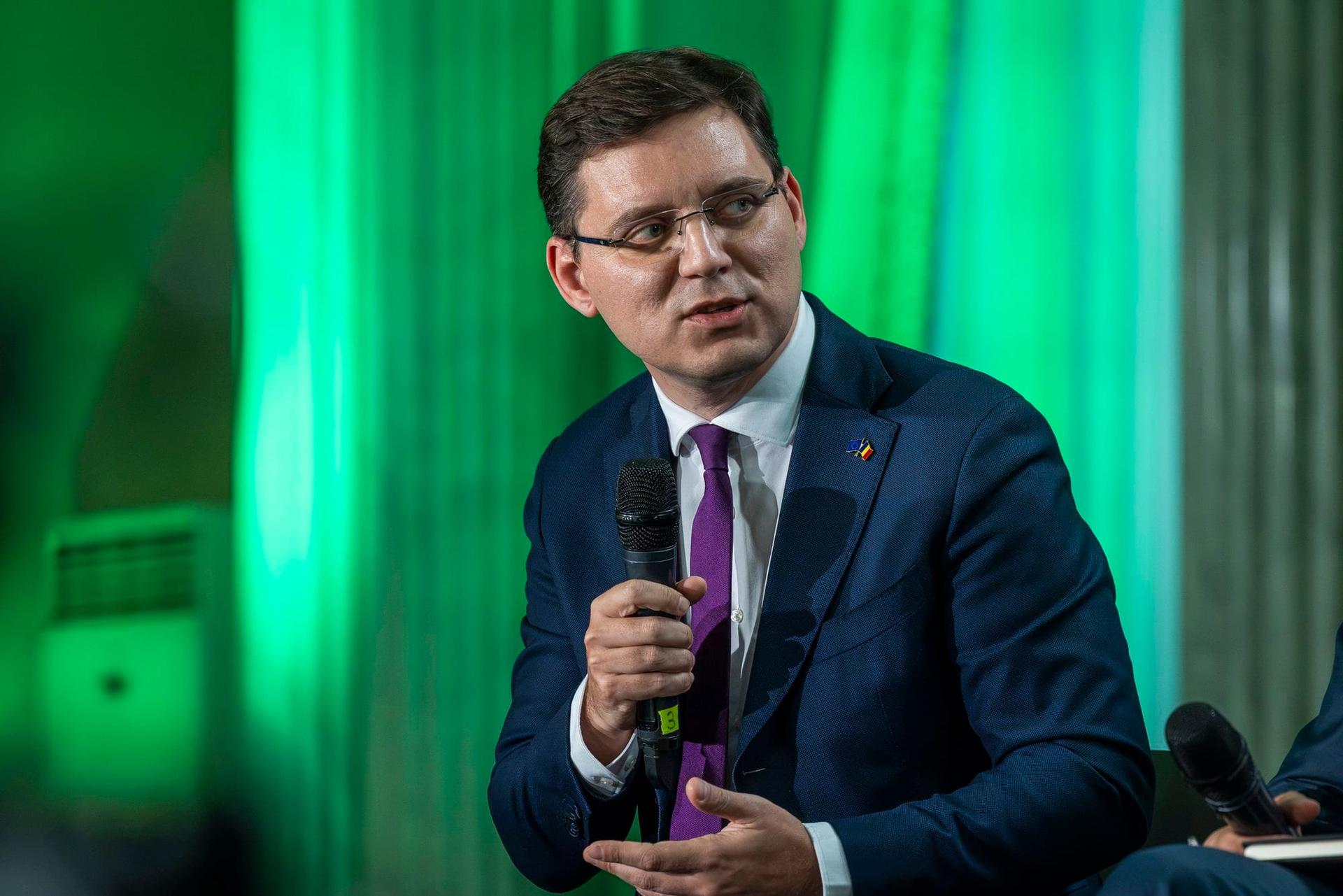
No one onstage contradicted him. In fact, over a full day of talks at the Digital Governance Summit, organized by Edge Institute, almost no one defended the way the Romanian state has gone digital. One of the harshest lines came near the end, from Victor Negrescu, a vice president of the European Parliament: "I am arguing today that we should admit that the digitalization of the Romanian state has failed so far, and that our approach was genuinely wrong." He explained right away: Many projects were carried out, some of them successfully, but they were never connected to one another.
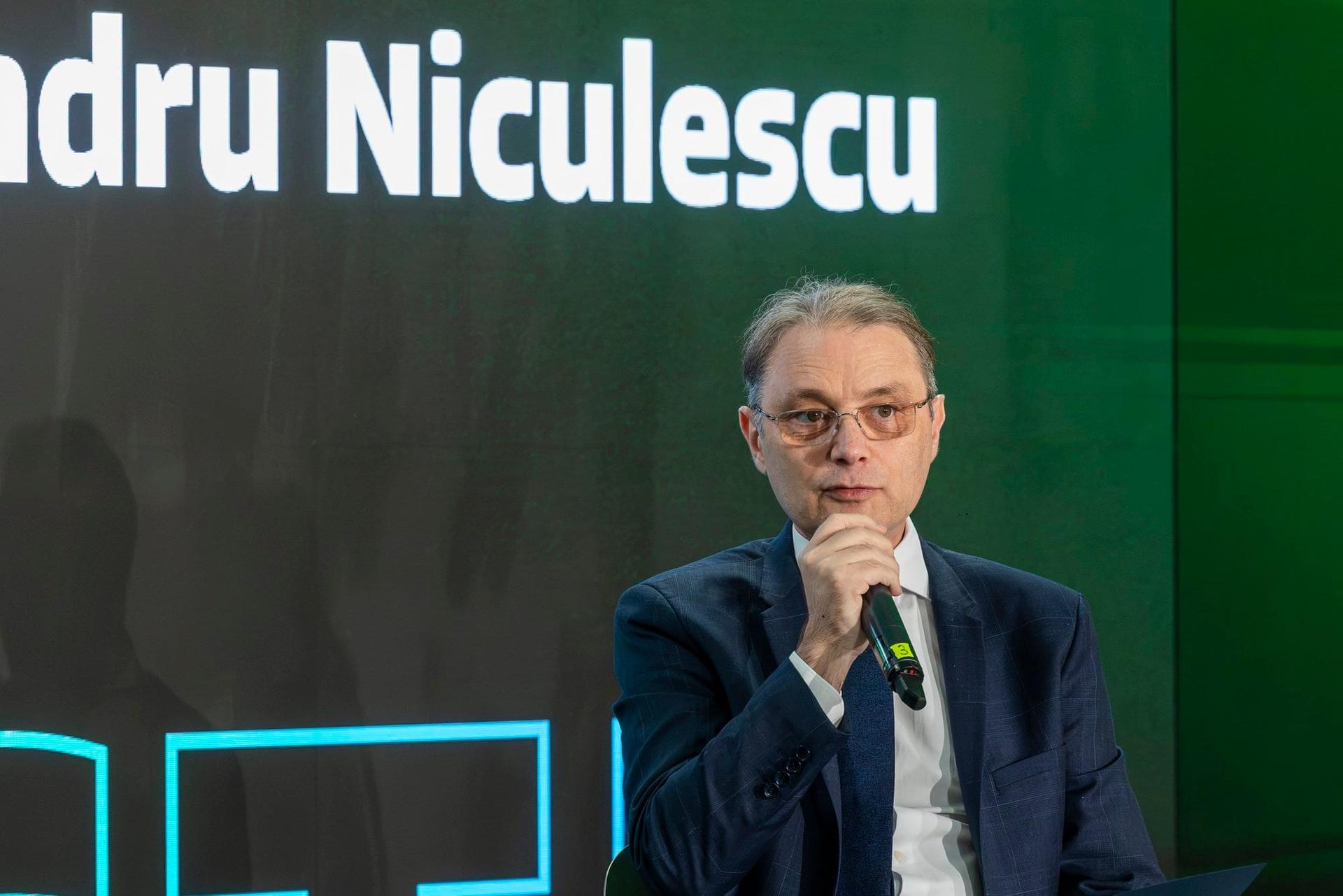
That was the theme of the day, put 10 different ways. Not a lack of money, but a lack of connections. And the stakes were set by Prime Minister Luca Niculescu, who gave himself a deadline: "A year from now we will have to come with results, not with documents about what we intend to do."
The construction site isn't new. This was the summit's second edition; the first took place on Nov. 25, 2025, also at Cotroceni Palace. This summer, halfway between the two, a progress report published by the organizers counted two steps taken and five still to go.

A boulevard with two names
The clearest example came not from a minister but from a mayor. Asked what he needed from the central government, George Cristian Tuță, mayor of Bucharest's District 1, answered with the name of a boulevard: Banu Manta. In the land registry, the name is written with the Romanian definite article, "Banul Manta." In the population registry, it is written without it. To a person, it is the same street. To two computers, it is two different streets, and the district can't fix it, because one of the databases belongs to the Interior Ministry. "We need this like air, because identity has to be the same everywhere," Tuță said.
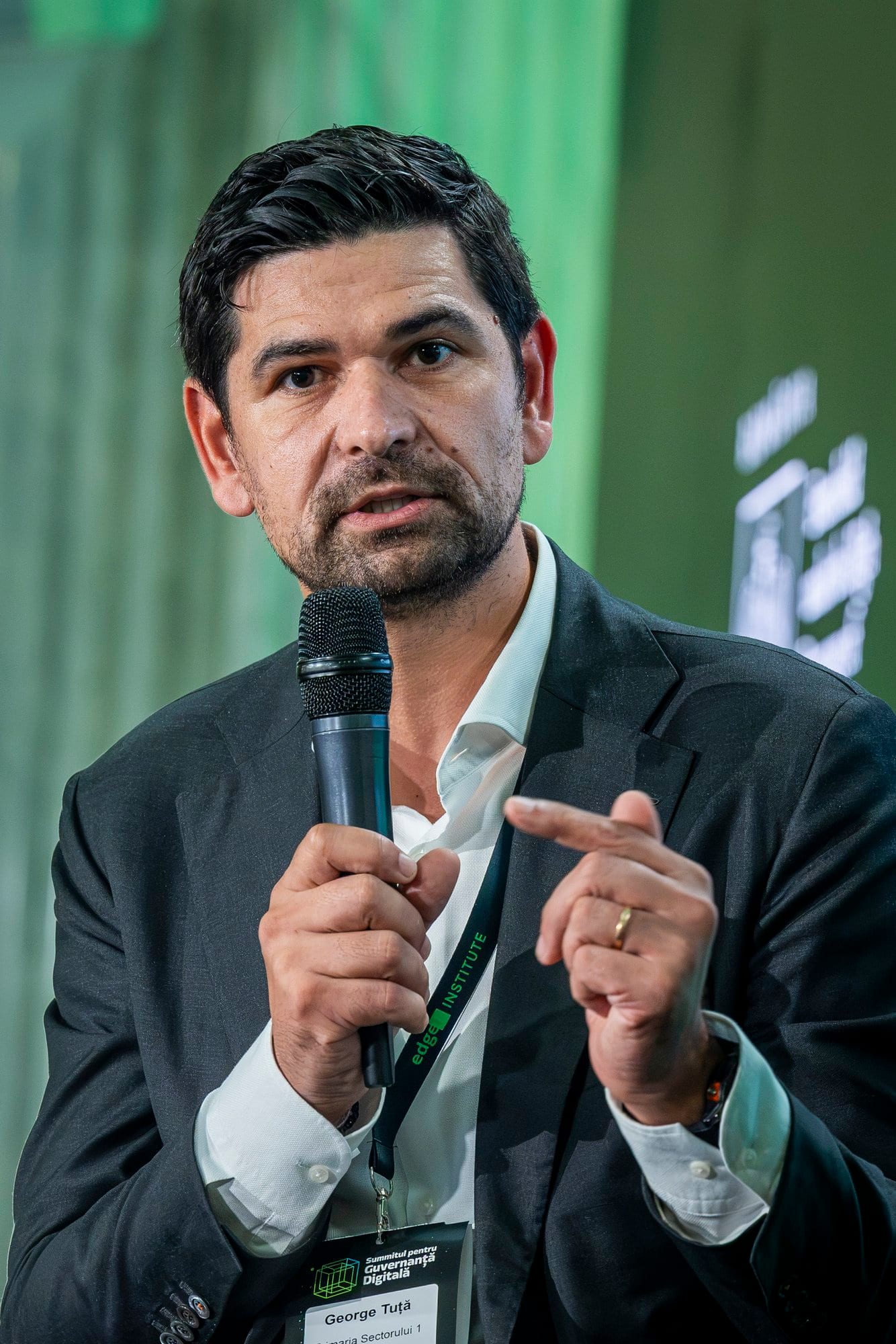
In District 1, the numbers otherwise look good. In 2020, 36,000 of its 250,000 residents paid their local taxes electronically. This year, according to the mayor, the figure passed 130,000. His strategy fits in one sentence: eliminate every unnecessary trip to city hall.
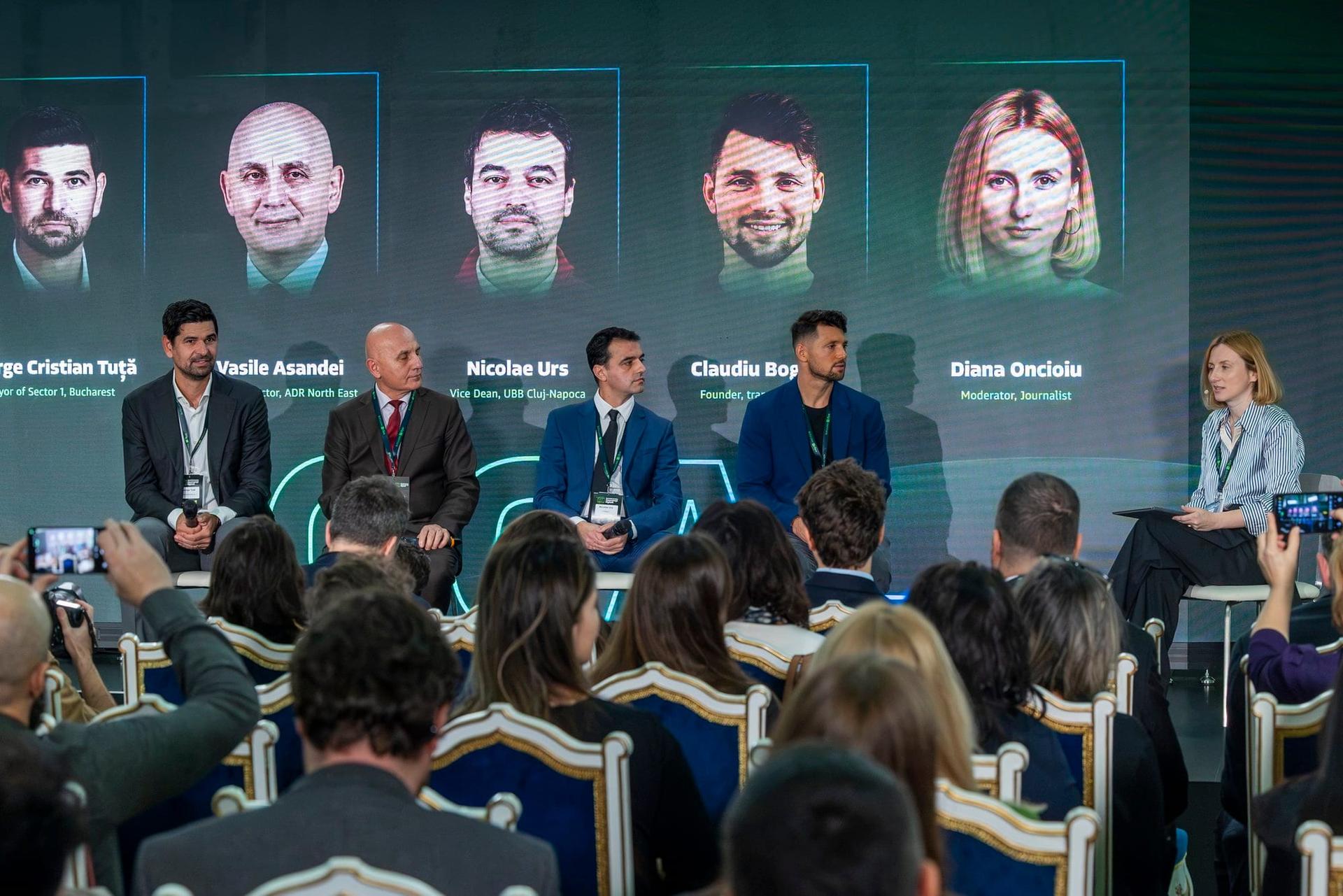
The rest of the country looks different. Diana Oncioiu, a journalist at Dela0.ro who moderated the discussion on local government, brought figures from a map of city hall digitalization she worked on. Of more than 600 city halls evaluated, 450 still require residents to put together a paper file and take it to a counter to register a taxable asset. In only eight is the process digital on both sides of the counter, meaning no paper moves around behind it either.
Why? Vasile Asandei, director general of the North-East Regional Development Agency, answered in one sentence: "At this moment, we do not have a vision for digitalization in Romania." There was money, he said, but everyone spent it their own way. "If we don't think systemically, we could spend another few billion euros in the next financial period and still not end up digitalized. The first need is not money."
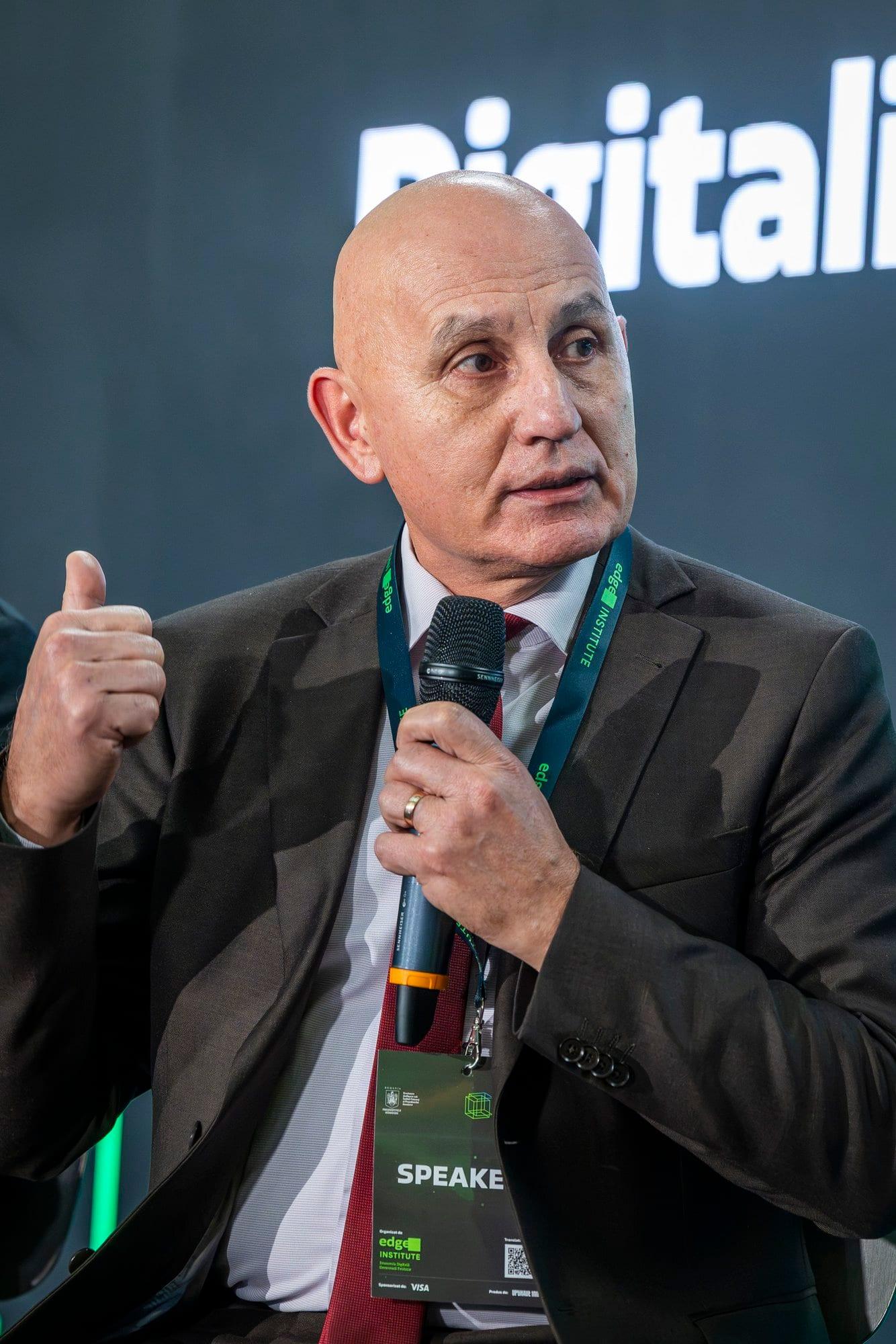
Nicolae Urs, an associate professor at Babeș-Bolyai University in Cluj who runs an index measuring the digitalization of Romania's city governments, filled in the picture: After 2023, the momentum stopped, because public pressure eased. "What isn't measured doesn't improve. And we don't measure." Most of the country's city halls, he added, have no IT department.
Claudiu Bogdan, a programmer who built a platform for analyzing the spending of public institutions, described the same problem from the outside. Public data exists, but it is hard to use: institution names misspelled, organizational charts with no common format, documents scanned so badly they can barely be read. "It's not enough to have access to it. You have to trust that you can use it," he said. His platform drew more interest from ordinary citizens than from journalists, especially in small villages, where people had no other way to find out how the money was being spent.
Twenty thousand projects vs. seven
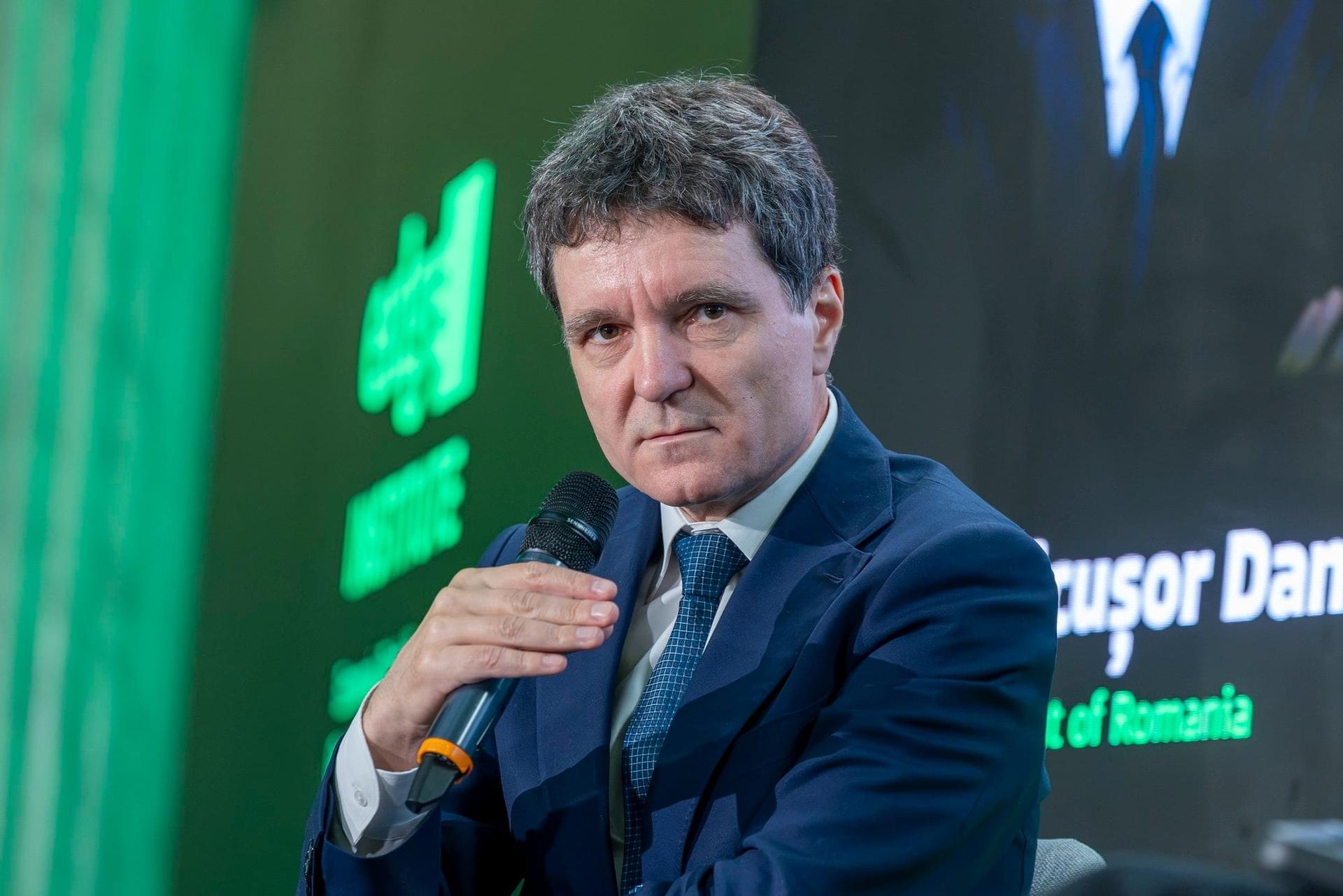
That morning, President Nicușor Dan had made the same point with numbers. In its EU-funded national recovery plan, he said, Romania has between 20,000 and 30,000 projects. Ireland has seven. "It is much better to have seven than 20,000," he said, because every project also costs something to administer.
The president also made an institutional announcement, worded carefully, with an "I believe": The Authority for the Digitalization of Romania is to be moved under the prime minister, to give it the authority it needs in dealing with other institutions. And the test he proposed is simple: Do citizens feel any difference from a year ago?
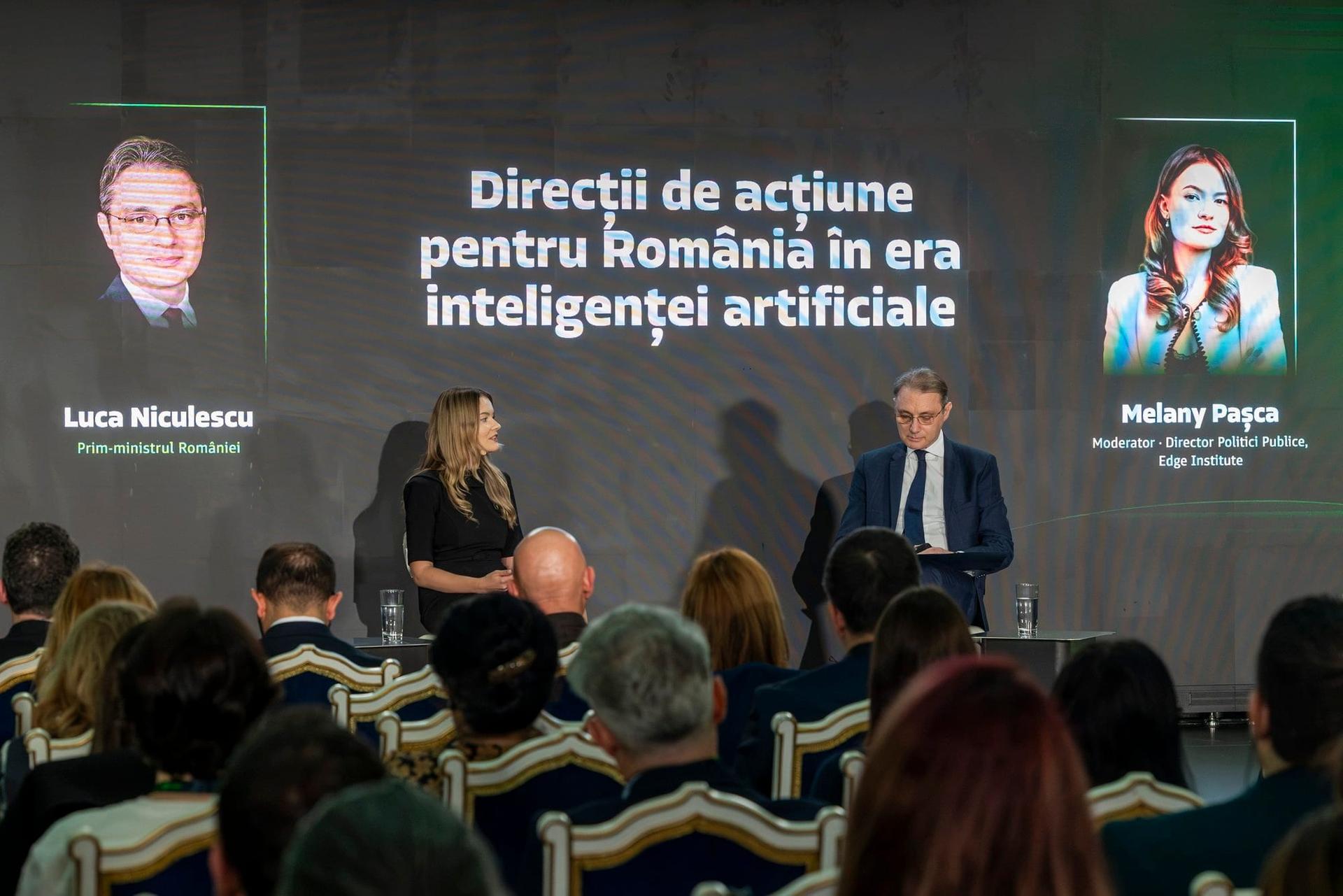
Niculescu described Romania as "a two-speed country": fixed internet among the best in Europe and a strong technology industry, but online public services far below the European average. He also promised that European rules would no longer be padded at home: "Let's stop putting bureaucracy on top of the bureaucracy that already exists." He acknowledged that the government is still "in a grace period," when it can talk nicely about plans. A year from now, he wants to come back with three concrete things. If not, he said, the government expects to be penalized.
Artificial intelligence, in the basement
This is where the day's shift in perspective came. Bogdan Dumitru, the minister delegate for digitalization and artificial intelligence, in office for about a month, first said where Romania stands: fairly well compared with a few Western countries, but "far behind Moldova." Then he proposed a shortcut.
The state's databases were built separately, each shaped like the ministry that owns it. In one, an address is a single line of text; in another, it is split into several fields. It is nobody's fault, the minister said, but they don't match. The classic fix would be to rewrite them, which means years of work. Dumitru believes artificial intelligence can do the matching faster, on one condition: that it not be treated as the building's top floor, the one with the chatbots, but taken "into the deep structure, into the basement."
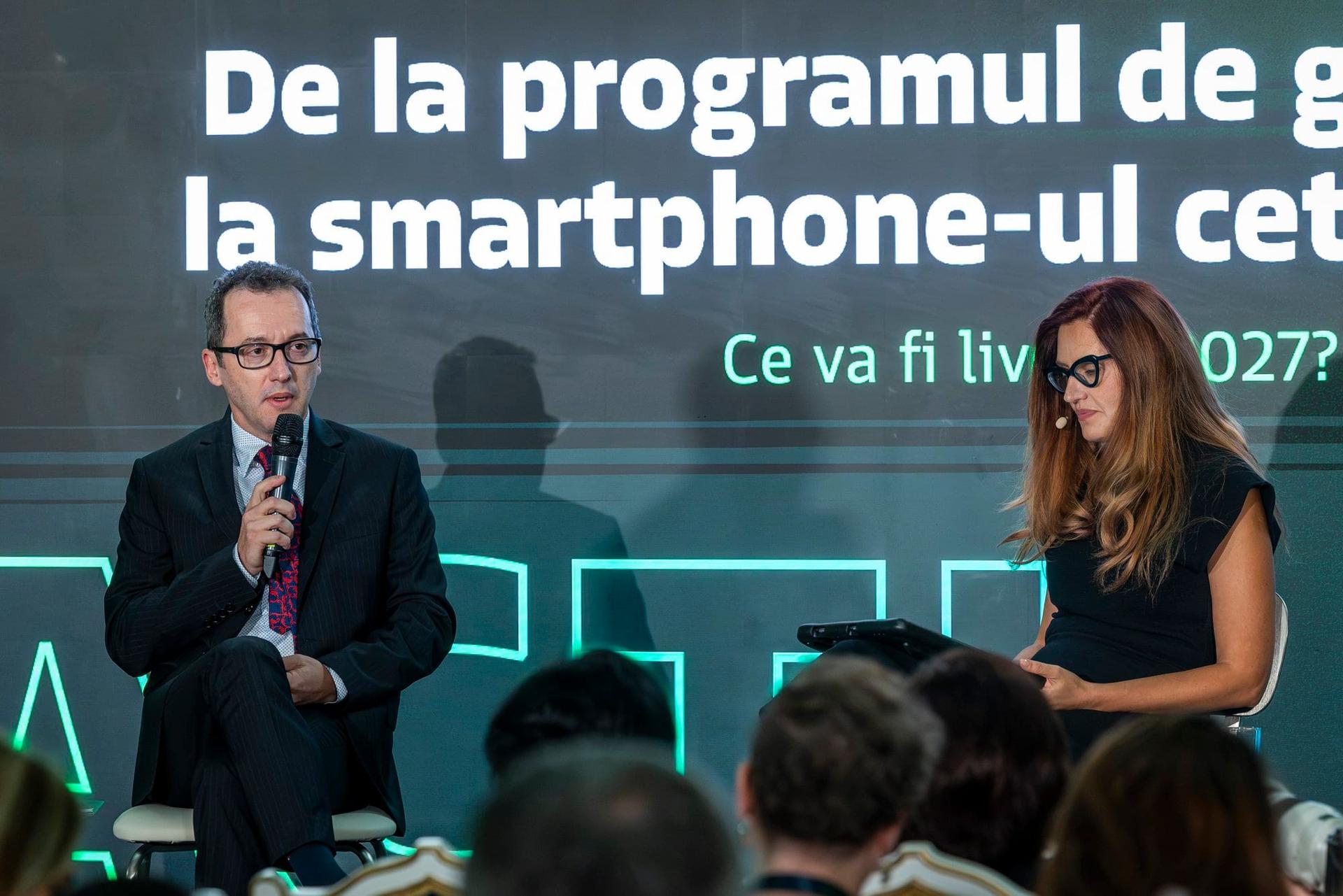
Velsberg reached a similar conclusion from experience. Data doesn't get cleaned before it is used, but while it is being used. And every registry needs a person who answers for it. When he joined the government, 20% of Estonia's registries at most had someone responsible. Today, 90% do. His advice: "Don't overthink, start doing."
The other foreign guests asked the uncomfortable questions. Valeriya Ionan, Ukraine's former deputy minister of digital transformation, described how her country climbed from 102nd place to fifth in the world for digital public services, then asked: "But do we really need the war to make a change?" Tamara Srzentić, a former minister in Montenegro, called artificial intelligence "the single most honest audit" governments have ever had: It doesn't create new problems, it exposes the old ones. And Marietje Schaake, a Stanford fellow and former member of the European Parliament, warned that Europe's dependence on American technology "can be weaponized." She added that she has yet to hear a political leader say openly that independence costs money first and pays off only later.
The last train of European money
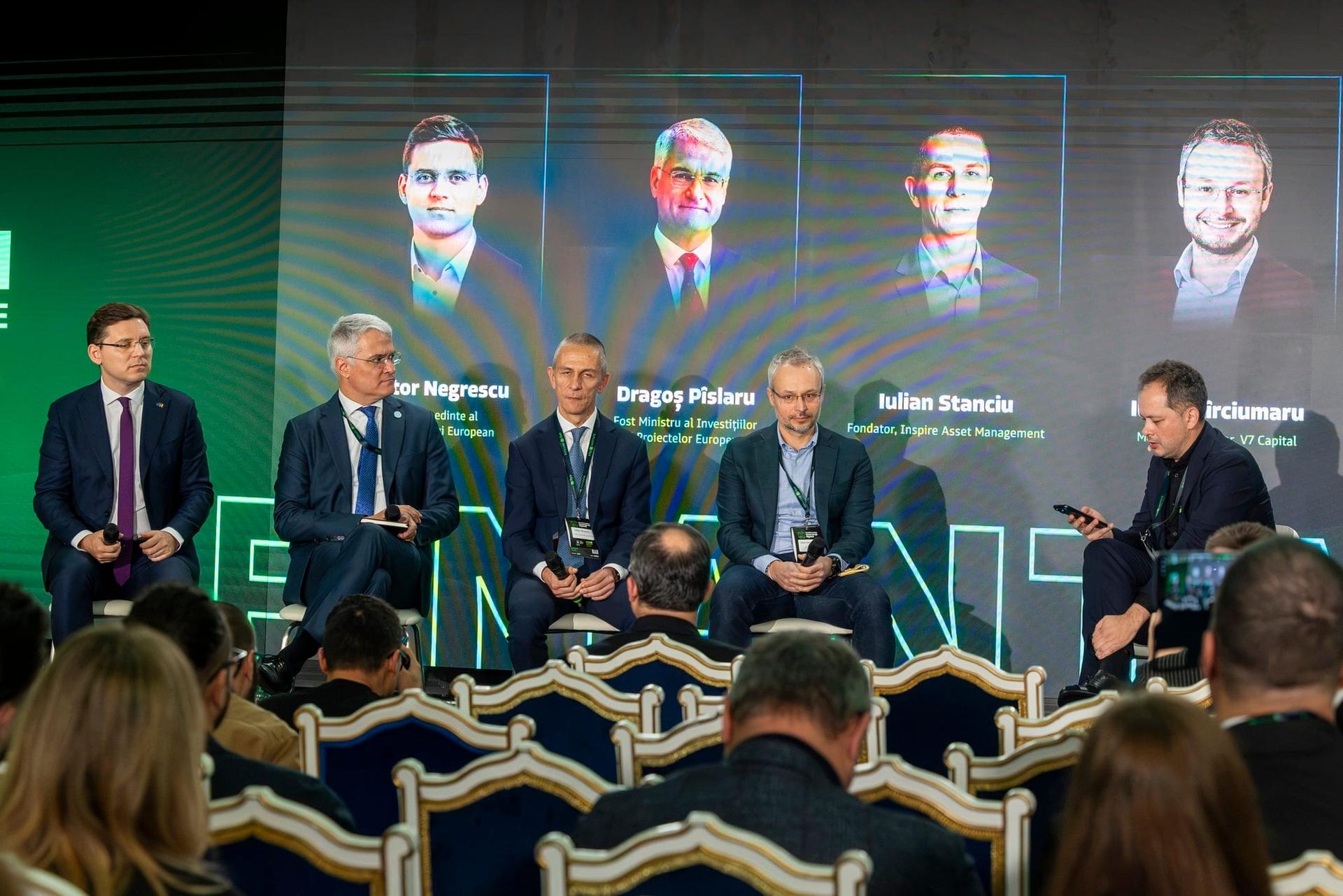
Money came up last, and that is where a real dispute emerged. Dragoș Pîslaru, a former minister of European investments and projects, asked that in the next European budget Romania set aside a separate chapter for digital, with 12% to 18% of its allocation, or between 3 billion and 5 billion euros. He also announced, without details, that he is about to move to the private sector, into artificial intelligence.
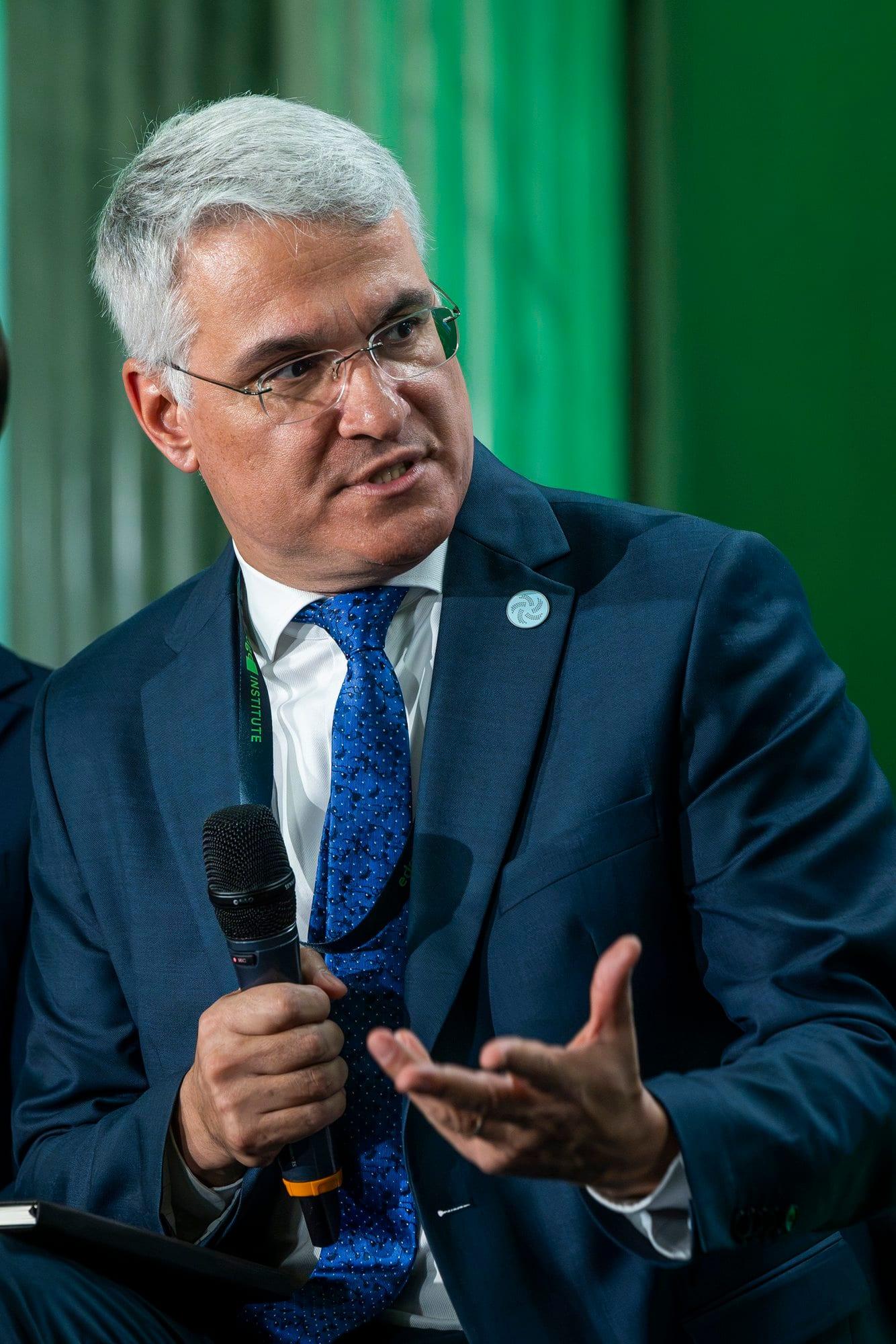
Pîslaru also proposed that the state pick its champions early and back them. Investor Iulian Cîrciumaru politely disagreed: The champions should be chosen by "the private investor, the one with skin in the game," meaning the one who loses when he gets it wrong. Iulian Stanciu offered the figure that explains why it matters: According to data from ANIS, the software industry association, fewer than a quarter of Romania's IT employees work at companies that develop Romanian products. The rest, he said, "are building other countries' GDP."
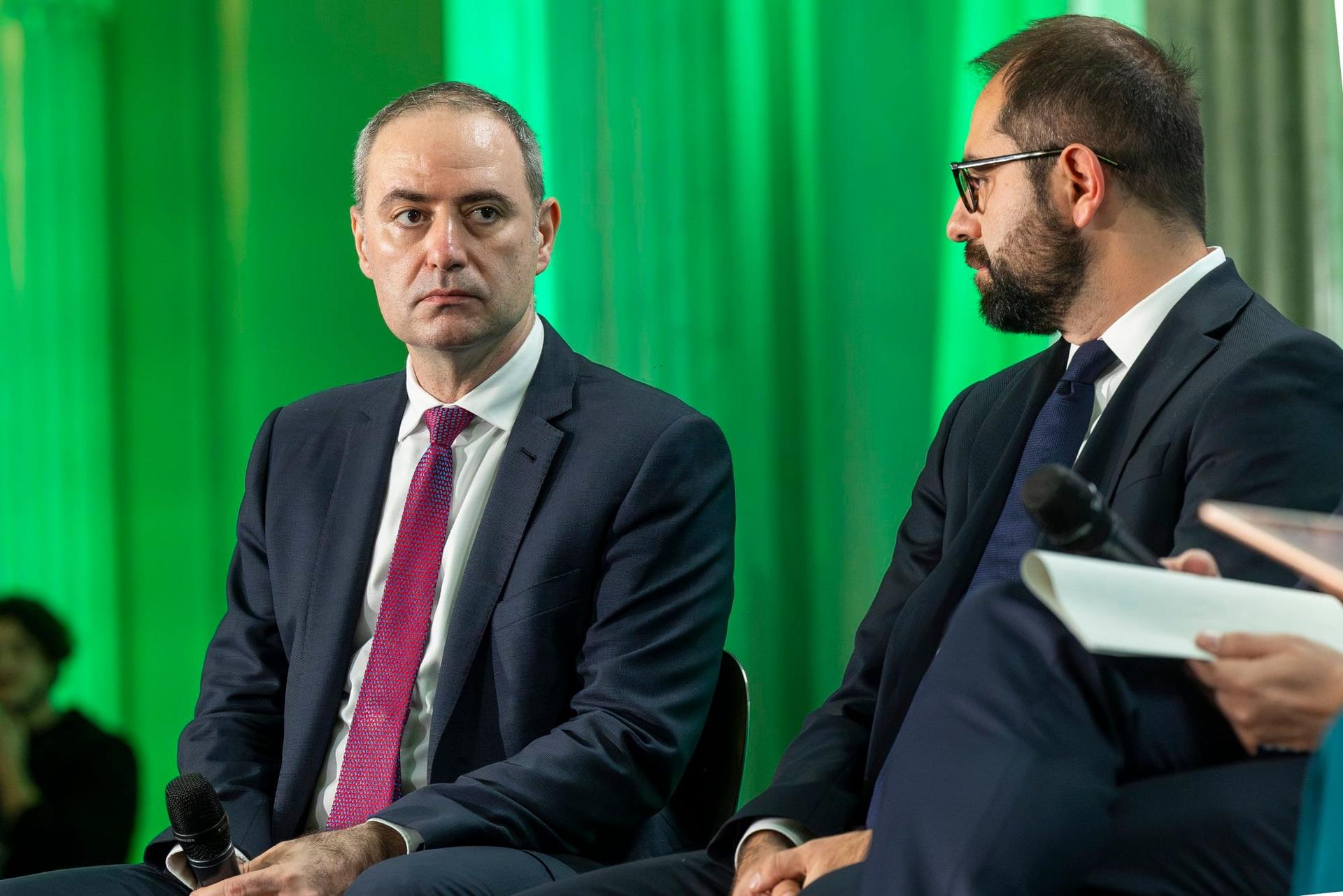
Sergiu Manea, CEO of Banca Comercială Română, one of the country's largest banks, summed up as a wish what others had said in numbers. The digitalization minister wants printers to disappear. Manea would like something else to disappear: "the furious resistance of institutions to talking to one another."

What can be checked a year from now
The summit produced no decisions with a budget and a date. It did produce a few promises that can be checked off. A pilot project for the RO Wallet digital wallet, announced by Dumitru for December. A guide to using artificial intelligence in public administration, also announced for December, by presidential adviser Radu Burnete. The first version of the new portal of ANAF, the national tax agency, promised by Finance Minister Alexandru Nazare by the end of the year. And the prime minister's three concrete things, due in November 2027.
It took Estonia years to get from accidents in the middle of Africa to registries with a responsible person's name on them. Romania's prime minister has given himself one. One more, if you count from the first summit. Until then, in District 1, a boulevard goes by two names, depending on which counter you ask at.
Reported from our own recordings of the Digital Governance Summit at Cotroceni Palace on Nov. 19, 2026. Quotes from the talks given in English are transcribed from those recordings; quotes from the Romanian-language sessions were translated into English. The figures are those stated by the speakers and are attributed to them.
This English version is an automatic translation of the Romanian original.