
Three stories circulate about the bridge: that horse carts used to cross it, that the engineer sat in a boat beneath it during the load test and that the army blew it up in 1916. The newspapers of the time, read page by page, tell a different story: a competition nobody won, a plaque fought over by political parties and a bridge that withstood its own army.
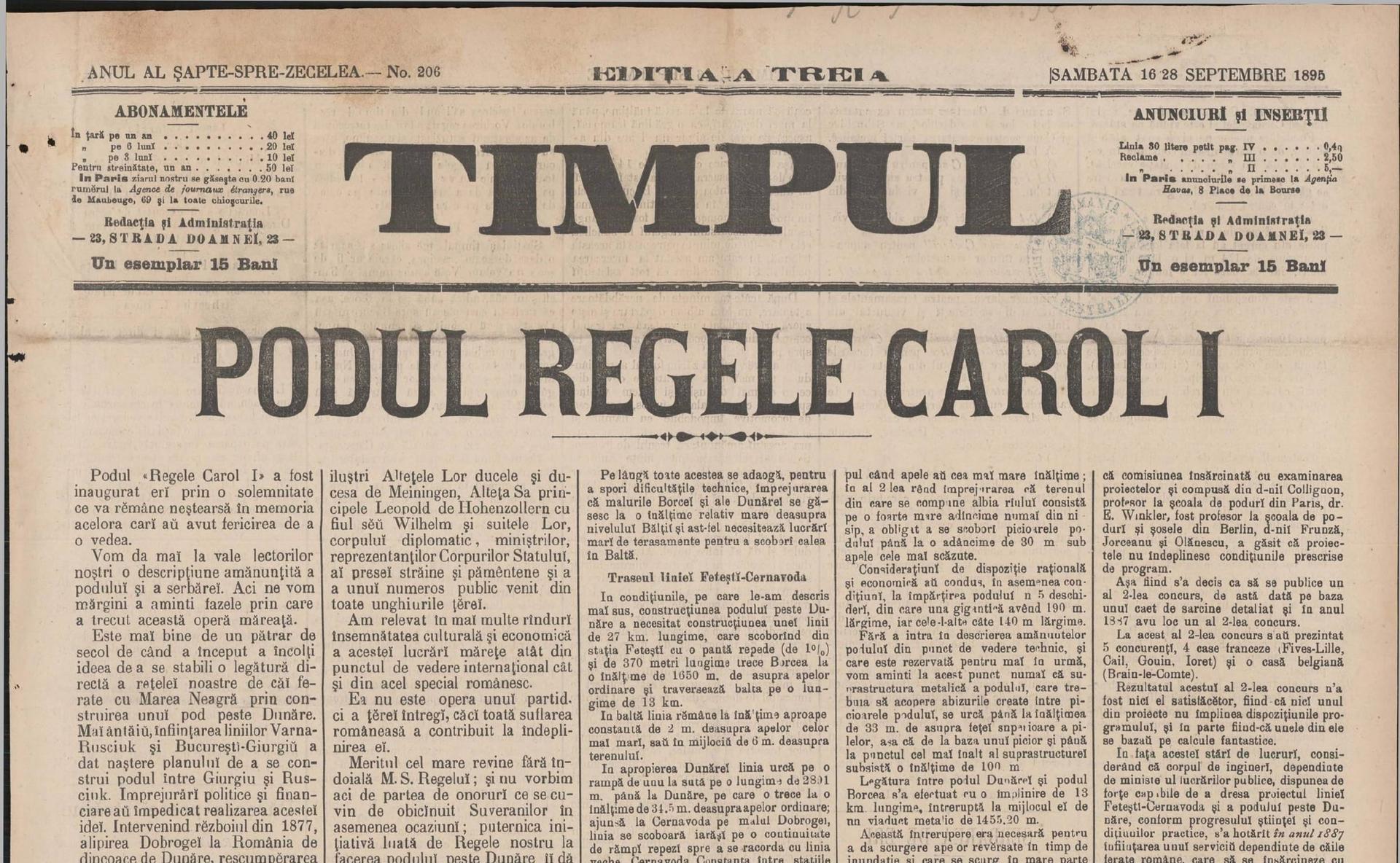
On Sept. 14, 1895 — Sept. 26 by today's calendar — grandstands had gone up on the Dobruja heights outside Cernavodă. Some 400 invited guests were there, along with roughly 30,000 people, by newspaper estimates, who had come to watch the test. From the direction of Fetești came 15 locomotives decked with flags, coupled one behind the other. The reporter for the newspaper Timpul saw them coming "like a furious dragon."
They rolled onto the bridge at 80 kilometers an hour. The train crossed in about a minute and a half. The bridge, the same reporter noted, "had not so much as hummed." Then came the whistles, the gun salutes and the cheering: "This concert is impossible to describe." The royal train crossed afterward in 40 seconds.
The Cernavodă bridge is one of the few Romanian monuments that need no legends. It acquired three anyway. The true story behind them is better than any of them: an international competition nobody won; a 29-year-old engineer, the jury's secretary, who went on to design the bridge himself; a bronze plaque that splits the credit between political parties; and a bridge that in 1916 withstood its own army's attempt to destroy it.
Eight firms and no first prize
In August 1882, Romania's Ministry of Public Works launched an international competition for a railroad bridge across the Danube. The deadline was Sept. 1, 1883. The brief called for a single track, a 2-meter sidewalk and a clearance of at least 30 meters above high water, so ships could pass underneath.
Eight firms responded, among the largest of the day, including Fives-Lille, Batignolles and the firm of Gustave Eiffel. The British magazine The Engineer published the result in November 1884. The jury, chaired by Dimitrie Frunză, awarded second prize to Batignolles and third prize to the German consortium Klein-Schmoll-Gärtner. Nobody received first prize.
The jury's secretary was a 29-year-old engineer named Anghel Saligny.
In October 1883, the newspaper Românulu reported briefly that "the construction of the bridge over the Danube has been postponed." The project did not die. A year and a half later, in March 1885, Parliament passed the bridge law without debate, in a ballot of 67 white balls against 11. The law opened a credit of 35 million lei. That same year, Saligny's name appears on the committee revising the specifications. A second competition, with five entrants, also ended without a result: some of the designs, Timpul later wrote, rested on "fantastical calculations."
Starting in 1887, the state entrusted the work to an in-house office headed by Saligny. His design took two years. At the construction tender in January 1890, Fives-Lille won the contract, "the cheapest and with the best guarantees," according to Timpul. It was one of the firms that had lost the 1883 competition. This time it was building to the plans of the jury's former secretary. The bridge over the Borcea branch of the Danube went in 1891 to Gaertner, Schneider & Cie.
The foundation stone was laid on Oct. 9, 1890, Old Style. Saligny was 36.
The man at the jury table
Anghel Saligny was born on April 19, 1854. He was 41 at the inauguration, not 33 or 34, as is sometimes claimed. His real age makes the story more credible: not a precocious genius, but an engineer who had watched from the inside as eight major firms failed to convince a jury, and who then had 12 years to solve the problem.
The press of 1895 treated him as the undisputed author of the work. Timpul noted that "no claim of paternity" had been made, a rare thing for a project of that size. At the banquet catered by Capșa and the Continental hotel, the engineer sat across from Princess Marie. The most deserving workers received the "Faithful Service" medal. On the Dobruja bank, Gazeta Transilvaniei wrote, "a swarm of Tatars" roasted whole rams for the crowd.
The last rivet, made of silver, was driven on inauguration day. The bridge was named "King Carol I." Today it bears the engineer's name.
How to lift 1,800 tons onto a stone pier
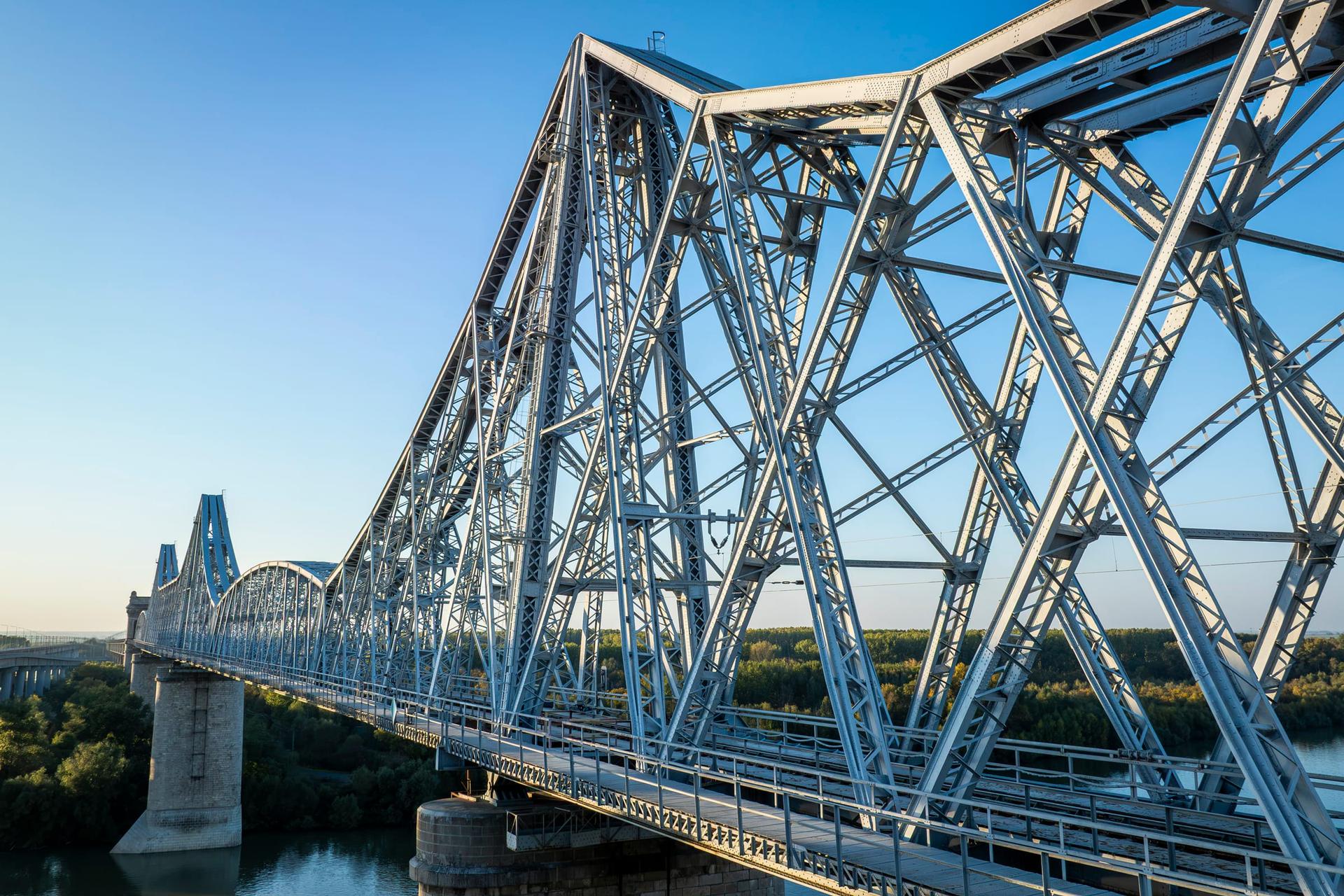
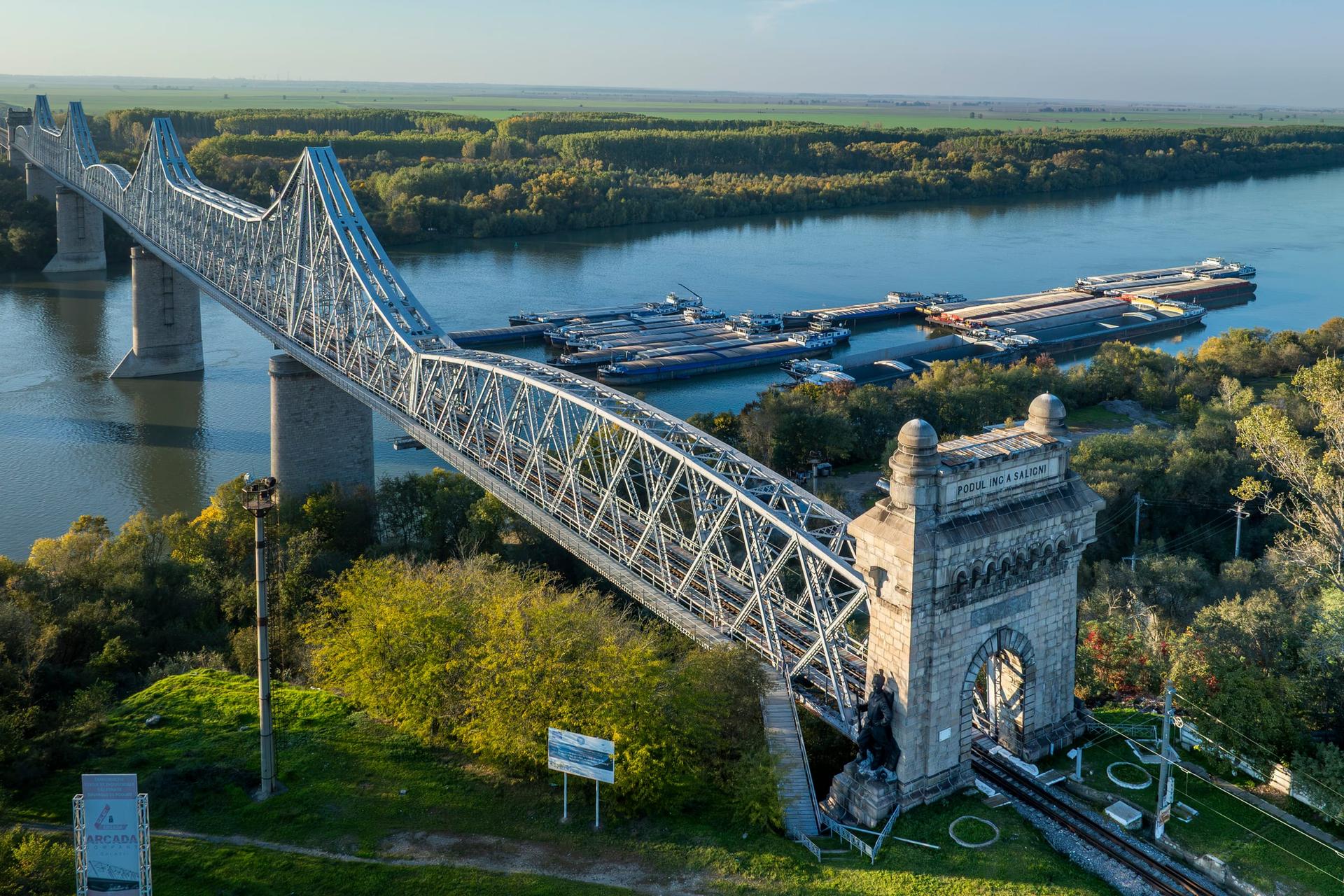
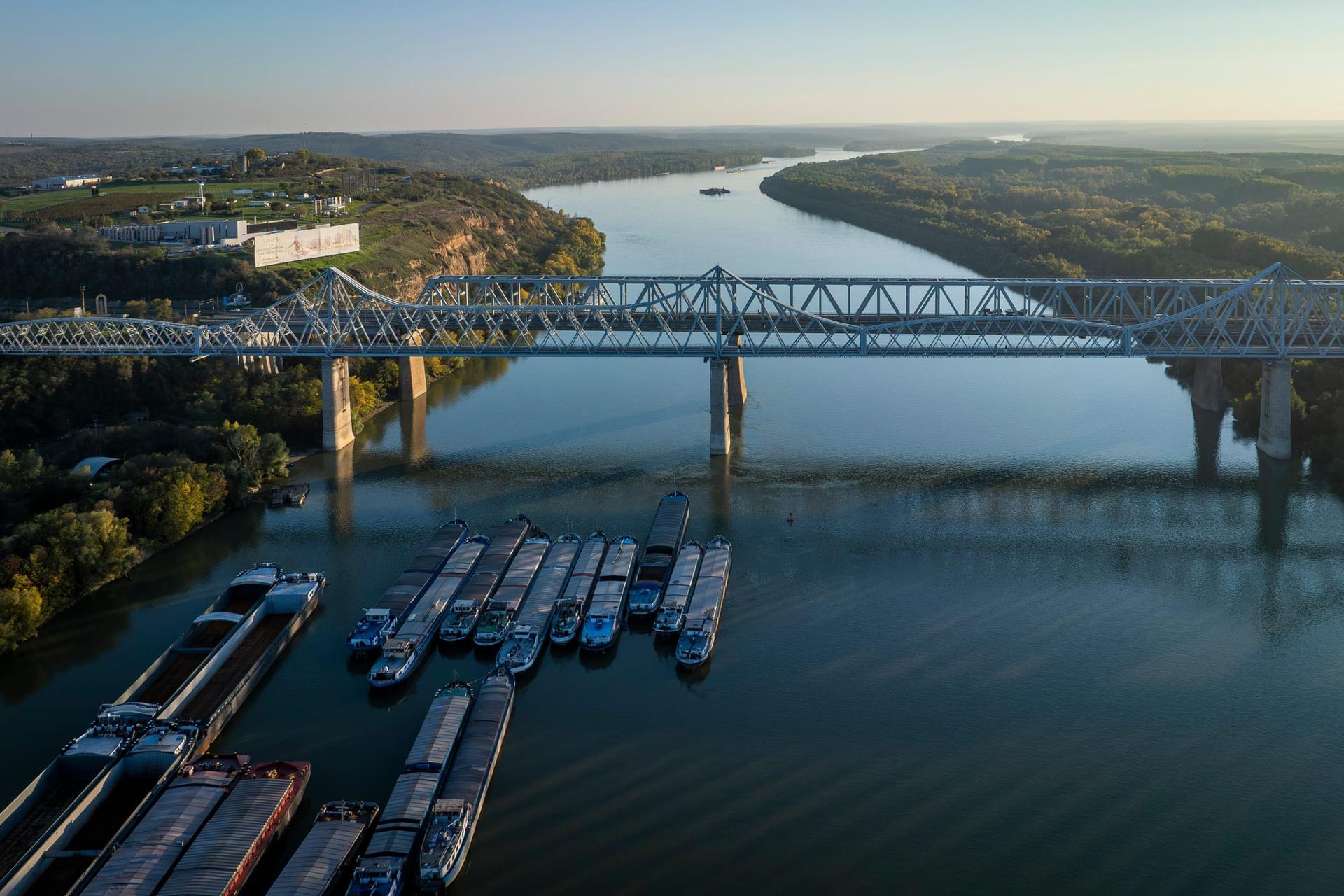
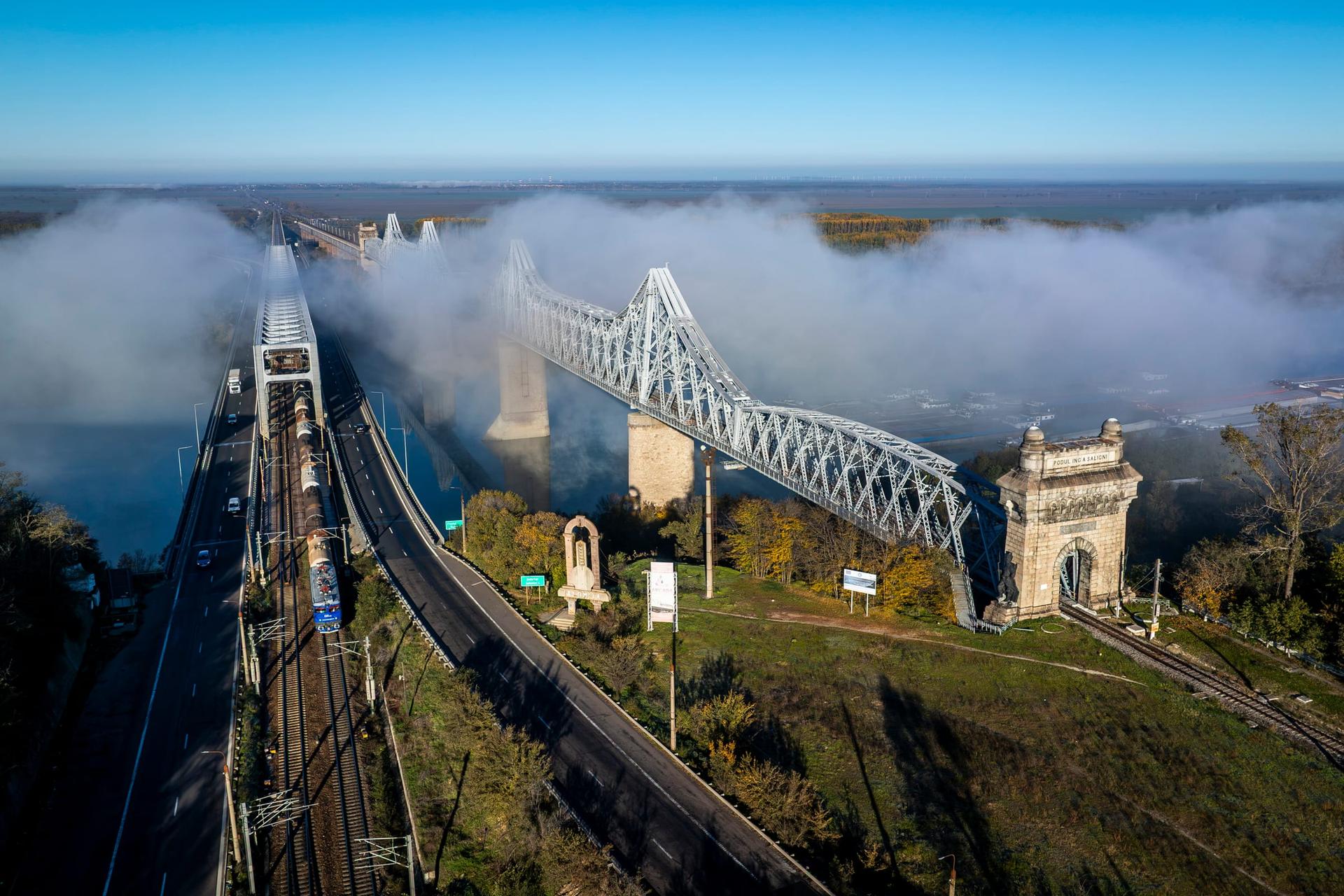
Between Fetești and Cernavodă, the train crosses nearly 4 kilometers of bridges and viaducts: the bridge over the Borcea branch, a long viaduct across the Balta Ialomiței and the bridge over the Danube. The last is 750 meters long, with a central span of 190 meters and four spans of 140 meters each.
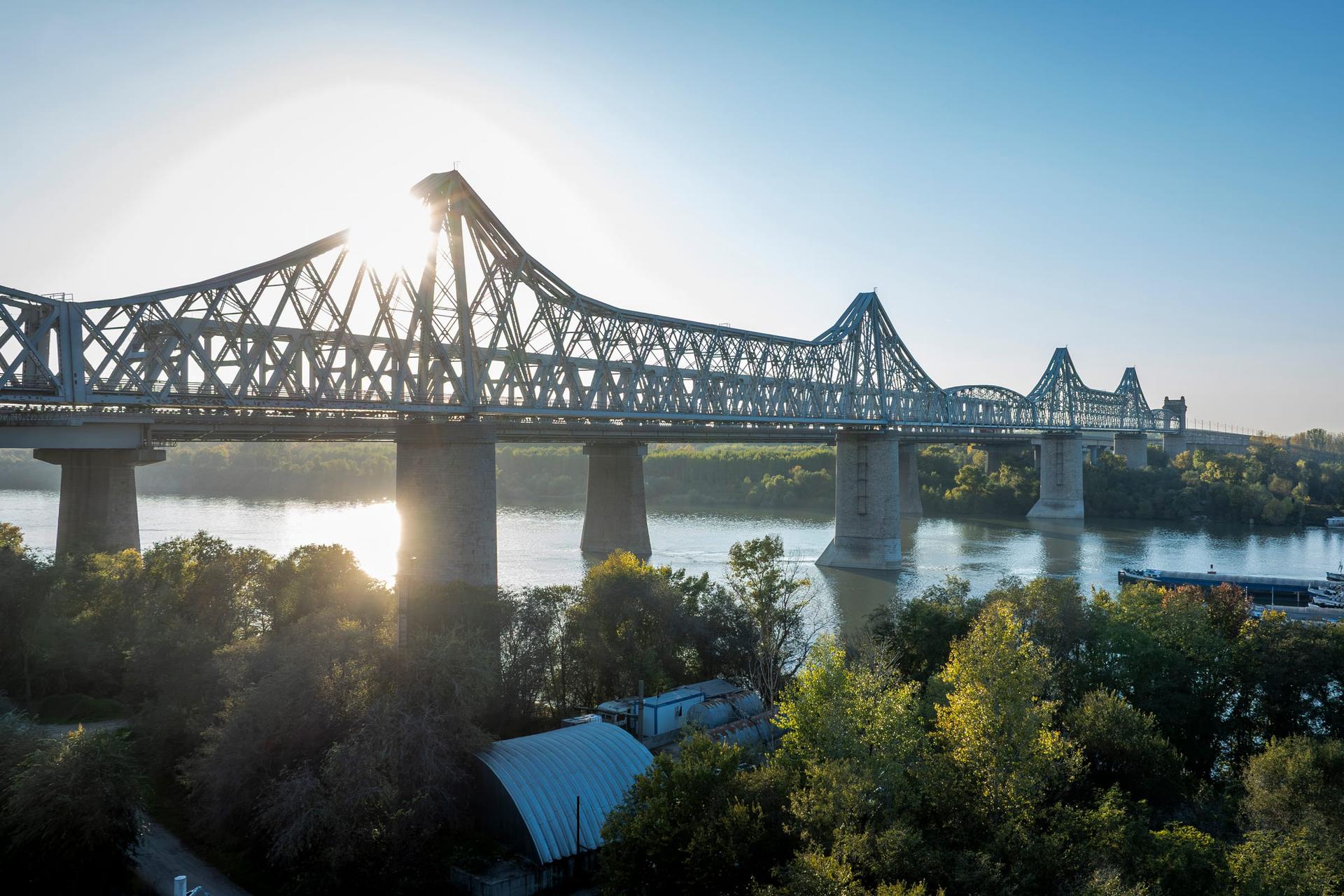
Timpul explained the method to its readers. The superstructure was assembled on scaffolding a few meters above the water and raised in stages with hydraulic presses, about 1,800 tons at a time, as the masonry of the piers rose. The piers stand 36 meters above mean water level. The job required 42,000 cubic meters of masonry and 6,450 tons of metal. Only 2,500 tons are visible, in the superstructure. The rest, the paper wrote, was "buried forever" in the foundations, in caissons sunk 28 to 30 meters deep. The steel came from the Schneider works at Le Creusot, in France, and the parts were made in the Fives-Lille workshops.
The entire line cost 35 million gold lei, as the 1885 law had provided. The Danube bridge alone accounted for nearly 10 million. The final accounting was not published until 1936, in Analele Economice și Statistice. The state budget for 1895-96 was 209.8 million lei. The line, in other words, cost 16.7% of one year's spending — roughly two months of everything the state spent. In gold, the 35 million lei come to more than 10 tons of fine gold.
A railroad bridge, not a road for carts
The first legend says horse carts crossed the Cernavodă bridge too. The bridge carried a single railroad track, with a wooden sidewalk about 70 centimeters wide on each side. The competition brief had called for a 2-meter sidewalk. It never had a road for carts.
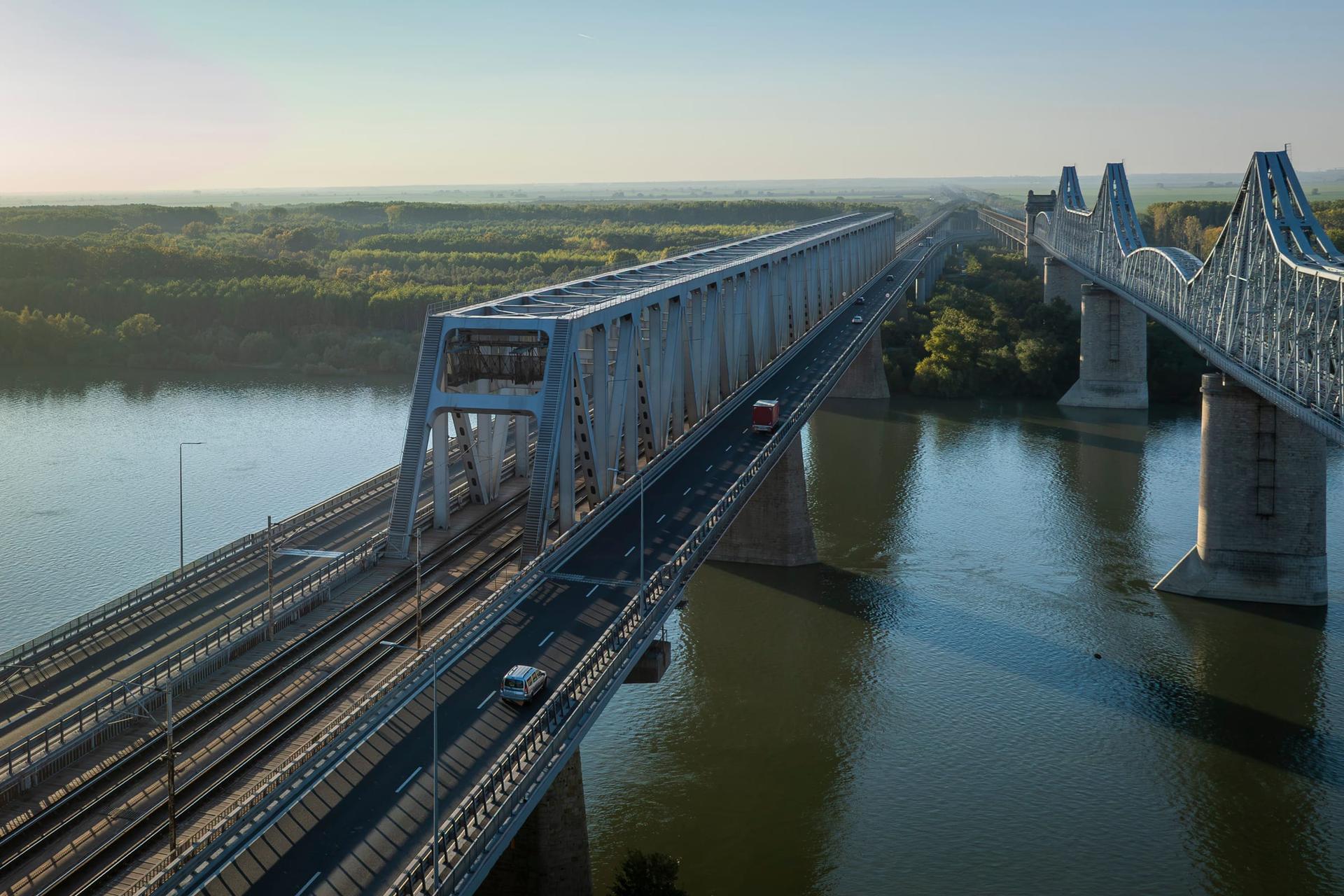
People at the time noticed what was missing. The press of the day, as cited by historian Constantin Cheramidoglu, complained that the great bridges had been built "with a single track, without a road bridge." When the engineer died in 1925, the newspaper Adevĕrul mentioned the bridge's "shortcomings of foresight," which it said were "owed more to insufficient financial means than to a lack of perspicacity." In 1895, though, Gazeta Transilvaniei had called it "the most significant railroad bridge on the European continent," correctly adding that Scotland's Firth of Forth Bridge surpassed it.
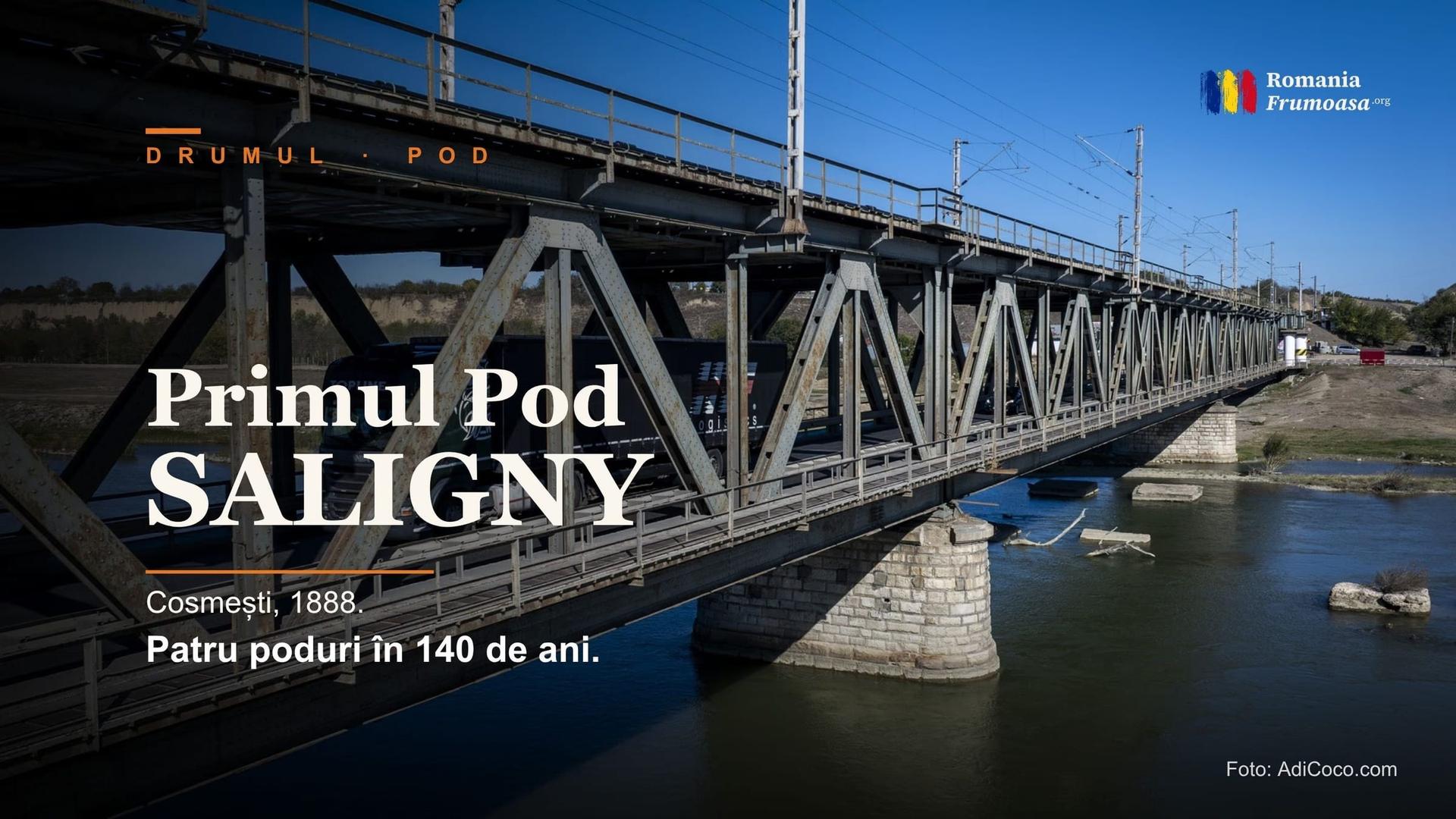
The confusion probably has a ready explanation. Saligny's bridge at Cosmești, over the Siret River, really was, as Viitorul wrote in 1925, "the double bridge for road and railroad." The same paper called it the "prelude" to the Danube bridge.
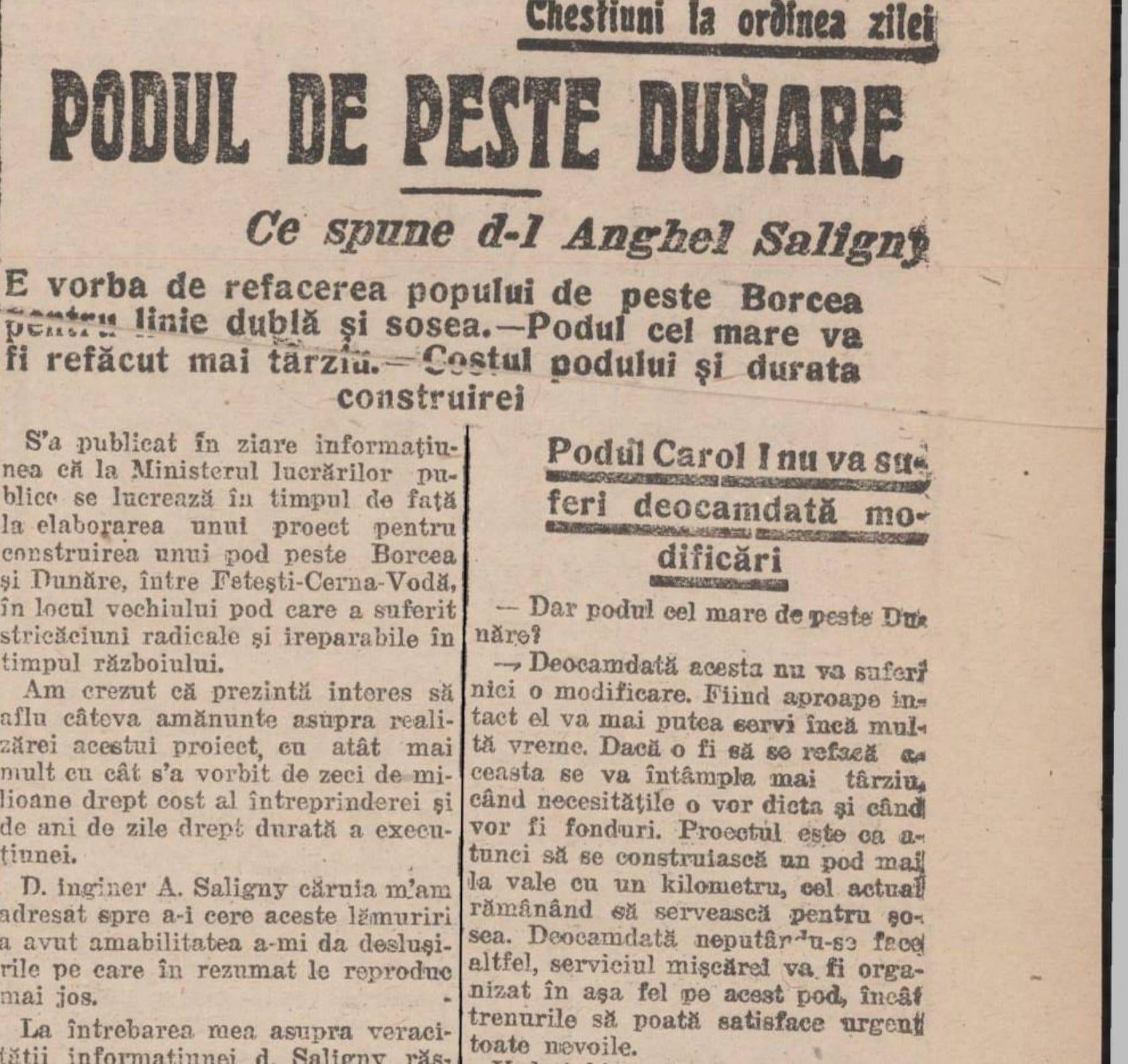
The lack of a road was felt for a long time. In 1919, Saligny told Viitorul that the Borcea bridge, blown up by the Romanian army, had to be rebuilt for double track and for road traffic, "which has long been needed." A road bridge over the Danube at Cernavodă would not come until November 1987, almost 70 years later.
One plaque, two governments
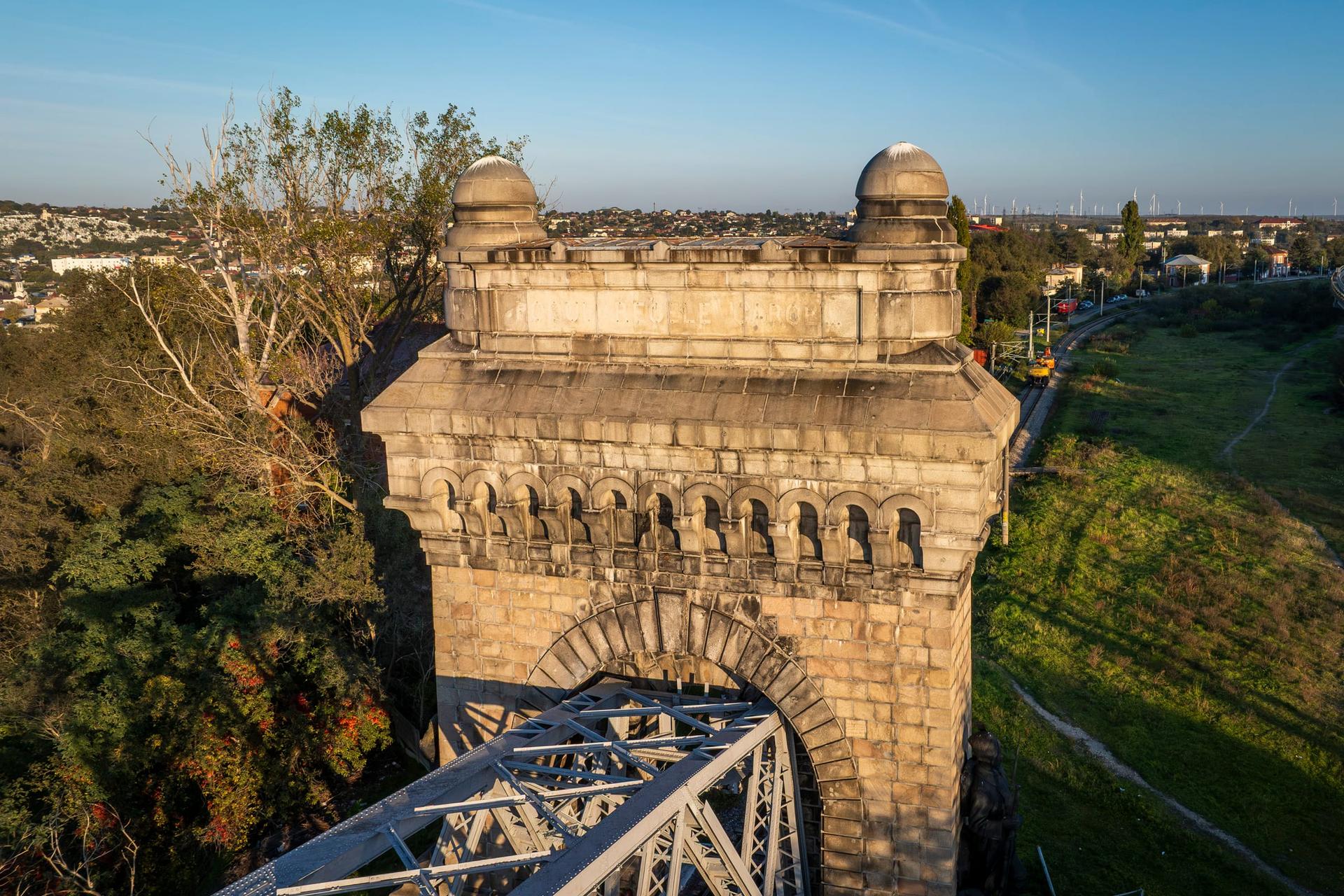
A bronze plaque was mounted on the bridge. Its text, reproduced by Timpul, says the work was voted in 1885, under the government of Ion C. Brătianu, that it was "decided in the year 1889" and that it was carried out "by the Fives-Lille Company." The last line names "Author of the design and director of works Anghel Saligny."
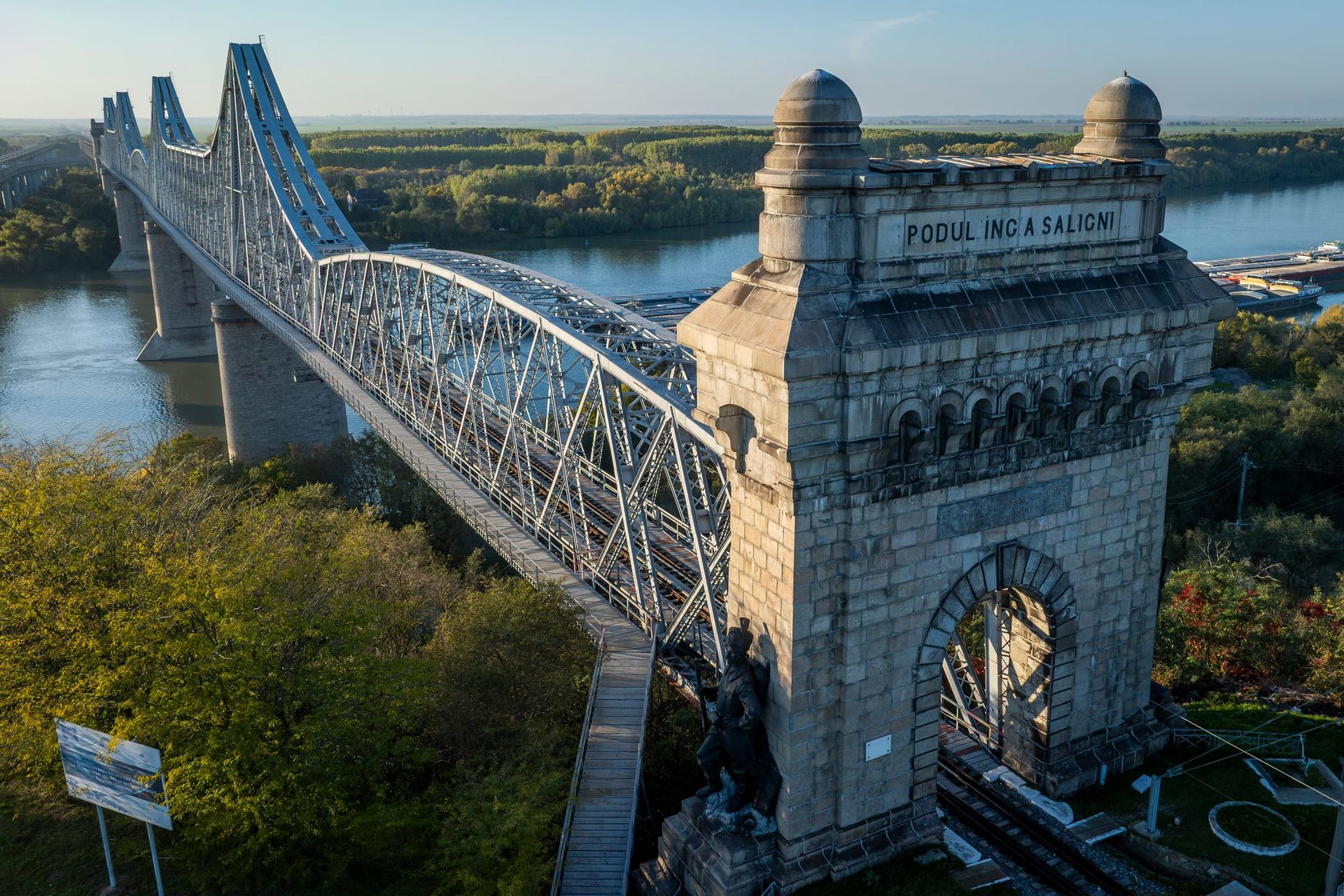
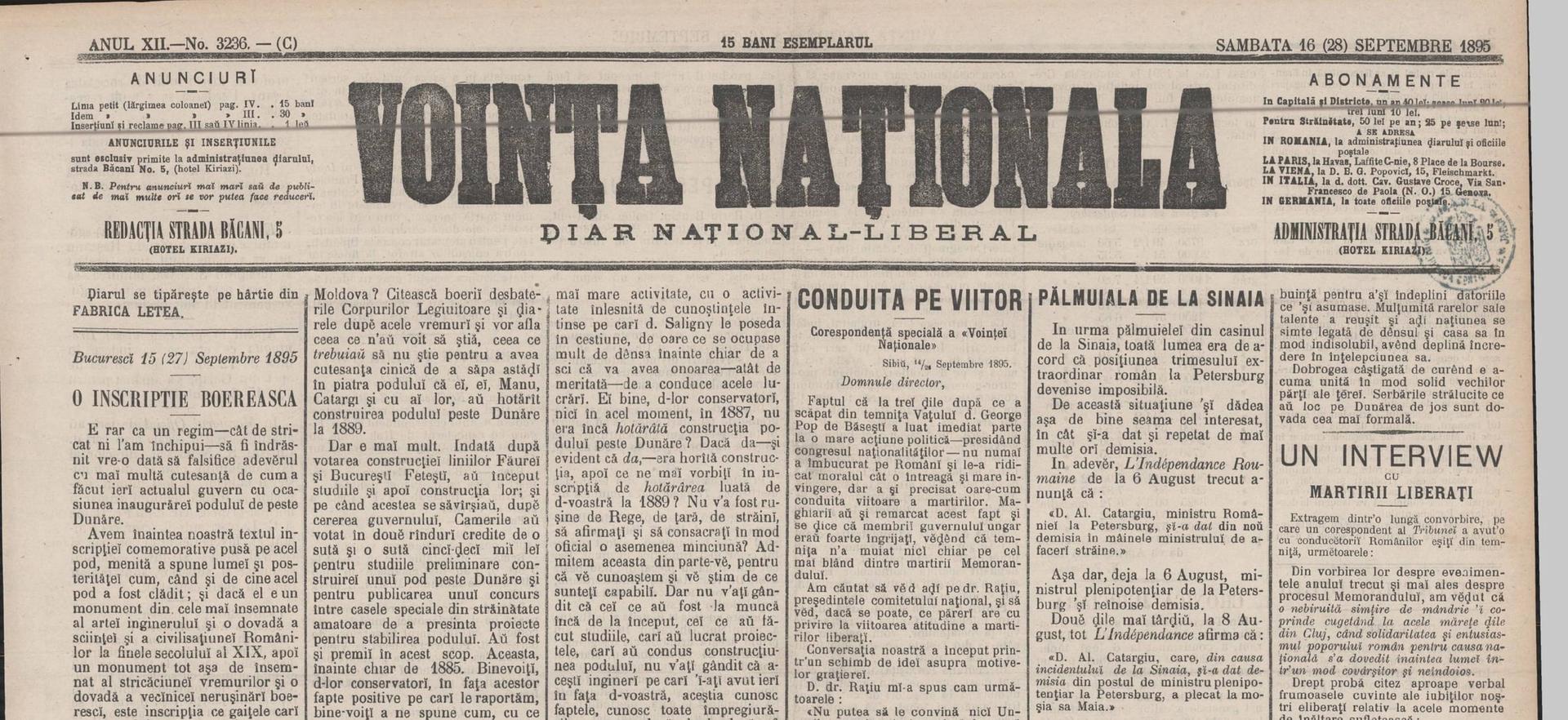
The year 1885 is the year of the law. The year 1889 is the one claimed by the Conservative governments in power after 1888, which took the work to tender. The inauguration took place under a Conservative government. The Liberal newspaper Voința Națională responded with an article titled "A Boyar Inscription" and an ironic question: "What need was there for this scholar's name to appear among so many boyars and so many merchants?"
So the plaque states two true things and one disputed one. It is not the only bronze here. At the Cernavodă entrance to the bridge stand two bronze dorobanți, one on each side.
The boat under the bridge
The best-known story about Cernavodă holds that during the load test, Saligny and his team sat in a boat under the central span, ready to die if the bridge gave way. It is a powerful scene. It does not appear in either of the two eyewitness accounts from September 1895, the one in Timpul and the one in Gazeta Transilvaniei, although both describe the test in detail. Nor does it appear in the 1925 obituaries, not even the most admiring ones.
There was a boat, but somewhere else. In a reminiscence in România Petroliferă, published in 1925 and reprinted in 1932 under Pierre Solomon's byline, Saligny rides a motorboat through the port of Constanța, another of his projects, toward the oil tanks. When he is praised, he replies: "Congratulate the young engineers, especially Mr. Const. Bușilă, in whom I foresee my future successor."
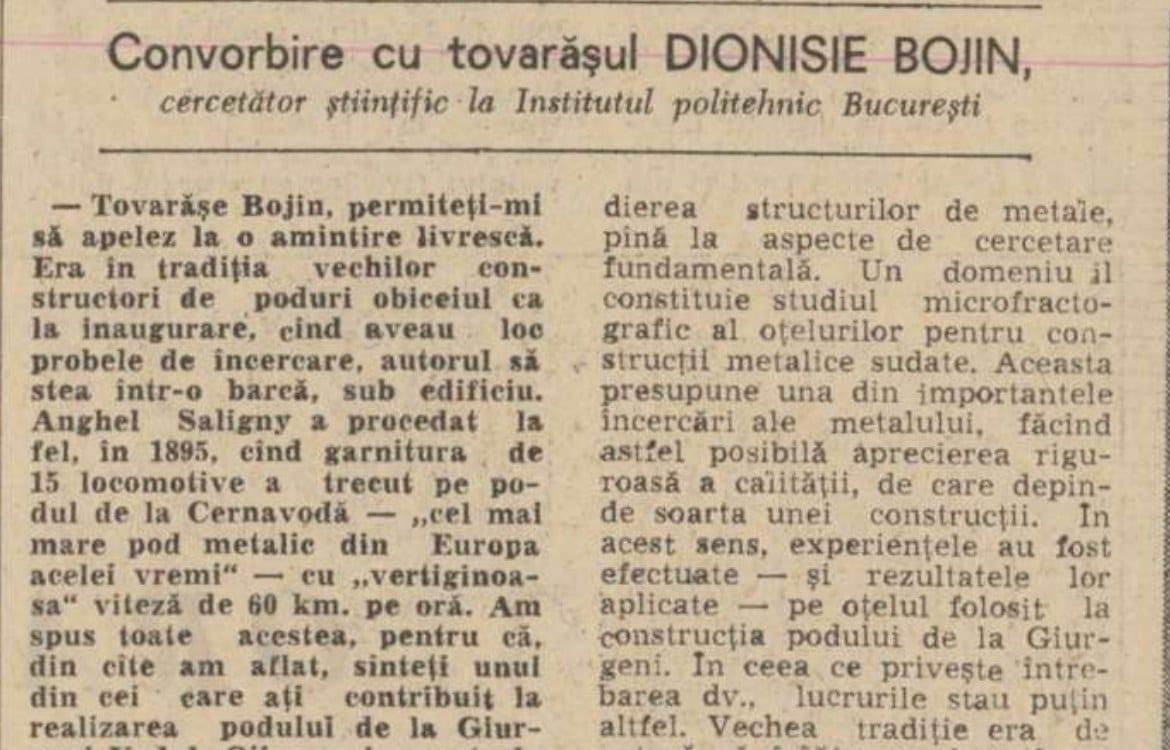
The earliest version of the bridge legend I found dates from July 5, 1974, in Scînteia Tineretului. The reporter introduces it cautiously, in a question put to Dionisie Bojin, a researcher at the Bucharest Polytechnic Institute, calling it a "bookish recollection" and attributing it to "the tradition of the old bridge builders." In that version, the locomotives crossed at 60 kilometers an hour, not 80. In 1986, an article about engineer Mihai Margine called it a "guild tale."
In the press between 1926 and 1971, the boat under the bridge does not appear at all. The story looks like an old motif among bridge builders, attached to Saligny later, perhaps partly through the memory of the real boat in the port of Constanța. The 1895 test had 30,000 witnesses. None of those who wrote about it mentions a boat.
Fall 1916
The third legend has a precise date in the press. On Oct. 26, 1916, the German communiqué, reprinted by the newspaper Drapelul, announced that Romanian troops "have blown up the entire bridge."
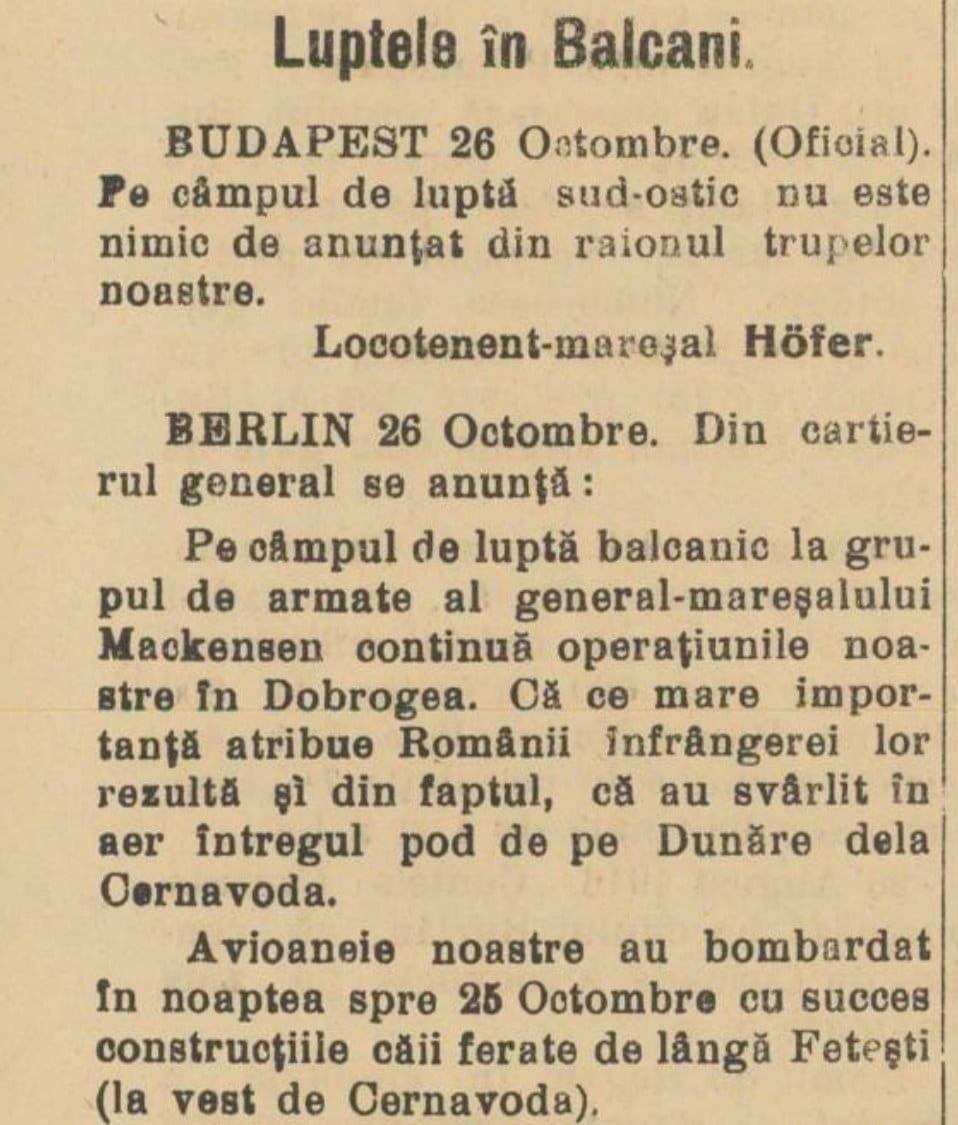
The front in Dobruja had collapsed. German aircraft had been attacking the bridge since September, and on the night of Oct. 24-25 the Romanian army had pulled out of the Cernavodă bridgehead. The rumor of the explosion was circulating on the Romanian side as well. In her diary, Queen Marie notes in those days that the bridge was said to have been blown up, and then that Constanța was lost but the bridge had not yet been blown up.
Constantin Kirițescu, in his Istoria războiului pentru întregirea României (History of the War for the Unification of Romania), describes what happened: "The magnificent 'King Carol I' bridge ... had to be destroyed." He goes on: "Fortunately, the great bridge at Cernavodă withstood every attempt at destruction, made with the meager technical means of a field army, and remained almost intact." The enemy, in fact, wanted it whole. Field Marshal August von Mackensen, the same historian writes, had repeatedly ordered "that no destruction be done to the Cernavodă bridge" without the direct approval of his headquarters.
In 1938, a naval officer, Cmdr. I. Kălan, wrote in România Militară that the order had come "too late" and that on the great bridge "the few broken ties did not amount to very significant damage." The Borcea bridge at Fetești and the intermediate bridge over the marsh were destroyed on Oct. 26 with the navy's floating mines. At Borcea, part of the deck had fallen into the water and blocked the channel.
The German claim was false, but it spread. A month later, a Russian communiqué announced the capture of "the western part of the bridge," while the neutral press reported constant artillery fire around it. The bridge declared destroyed was still a battle position.
In February 1919, Saligny told Viitorul that the Borcea bridge had been "destroyed by our army in the fall of 1916," and that its iron had been carted off by the Germans. The Borcea bridge was rebuilt with steel from Reșița. By September 1921 it was nearly finished.
Three bridges
Until 1970, cars bound for Dobruja crossed the river by ferry. In the summer of 1966, the newspaper Dobrogea Nouă described lines of cars, buses and trucks waiting for the ferry at Vadu Oii, about 1,400 vehicles a day. The Giurgeni–Vadu Oii bridge, opened in December 1970, got them out of line. From 1970 to 1987, cars headed for Dobruja crossed the Danube on that bridge, the only road bridge over the river between Muntenia and Dobruja. Trains crossed, as before, on Saligny's bridge.
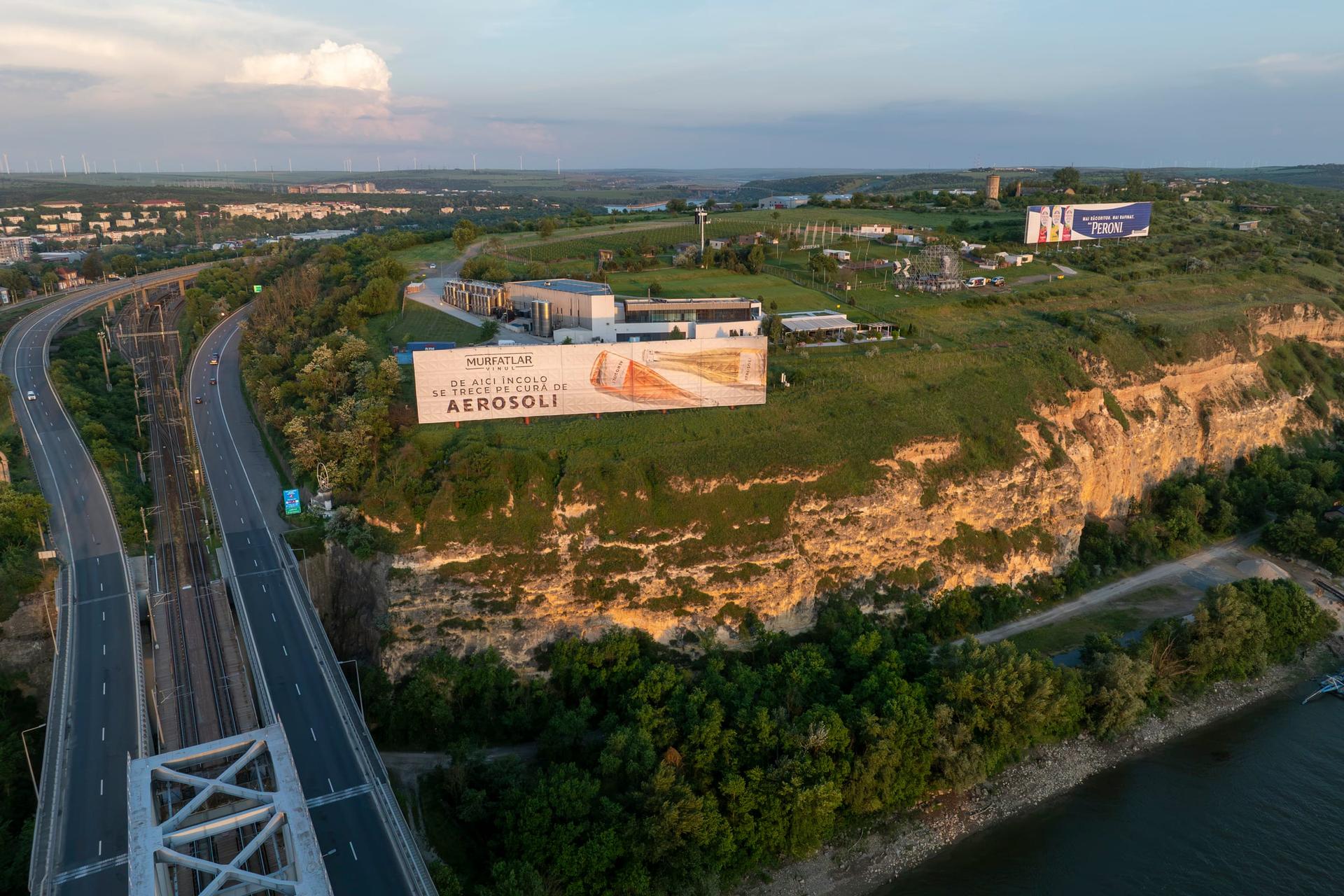
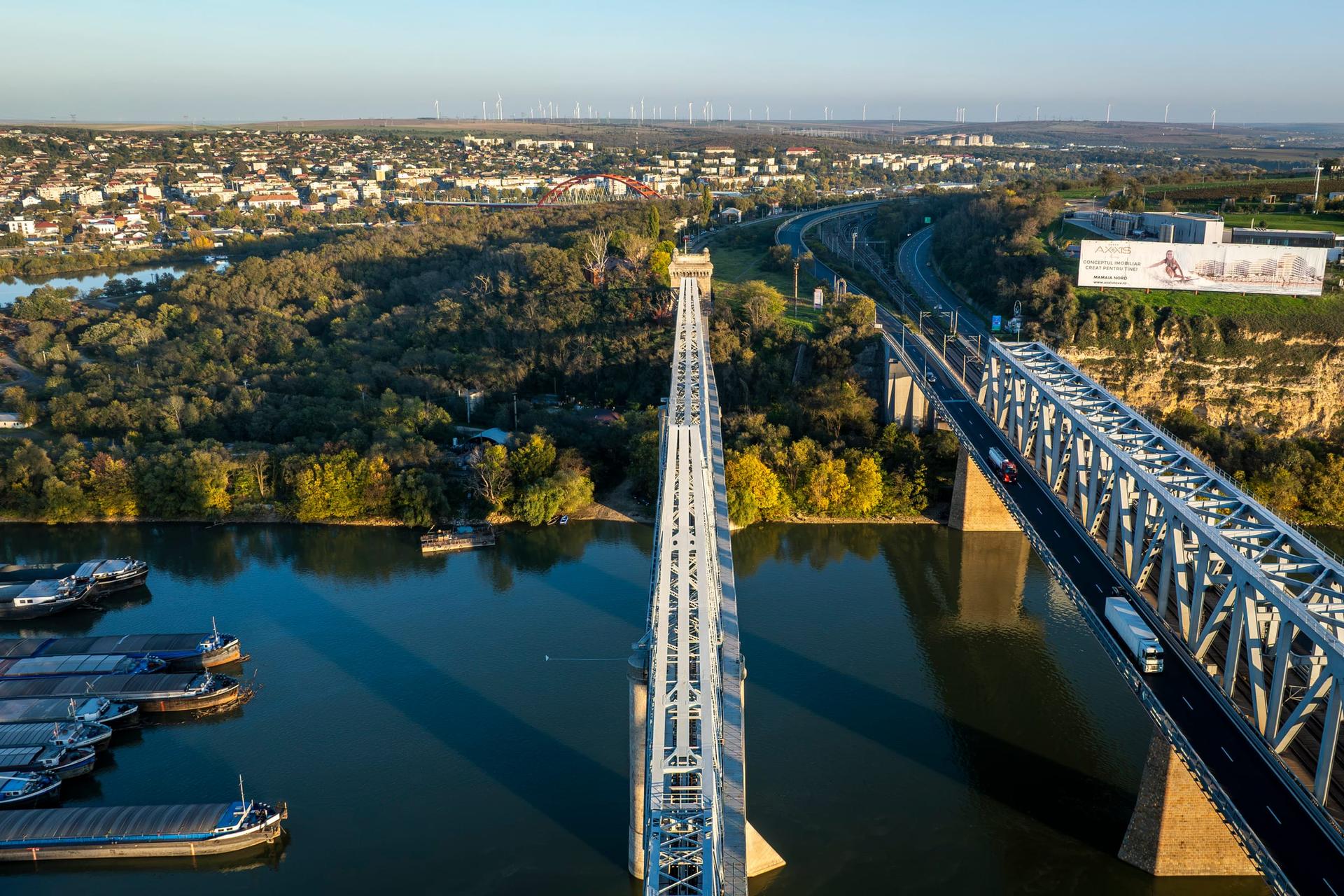
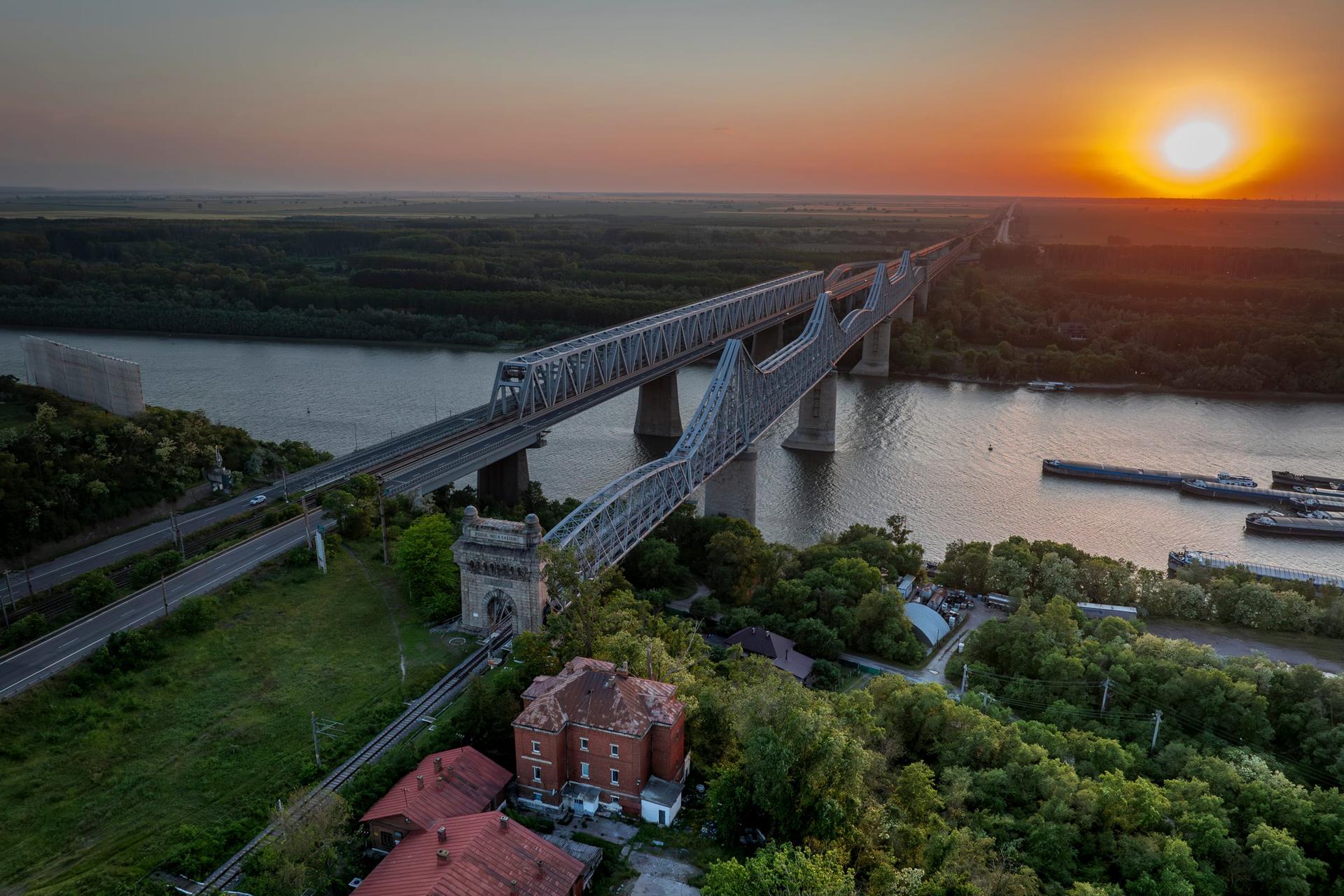
In November 1987, the new Cernavodă bridges opened next to the old one, with double track and a highway. The road to the coast became nearly 50 kilometers shorter. Saligny's bridge stayed where it was, alongside them. It was refurbished and reopened to rail traffic on Sept. 16, 2015, as a third track, and in 2018 the national railroad company, CFR, announced acceptance of the work on the old bridges over the Danube and the Borcea. Since 2024, the bridge has also appeared on a commemorative 100-lei banknote issued by the National Bank of Romania.
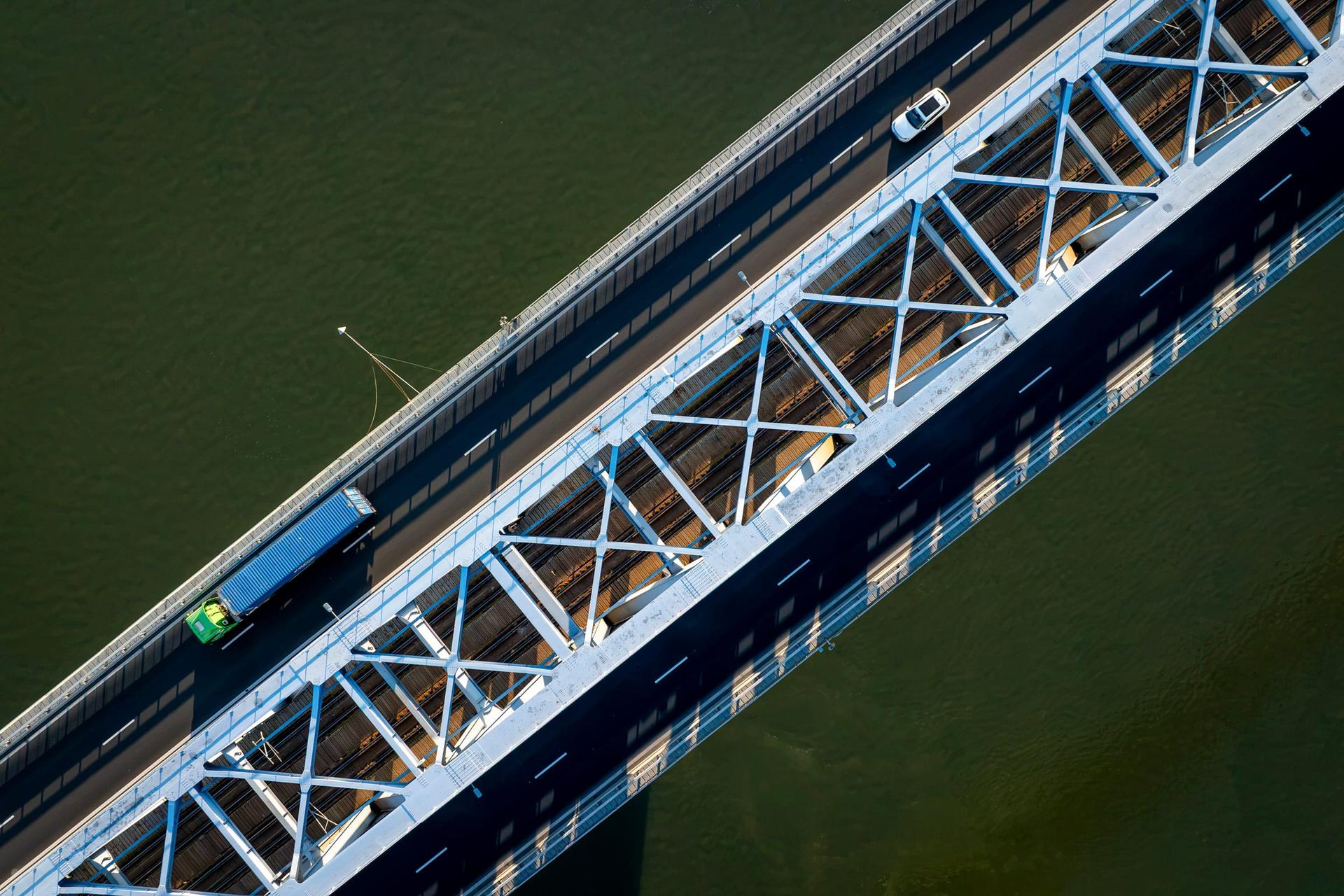
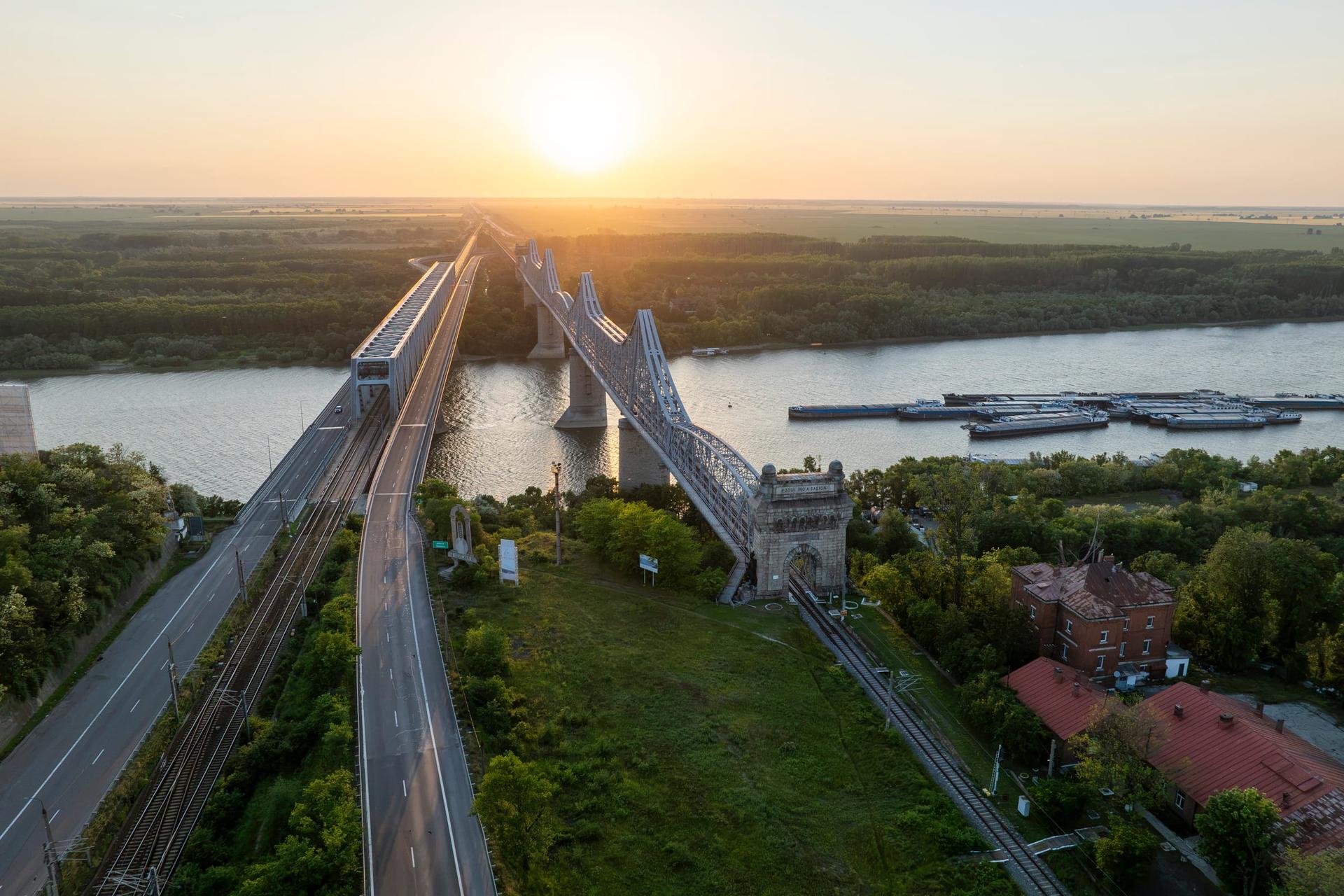
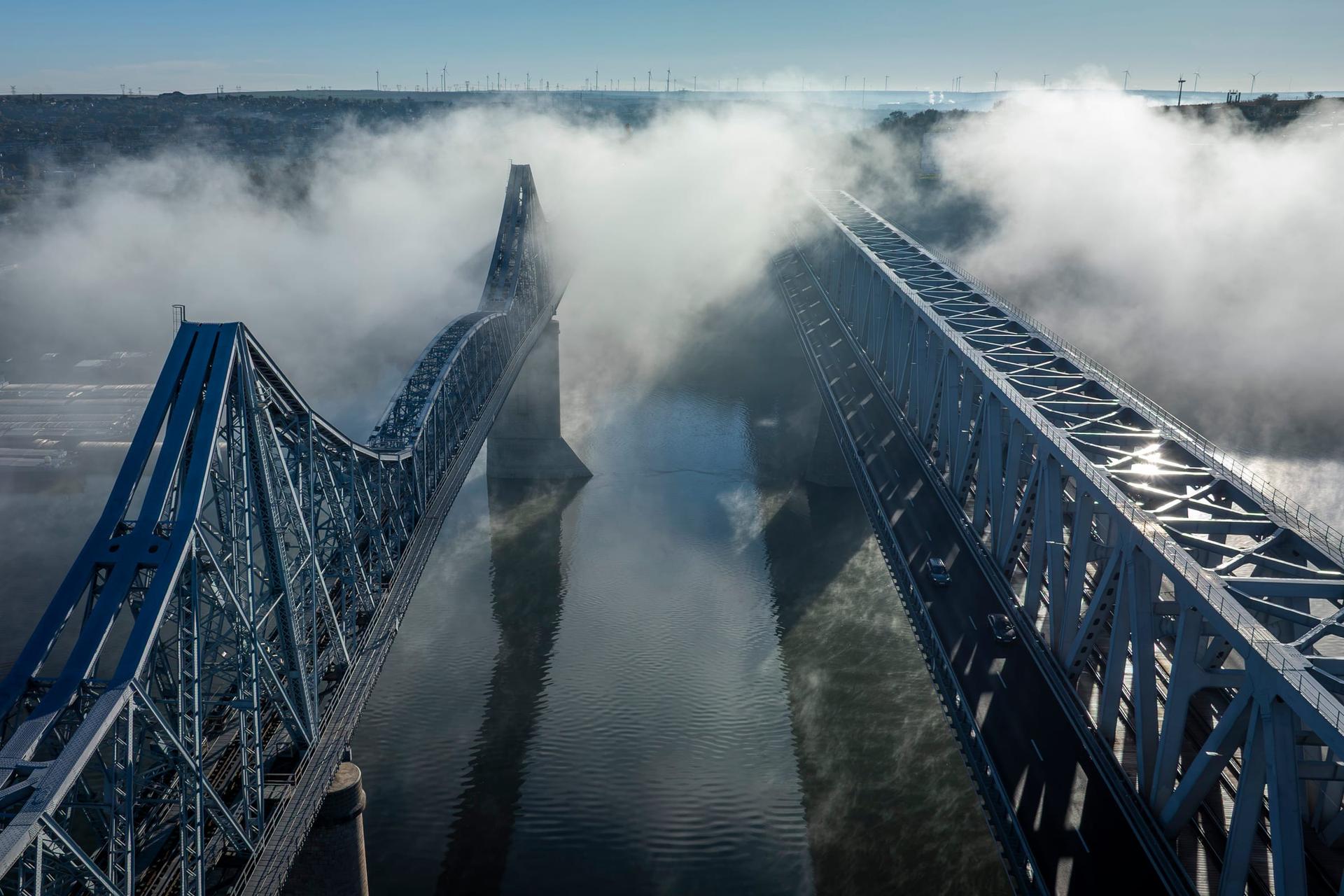
Seen from the air, the two bridges show the difference at a glance. The 1987 bridge is wide, with the highway and double track side by side. The 1895 bridge, with its single track, looks narrow next to it.
A minute and a half
The 1895 test lasted about a minute and a half. The legends about it are of different ages. The one about the explosion appeared in wartime communiqués while the fighting was still going on. The one about the boat reached print only after nearly 80 years. The one about the carts has no date at all.
In February 1919, three months after the armistice, Saligny said of his Cernavodă bridge: "Being almost intact, it will be able to serve for a long time yet." It has.
One November morning, fog over the Danube covered the river and part of the old bridge's trusses. The stone portal rose above it. It was cold, but no colder than usual for the season. Under the bridge, the only sounds were the traffic on the highway and a train crossing the new bridge. On the old one, for as long as the fog lasted, nothing crossed. After an hour, the fog began to lift.
The greater part of the old bridge, nearly 4,000 tons of metal, is still where its builders put it: buried forever beneath the bed of the Danube.
The article draws on period newspapers from a digitized archive, on memoirs and on works of military and economic history. Quotations were translated from the Romanian. Until 1919, Romania used the Old Style (Julian) calendar. Dates from 1883 to 1890 are Old Style, those from 1895 are given in both calendars, and those from the fall of 1916, following Constantin Kirițescu's history, are New Style.
This English version is an automatic translation of the Romanian original.