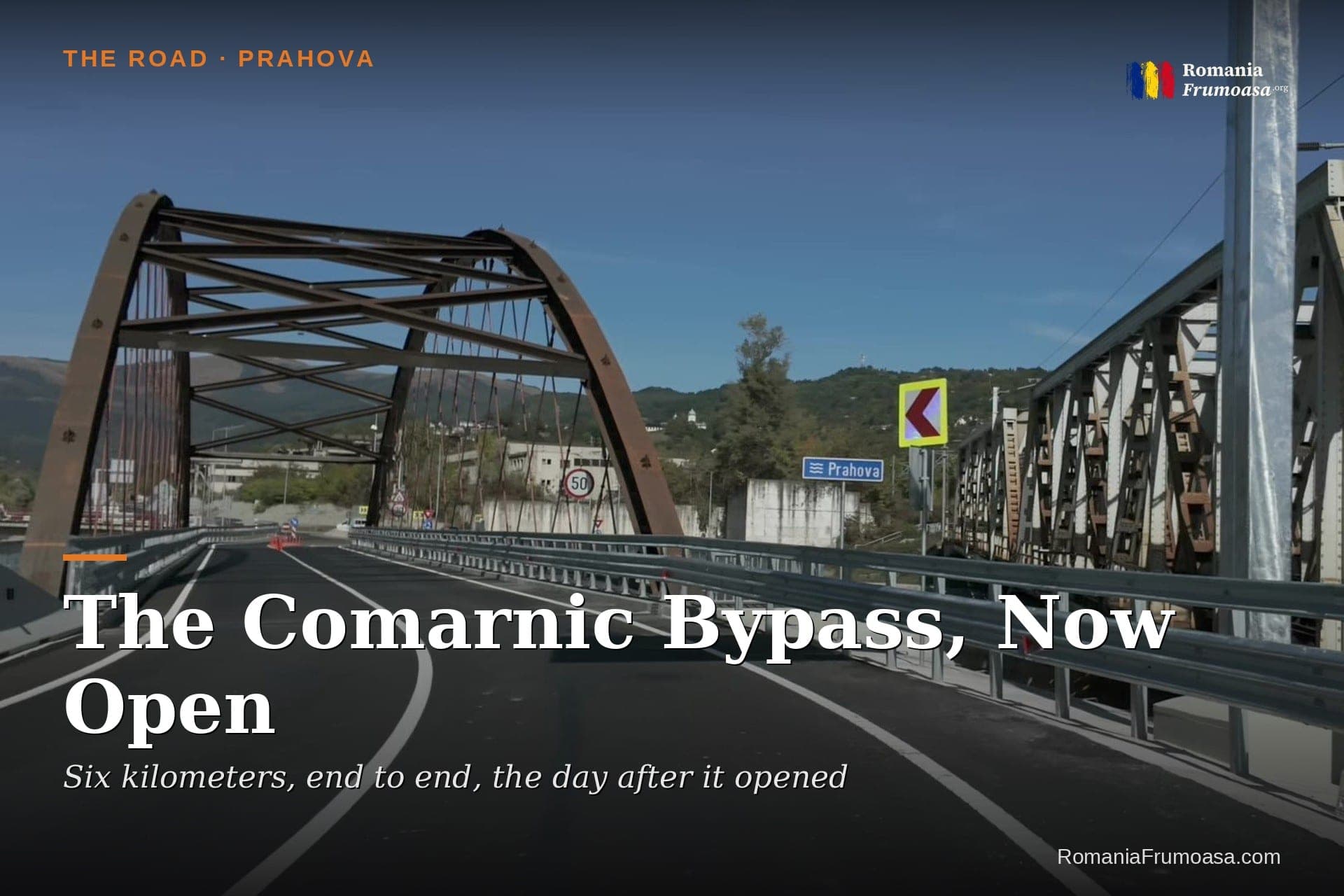
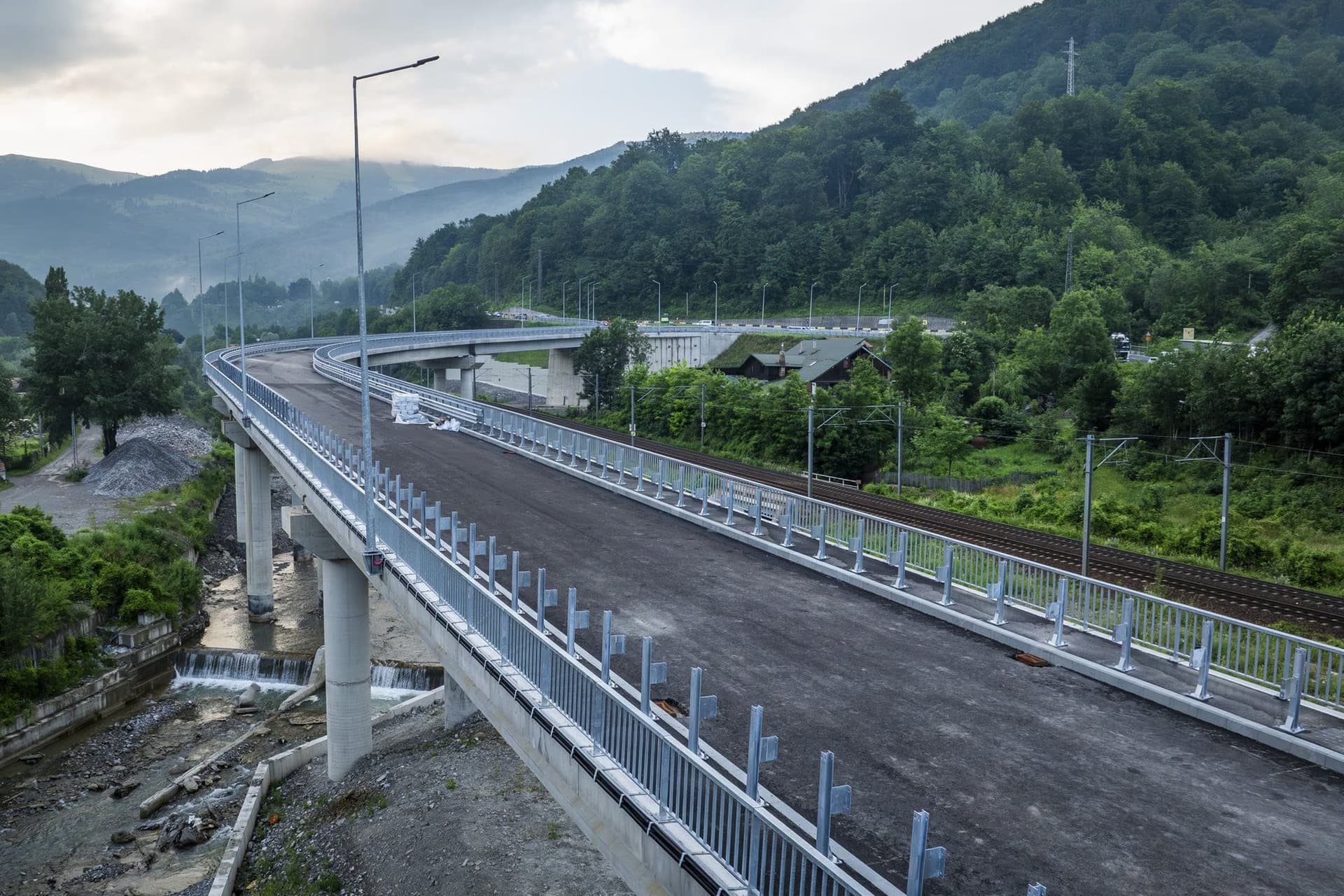
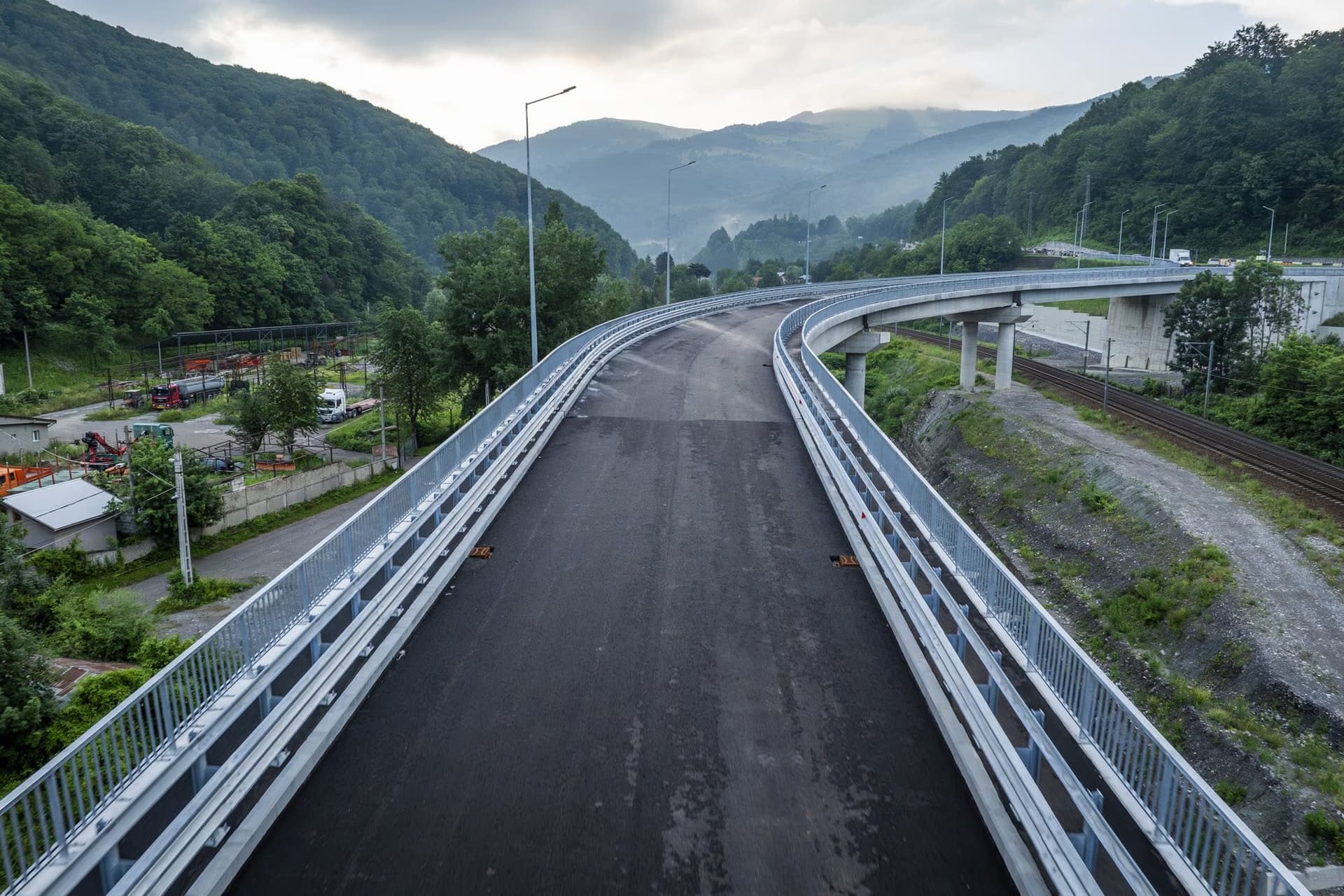
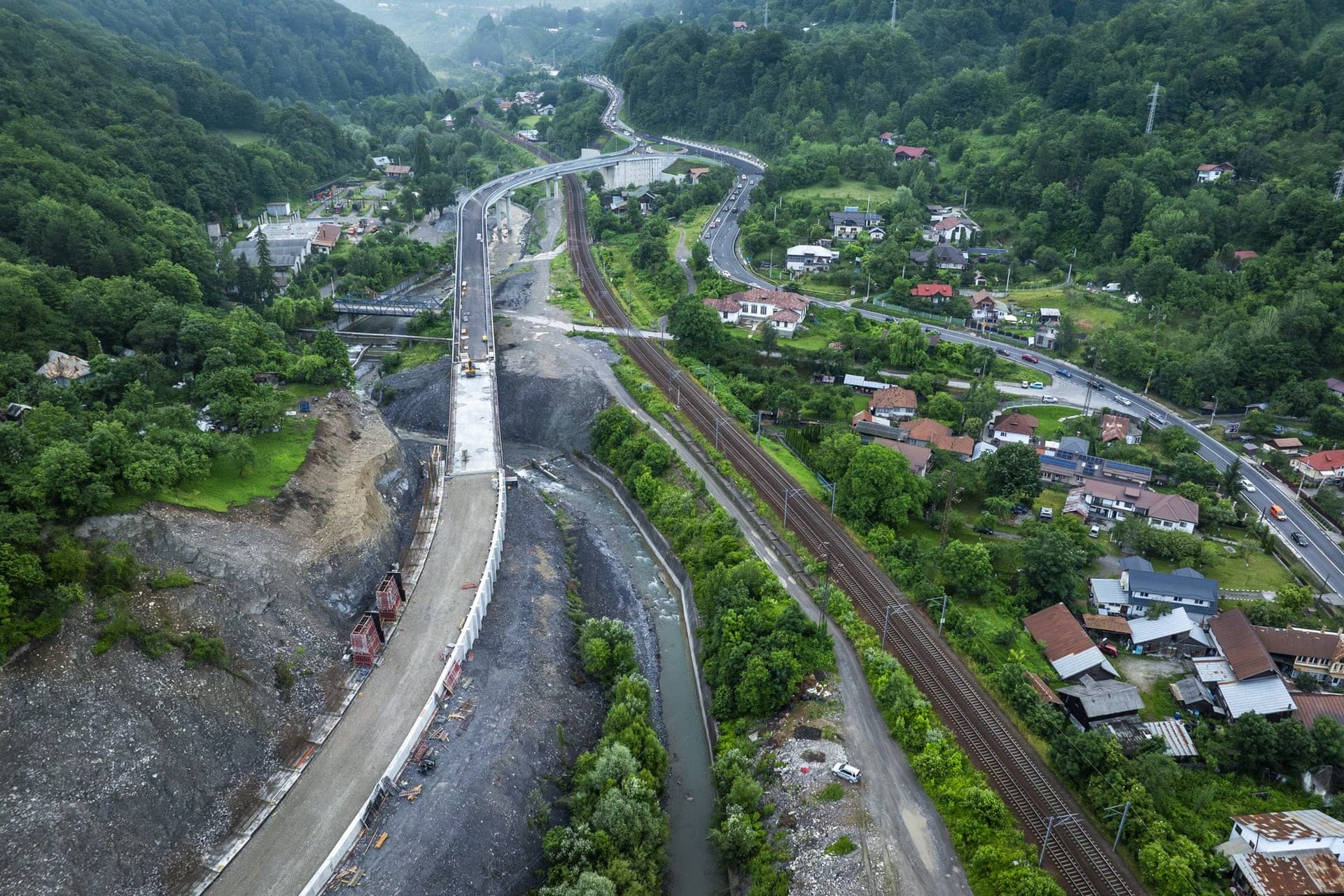
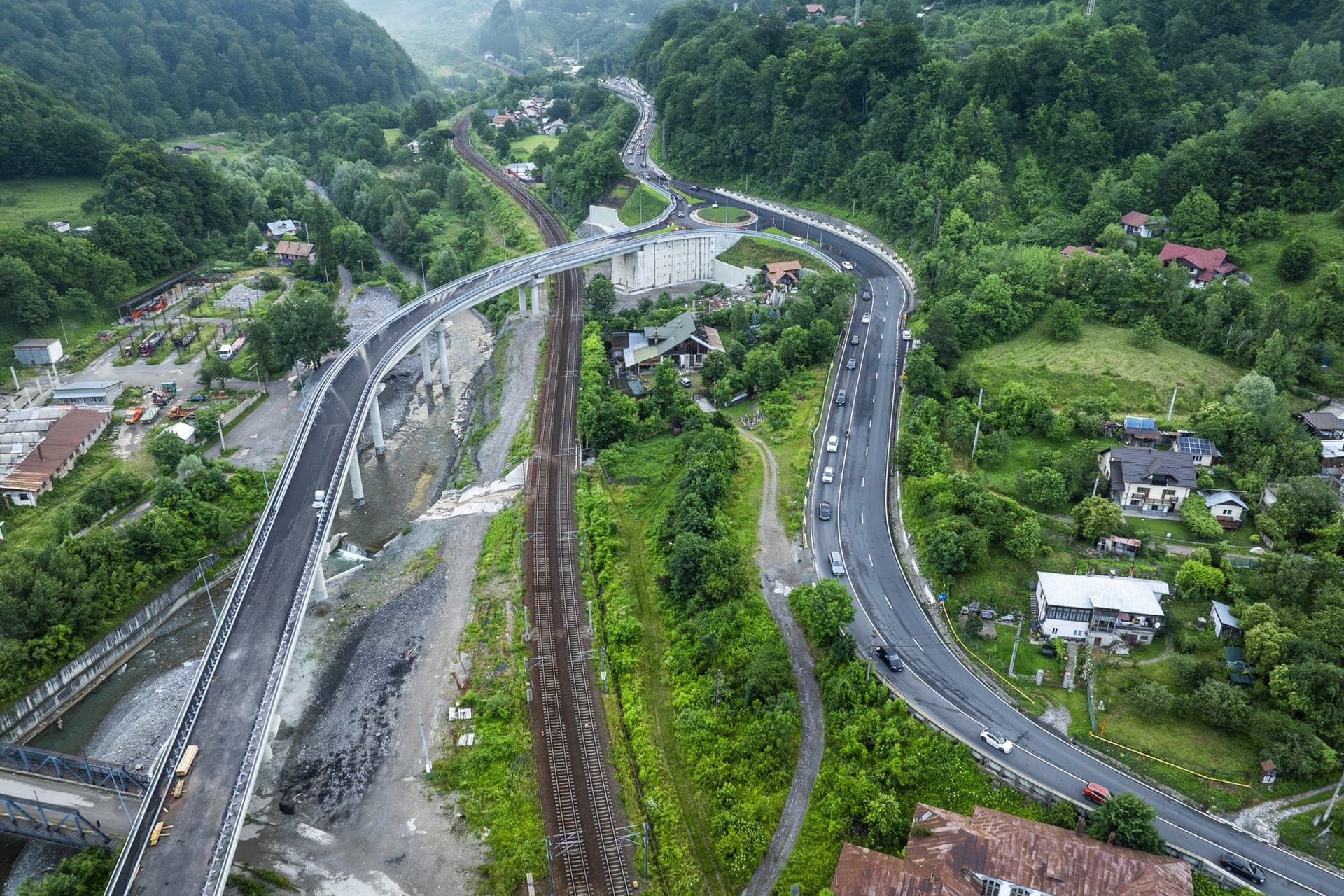
At the entrance into Comarnic, coming down from Sinaia, the new six-kilometre road sits on reinforced-concrete piers, with fresh asphalt and shining guardrails. Fifty metres to the side, on DN1, the queue of cars heading to Bucharest and the seaside hasn't moved in a quarter of an hour. The bypass, officially scheduled to open in August 2026 — and very-officially scheduled for December 2027 — is a visual parallel to how a road gets built in Romania: almost ready, still closed, already 130 million lei more expensive than the original contract.
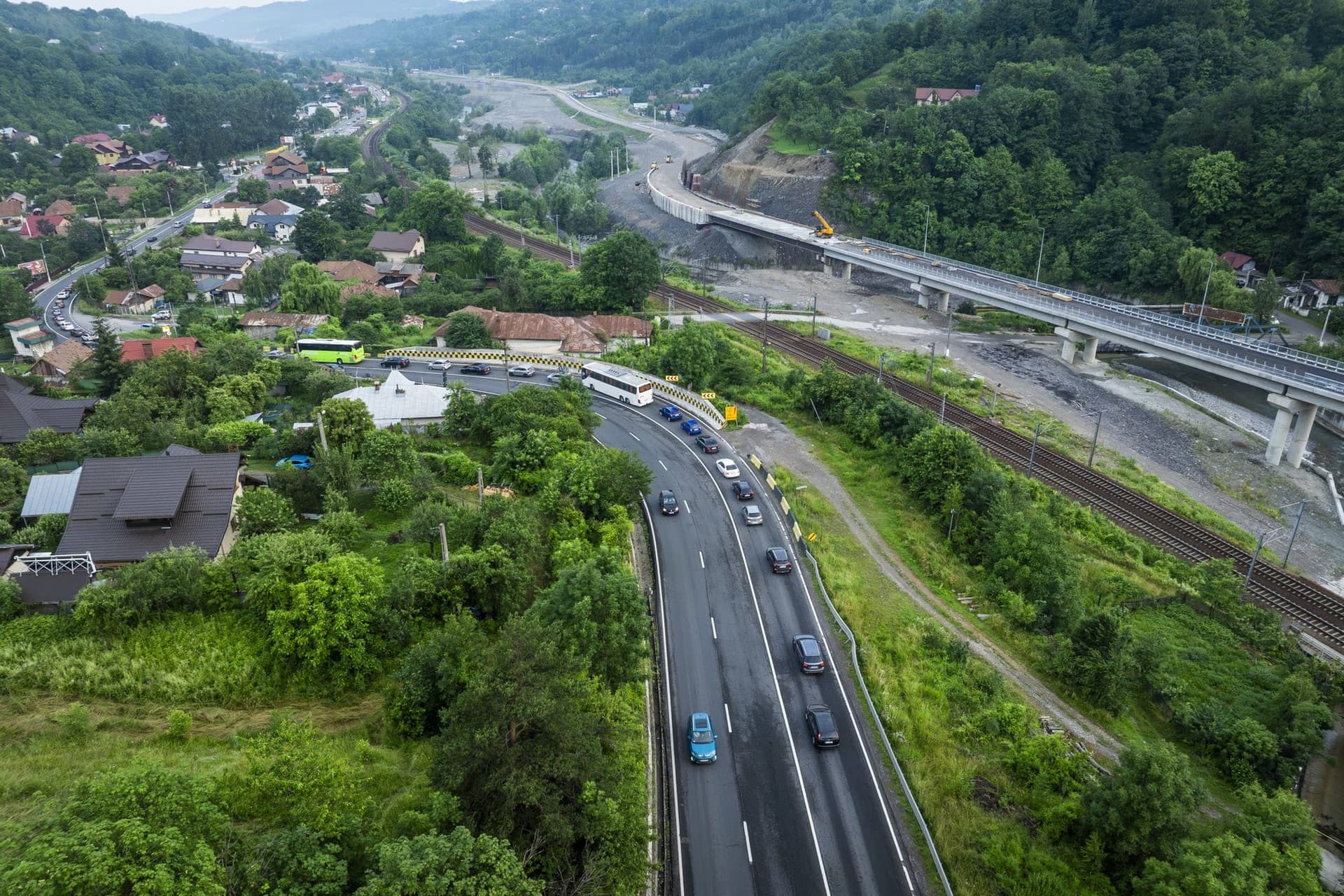
It is Sunday, 28 June 2026. By 9 a.m., Comarnic already has its classic column — cars sliding bumper to bumper along DN1, with number plates from Bucharest, Cluj, Brașov, Covasna. People are returning to Bucharest, people are leaving for the coast. Some are heading to Constanța, to Mamaia, to Vama Veche, to Saturn. Others are returning after a weekend in the mountains. Once they reach the Sun Motorway (A2), they will be at the seaside in two hours. But between Predeal and the A2 on-ramp still lie 37 kilometres of Prahova Valley — the old road, a single lane per direction, squeezed between mountains, villages, the railway, the river, the parking lots of guesthouses. Comarnic is the final point of the bottleneck.
Then you have escaped. Until you reach the Bucharest Ring Road. With the A0 unfinished between Voluntari and Bălăceanca, the discharge still happens onto the old ring. And that is another nightmare.
In Comarnic, right here, the Comarnic Bypass has been under construction for more than three years — six kilometres of an alternative route that, when finished, should cut at least half of the transit time through the town. If it gets finished.
Numbers that don't agree with each other
The Comarnic Bypass has official figures which, read side by side, do not say the same thing.
Contractor: the joint venture Frasinul – Arthenis, two Romanian firms.
Contract signed for: 236.74 million lei excluding VAT.
Initial approved budget (2023): 340 million lei.
**Approved budget after the supplement:** 470 million lei — of which 430 million for the works themselves. The supplement of 130 million lei was justified by land subsidence and route changes that emerged during construction.
Financing: the Transport Operational Programme 2021-2027.
Length: 6 km, with one lane per direction.
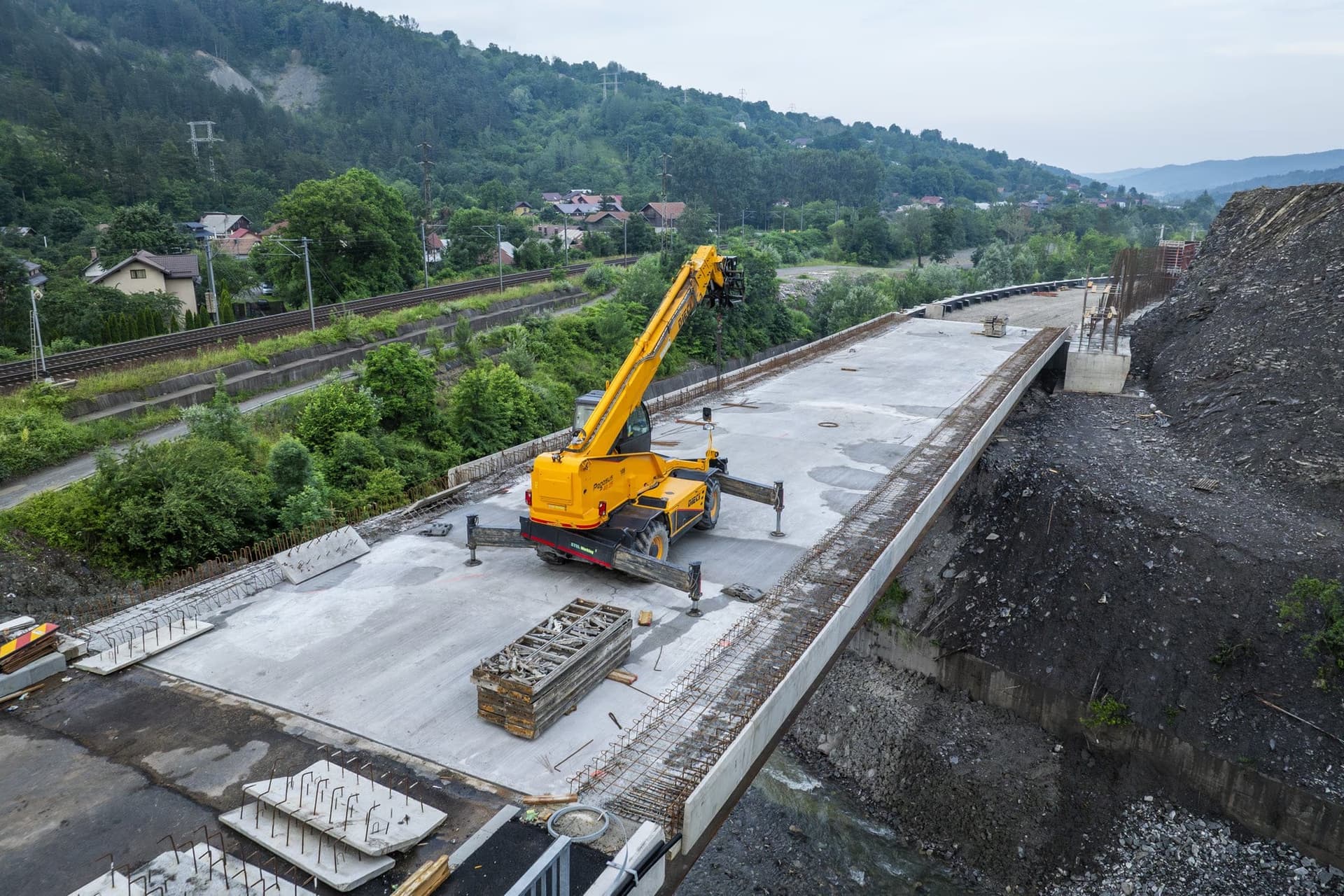
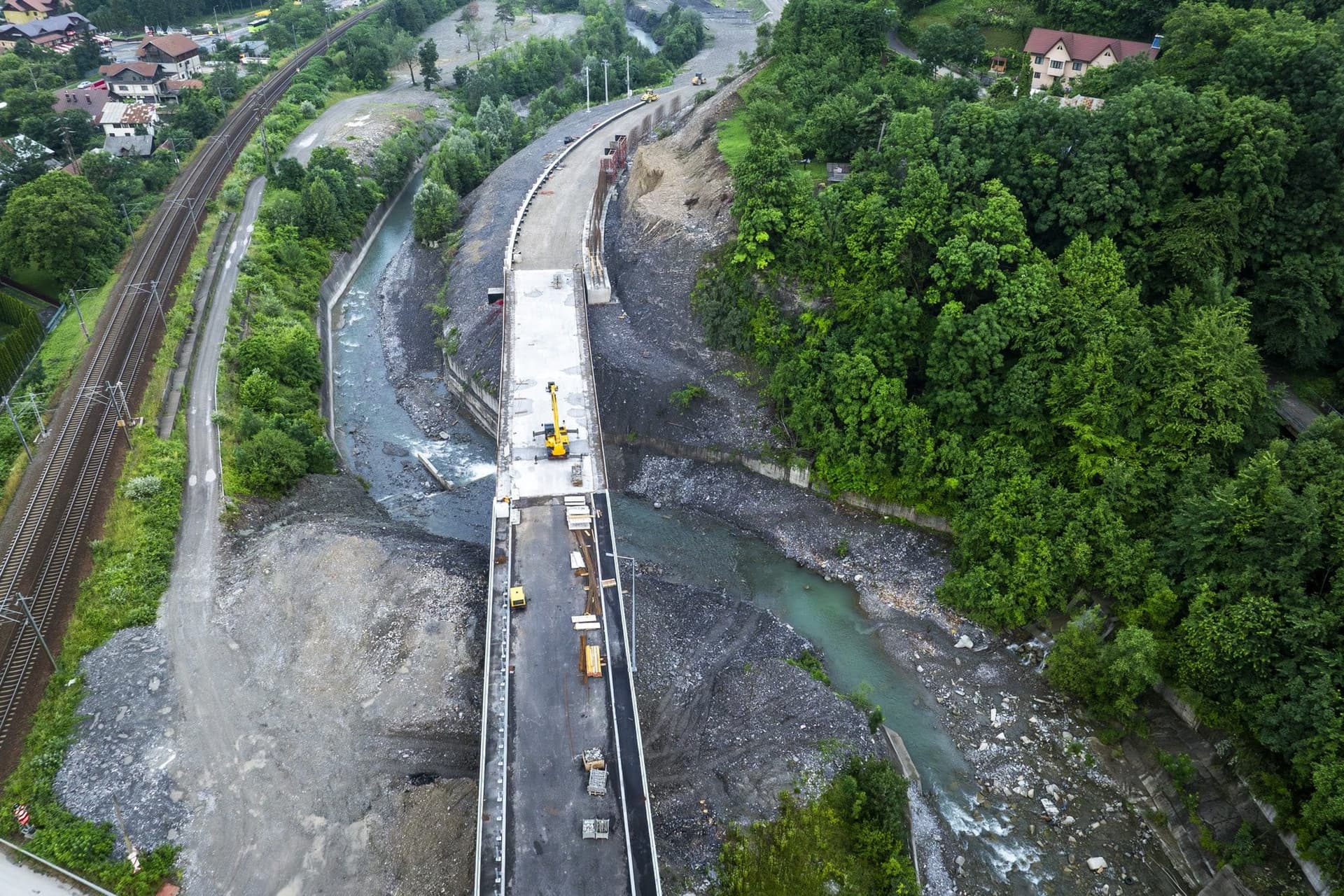
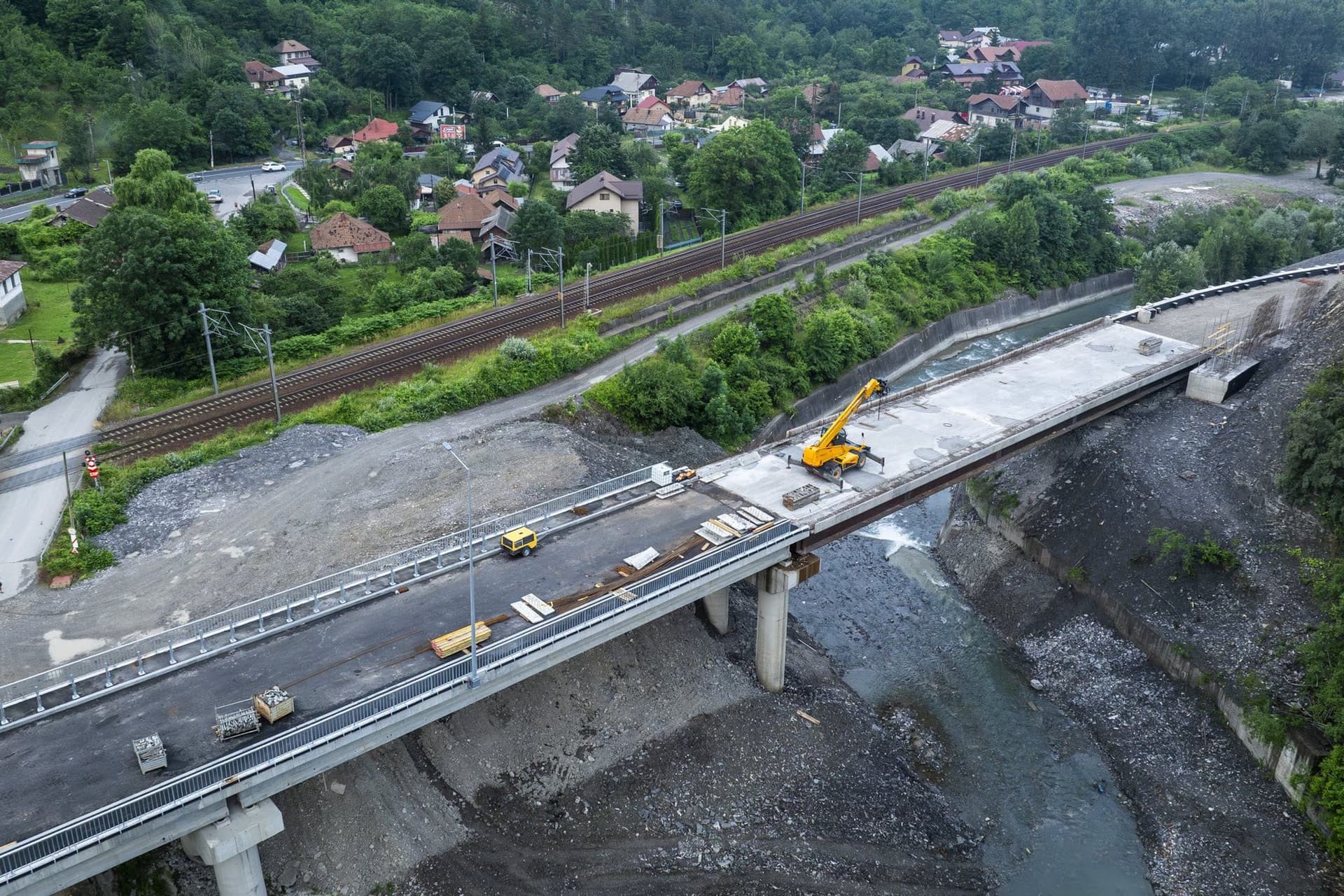
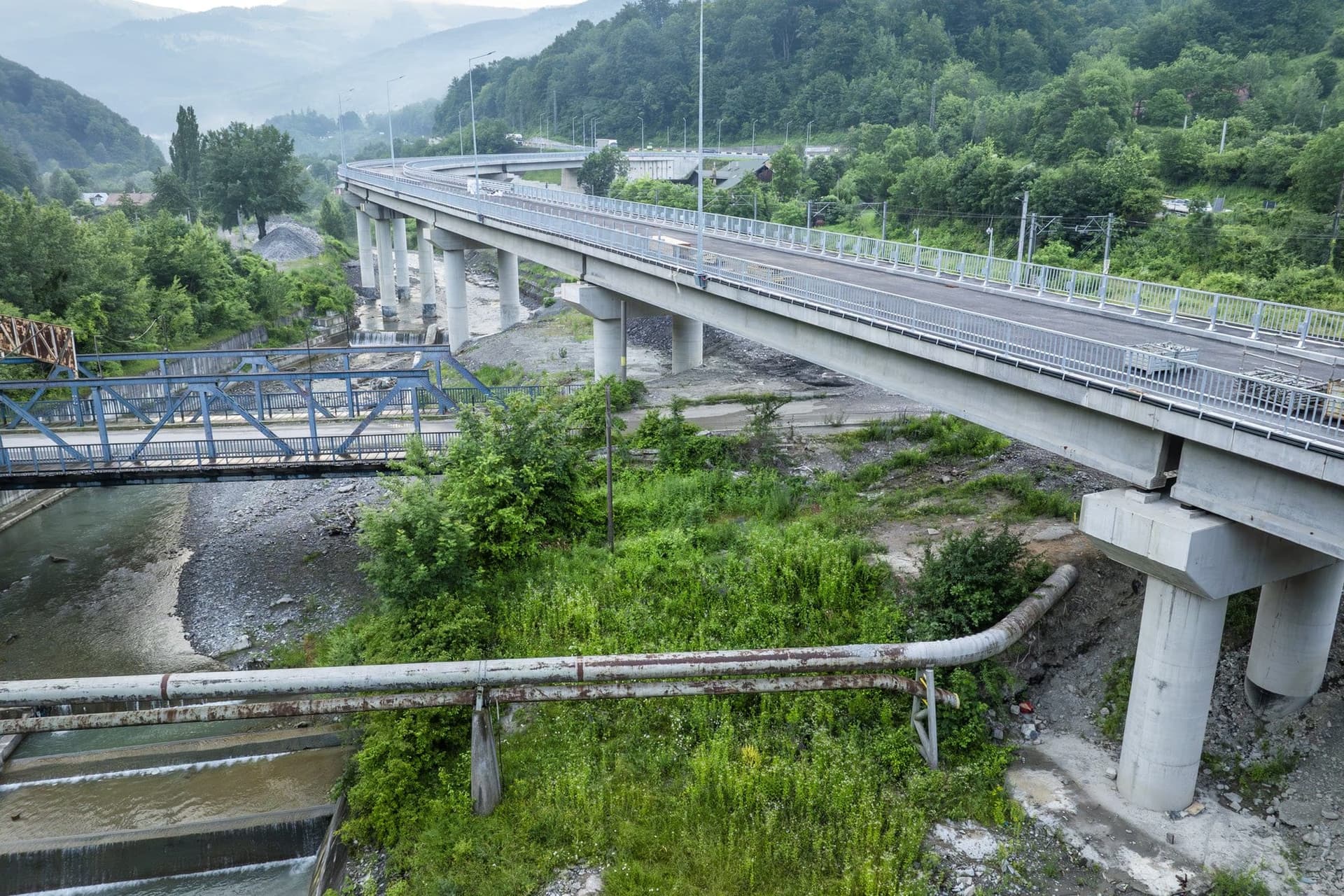
**Special works:** four bridges, including one over the Prahova River and one over the Bucharest–Brașov railway.
The status of the works depends — strictly — on who is talking.
Virgiliu Nanu, president of the Prahova County Council, announced in early June 2026 that the target remains physical completion in August 2026 and that the current state of the works is 80% physical and 70% financial. The contractor, Frasinul, publicly maintained in April 2026 that it would finish the works by summer. The original contractual deadline was June 2026 — already missed by the time of publication.
At the same time, the CESTRIN portal — the official instrument of the National Company for Road Infrastructure Administration (CNAIR) — lists physical progress at 62% and the completion deadline at December 2027. The authorities specify that the CESTRIN date represents „the end of the financing period", not the physical completion of the works. The gap between the two deadlines: nearly 18 months.
For a driver trying to plan a holiday, that gap means two summer seasons.
What you can see from above in June 2026
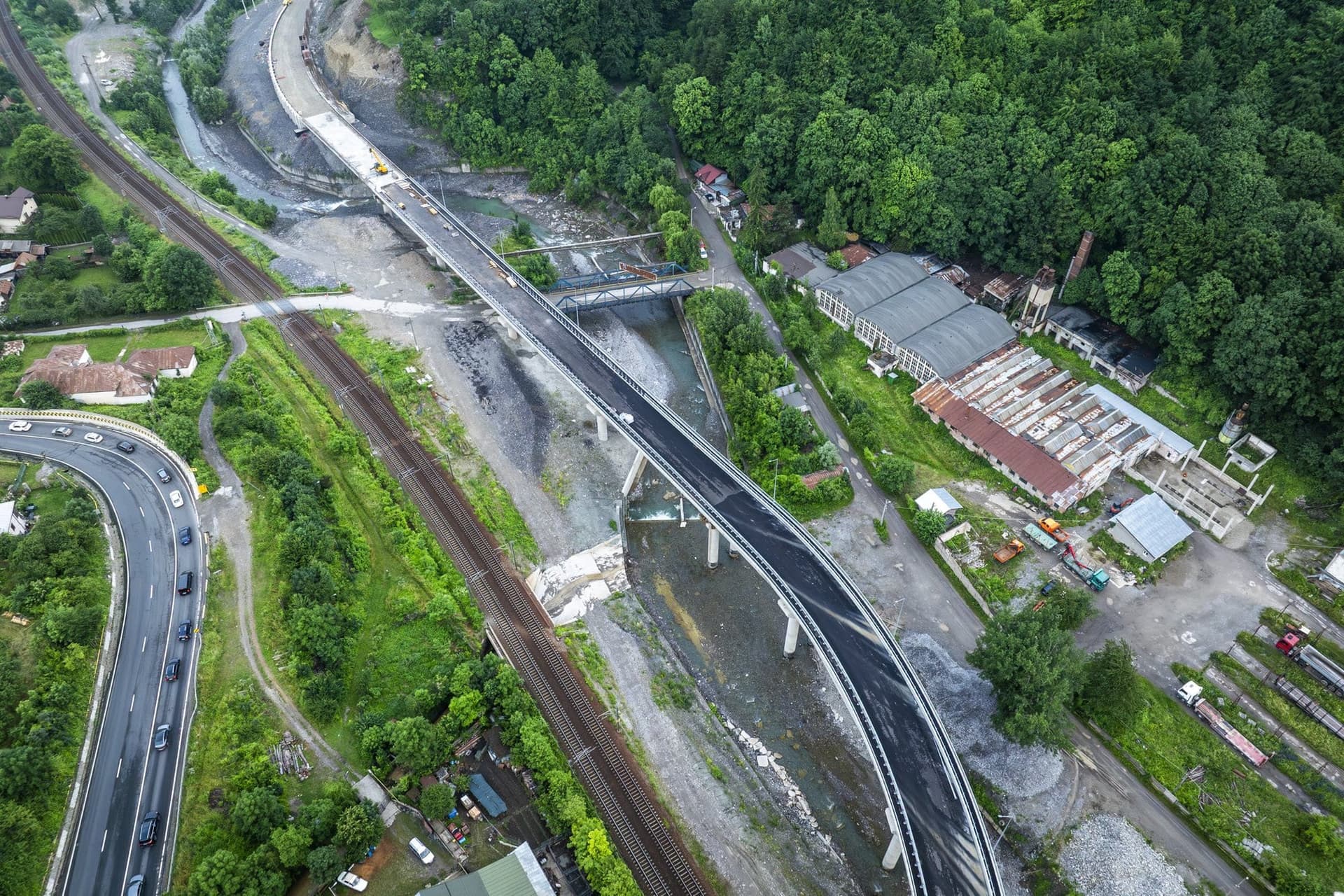
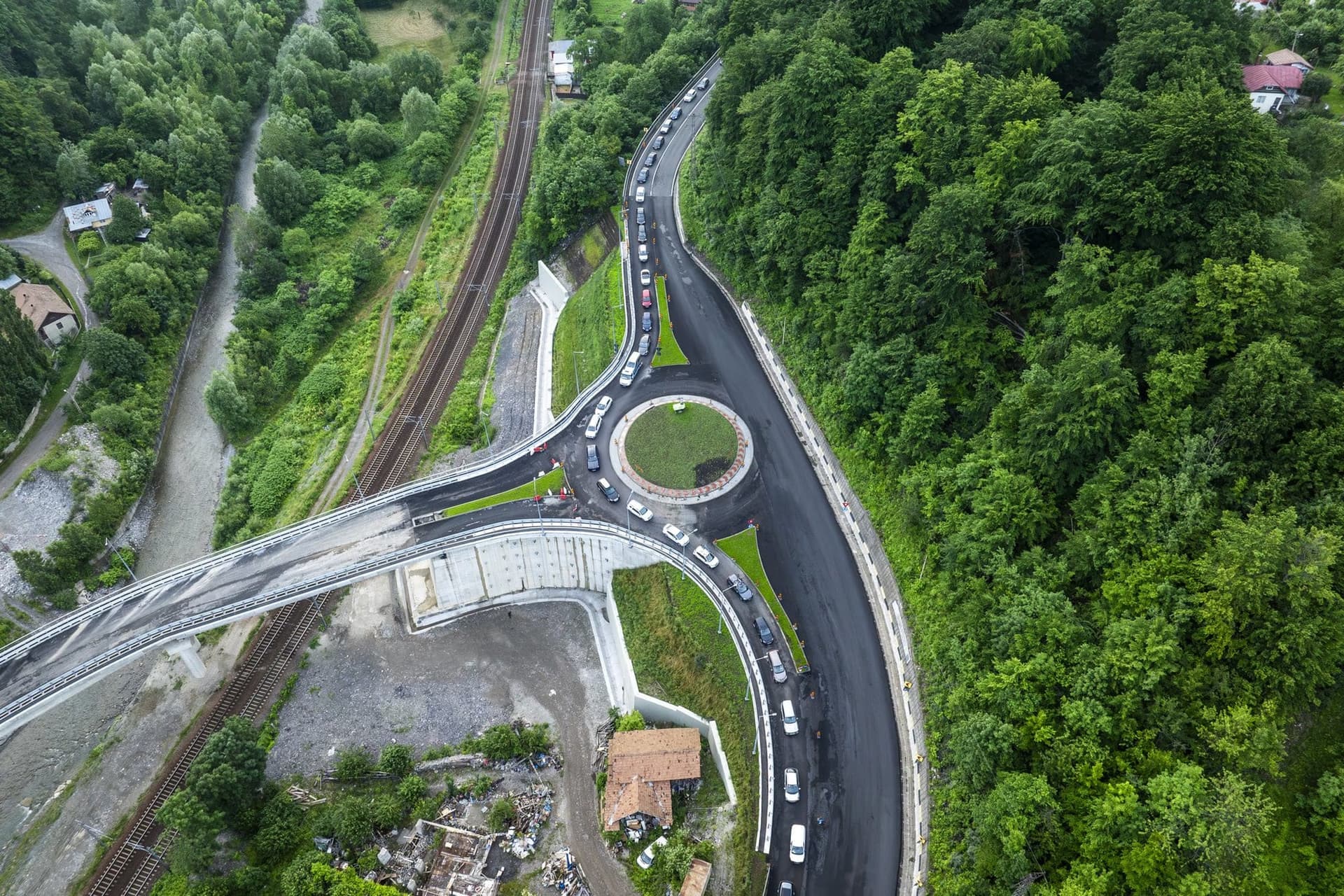
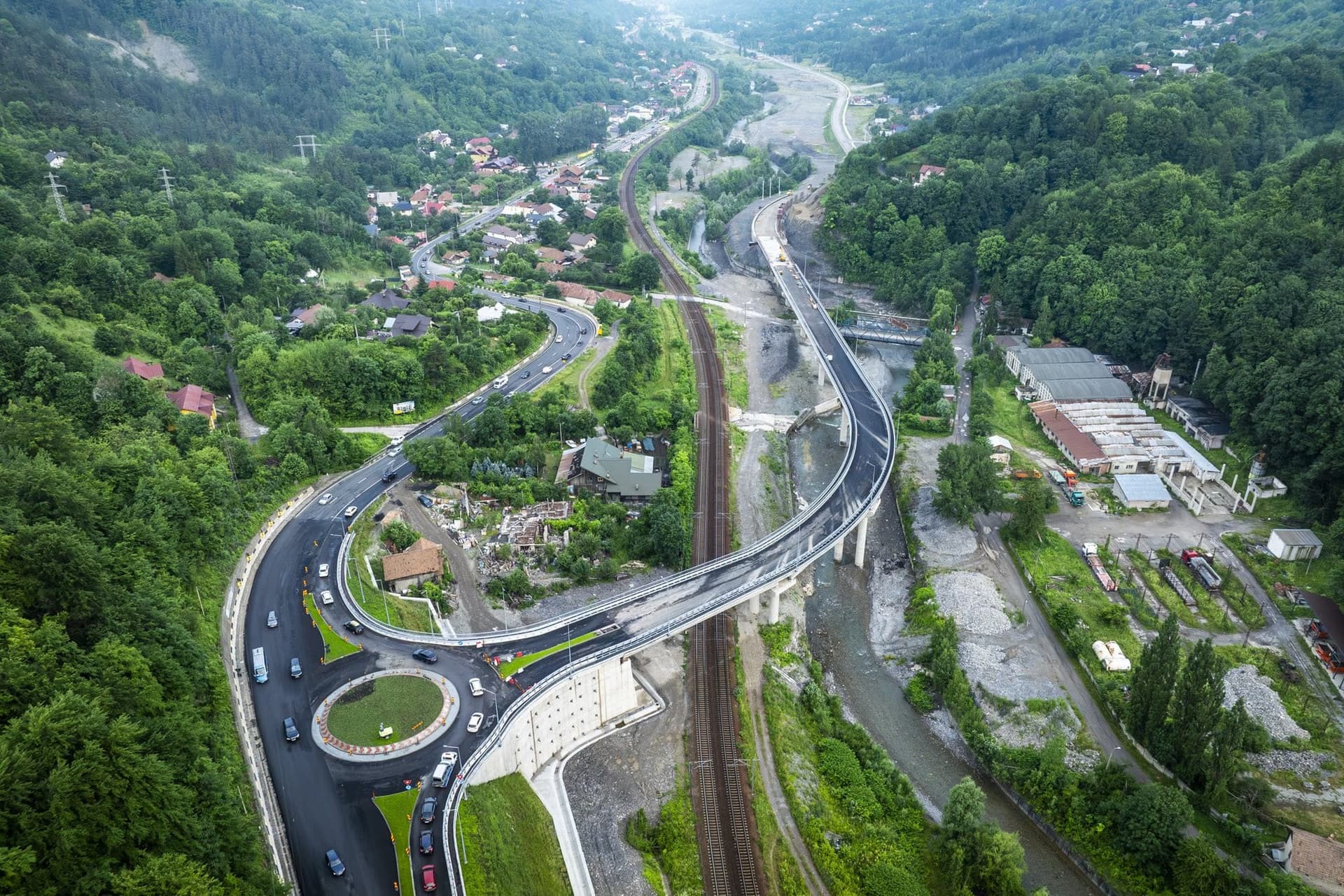
The aerial frame is the most honest starting point for what is happening in Comarnic.
On the right, the new bridge — on reinforced-concrete piers, already paved, with the guardrail mounted, parapets installed, lampposts in place. The road looks as if, were the barriers removed, the first car could pass today.
On the left, DN1 — the old road, congested, two lanes, cars queueing, coaches with children going to summer camps on the coast, vans carrying beer for beach terraces. Below, the CFR railway and the Prahova River.
The two roads — old and new — run in parallel, fifty metres apart. The vegetation between them is still alive. The distance between the world in which the road is finished and the world in which the road still does not work is given by the completion of the works, then by a single administrative decision: when the acceptance protocol gets signed.
What Comarnic cannot fix
An honest question, rarely asked: will the Comarnic Bypass solve the Prahova Valley problem?
Short answer: NO.
The longer answer begins with geography. The Prahova Valley is the most heavily travelled tourist corridor in Romania. From Bucharest to Brașov there are roughly 170 kilometres on DN1. On that route, six towns form a continuous column at the weekend: Comarnic – Sinaia – Bușteni – Azuga – Predeal – Brașov. All are wedged between the slopes of the Bucegi Mountains (south-west) and the Baiului Mountains (north-east). The road has, for most of its length, one lane per direction and cannot be widened without cutting the slopes or relocating the railway.
The Comarnic Bypass cuts six kilometres of „bottleneck". That's it. The rest of the route — Sinaia, Bușteni, Azuga, Predeal — remains unchanged.
The underlying solution is the Comarnic–Brașov Motorway (A3) — a section which, in June 2026, is still in the feasibility-study phase. The project is more than twenty years old. It has been awarded, withdrawn, re-awarded, blocked legally, blocked politically, blocked ecologically. In 2012 the prime minister said he would camp on the site until it was finished. Fourteen years later, work has still not started.
The estimated cost for those 60 kilometres exceeds 5 billion euros. There is no firm completion deadline.
Beyond the Comarnic Bypass, for the tourist coming from or returning from the seaside, the problem remains the same.
„On the belly". What it means
One of the recurring criticisms in the specialist press regarding how the Comarnic Bypass was contracted is the phrase „awarded on the belly" — a Romanian idiom suggesting that the initial design lacked rigorous geotechnical studies. Ziare.com — which has documented the history of the 130-million-lei supplement — uses this formulation to suggest that the initial design did not include enough rigour in the geotechnical surveys. The land subsidence found during construction — which forced route changes and additional costs — seems to confirm the reproach.
For a 6-kilometre project, the updated cost of 470 million lei works out to roughly 78 million lei per kilometre. By way of comparison: the average cost of motorway construction in Romania runs between 5 and 12 million euros per kilometre — that is, roughly 25-60 million lei per kilometre depending on the terrain. The Comarnic Bypass, although not a motorway, has complicated terrain features (slopes, the river bridge, the railway bridge) which partly justify the higher cost. The 130-million-lei supplement, however, represents a 38% increase over the initial budget — a margin difficult to explain without serious design problems.
For the reader's context, this supplement — alone — exceeds the annual investment budget of a small county capital.
The summer season, in parallel with the construction site
Sunday, 28 June 2026. The new road sits there, empty, in the morning light. The old road, fifty metres to the side, is gridlocked. The cars on DN1 are moving at an average of 8 km/h, according to the Waze data the passenger is reading aloud on holiday.
In that opening aerial shot, the central contradiction of Romanian infrastructure can be seen in two elements: something that should already be working, but isn't ready yet. The Comarnic Bypass is physically complete in a proportion which everyone — from the contractor to the president of the county council — estimates between 62% and 80%. The gap between those two numbers — and the gap between August 2026 and December 2027 — will decide in which year summer journeys will benefit from the new road.
With another year of works, the price will go up, as prices on a Romanian infrastructure site always do. Those six kilometres sit there, seen from the queue, as a picture of what the holiday road will look like when the bypass is finally finished.
The new road is, for now, only an Instagrammable promise. The old road is the everyday reality.
Photo gallery
Reportage by Adi Coco · Seeing Romania · 29 June 2026.
Sources:
- [Economedia — Comarnic Bypass, August 2026 deadline (Prahova County Council)](https://economedia.ro/centura-comarnic-va-fi-gata-in-august-nu-in-iunie-asa-cum-era-termenul-contractual-spune-seful-cj-prahova.html)
- [Economedia — CESTRIN announces December 2027](https://economedia.ro/video-centura-comarnic-nou-termen-de-finalizare-portalul-cestrin-anunta-luna-decembrie-2027-desi-autoritatile-afirmau-ca-va-fi-deschisa-in-vara-acestui-an.html)
- [Economedia — contract signed with Frasinul, 236 million lei](https://economedia.ro/centura-comarnic-pe-dn-1-valea-prahovei-frasinul-va-construi-centura-de-6-kilometri-contractul-a-fost-semnat-pentru-236-de-milioane-lei.html)
- [Economedia — the 130-million-lei supplement and the land subsidence](https://economedia.ro/centura-comarnic-se-scumpeste-cu-130-de-milioane-lei-ca-urmare-a-surparilor-de-teren-si-a-modificarilor-de-traseu-lucrarile-sunt-la-doar-48-si-ar-trebui-terminate-pana-la-sfarsitul-anului.html)
- [Ziare.com — the „belly" contract and the technical approvals](https://ziare.com/infrastructura-romania/centura-comarnic-avize-tehnice-termene-finalizare-probleme-surpari-1943917)
- [BizBrașov — the contractor claims completion, CNAIR contradicts](https://bizbrasov.ro/2026/04/17/constructor-centura-comarnic-finaliza-vara/)
- [Prahova County Council — priority project, 2026 budget](https://cjph.ro/centura-ocolitoare-comarnic-proiect-prioritar-in-bugetul-judetului-pentru-2026/)
For the context on the A3 Comarnic–Brașov Motorway, data are drawn from public CNAIR communications and specialist press reporting.
Image credits: AdiCoco.com.