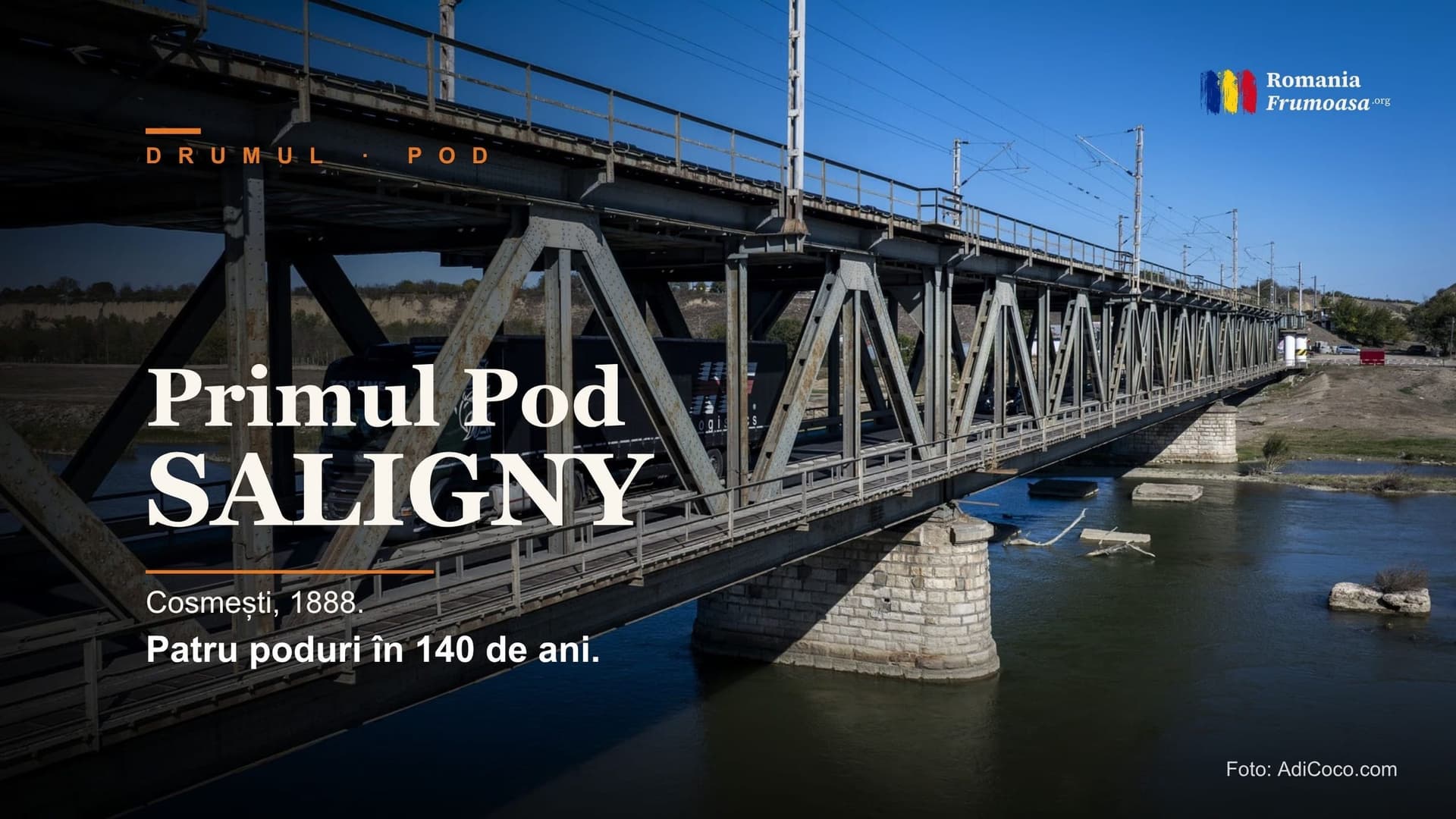
Built by Anghel Saligny between 1885 and 1888, blown up by the Romanian army on 2 August 1917 to stop the German advance on Iași, then rebuilt between 1921 and 1924. Now, 138 years after the Saligny bridge first opened, the site at Cosmești is preparing for its fifth bridge — a new one, authorized in May 2026.
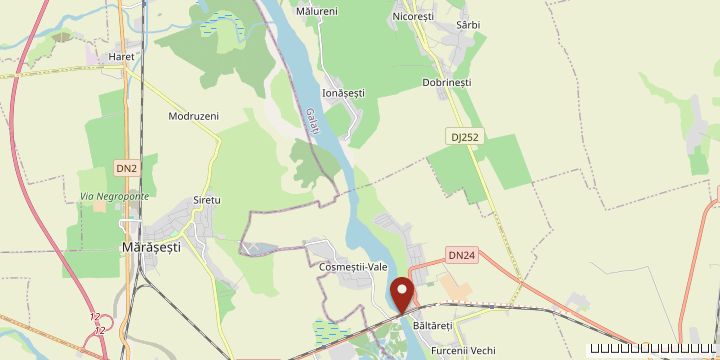
On 19 May 2026, the Ministry of Transport issued a construction permit for a new bridge over the Siret at Cosmești, on national road DN24. The construction contract was awarded to UMB four years earlier; the execution period is 24 months. Once the new bridge is complete, the existing bridge — until then used for both road and rail traffic — will remain exclusively for railway use.
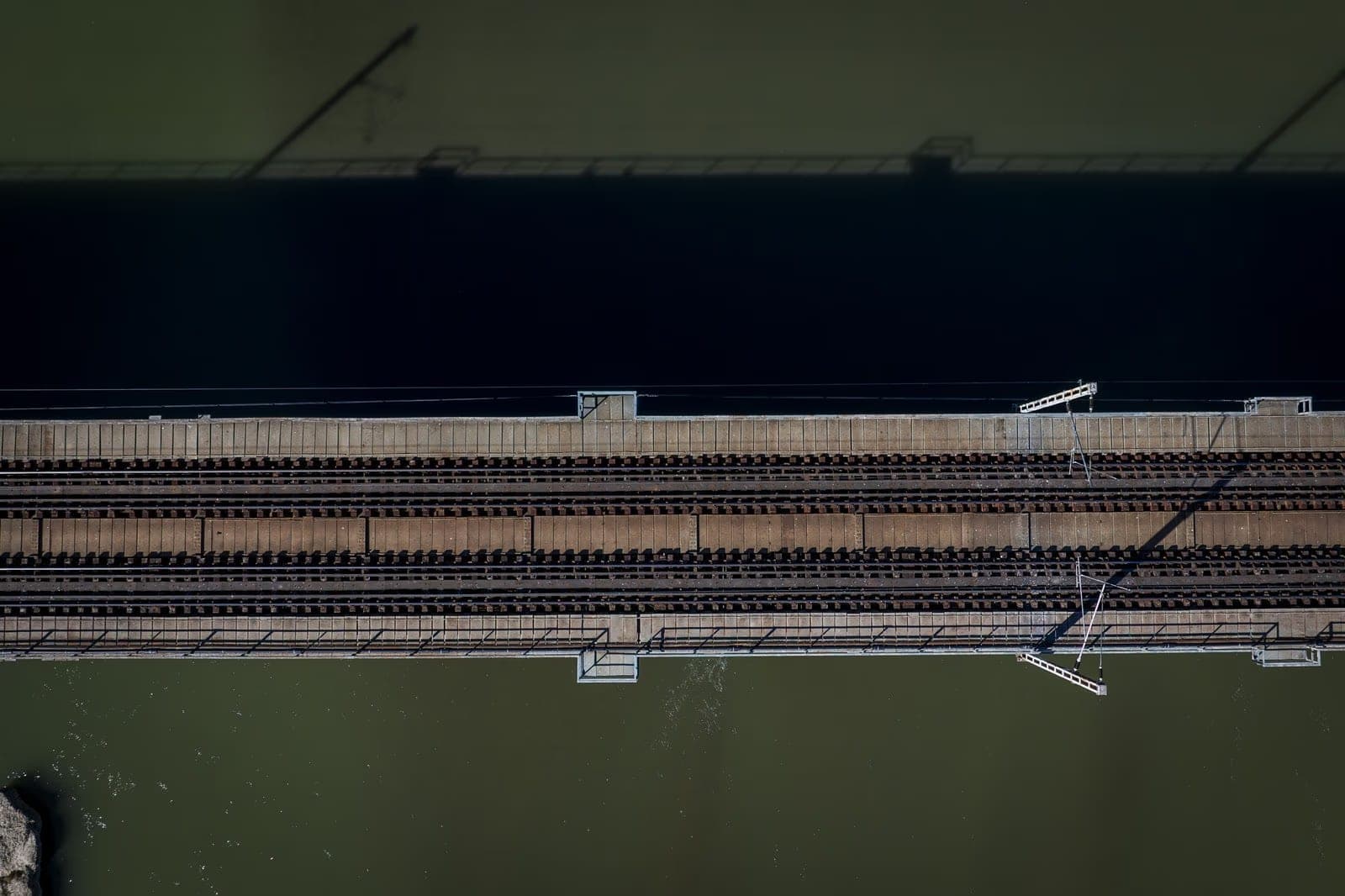
It is the end of one century-long cycle and the beginning of another. On that spot, over the Siret, four bridgeshave stood in succession. Each came with a story that most people never think about as they drive across.
The engineer who put Romania on iron
The name that connects all these bridges is Anghel Saligny. Born in Șerbănești (Galați County) in 1854 and educated in Berlin and Charlottenburg, Saligny worked on the Buzău–Mărășești railway line (as part of the design team) and later built the bridge at Cernavodă (1890–1895) — at the time of its inauguration, the longest combined road-and-rail bridge in continental Europe.
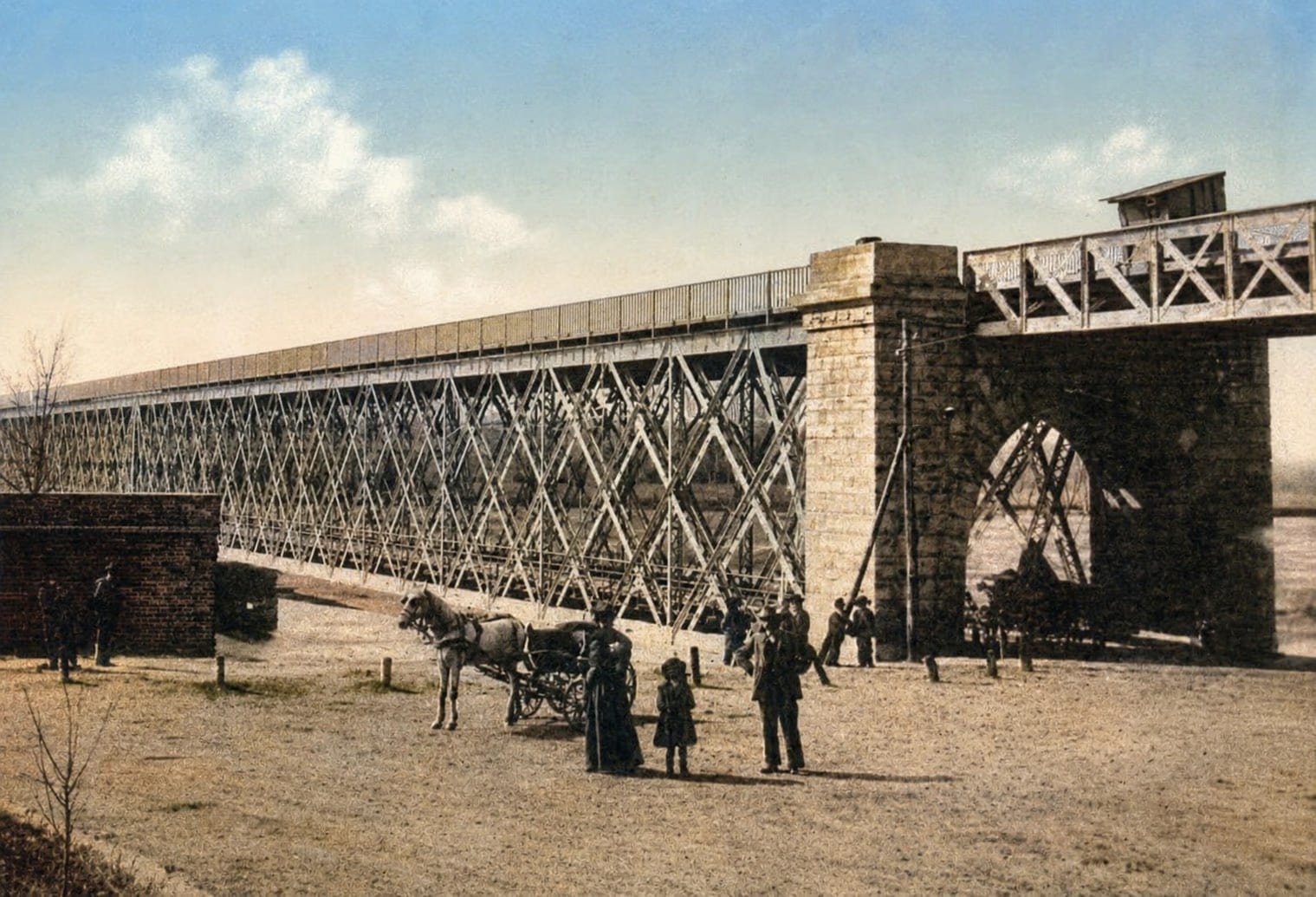
Before Cernavodă, however, came Cosmești. Here, on the Adjud–Tecuci–Galați railway line (opened in the 1880s), Saligny was commissioned to design the bridge over the Siret that would replace an existing wooden bridge. The design was completed in 1882. Construction took three years — 1885 to 1888.
A Romanian first, in 430 metres of iron
The bridge at Cosmești was more than a crossing. It was a series of technical firsts.
It was Romania's first combined road-and-rail bridge — a two-level structure, with the railway on top and the road below, stretching 430 metres. The stone piers are anchored 18 metres into the ground, and for the foundations Saligny used, for the first time in Romania, the compressed-air caisson method — a technology previously employed only in the construction of the great bridges of the West.
The materials — structural iron and decorative metalwork — came from Vienna, shipped down the Danube to Galați and Brăila, and then by rail. Contemporary press accounts and later railway histories frequently described it as the most beautiful railway bridge in the country: the ornamental ironwork, the proportions, and the dual function made it, beyond its utility, a work of architecture.
It operated without incident for nearly 30 years.
2 August 1917 — 'They shall not pass'
Summer 1917. Romania is partly occupied: Bucharest, Oltenia, and Muntenia are under German-Austro-Bulgarian administration. The royal family, the government, parliament, and the army have retreated to Moldova, with headquarters in Iași. Along the Siret valley, the last line of defence is being drawn. German Field Marshal August von Mackensen, commander of the Central Powers offensive, is credited in press accounts and textbooks with the line 'We'll meet in two weeks, in Iași' — a phrase with no clear documentary source, but firmly lodged in public memory.
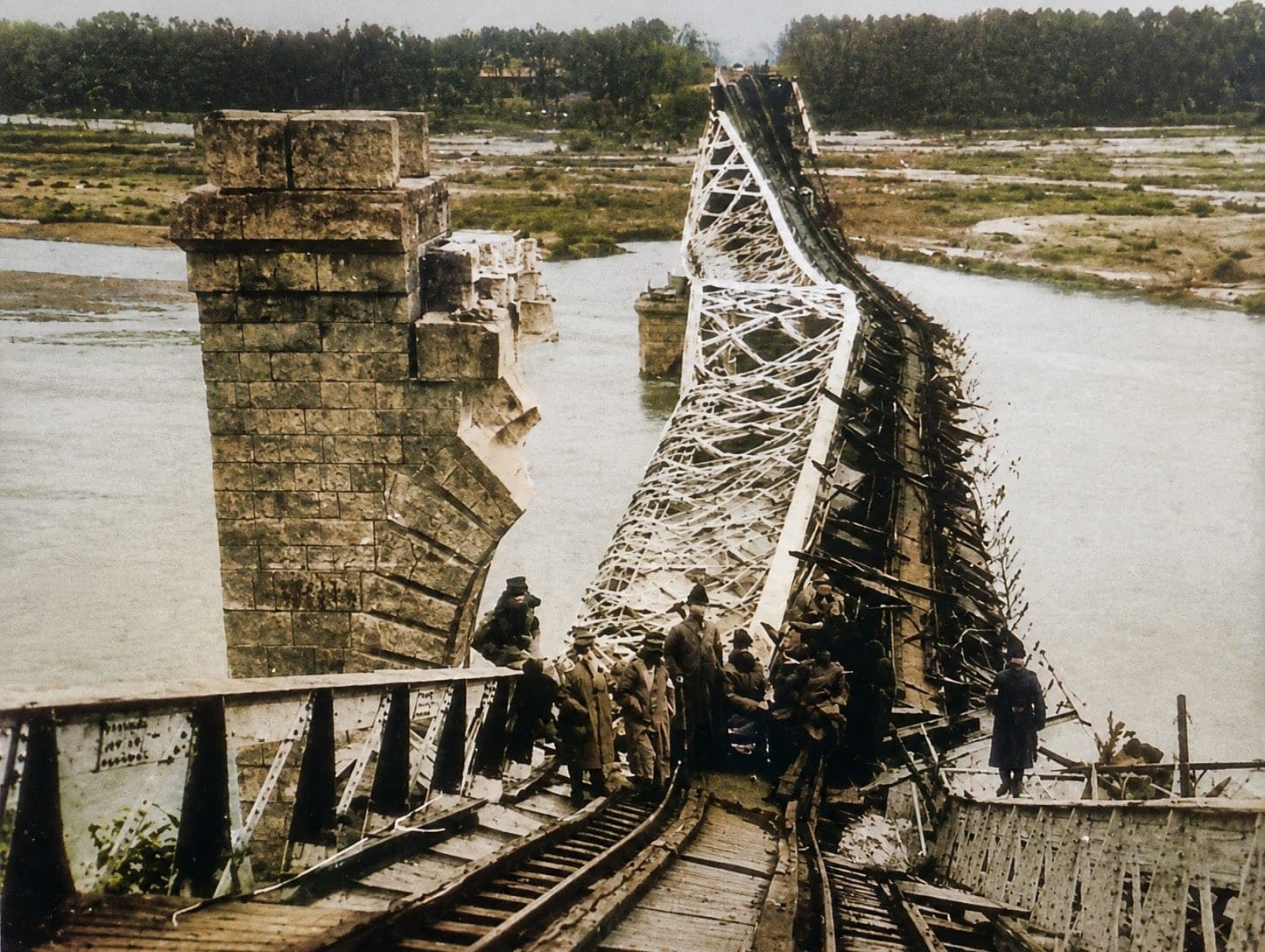
Between 24 July and 12 August 1917, the Romanian army — the 1st Army, commanded by General Eremia Grigorescu — fought the Battle of Mărășești. The main German thrust was also directed along the Siret–Putna corridor, toward the bridge at Cosmești. For the Germans, taking the bridge would have meant a direct route to Tecuci and on to Iași. For the Romanians, the bridge became a point on which the literal continuity of the state depended.
On the first day of August, German troops under General Curt von Morgen attacked Prisaca forest, which guarded access to the bridge. The front gave way at the edge of the forest. On 2 August 1917, falling back under pressure, the Romanian army blew up its own bridge.
It was a tragic paradox: Saligny's masterpiece — the emblem of Romania's pre-war modernization — was destroyed by the very hands it had served, so that the country would not be lost. By the end of the battle, the front held: the German army failed to push beyond Mărășești. The line attributed to General Grigorescu — 'They shall not pass' — became, over the following decades, one of the defining phrases of national memory, though its exact origin (army order versus a field expression taken up later) remains a matter of historiographical debate.
Mackensen never reached Iași.
Rebuilt on its own foundations
After the war ended, rebuilding the bridge became a priority. Saligny's stone piers — anchored 18 metres deep — had survived the explosion. On them, first, a temporary bridge was erected, with a single shared level for road and rail traffic; it was quickly put into service and carried traffic until 1924.
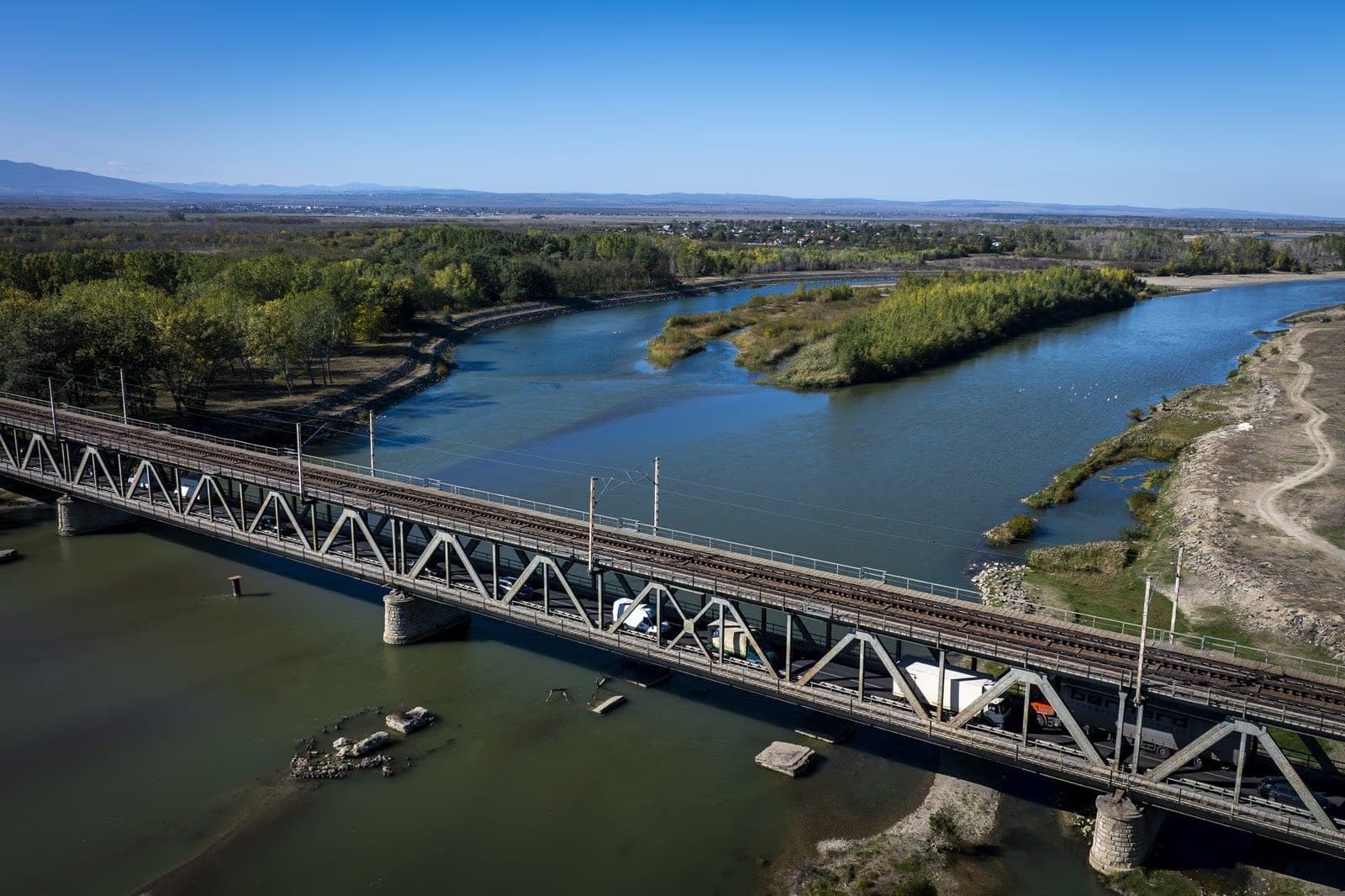
Between 1921 and 1924, on the same foundations, the permanent bridge was constructed — the fourth bridge on that site (counting the wooden bridge that preceded Saligny's). Its length reached approximately 512 metres, longer than the original. Like its predecessor, it remained a combined road-and-rail structure.
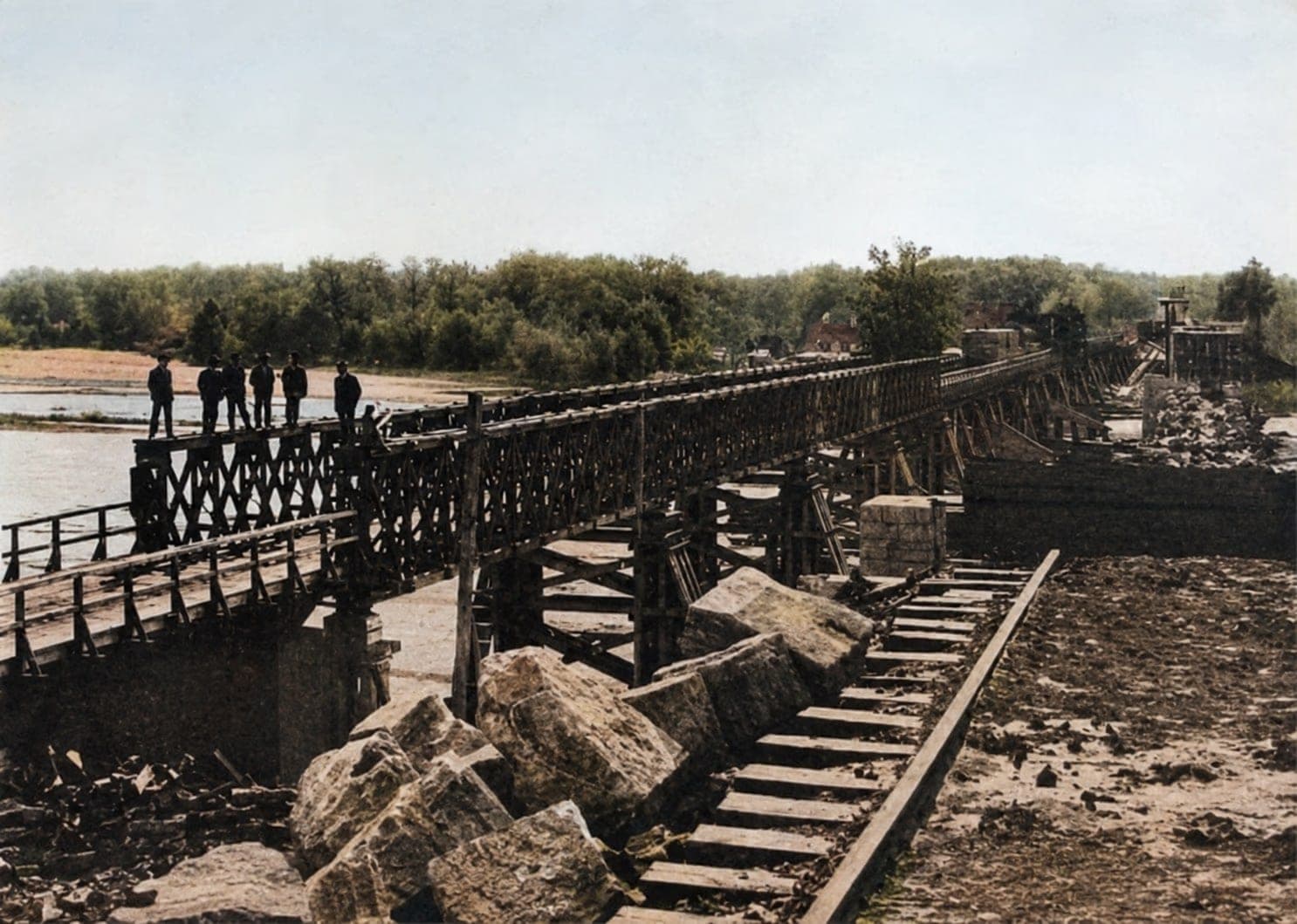
It was on this bridge that Romania entered the interwar years, came through the Second World War, endured communism (with a recorded rehabilitation in 1986), lived through the Revolution, and navigated the first three decades after 1989. More than a hundred years.
100 years on — still in use, but barely
A technical report from 2012 noted that the structural deterioration of the interwar bridge was advanced and that it posed risks to traffic safety. Discussions about a new bridge began at that point. It took a decade to reach a contract — and another four years from contract to construction permit, issued on 19 May 2026.
The new bridge will be built by UMB, on DN24, within the administrative boundaries of the town of Tecuci and the commune of Cosmești. The execution period: 24 months. Once it enters service, the interwar bridge will remain exclusively for rail traffic — an elegant transition, in which Saligny's legacy is preserved for what it was first conceived to do: carry trains.
The road, the bridge, the story
Four bridges on the same site, in 140 years. A wooden bridge until 1888. The Saligny bridge from 1888 to 1917. A temporary bridge from 1917 to 1924. The interwar bridge, which will complete a full century exactly when it enters its 'railway retirement.' And from late 2027 — a fifth bridge.
Each of them answers the same question — how do you cross the Siret here, so you can keep going — and each is shaped by the moment in which it was conceived: the first industrialization, the first modern military defeat, the first post-war reconstruction, the first decade of European funding.
A road crosses a bridge without asking any questions. But the bridge, if you stop at it for five minutes, tells you more about Romania than many a textbook.
1 / 12