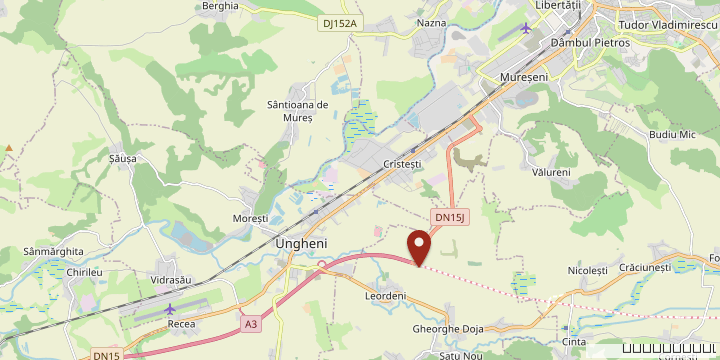
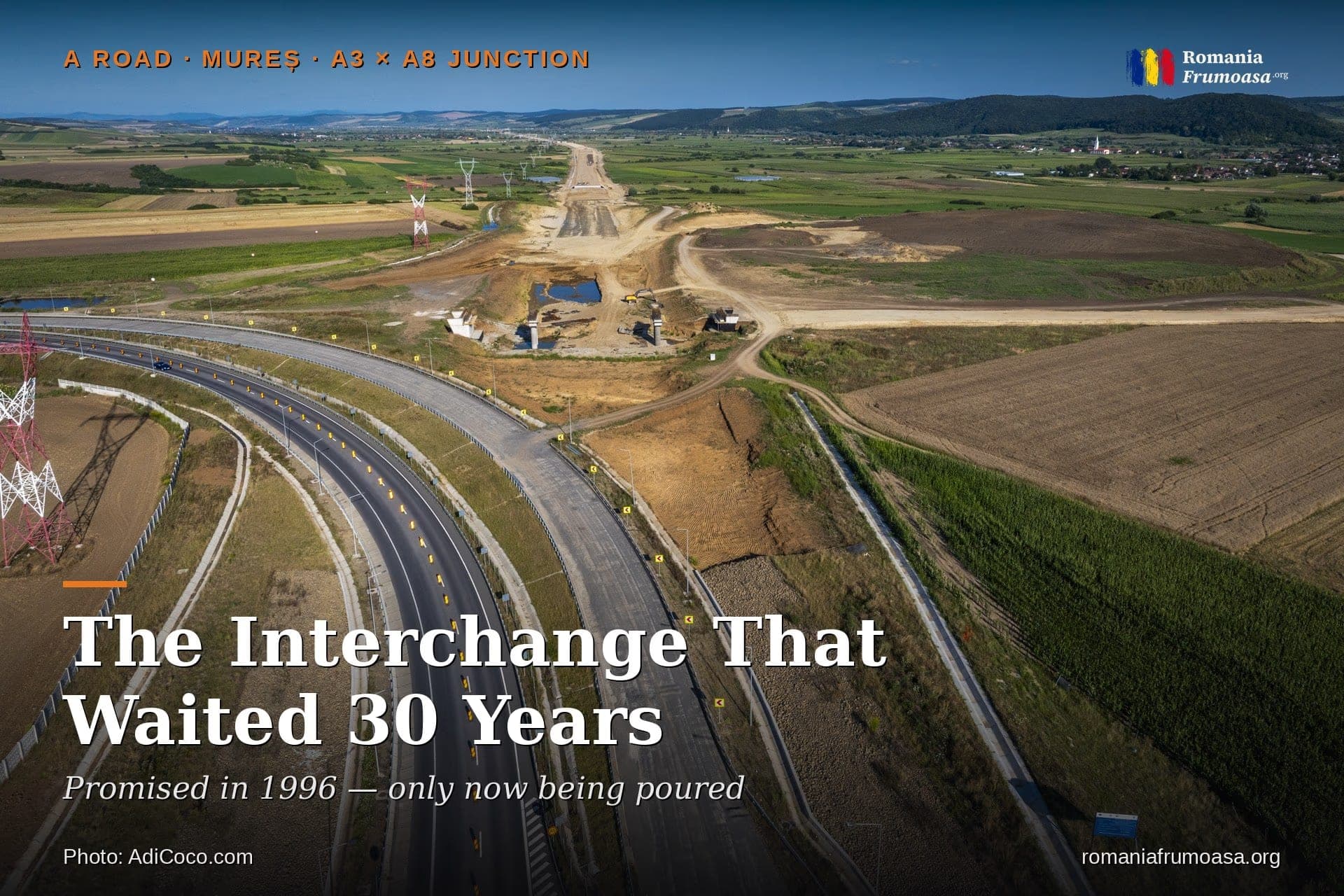
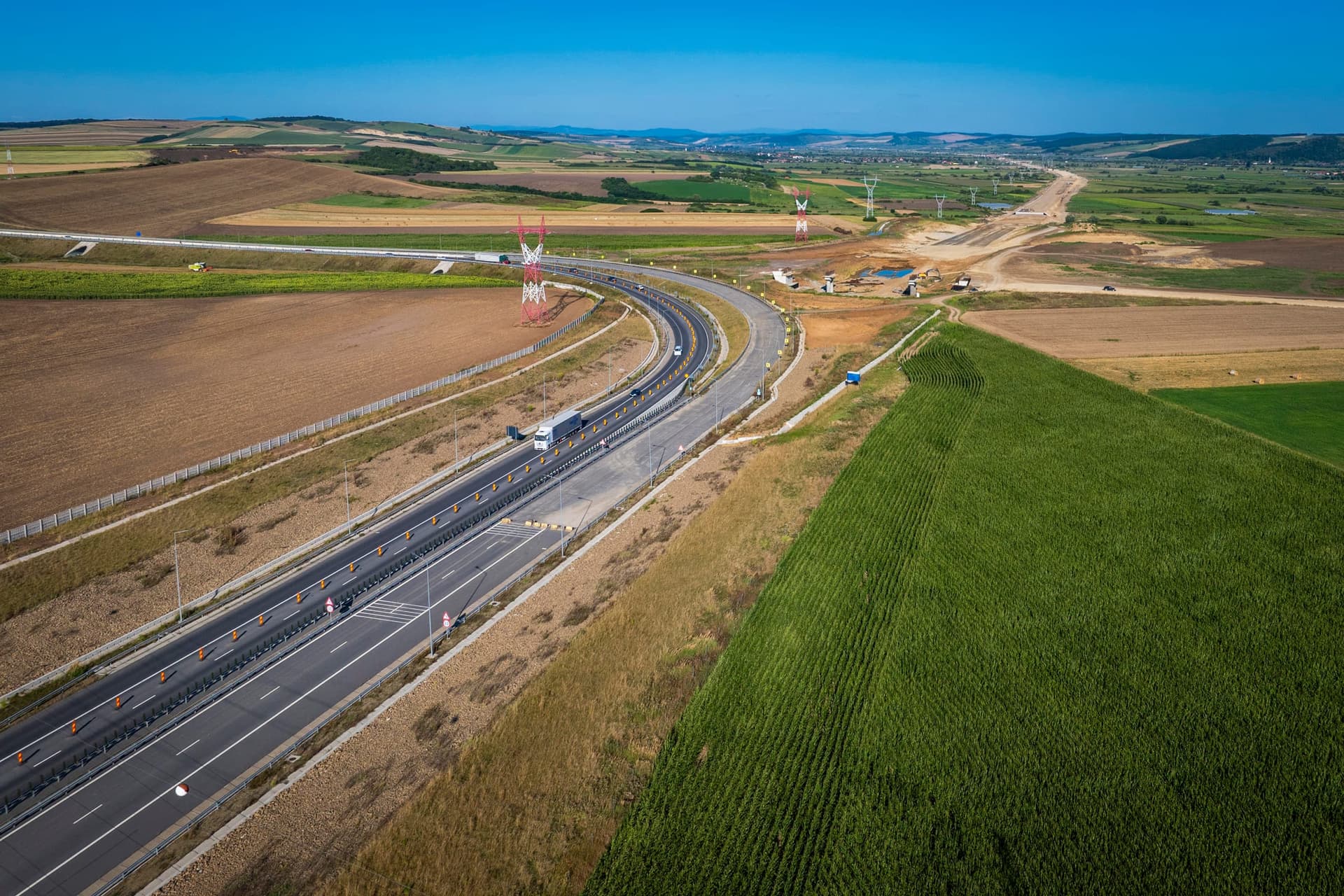
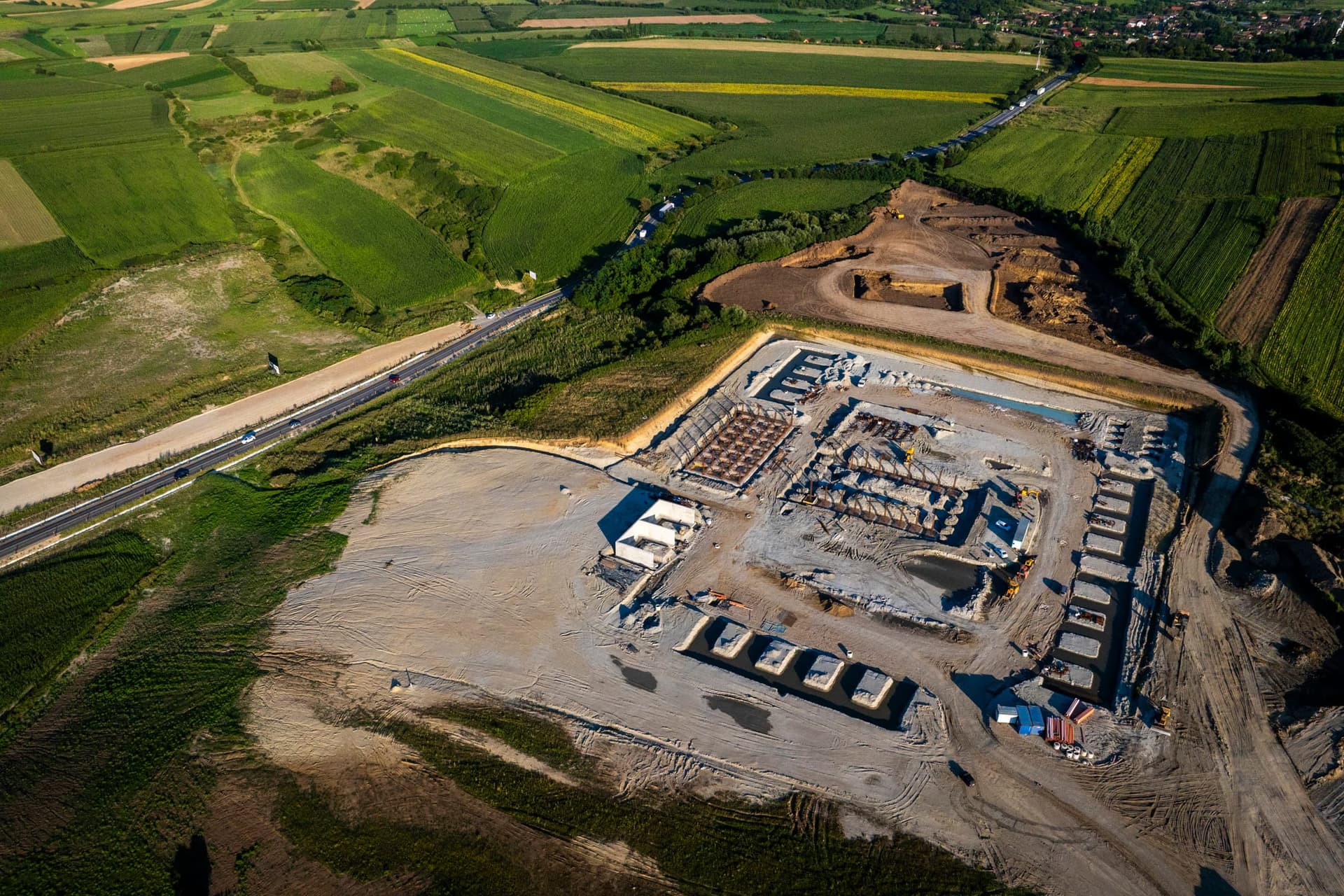
In 1996-97, the commander of the Târgu Mureș airport announced, at a press conference, the great motorway interchange that would rise beside the runway. Only now is the interchange being poured — I photographed it by drone on July 29, 2026.
The promise
Sometime in 1996 or 1997 — memory keeps the scene, not the exact date — I attended a press conference given by Ștefan Runcan, commander of the Târgu Mureș airport. He spoke of the future with the assurance of a man who had seen the maps: next to the airport, Romania's great motorway interchange would be built, the place where the road from Bucharest to Borș crossed the road to Moldavia. The airport, he said, would become the best-connected point in Transylvania.
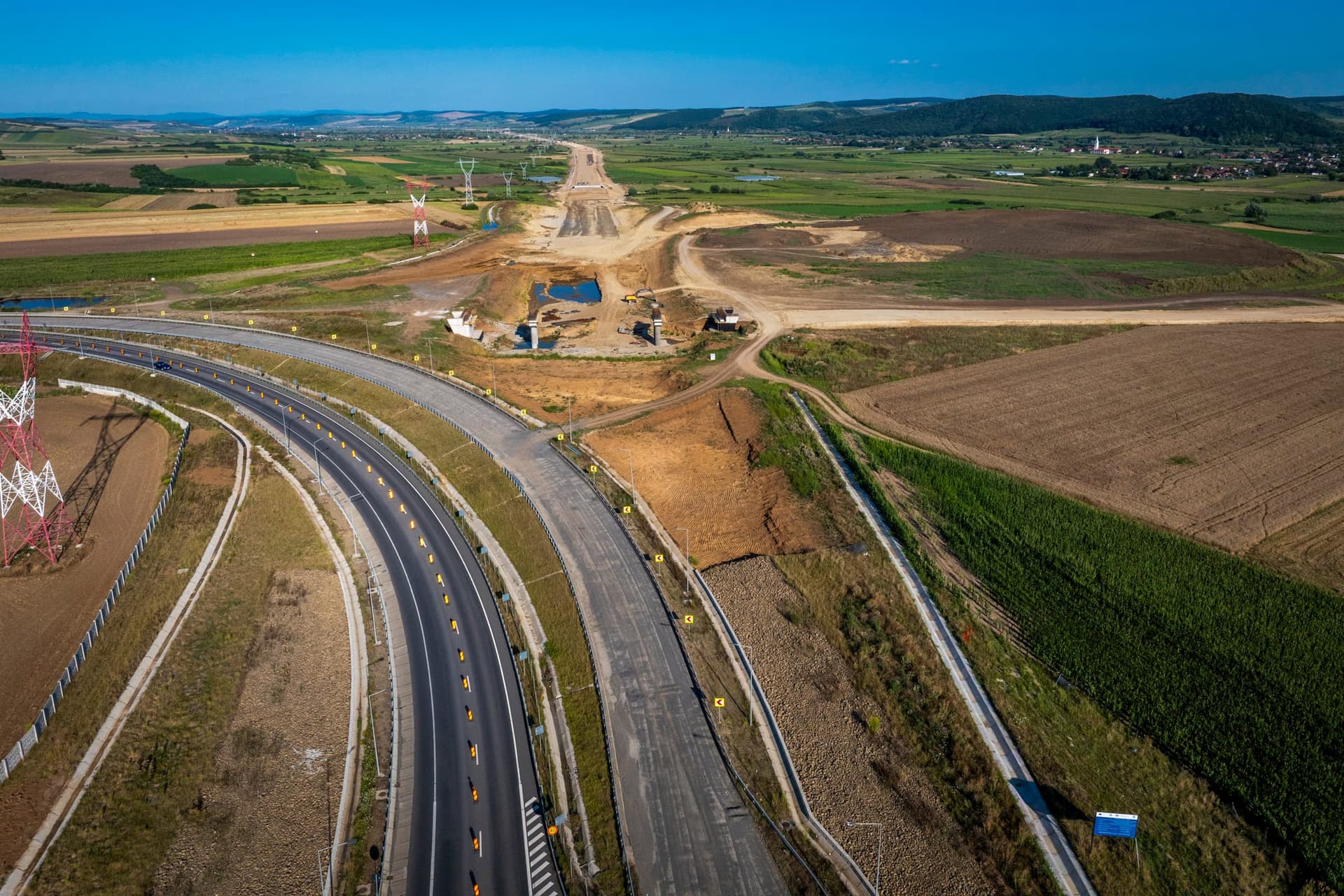
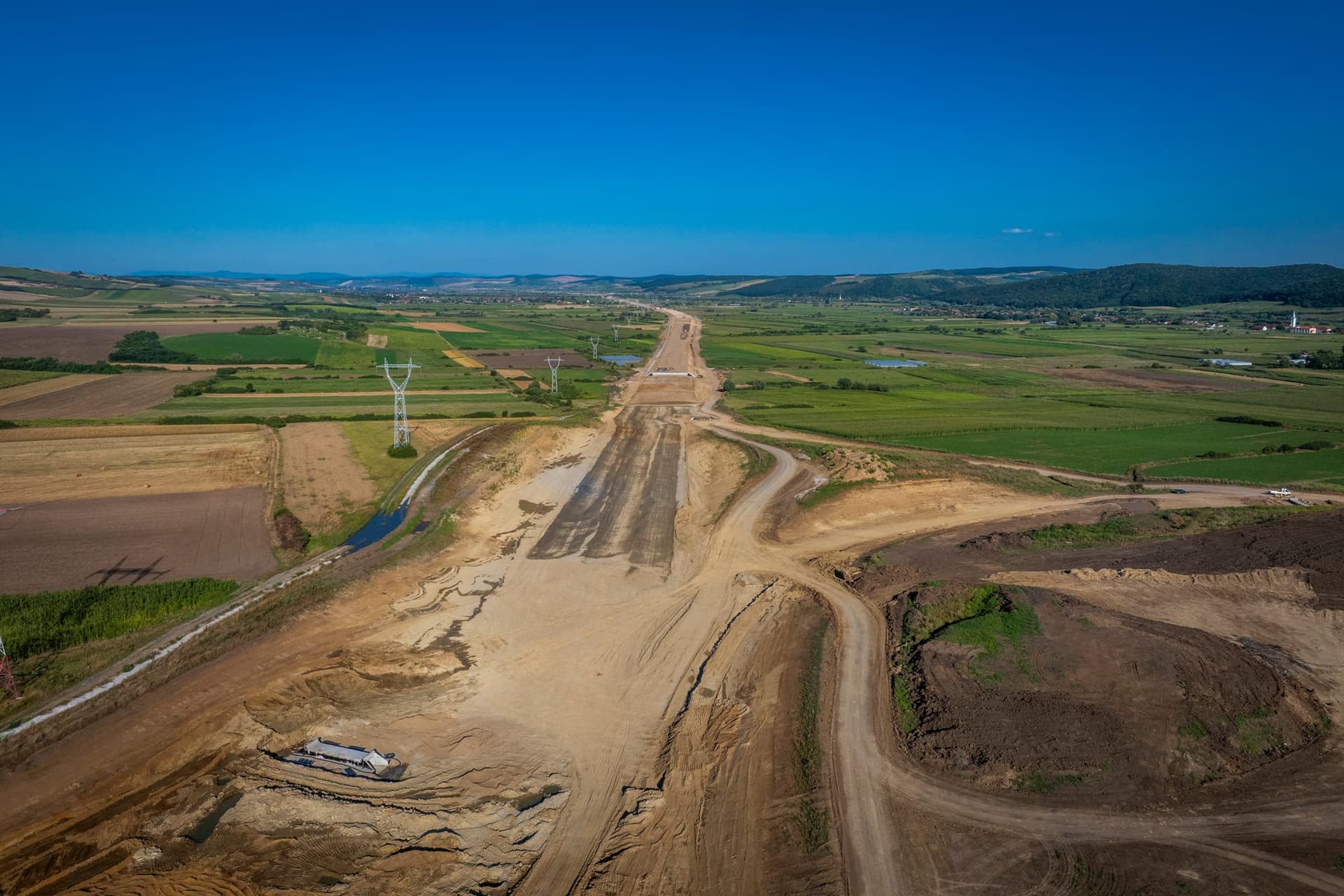
Nearly thirty years have passed. The interchange Runcan announced still does not exist. But — and this is why I sent the drone up over the fields at Ungheni and Acățari — for the first time in three decades, it can be seen: one arm of finished asphalt and one of yellow earth, growing by 15,000 cubic metres of earthworks a day.
What became of the A3
To understand why it took 30 years, you first have to tell the story of the motorway that was supposed to pass through here. The A3, as it was dreamed up, linked Bucharest to the border crossing at Borș via Ploiești, Brașov, Sighișoara and Târgu Mureș — roughly 600 kilometres. In December 2003, the government of the day signed the contract for the 415 km between Brașov and Borș directly with the American firm Bechtel, without a tender; after the documents were declassified, the press would write that the route had been "chosen by the Americans". Completion deadline: 2012.
Bechtel's tally at termination (May 2013): 52 kilometres delivered — Câmpia Turzii–Turda–Gilău — for roughly 1.4 billion euros — nearly 27 million euros per kilometre — plus 37 million euros in termination compensation paid by the state.
Then came the decisive blow for Târgu Mureș: the General Transport Master Plan, approved in 2015-2016, definitively struck the Brașov–Făgăraș–Sighișoara–Târgu Mureș section from the project. The city that was meant to be the motorway's midpoint became its terminus. The southern link no longer exists as a motorway in any programme: Brașov–Făgăraș was reborn separately under the designation A13, while Ploiești–Brașov — the only piece of the old concept still alive — is stuck, in 2026, at the stage of a feasibility study with penalties: of the entire section, only the 6.3 km between Râșnov and Cristian have been built in 20 years.
In other words: the A3 announced by the maps of the 1990s, the one that came from Ploiești through Sighișoara, is dead as an idea. What survived is the "Transylvania Motorway" — Târgu Mureș–Cluj–Borș — and it, at last, has news.
The western arm: Târgu Mureș–Borș
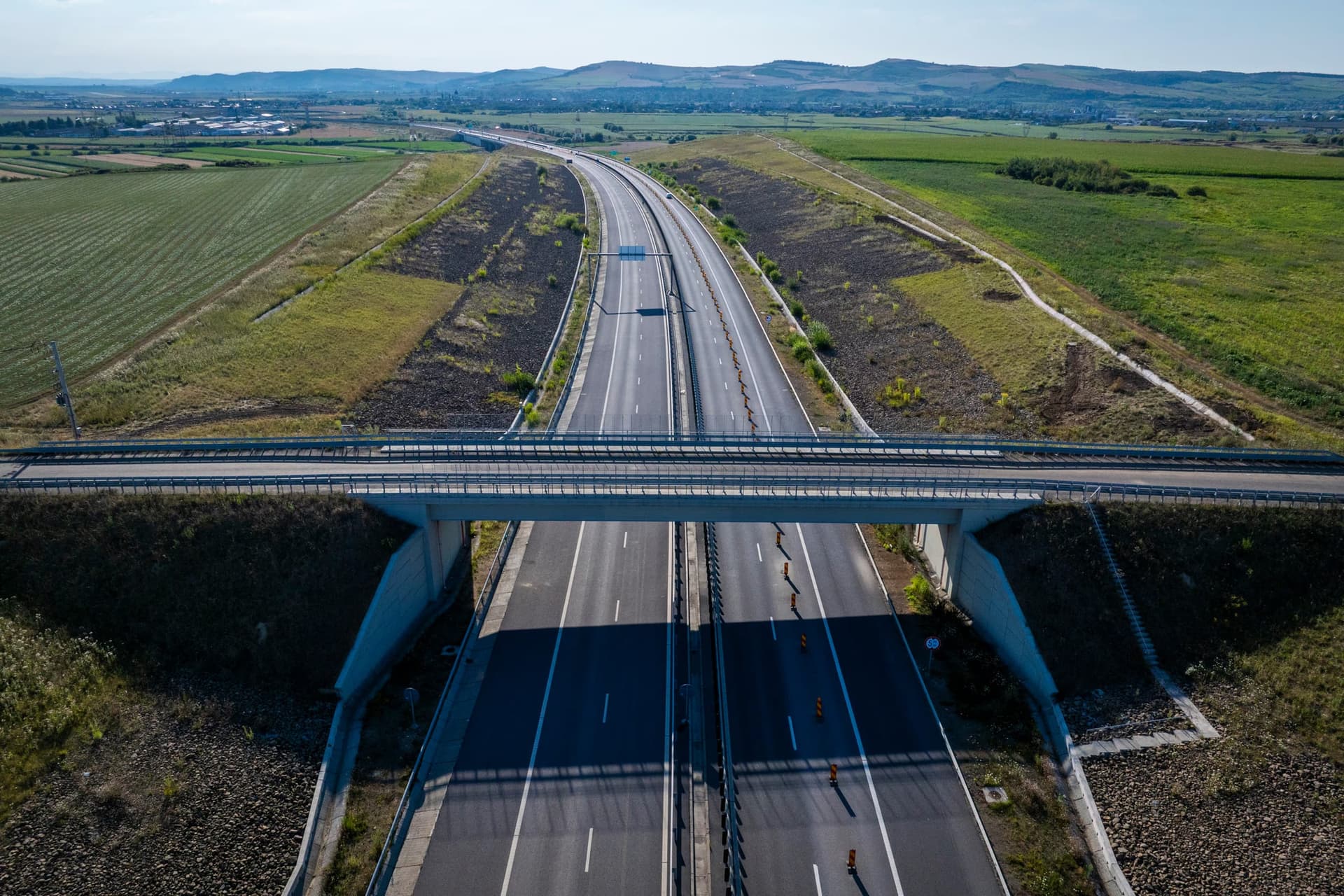
From Târgu Mureș towards Cluj, traffic has flowed uninterrupted — 114 kilometres — since December 2023. Further on, towards the border, 2026 is the best year in this motorway's history: the Zimbor–Poarta Sălajului lot opens on August 10; Nădășelu–Zimbor, now at 94%, has a contractual deadline of March 2027 but could be ready as early as December; Suplacu de Barcău–Chiribiș — with the viaduct Bechtel started and abandoned — opens in the autumn; Chiribiș–Biharia has a contractual deadline of May 2027, with a possible early opening, also in December. If the optimistic scenario holds — and for now it belongs to political announcements and civic monitors, not to the contracts — by the end of 2026 it will be possible to drive from Târgu Mureș to near Zalău, and from Nușfalău to the Hungarian border.
What remains is the hole in the middle: the Meseș lot, 41 kilometres with a tunnel of nearly 3 kilometres — the largest road contract in the history of CNAIR, the state road company: 6.62 billion lei, signed only in April 2025, with 78 months for design and construction. The arithmetic is unforgiving: end to end, Târgu Mureș–Borș will realistically be drivable in the early 2030s. Until then, the gap is bypassed through Zalău.
The eastern arm: the A8, at last
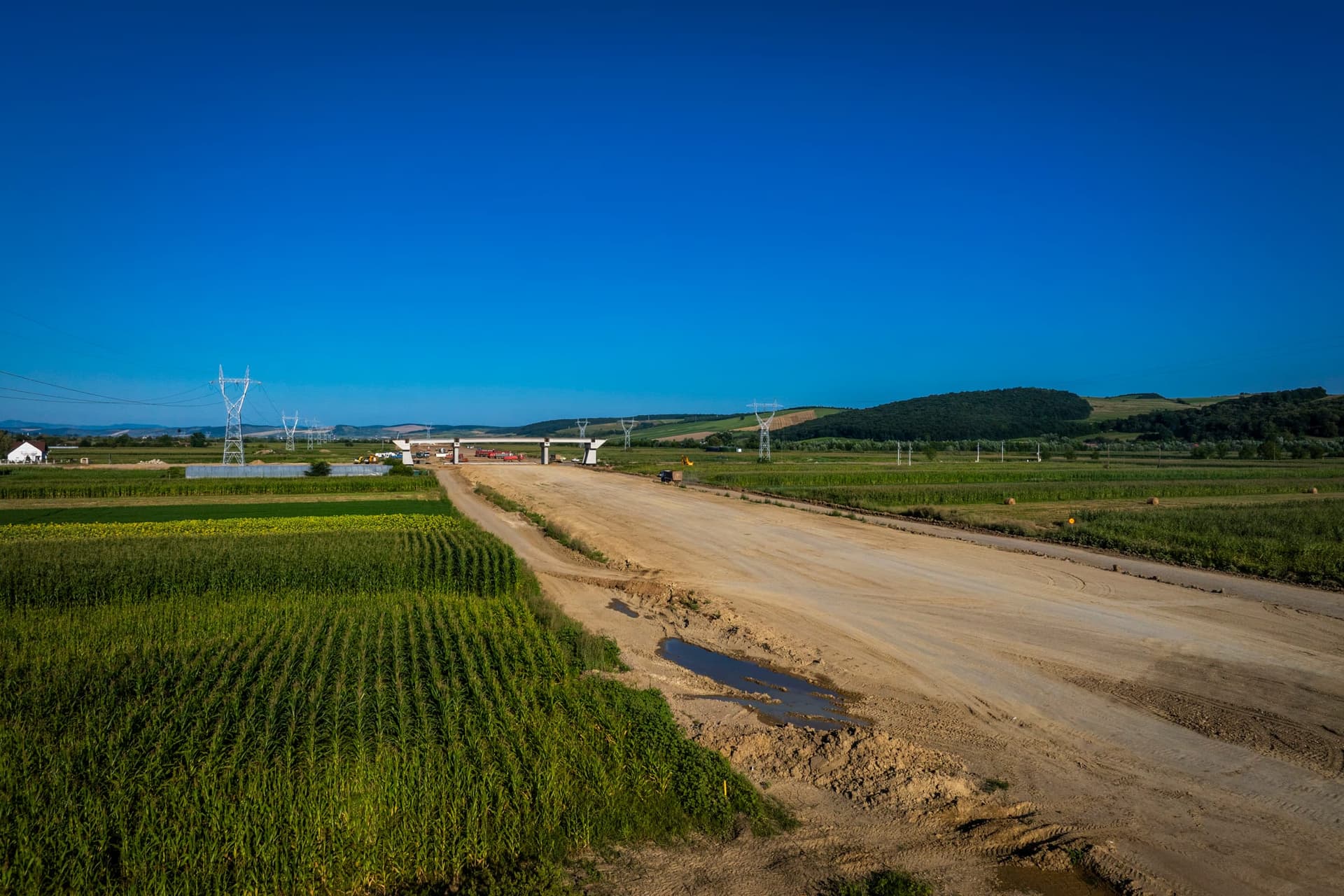
And the second arm of Runcan's interchange — the one missing altogether — is exactly what I photographed: "Motorway A8 Târgu Mureș–Târgu Neamț, Section I: Târgu Mureș–Miercurea Nirajului and the link to Motorway A3". On CNAIR's paperwork it sounds bureaucratic; from the drone it looks like the first physical proof, after two decades of talk, that the "Union Motorway" exists.
The figures for July 29, 2026: physical progress above 50%, around 800 workers and 700 machines belonging to the Turkish contractor Nurol, 36 structures — 16 bridges, 16 overpasses, 4 box culverts — and the first layer of asphalt in the history of the A8's 305 km, laid right here, at more than 1,000 tonnes a day.
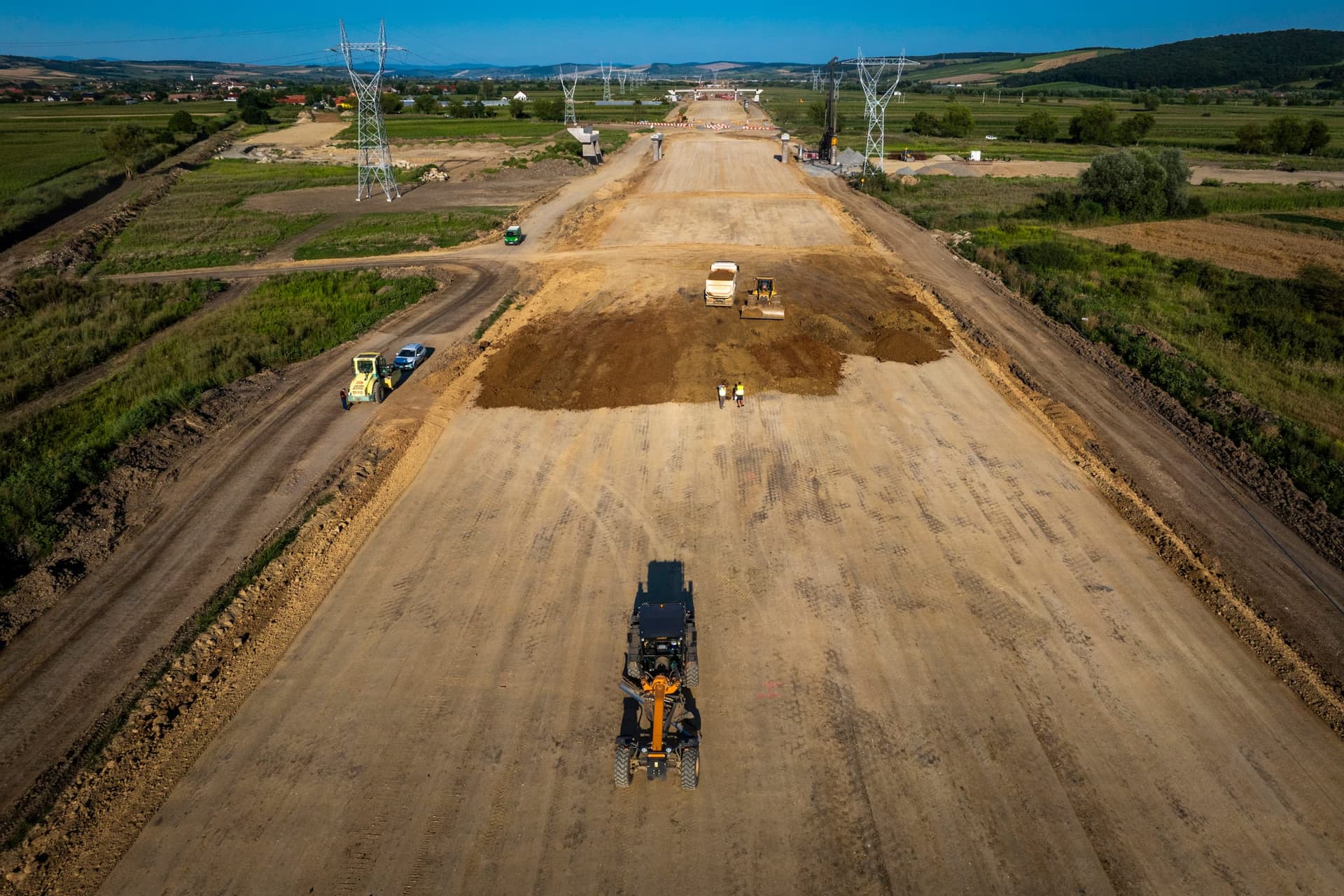
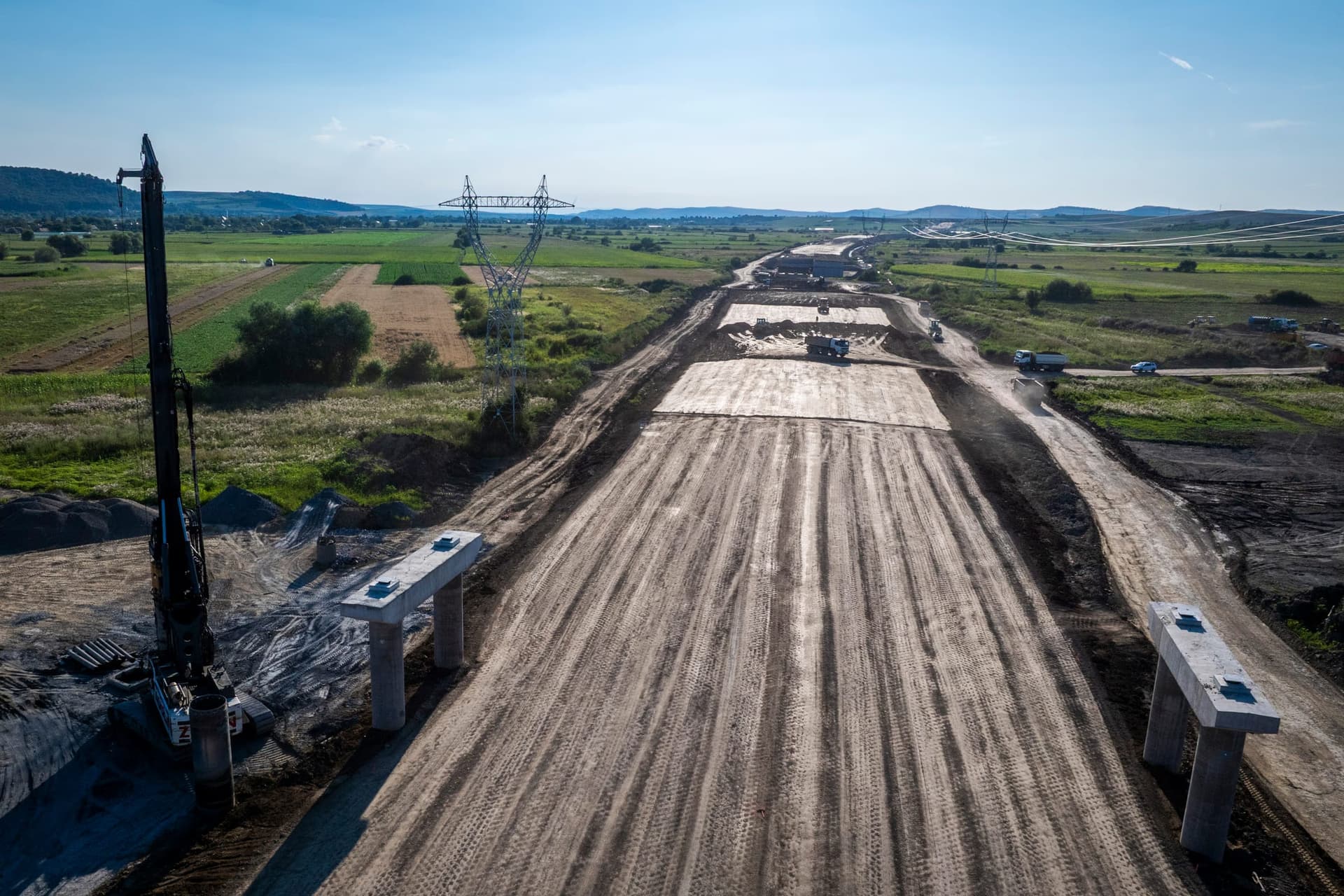
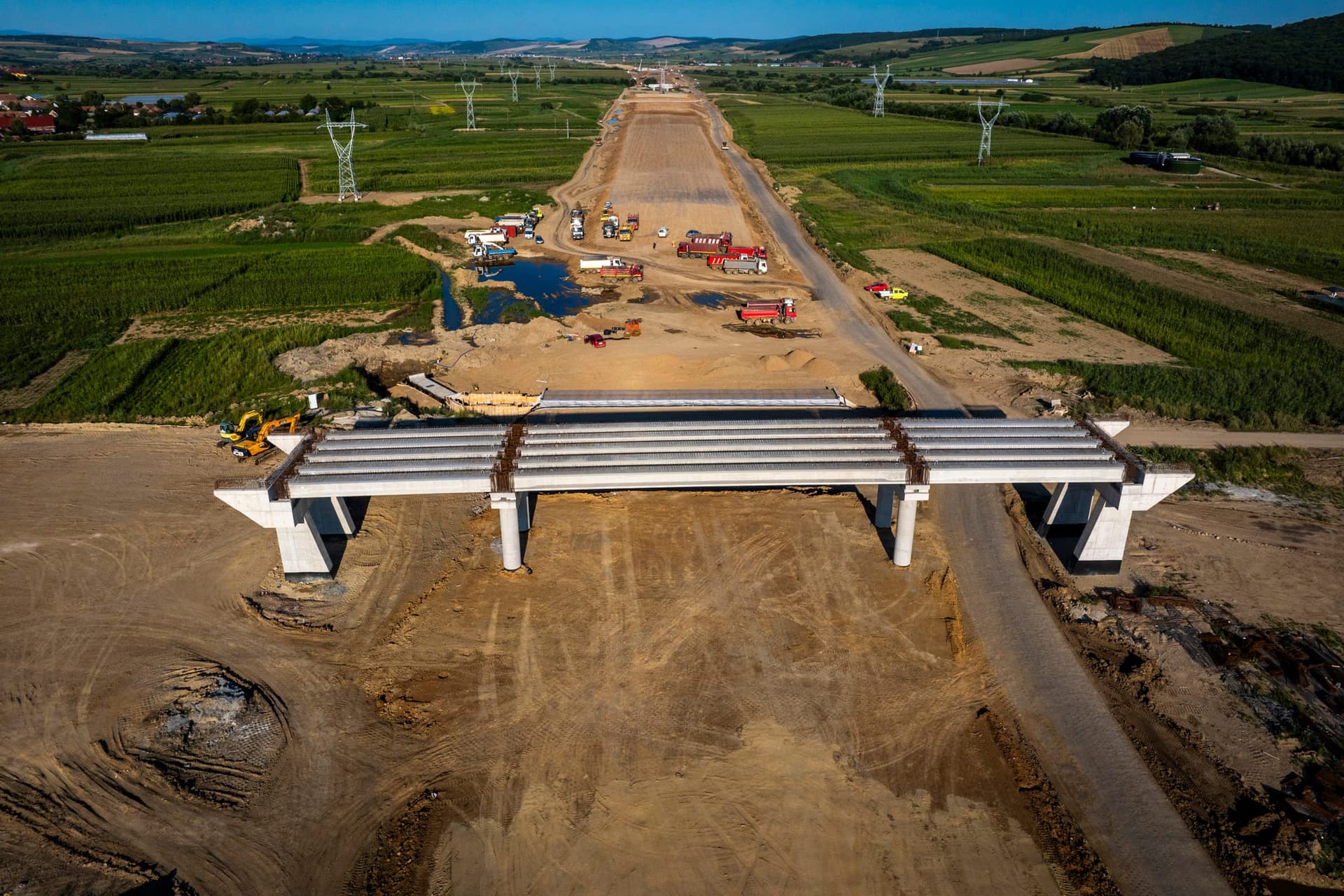
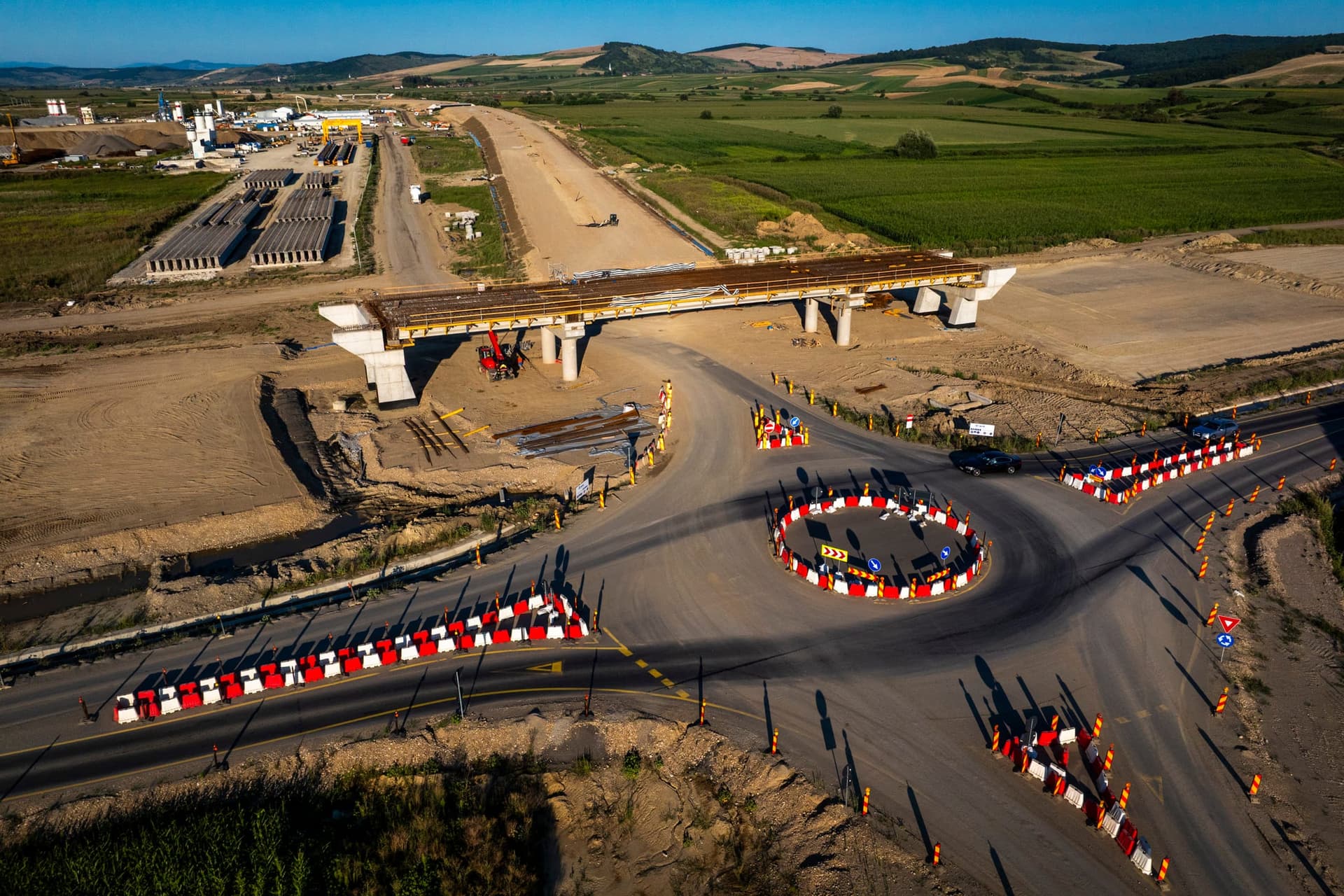
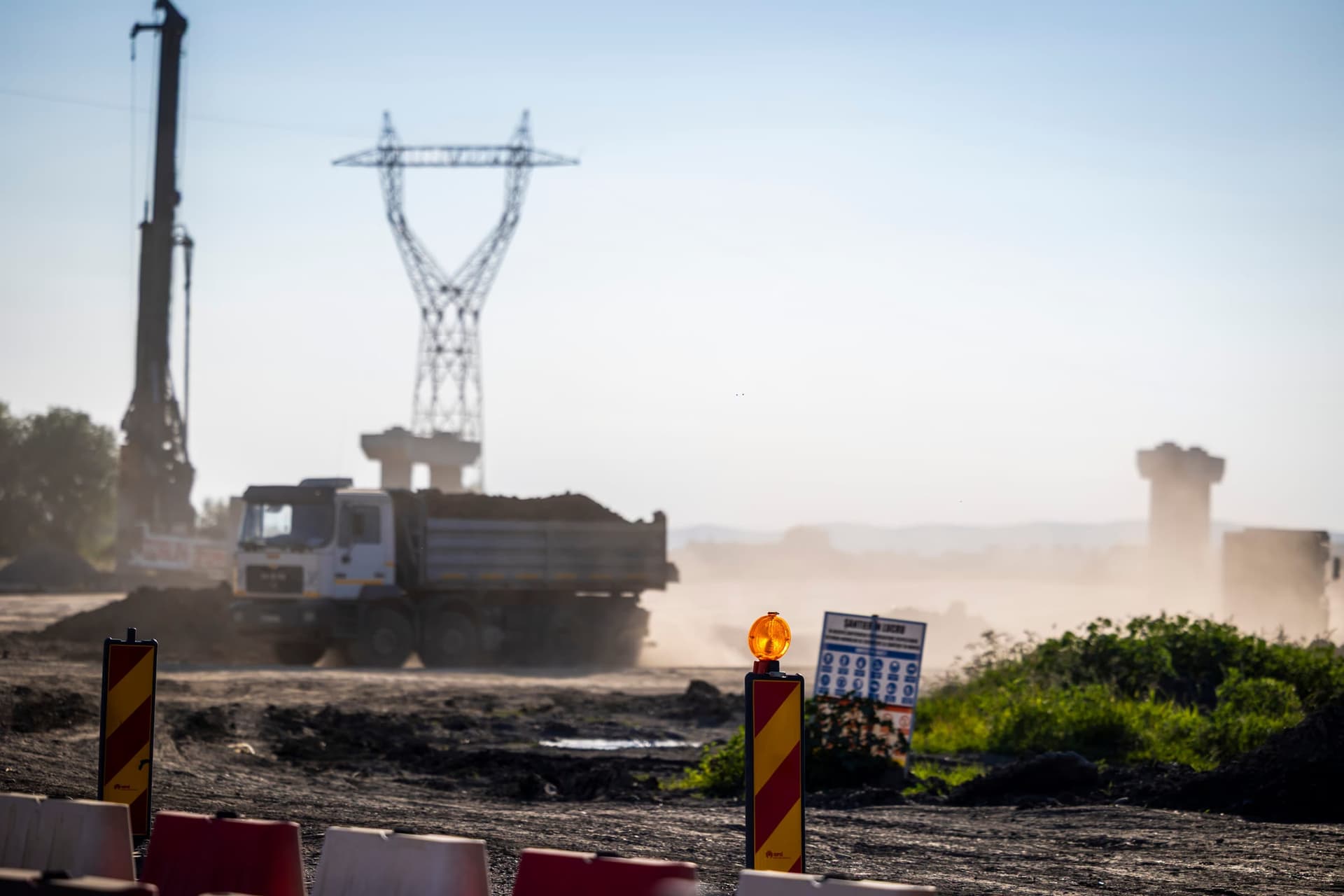
The epicentre is at Acățari — the commune that gave up 2.5% of its territory to the motorway, more than any other along the lot, and which receives in return the double road junction and the motorway's Maintenance and Coordination Centre. All around, the villages of the Niraj Valley live, for now, between traffic cones: the DN13 has been diverted, trucks kick up the dust, and church spires rise from the fields a few hundred metres from the overpass abutments.
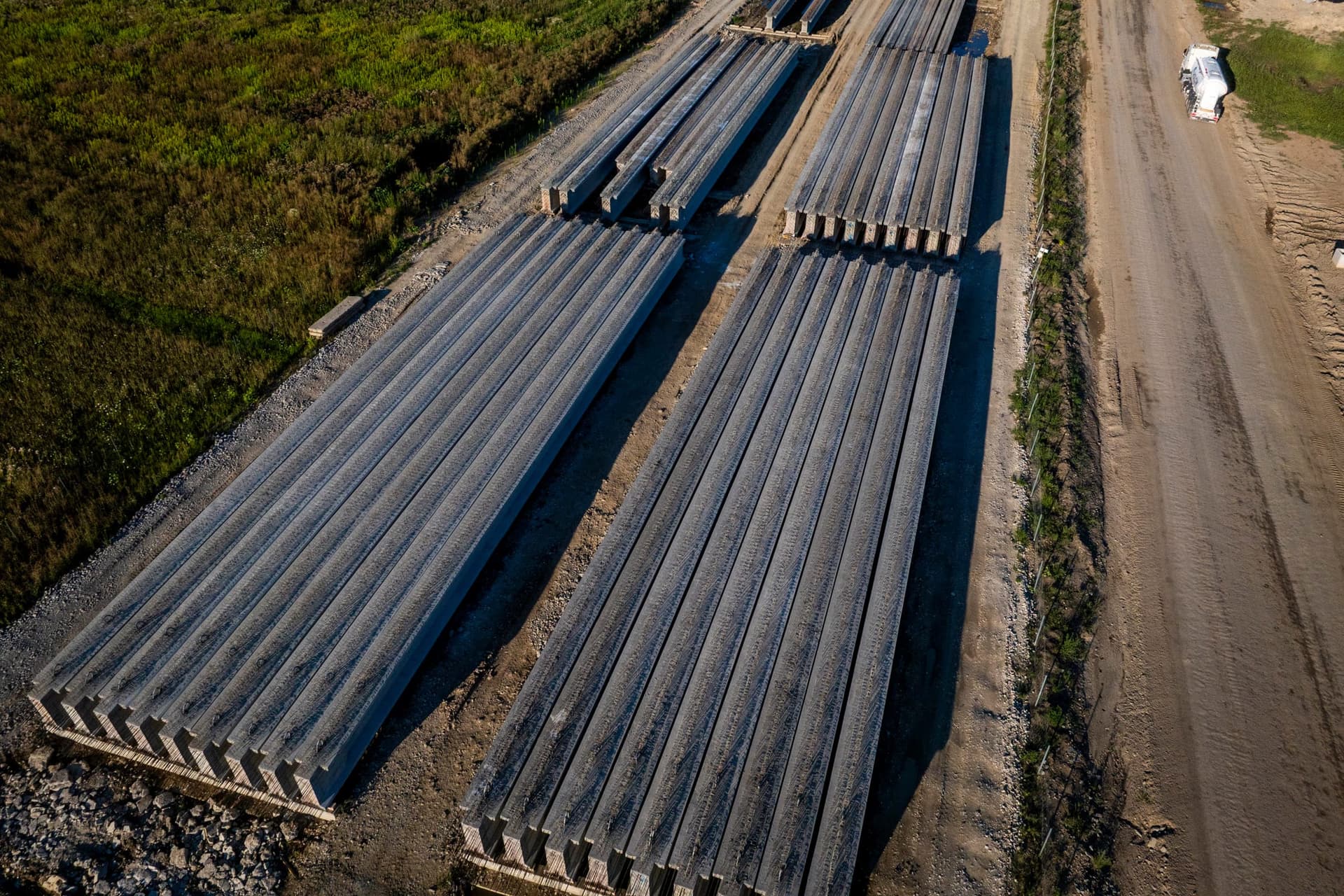
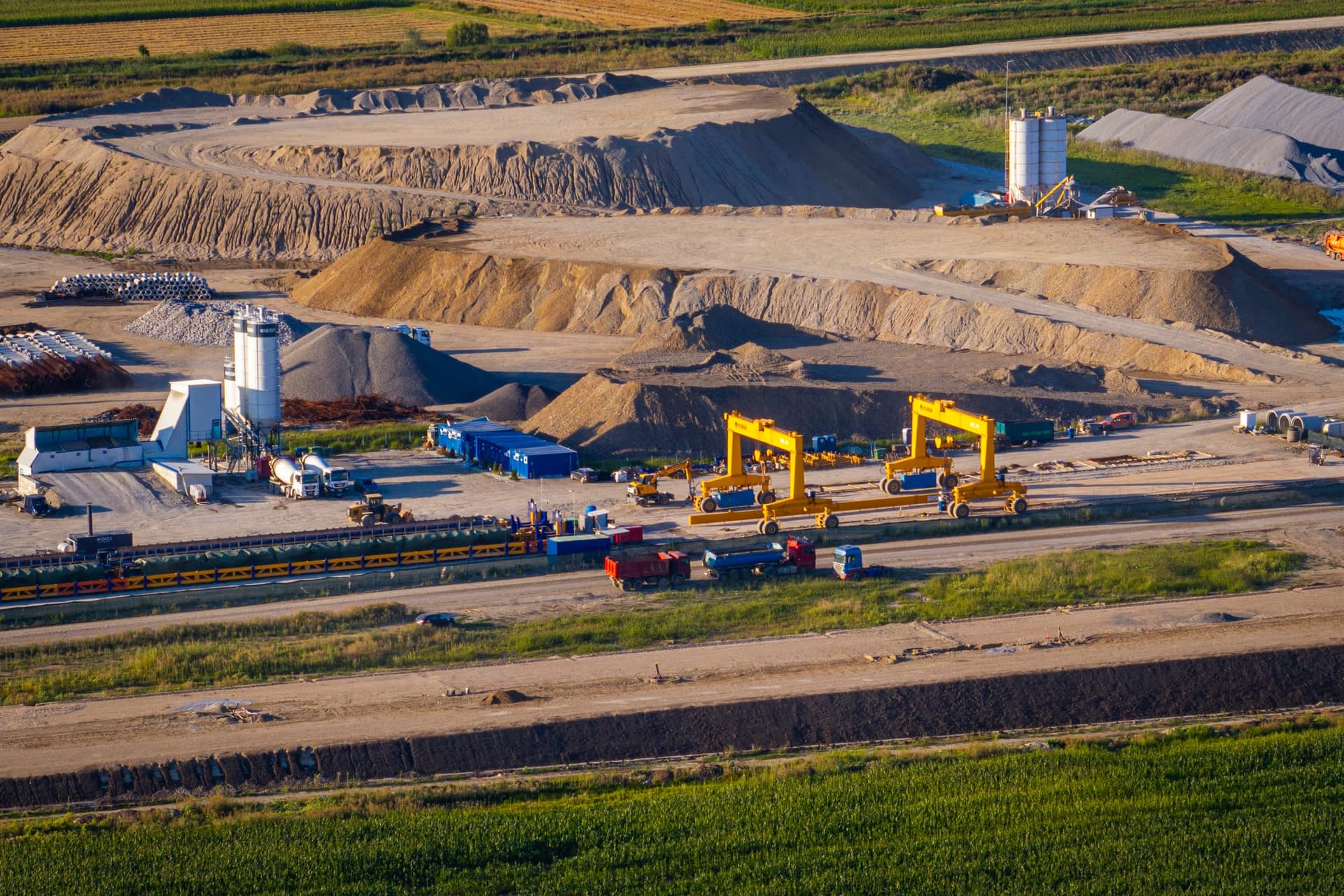
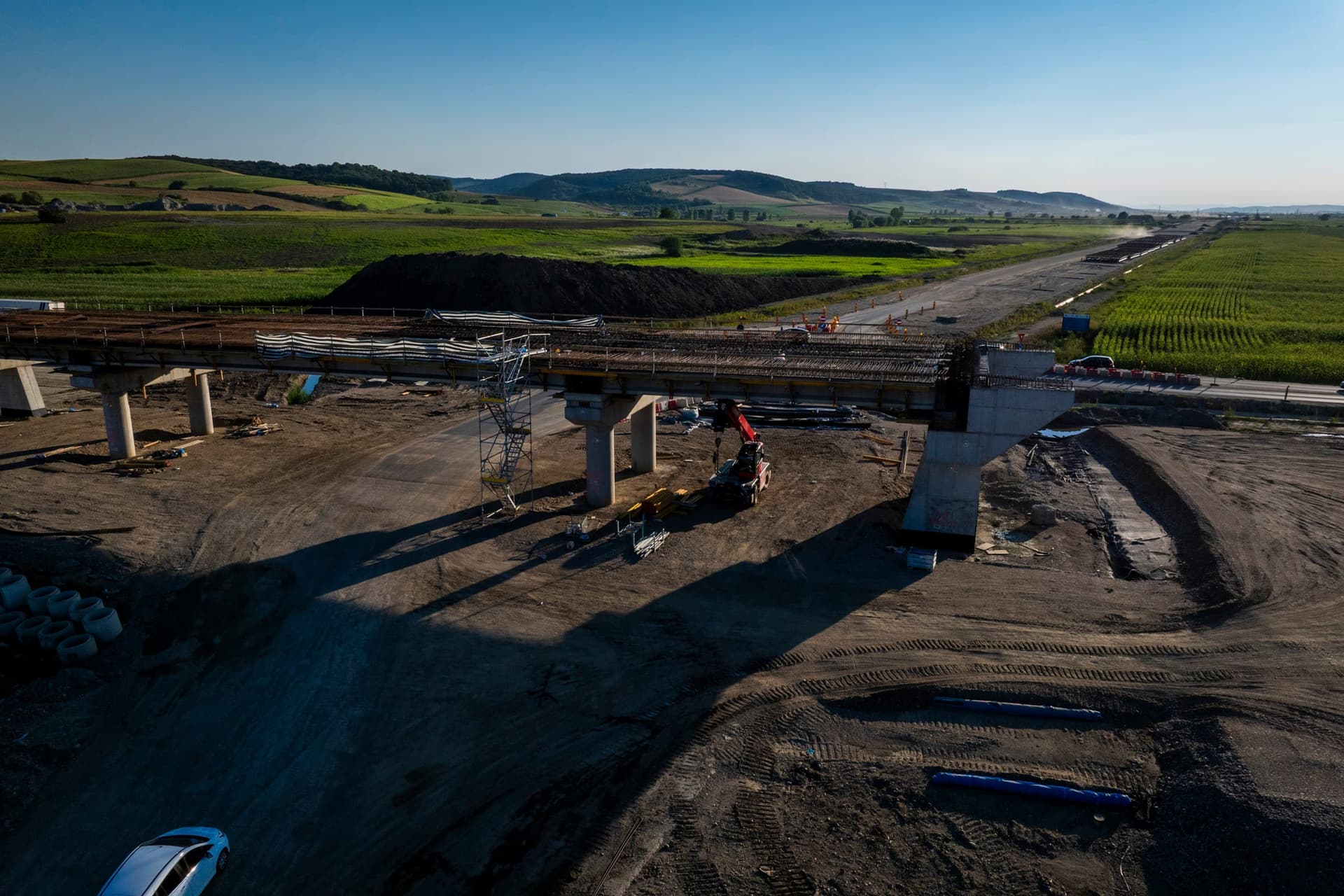
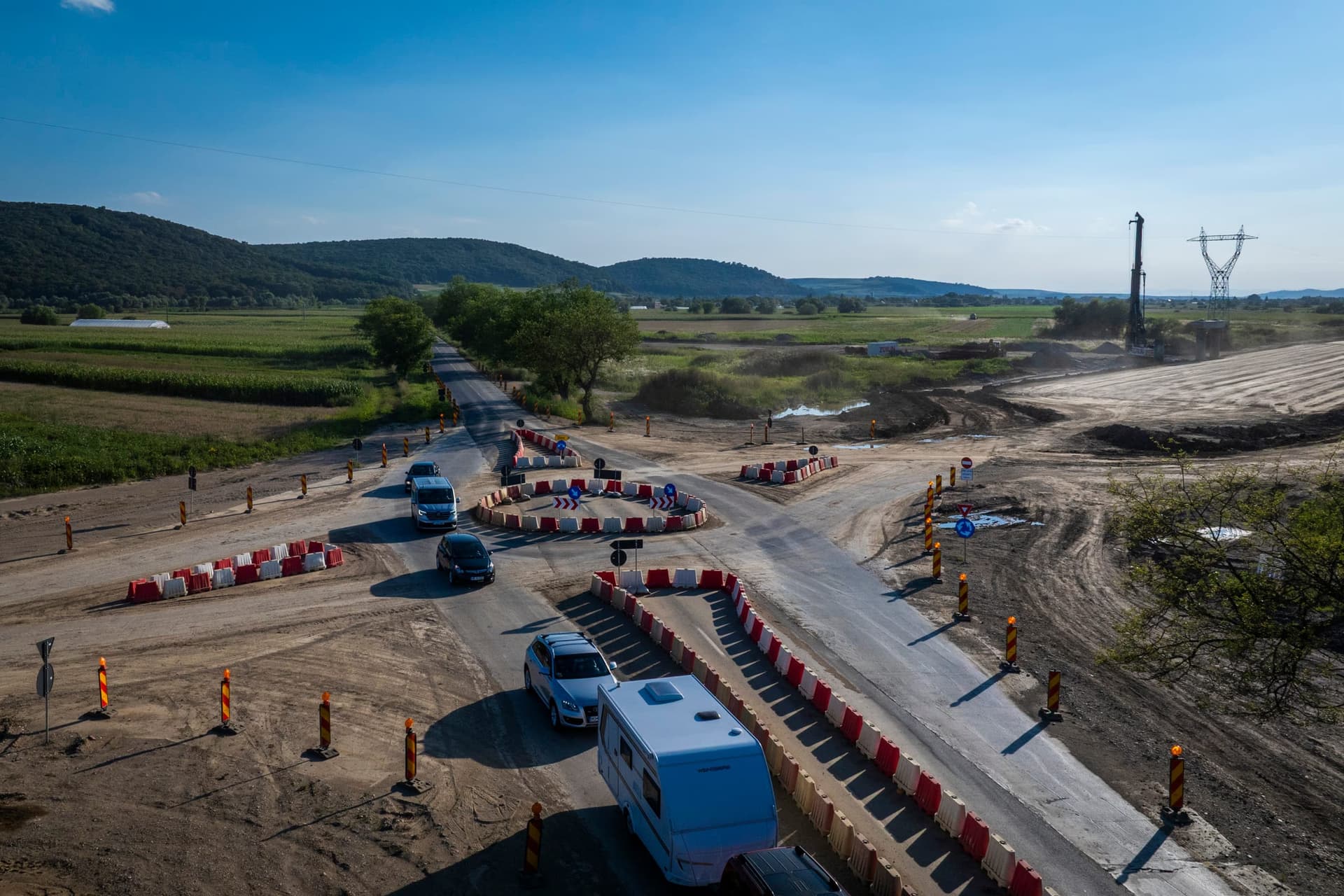
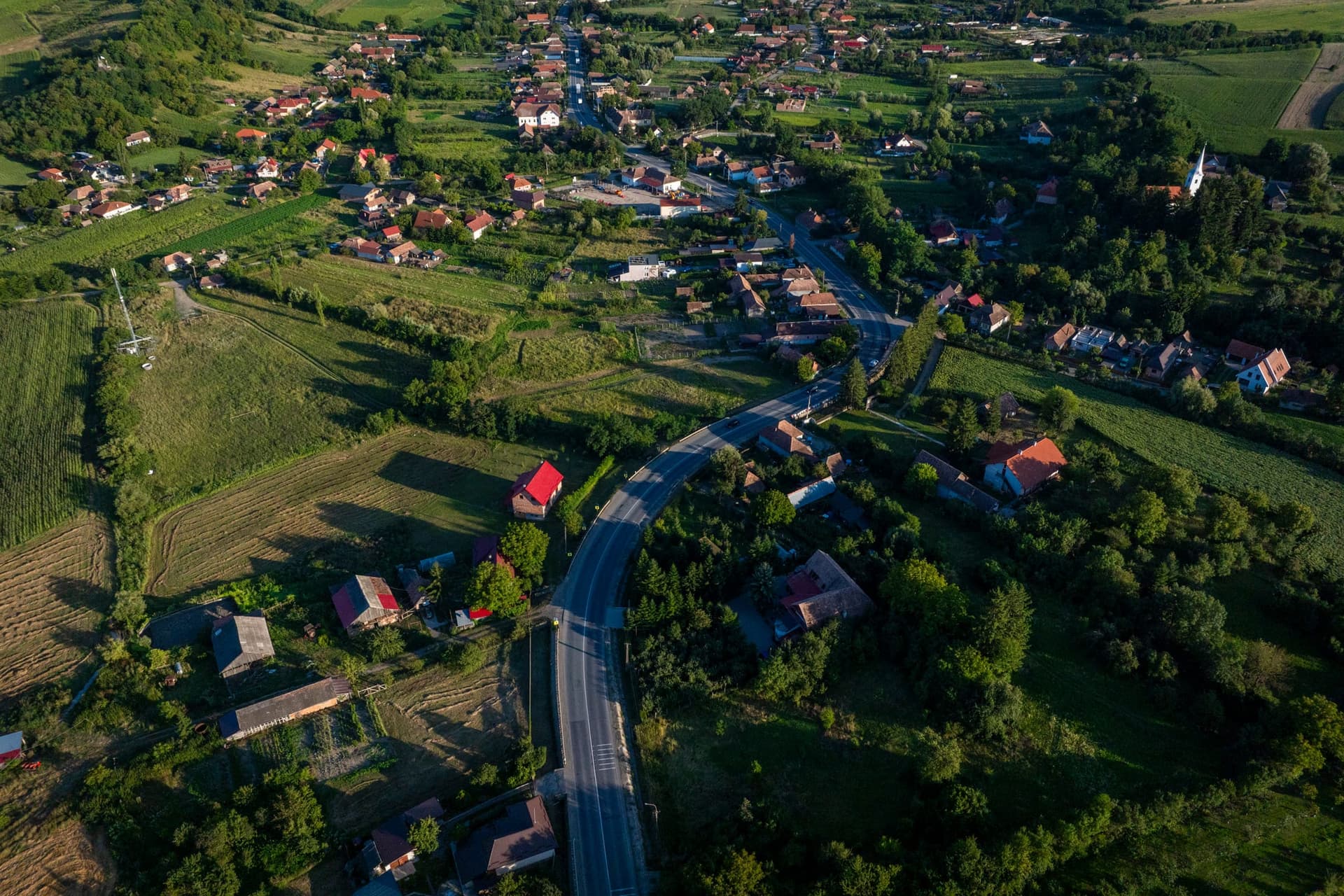
This road has been spared nothing of what Romanian infrastructure means: a contract signed in February 2024, a building permit only in April 2025 — fourteen months of paperwork —, a year of "anaemic pace" denounced by the Pro Infrastructura Association, the lot's removal from the National Recovery and Resilience Plan at the 2025 renegotiation. And yet: in the summer of 2026, the same worksite is held up as a national example. The Ministry of Transport promises traffic on the first kilometres "in the first part of 2027"; the optimists at Pro Infrastructura believe the Târgu Mureș–Acățari sector, which will also serve as the city's southern bypass, could be ready as early as the end of 2026.
Thirty years, one interchange
Law 291/2018, as amended in 2021, requires the entire A8 — from the Ungheni junction to the Prut — to be finished by December 31, 2030. Independent experts say, almost with one voice, 2031-2032: on the mountain section — where the Ditrău–Grințieș lot alone counts 19 tunnels — the first building permit was issued only in July 2026, and not for that lot but for its neighbour, Joseni–Ditrău, of 14.4 kilometres. But the interchange — Runcan's interchange — no longer depends on the mountains. All it needs is for the two arms already under way to touch: one has been asphalt since 2021, the other will carry traffic in 2027.
I brought the drone down at sunset. On the A3, trucks were passing towards Cluj; on the yellow platform of the A8, a roller was finishing its shift. Between them, the overpass that will join them stood with its girders in place, like a bridge waiting for something to unite. The airport commander did not live to see this image. But he described it accurately, 30 years in advance — only the calendar lied to him.
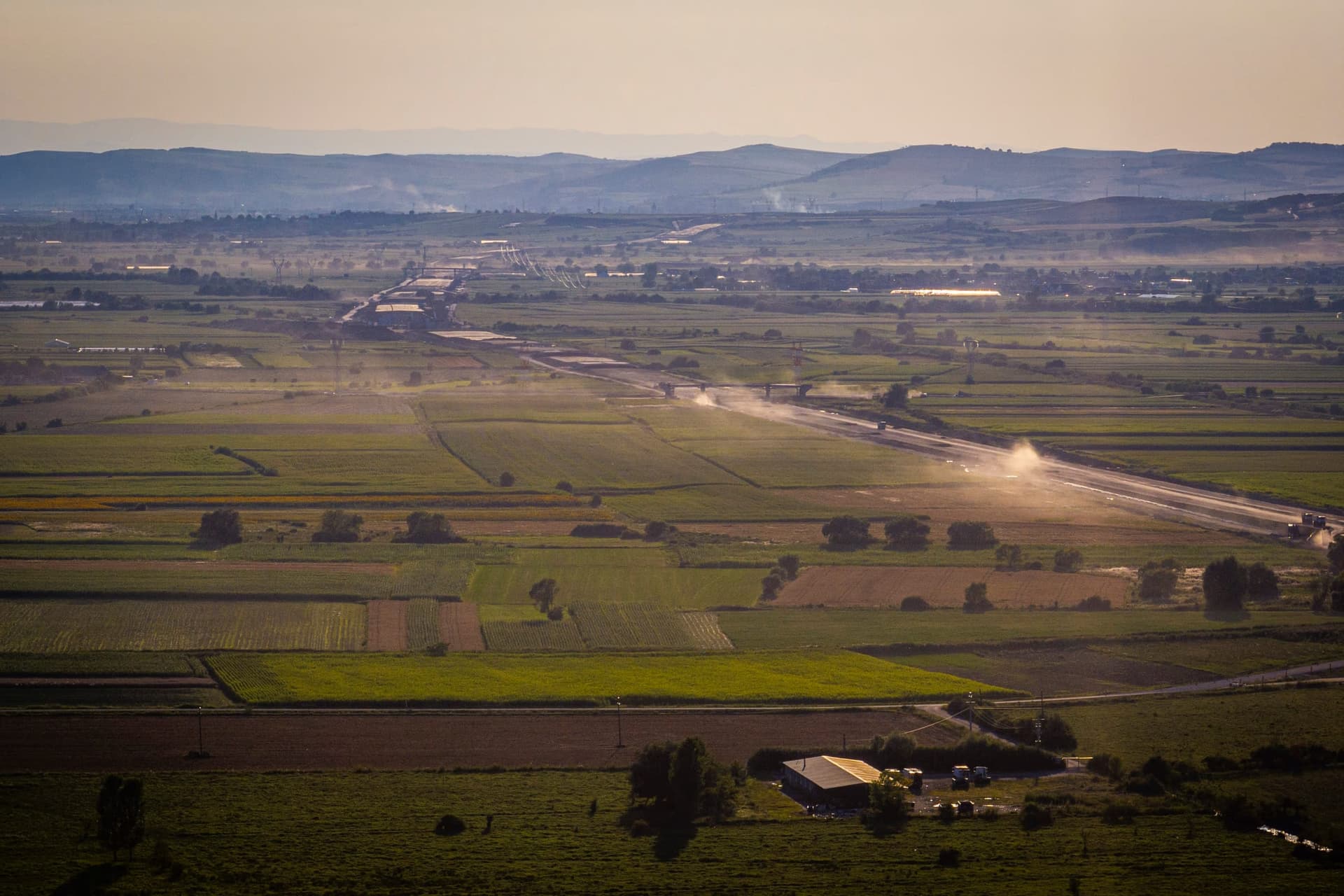
Photographs taken on July 29, 2026, on the A8 worksite between the Ungheni junction (A3) and Acățari, Mureș County.