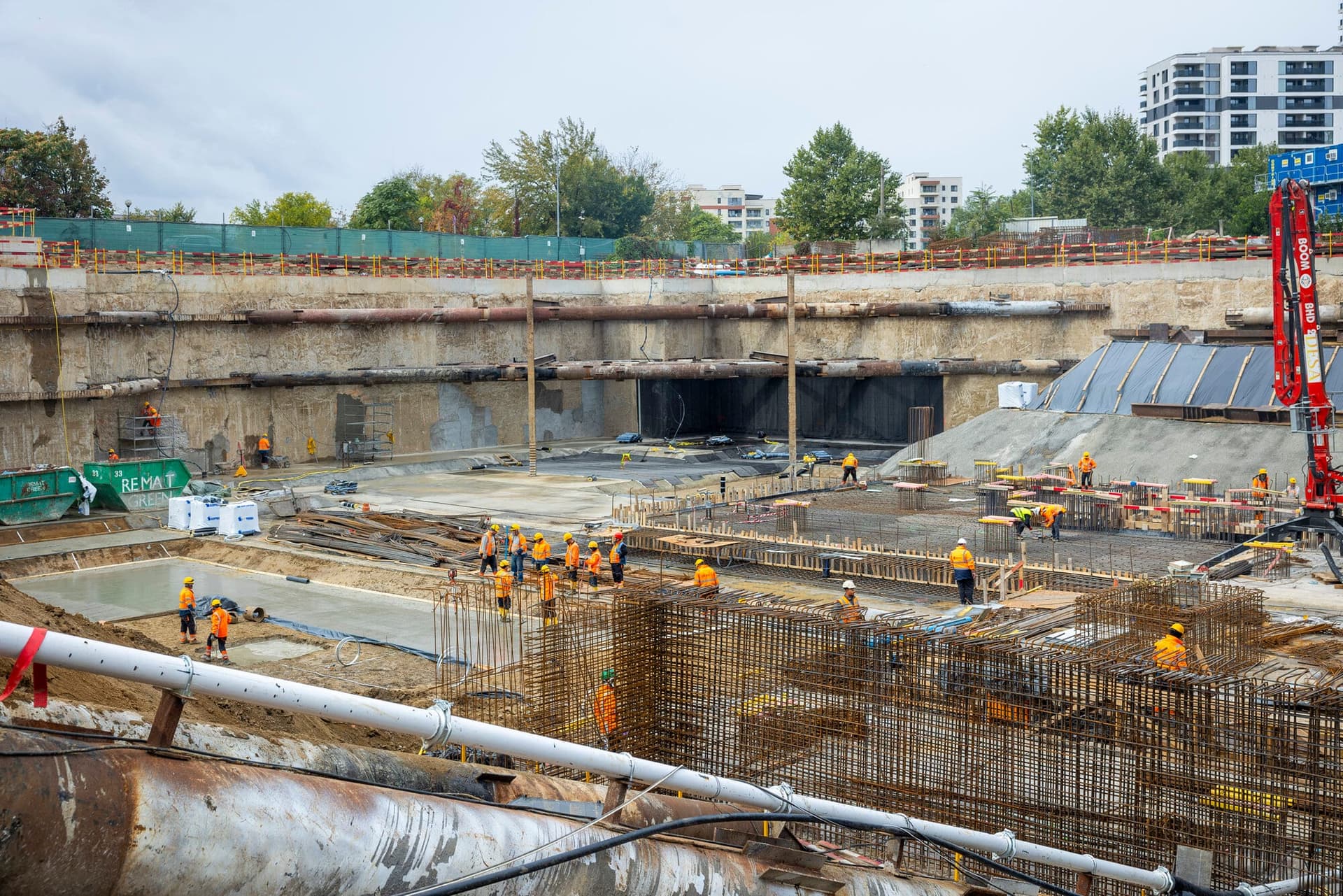
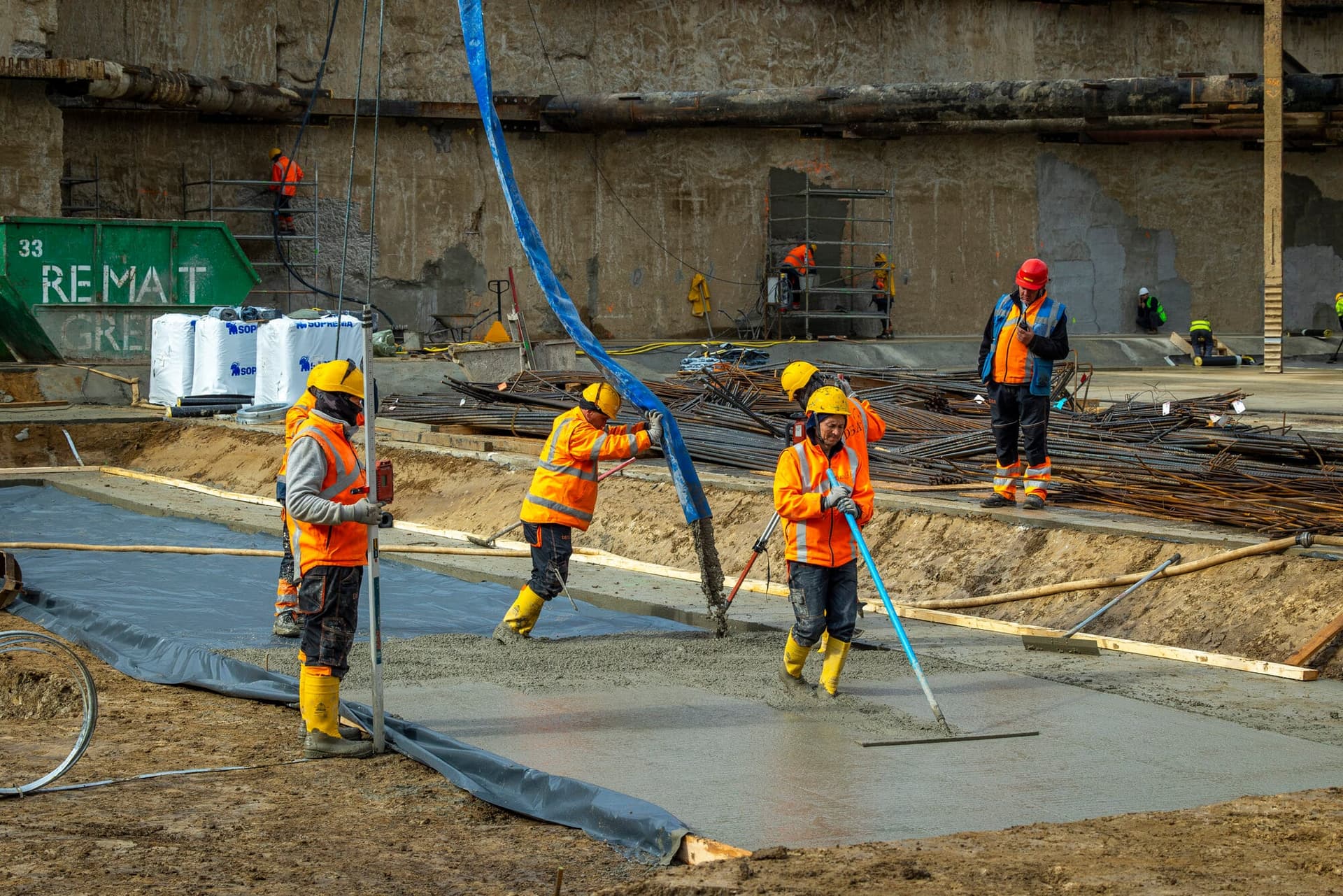
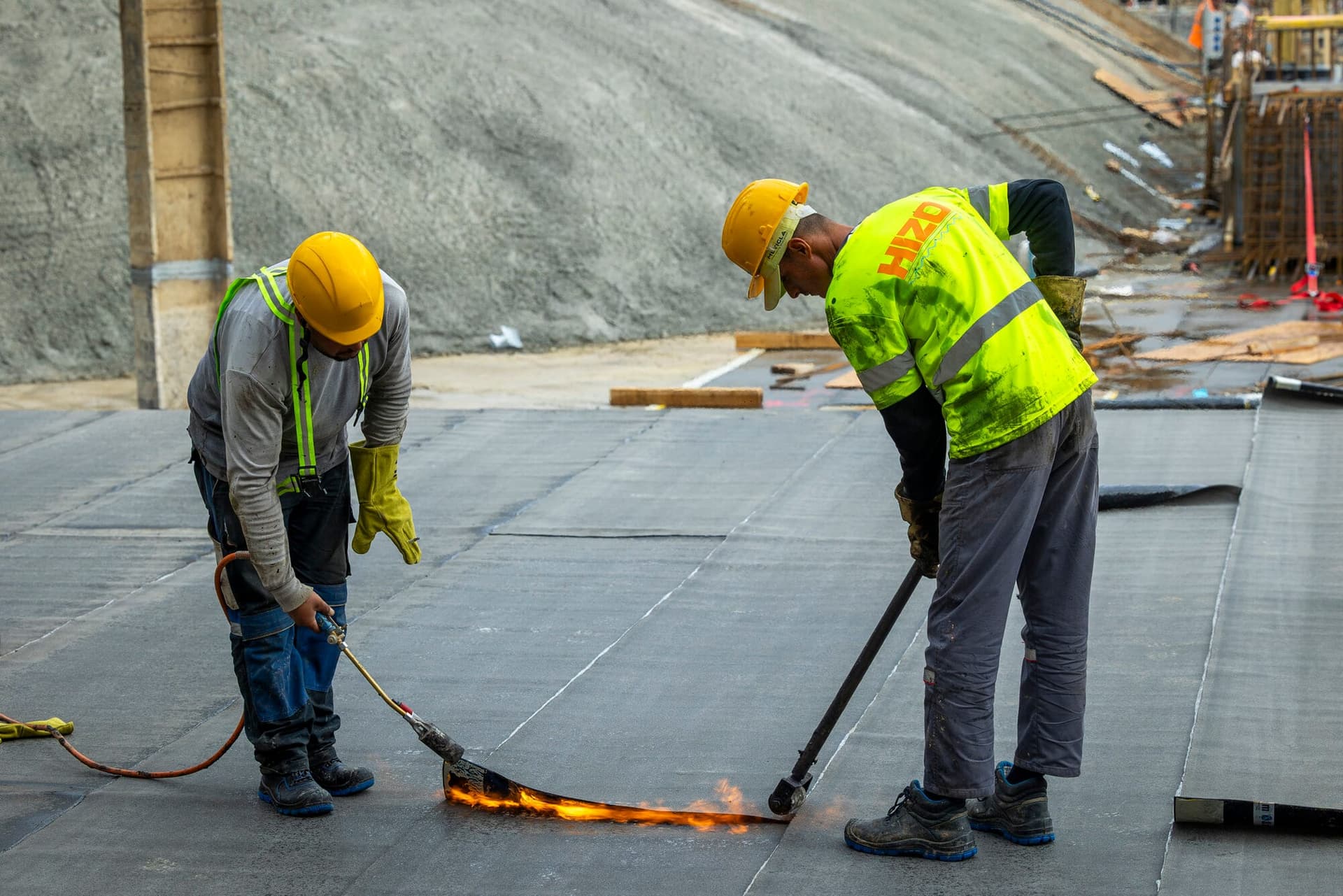
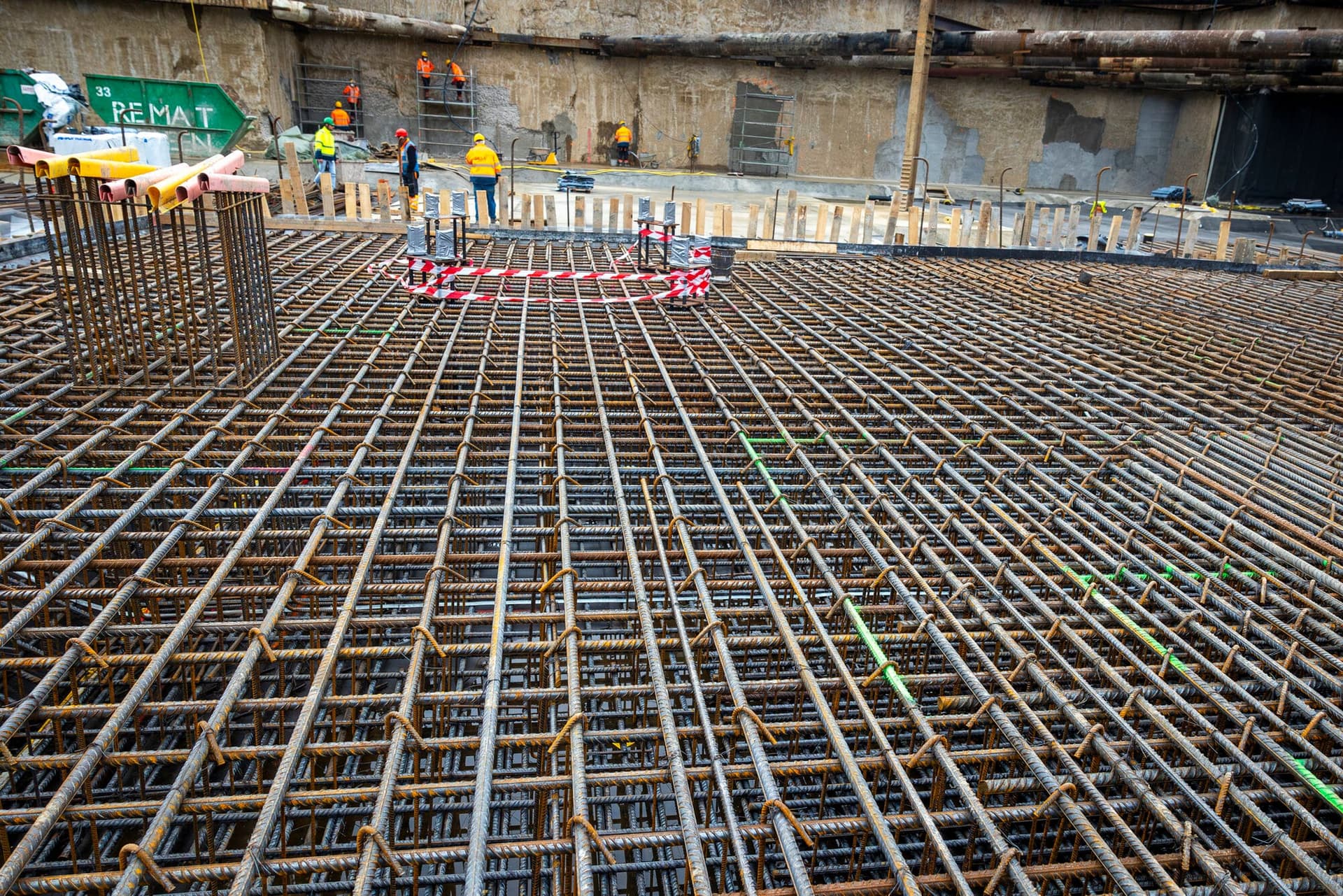
On Oct. 16, the foundation pit of a construction site looks, from above, like an anthill: every crew works its own sector. On the dirt ramp, excavators are still digging, their buckets banging against the beds of dump trucks. In one sector, workers are pouring lean concrete, the first layer at the bottom of the excavation. Next to them, a crew is torching a waterproofing membrane into place. Farther on, the rebar is already laid out. You hear welding rigs and conversations in at least four languages. It rained the day before, and wherever concrete hasn't been poured yet, the ground is sticky mud.
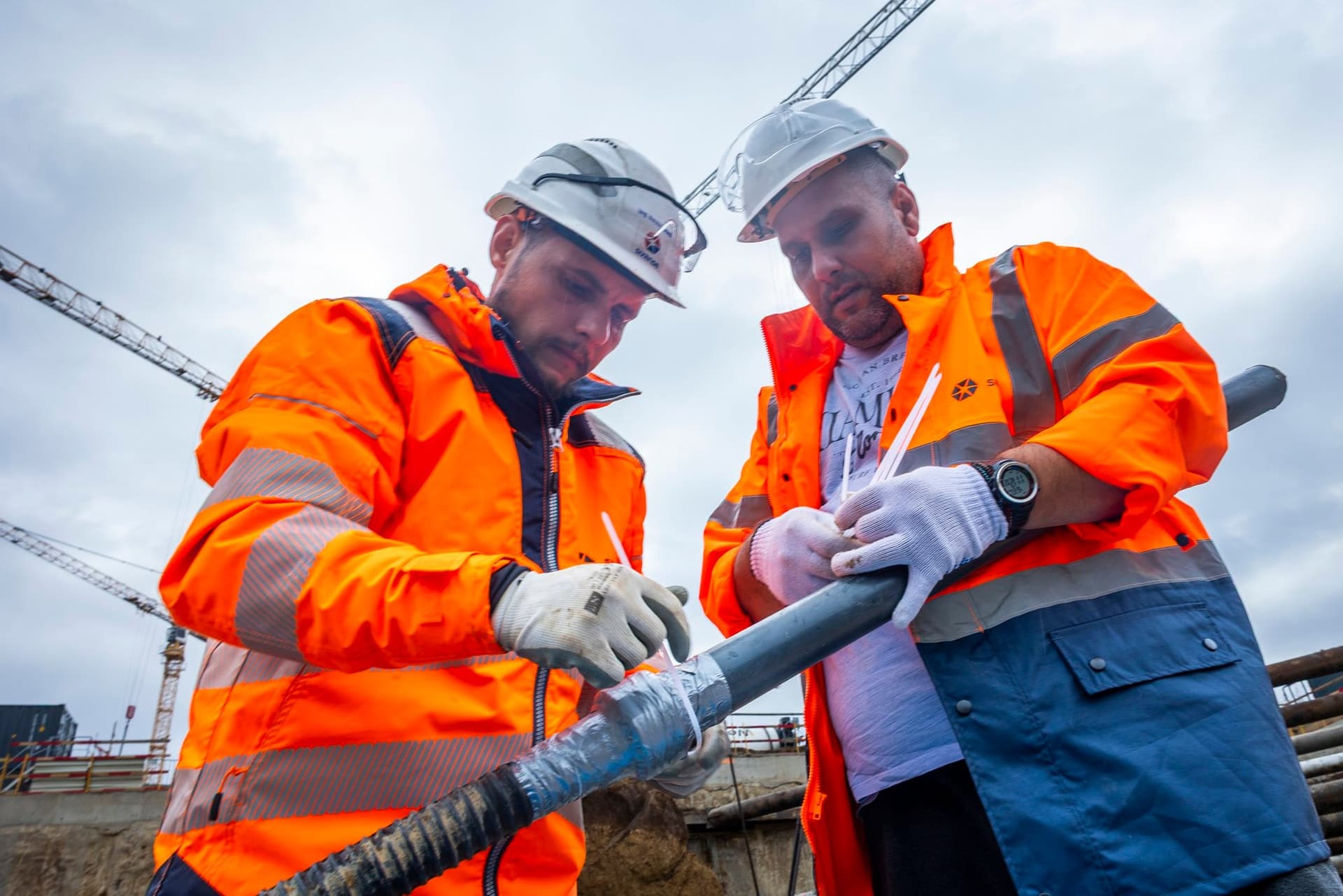
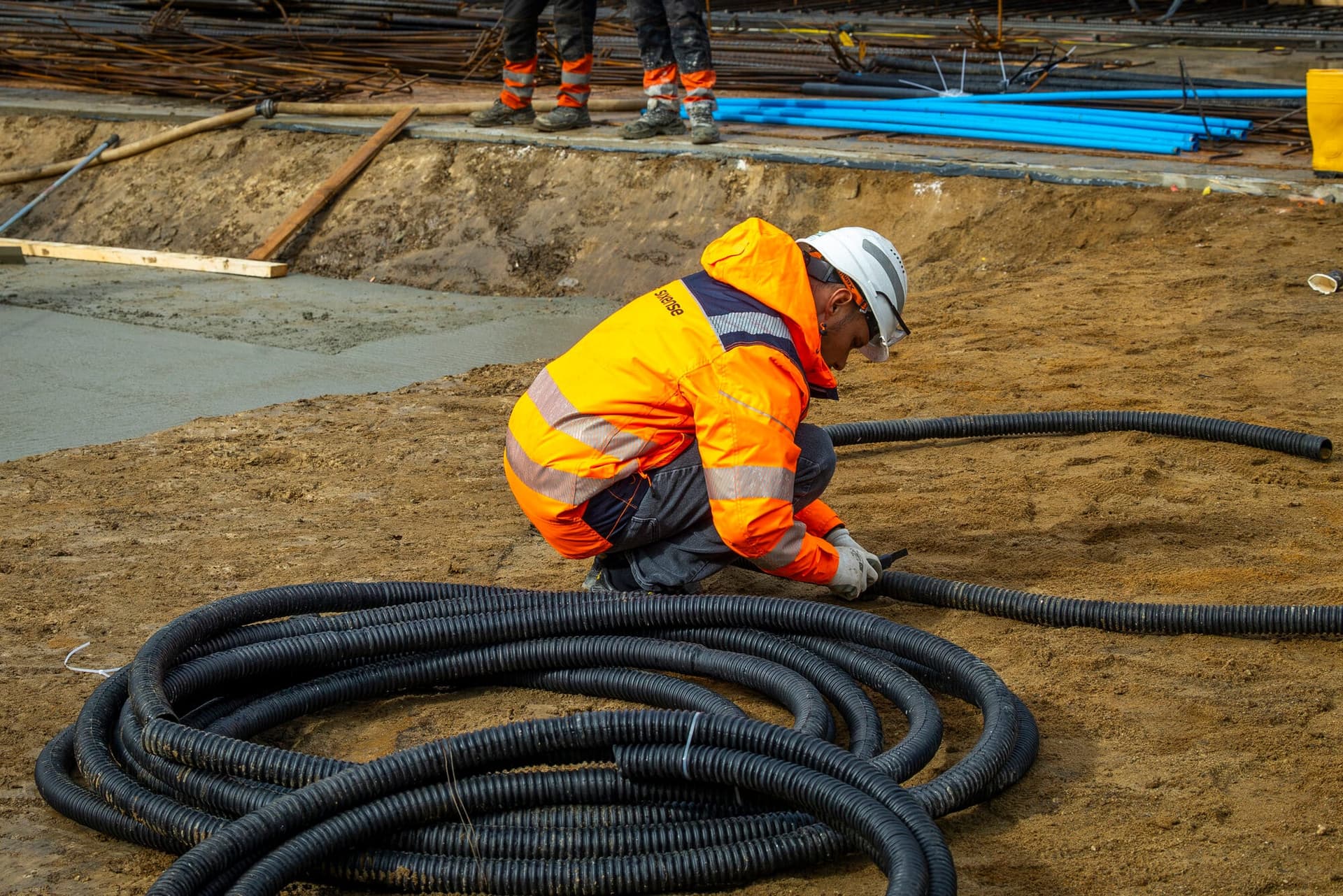
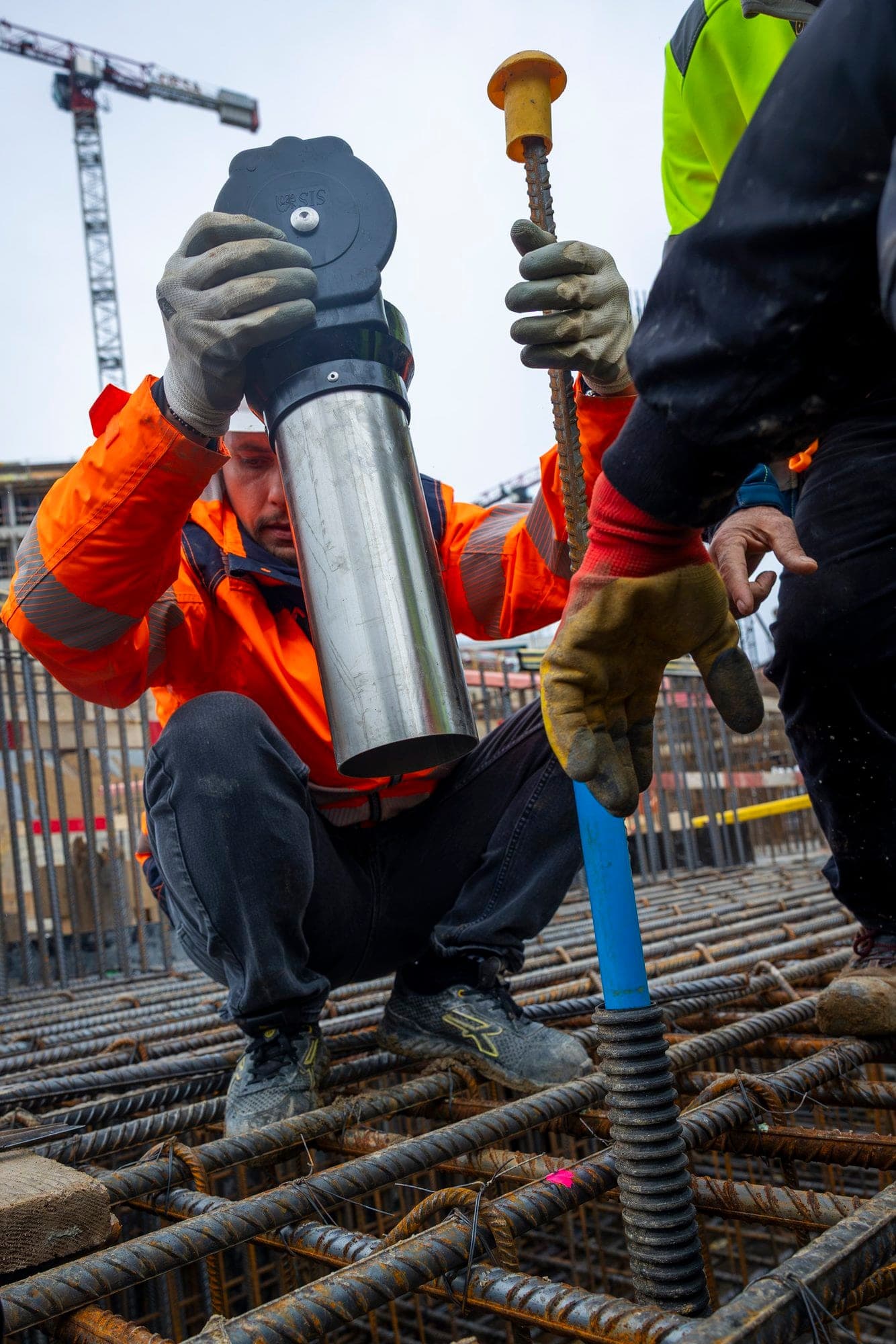
Among the rebar, Ionel Neață, an electrical engineer at Sixense Romania, is fitting sensors onto a settlement column. Its tubes, joined end to end, run down into the ground. The column is protected by a black corrugated tube along which the magnetic sensors slide. It will measure settlement: how much the ground sinks as the building rises above it.
On a site like this one, someone pays for this kind of attention. The law requires it for the buildings we live in, too.
An obligation since 1995
Monitoring a building's behavior over time is how you find out, early enough, whether it is settling, tilting or cracking more than it was designed to. The obligation dates to Romania's 1995 law on construction quality, and a dedicated technical standard, P 130, to 1999. A new version of the standard was published in the Official Gazette in June 2025. Since Aug. 25, 2026, the framework has been set by Romania's new Code of Spatial Planning, Urbanism and Construction, Law 169/2026, which devotes Article 550, with 24 paragraphs, to monitoring.
The code keeps two tiers. Routine monitoring covers every structure for its entire service life: the building's condition is observed and recorded, usually by visual inspection but also with measuring instruments. Special monitoring means systematically measuring and interpreting a structure's parameters, and it is mandatory for new structures in consequence classes CC3 and CC4. The procedure the state uses to oversee this work makes it the owner's responsibility. For an apartment building, the owners are the residents, represented by their homeowners association.
Anyone who fails to carry out monitoring, or to fill in and keep the building's technical logbook, faces fines of 20,000 to 50,000 lei under Article 570.
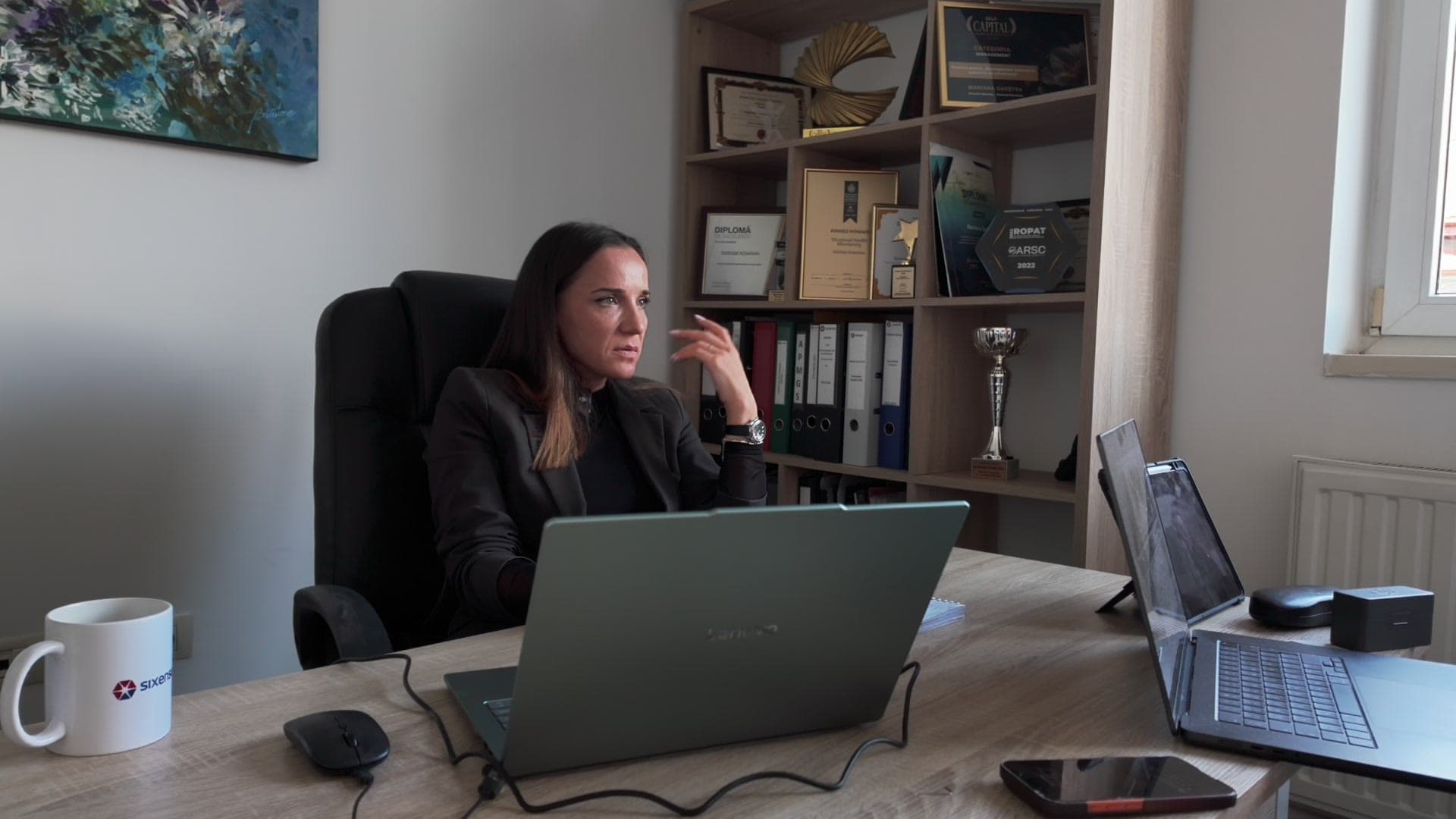
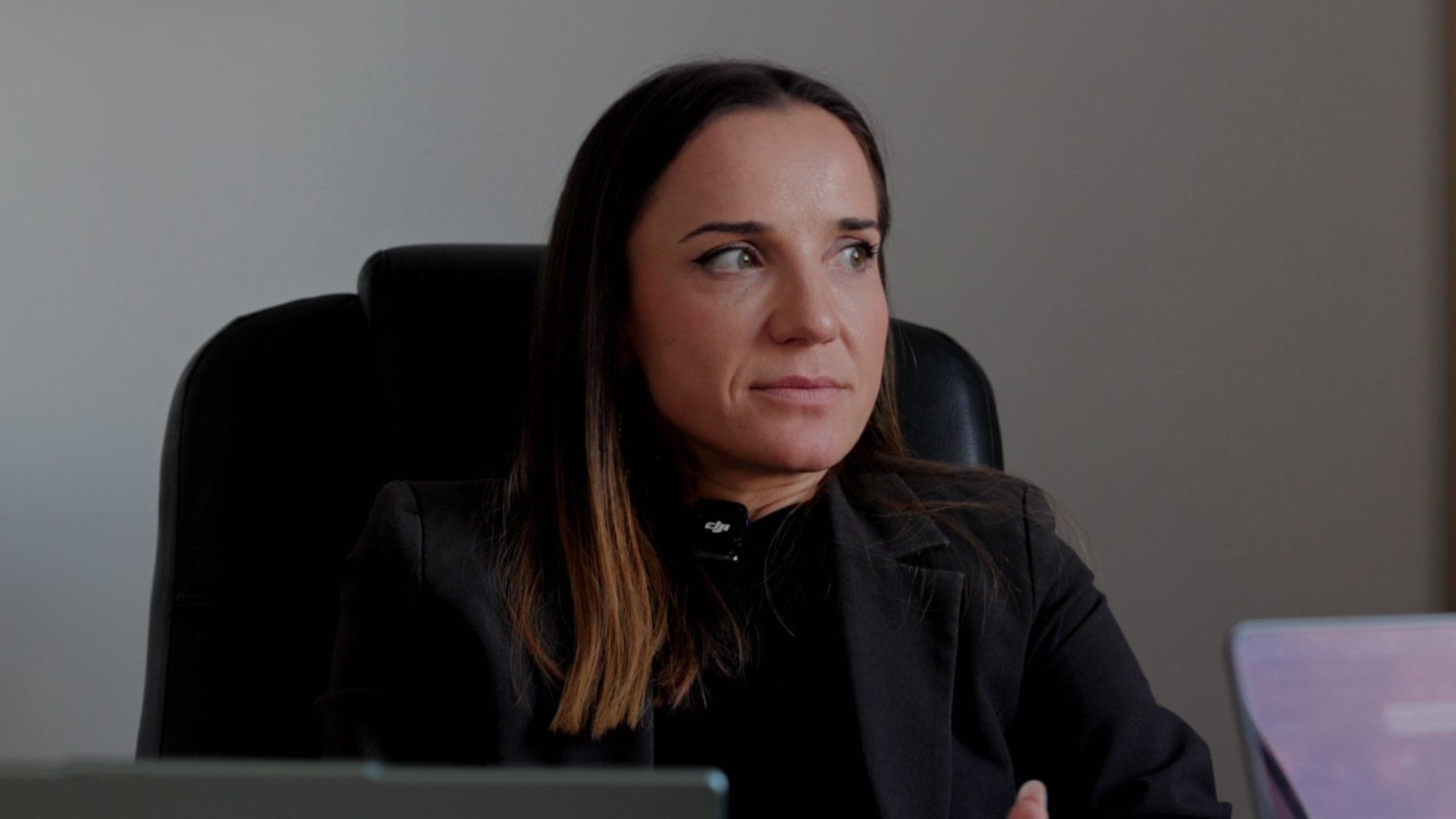
Mariana Garștea has run Sixense Romania, part of the VINCI group, since 2017. She describes it as the only company in the country devoted exclusively to monitoring structures. The rules, she says, were always there: "In Romania, the problem was never the standard [...]. It was the enforcement, the implementation, that's where we had a problem."
The building after handover
Until a building is formally handed over, the developer is responsible for monitoring it. After that, Garștea explains, the obligation passes to the homeowners association. Measurements from the first few years are also a weapon: if cracks, leaks or settlement appear while the building is still under the contractor's warranty, the reports are the evidence the association uses to make the developer pay for repairs. Without them, she says, the association is "completely exposed" and pays for repairs out of the owners' pockets.
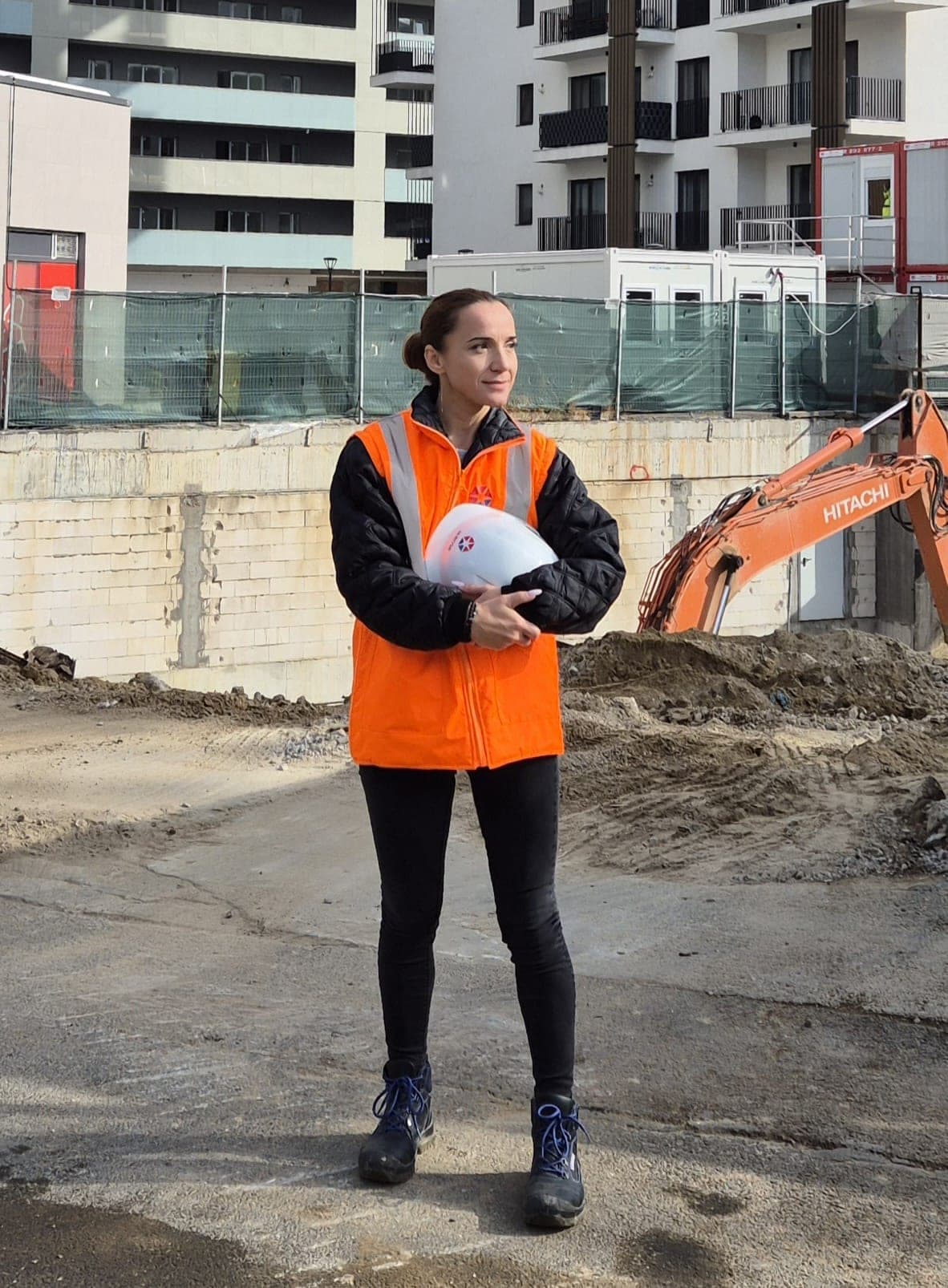
In new developments, building managers are starting to learn what the law requires. In older buildings, the reaction is different. After she posted a few TikTok videos on the subject, she got comments from, among others, homeowners association presidents: "So now you've found yourselves something else to do." Others say city hall should pay. "Well, it's not city hall's home, is it?" she replies.
A crack, nine years on
On Oct. 24, 65 people were evacuated from one section of the building at 30 Drumul Taberei, built in 1963, after a resident called the 112 emergency number: between two stairwells, a crack ran from the fifth floor to the eighth. According to Bucharest City Hall, the crack had already been recorded in the building's first structural assessment, in 2017. City Hall blames problems with the building's sewer system and says residents turned down a proposed strengthening plan in 2021. State construction inspectors found that the load-bearing structure had not been compromised, and residents were allowed to return home.
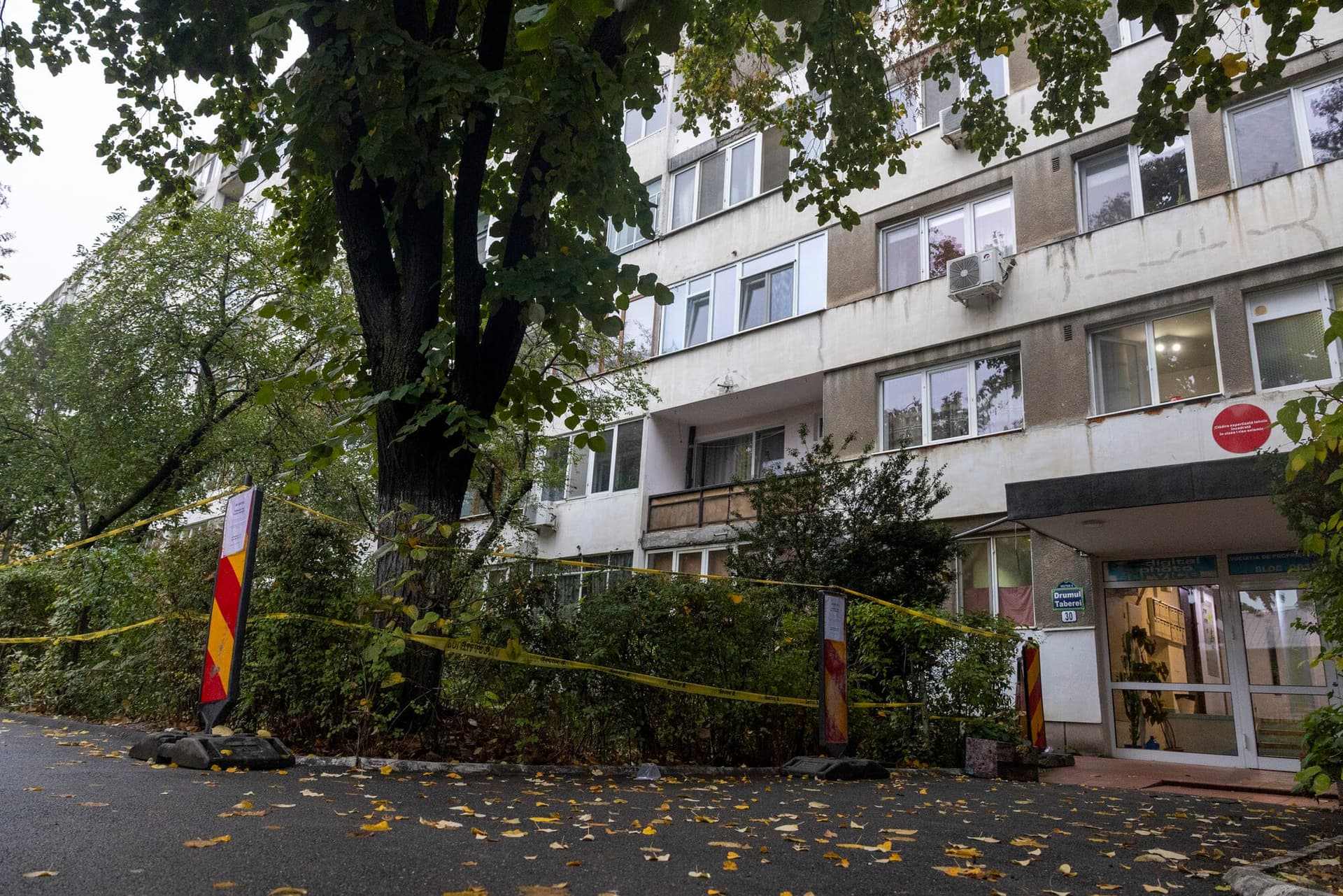
On Oct. 30, the building carries on its facade the red disk that marks buildings at seismic risk. The crack climbs between the balconies all the way to the roof, with a streak of rust along its edge. In front of the entrance: yellow tape and a sign reading "RISK ZONE · NO ENTRY."
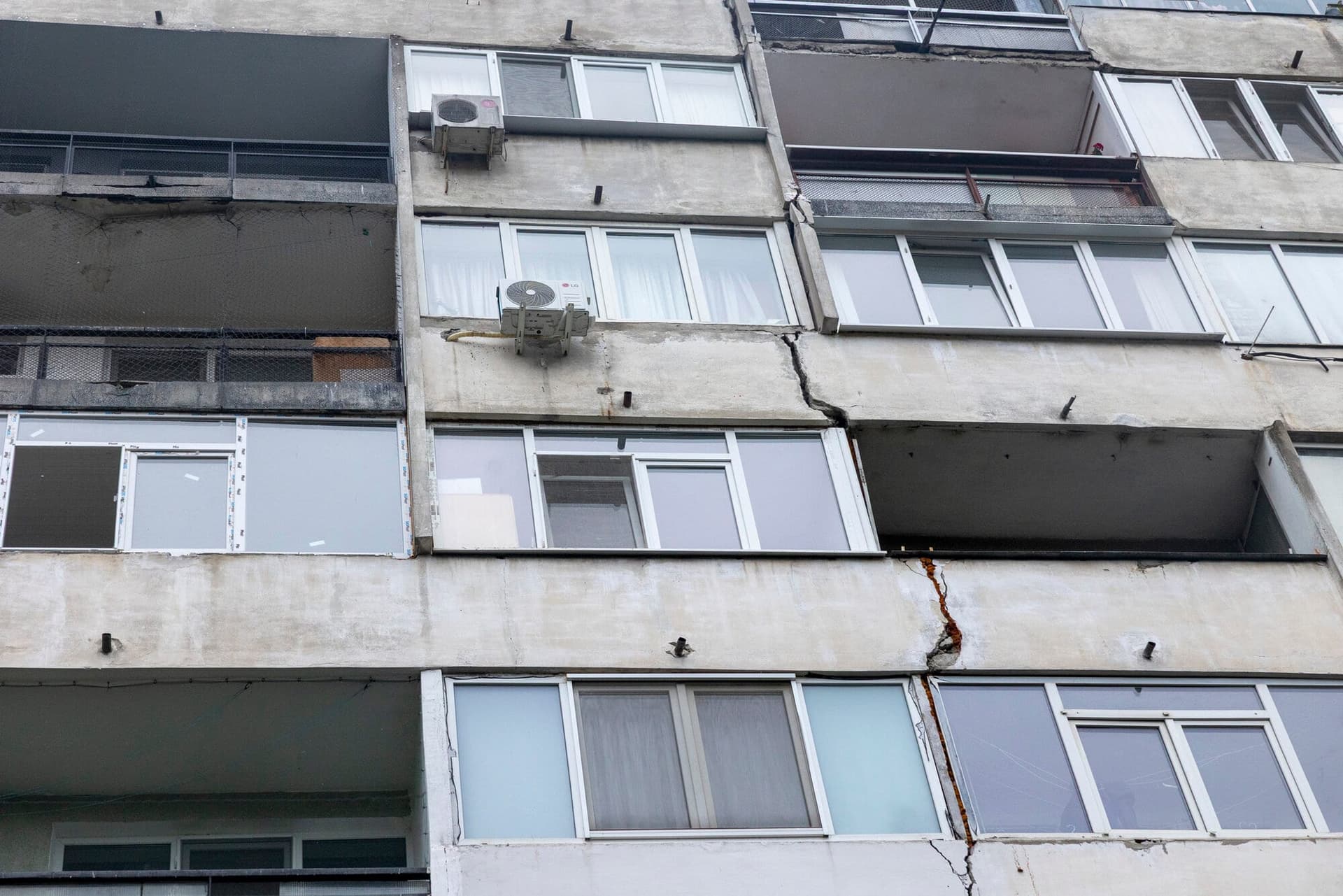
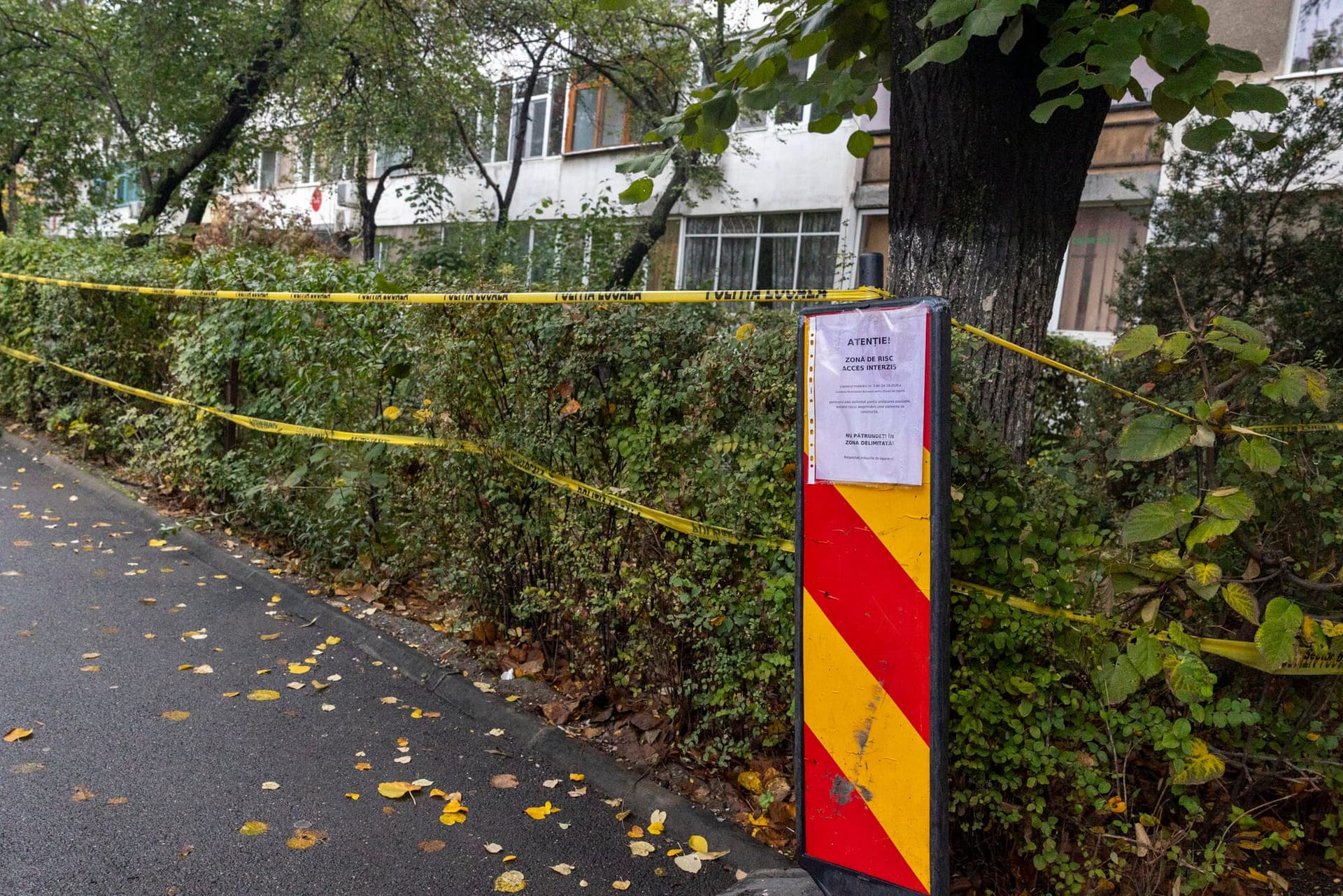
Nothing published so far shows whether anyone measured how much the crack widened over those nine years. That is exactly the question monitoring over time answers.
According to data from AMCCRS, the Bucharest agency in charge of strengthening buildings at seismic risk, cited by the press in March 2026, the city has 349 buildings in seismic risk class I, the category at risk of collapse in a major earthquake. I asked Garștea how many of them are monitored with instruments, rather than just assessed every so often.
"Close to zero, I think."
Sixense, she says, has none of them in its portfolio. She acknowledges there may be exceptions she doesn't know about.
How many millimeters matter
"The building is just settling," people say. Garștea would drop the expression. A building can sink, rise or tilt. The problem isn't movement itself but uneven movement: "one part of the building moving differently from the other." Buildings aren't designed for each corner to move its own way.
Every project has a maximum allowable settlement, calculated by the structural designer. How fast it is used up matters, too. If a building is allowed to settle 5 centimeters and uses up 3 during two years of construction, that's one thing. If it uses them up in a few months, that's another. "Speed matters a great deal," she says.
When an existing building is monitored with instruments, settlement is measured by high-precision geometric leveling, down to fractions of a millimeter. If a trend shows up from one measurement to the next, she explains, readings are taken more often, every six or three months, and the cause is investigated.
When a threshold is crossed
For every structure monitored with instruments, three thresholds are set: alert, warning and alarm. The designer sets them, and for existing buildings they can also be set by the technical expert. On the subway projects, data comes in almost in real time, every five or 10 minutes, and what happens once a threshold is crossed is written down in advance, in an action plan: who notifies whom, who has the authority to stop work. Elsewhere, Garștea says, such a plan "is missing most of the time."
Sometimes, she says, after a report goes out, the client asks: "OK, fine, but what do I do with this information?" For her, that is the whole point: "If the information I give you doesn't help you at all, I don't see the point."
Bridges, after the ribbon-cutting
In Luțca, in Neamț County, rehabilitation work on a bridge over the Siret River was completed in November 2021. The bridge collapsed on June 9, 2022. Prosecutors charged the designer, the design firm, the verifying engineer and the technical expert. They allege that the plans called for an additional concrete slab over the entire deck, with no calculations to justify it, and that the slab reduced the bridge's load-bearing capacity. On Sept. 30, 2026, a preliminary chamber judge at the Roman District Court found the indictment lawful and sent the case to trial. The defendants are presumed innocent.
There were warning signs. After the collapse, Radio Free Europe recalled that local station Roman TV had reported in March 2022 that a "small" beam had come loose from the bridge.
The suspension bridge at Brăila, opened in July 2023, was designed to last 120 years, a state secretary in the Transportation Ministry said at the time. Sixense was hired for the bridge's static and dynamic load tests. Garștea says a promise like that requires a sensor system designed from the outset to last for decades, maintained and replaced on time. Speaking about bridges in general, she believes a structure doesn't fail without warning: "If a bridge falls, it's clear there were signs beforehand, right? You just have to look at it."
Who writes the rules
Garștea joined Sixense in 2015. She describes her first years bluntly: "I started from zero, I was talking to myself, nobody heard me." Around 2019, she was close to leaving the field. In 2022, together with other companies in the industry, she founded the Professional Association for Geotechnical and Structural Monitoring (APMGS), which she chairs.
The association explains the law to owners, designers and authorities. The company she runs makes money when the law is enforced. I asked her how she answers those who see a conflict of interest in that.
"The rules aren't written by us," she says. According to her, APMGS took no part in drafting the new code and weighed in only during the public consultations opened by the ministry, alongside universities and anyone else. "We just put these standards on the table. They existed [...], we were just pretending not to see them."
Before the concrete
Garștea says you don't have to be an engineer to ask. All it takes is going to the president of your homeowners association and asking: "Are you doing this?"
Around noon, the sensors are already on the settlement column. Neață works on his knees among the rebar, with new apartment towers behind him.
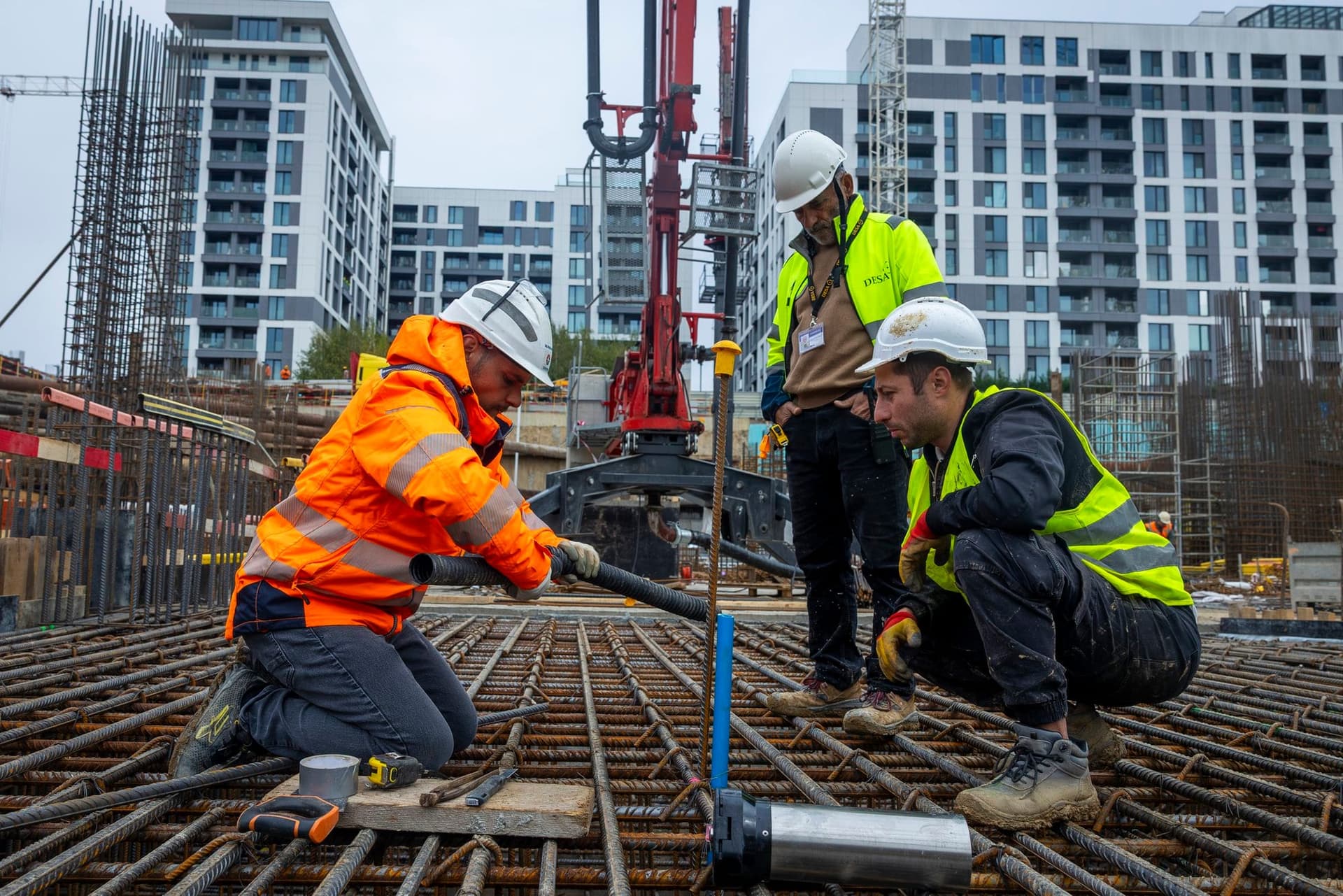
Once the concrete is poured, the sensors will no longer be visible. They will be audible: a probe lowered down the column beeps the moment it reaches each one.
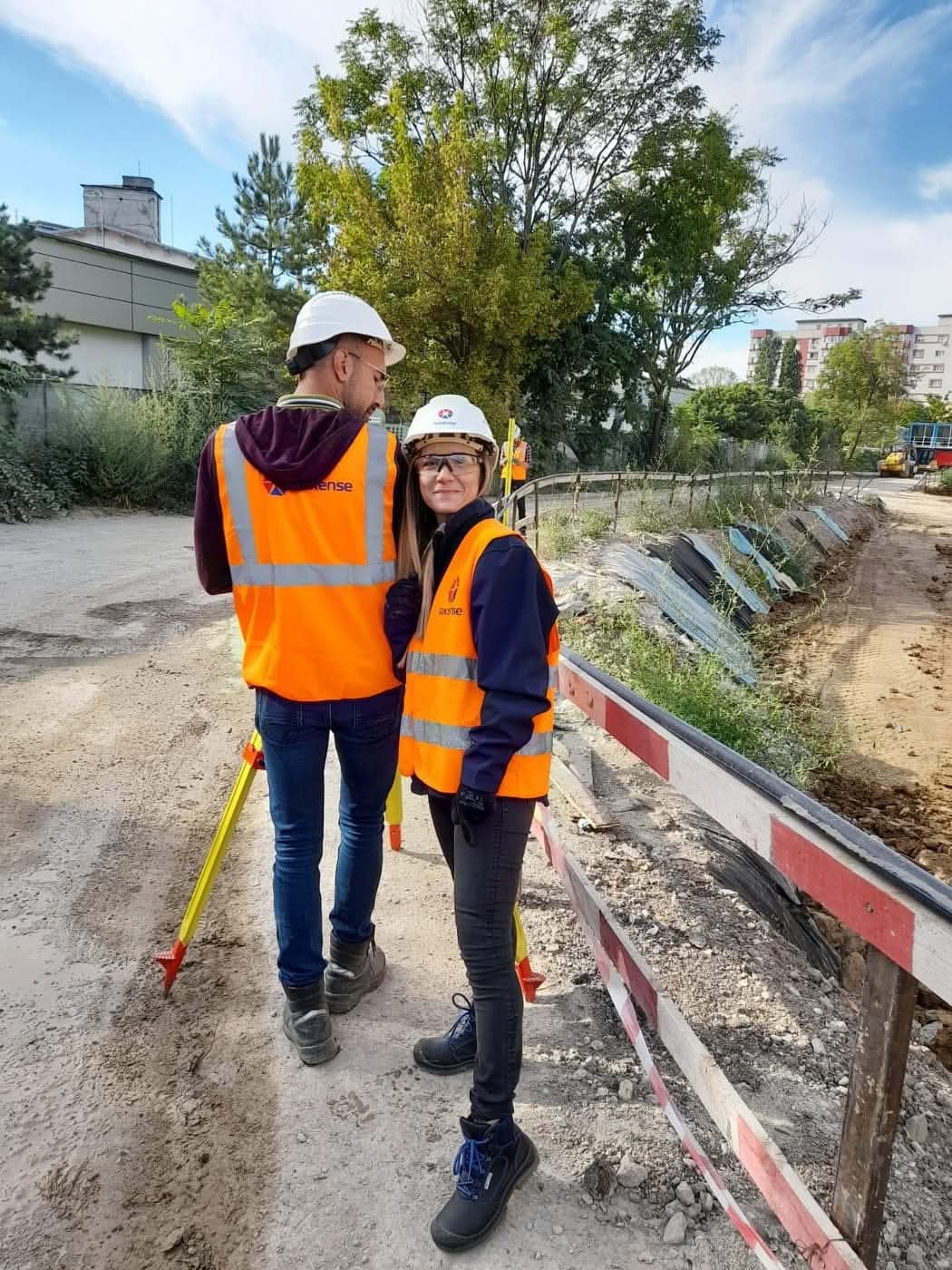
The interview with Mariana Garștea was recorded on Sept. 15, 2026, at her office, and was arranged through Sixense Romania's communications team; the questions were written by our editors. The construction site photos were taken on Oct. 16, 2026, and the details about the work come from Ionel Neață; Garștea was not present there. The photos of her on construction sites were provided by Sixense Romania. The Drumul Taberei building was photographed on Oct. 30, 2026. Quotes were translated from Romanian. This English version is an automated translation of the Romanian original.