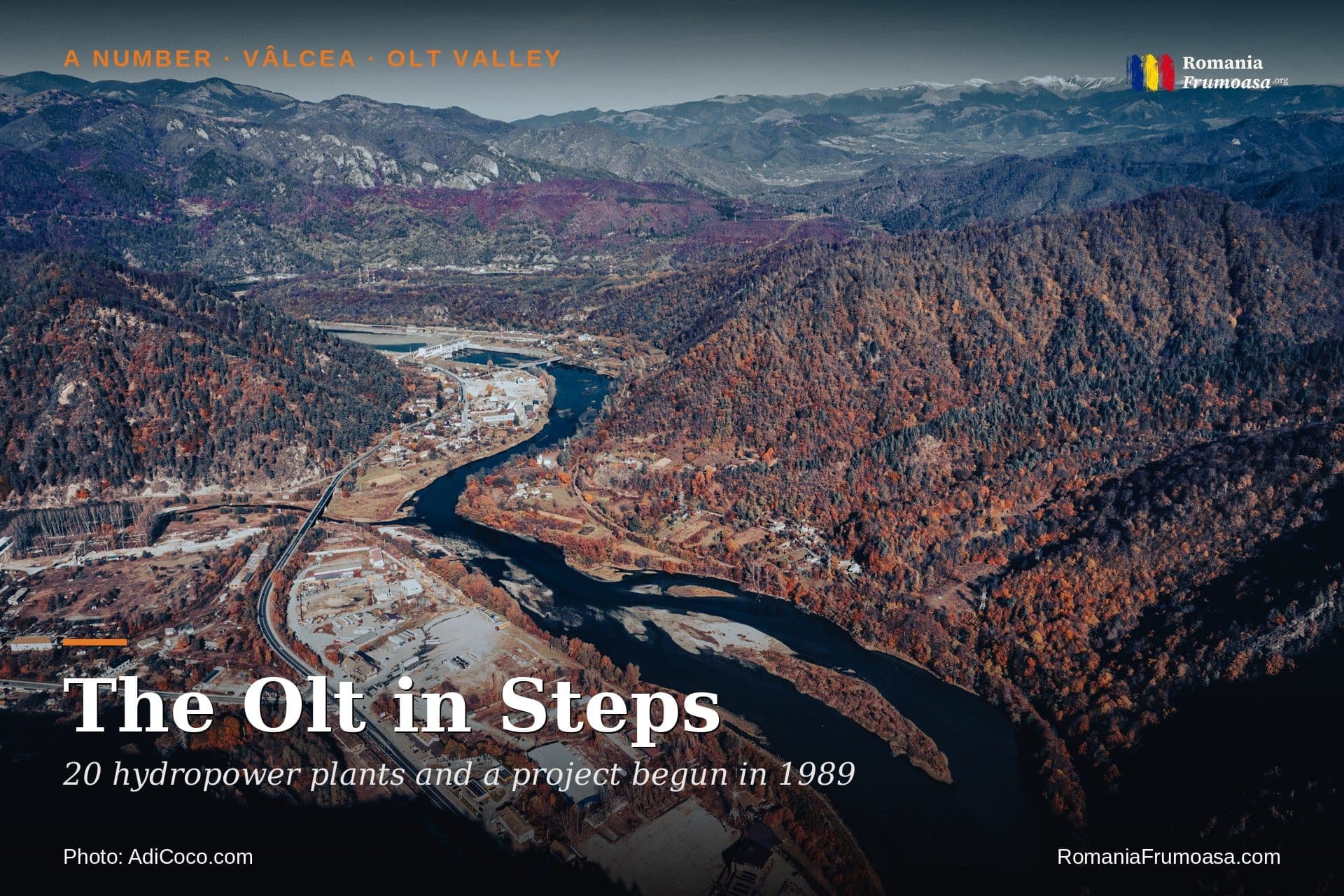
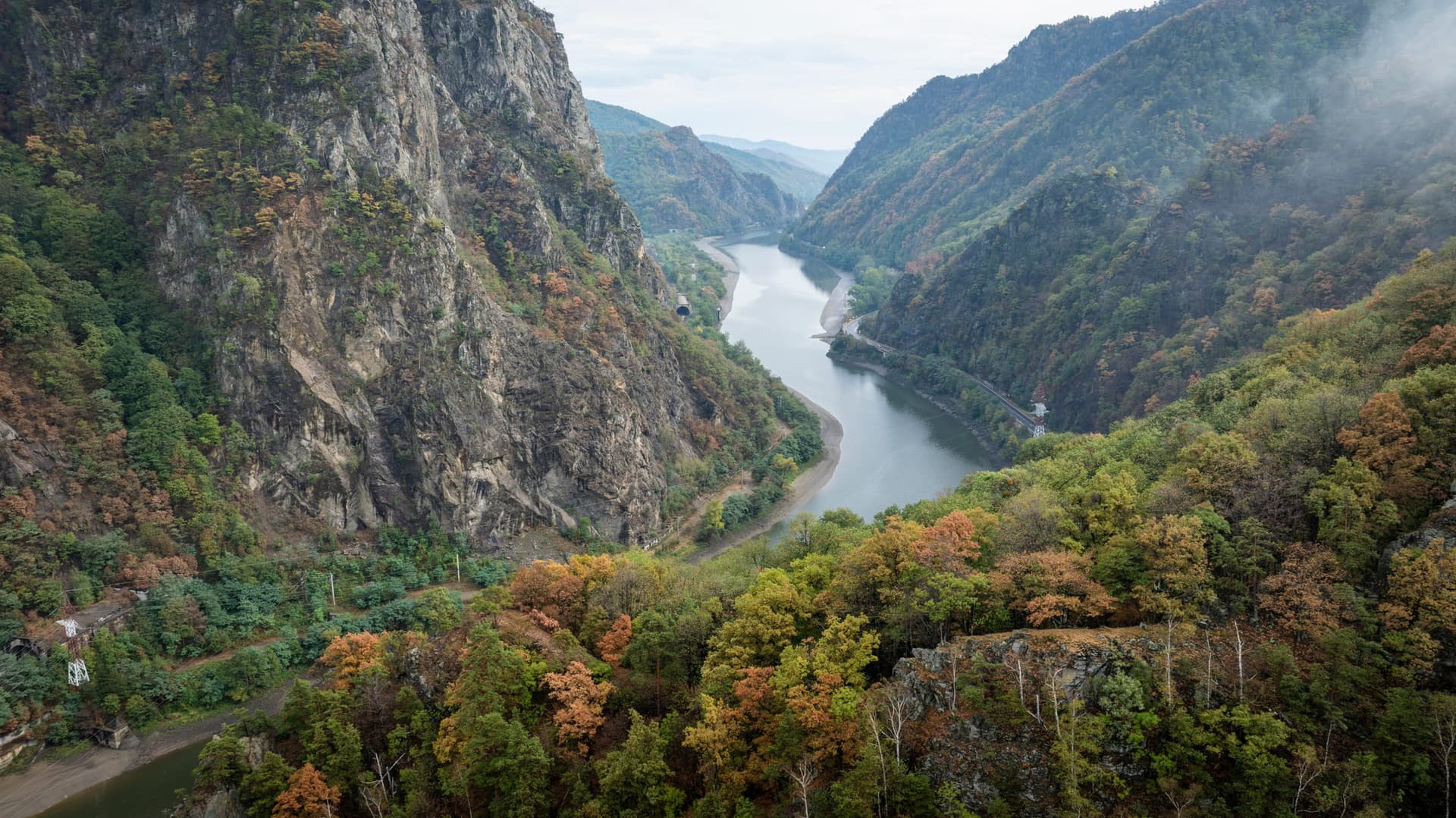
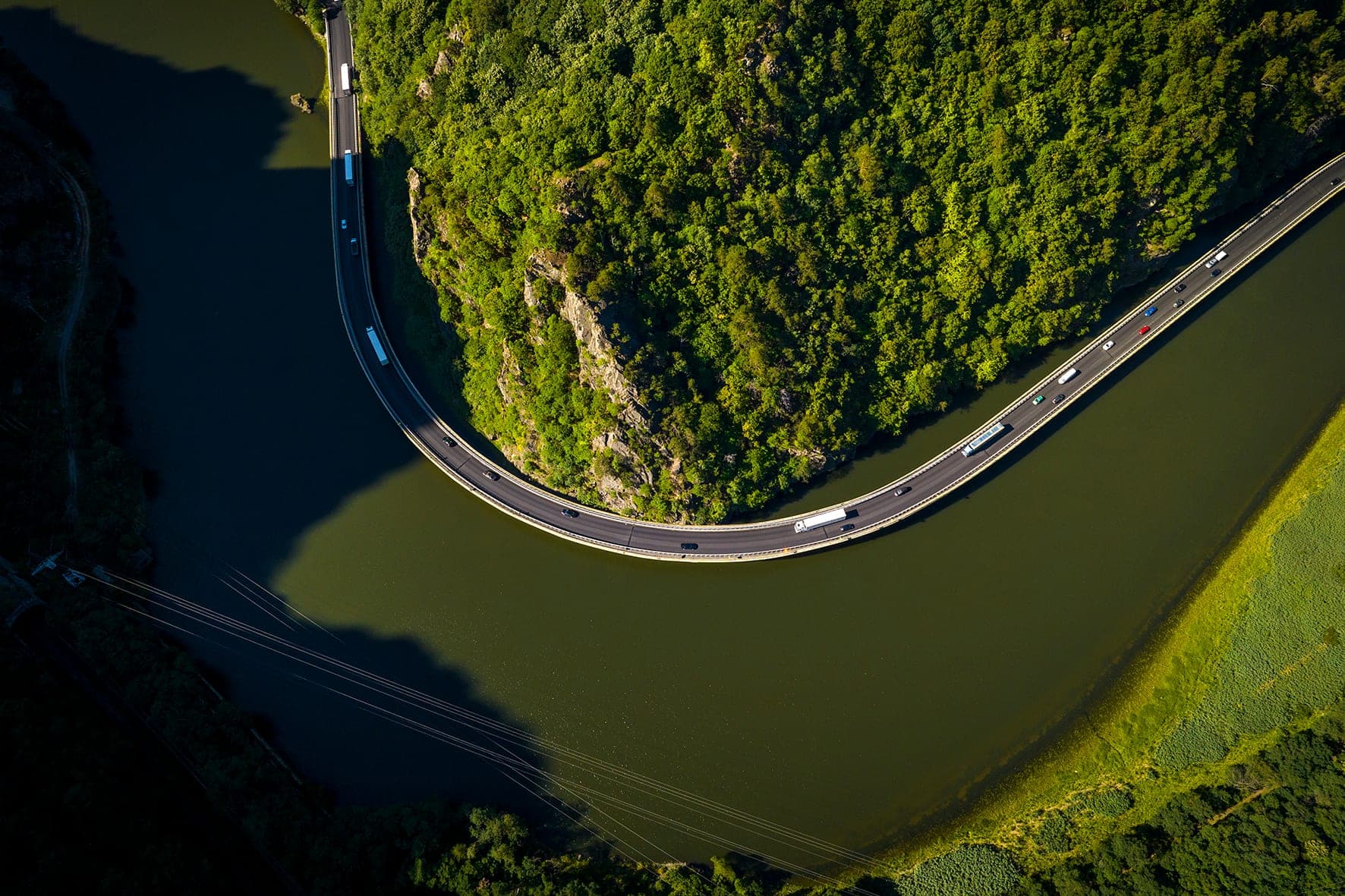
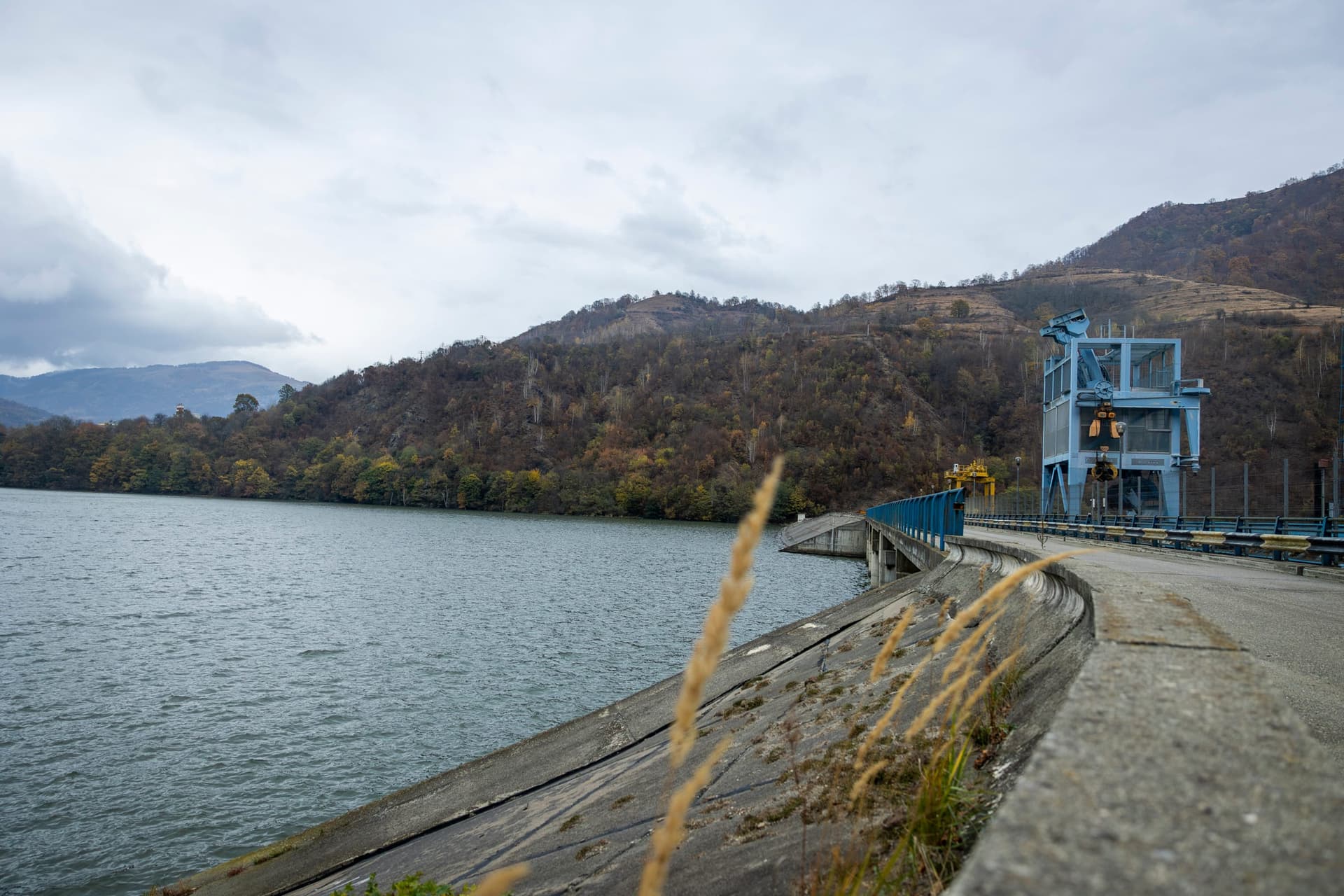
Between Brezoi and Călimănești, the Olt seems to stand still. From above, the river has the sheen of standing water: wide, gray-green, without a ripple, with the national highway pressed against its bank.
The explanation is a number: 20. That is how many hydropower plants Hidroelectrica owns on the middle and lower Olt, according to a report filed with the stock exchange in May 2025. On a river without waterfalls, the drop a turbine needs is usually created by raising the water behind a dam. Repeat that 20 times and the river changes shape: a step of still water, a dam, another step.
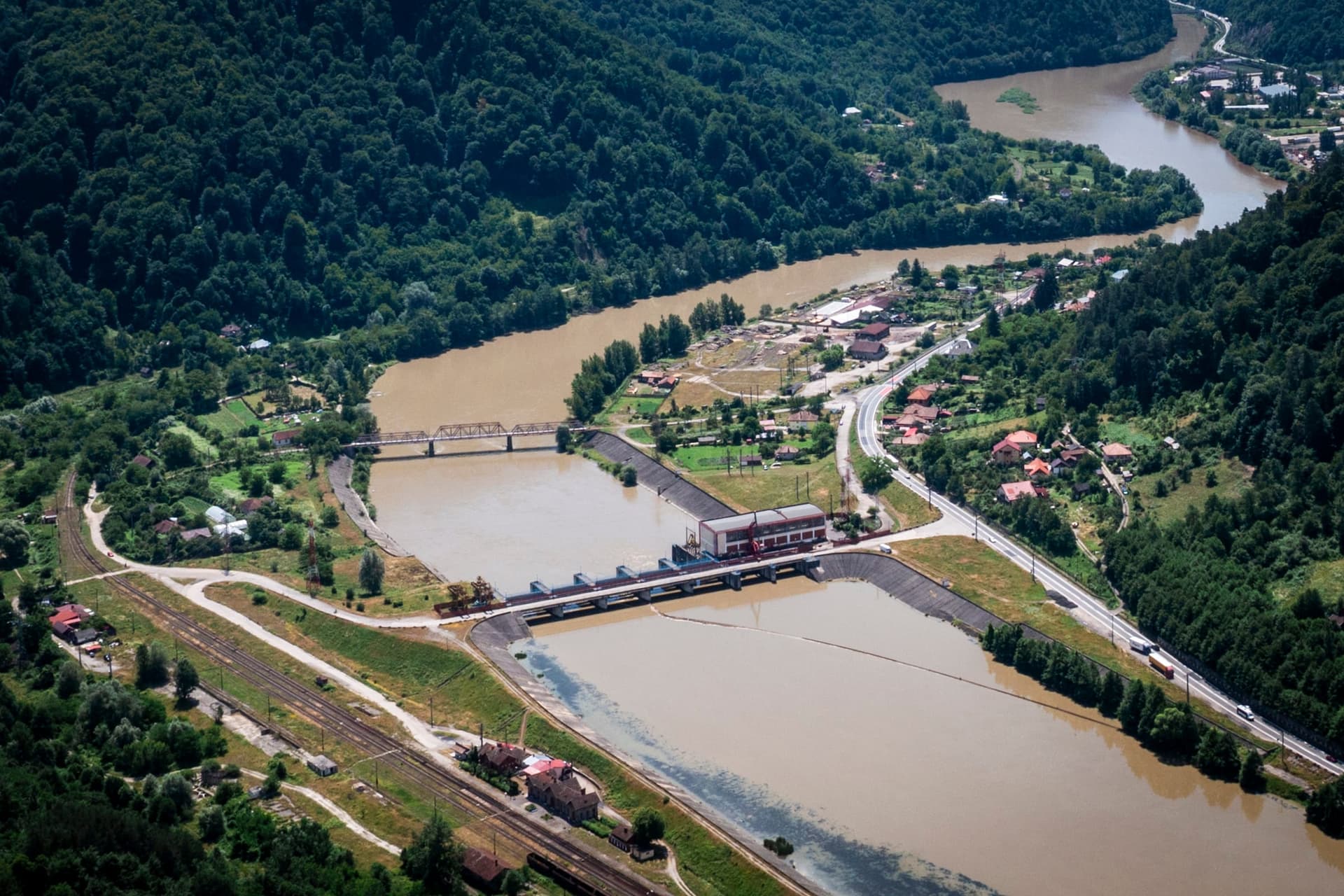
Farther upstream, in the gorge between Avrig and Cornetu, the staircase has gaps. Five steps were planned there in 1989. Thirty-seven years later, two are still far from finished.
River, Road and Rail
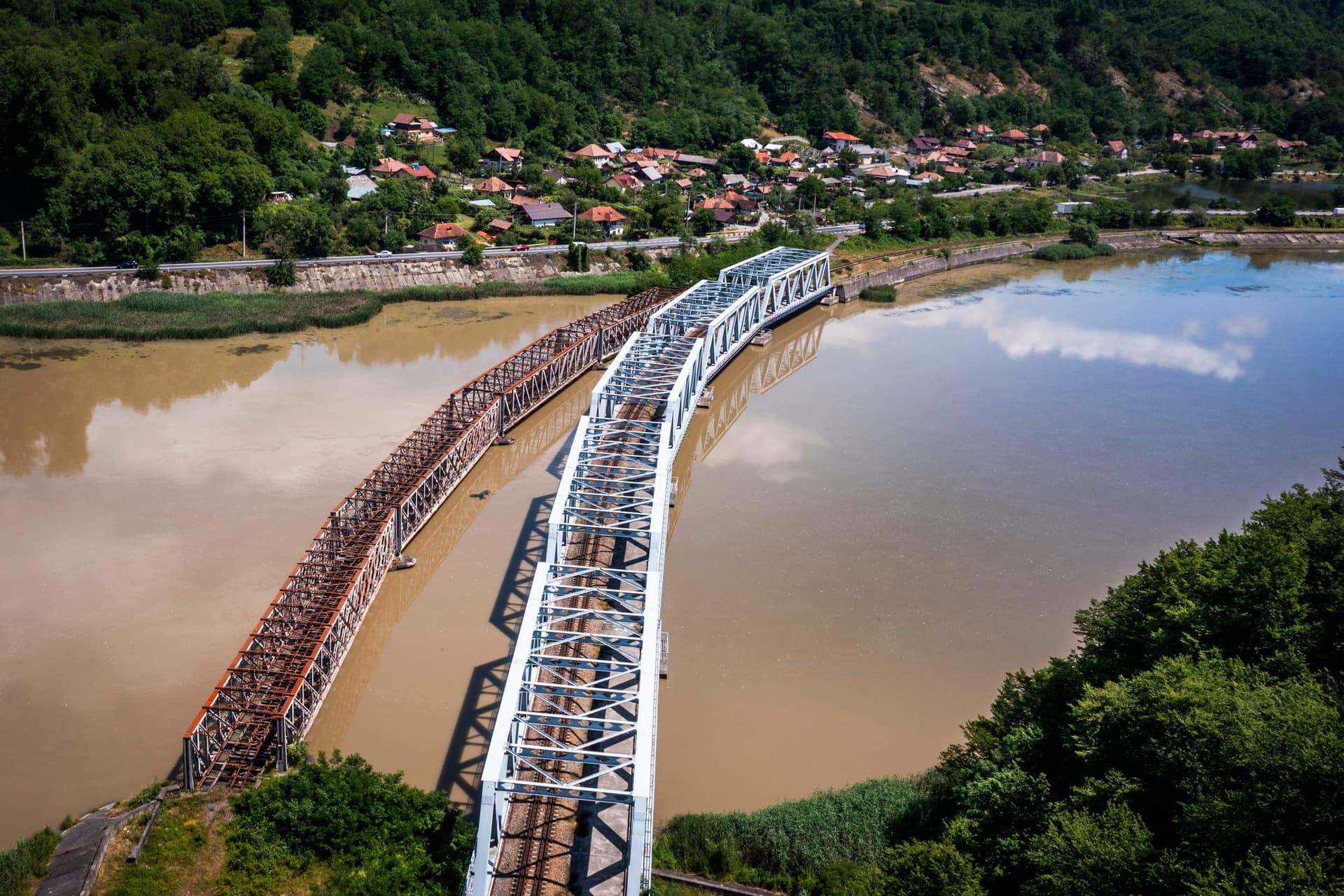
Anyone who has driven down the gorge knows how close the water is: the DN7 runs a few yards from it, and in places right above it. The narrow corridor holds the river, the national highway and the railroad linking Transylvania with Oltenia. In stretches, the highway runs on a viaduct, its piers standing in the water. That crowding would end up holding back one of the plants for nearly a quarter-century.
The Missing Steps
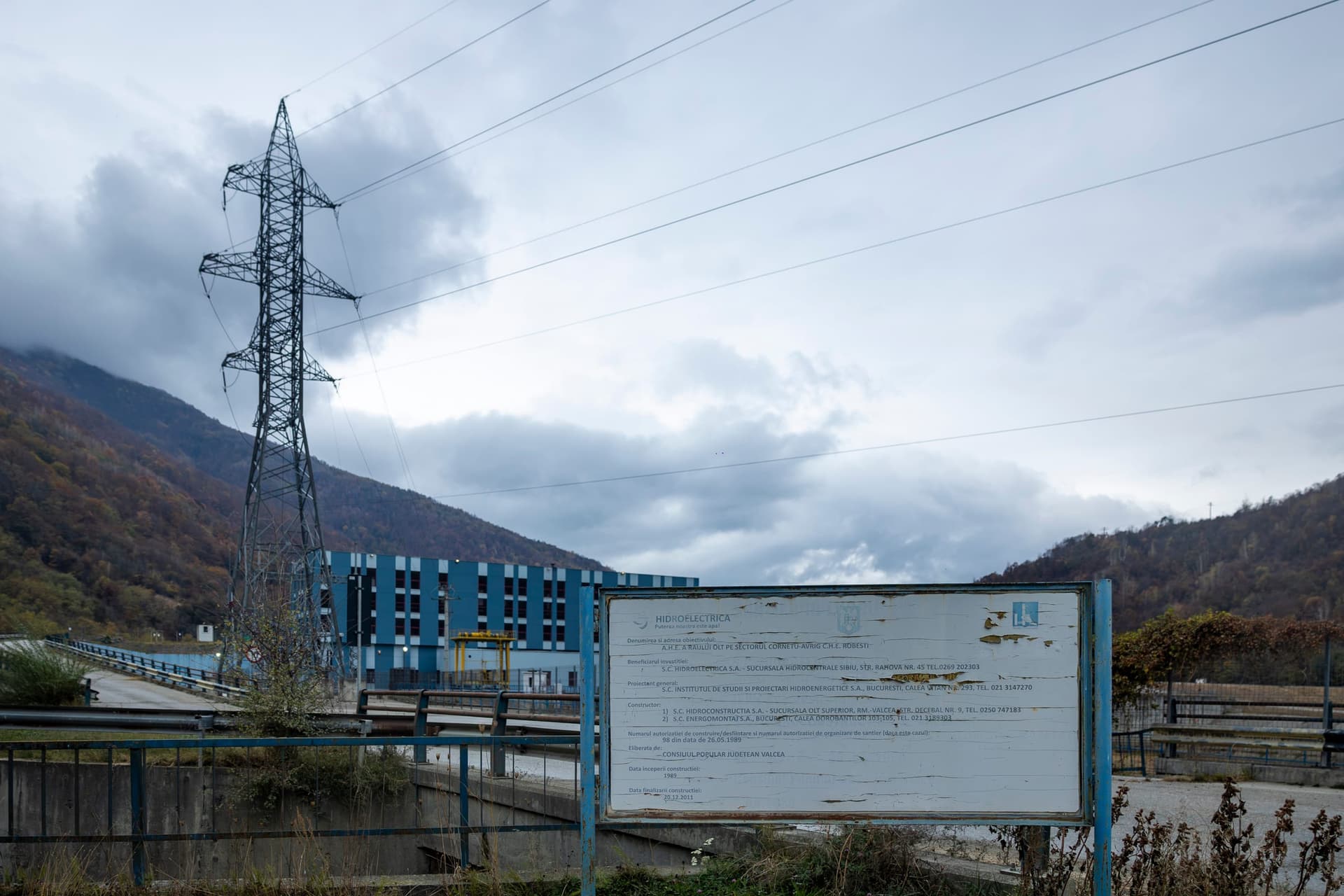
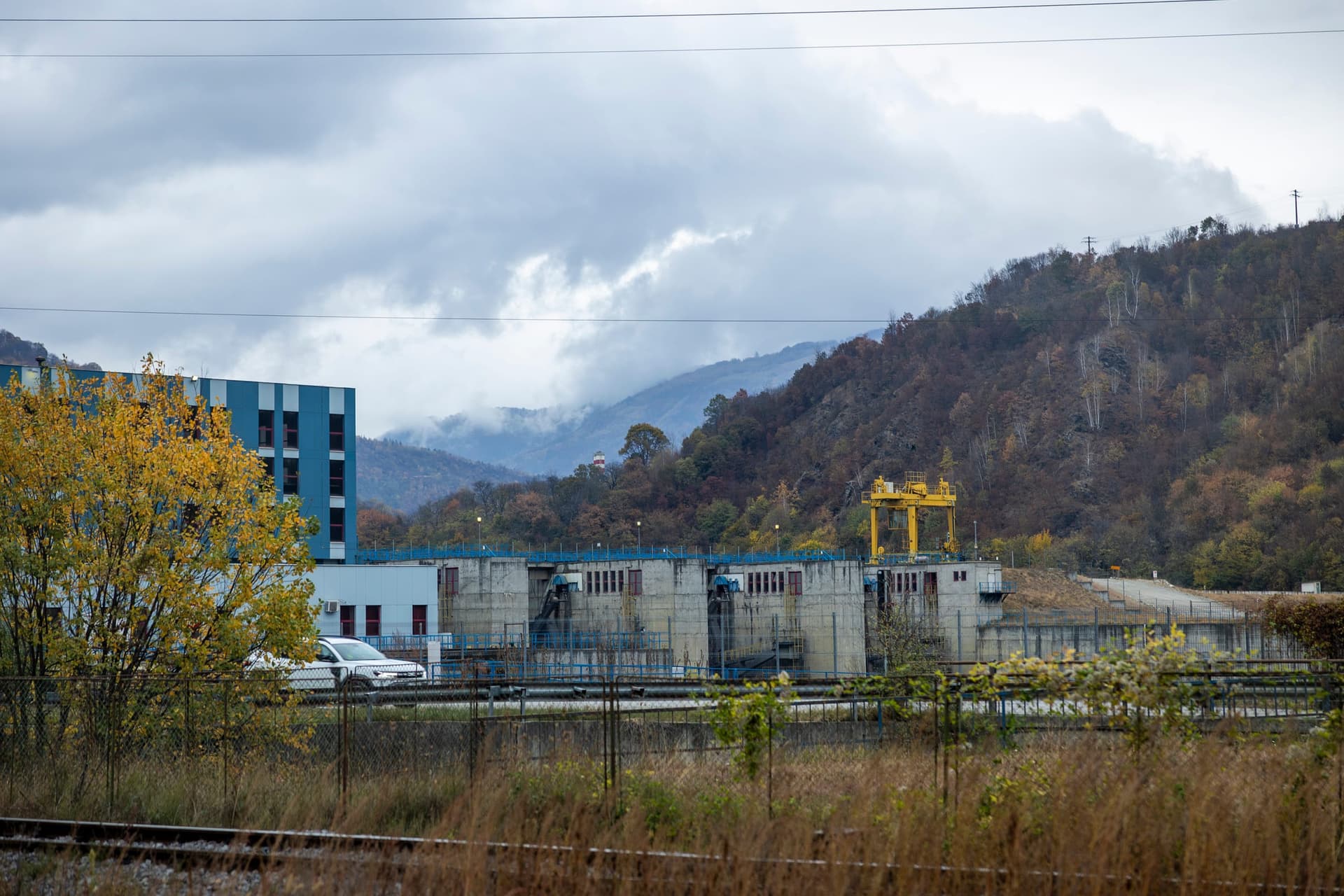
At Robești, the construction sign still stands at the plant's entrance, its paint peeling. It lists building permit No. 98, issued May 26, 1989, by the Vâlcea County People's Council, a construction start in 1989 and a completion date of Dec. 20, 2011. Twenty-two years for a single step.
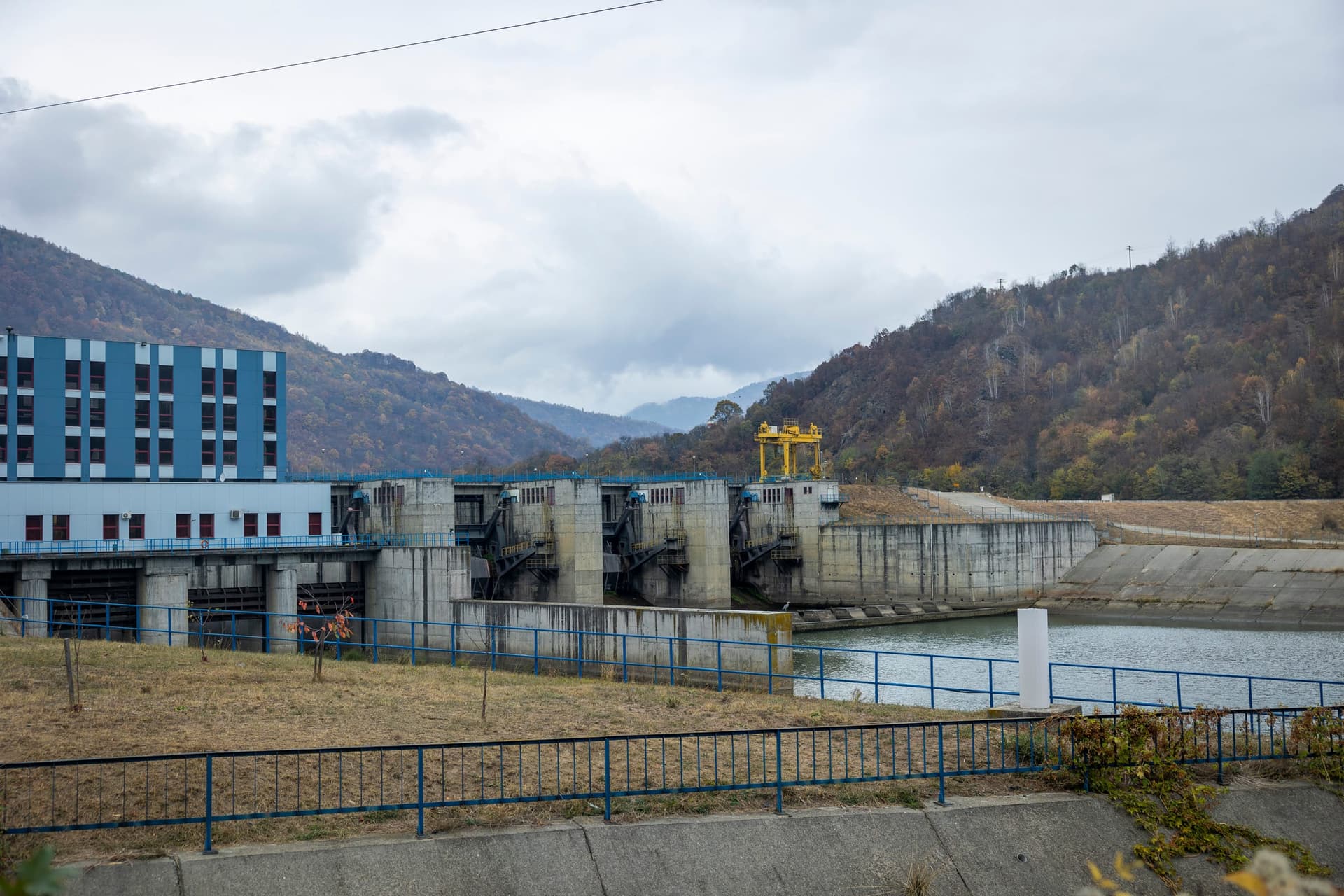
Robești is one of five steps planned along the roughly 34 miles (55 kilometers) between Avrig and Cornetu. From upstream to downstream, they are Racovița, Lotrioara, Câineni, Robești and Cornetu. Cornetu has been running since 2002, Robești since 2012.
Racovița was inaugurated Dec. 19, 2013, and in July 2026 Romania's Energy Ministry listed it as 95% complete. The plant generates power, but under water-level restrictions: the weir downstream of it cannot be removed until the railroad bridges farther down are protected. At the inauguration, the bridge problem was described as having held up the work for 24 years.
The other two steps are even further from completion. In July 2026, Câineni stood at 24% and Lotrioara at 1%; funding for Lotrioara had been cut off in 1992. On Sept. 21, 2026, the Environment Ministry issued the environmental approval for completing the project. Land expropriations and a building permit come next, and the approval can be challenged in court. Estimates cited after it was issued put completion at 2031 for Câineni and 2032 for Lotrioara.
Once finished, the project would have 131 megawatts of installed capacity, according to the Energy Ministry. The Environment Ministry estimates the investment will contribute 156.8 gigawatt-hours a year to national output, the annual consumption of more than 52,000 households.
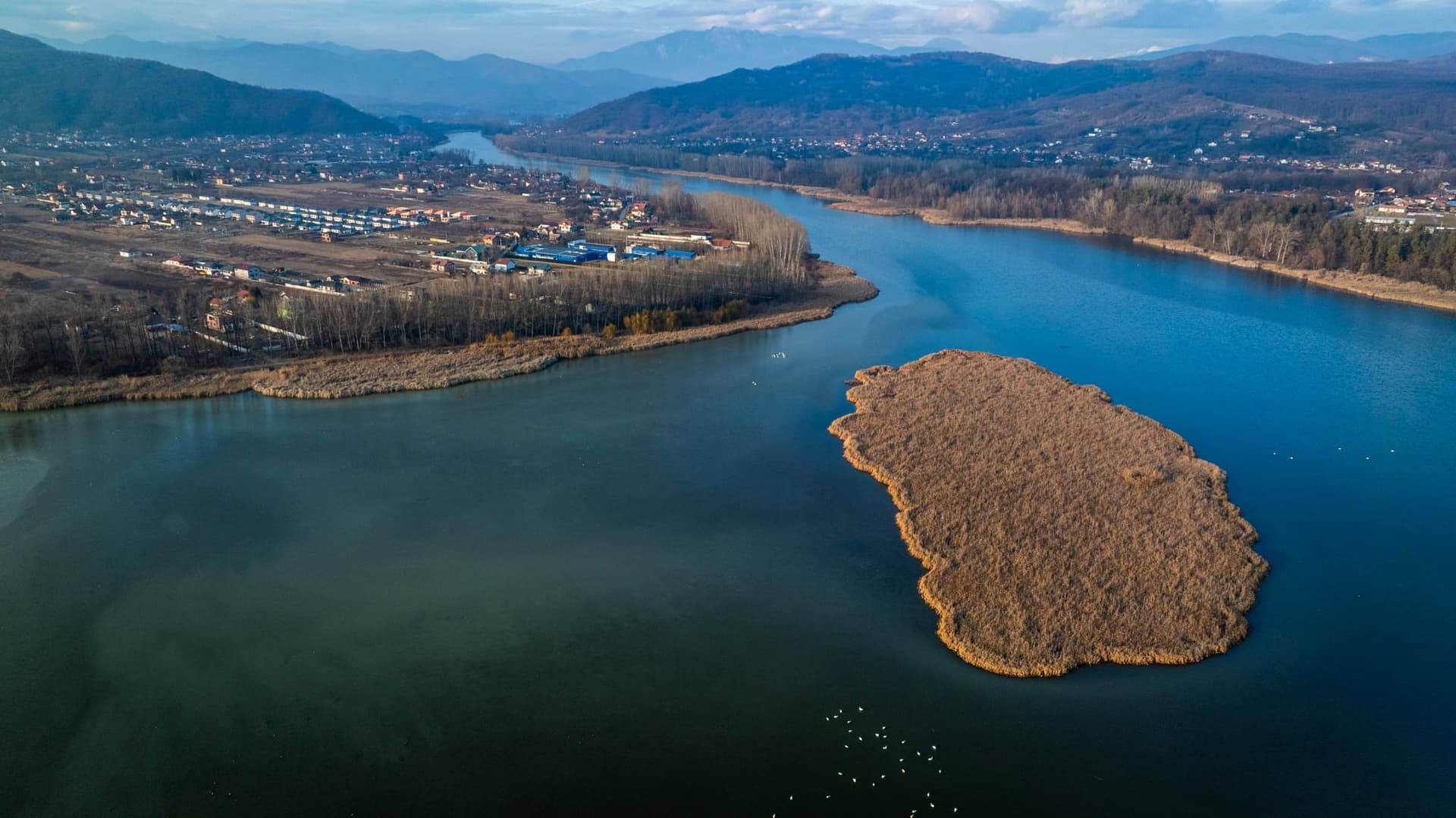
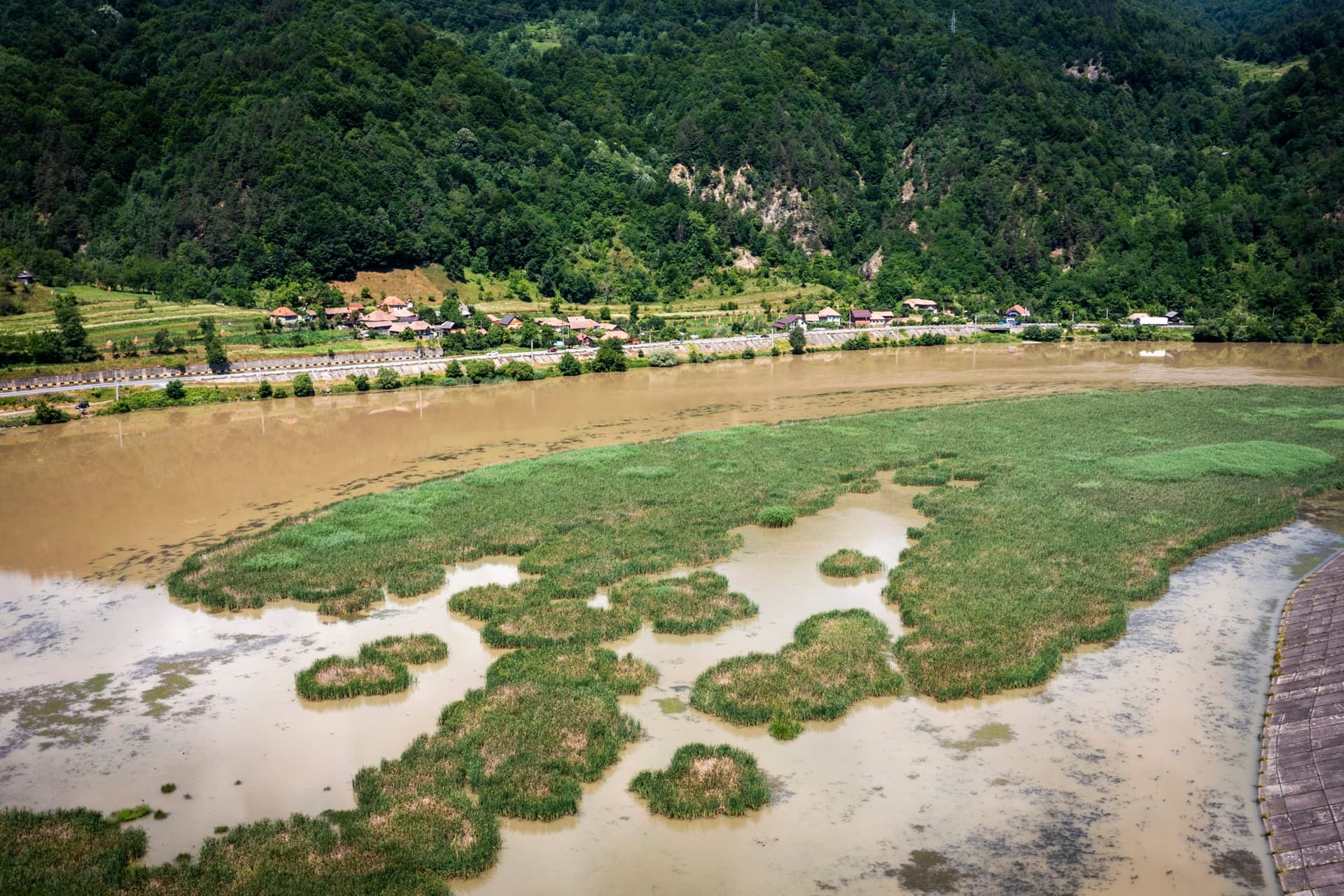
Toward Râmnicu Vâlcea, the lakes widen until they hold islands of reeds. The Olt still reaches the Danube. It just gets there in steps, and two of them have been waiting since 1989.
The aerial photographs were taken between June 2021 and November 2025, along the stretch between Brezoi and Râmnicu Vâlcea; each caption gives the year. Robești was photographed from the ground on Oct. 26, 2026, when the details on the construction sign were also recorded. Câineni and Lotrioara are not pictured. All other figures come from written sources.