
The First Thirty Men
The Auschwitz camp was established by an order from Heinrich Himmler dated April 27, 1940, in a former army barracks near the town of Oświęcim in occupied Poland. Its first commandant was Rudolf Höss.
On May 20, 1940, a transport from the Sachsenhausen camp delivered the first 30 prisoners to Auschwitz. They were not political prisoners but German "career criminals" (Berufsverbrecher), identified by the green triangle on their clothing — hence their nickname, "the Greens." They were assigned numbers 1 through 30. The first of them, Bruno Brodniewicz, became Lagerälteste, the prisoners' "dean."
Their role had been planned in advance: they were to serve as camp functionaries — kapos and block leaders — who would organize the place and keep the waves of incoming prisoners in check through violence. This was a method the Nazis used when opening most concentration camps. The first mass transport of political prisoners — 728 Poles brought from Tarnów prison — did not arrive until June 14, 1940.
From Concentration Camp to Death Factory
In the years that followed, Auschwitz expanded into a vast complex: the main camp (Auschwitz I), the extermination camp Auschwitz II-Birkenau, and the labor camp Auschwitz III-Monowitz, along with dozens of sub-units. According to estimates by the Auschwitz-Birkenau Memorial, approximately 1.1 million people were killed here, of whom roughly one million were Jews. The camp was liberated by the Red Army on January 27, 1945 — a date now observed as International Holocaust Remembrance Day.
Romania's Connection: the Deportations from Northern Transylvania
For Romanian history, May 1944 is the month when Auschwitz drew tragically close. Following the Second Vienna Award of 1940, Northern Transylvania had come under Hungarian administration. After Germany occupied Hungary in March 1944, Jews in the region were confined to ghettos (in May 1944) and then deported.
Hungary Had Not Deported Its Jews en Masse Before the German Occupation
One fact is essential for understanding this tragedy: until Germany occupied Hungary on March 19, 1944, the regime of Miklós Horthy had not deported Hungarian Jewish citizens en masse to the Nazi extermination camps— despite repeated pressure from Berlin. For this reason, the Jewish community of Hungary — one of the largest still remaining in Nazi-dominated Europe, including Northern Transylvania — had not yet been subjected to systematic mass deportation to Auschwitz before 1944.
Only after the installation of the collaborationist government led by Döme Sztójay and the arrival of Adolf Eichmann in Budapest was the deportation machinery set in motion — and it operated with terrifying speed: between May 15 and July 9, 1944, approximately 437,000 Jews from Hungary were deported, around 420,000 of them to Auschwitz-Birkenau. Upon learning of the scale of the deportations, Horthy ordered them halted in July 1944.
This does not mean that Horthyist Hungary was free of persecution: harsh anti-Jewish laws were in force, tens of thousands of Jewish men were sent to forced labor battalions, where many perished, and in the summer of 1941 some 18,000–20,000 stateless Jews had been deported to Kamenets-Podolsk in occupied Ukraine and murdered there. Yet the distinction documented by historians remains clear: the systematic, mass deportation of Hungarian Jews — including those from Northern Transylvania — to Auschwitz began only after the German occupation of March 1944.
The Toll of the Deportations from Northern Transylvania
Between May 16 and June 27, 1944, approximately 131,000 Jews from Northern Transylvania (a frequently cited figure is 131,639) were transported to Auschwitz-Birkenau; most were killed upon arrival. Ghettos existed in Cluj, Oradea, Satu Mare, Sighet, Baia Mare, Bistrița, Dej, Târgu Mureș, and Șimleu Silvaniei. The deportation of the roughly 8,000 Jews from Târgu Mureș is extensively documented in the volume "370 de zile de teroare" (370 Days of Terror) by Radu Bălaș and Kocsis Francisko (2003).
The dates connect directly to May 20: the entire Jewish community of Sighet was deported in the second half of May 1944 (the USHMM indicates May 17–22), meaning trains were leaving on precisely these days. Among those taken at that time was a teenager from Sighet, Elie Wiesel (born 1928), future Nobel Peace Prize laureate and author of "Night," his memoir of Auschwitz.
The Railway Extended to the Crematoria for "Operation Hungary"
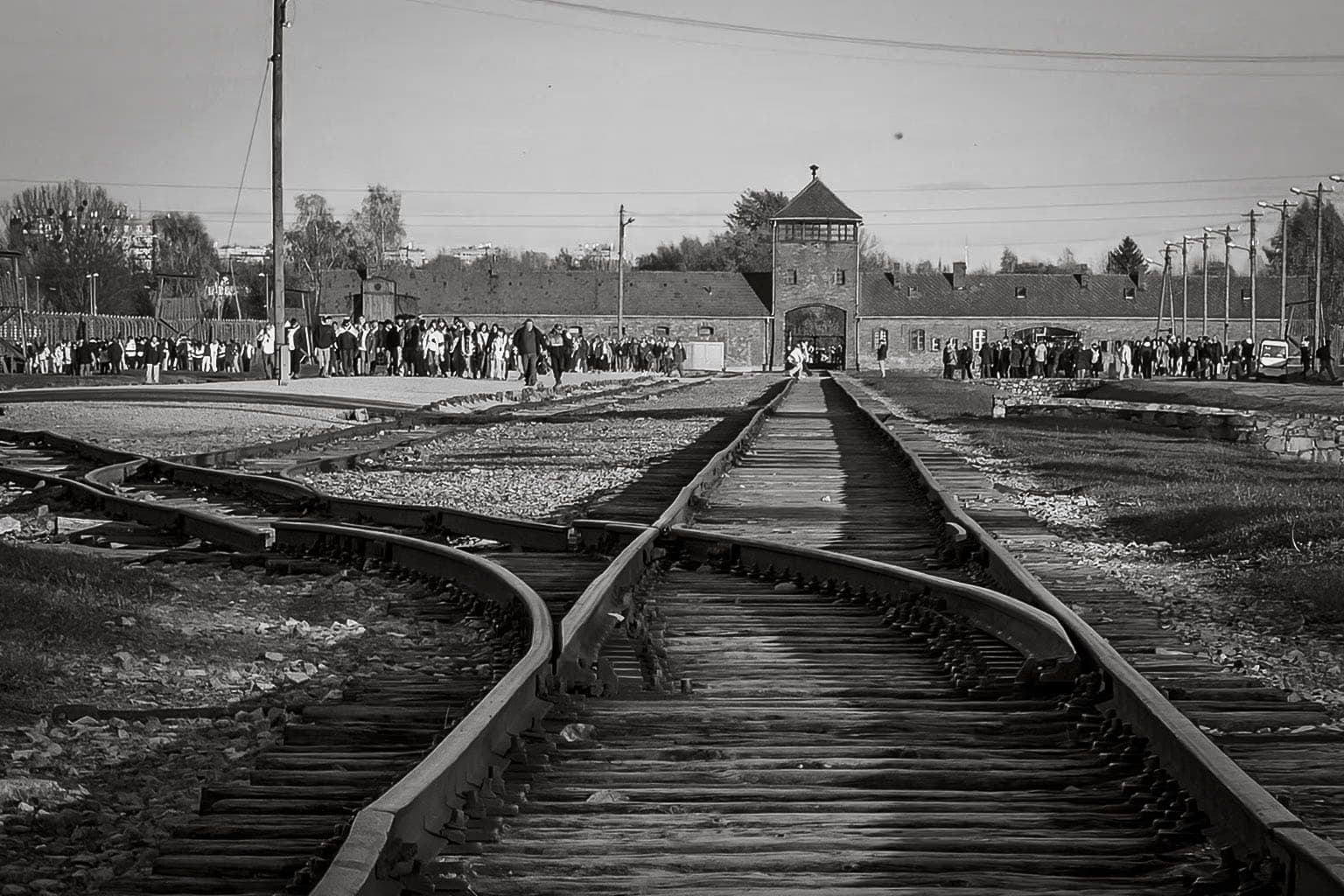
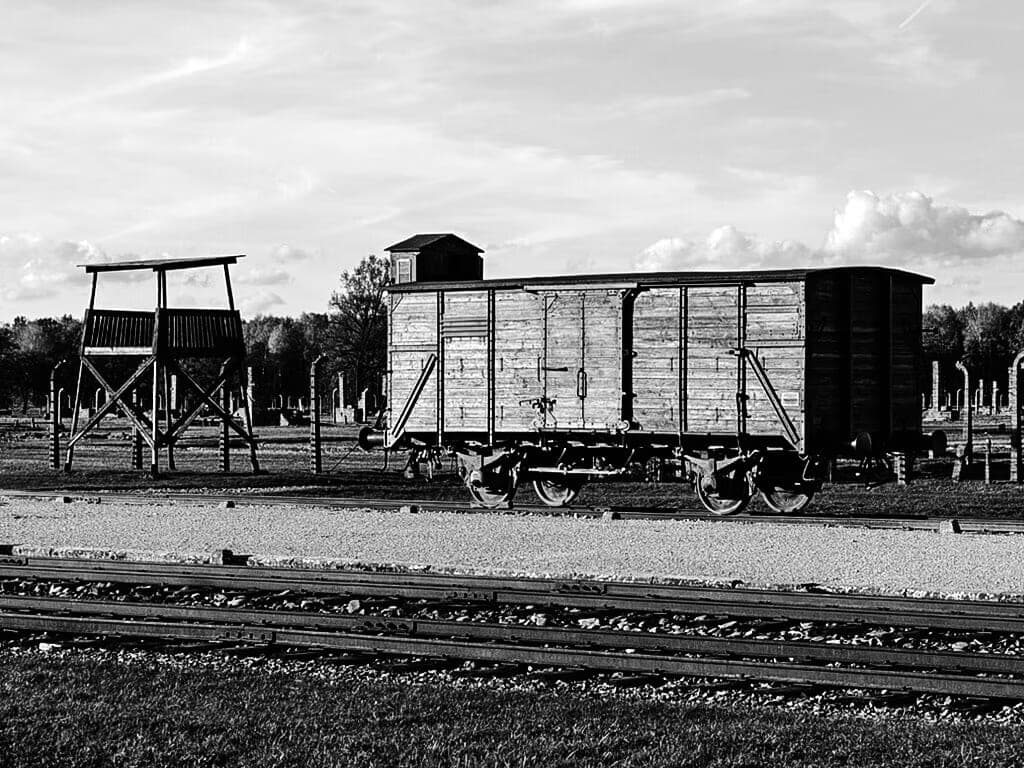
A lesser-known detail ties these deportations directly to the geography of death at Birkenau. Until the spring of 1944, trains carrying deportees stopped at the so-called Judenrampe (Jews' ramp), located between Auschwitz I and Auschwitz II-Birkenau, outside the camp perimeter; from there, people were marched on foot or transported by truck to the gas chambers.
In anticipation of the enormous number of Hungarian deportees — among them the Jews of Northern Transylvania — the SS extended the railway directly inside the Birkenau camp— running it through the main gate (known today as the "Gate of Death"). This new ramp was completed and became operational in May 1944, precisely for "Operation Hungary"; the line ran all the way to the gas chambers and crematoria II and III. Transports were even temporarily delayed until the interior ramp was finished, because the camp could not keep pace with the extermination plan.
Moving the selection and disembarkation right next to the crematoria drastically shortened the distance between the train and the gas chambers, making the killing more "efficient." The volume was so great that the Nazis also dug open-air burning pits and reactivated a makeshift gas chamber. Alongside the approximately 430,000 Hungarian Jews, deportees from the Łódź ghetto and from Theresienstadt were also unloaded at this interior ramp.
 1 / 7
1 / 7A Note on Historical Accuracy
Jews deported to Auschwitz "from Romania" came from Northern Transylvania, which was then under Hungarian administration — not from the territory controlled by the Antonescu regime.
In Antonescu's Romania, the Holocaust took different forms: the Iași pogrom (1941) and the deportations and massacres in Transnistria. According to the report of the International "Elie Wiesel" Commission (2004), between 280,000 and 380,000 people of Jewish origin were killed in Romania and in territories under Romanian control.
The two realities are distinct, but both form part of the same history of the Holocaust — one that reached directly into Romanian lands.
Sources
— Auschwitz-Birkenau Memorial — the camp's origins and prisoner numbers (auschwitz.org)
— Auschwitz concentration camp — Wikipedia
— INSHR "Elie Wiesel" — the deportation of Jews from Northern Transylvania
— USHMM Holocaust Encyclopedia — Elie Wiesel / Sighet
— USHMM Holocaust Encyclopedia — The Holocaust in Hungary (the Horthy regime and the 1944 occupation)
— Auschwitz-Birkenau Memorial — "The unloading ramps and selections" (the interior ramp, May 1944)
— "May 20, the Day the Auschwitz Nightmare Began" — Adevărul