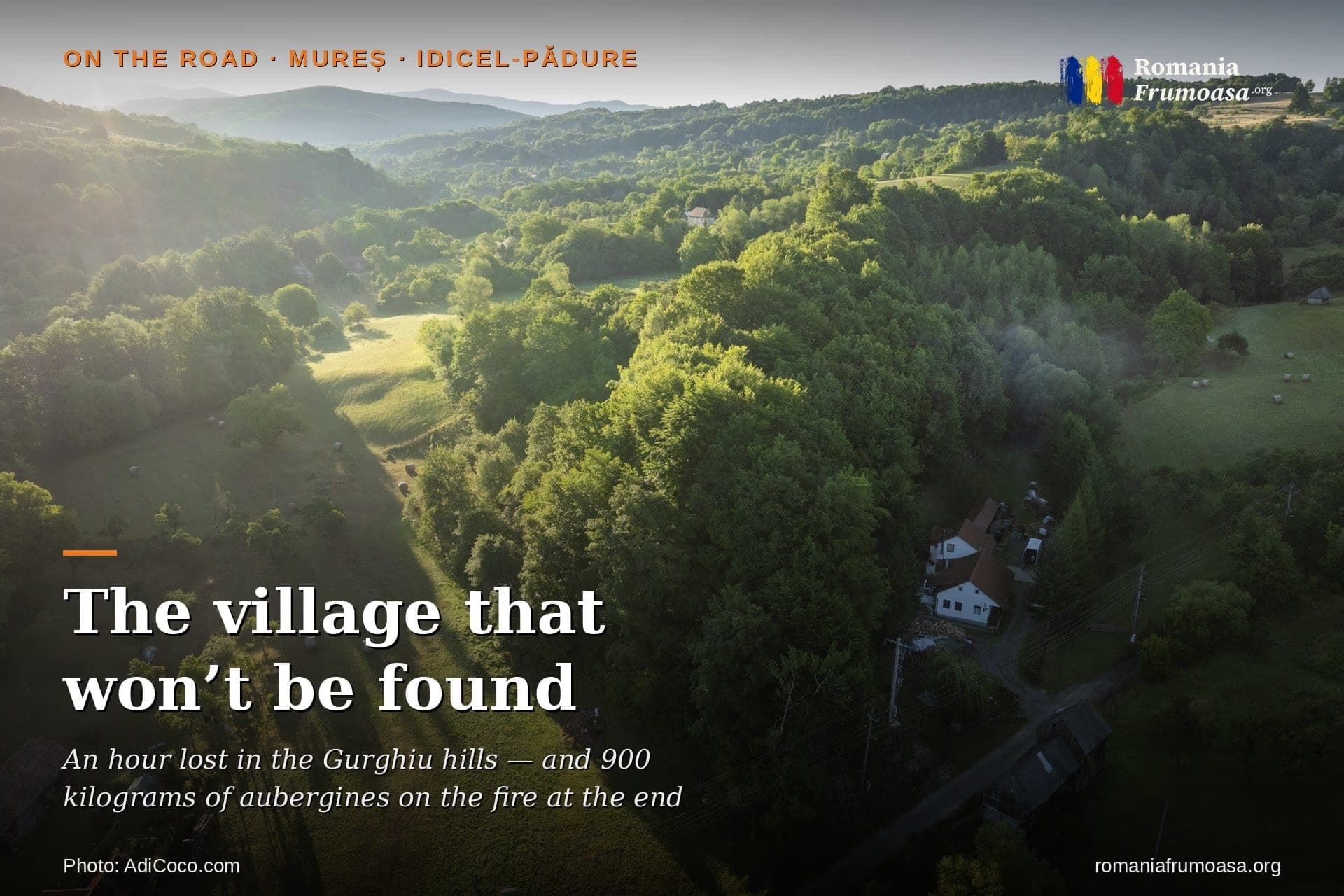
I left Târgu Mureș at 5 a.m. to catch the hour when the aubergines go on the fire. I had the location on Google Maps — until, past Idicel, the phone signal died. A reportage about an hour lost in the most beautiful cow-filled labyrinth of the Gurghiu Mountains, and about what I found at the end of it: 900 kilograms of aubergines roasting over a wood fire, well before breakfast.
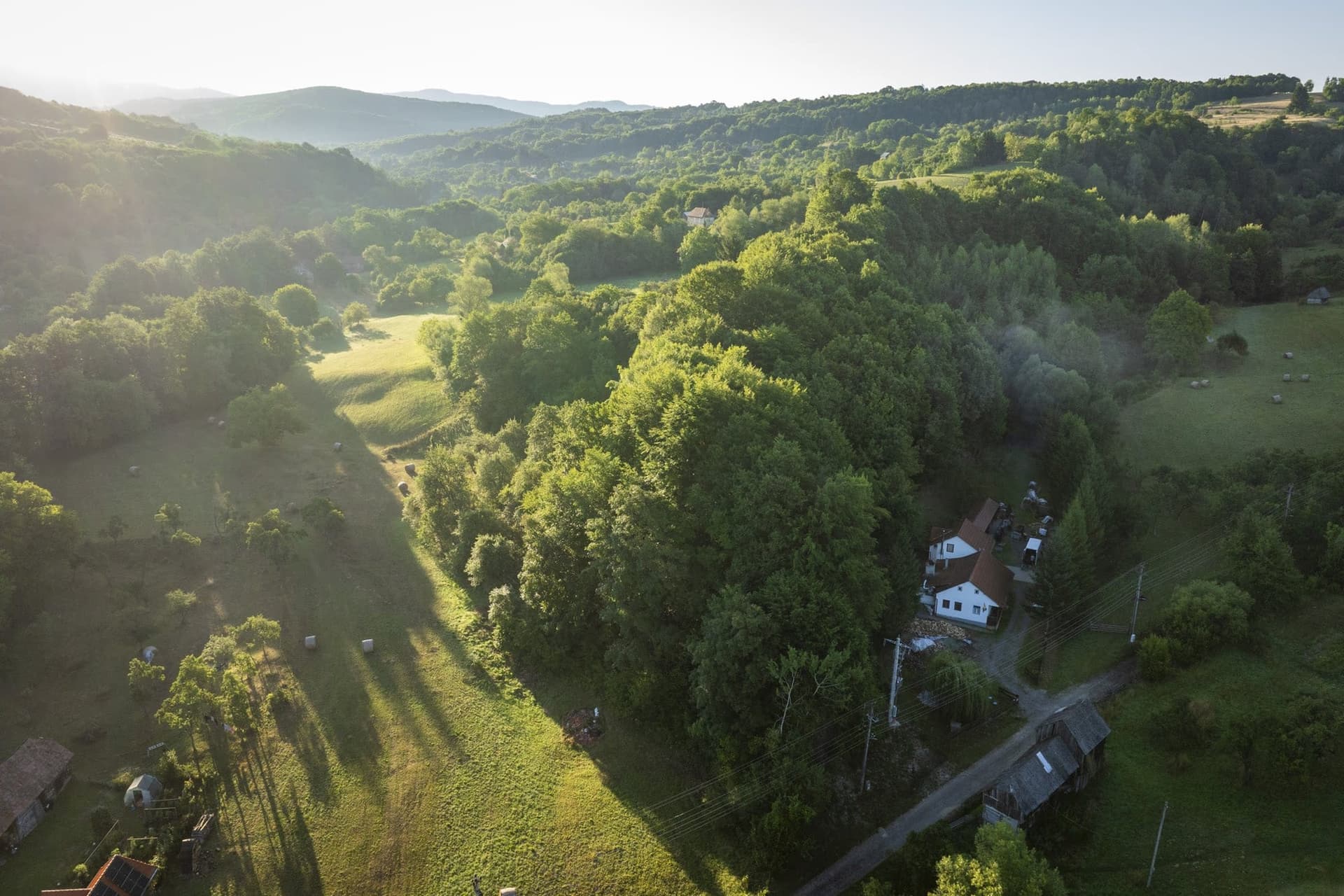
5.00 a.m.: the plan
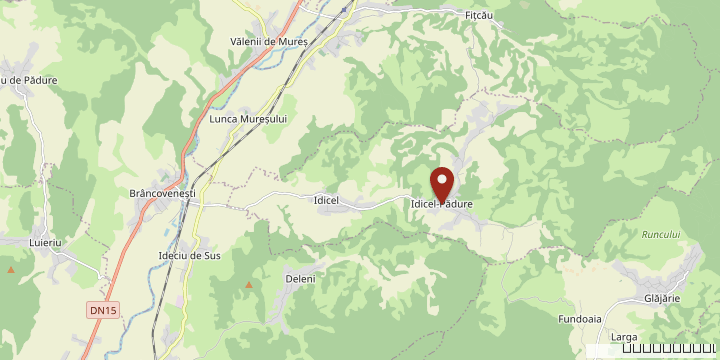
The arithmetic was simple. The aubergines start roasting at 6, so departure from Târgu Mureș had to be at 5. An hour's drive: Reghin, then Ideciu, then Idicel, then Idicel-Pădure — the villages string themselves along the valley like beads on a thread, each one higher and smaller than the last. I had the location from Răzvan, shared on Google Maps. What could go wrong?
Past Idicel, the one thing you cannot control went wrong: the GSM signal. It died along with the good asphalt, and with it died the blue dot on the map. But I told myself: how hard can it be to find a factory where aubergines are roasted in the yard, over a wood fire, in a village of some 400 inhabitants?
Well — hard enough.
6.00 a.m.: the labyrinth
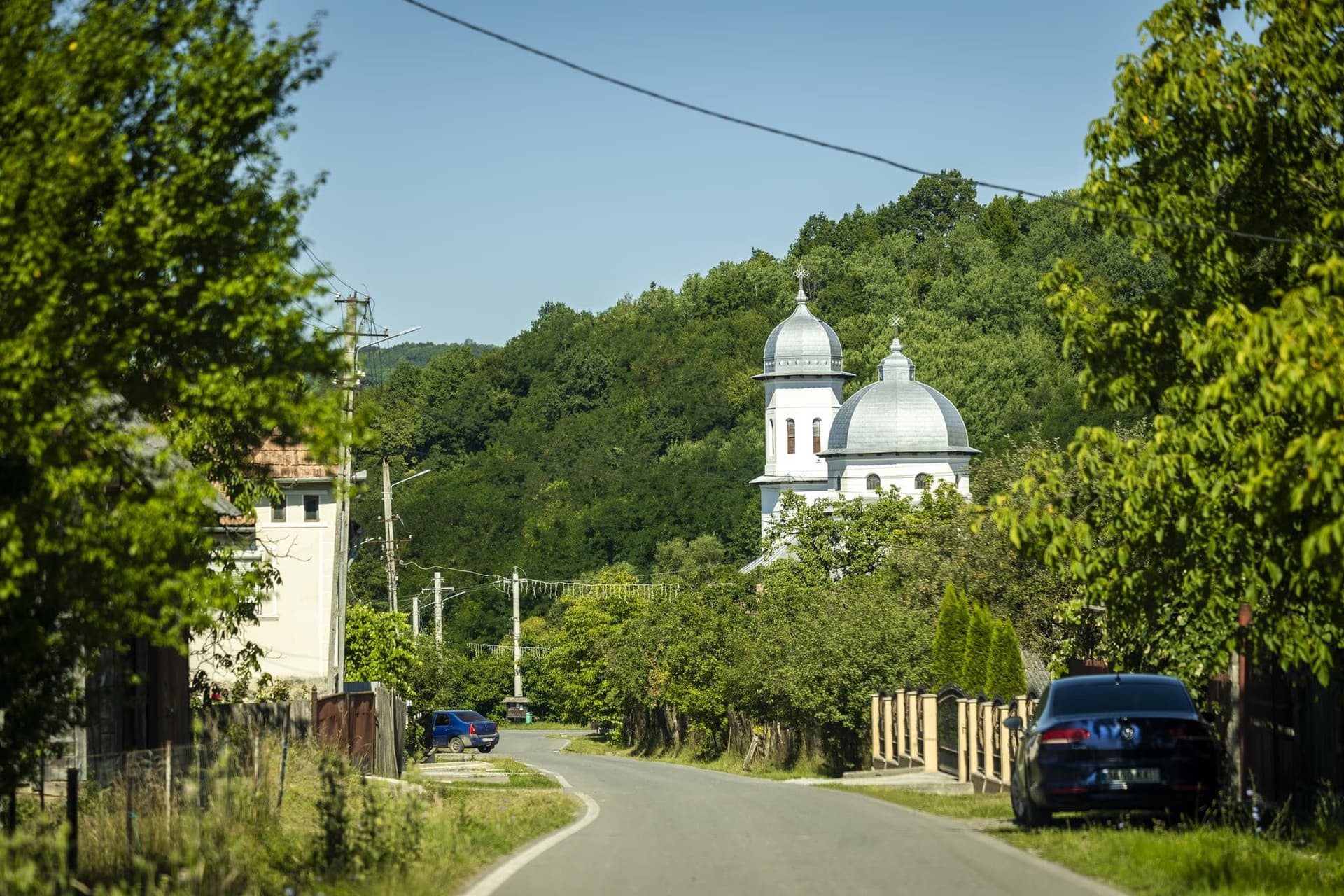
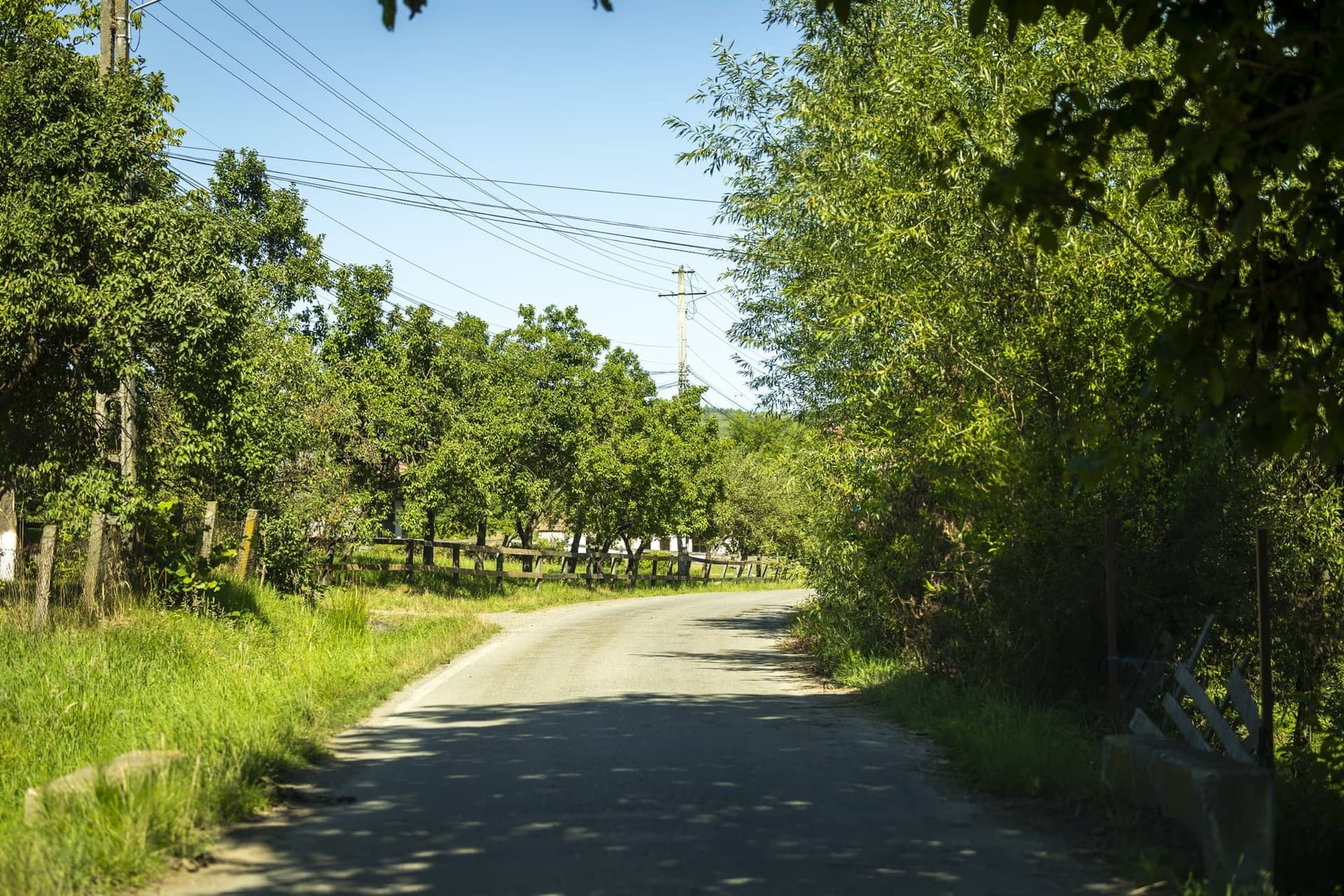
At the church, the road splits in two. Not a signpost, not a soul in sight — at 6 in the morning, the only living creatures on the lanes of Idicel-Pădure are the dogs, who give no directions, and the cows, who are in no hurry to be anywhere. I tried my luck on the left: five kilometres to the far end of the village, where the road ran out along with my hopes. Back at the fork, I took the right: another four kilometres, past the milk collection centre, deeper and deeper into the hills, further and further from anything resembling a factory.
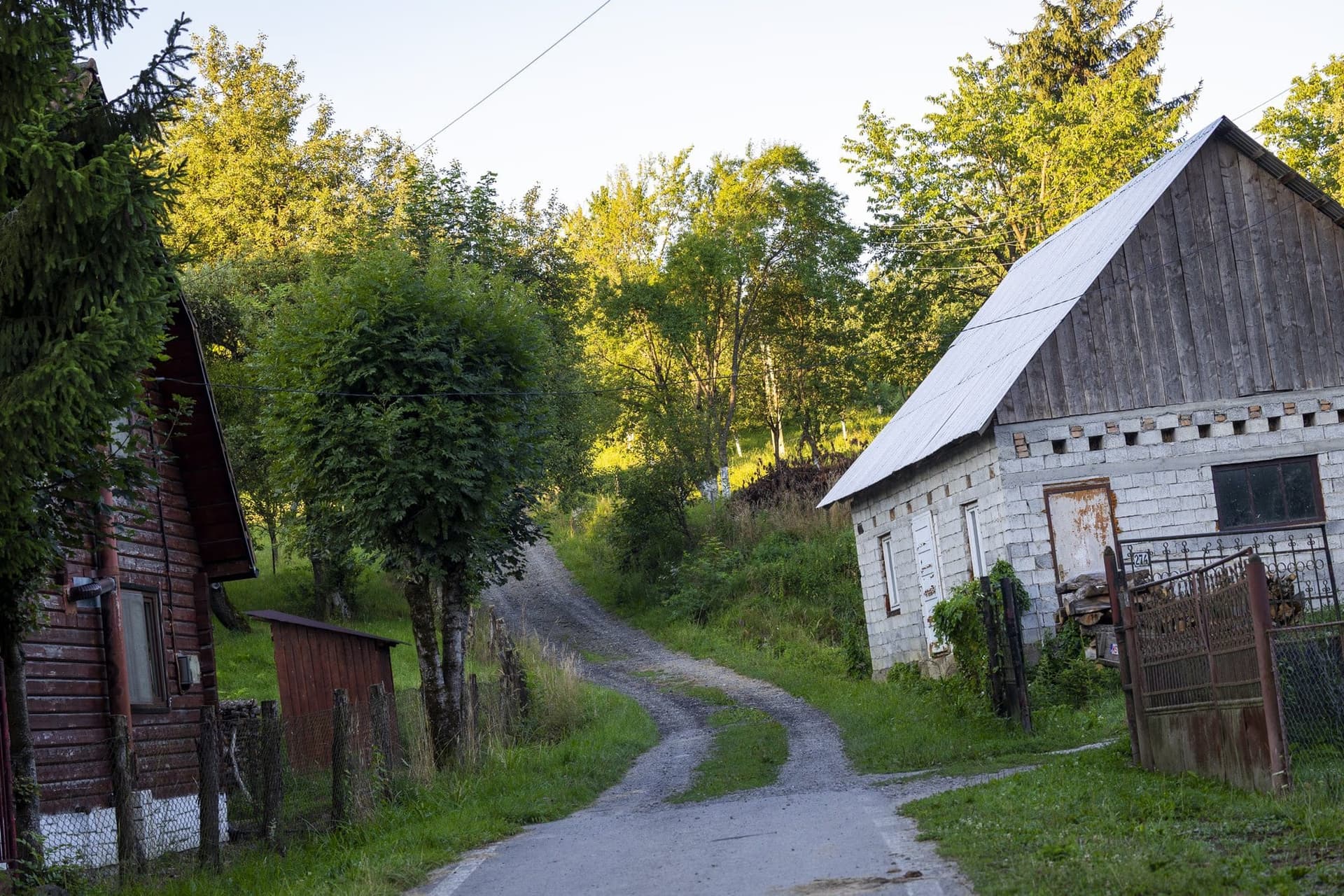
The first human being to cross my path — a villager as sparing with words as any man with work to do at 6 a.m. — offered me a complete set of directions in three words: „mări pă deal" (roughly: "go on up the hill"). I went up the hill. It was not that hill. Only the second villager solved the riddle: from the main road I was to turn right, up a climb I would never have suspected of anything.
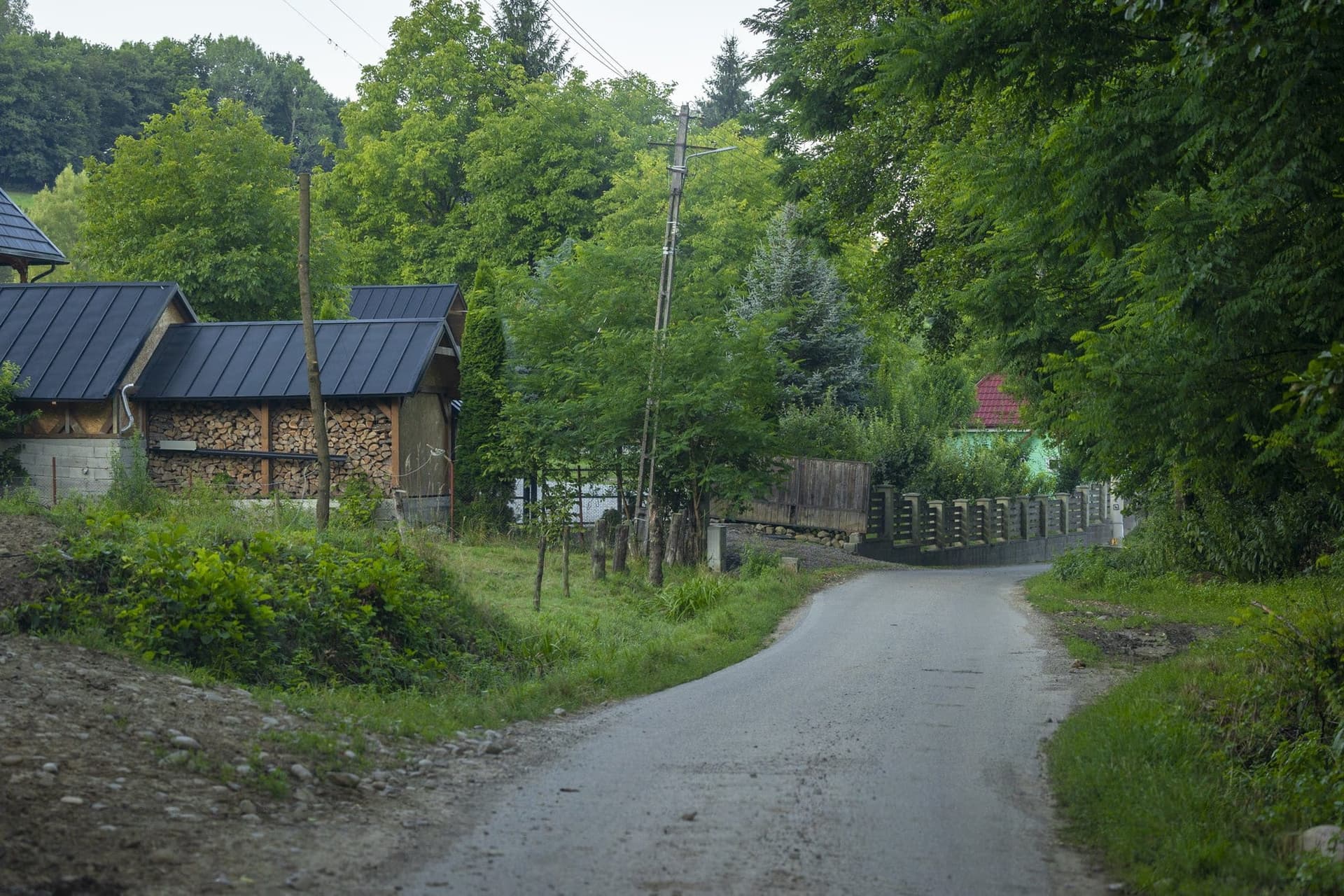
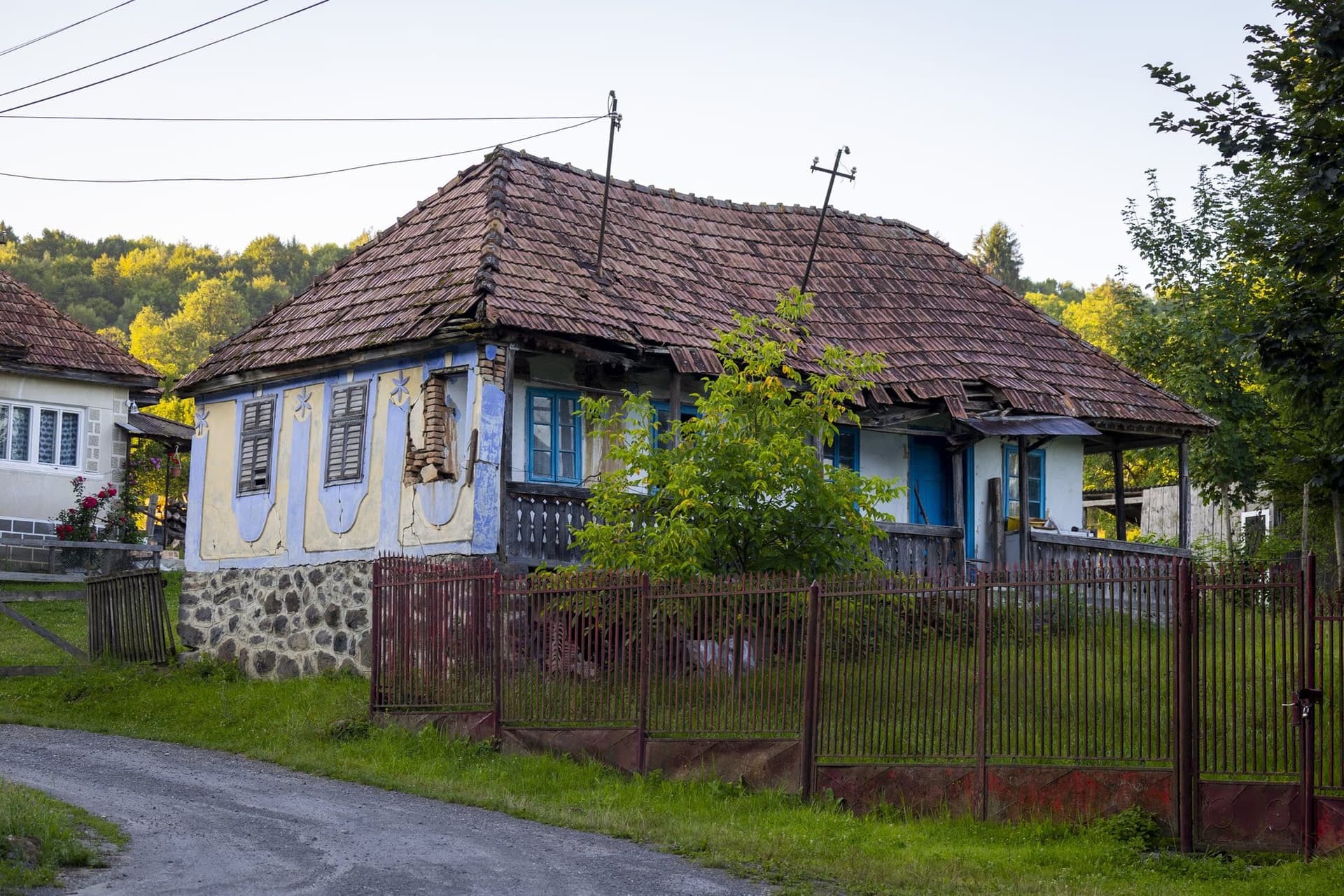
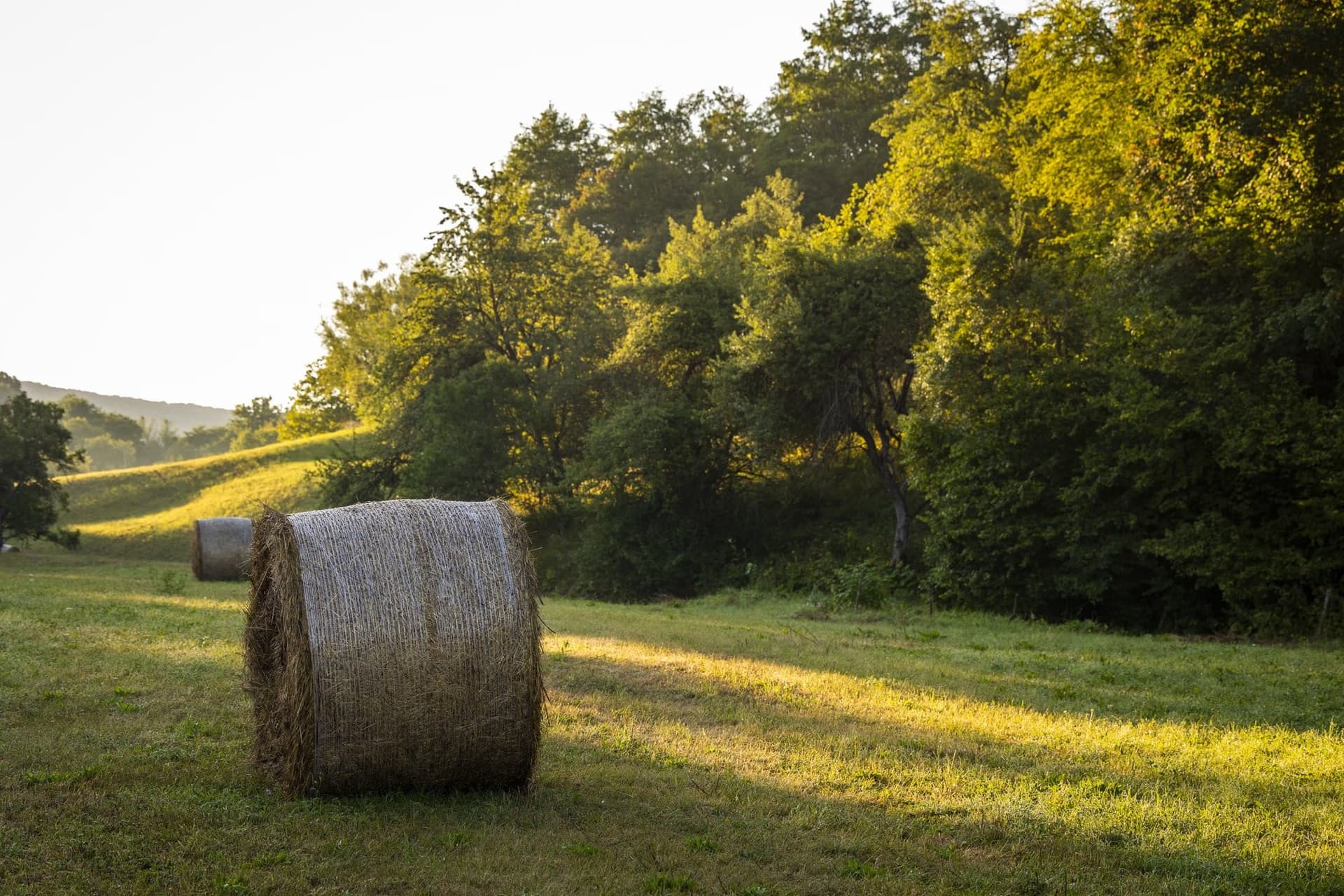
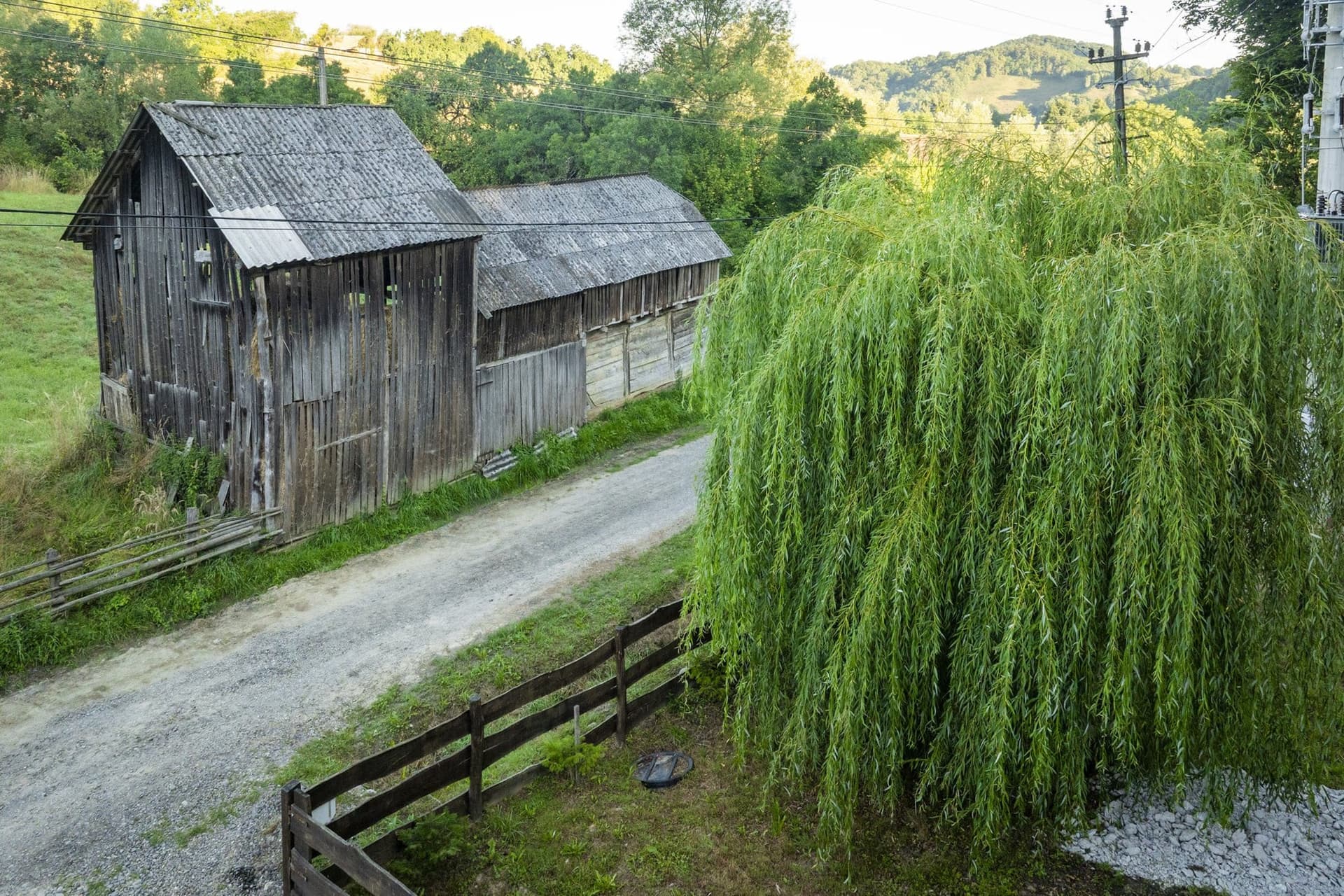
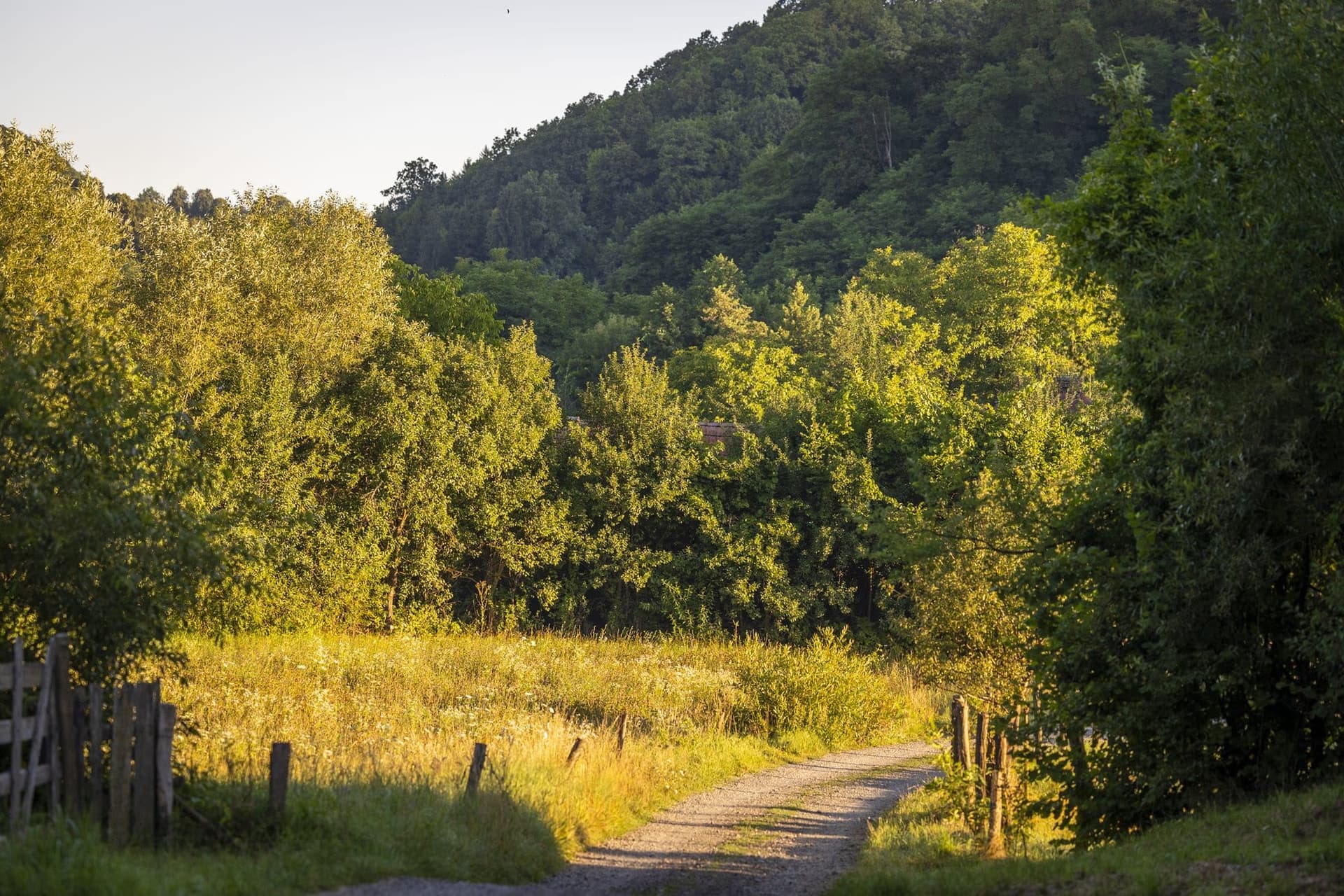
The truth is that somewhere around kilometre seven of being lost, I stopped cursing and started looking. The mountain village was revealing itself for me alone: hay bales set alight by the sunrise, willows bowing over the road, wooden barns blackened by a hundred rains. An hour spent admiring a village that won't be found — and which, for exactly that reason, is worth looking for.
7.00 a.m.: the fire
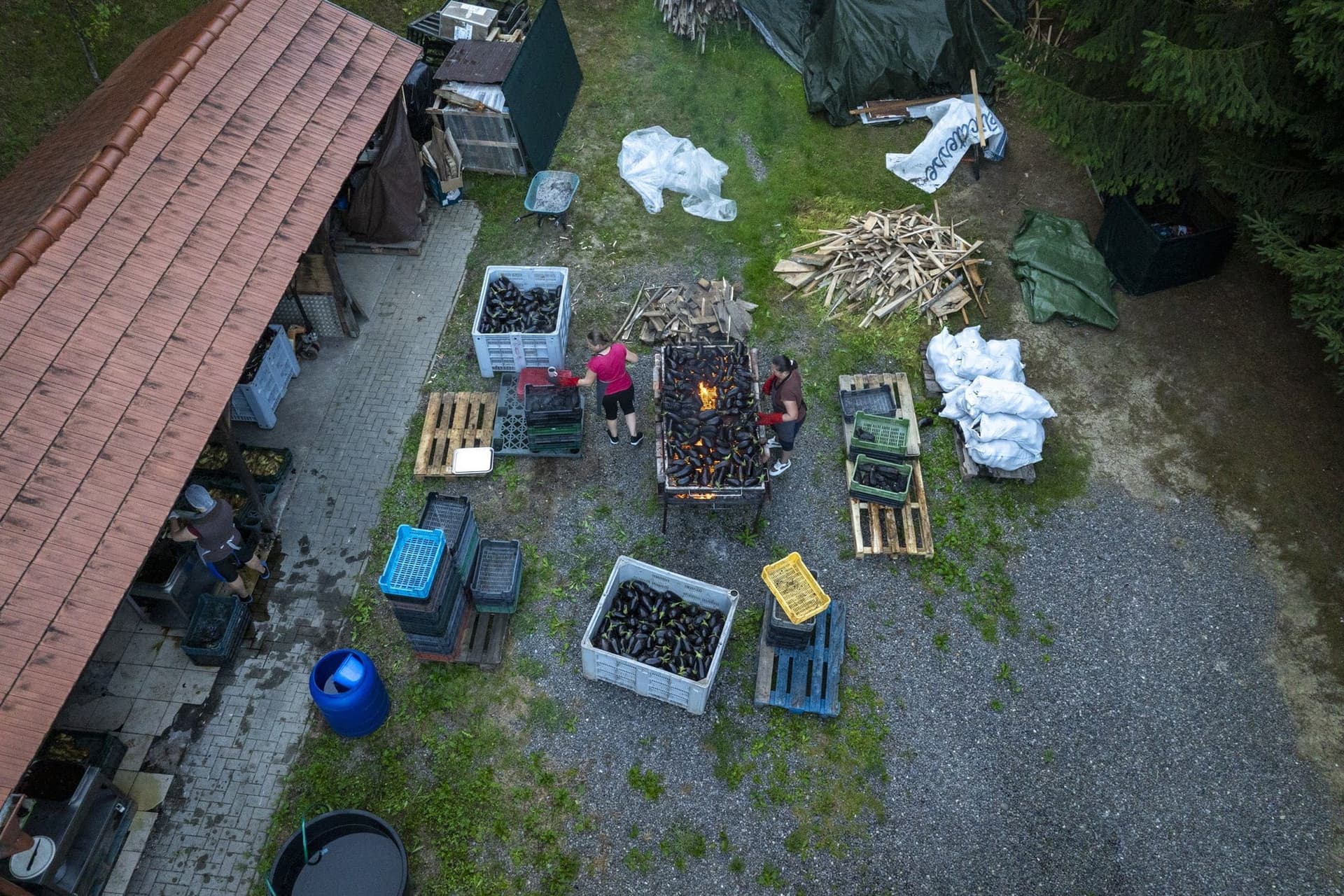
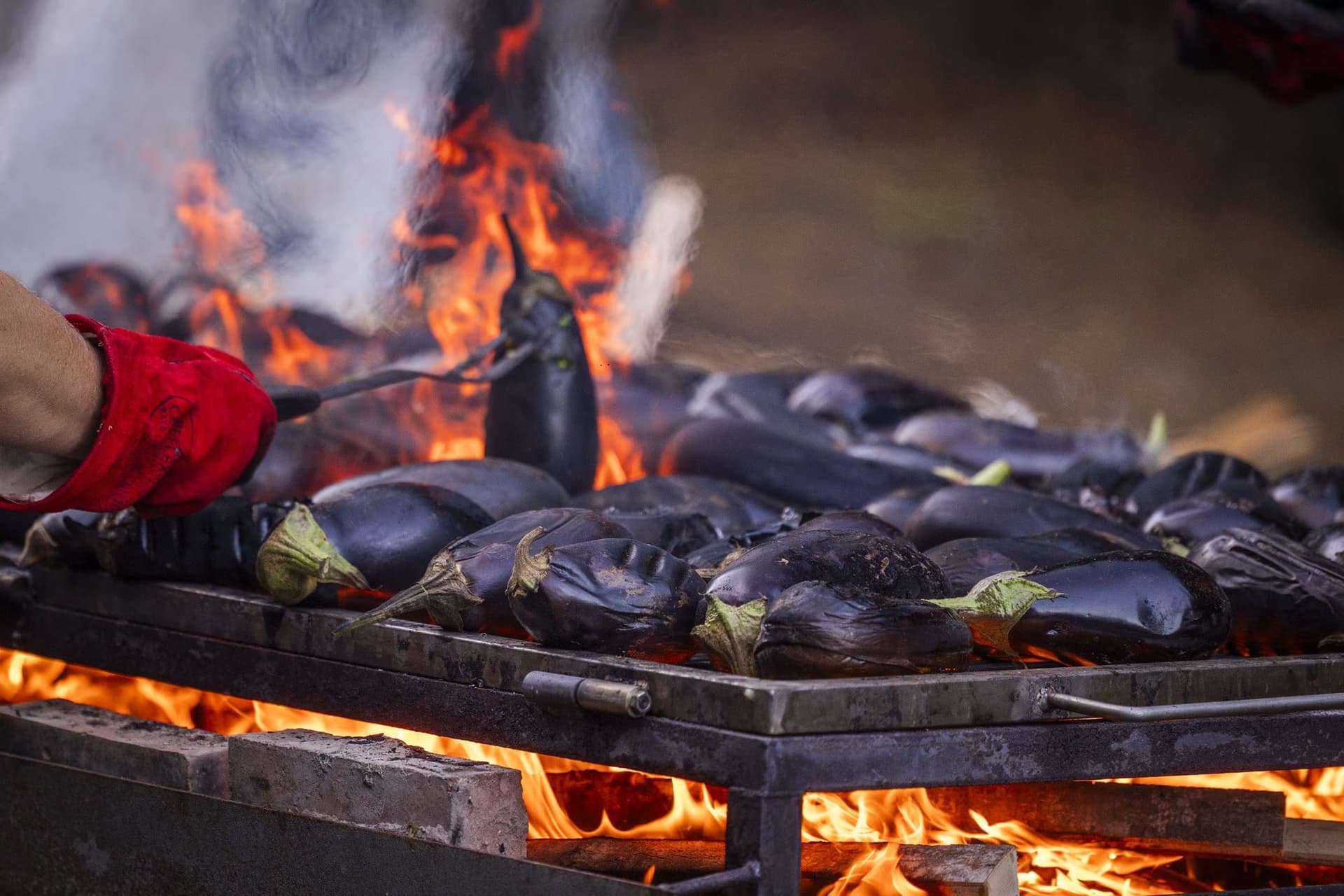
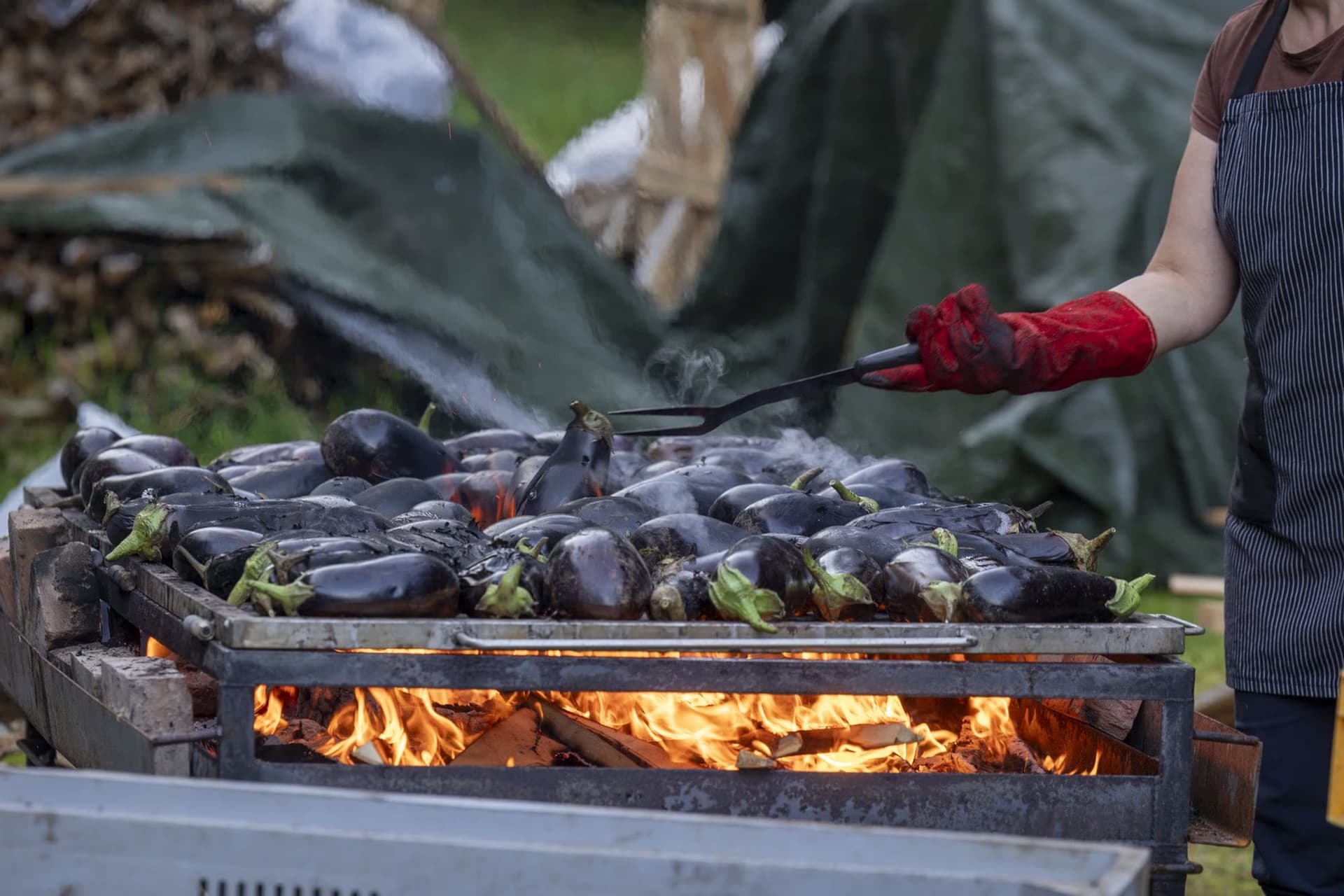
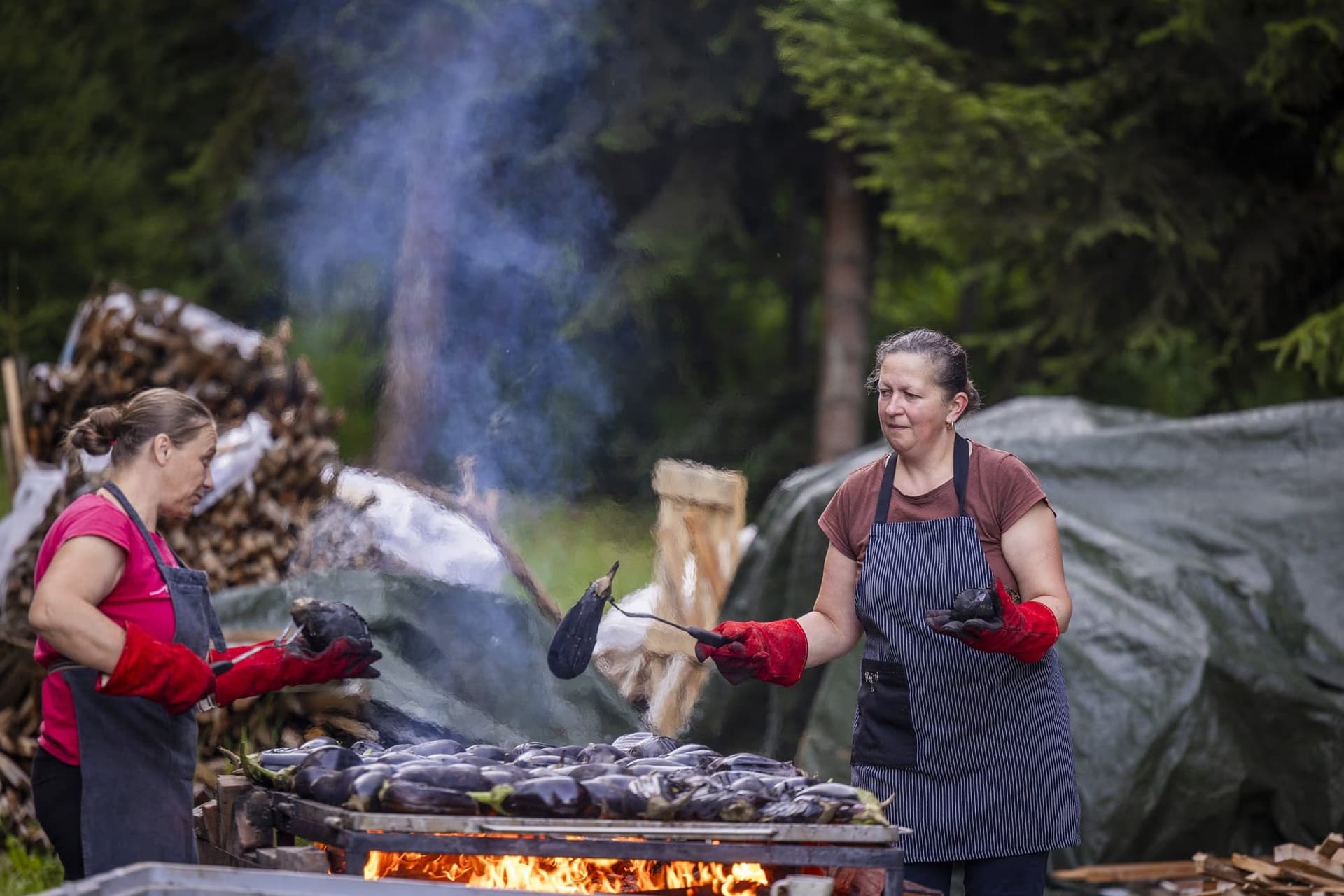
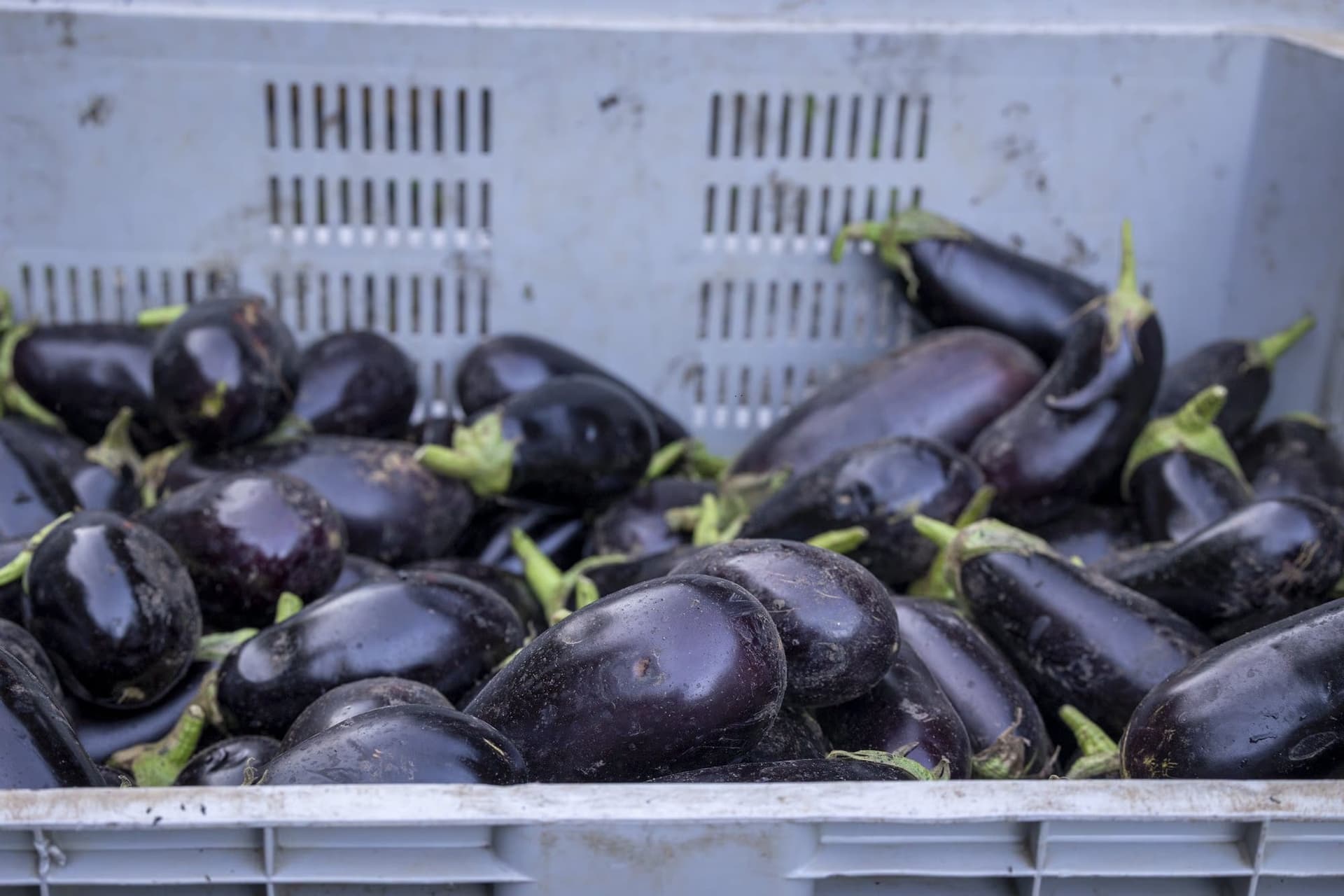
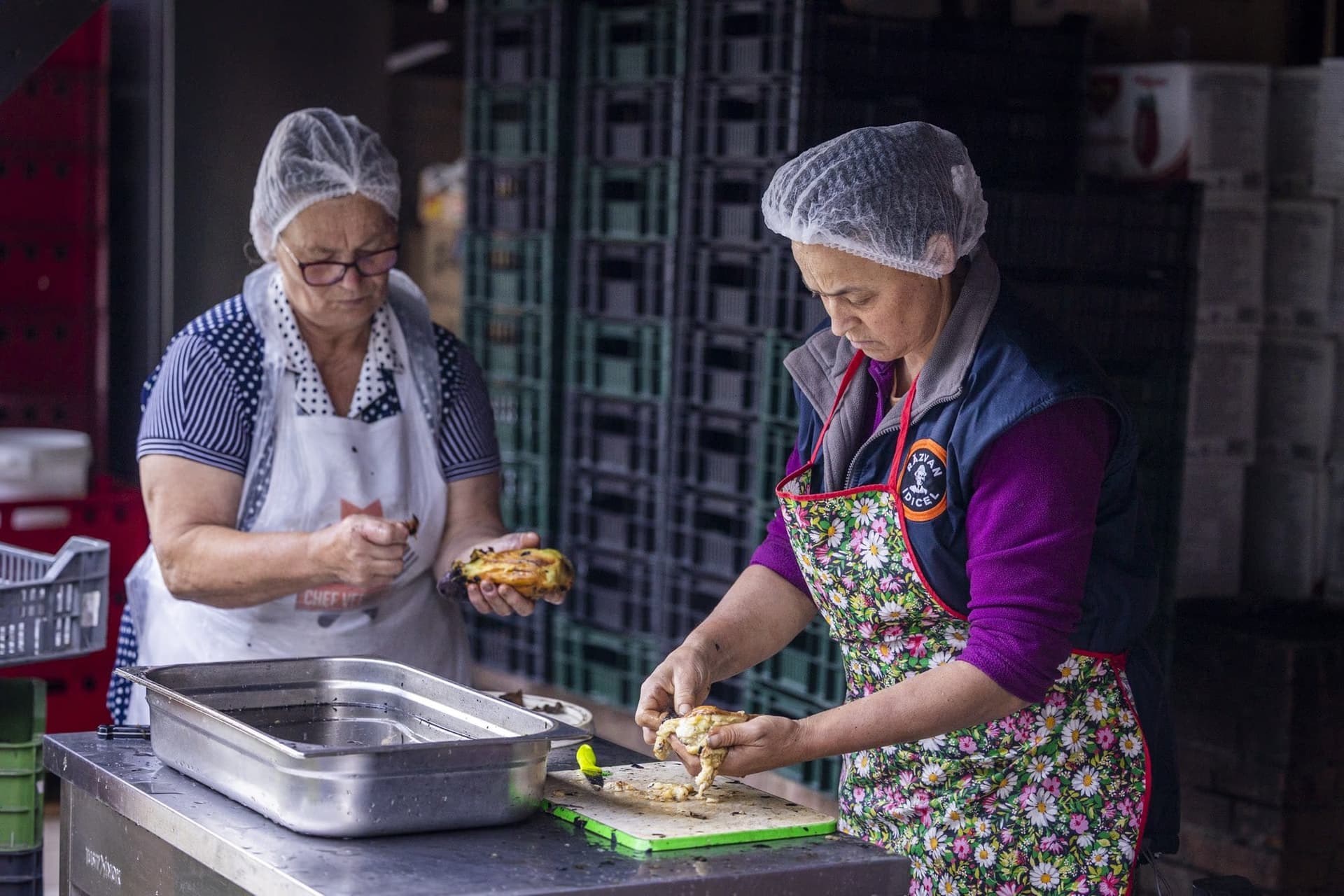
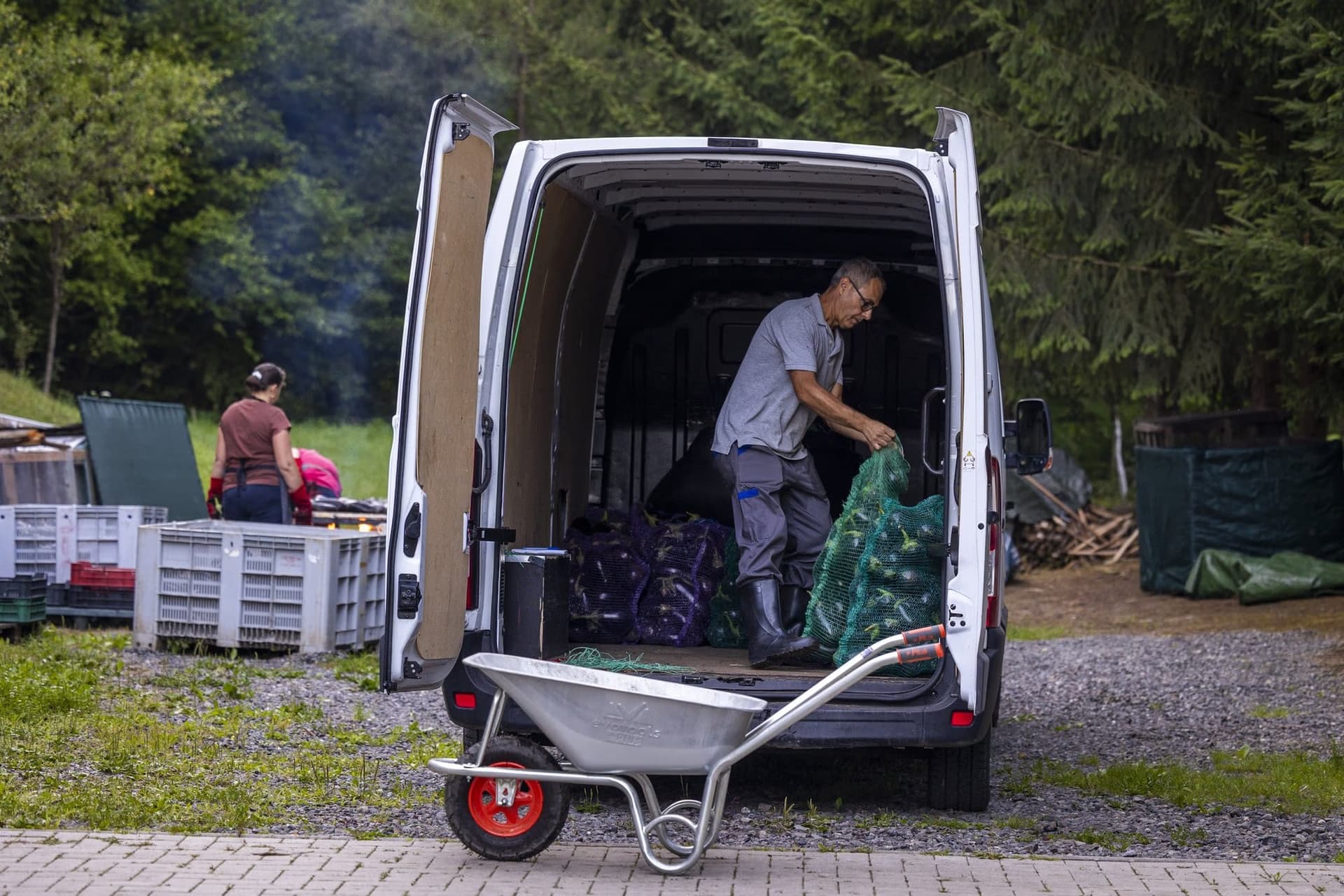
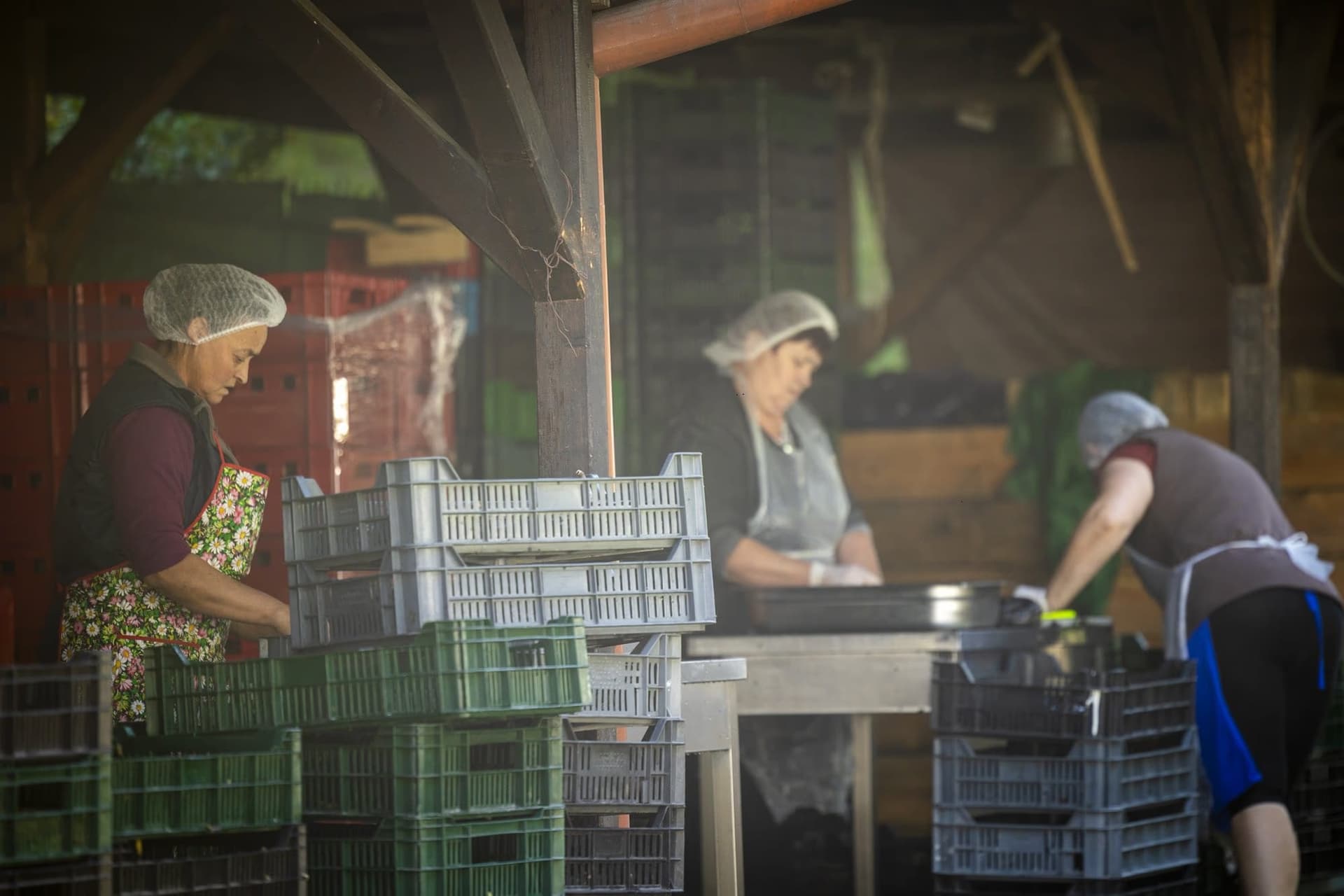
I arrived an hour late. The fire had not waited for me: in the yard of the small white factory with the tricolour flag, Veronica Gavrilaș and four other women had been roasting aubergines since first light. On the long grills, above the wood embers, the aubergines stood lined up as if for roll call, turned with tongs, one by one, by hands in red gloves up to the elbow. Today: 900 kilograms. Yesterday: another 900. Those figures don't register until you see the crates — whole stacks of them, as tall as a man.
Talking with Veronica
Veronica Gavrilaș — the woman who, in 2012, told a student on a work placement the fact that would change his life: that the hills are full of fruit nobody picks — welcomed me like one of the family. We fell into conversation the way you do around here: without hurry.
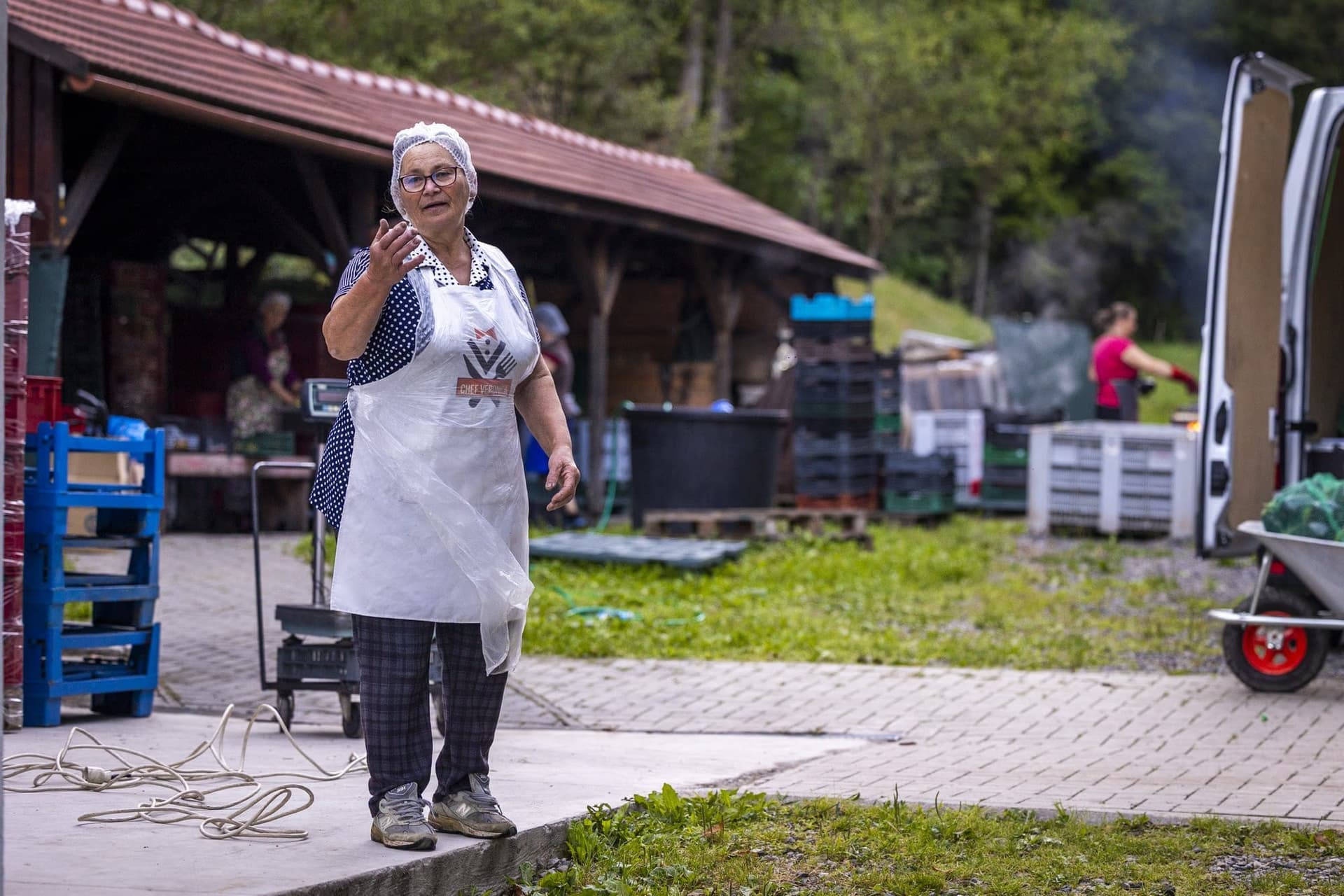
She is from Bicaz, she told me. She grew up there and remembers the dramas of the people displaced when the Bicaz dam was built — the houses that vanished under the water, the people moved along with their whole lives. Here, in the village, people live off their cows, off the milk. Only the contracted price is meagre: one leu thirty, one leu forty per litre. "And it's a lot of work," she says — and the way she says it closes the subject better than any statistic could.
Meanwhile, the yard goes on living: two workmen arrive to mend the gate and the stairs, and Veronica explains exactly what needs doing, with the calm authority of someone who has been running a worksite all her life. Tomorrow, guests arrive from France — the children of the farmers who took Răzvan in 14 years ago, when he went off to learn the science of wine from them. The circle closes: the people who taught him his trade are now sending their children to see what came of it.
9.00 a.m.: the interview
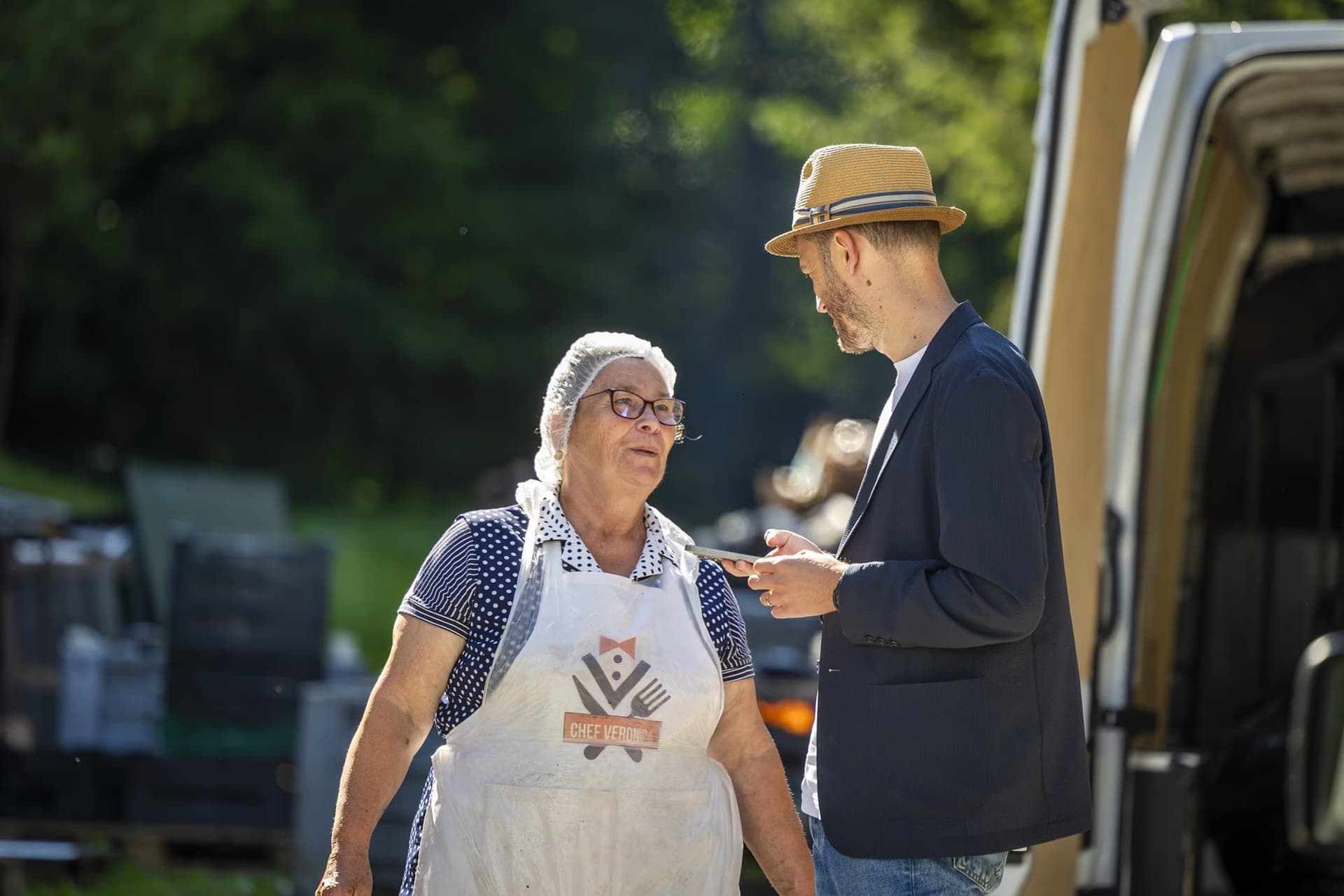
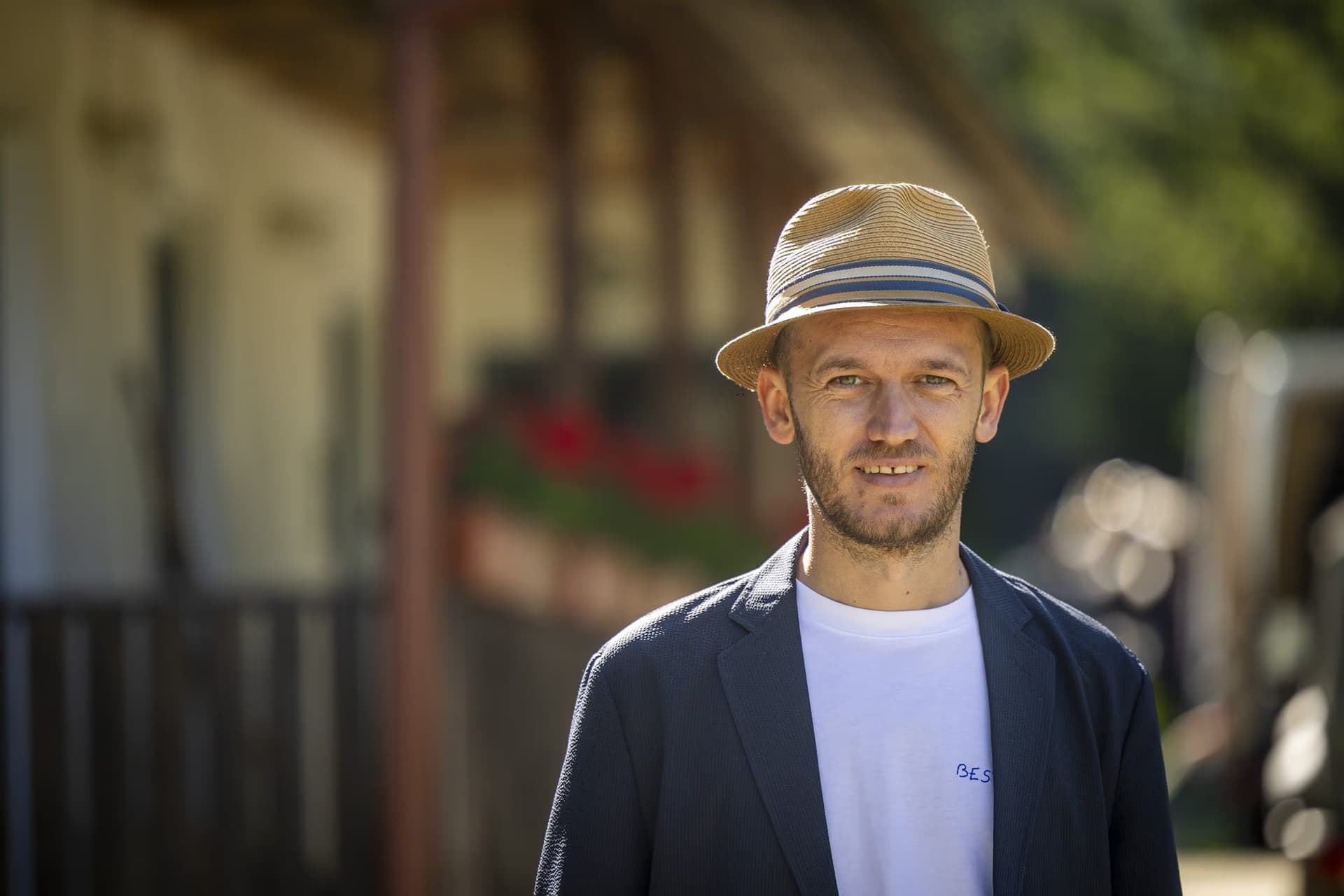
Then came Răzvan — straw hat on, phone in hand, between two orders — and we sat down for the interview I had come for. The conversation was so good it ran twice as long as I had planned: about how you build a national brand out of a village with no signal, about Veronica, about the French, about the million jars. But that is another story — we're publishing it separately, in the „Făcut aici" (Made Here) series.
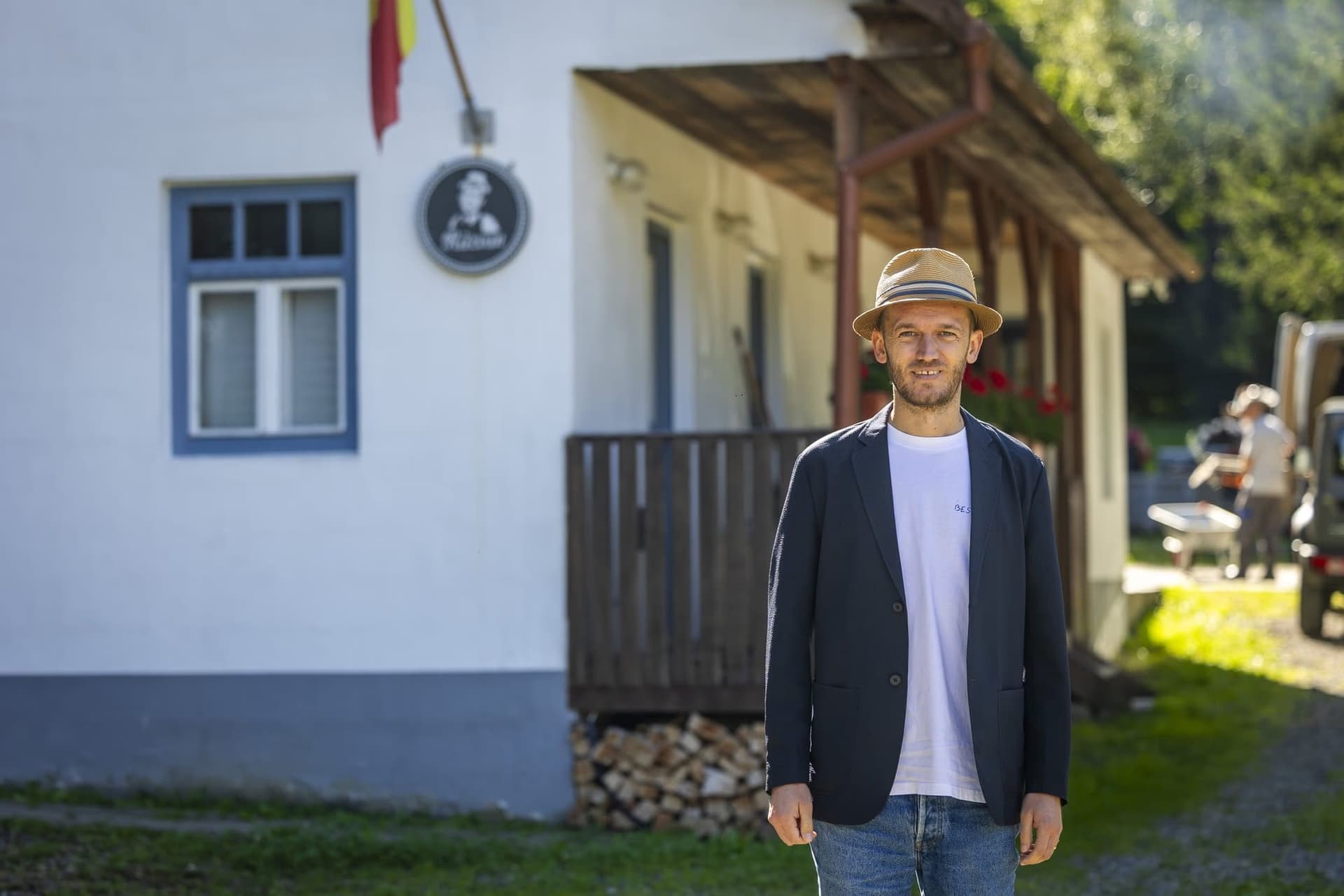
On the way out, the drive back took exactly twenty minutes. I knew which way to go. But honestly? Getting lost was the best part: the villages that won't be found are, almost always, the ones worth the journey.
Reportage from Idicel-Pădure, Brâncovenești commune, Mureș county, 30 July 2026. The interview with Răzvan Rusu will run as a separate piece in the „Făcut aici" (Made Here) series.