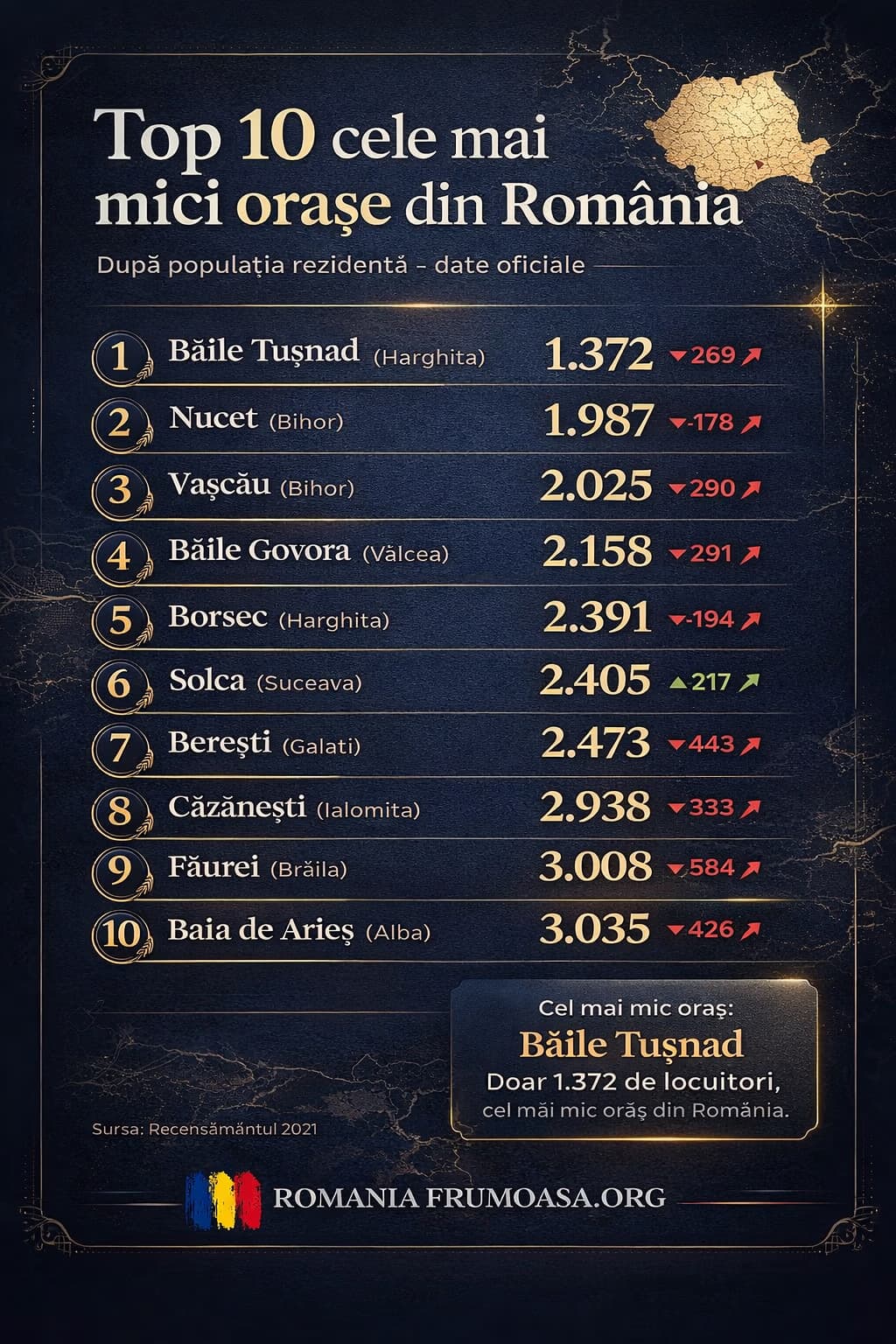
The ranking below includes both towns (orașe) and municipalities (municipii), but no municipality makes the top 10. The National Institute of Statistics has separately noted that the smallest municipality is Orșova, with 8,506 inhabitants — well above the figures in this ranking.
Romania's 10 smallest towns by resident population (2021 Census)
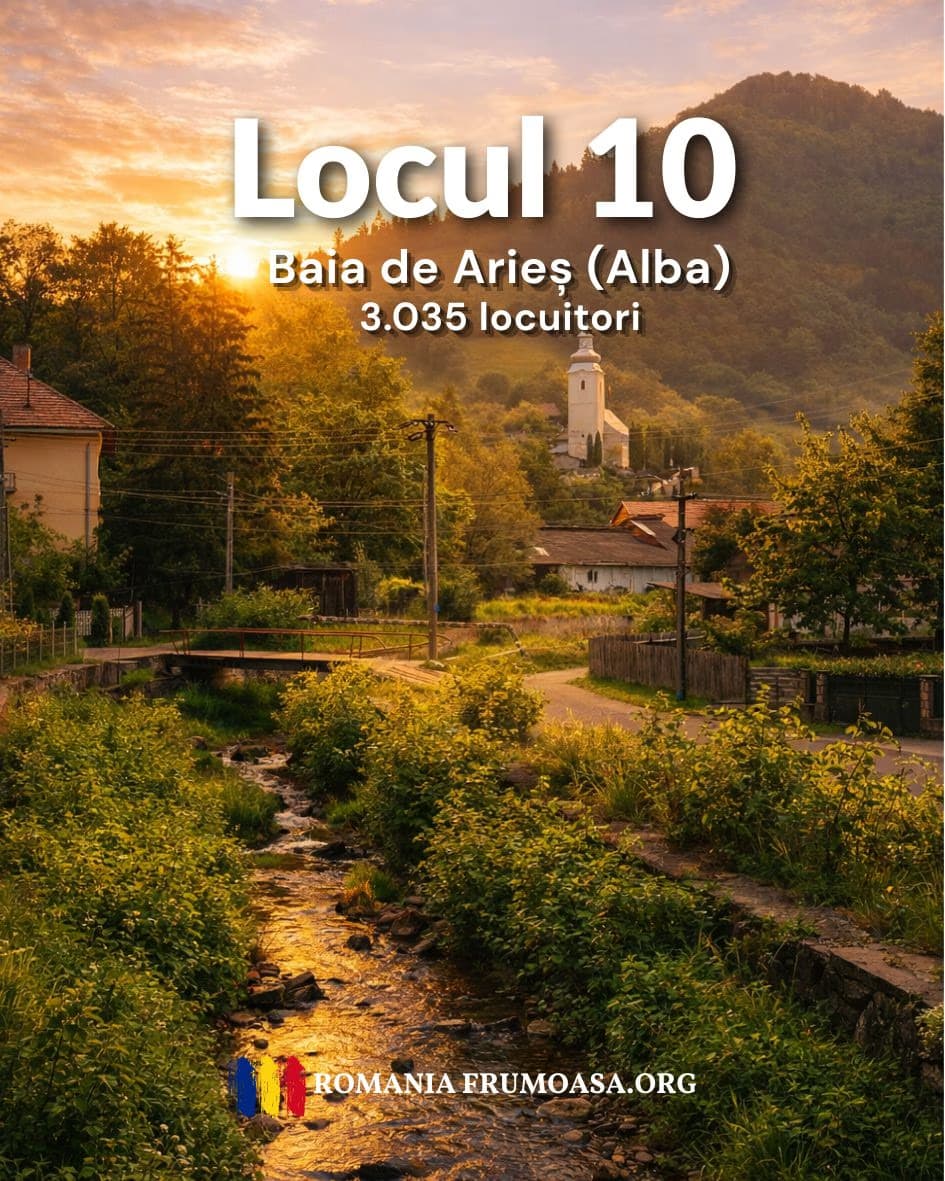
Romania still has a number of localities with urban status whose populations have fallen to very low levels. According to Table 1.22 of the final 2021 Census results, the country's 10 smallest urban localities are: Băile Tușnad – 1,372 inhabitants, Nucet – 1,987, Vașcău – 2,025, Băile Govora – 2,158, Borsec – 2,391, Solca – 2,405, Berești – 2,473, Căzănești – 2,938, Făurei – 3,008 and Baia de Arieș – 3,035.
 1 / 10
How they have changed over the past decade (2011–2021)
Compared with the official figures from the 2011 Census, these localities have, almost without exception, followed a downward trend. Băile Tușnad dropped from 1,641 to 1,372 inhabitants, Nucet from 2,165 to 1,987, Vașcău from 2,315 to 2,025, Băile Govora from 2,449 to 2,158, and Borsec from 2,585 to 2,391.
In the second half of the ranking, Solca is the one clear exception: it grew from 2,188 to 2,405 inhabitants. By contrast, Berești fell from 2,916 to 2,473, Căzănești from 3,271 to 2,938, Făurei from 3,592 to 3,008, and Baia de Arieș from 3,461 to 3,035. In other words, 9 of Romania's 10 smallest towns lost population over the last intercensal decade, and only one grew.
Top 10 + change between 2011 and 2021
The overall picture is fairly clear: in Romania, the smallest towns are, for the most part, towns under demographic pressure. Some have dropped below thresholds that bring them closer to small rural communes than to classic urban settlements, and between 2011 and 2021 nearly all of them continued to lose inhabitants. Solca is the notable exception in this ranking, while Băile Tușnad remains, according to official census data, the smallest town in Romania.