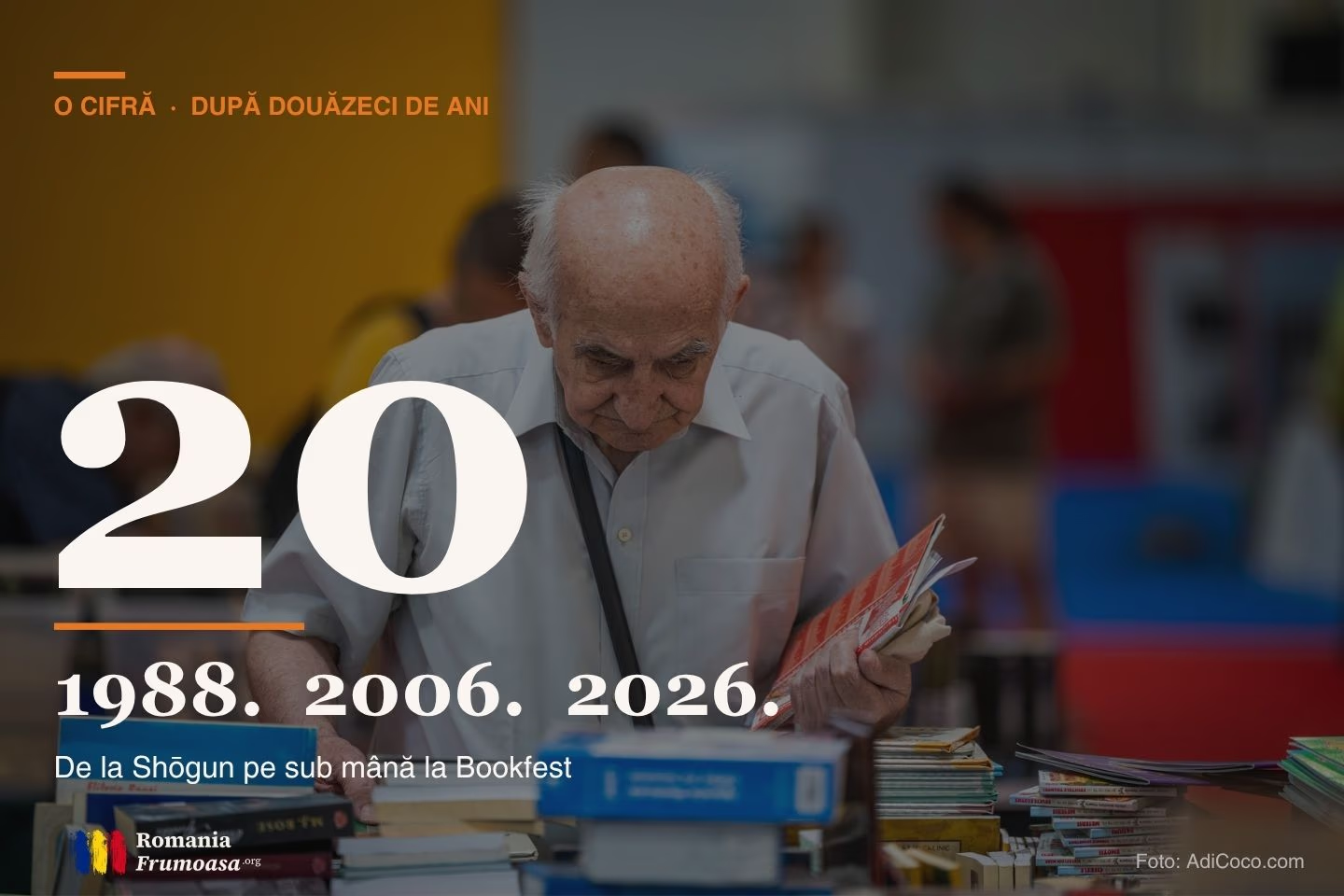
"Twenty Years After" — the sequel to The Three Musketeers — is one of the novels that marked my childhood. Nearly impossible to find in bookshops, like almost every good book back then, you might catch it in a public library if you were lucky. Twenty years into Bookfest, Bucharest has a place where admission is free, one hundred and fifty-eight exhibitors set up their stalls, and conversations about books happen standing up, beside shelves packed with titles. A scene that before '89 wasn't even a fantasy.
A particular silence
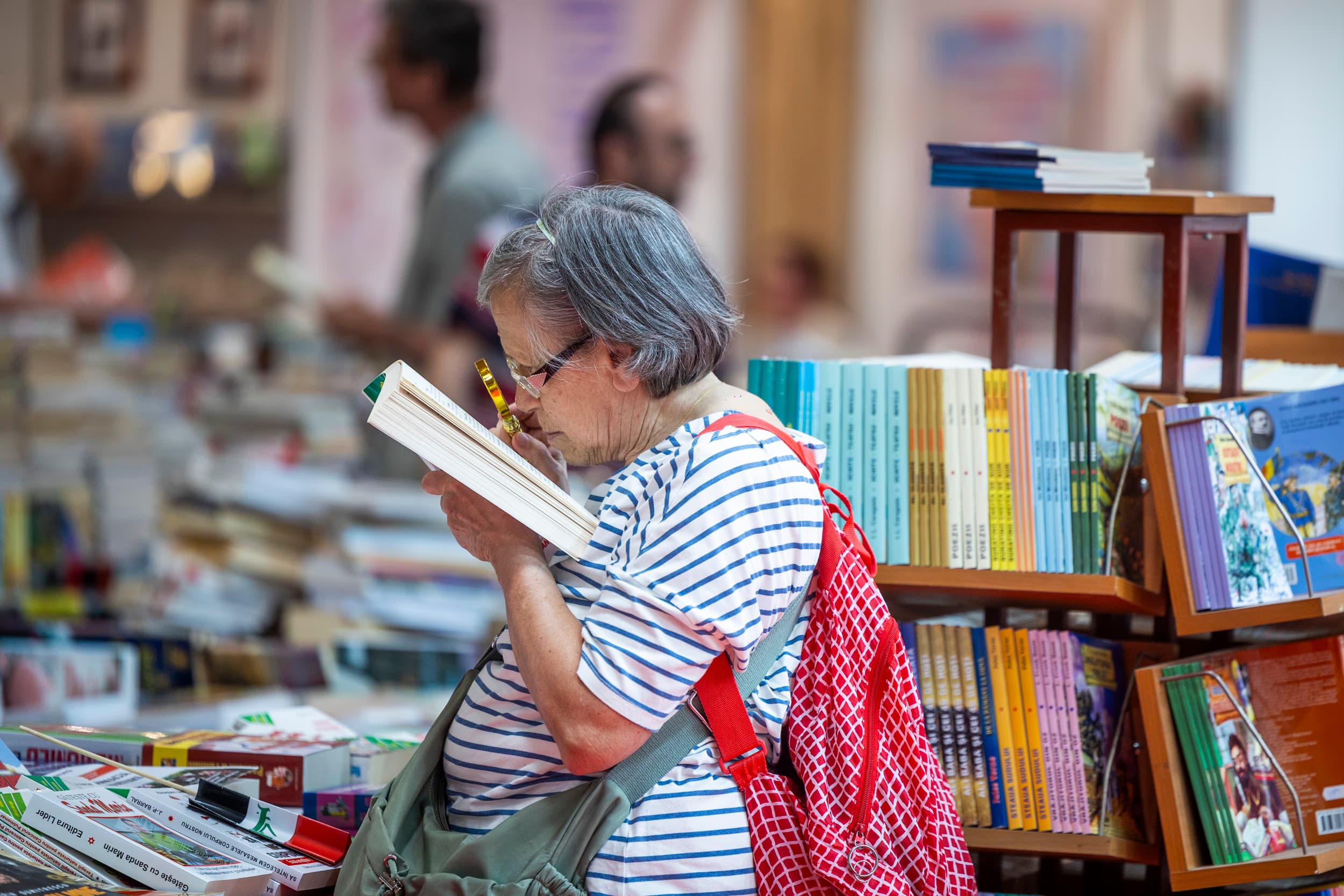
In Pavilion B2 of Romexpo, last Wednesday afternoon, I walked into the noise typical of any fair — hurried footsteps, background music drifting from a distant stand, voices calling out to each other. And yet, five steps from any entrance, something else began. A focused silence. Heads bowing over a cover. The way a seventy-year-old man leafed through a history volume, holding it close to his face, indifferent to whoever passed by.
It was the silence of a person alone in a room full of books — except here, thousands of such rooms stood side by side. It was no coincidence. It was what comes naturally when there is no one around you, only covers waiting to be opened.
It is a silence that, in Romania, we learned relatively recently.
Under the counter
Before 1989, books were not available in bookshops. Or, more precisely: the good ones were not.
Print runs were centrally planned, stock vanished from shelves within hours, and bookshops sold, more often than not, whatever nobody had wanted — ideological pamphlets, party-approved novels, technical manuals. Everything else moved under the counter. Good books were goods — just like cheese, meat, or real coffee — and were passedunder the counter. If you knew a shop assistant at a bookshop, you paid a little extra or brought something to trade.
The defining case of the 1980s is"Shōgun"by James Clavell. Editura Univers signed the translation contract in November 1985 and published the novel in 1988, in two volumes, over thirteen hundred pages, in Doina Cerăceanu's translation. The official print run:thirty-five thousand copies— for a country of nearly twenty-three million people. One book for every six hundred and fifty inhabitants.
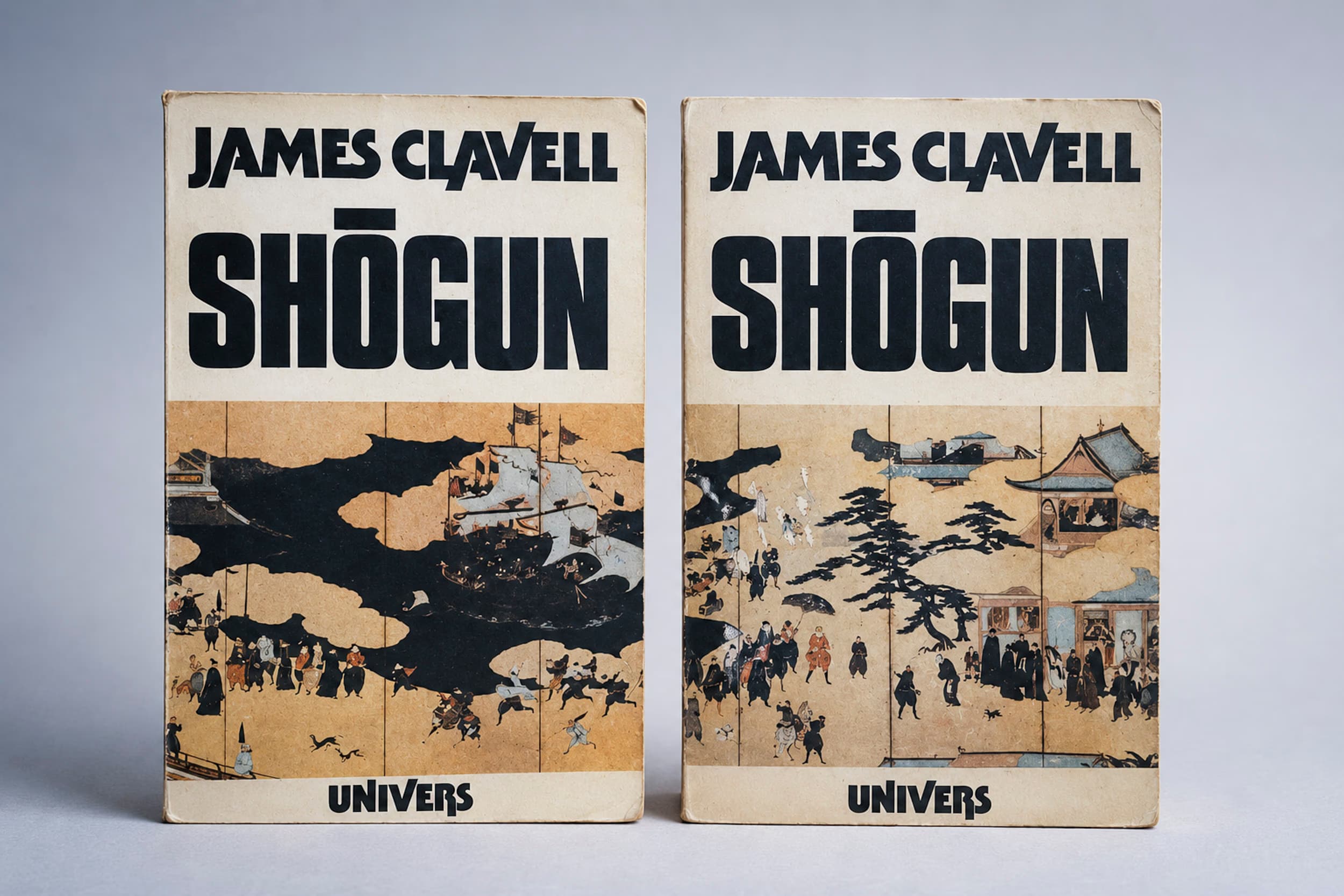
It wasn't enough. Shōgun became aphenomenon— a word that, in 1988, nobody used about books. People lent their copies from one to another, passing through waiting lists of ten to fifteen names. Those who had read it talked in hushed corners, on buses, over coffee, about Toda Mariko —Mariko-san— the samurai woman who dies for a secret. About how the Englishman Blackthorne learns honor in a world that does not speak his language. About a Japan that, in 1600, bore an unsettling resemblance to a country in 1988 — controlled, ritualized, where every gesture was read as a sign.
It was contraband. People queued for it the way they queued for bread, which was also rationed. That was the Romania in which books were made in December '89.
Twenty Years of Bookfest
The free, public fair — with hundreds of exhibitors and thousands of visitors — came late. Post-communist Romania had thirteen years of open bookshops but no coordinated book fair of its own. The Romanian Publishers' Association (Asociația Editorilor din România), founded in 1991, had until then been better known for its stands at Frankfurt and Paris than for any event of its own.
In June 2006, in halls 13–15 of Romexpo, Gabriel Liiceanu — founder of Humanitas — opened the first edition of Bookfest. The idea: Romanian publishers under one roof, with free admission for the public. It felt like an experiment at the time. It took a few more years to become a certainty.
Twenty years later, Liiceanu was still on the Arena Stage. Humanitas was still one of the most crowded stands. The Association is now led by Lidia Bodea — Humanitas's general director — who, in pre-edition communications, spoke of steadily growing numbers and an increasingly young audience.
The young were there, and you could see it. At contemporary fiction stands, next to shelves of young adulttitles, next to newly translated foreign authors. A generation that never had to whisper about Mariko-san on street corners — and doesn't need to. For them, books are ordinary objects in an ordinary world.
It's less romantic. And that's a good thing.

The Numbers
19th edition. June 3–7.One hundred and fifty-eight exhibitors. Four hundred and fifty-five events. Free admission.
Numbers that, read alongside the four hundred copies of Shōgun that weren't enough for a city of three million people, seem to belong to another country. And they do.
Bulgaria, in 2026
The guest of honor at this edition was Bulgaria. Fourteen writers, poets, and children's authors made up the Bulgarian delegation — with over thirty events held both at Romexpo and in other cultural venues across București.
The opening, on Wednesday at six in the evening, was a conversation between Gheorghi Gospodinov — the author of Time Shelter(International Booker Prize, 2023) — and Mircea Cărtărescu. The title of the conversation: "Inner Geographies: Sofia, Bucharest, and the Literature of Memory."Moderator: Mirela Nagâț.
It's the kind of event that, had you seen it listed in a Wigmore Hall programme or at the Cheltenham Literature Festival, you would have felt compelled to mark in your calendar.
This is Bookfest. A small country, publishing hundreds of translated books a year, that brings its own Booker winner and its own voice, sets them face to face, and lets the audience listen.
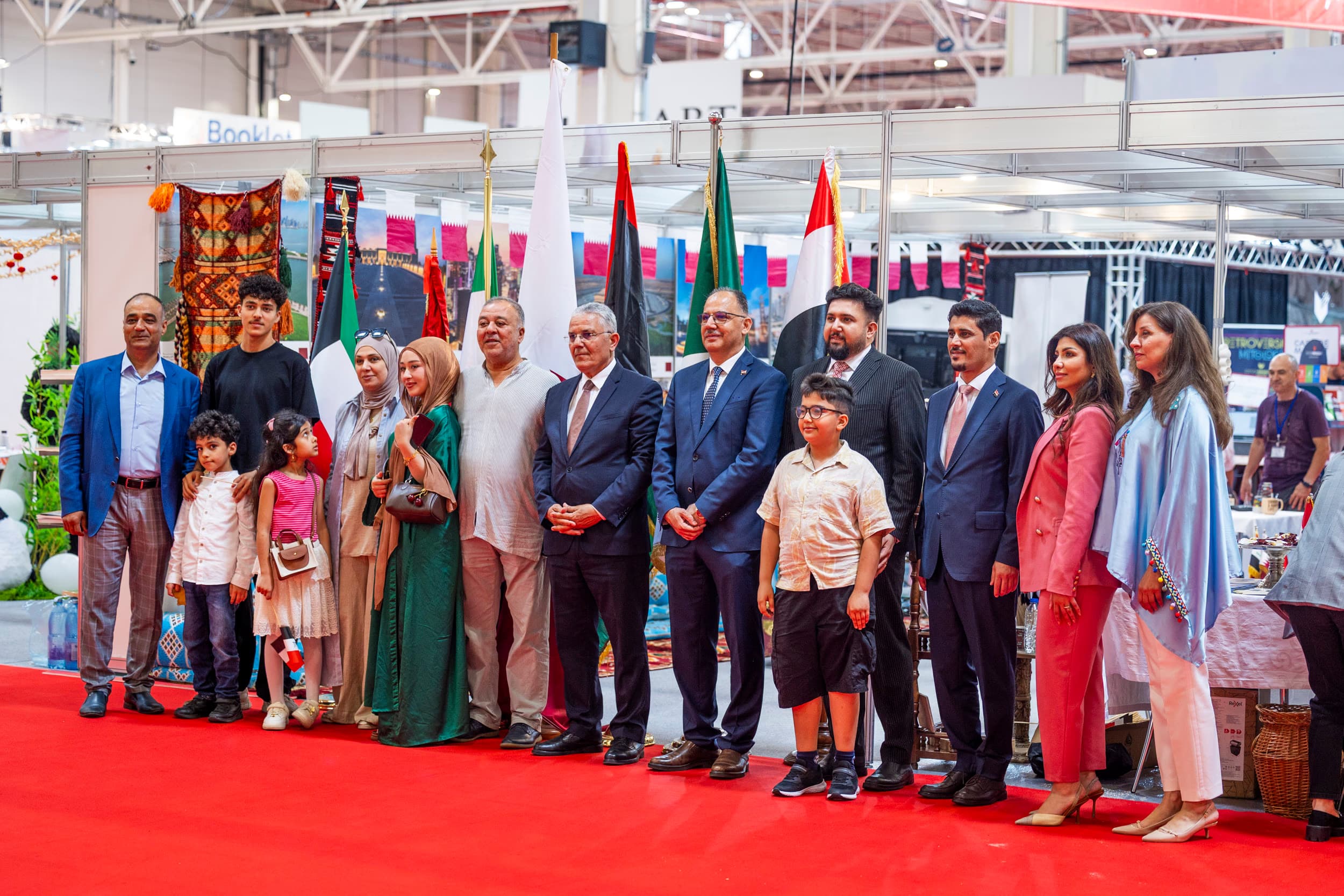
A few faces I carried with me
More than specific people, I remembered the moods.
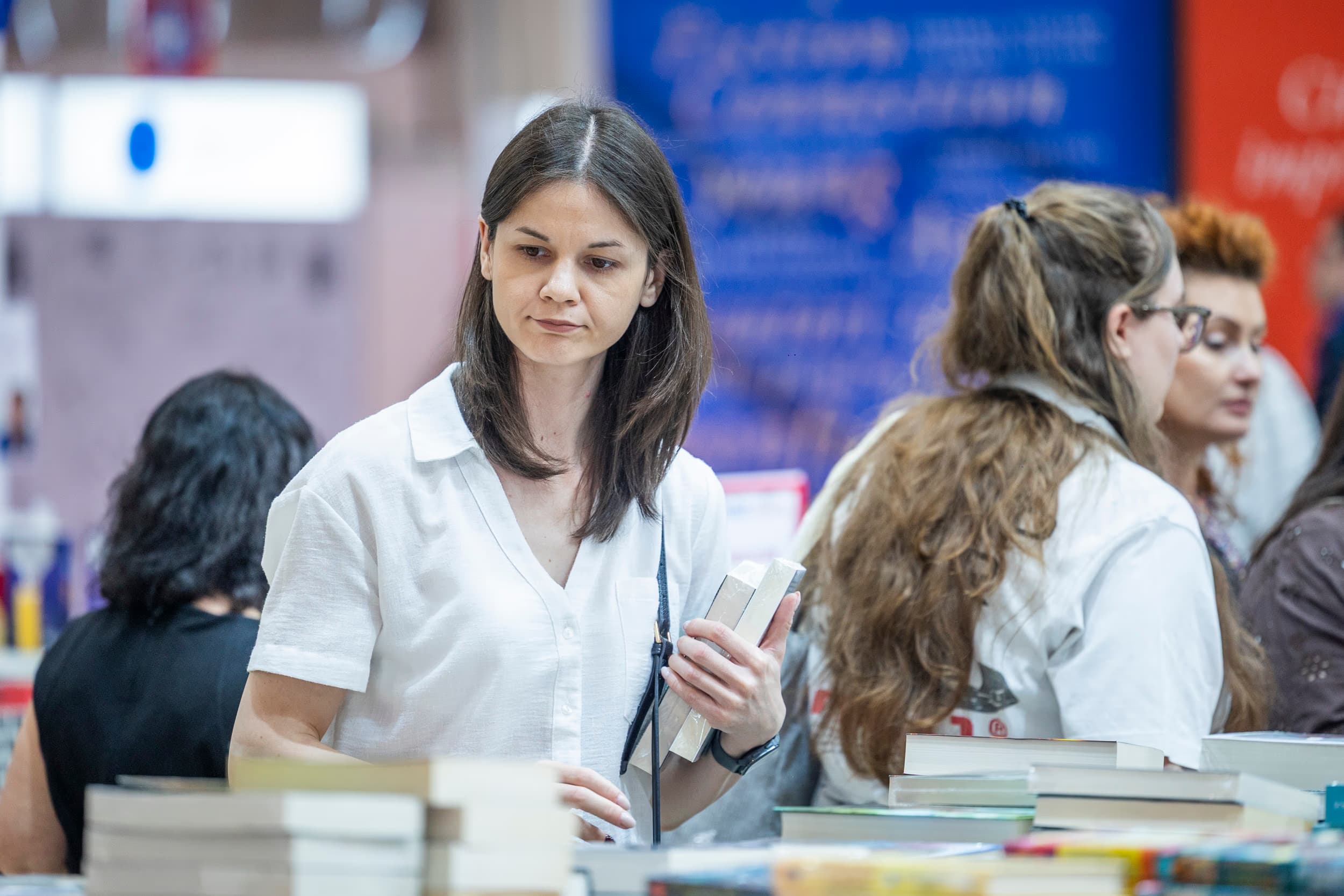
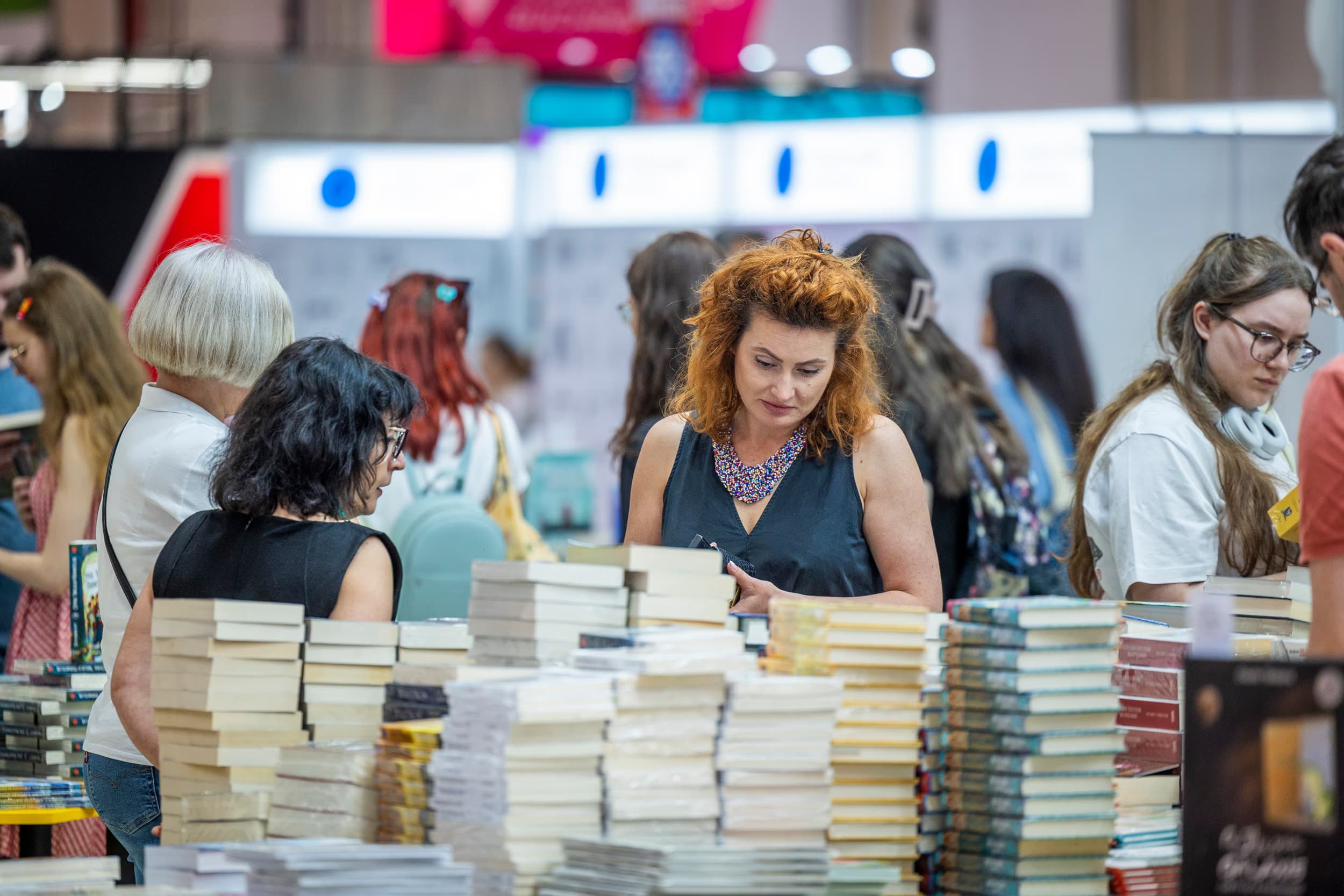
The attentive silence.Of a person who has read their whole life and who, walking into a fair of ten thousand people, finds a book they weren't looking for — but which was there waiting. For ten seconds, no one else exists. They are in no hurry, because there is nowhere they need to be. For ten seconds, they and the author of that book are alone in a room.
The good kind of greed.Someone who found what they were looking for. Two books in the left hand, one in the right, no thought of stopping. There's still time. There's still money. There's still a whole month of reading ahead at home. It's a kind of greed that looks good on a person — because it's the only kind that asks for nothing in return.

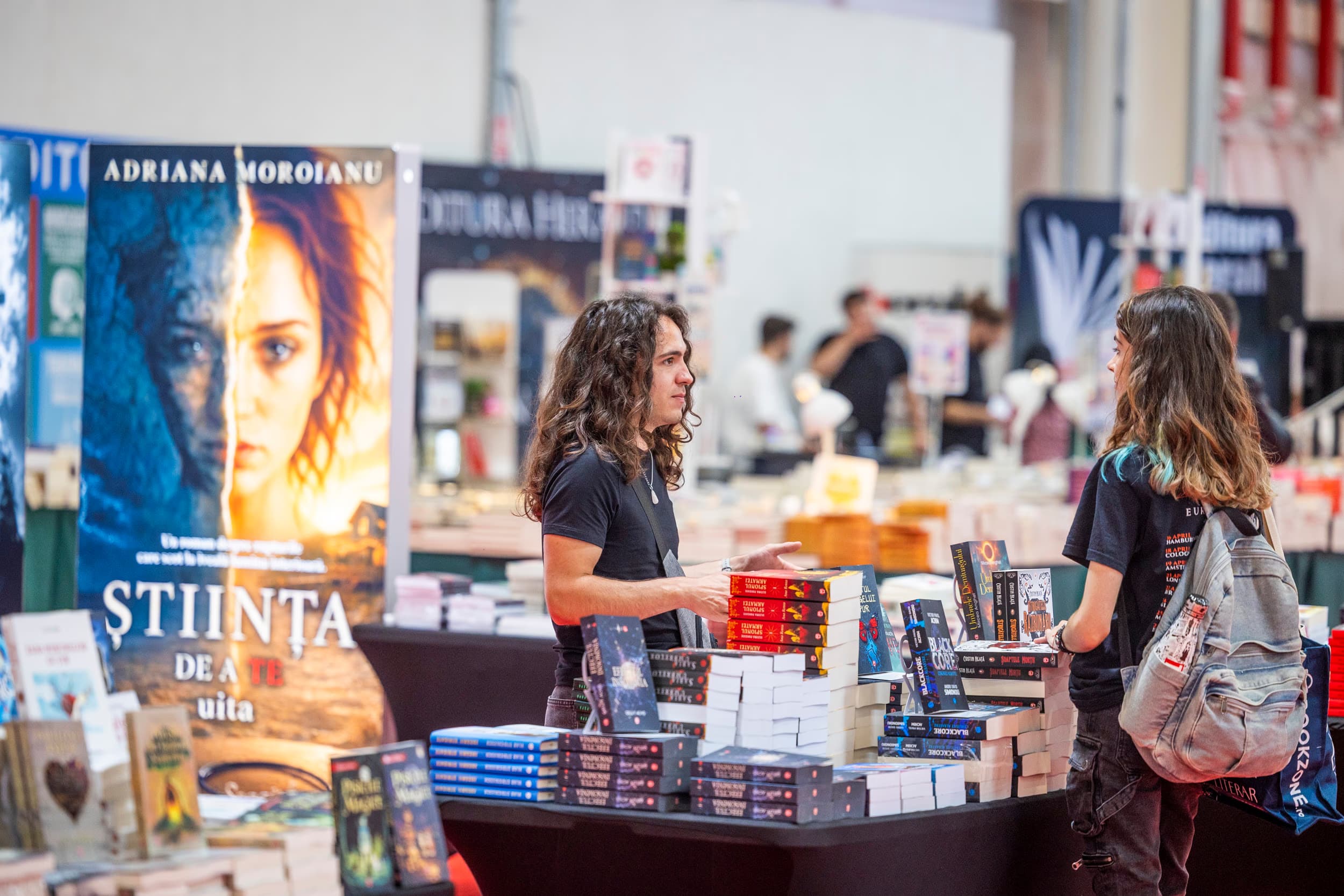
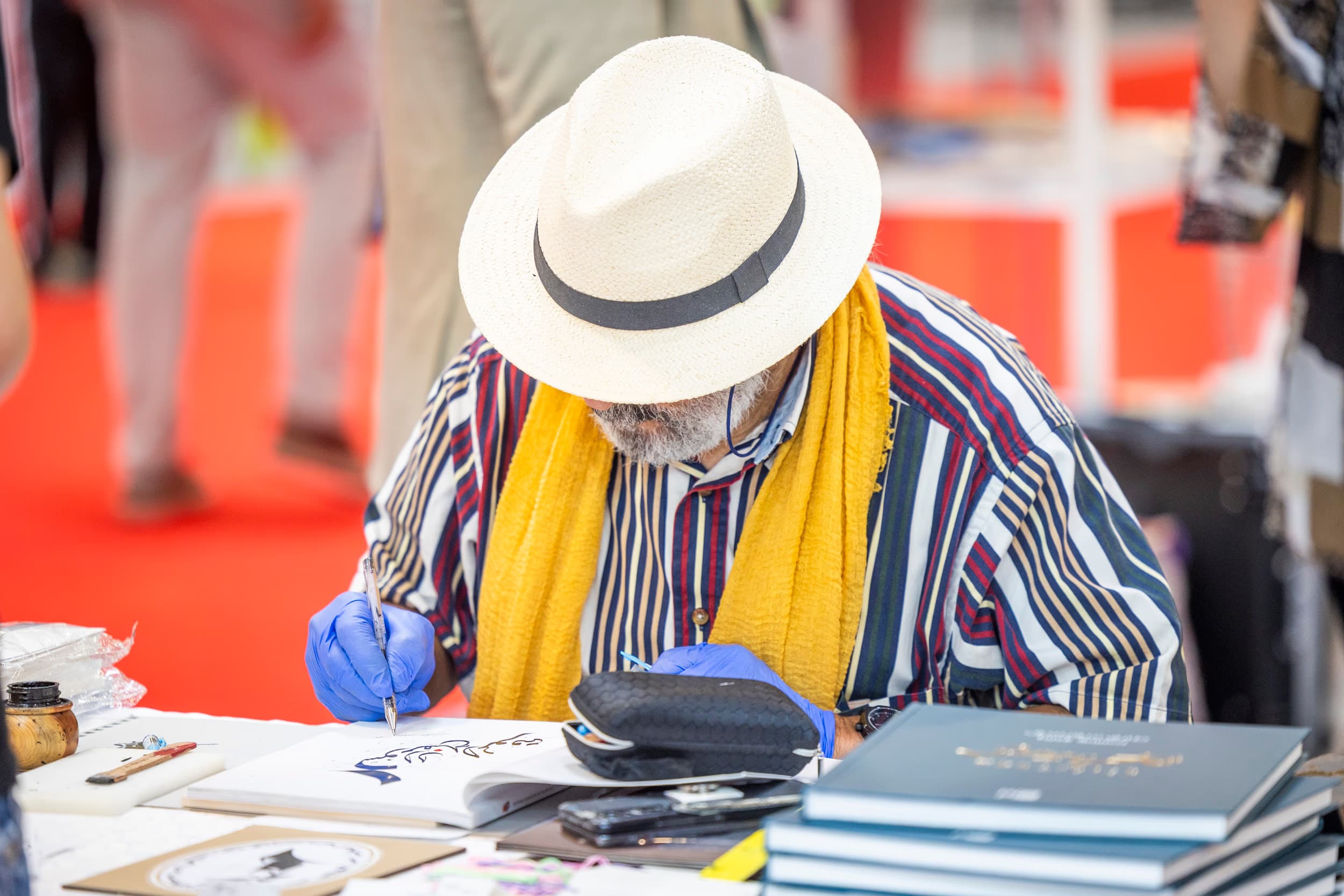
The patience of a craft. Of a person who, in 2026, still signs dedications with black ink and rubber gloves, so as not to leave marks on the next page. Buyers wait in line. Not for an autograph — for the gesture itself. Because in that space, the act of receiving a handwritten page no longer happens often. And because, when it does, it's worth the five minutes.
The focus you never see on the street. A woman who admits she has poor eyesight. Here, beside the shelf, pencil in hand, she holds the book so close to her face it looks like she's kissing it. She doesn't care who walks past. She reads a page. Then another. Then sets it down and picks up a different one.
The concentration with which a person listens to an author. Three minutes at an unscheduled conversation. The poster behind pins down the name. The rest stays with you as a well-turned phrase — one of many that, for the rest of the year, would have been buried in a podcast you never had time to finish.
The courage to read in public. Someone who, standing beside a self-help display, opens a book and reads the first page. They're not embarrassed to be seen. They don't hide from the category label. Bookfest is also one of the few places where nobody judges you by what you find on your shelf.

Twenty years on
It is not an entertainment event. It is not a mall. It is closer to a library thrown open for five days — in a city that, thirty-five years after the fall of communism, now also has a National Library even larger than the Romexpo Pavilion.
It is easy to sum up Bookfest as a week of discounts and book signings. All of that is there. But its real function is more subtle — it is the moment when an audience that spends the rest of the year buying books one at a time enters a space where everyone around them is doing the same thing. Where a ten-year-old sees for the first time that reading has a physical presence — that it is not an app, not a school subject, but hundreds of thousands of printed objects, with living authors signing copies five meters away.
For five days a year, Romexpo becomes again what its name suggests — expo — and what nowhere else in București still is: a place where reading is put on display for its own sake. Without intermediaries. Without algorithms. And without needing to know anyone.
It is a great deal, after twenty years. It is more than seemed possible in 1988, when a twenty-five-year-old man from București, on his way to work, was carrying under his coat a copy of Shōgun that he had to return the next day to a colleague who was waiting for his turn.
 1 / 21
---
Photo essay by Adi Coco · RomâniaFrumoasă · 8 iunie 2026.
Sources:
[Bookfest — Official Website](https://bookfest.ro/)
[Agerpres — Bookfest 2026: 455 Events, 158 Exhibitors](https://agerpres.ro/cultura-media/2026/05/27/salonul-international-de-carte-bookfest---intre-3-si-7-iunie-la-romexpo-455-de-evenimente-propuse-de--1560477)
[Adevărul — Bookfest 2026 Opens at Romexpo. Gospodinov and Cărtărescu Headline the Anniversary Edition](https://adevarul.ro/stil-de-viata/cultura/bookfest-2026-incepe-la-romexpo-gheorghi-2533854.html)
[Antena 3 — Book Fair Programme>(https://www.antena3.ro/actualitate/cultura/bookfest-2026-incepe-cu-un-dialog-intre-mircea-cartarescu-si-gheorghi-gospodinov-programul-targului-de-carte-790576.html)
[Lege5 — ECHR Ruling in the Case of S.C. Editura Orizonturi (Shōgun contract details, 35,000 copies, Editura Univers, 1985)](https://lege5.ro/gratuit/gezdanjwge/hotararea-in-cauza-sc-editura-orizonturi-srl-impotriva-romaniei-cererea-nr-15872-03-din-13052008)
[Ministry of Culture — BOOKFEST International Book Fair](https://www.cultura.ro/salonul-international-de-carte-bookfest/)