In an air-conditioned conference room at Orange Tandem, with 38 to 39 degrees Celsius outside, Chinezu gathers the country's most listened-to podcasters on stage. Four panels unfold, one quote about Michael Jackson, and one uncomfortable certainty: at a 33 percent consumption rate, the industry refuses to call itself an industry.
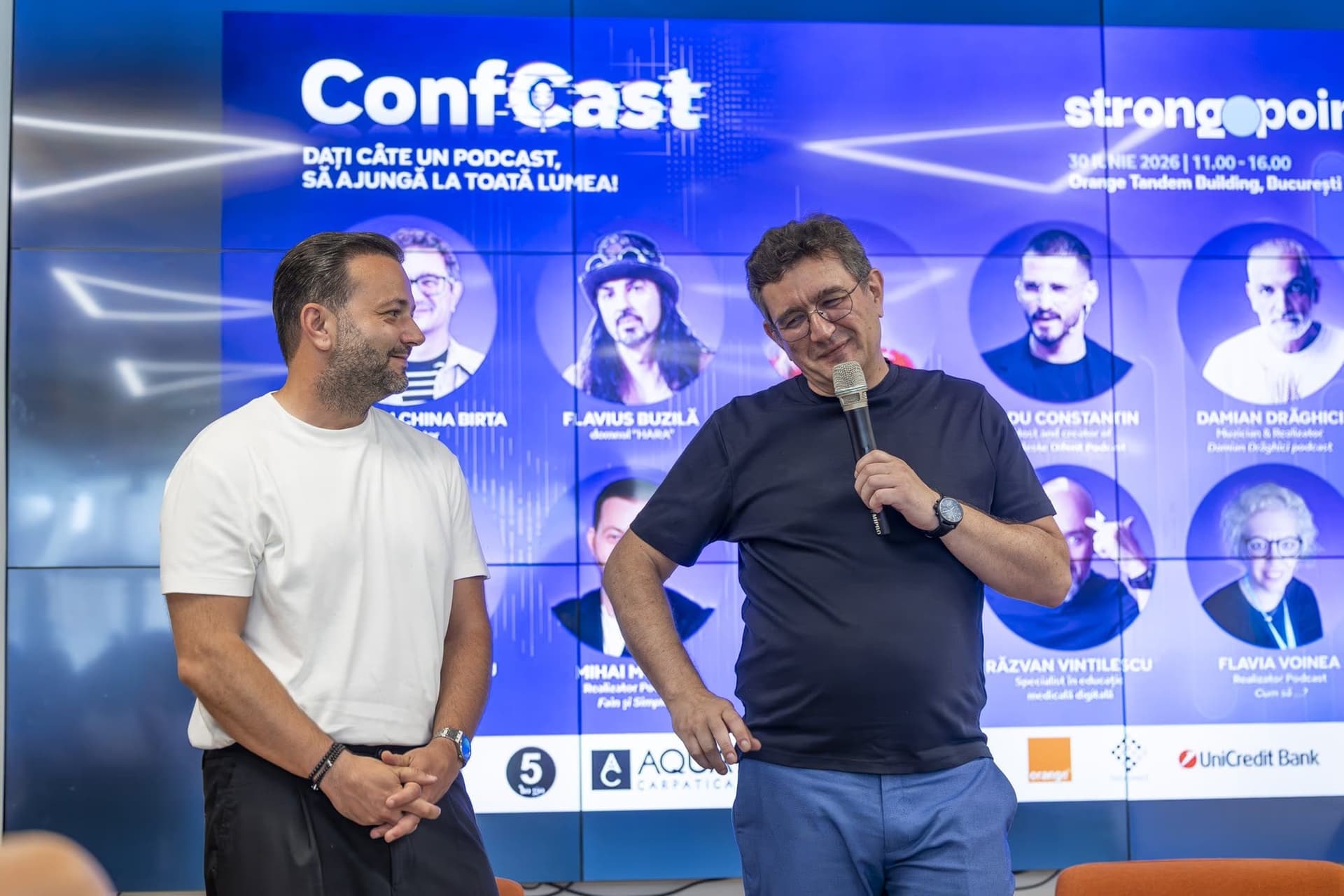
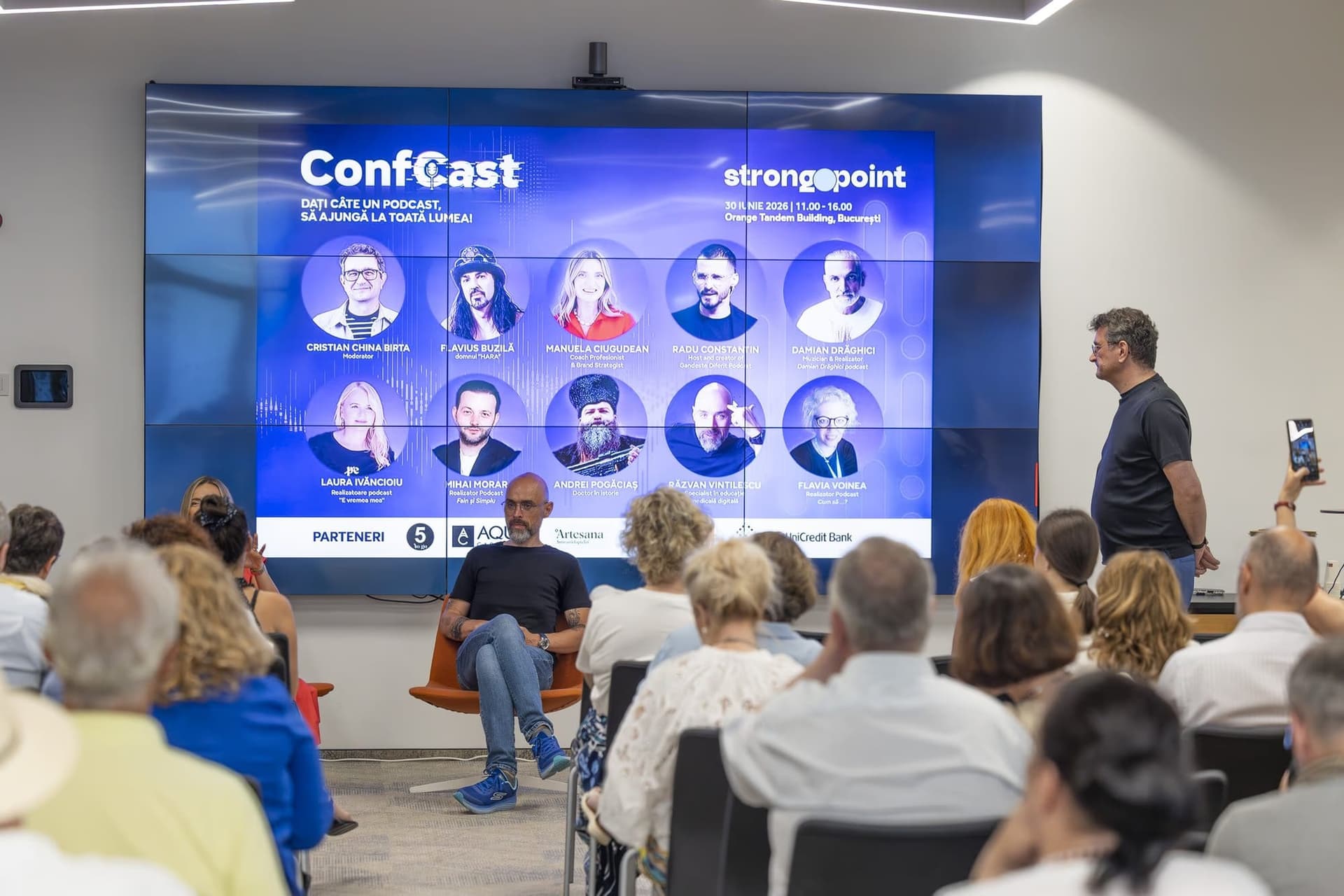
The room next to the Palace of Telephones smells like fresh coffee. Outside, it's one of the hottest days of June, and in front, empty chairs await nine of Romania's most successful podcasters. The host, Cristian China Birta — known for nearly two decades under the nickname "Chinezu" (the Chinese) — is the first to walk onto the stage (which wasn't really a stage), and in three sentences delivers the entire editorial brief of the day.
"I asked ChatGPT who I should invite to a podcasting conference," he says. "It said: Mihai Morar." The audience laughs. Chinezu looks directly at Morar, who is placed, intentionally or not, on the second row of the poster. "But I don't like Mihai Morar," Chinezu continues. "It's just that, if you're running a podcasting conference, there's no way around it."
This is the ConfCast rule, 2026 edition: a moderator who behaves like a stand-up comedian, a panel that refuses the standard "interview-question-answer" format, and stakes far more serious than they appear. At 33% penetration of the population and 58 minutes consumed daily — figures higher than the global average of 22% (Digital 2025 Global Overview Report) — the Romanian podcast market is the second most intensive in Europe. But unlike the markets ranked above or below it, it is completely disorganized. No professional association. No code of ethics. No unanimous definition of what "podcast" means.
The next panel will attempt to give that definition. It will fail, but with great elegance.
The podcast that has no "blue button"
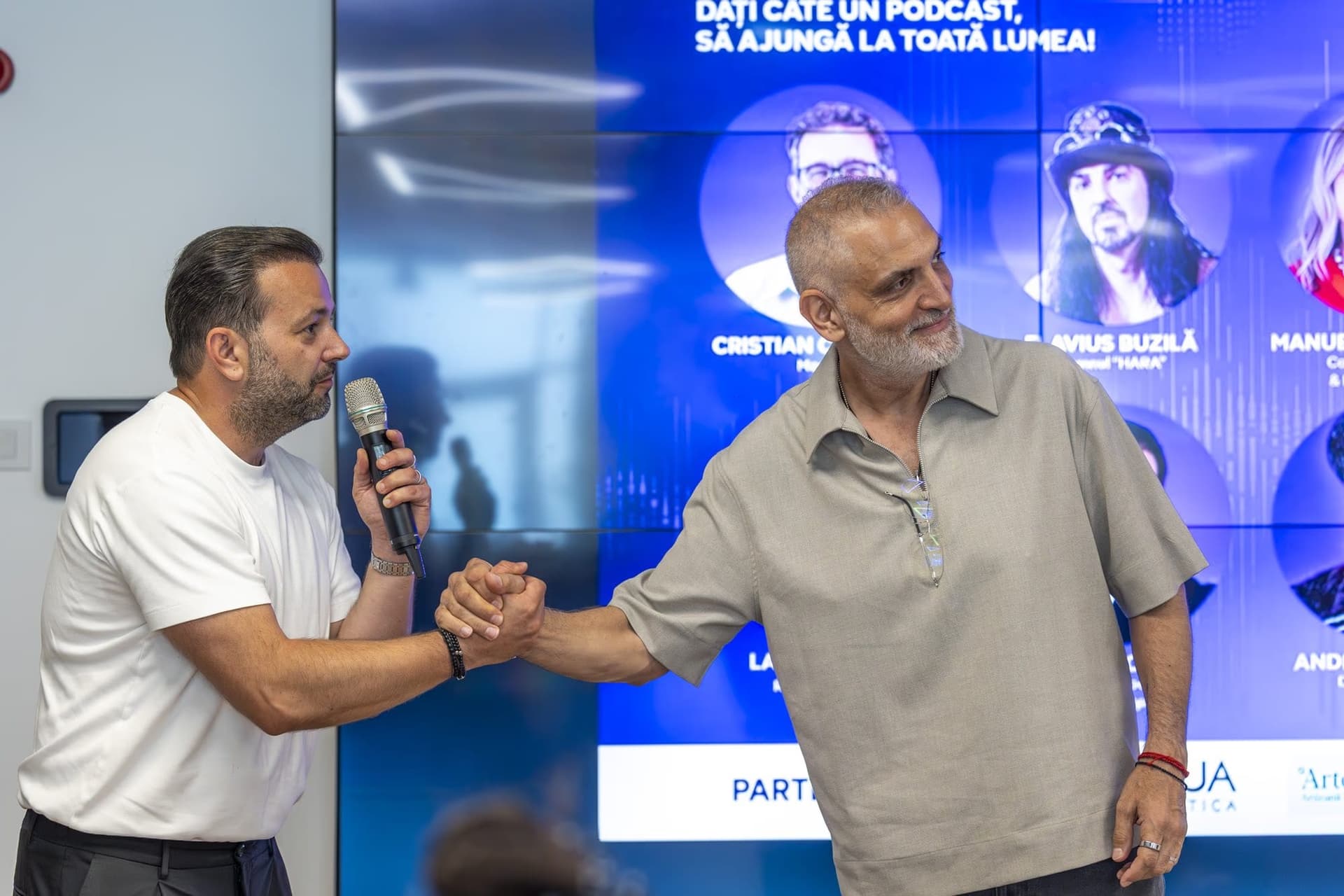
Mihai Morar arrives at ConfCast straight from an RV. "Radio Aventura, 130 hours of live broadcast in 14 days, under the open sky," he says. The mathematics baccalaureate exam had been postponed that very morning — a detail he uses as a half-serious opening: "A podcast conference was important enough that you had to hold it, even on a day like this." Except, he adds, it's "especially with Mihai Morar on the second row." The room laughs.
His opening is a tour of the past two weeks. In Iași, he had parked the Radio Zu RV at the entrance to Copou Park and a small boy recognized him: "Radio Zu is Michael Jackson." In Bacău, a lady had given him "a smooch" on the neck at the end of a photo session. "It's a sign of love," he says. "Love should have limits, but if even this isn't fame..."
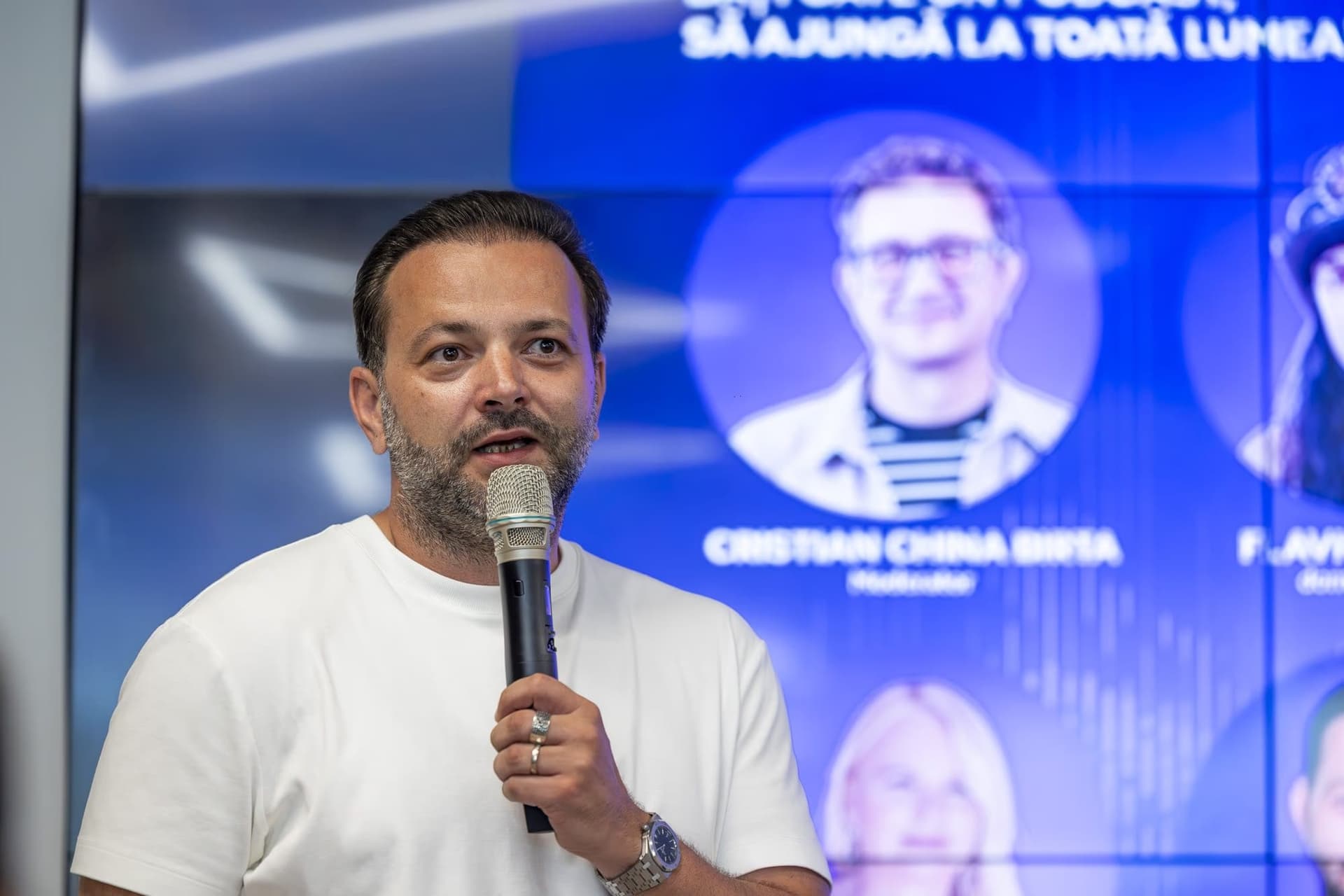
Chinezu opens the day's first number. "Statistically, Romanians listen to the most podcasts in Europe. 22% European average, 33-35% in Romania. 10 hours a week." He pauses for a moment. "Why? We have no idea." Thus falls the central question of the whole conference: how can a market grow so fast, so hard, and yet remain, editorially, a gathering of amateurs?
Morar takes up the stake with the argument that will become the discreet title of the panel. "Celebrity isn't important because it isn't an end in itself. It's a way to fulfill your dreams. A bunch of influencers became famous and either cracked, or broke, or went elsewhere, because they didn't know how to manage it."
The anecdote that will stay, however, is a different one. Chinezu tells about being at a concert in Timișoara with Andi Moisescu, in the peak years of a personal period — front-row seats, the audience running toward them for photos. What was cute at first became increasingly unpleasant as it continued, and Moisescu said to him, in a low voice, a single sentence: "This is how it begins..."
"I'm famous in my own yard. That's it," he says. "Fame isn't an end in itself. It's a way to fulfill your dreams," he delivers on the ConfCast stage.
Chinezu, meanwhile, opens a more personal line. "Do you believe in God?" — a question that, in Romania, has its own electoral anchor (it was asked by Emil Constantinescu to Ion Iliescu in the 1996 campaign). Morar refuses the philosophical format and tells a story. On Sunday, the day before yesterday, he had been a godfather. He baptized the twins of Cristiana — the project manager who built Fain și Simplu with him. "My pillar, my left hand and my right hand. Accounting, legal, the video team. Everything was on her." At the baptism party, Cristiana and her husband had invited the guests to the pier for a "surprise." Under a sheet raised like a statue being unveiled, a single word: Baby. Cristiana is pregnant again, six months after the twins.
"When I had just gotten used to the idea of counting how long until these girls turn two, so the woman can return to work." Morar pauses. "Things you can't explain to yourself. You have to attribute them to someone."
A woman from the room interrupts: "You men can't explain things to yourselves..." Chinezu shrugs, amused. His conclusion is a small personal manifesto: "At the census, for religion, I declared myself a Stoic. 'With a K?' 'No, with a C.' Stoicism believes in a whole, a universe, not in that old man on the throne who kills our children to test us. But everyone must believe in something."
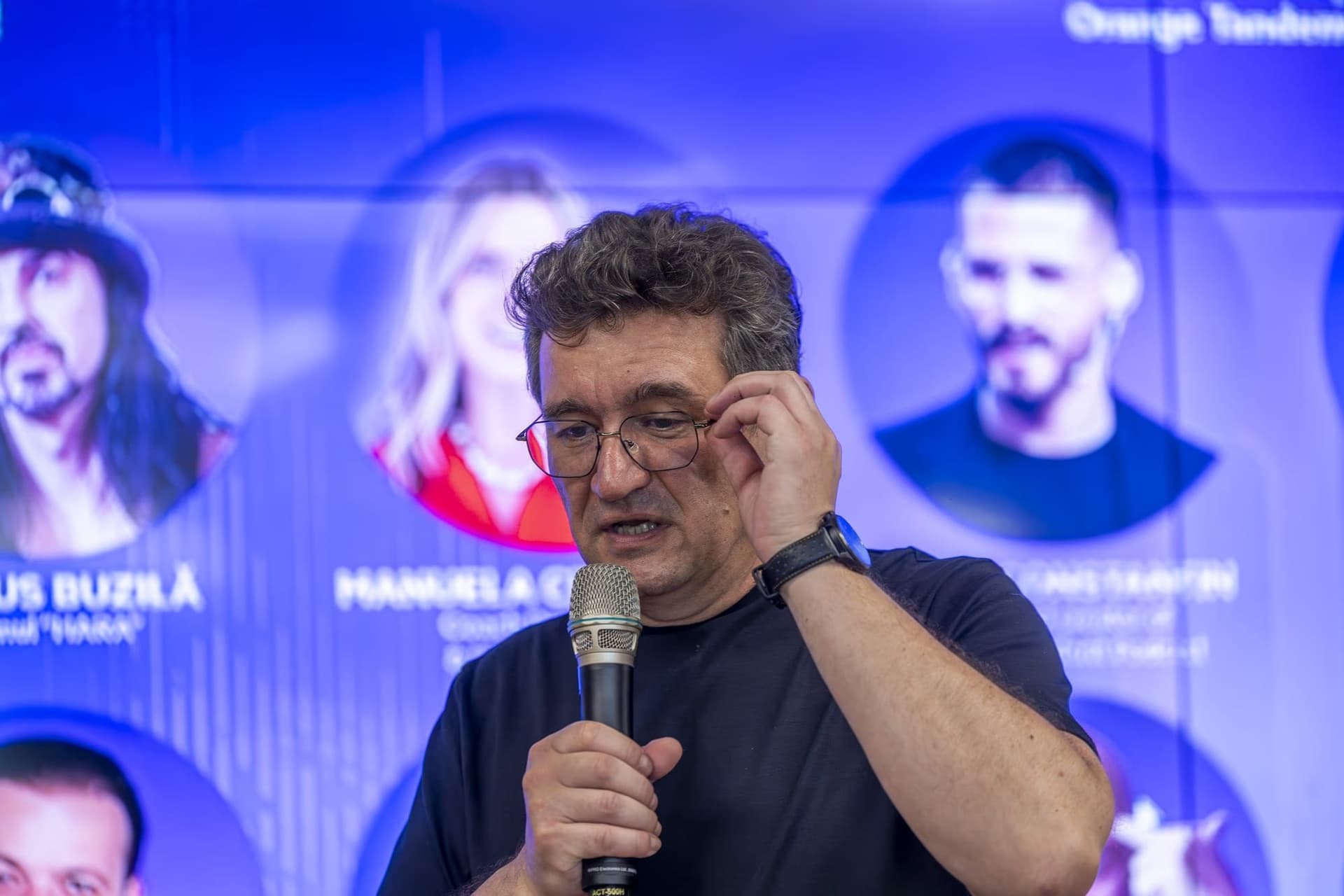
Then Chinezu turns the discussion back to the technical stake. This is the first panel's most important editorial moment. He formulates it as a metaphor that, in the hour that follows, will be borrowed in whispers by almost every speaker.
"Have you asked yourselves why it's extremely easy for us, with no skill, to put money into Facebook and Instagram? Because they have a blue button that says 'Promote.' How much? 10 lei." He pauses for effect. "Radio, TV, press, outdoor — they all have a history and they've built their blue button in their relationship with money. I want to work with influencers — we have a bunch of options. For podcasts, there is no blue button. Dragoș Stanca tried, with Think Digital, to build a podcast division. It didn't work. Now ArboMedia is trying." His conclusion is brutal. "The Romanian podcast market has no way to grow until it builds that blue button."
Morar counters. "It's not just the agencies' fault. It's our fault, the creators, that we don't know how to organize ourselves. I've been making podcasts for five and a half years. Money came in five years ago the same way it comes in now. Most budgets come from BTL and influencer marketing. Because this slice doesn't exist." Pause. "And what's missing isn't sales. Vanity metrics — millions of views, millions of likes — don't pay the bills."
Morar closes the argument with a story that is, at the same time, the proof. He had a Fain și Simplu episode with Andreea and Babis — a love story between a Romanian woman and a Greek man who regenerated the family olive grove in the Peloponnese and sell Zaliari extra virgin olive oil. The episode got "only" 100,000 views. Four days after publication, Andreea called Morar: "I have no more extra virgin oil until December, when the new crop comes." She had sold the entire stock. "It's retail. It's story. It's podcast. It's content. It has it all."
Here, part of the audience stirs. An entrepreneur in the back asks what is, perhaps, the day's most direct question: "In an AI-driven future, where advertising is omnipresent and becomes invisible, how do we differentiate ourselves?" Morar refuses to give a concrete answer: "I have no idea." Chinezu pushes from behind. "Say something..." Morar partially yields. "On the radio, we have a game — 'is it human? is it AI?' We're getting it right less and less. Personally, to keep from going crazy, I use paid Claude and paid ChatGPT. I just ask myself: do I want this to be part of my life, or don't I? If I feel a post is made every day with AI, I unfollow or block."
Another question from the room: "How much responsibility do you carry for the products you promote in the podcast?"
Morar's answer is exactly the kind of phrasing that distinguishes a professional from a nervous influencer. He has been a Honor brand ambassador for three years — and he arrived at the conference in a BYD, but doesn't drive a BYD every day. "I can't be a consumer of every product I promote." His philosophy: at 18, one can vote and drive, meaning one has discernment. "I smoke, don't drink. I have a sponsor from the spirits industry. For betting houses and slot machines I've refused contracts — including one that would have doubled my income for that year. It wasn't bad. It was very bad from another point of view."
The last question of the panel also comes from the room. "The guest or the subject?" Morar answers with one of the day's best editorial syntheses. "The story includes both the guest and the subject. Often, the story is so strong that the guest's notoriety doesn't matter. If I had made a podcast based only on notoriety, I wouldn't have invited Chinezu." Laughter. "And yet, this is a podcast that had impact. Someone made an Excel while listening, with common values between me and the Chinese. That's the moment for which it's worth doing what you do."
Damian Drăghici, or, podcast five years after you left Parliament
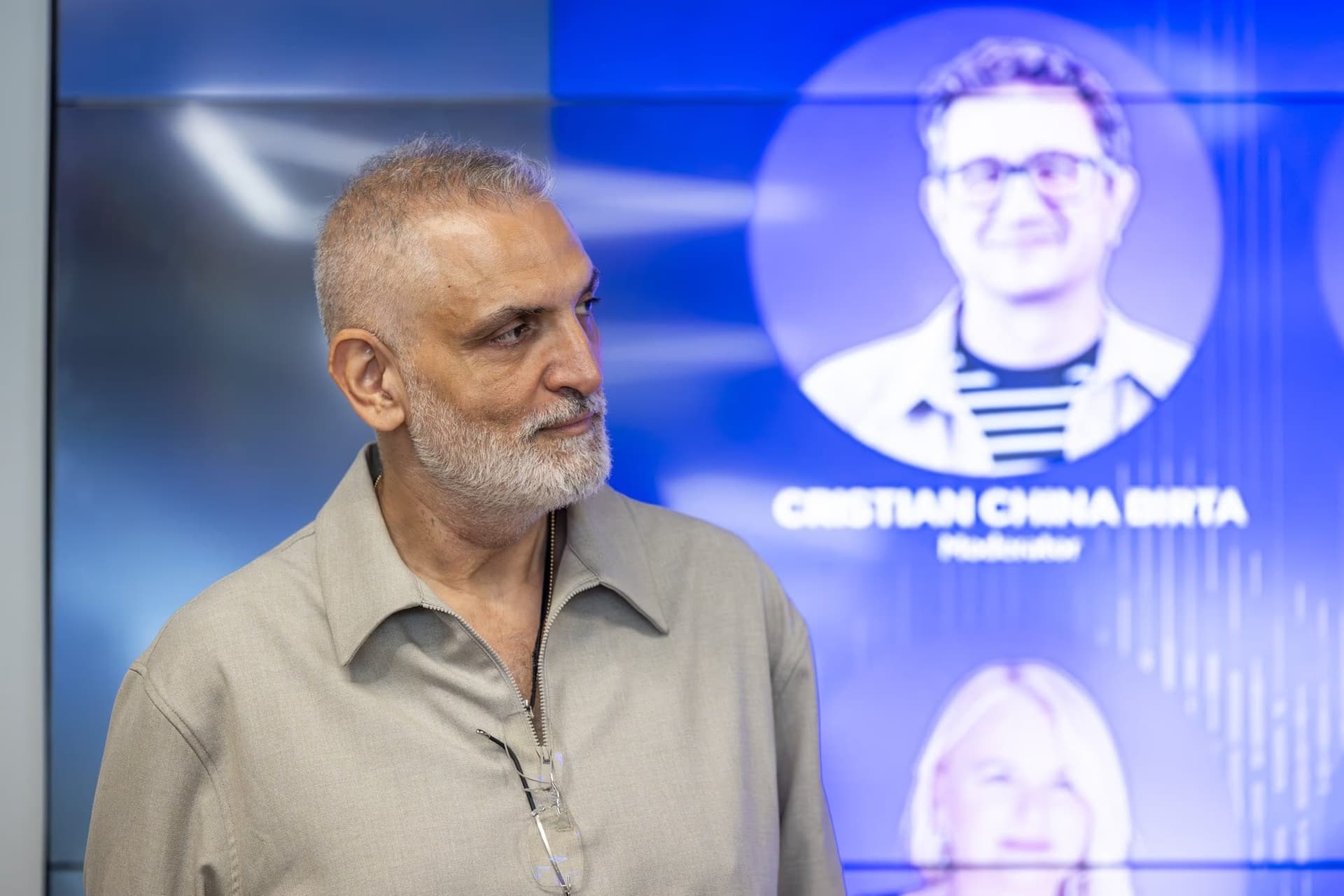
Damian Drăghici is among the few people on stage for whom the biography matters more than the microphone. Grammy-nominated in 2007 for an album with Manhattan Transfer. State counselor, then independent senator between 2012 and 2016. Member of the European Parliament between 2014 and 2019. Founder, for five years now, of "Podcastul lui Damian Drăghici" — a near-daily format with very diverse guests (Constantin Dulcan, Daniel Roxin, Anca Dumitra).
Chinezu asks the first question: "What would you do if you didn't earn a single leu from the podcast this year?"
Drăghici's answer is honest and, for some, disappointing. "The podcast will become more of an artistic part, more musical. It's the natural direction."
Morar interrupts. Here, he says, is the core of the entire day. "Not everything is a podcast. Prima Sport shows put on YouTube are not podcasts." The audience spontaneously applauds. Definitions missing from an industry are precisely those that everyone carries in their head, not at the microphone.
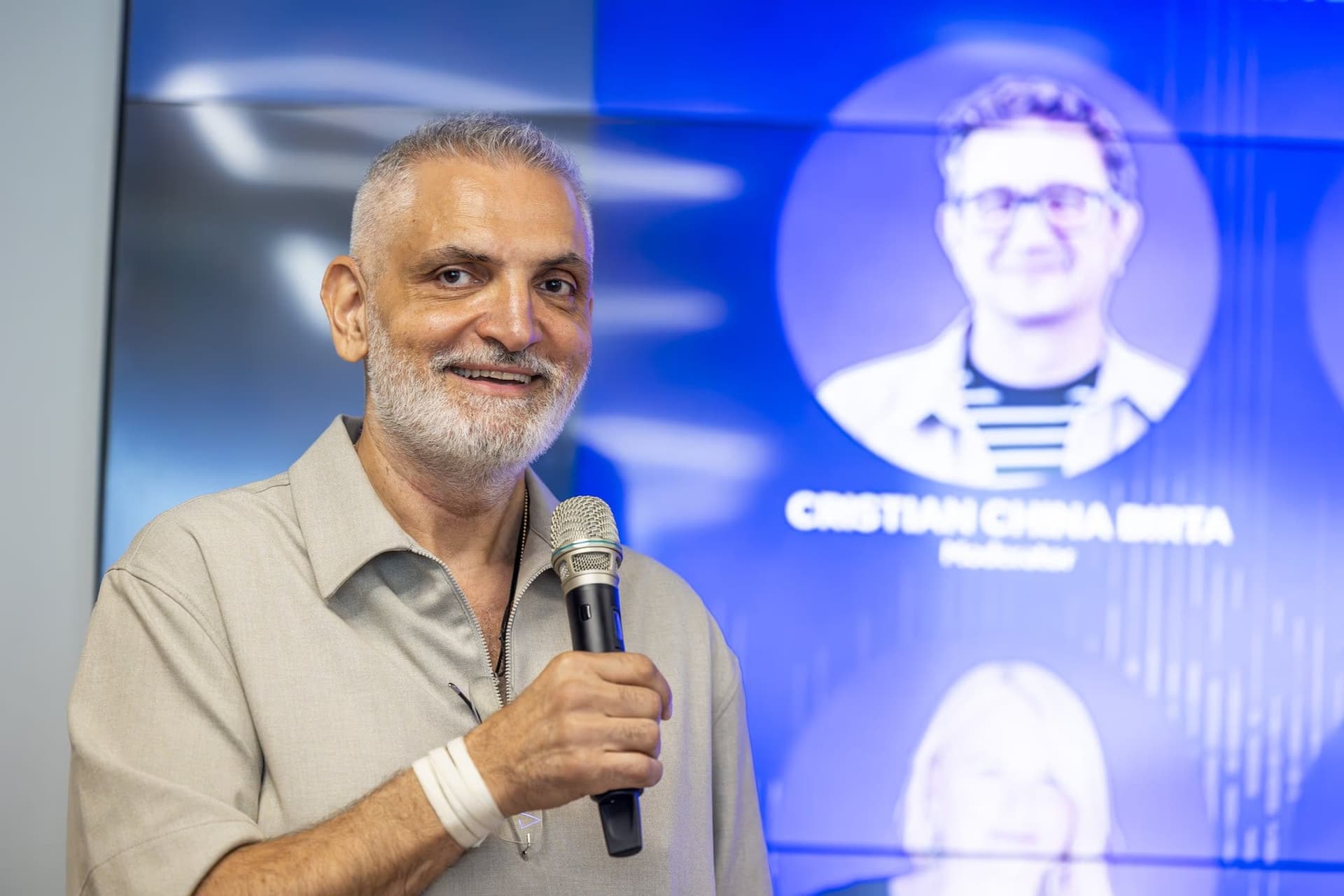
Drăghici pivots. He speaks about faith. "I was born in '70, like most of my generation, with fear of God rather than faith. I went to Greece, and my faith developed. In America, I lost it. In 2014, after a health issue, I returned to Mount Athos. Black fast, 22 days. I realized I'm not in control."
"Music?" "I didn't choose it. In my family, music has been made for 250-300 years. It's a mode of survival. Either you beg, or prison. Music spared me from both."
This is the moment, less applauded than it deserves, when the panel exceeds the definition of an industry conference. It becomes a study of family memory. Drăghici, in the three minutes that follow, gives the most honest answer on the ConfCast stage: at the European Commission, friends of his who were fans would drink "three bottles of Brunello di Montalcino" with him in the evening, instead of him waiting for six official meetings. Podcasting, he says, is the first career in which he no longer felt he had to "drink with someone" to be heard.
"The podcast," he closes, "has been a blessing. Especially for those of us with ADHD who never get bored."
Three faces. Or: a coach, a doctor, and a historian walk into a studio
The third panel brings on stage the combination that, over almost two hours, will make visible what the Romanian podcast market really is. Manuela Ciugudean, brand strategist and coach. Dr. Răzvan Vintilescu, family physician with approximately 1 million followers on TikTok, from a village near Giurgiu. Andrei Pogăciaș, doctor of military history, one of the few Romanian historians featured in international productions (Netflix, "Rise of Empires: Ottoman," 2022, over 250 million views).
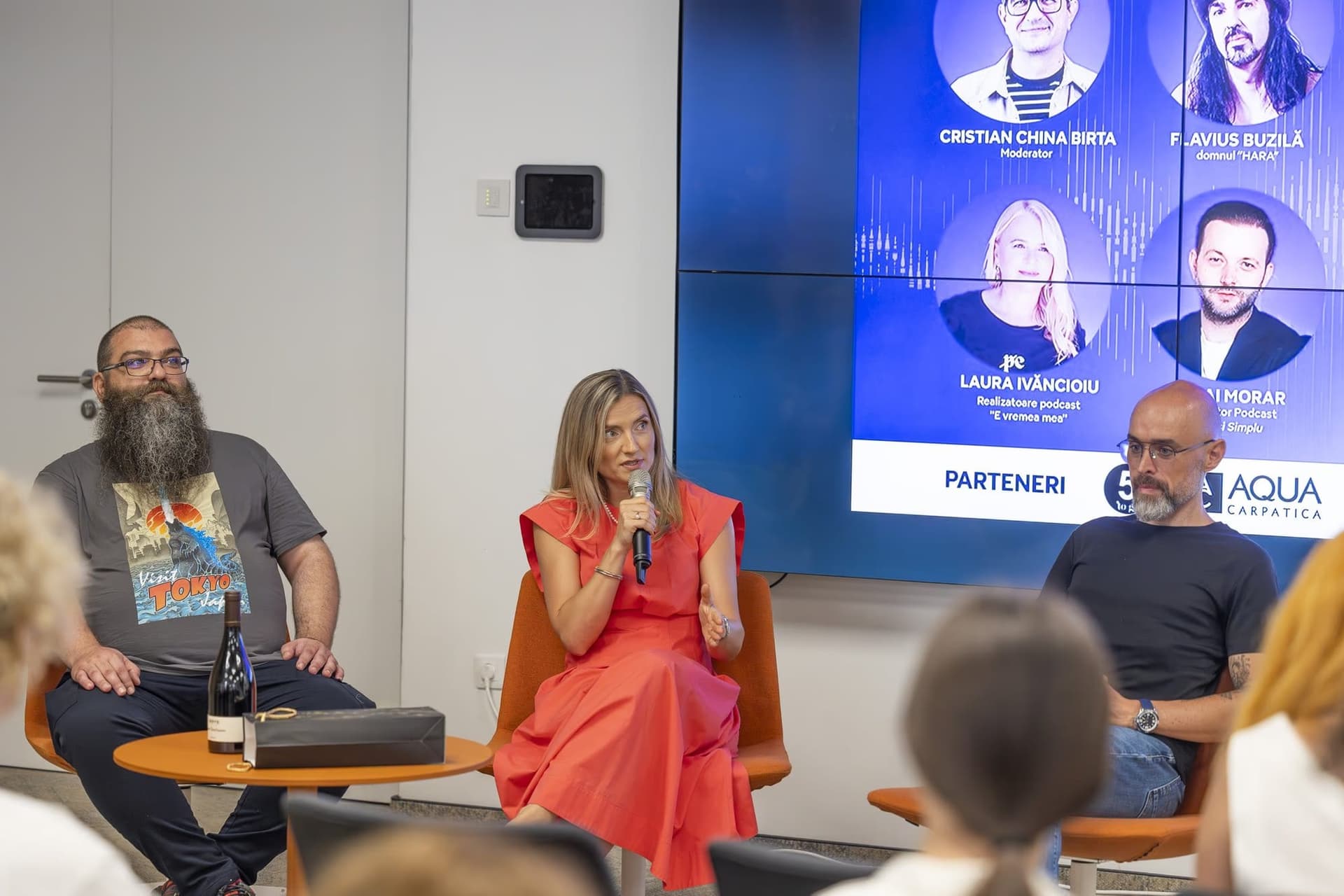
Chinezu arranges them, as if in a botched Renaissance painting: "Beauty and the Beast, plus a neighborhood kid, plus a doctor on TikTok."
Manuela Ciugudean opens with a confession that lands like a direct punch to the audience's stomach. "My podcast is 100% audio. No guests. No video. I've passed 400 hours of talking to myself."
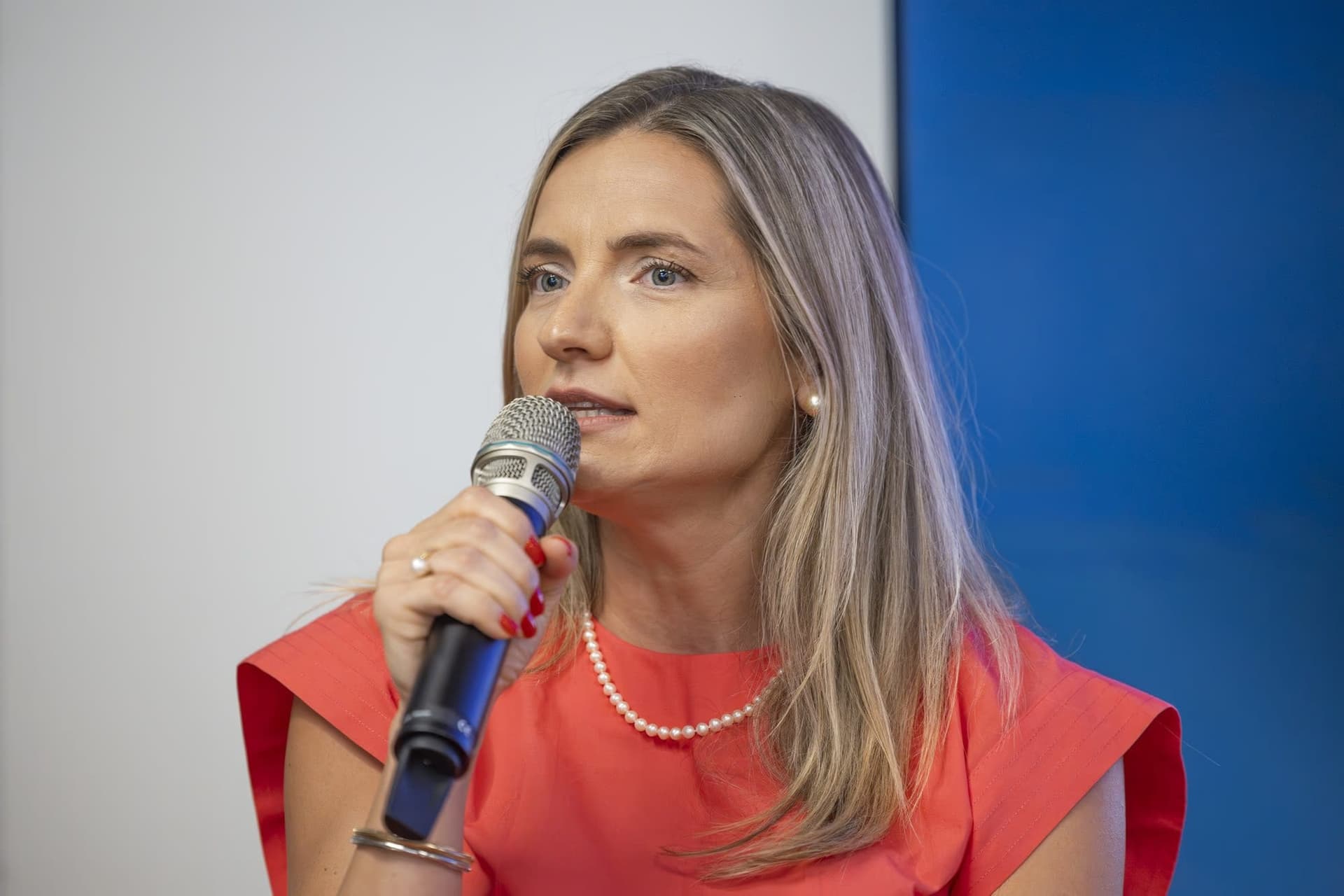
The audience laughs, surprised. Manuela Ciugudean doesn't stop. "A client listens to me for two years before they come to work with me. The investment is 5-6 thousand euros. The podcast is the base of my marketing funnel. I don't sell from social media. I sell from the podcast."
Her numbers are precise, like someone who has built a business, not a channel. Hosting cost under 100 euros a month. Two hours a week for recording. A monthly-paid editor. An IT coordinator. A graphic designer. A newsletter. Three texts per episode. Total time cost: roughly a quarter of a professional workload.
"My most popular episode," Ciugudean closes, "is 6 minutes long. Andy, my son at 6 years old. That's proof AI still has a way to go before it takes as much ground as we'd want. Human nature wins."
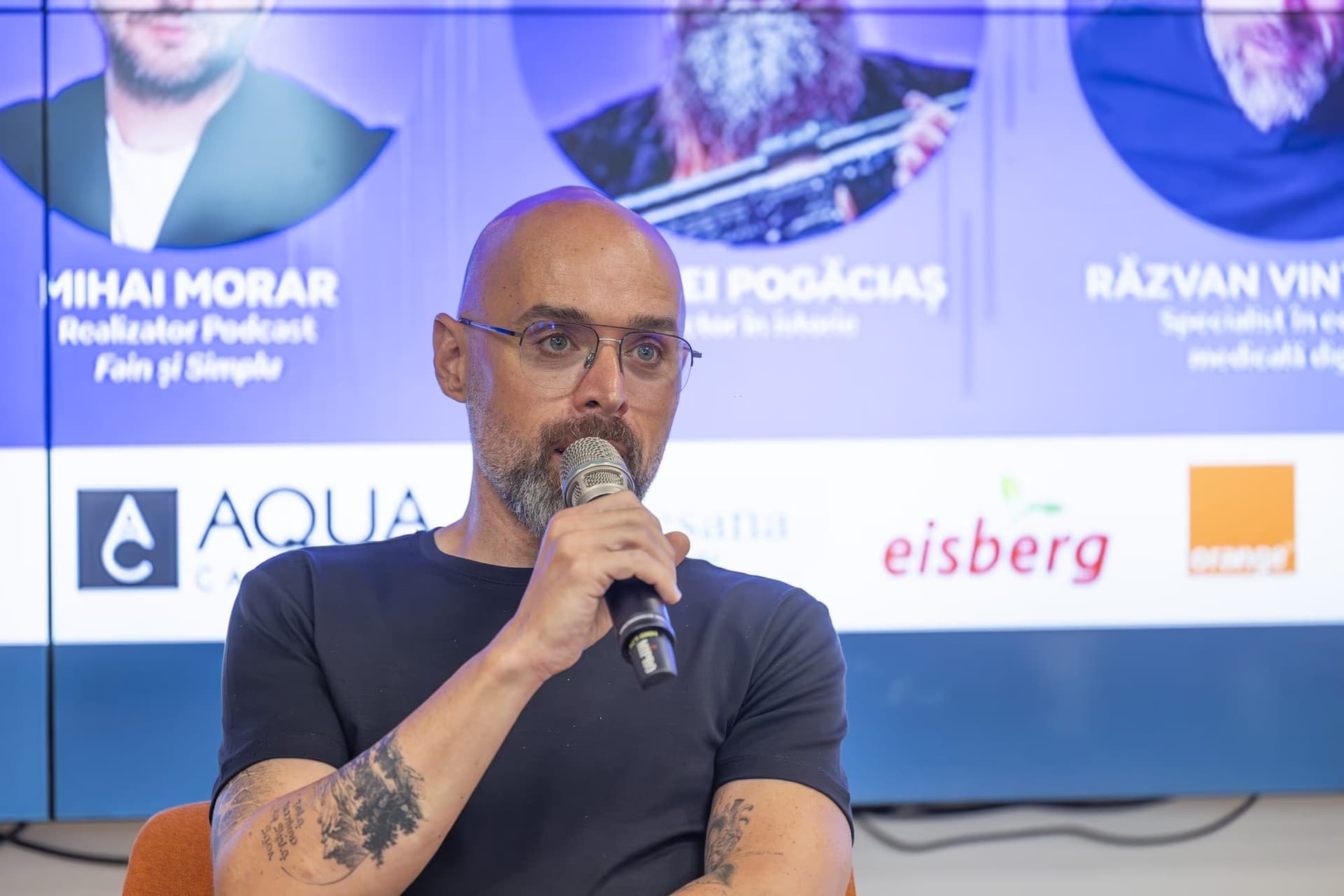
Dr. Vintilescu takes the microphone. "The podcast is the newest arrival in my family of channels. I did 4 years of residency, then 2 years of TikTok, Facebook, and Instagram to build an audience. An aquarium fish's attention — under one minute. On the podcast, people give me an hour. That's what interests me."
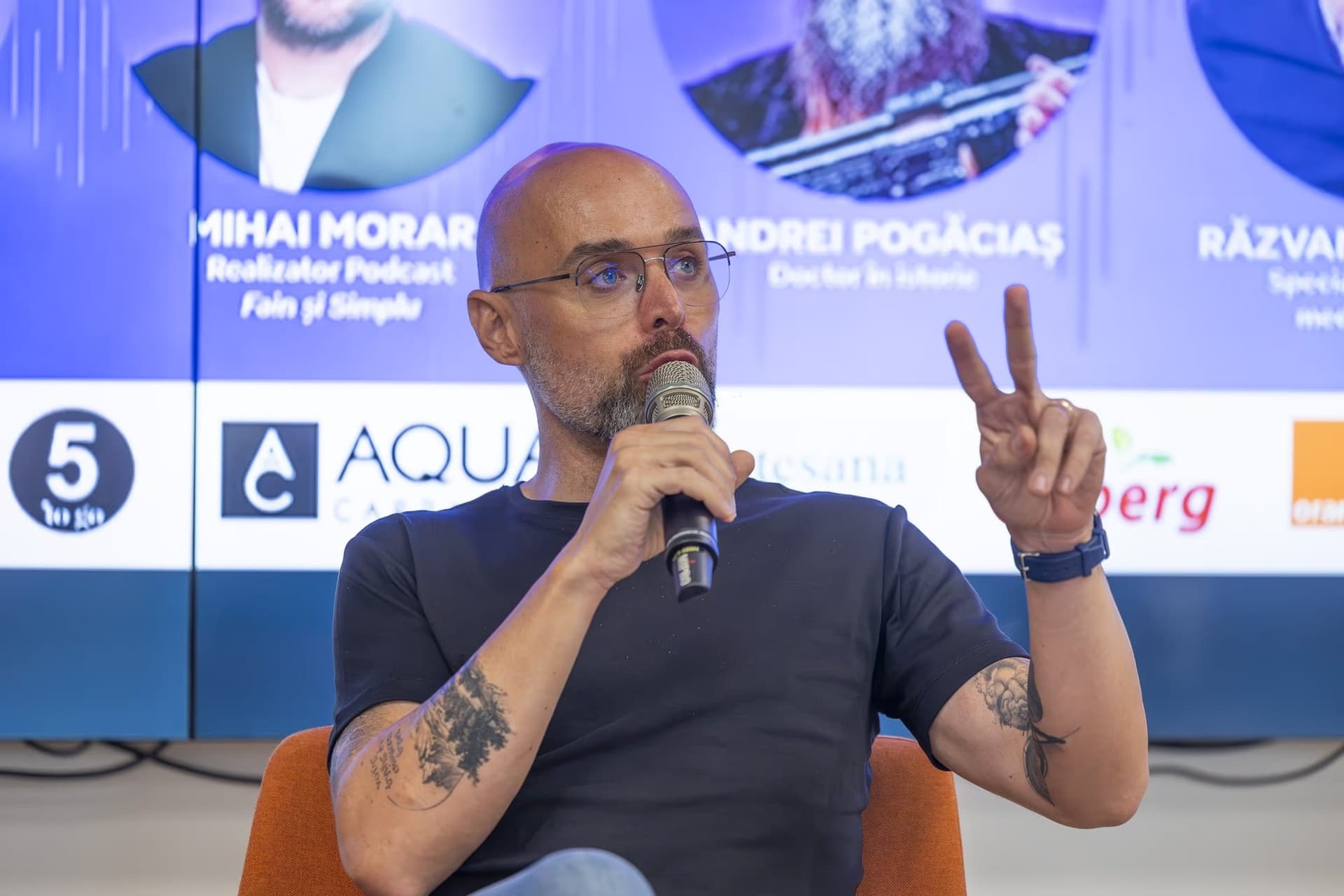
Vintilescu says a phrase that will probably irritate the medical community: "AI will rapidly replace part of medicine. A robot that measures blood pressure, glycemia, ECG in two leads, plus an algorithm — and you've eliminated the first link in the chain, the most costly one. A doctor who isn't a star in their specialty will, statistically, be frustrated their whole life."
The strongest moment of panel three comes when Vintilescu describes a day he won't forget: "I went to buy podcasting equipment, a few thousand euros' worth. Nobody recognized me. My ego — crushed. I approach the door, wondering how to open it with full arms. A security guard comes: 'Doctor, let me help. Here, when I stand all day, we listen to you and others. That's how the time passes.' That's when I understood who the people who need me are. They're people with time. With a lot of time to listen."
Then Andrei Pogăciaș takes the stage. Formally, he presents his credentials. Doctor of military history. Author for Historia magazine since 2013. Editor at Humanitas. "I smoke with Ștefan cel Mare," as he jokes, "at Historia they used to tell me that if they wanted to sell the issue well, they'd put Ștefan cel Mare, Mihai Viteazul, Antonescu, or Regele Mihai on the cover. Those rip."
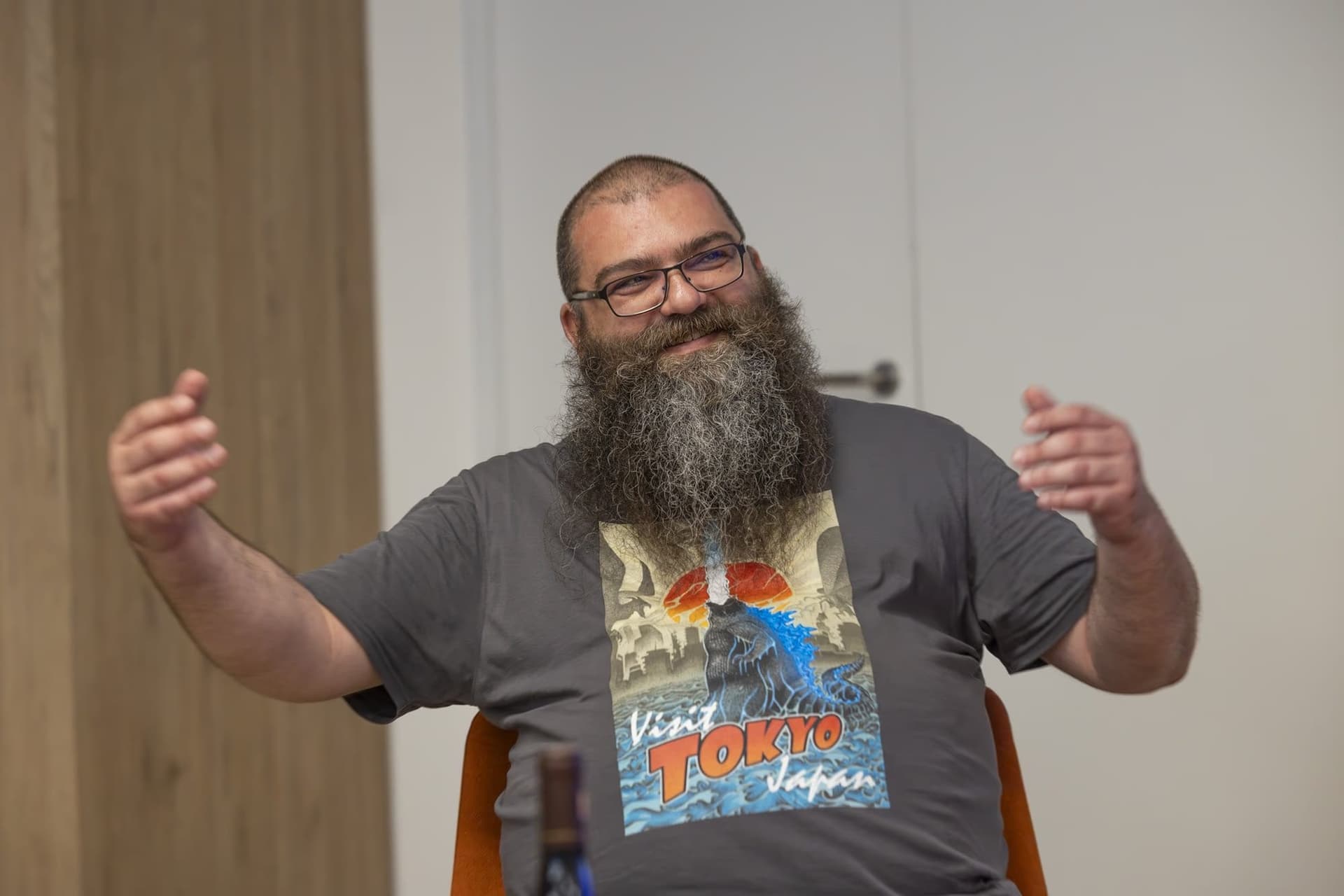
Pogăciaș brings up what few podcast panels have the courage to bring up: the brutal truth about TikTok and Instagram. "For us in history, they don't help at all. A TV show about Mihai Viteazul's army has 7,000 views after three years. A 2-minute clip from the same show, cut and put on TikTok, got 100,000 in a single night. But the most valuable minutes remain those of the people who spend an hour with you. 80% men, over 35. Rest, zero."
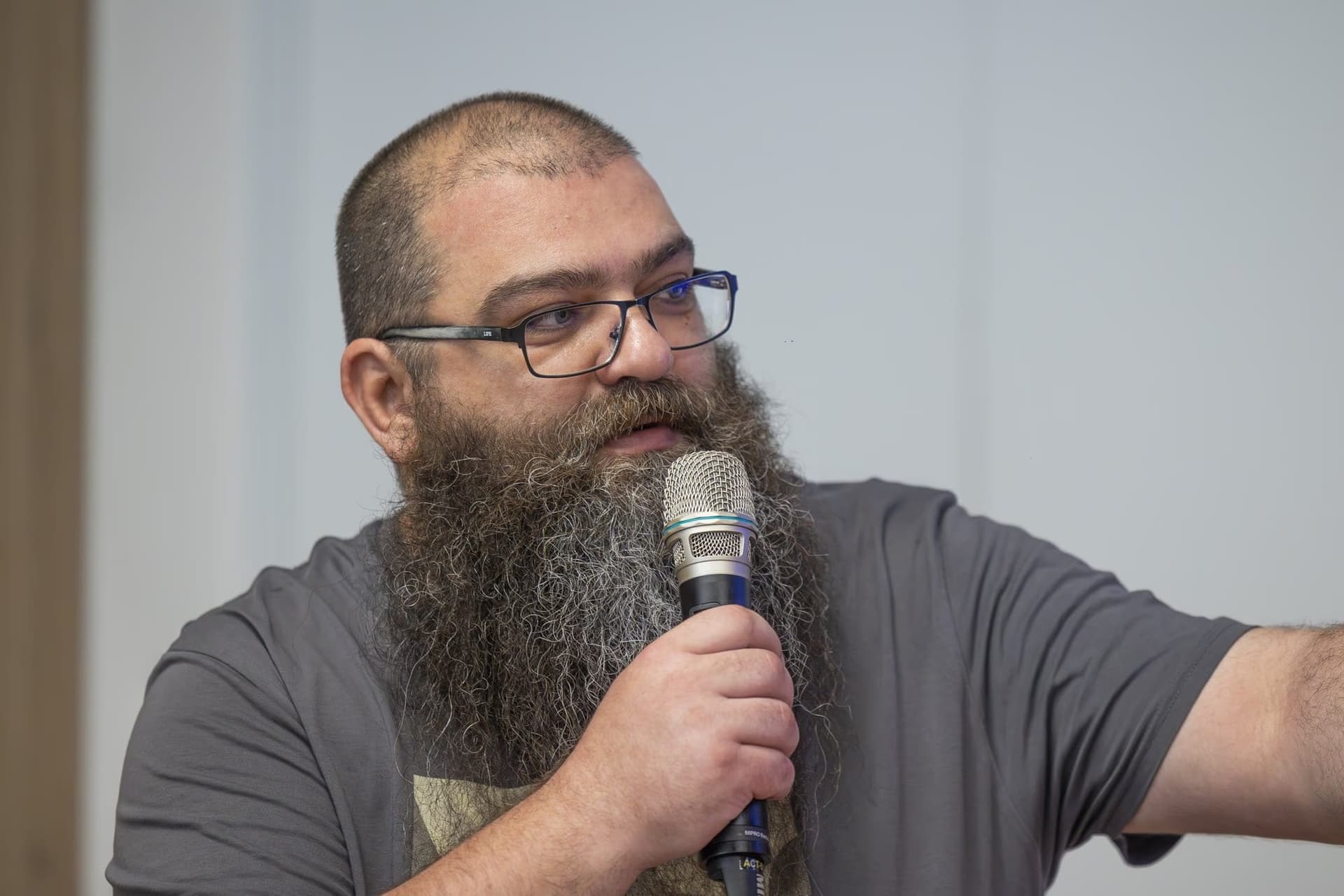
Chinezu — who conducts the panel with a rhythm that would make a BBC HardTalk moderator jealous — introduces a question from the audience. It comes from a woman running emotional-management projects for children. "Radu Constantin — how much of your audience is children?"
Radu Constantin's answer, the first sign that panel four is about to start, sounds like this: "Almost zero."
Radu Constantin, or, on the recipe that exists
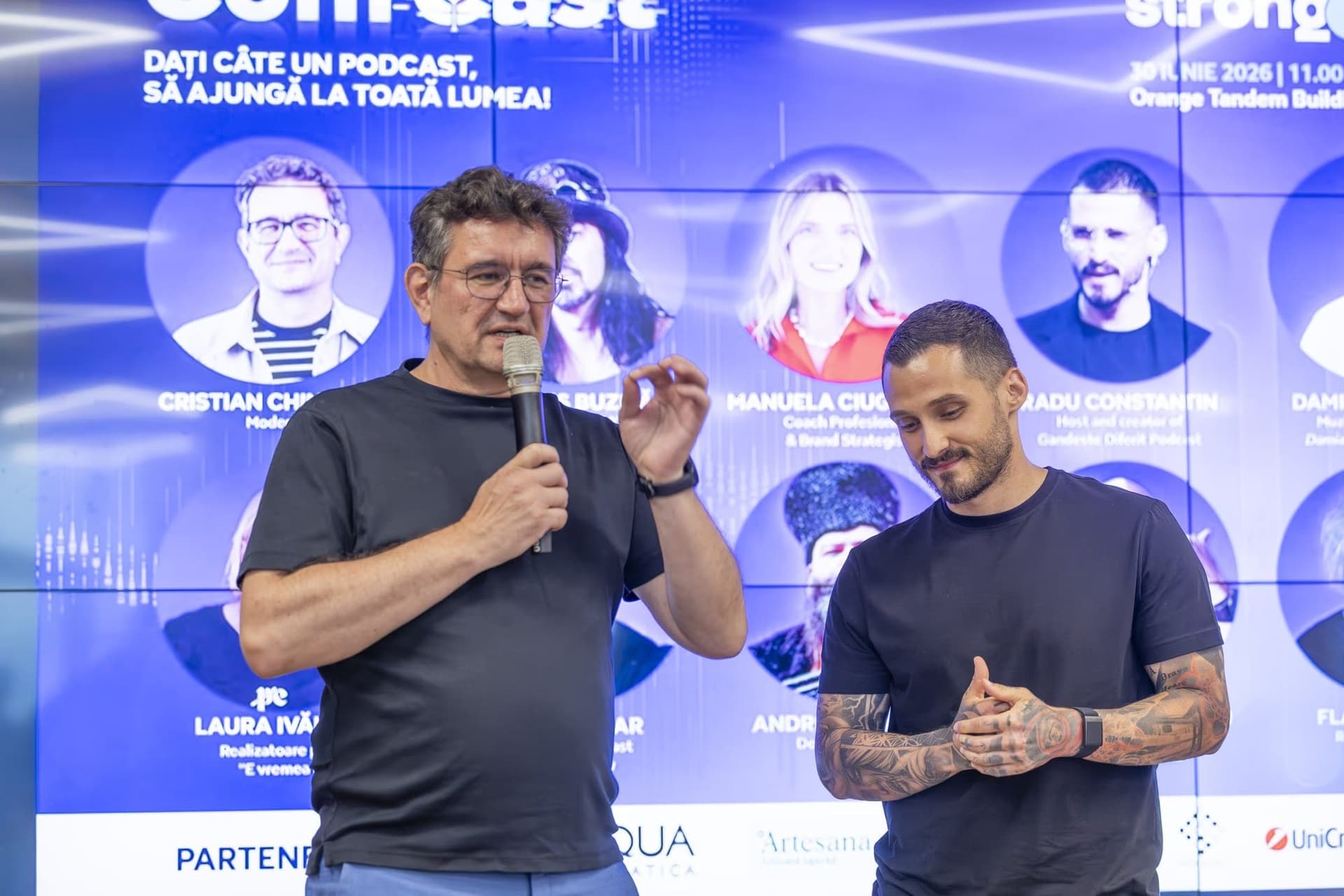
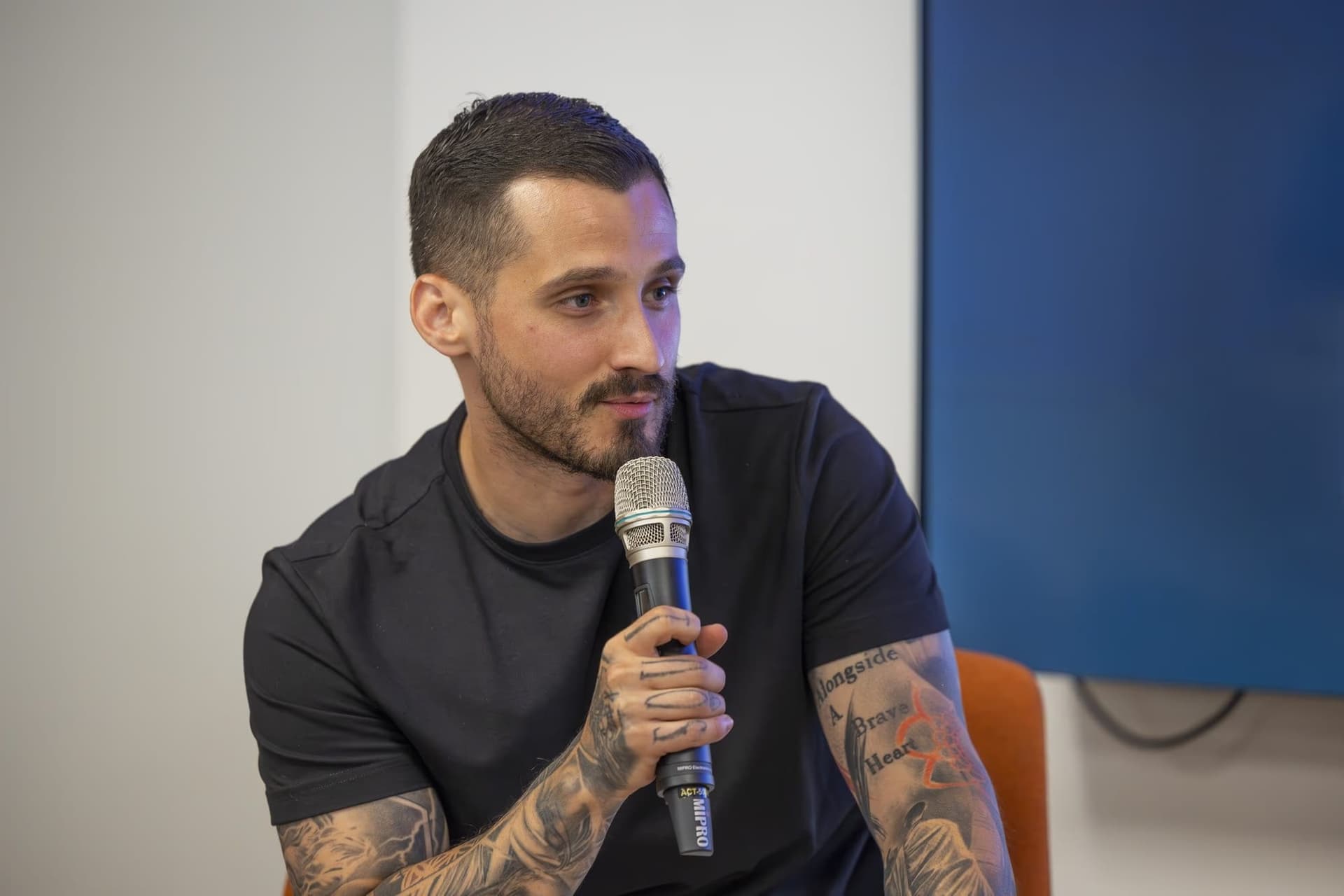
Radu Constantin walks onto the Alba Iulia hall stage of Orange Tandem with the air of a man who has nothing to prove. He's 32, with 1.32 million subscribers on the "Gândește Diferit" channel. Dressed in shorts, tattooed arms, and the "self-confidence" attitude of a young man dominating an audience mostly older than himself.
Chinezu — who gave him the longest introduction of the entire conference — announces him with a genuinely unusual observation for his generation: "I know a lot of influencers. Most of them, by the standards of my generation, lack elementary politeness. What shocked me about Radu is that on the politeness front, you'd say he's a grandma."
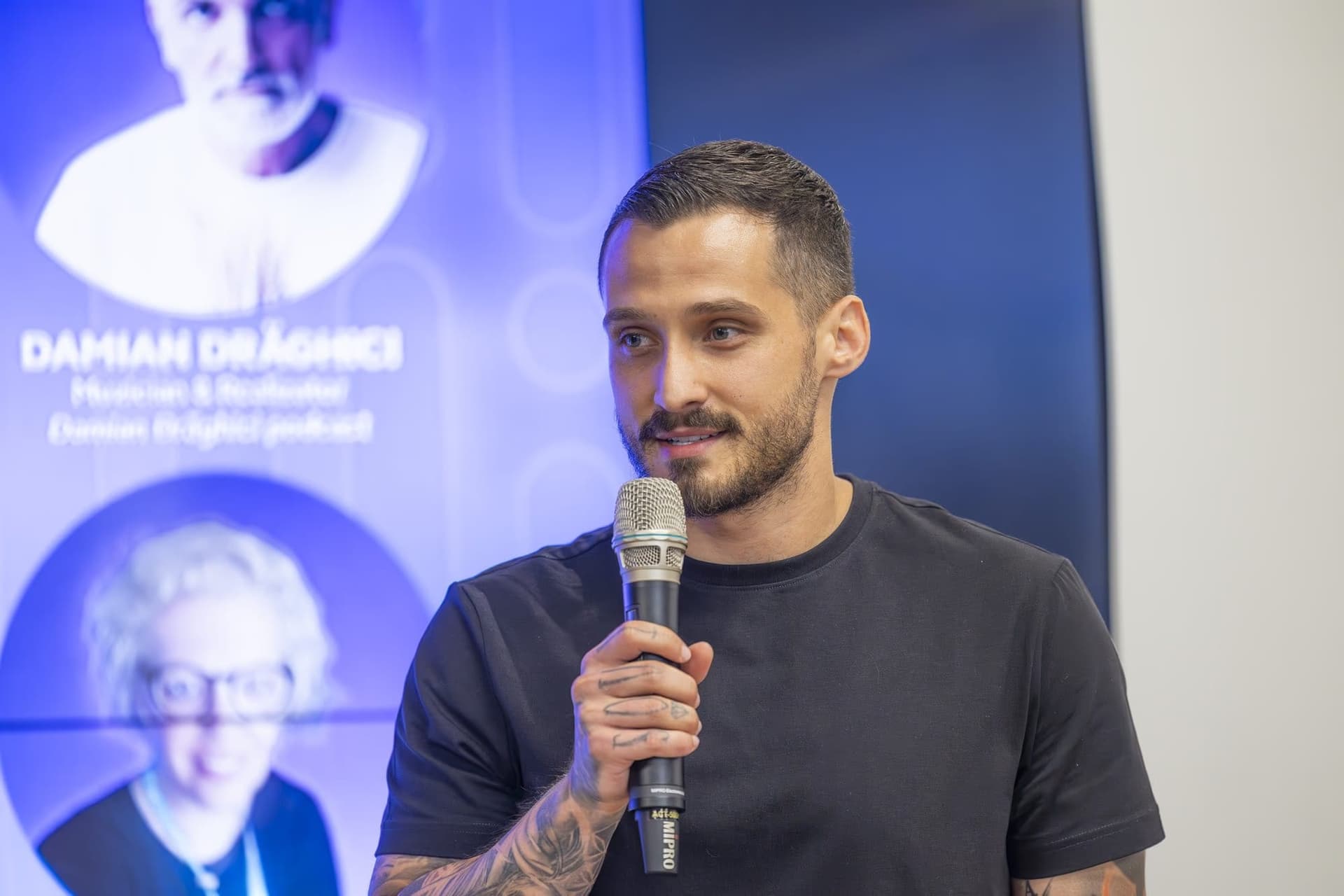
Radu Constantin, in the 45 minutes that follow, will justify the introduction with one of the best technical presentations in the history of Romanian podcasting conferences. The recipe exists, he says. It's called emotional architecture. It's borrowed from screenwriting — where he has written two serials totaling over 1,200 pages.
The elements are technical: cognitive dissonance (you say something that contradicts the audience's expectation), recognition (you make the person at home feel like they are like you), the live triangle (host + guest + person at home actively involved), mutual vulnerability (the guest opens up only after you have opened up, but only 30% less than they will open up), and — the most powerful — prediction error.
"We are used," says Radu Constantin, "to something happening in the next seconds that we predict. When it doesn't happen, the brain creates a moment of attention. That is exactly what I did with you at the beginning, saying that a recipe exists when everyone claims it doesn't."
Radu Constantin then delivers something that hadn't yet been heard on stage that day: a cynical honesty about AI. "I made a little robot for research. I took all of Chinezu's transcripts — from YouTube, from his blog, from everywhere. I passed them through Transcriptor. I put them in Claude. Now I know this gentleman's psychological vulnerabilities. It costs 200 euros a month. It's like an army of employees. AI is the best shit."
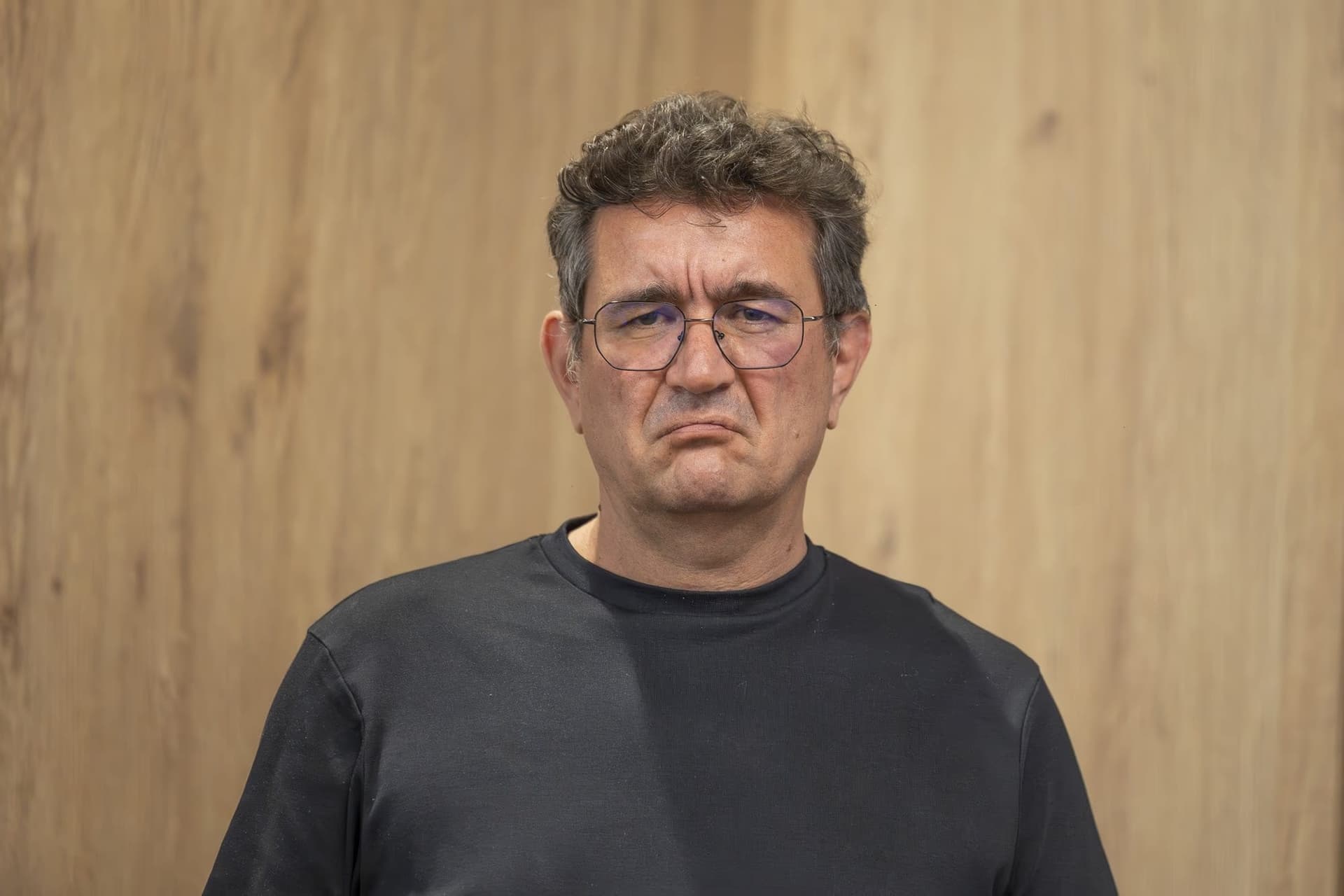
Chinezu looks at him for a few seconds with the expression of a man who realizes he has been audited. The room bursts into laughter.
Flavia Voinea and Laura Ivăncioiu, or, two women in a world that doesn't ask them the questions
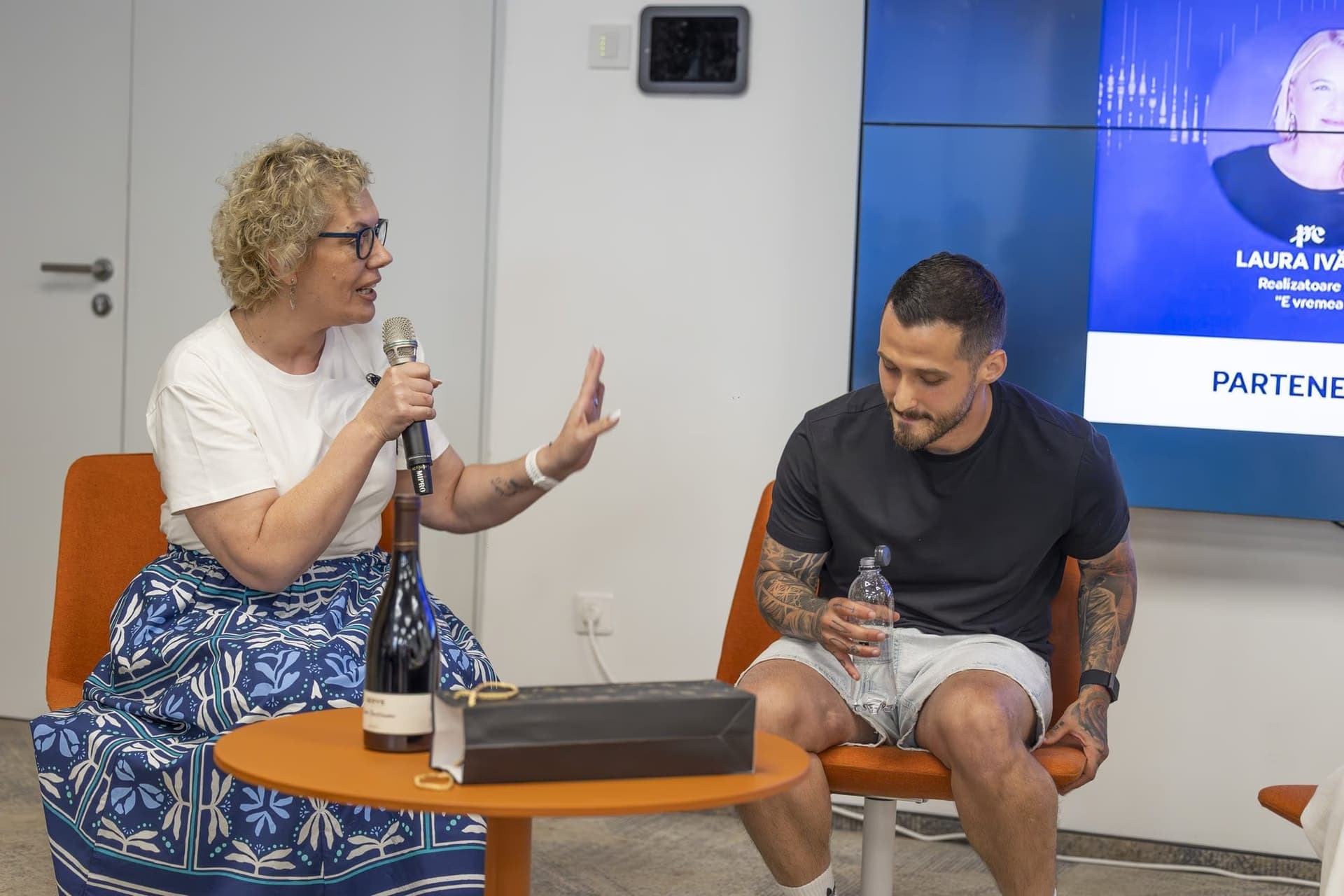
The day's last two voices belong to two journalists who run shows in two very different frameworks. Flavia Voinea, manager of Radio București FM (part of Radio România Regional), produces the podcast "Cum să...?" ("How to...?"), the only Romanian public podcast included in the EBU Podcast Catalogue 2025. Laura Ivăncioiu, founder of the Deci Se Poate ("So It's Possible") agency and a 13-year radio journalist (Radio Contact, Cațavencu Press), runs the "E vremea mea" ("It's My Time") podcast — about women and aging, co-hosted with health specialist Monica Rădulescu. Radu Constantin accompanies the two women on stage in the role of host-commentator.
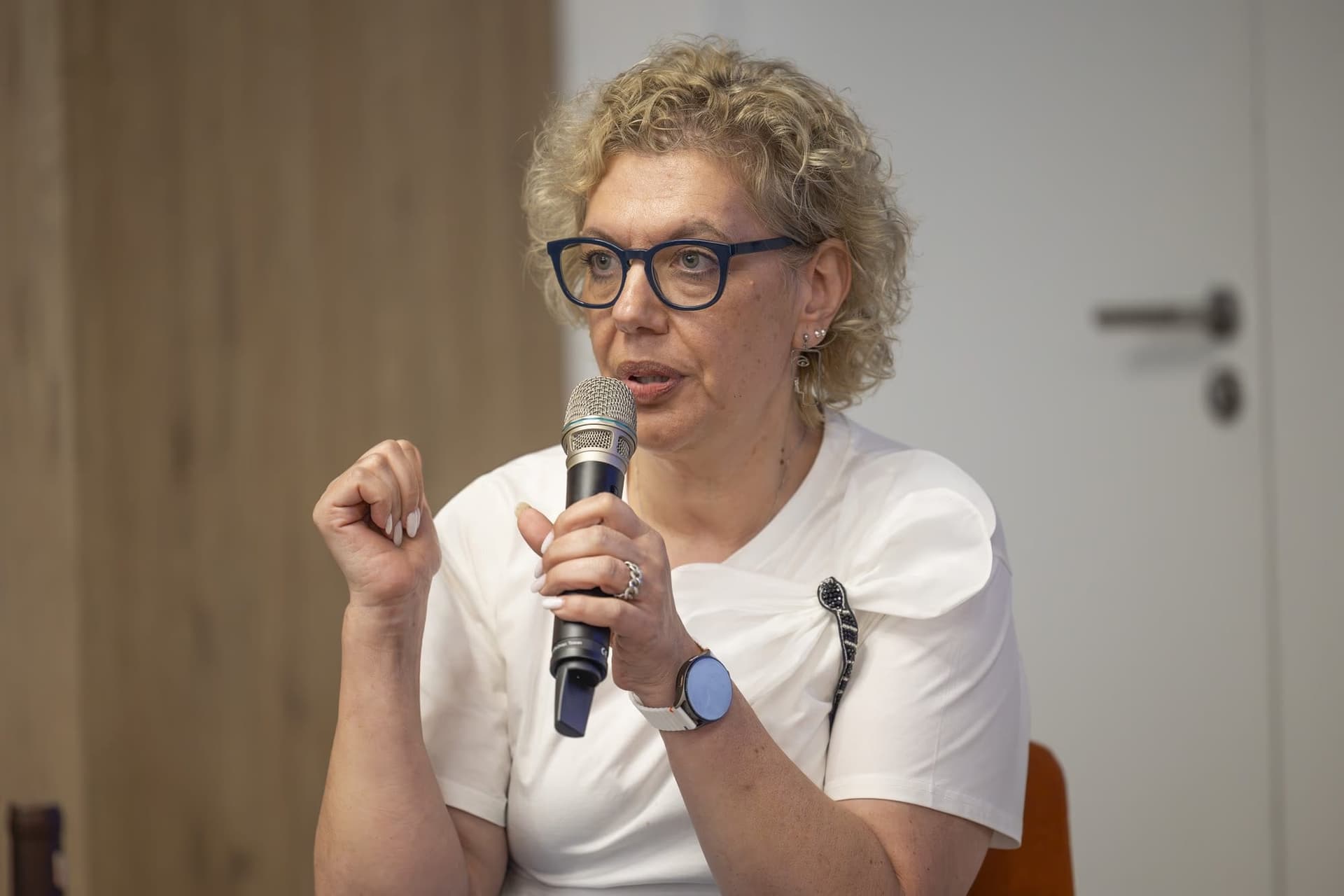
Flavia Voinea opens with one of the day's clearest editorial phrases: "A podcast is NOT a snippet of a radio or TV show that's been recorded and posted online afterwards. That's an archive. A podcast is designed on its own terms, for online, to be consumed as such."
This is the moment when the fourth panel aligns with the principle stated — but not defined — by Chinezu in the first panel: "Not everything is a podcast."
Flavia Voinea brings up two international references that could rhetorically stand as symbols of the entire Romanian disorganization. The first: Diary of a CEO by Steven Bartlett — who tested 80 shades of red for his logo. The second: The Tony and Ryan Podcast from Australia — where a single person on the team answers all comments, sending branded objects to listeners 5,000 kilometers away.
"They work, hundreds of items every week. We make podcasts because it's sexy and trendy," Flavia Voinea says, almost gently.
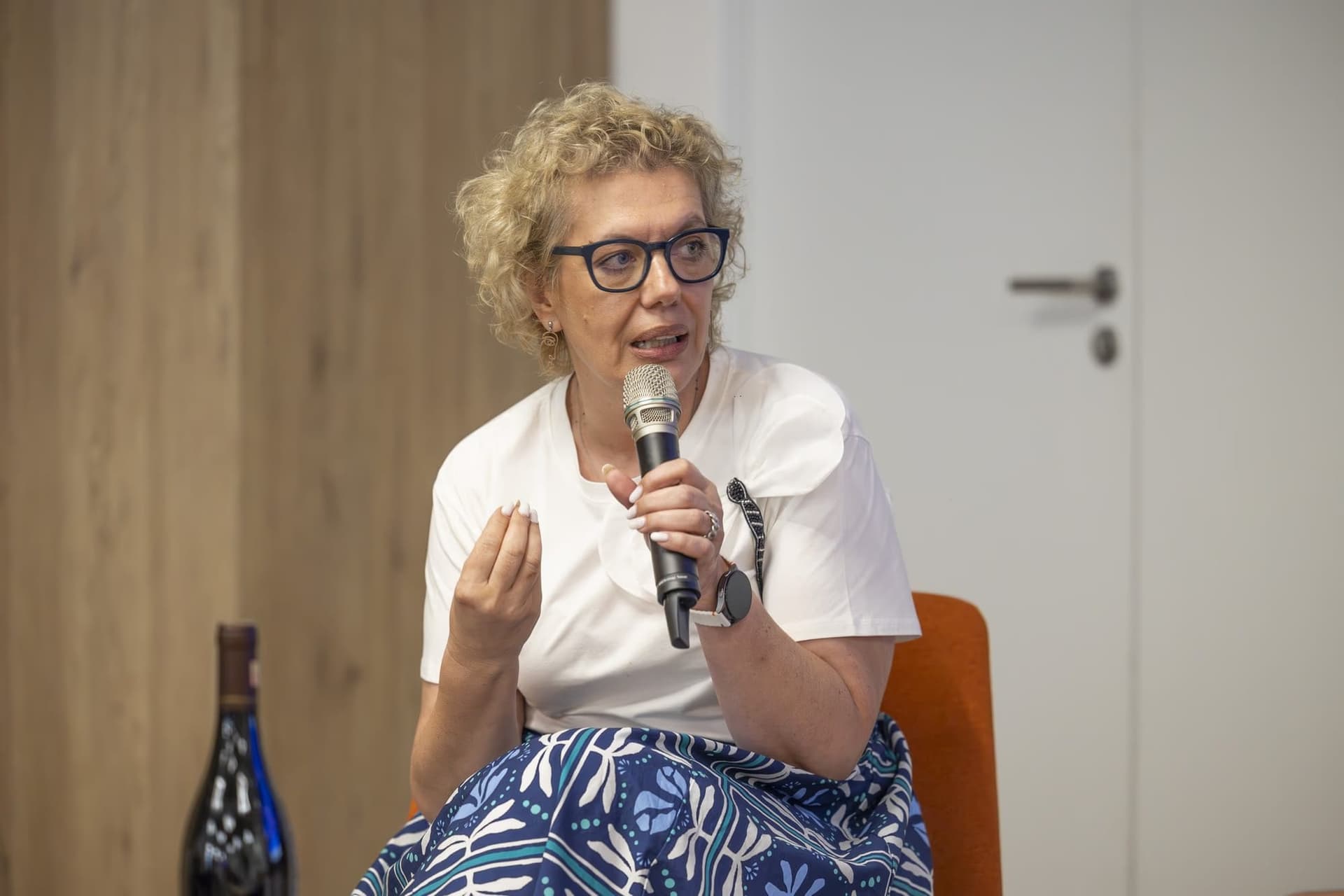
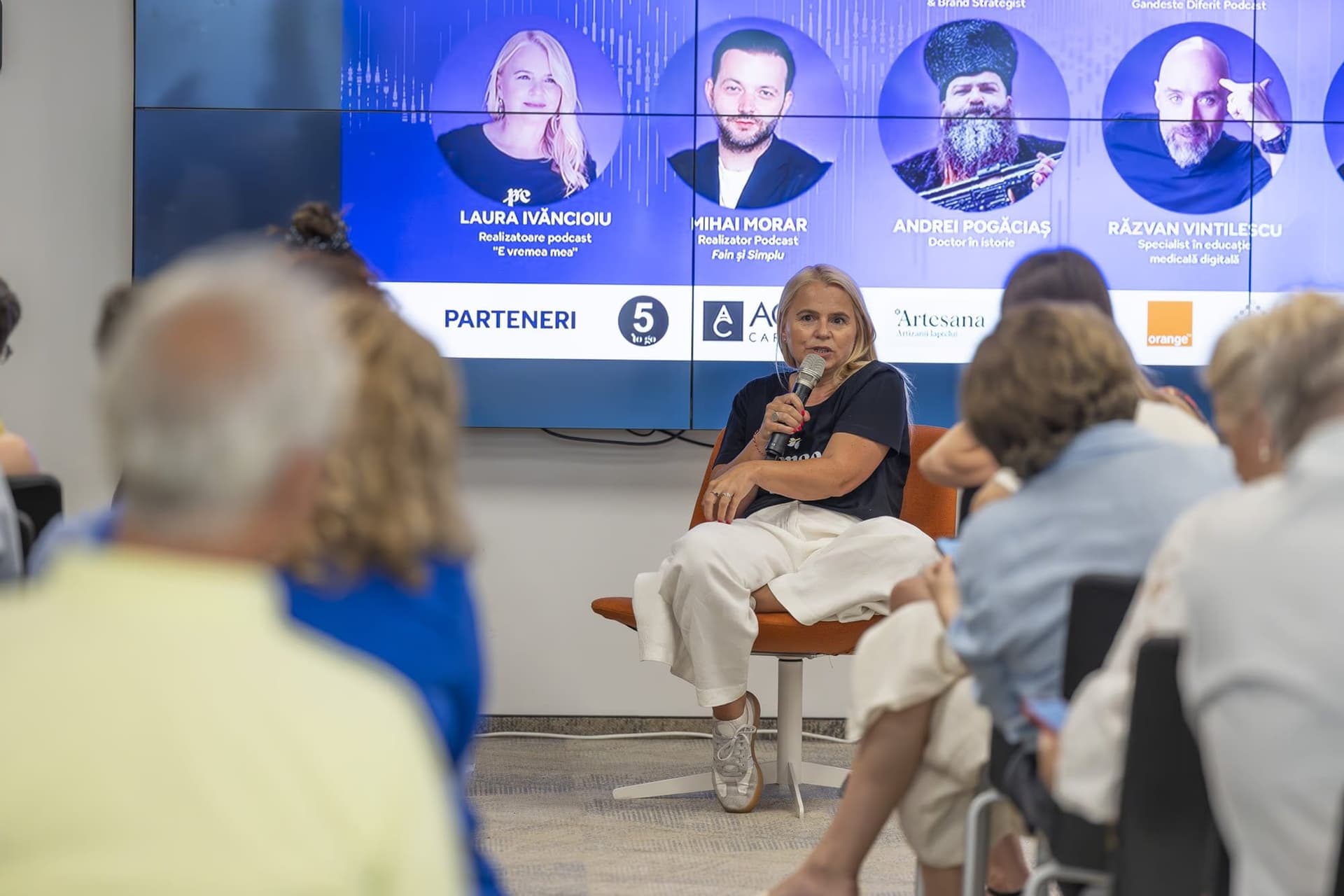
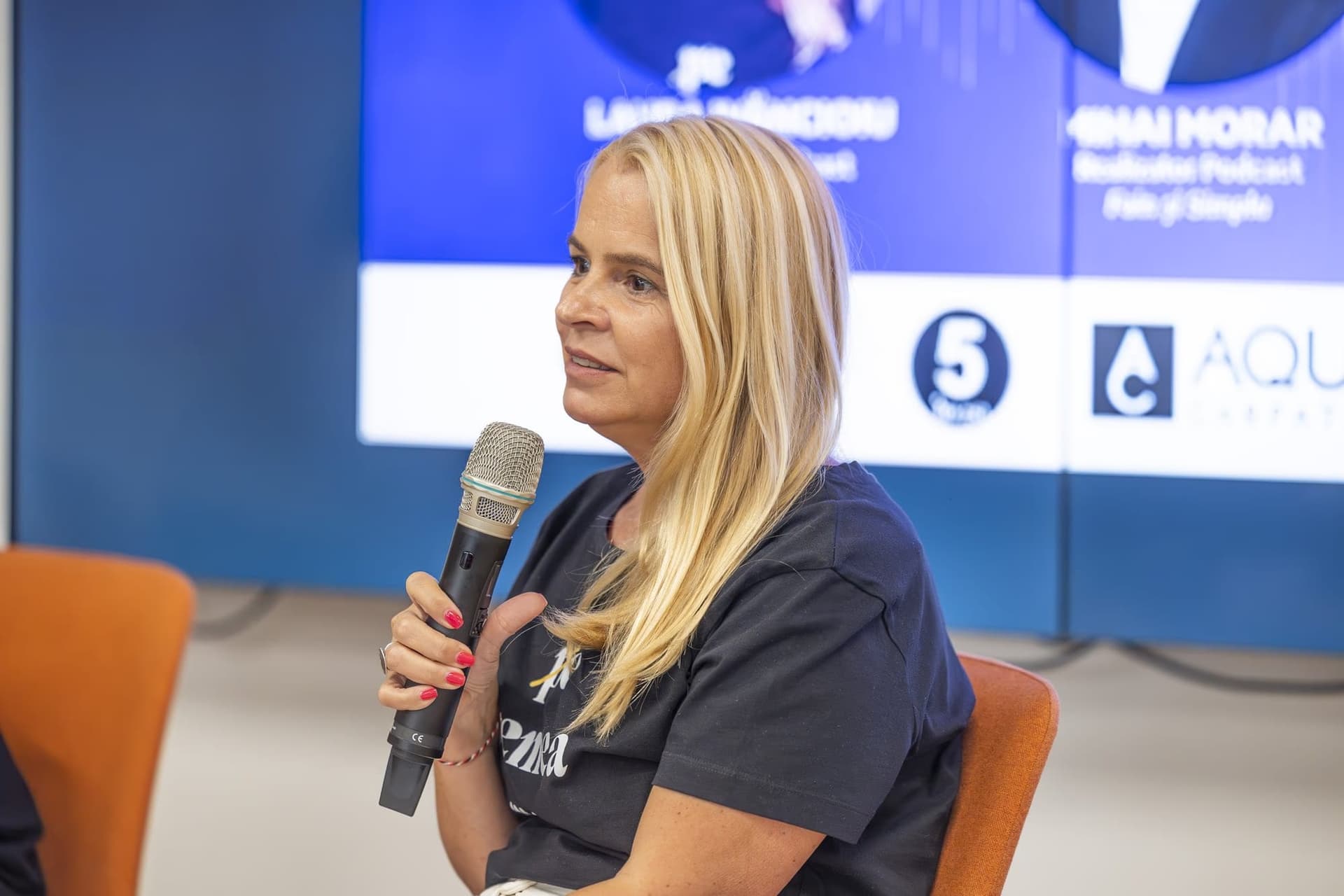
Laura Ivăncioiu then delivers, in the 20 minutes that follow, the day's deepest editorial self-critique. She starts with her first mistake. "First episode. With Lia Bugnar. I asked the first question, she answered, then there was a pause. She laughed and said: 'Is it over?' Instead of reacting to what she'd said, I went back to my list of questions. I chose wrong."
The moment that will stay, however, is a different one. Laura Ivăncioiu interviewed Marina Voica — a legendary vocalist over 80 years old with a career in Romanian light music. At one point, Voica said: "You have to be mean to a man. If you're good, he'll leave you for a meaner one." Ivăncioiu made a reel from that passage. She posted it.
"Someone took the reel and wrote: 'Look at the host laughing like an idiot.' Then I realized I'd laughed at something I didn't agree with. Because I saw the views going up. I should have gone deeper. I should have asked: 'Who traumatized you?' Or 'What experience made you say that?' I didn't do any of that."
Radu Constantin intervenes with mutual vulnerability — the theoretical framework he had explained earlier. "The weight of your vulnerability must be less than the weight of the guest's vulnerability. But you must always start."
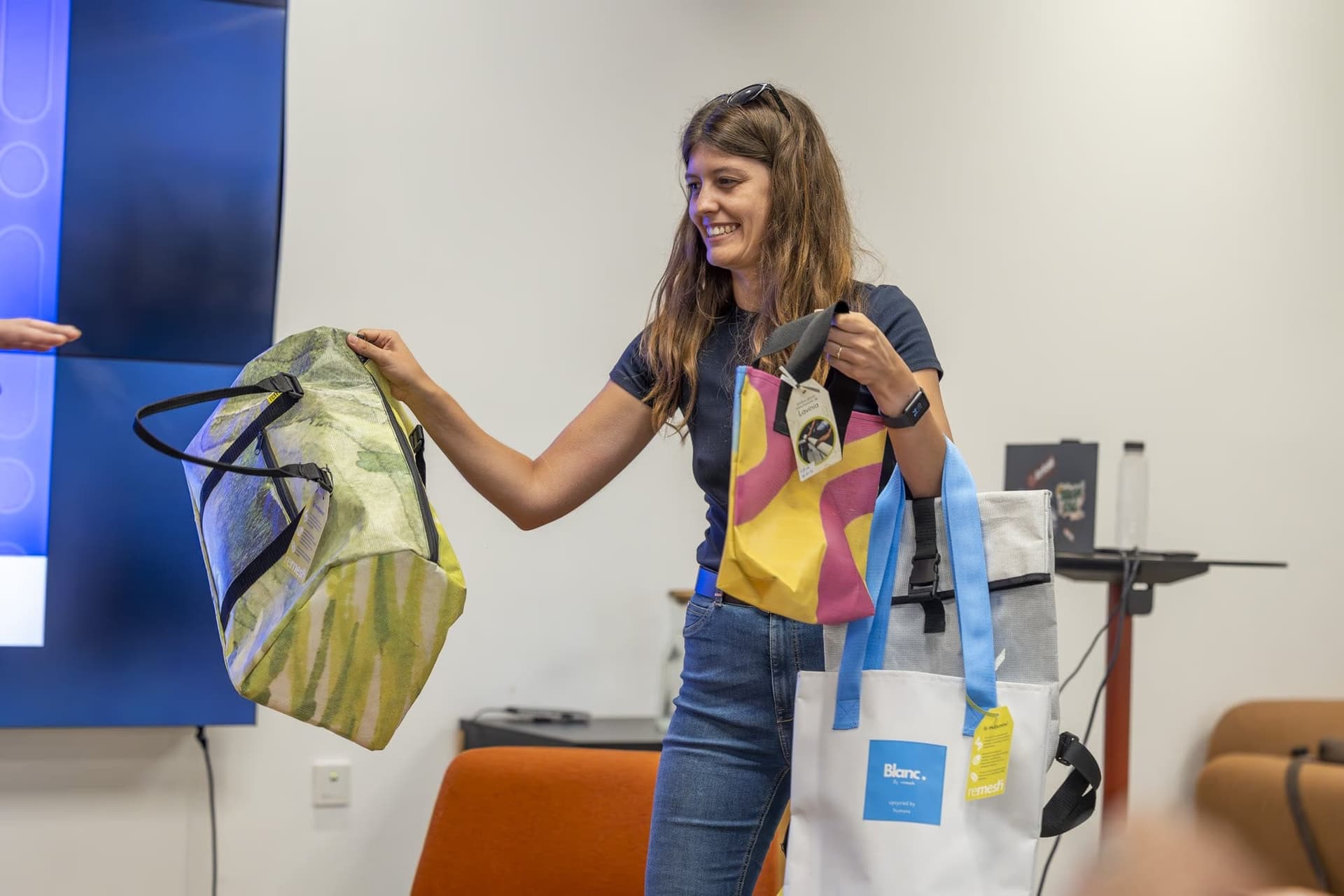
Chinezu, who seems to have understood something too important to leave unmarked, closes the panel with an observation. "We did a conference where we kept talking about podcasts. But the best thing that happened today," he says, "is that I told you about Ateliere Fără Frontiere. Rehabilitated people who make objects from street banners. Nobody knows them. You can do good if you help them become known."
The audience applauds. It rises. In six hours, ConfCast at its first edition.

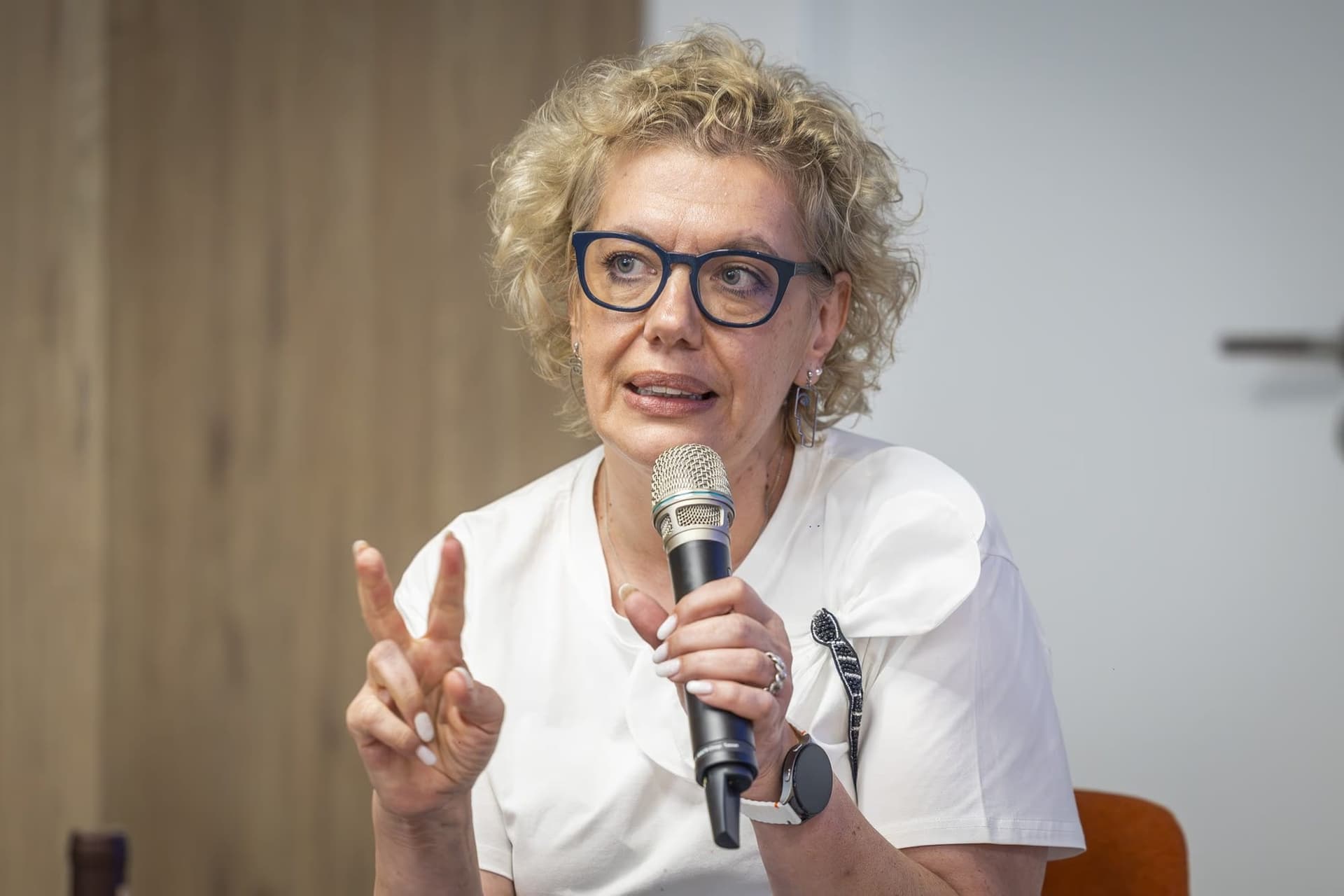
Flavia Voinea — "they send branded objects to listeners 5,000 kilometers away."
Editor's conclusion
The Romanian podcast market is the second in Europe by intensity, with 33% demographic penetration (Digital 2025 Global Overview Report — a report that prudently compensates to 29.4%, because it counts at-least-monthly listening, not weekly; YouGov 2025 measures 47%, including occasional listeners). 58 minutes per day for an active user. 4.8 million listeners (BRAT Digital Media, 2025).
It has no professional association. It has no code of ethics. It has no technical standards. It has, at least, no consensus about what a podcast means.
On the ConfCast stage, for the first time since the birth of the Romanian industry, three generations of podcasters met: mainstream reach (Morar, Damian Drăghici), business funnel (Manuela Ciugudean), and mission-driven editorial (Vintilescu, Pogăciaș, Voinea). All three recognized the same problem: nobody wants to declare themselves the first to try to bring order.
Chinezu joked — but perhaps did not joke — that he could become "the president of Romanian podcasts." If someone did that, the next 10 ConfCast conferences might matter more than Saturday's 4 panels. For now, the mirror the event holds up is clear: 33% listeners means an industry. 0% organization means a collective hobby. And between these two, those who actually make podcasting — for someone's mind or someone's life at home — are in the minority.