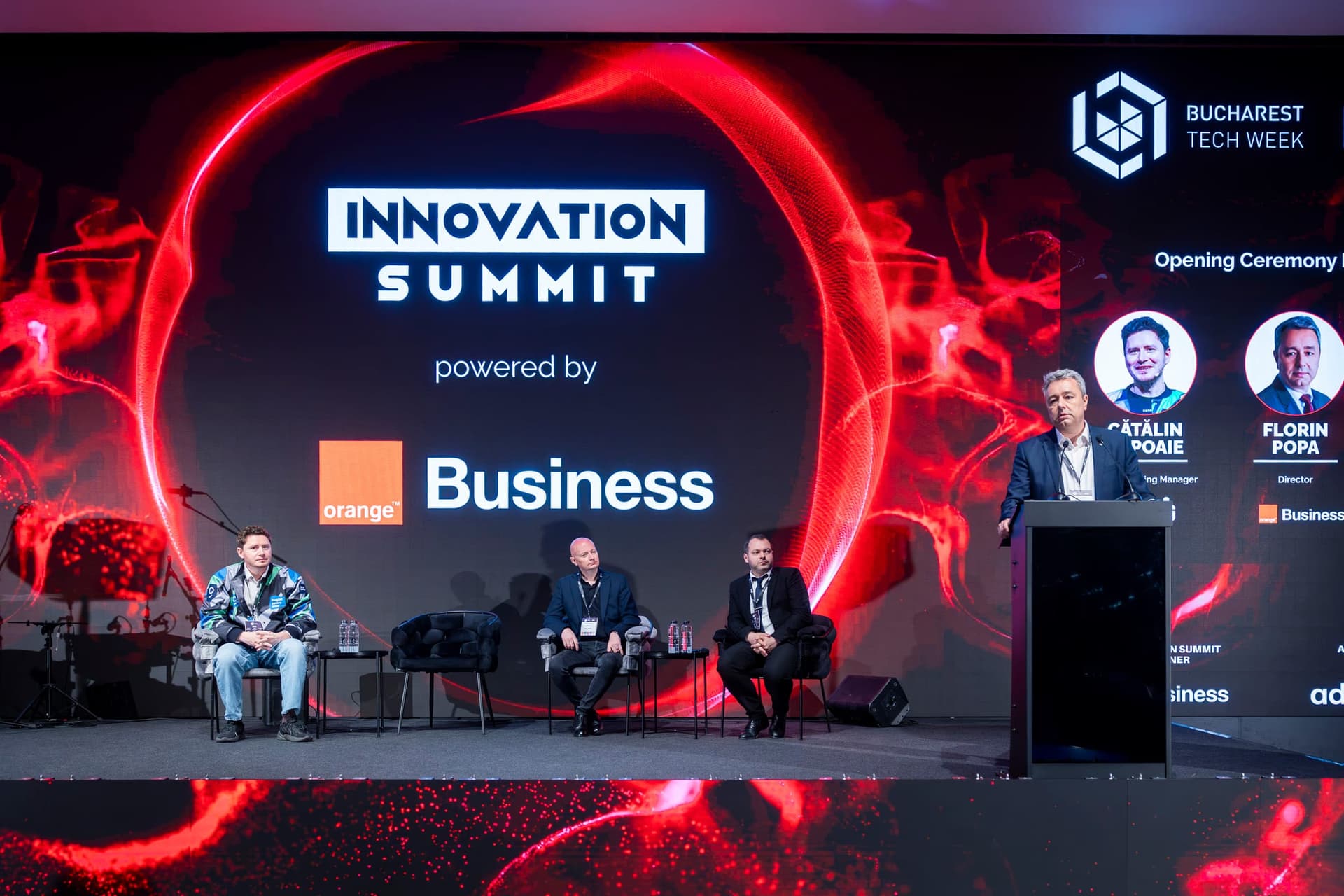
At the 10th edition of Innovation Summit, part of Bucharest Tech Week, seven international speakers and two panels arrived — without consulting each other — at the same thesis: when AI flattens everything, the differentiator is what's irreducible — community, brand, the human. Only one speaker broke the refrain. Right before the wine tasting.
Toward the end of the afternoon, after six hours of talks, Octavian Palade, the moderator, did something moderators rarely do: he dismantled his own brand on stage. „I just realised I have to change my logo. I run an AI agency for SEO, and I look at my logo — I used a hexagon. And it's even green."
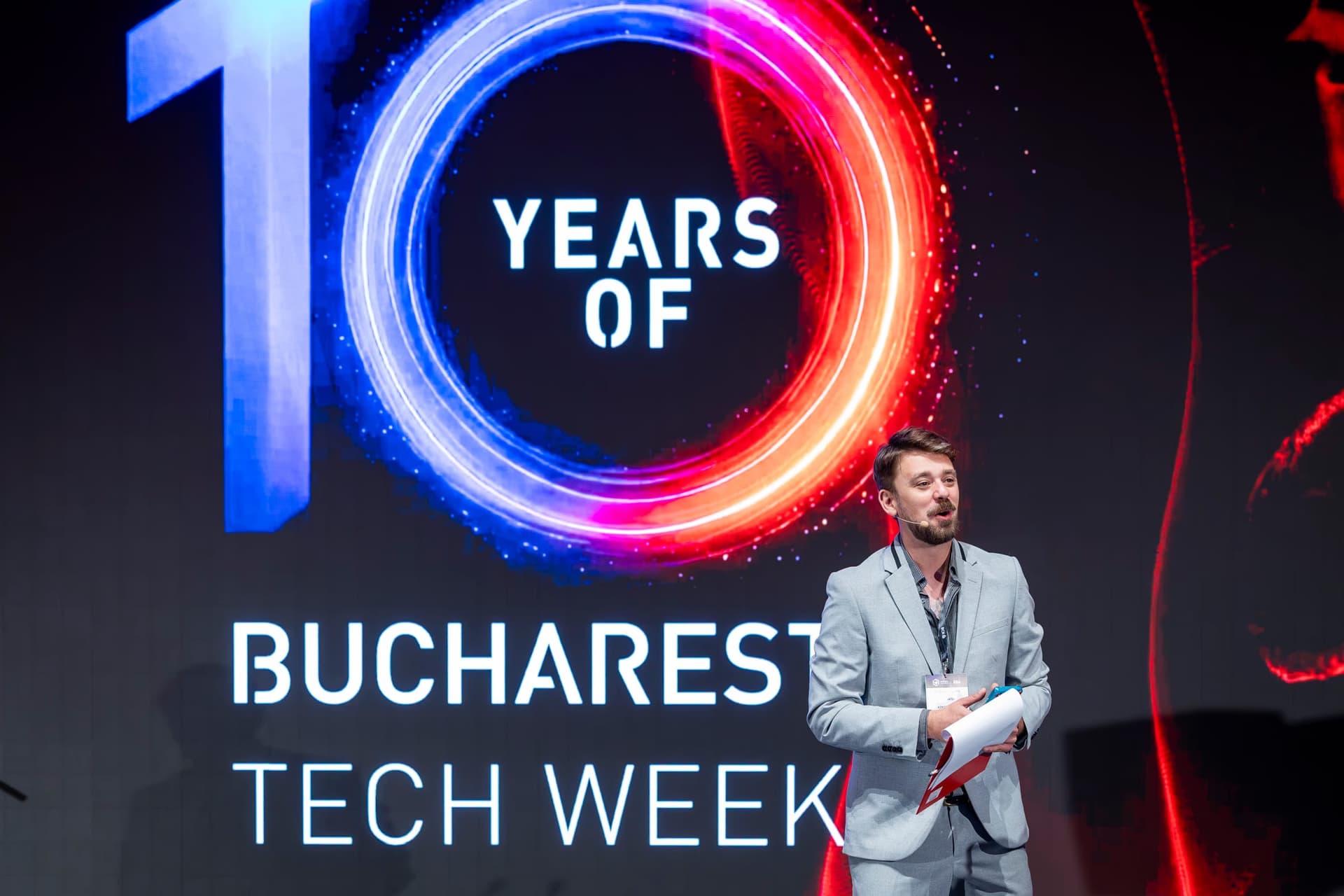
Laughter. Dani Rayner, former marketing director at Netflix, had just finished a slide of AI start-up logos — all of them featuring a hexagon. Her argument: „in the age of the algorithm, the biggest risk facing brands isn't irrelevance. It's indistinguishability."
On the stage of Innovation Summit 2026, seven international speakers and two panels arrived — without consulting each other — at the same thesis. The entire day was built on a single idea, never named explicitly: when AI gives everyone the same tools, what becomes the differentiator? The answer was delivered in four different ways — by Lars Silberbauer (ex-LEGO, now Goldman Sachs), Dani Rayner (ex-Netflix), Tatiana Makhankova (Diageo / Johnnie Walker), and Regina Quartey (ex-PwC, founder of Executive) — but it was always the same: community, brand essence, the fact of being irreducible.
Only one speaker broke the refrain. Right before the closing, right before the wine tasting.
The Numbers Worth Taking Home
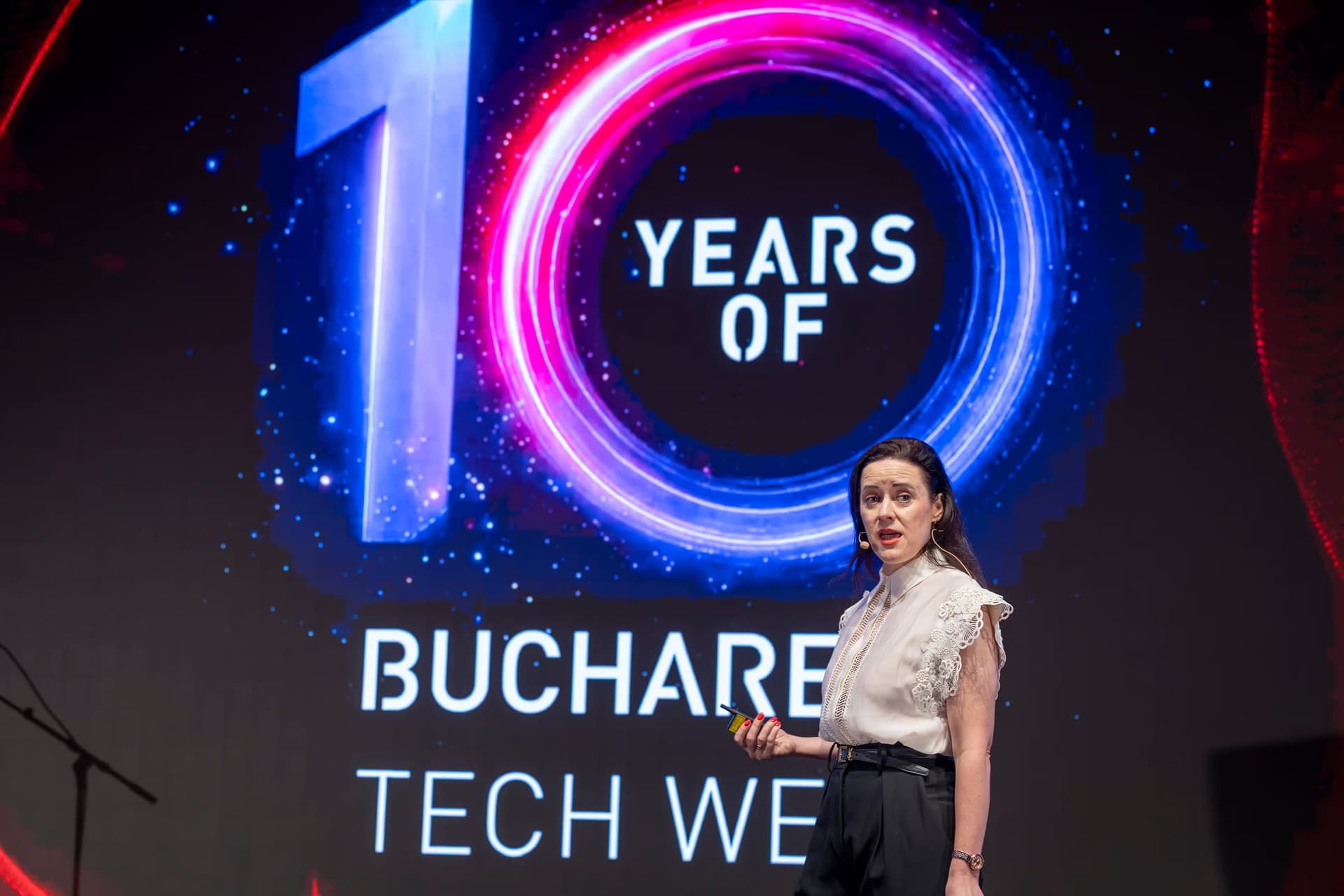
The strongest numbers of the day came from Renāte Strazdiņa, National Technology Officer for Northern Europe at Microsoft, who made public — for the first time — the Microsoft score for Central Europe's AI organisational readiness: 2.2 out of 5. Romania scores strongly on technology and data; weakly on governance and strategy. A global frame from Microsoft's AI Diffusion Report adds context: 70.8% of the working-age population now uses GenAI, but only 16% are „frontier users" — the rest stagnate below 60% of their potential.
Strazdiņa delivered a Romanian case study that explains her thesis: Banca Transilvania (the country's most innovative bank). The chatbot agent integrated into its BT Pay app handles 150,000 interactions a month — 80% resolved autonomously. Not pilot. Production.
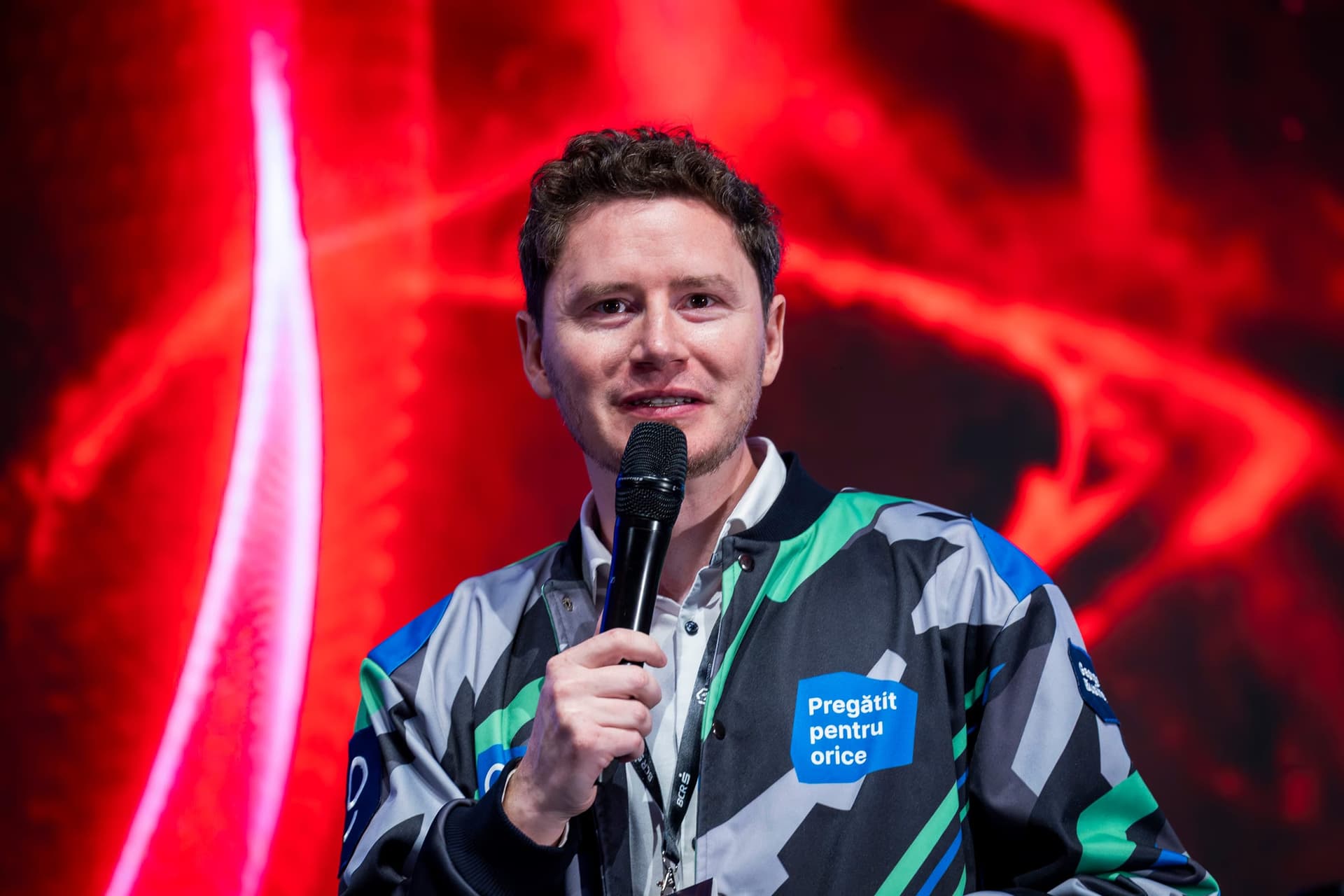
Earlier, in the opening, Cătălin Lupoaie (BCR — Banca Comercială Română, one of Romania's largest banks) had cut out a figure that the business community rarely hears: of 670,000 active companies in Romania, only 44,000 have revenue above 1 million EUR, and only 6,000 turn a net profit above that threshold. His conclusion: Romanian tech start-ups should look not at corporations (where Big Four firms resolve things in three months anyway), but at SMEs in the 1–10 million EUR range.
At George Business — BCR's flagship business banking platform — „one in three Romanian companies uses it; over 10,000 companies; 12 billion EUR in monthly transaction volume" (Emilia Dumitrașcu, Proxy Product Owner). At Diageo, 30% of visitors to Johnnie Walker House who taste the liquid buy it on the spot — a conversion ratio no e-commerce channel matches.
And the figure that, ironically, demolishes the „retail is dying" narrative: at LVMH, 95% of sales still come from physical stores, in 2025.
The Unspoken Thesis — and Why It Mattered
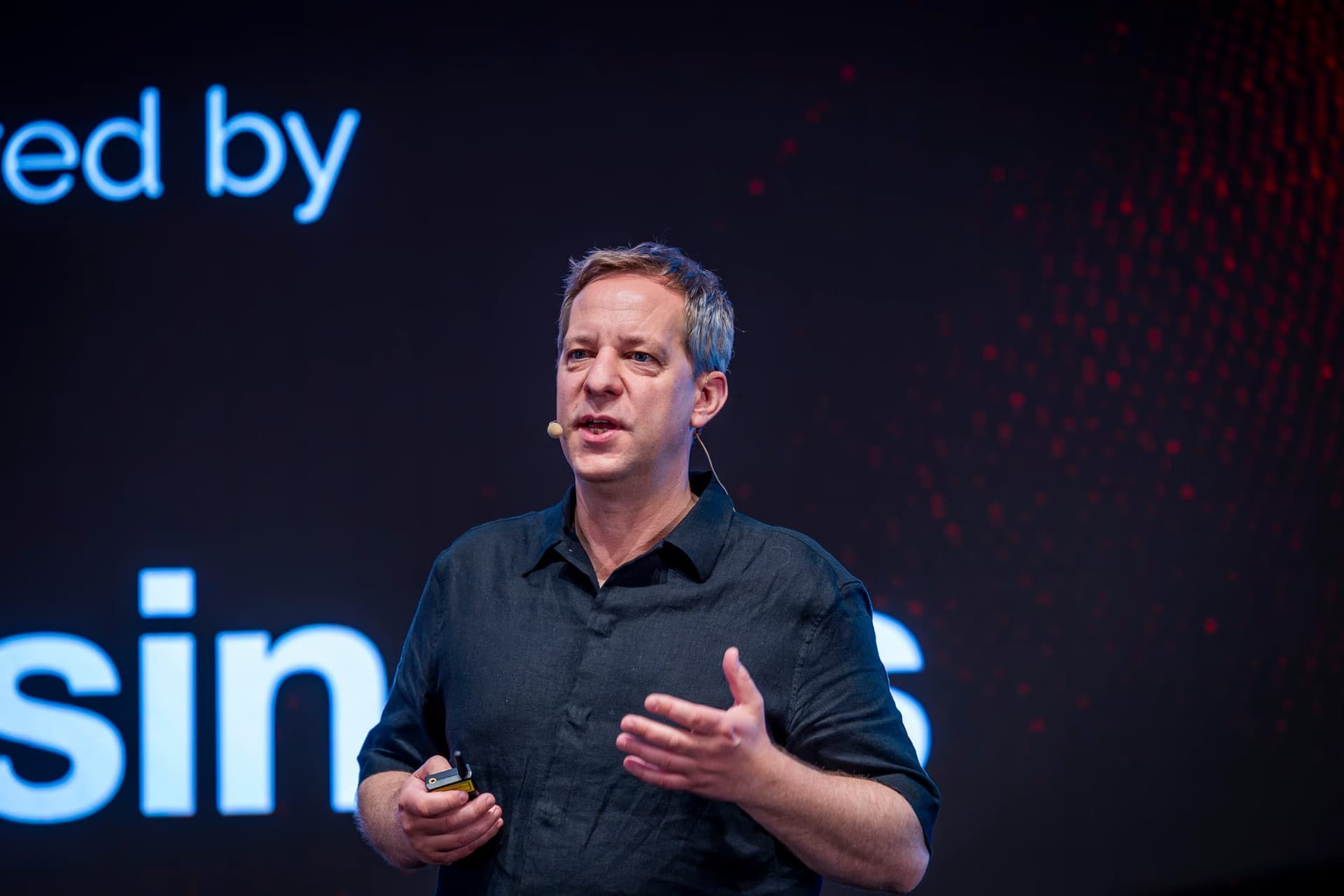
Lars Silberbauer opened it, even as he ostensibly spoke about something else entirely. Ex-CMO at the Olympics (the Tokyo rebrand done in 7 months, during the pandemic, „ten people locked in a room in Switzerland"), ex-LEGO where he built the community-led crowdsourcing platform. His lesson: organisations don't fail from a lack of strategic clarity. They fail because „we have liabilities in our mindset that, unless we recognise them, prevent us from moving forward." The antidote: brand essence and community.
LEGO Ideas — his platform — generates 1 billion USD a year. The condition for a set to reach production: not likes, but 10,000 supporters who answer a serious questionnaire. The sales response comes from the community that contributes, not the one that merely reacts.
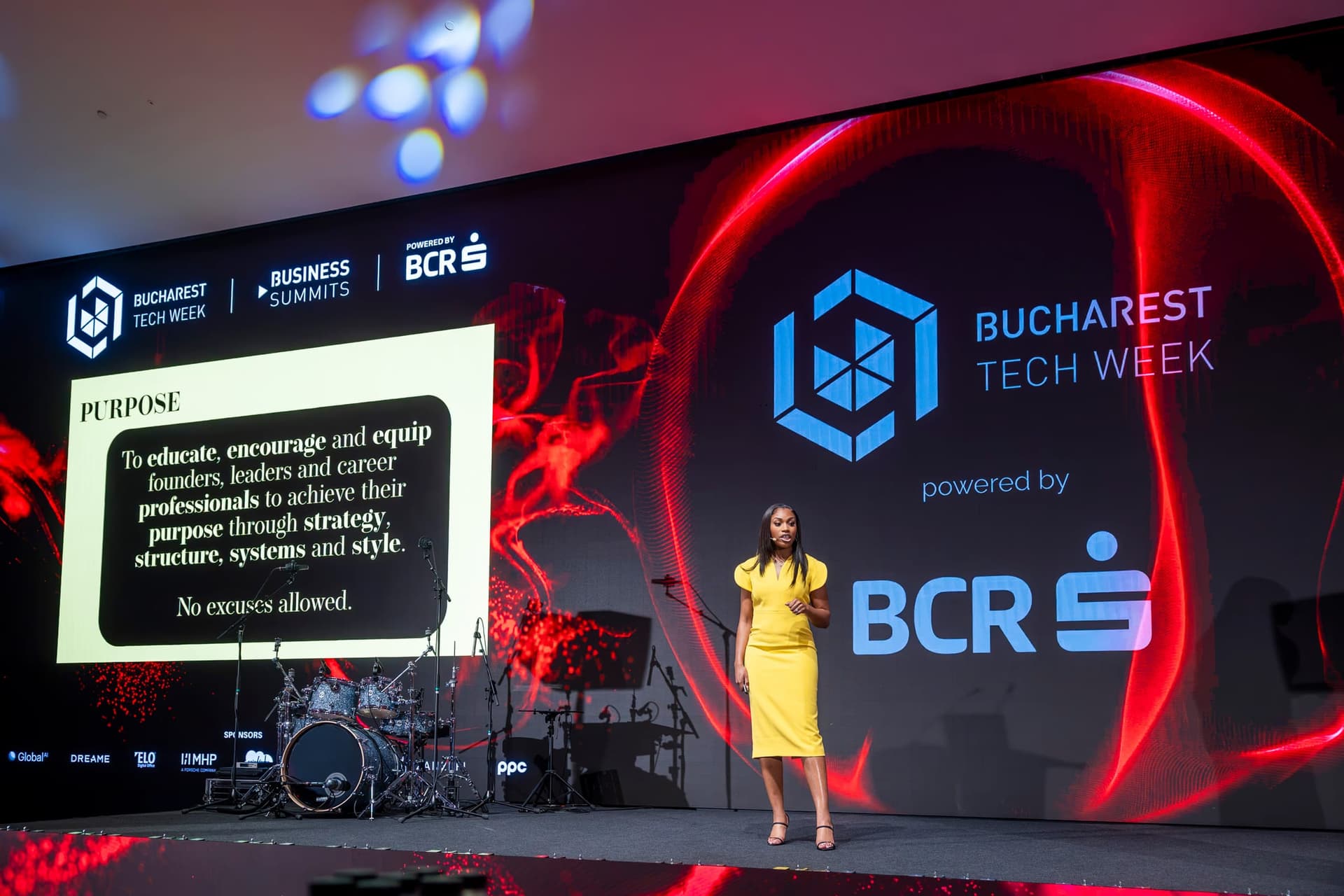
Regina Quartey continued the refrain with B2B numbers: 73% of B2B decision-makers find thought leadership more credible than other materials; 92% trust a company more whose executives are publicly active. In the AI era, she said, the differentiator is no longer technical expertise — everyone has the same toolkit. It is „the face people recognise — with a position."
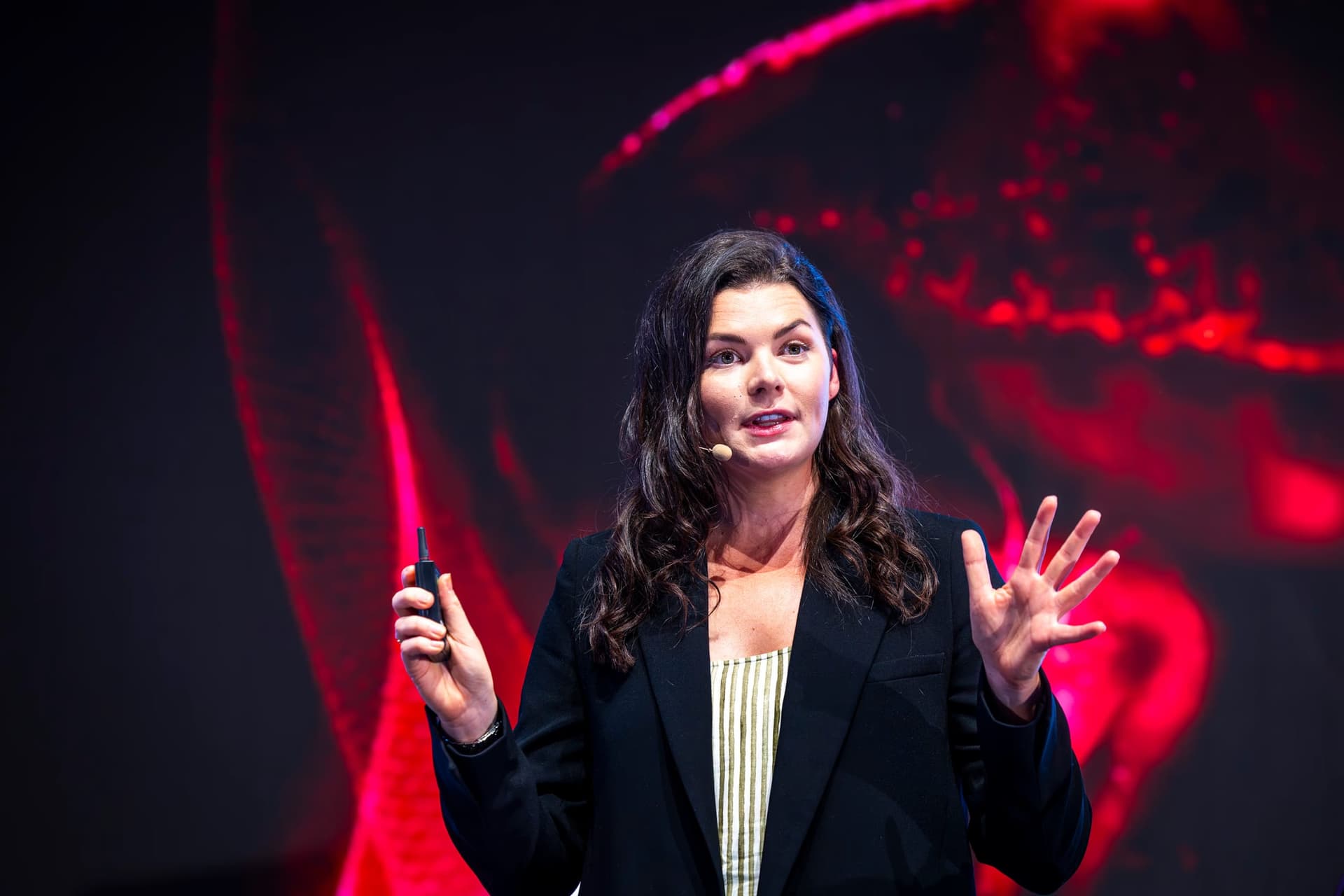
Dani Rayner named the failure: five „behavioural traps", of which the fourth — the optimization trap — is the one Octavian Palade declared himself a prisoner of, in 30 seconds. Faceless brand syndrome.
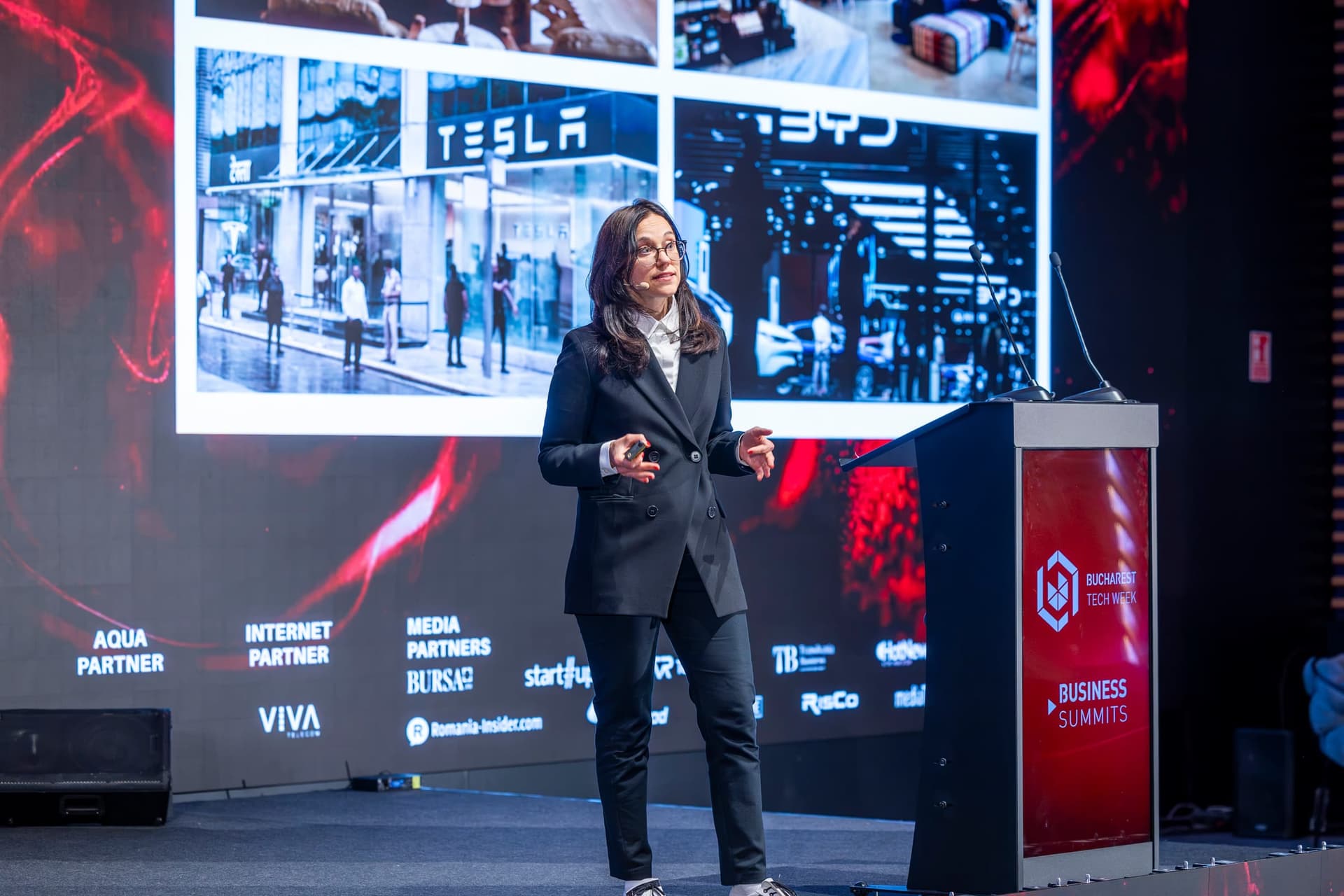
Tatiana Makhankova closed the case empirically: large brands invest billions in physical spaces not for sales but to build „the relationship — which, in the era of AI and infinite content, may become the most valuable asset of all."
All four — without consulting each other — painted the same picture.
The Speaker Who Refused to Sing in Unison
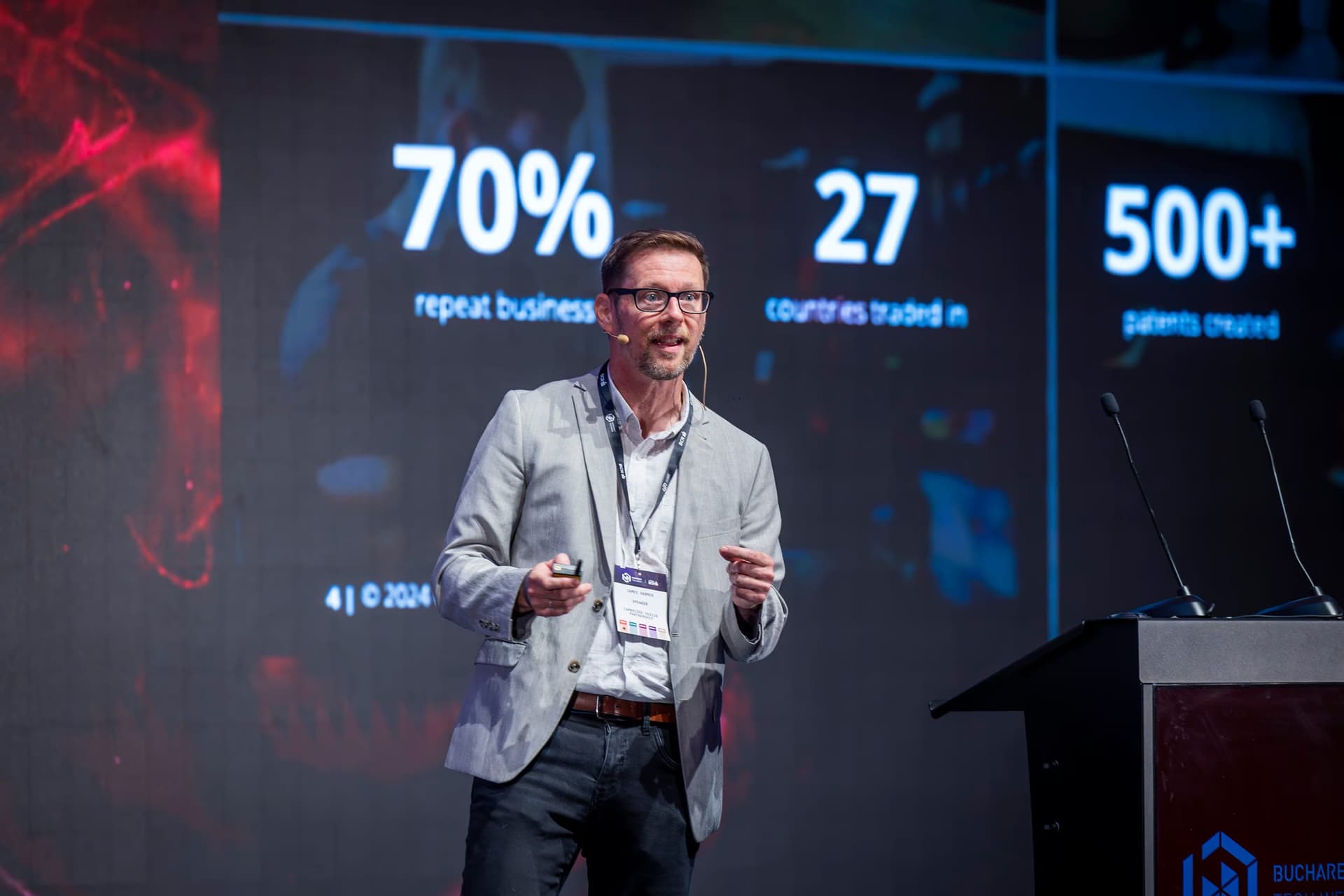
Then James Harmer, Planning and Strategy Leader at Cambridge Design Partnership, took the stage. He was the last speaker. The mood was set, the room enchanted by AI's productive future. James allowed himself the luxury of dissonance.
„AI is now approaching, in terms of water consumption, the bottled-water companies."
A second of silence in the room. Then, the regulation coming: Right to Repair. James, with the calm of a surgeon: „When Right to Repair comes — and it's coming — these companies will be sweating." Consumer-electronics manufacturers have spent years delaying small packaging changes. They are now staring down a regulation that will force a complete redesign.
His value-retention numbers: Caterpillar — the most successful circular-economy story in the world. Philips Medical — one in three medical products is already returnable/circular, the result of a strategy set fifteen years ago.
And the bitterest of all: the first time he saw a modular phone was 12 years ago, when Google owned Motorola. „It had zero success." Octavian Palade — who had already embraced vulnerability that day — confessed that Project Ara still haunts him. „Is it somehow our responsibility, too, that circular products haven't succeeded?" James agreed.
Three Things Remain After Innovation Summit 2026
One, AI has stopped being the topic of the edition — it has become its language. Every speaker discussed AI without announcing they would. That is maturity. But it is also a risk: when a technology becomes language, we stop evaluating its cost. James Harmer was the only one who did. And he was the last. He should have been the first.
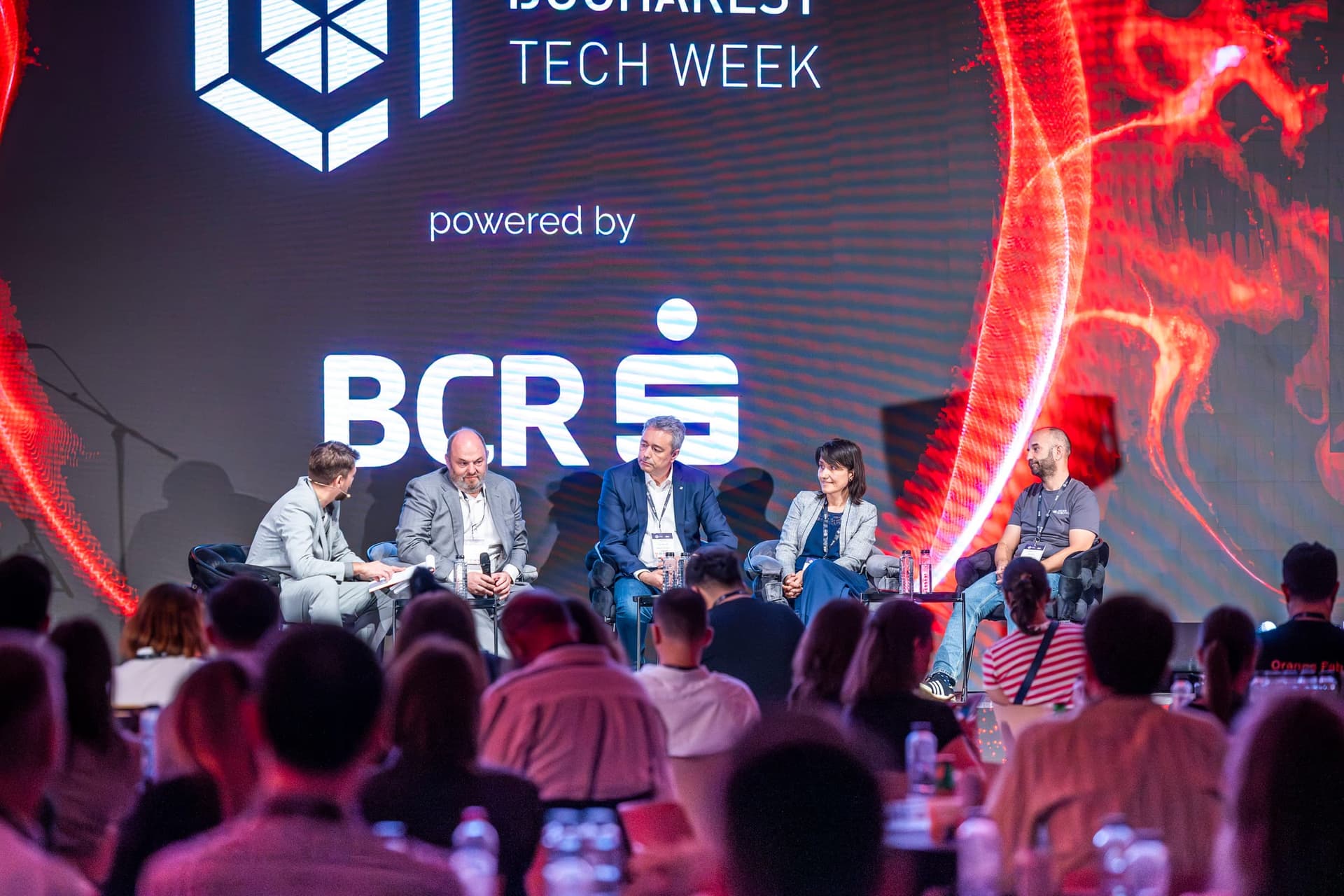
Two, there is a subtle Romanian thesis, visible only if you put the data side by side. 6,000 companies with profit above 1 million EUR (BCR). 2.2 out of 5 on the region's organisational readiness (Microsoft). Agora Robotics — a Bucharest start-up, founder Bogdan Lupu — who admitted on stage that Munich is friendlier to Series A funding. The gap with Western Europe is not technological. It is institutional and a matter of patient capital.
Three, there is a question no one asked on stage, but which floats over the entire day: who teaches the Romanian public about AI's limits? In a room full of directors, marketers and consultants, the show of hands at „who uses GenAI" — close to 100%. At „who has a clear organisational strategy for AI" — a few hands. At „who stopped going to the doctor after asking ChatGPT" — fewer still, but not zero.
That doesn't get solved at a summit. But without a summit, it cannot even be seen.
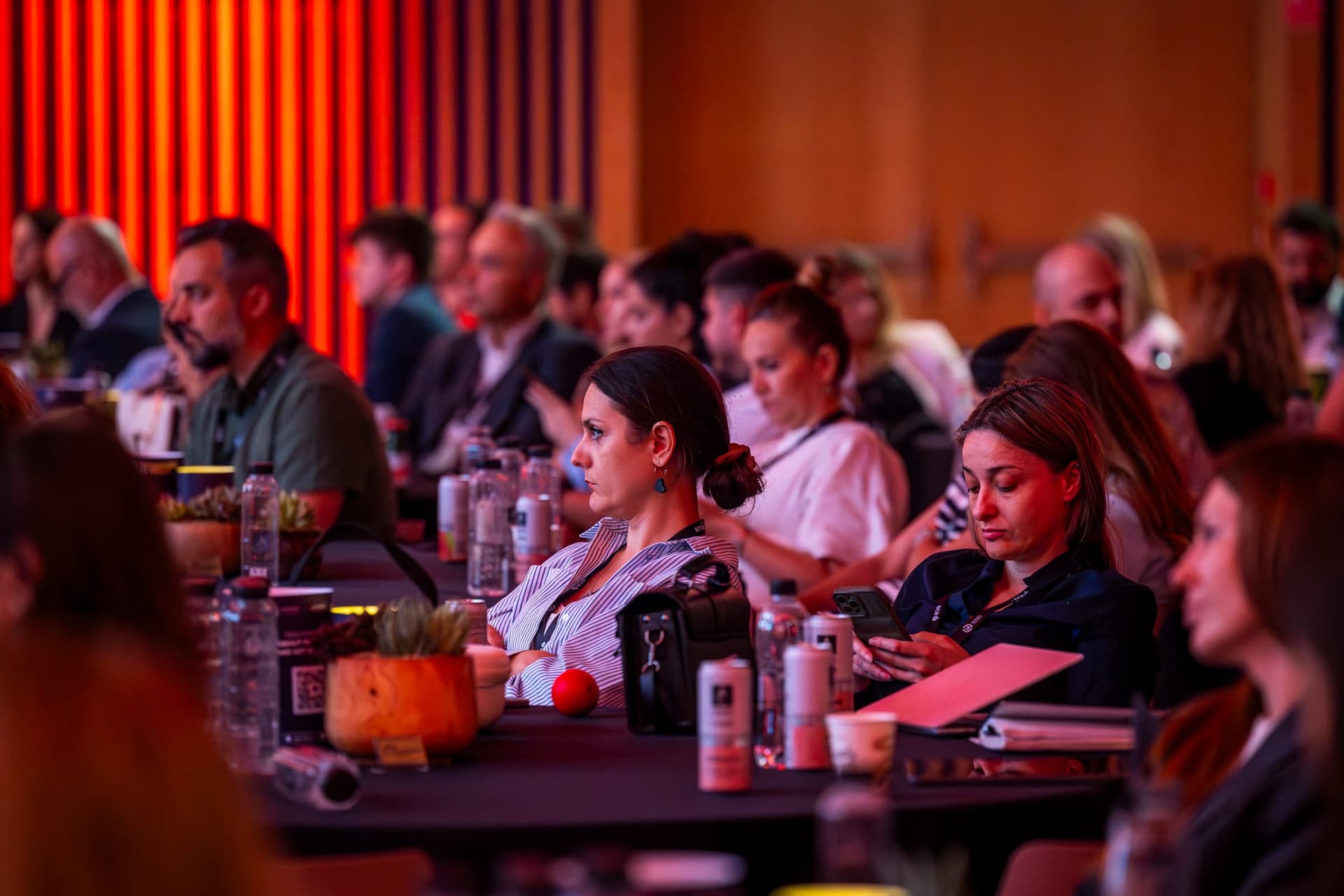
Photoreportage by Adi Coco · Seeing Romania · 16 June 2026.
1 / 15