

To the Deer, at the End of the Stone Road
A Place · Suceava · Dârmoxa
Half an hour of rattling over stone, from the national road up to 1,250 metres, a coffee on the terrace, a five-lei entrance fee — and a herd of Carpathian red deer grazing beneath the windows of the timber cabins. A reportage from the farm in the Bistrița Mountains where, one day in June, I arrived as the only visitor.
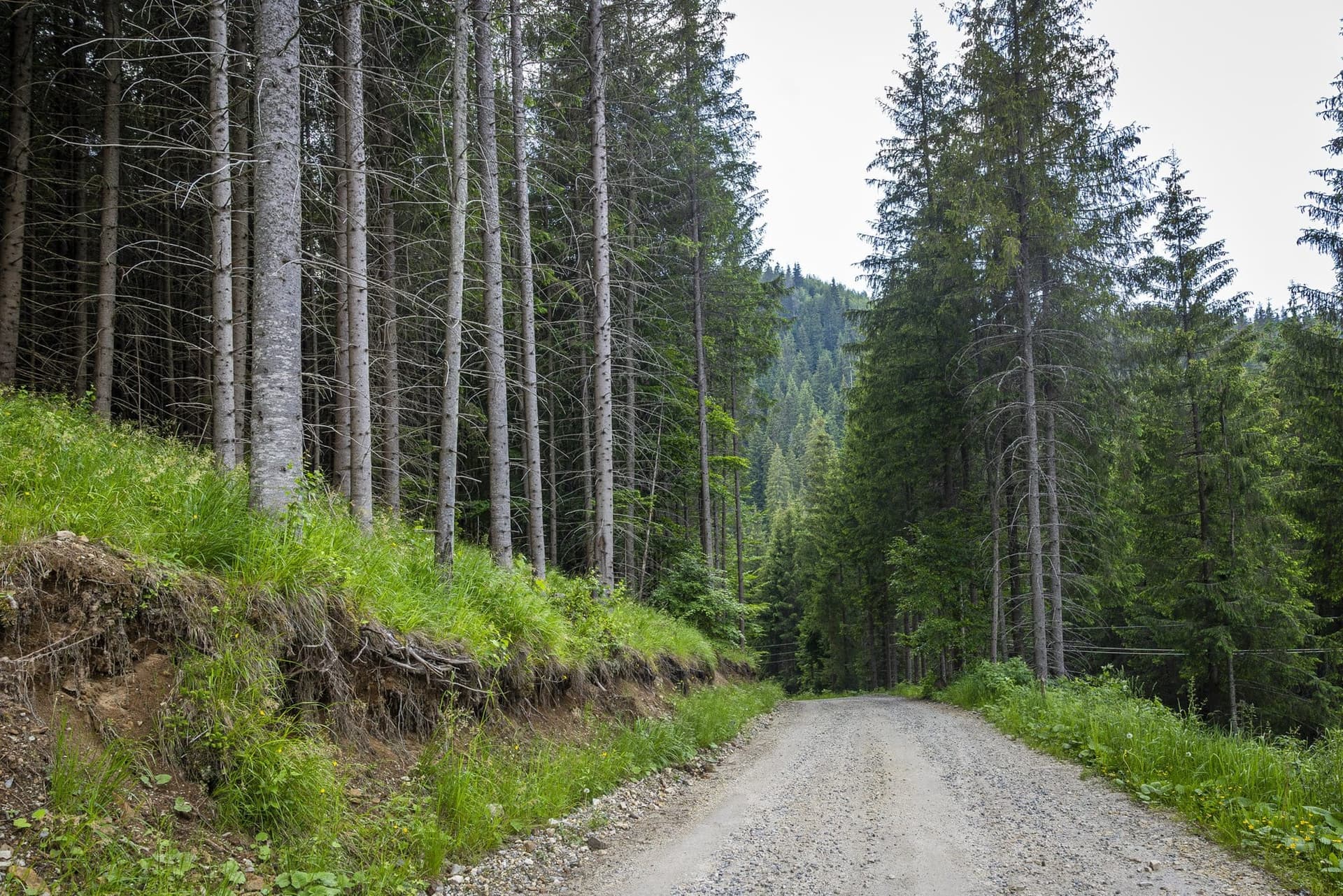
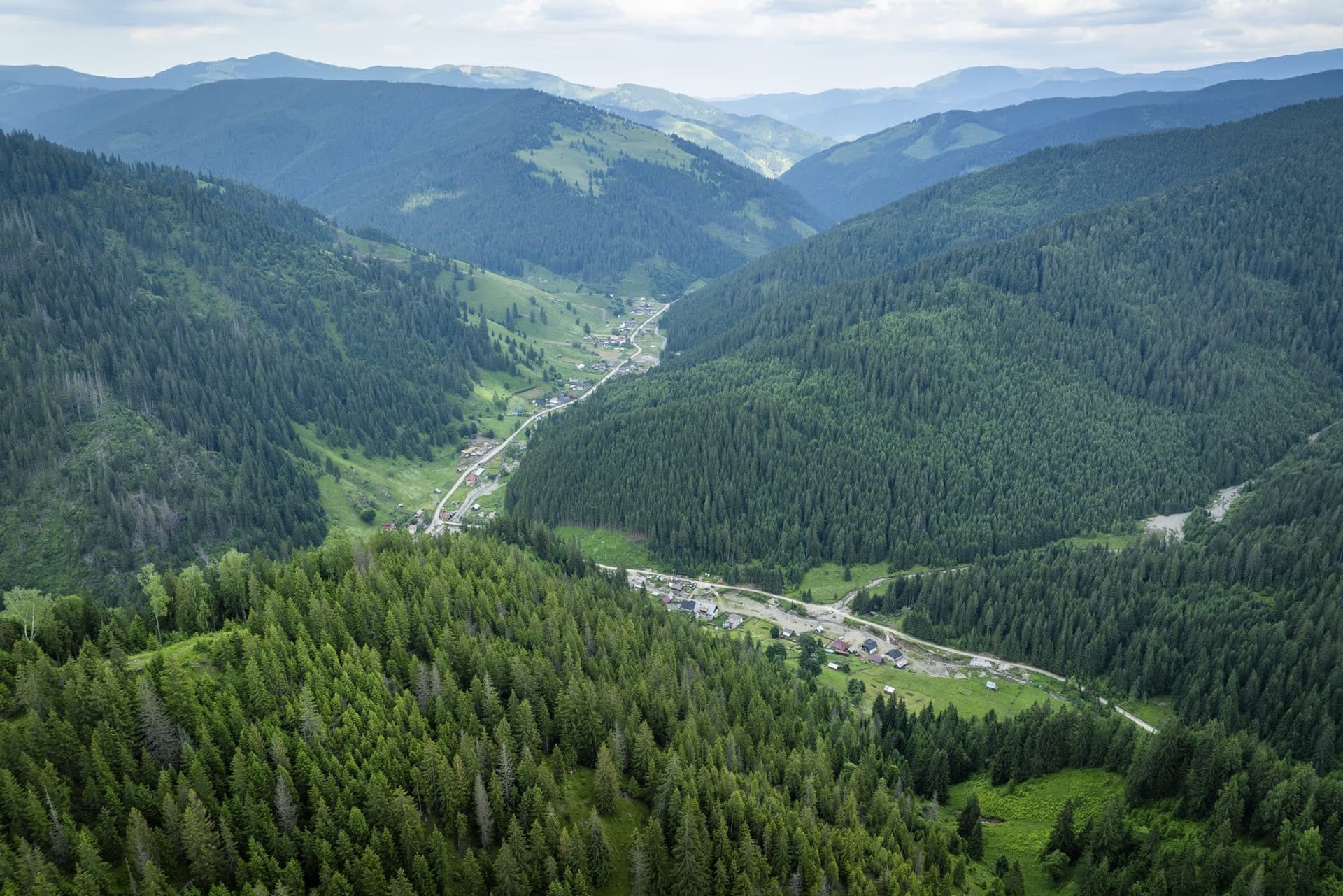
From national road DN17B, coming from Vatra Dornei, the road to the deer peels away from the tarmac and climbs into the forest like a promise you have to take on trust: stone, potholes, spruce and, every so often, a gate of light between the crowns. I drove that way for some thirty minutes, at the speed the road dictates, not the one impatience would prefer. At the top, where the forest opens abruptly into a clearing the size of a plateau, a simple truth is waiting: places that make you earn them usually know why.
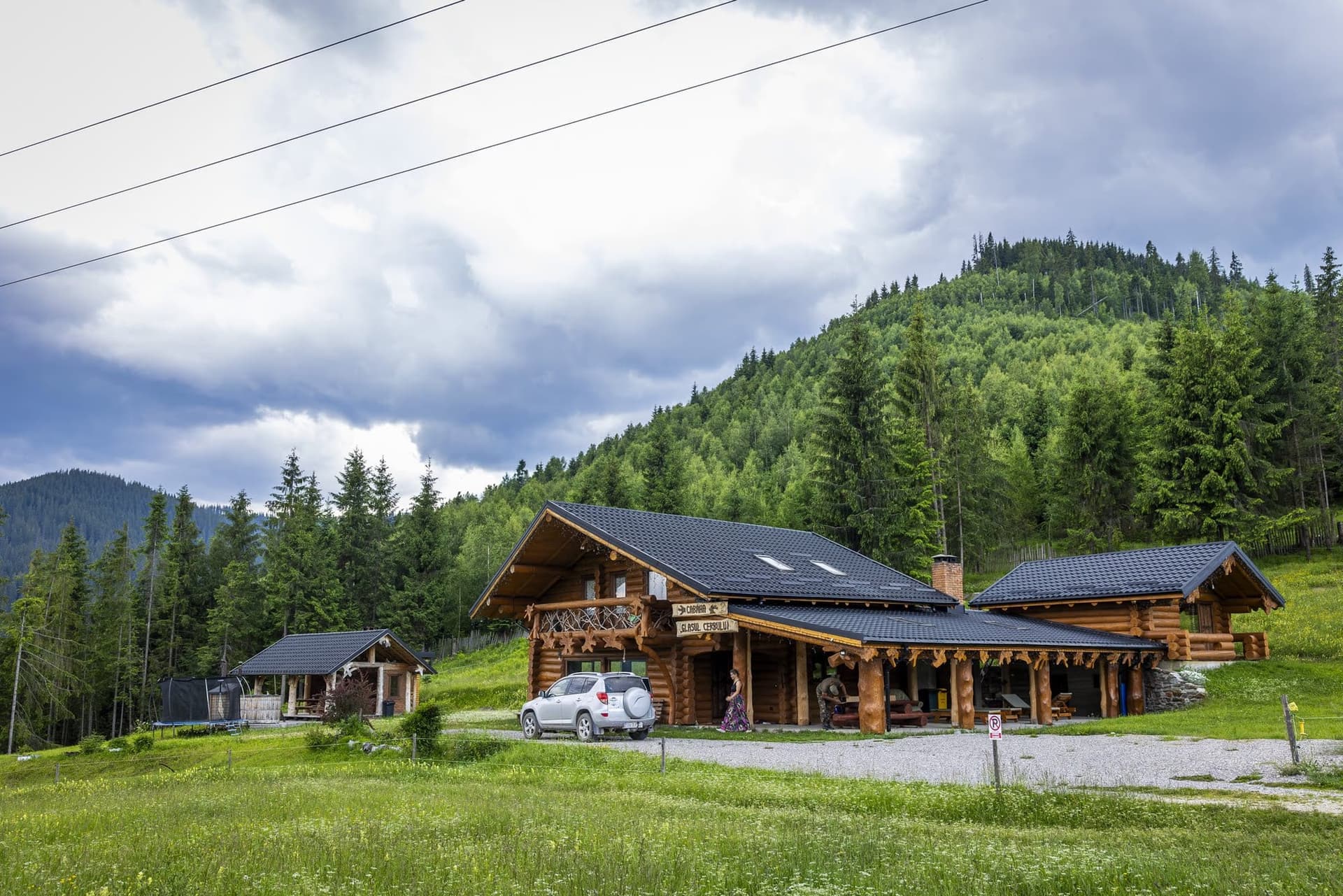
At the entrance to the farm stands a log cabin with a terrace. I drank a coffee there, the mountains in front of me and a silence so complete you could hear it at work. The entrance fee: five lei. It is probably the cheapest ticket in Romanian tourism — and one of the very few about which there is absolutely nothing to say against. At that moment on 25 June I was the only visitor: no other car, nobody on the paths. For the space of an hour, an entire place, for a single person.
Up where the path ends
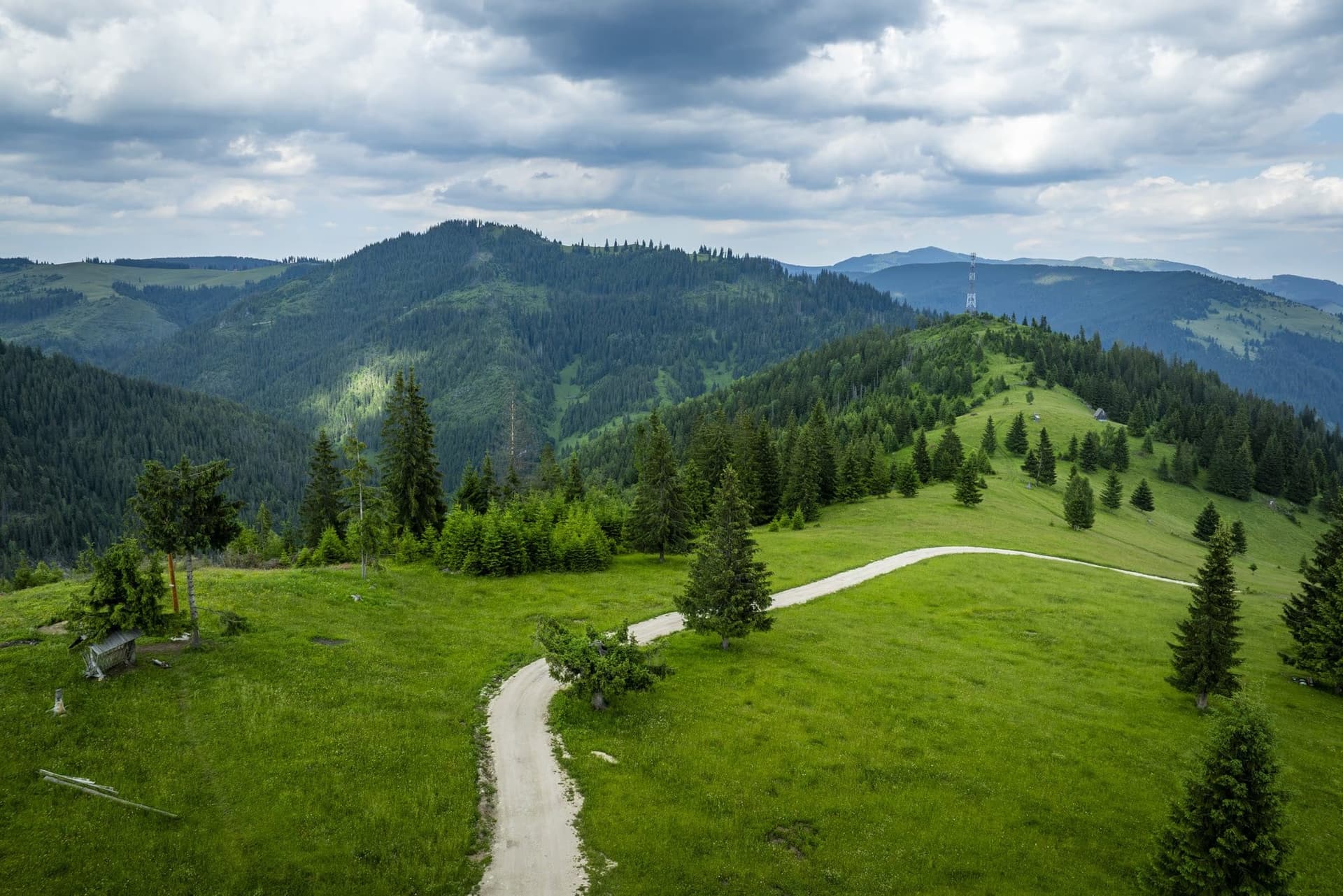
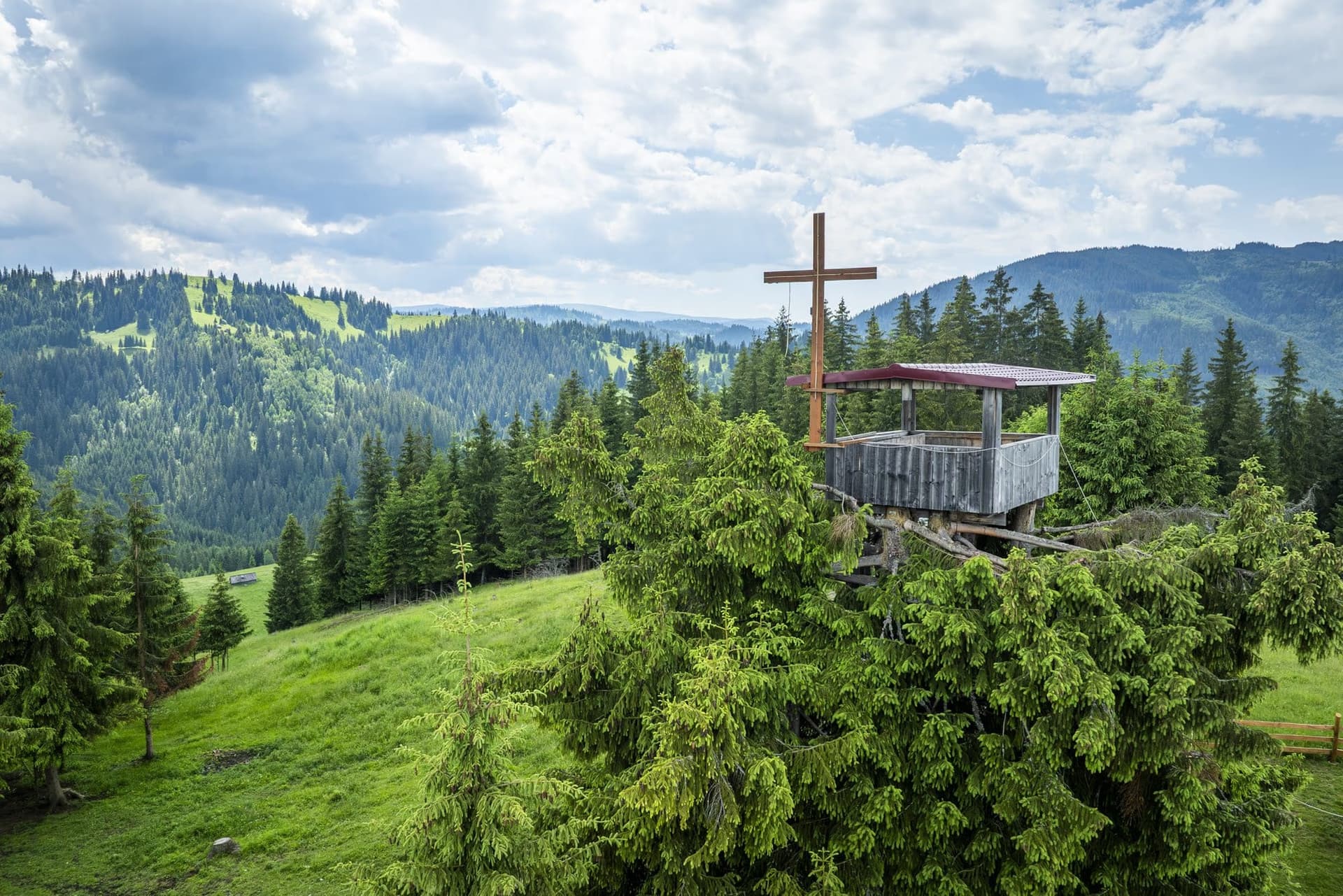
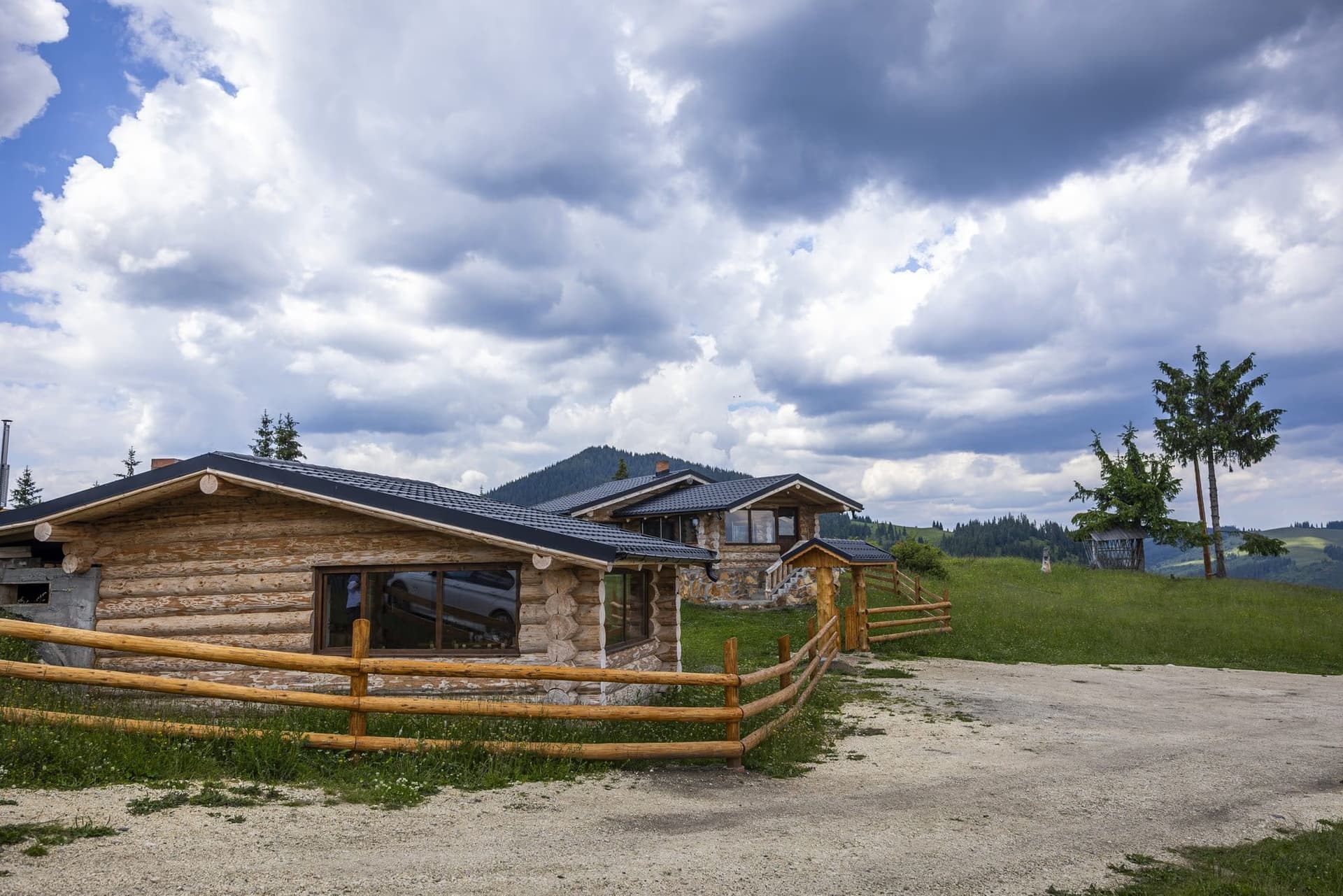
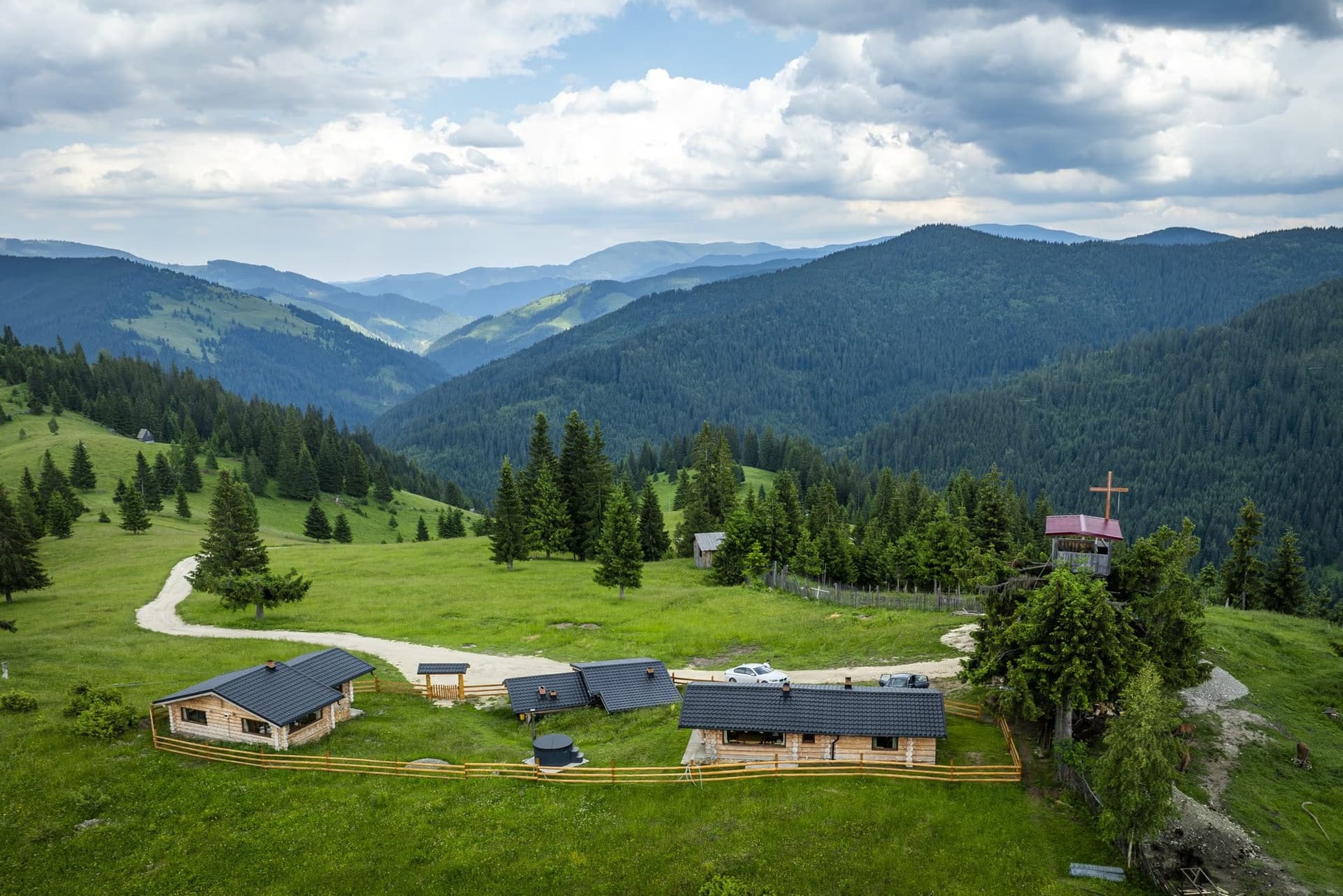
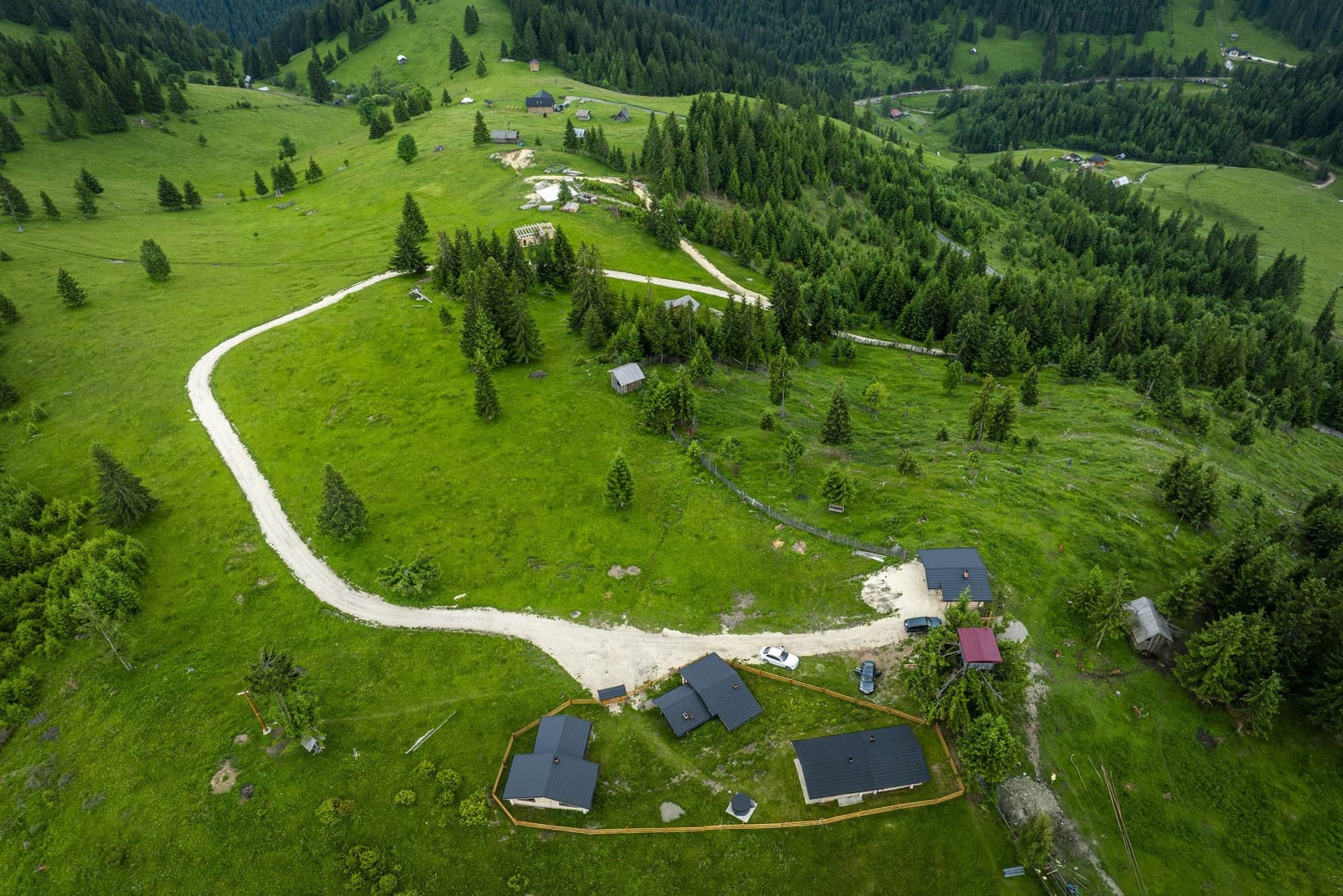
From the terrace you climb gently through the clearing. The farm unfolds as you gain height: timber cabins with black roofs, plank fences nailed to stout posts, a gazebo with a pointed spire, like a small church without walls. At the highest point stands the observation platform — a timber deck perched in the crown of an old spruce, with a cross above it, as though someone had wanted to put the watching and the blessing in the same place.
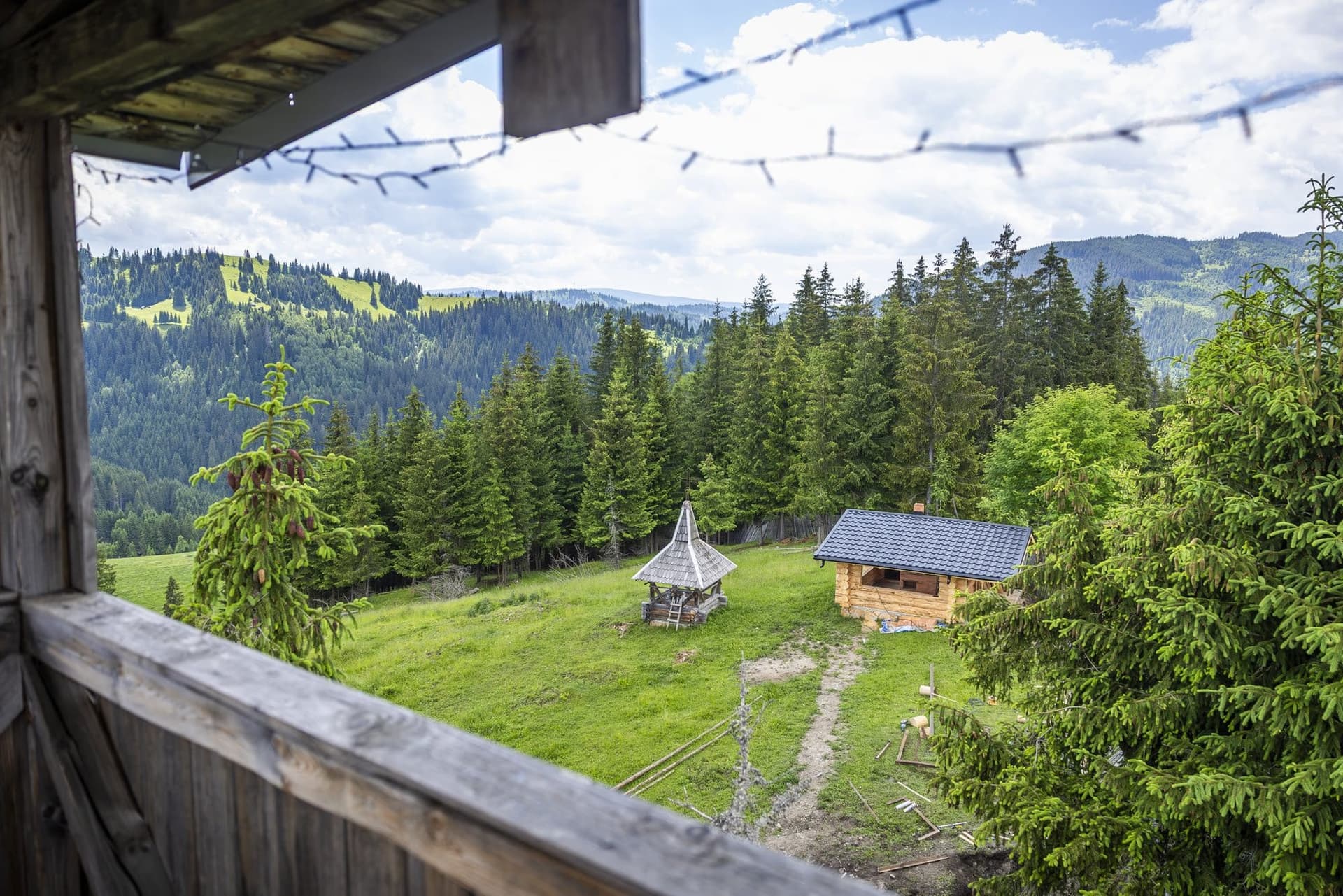
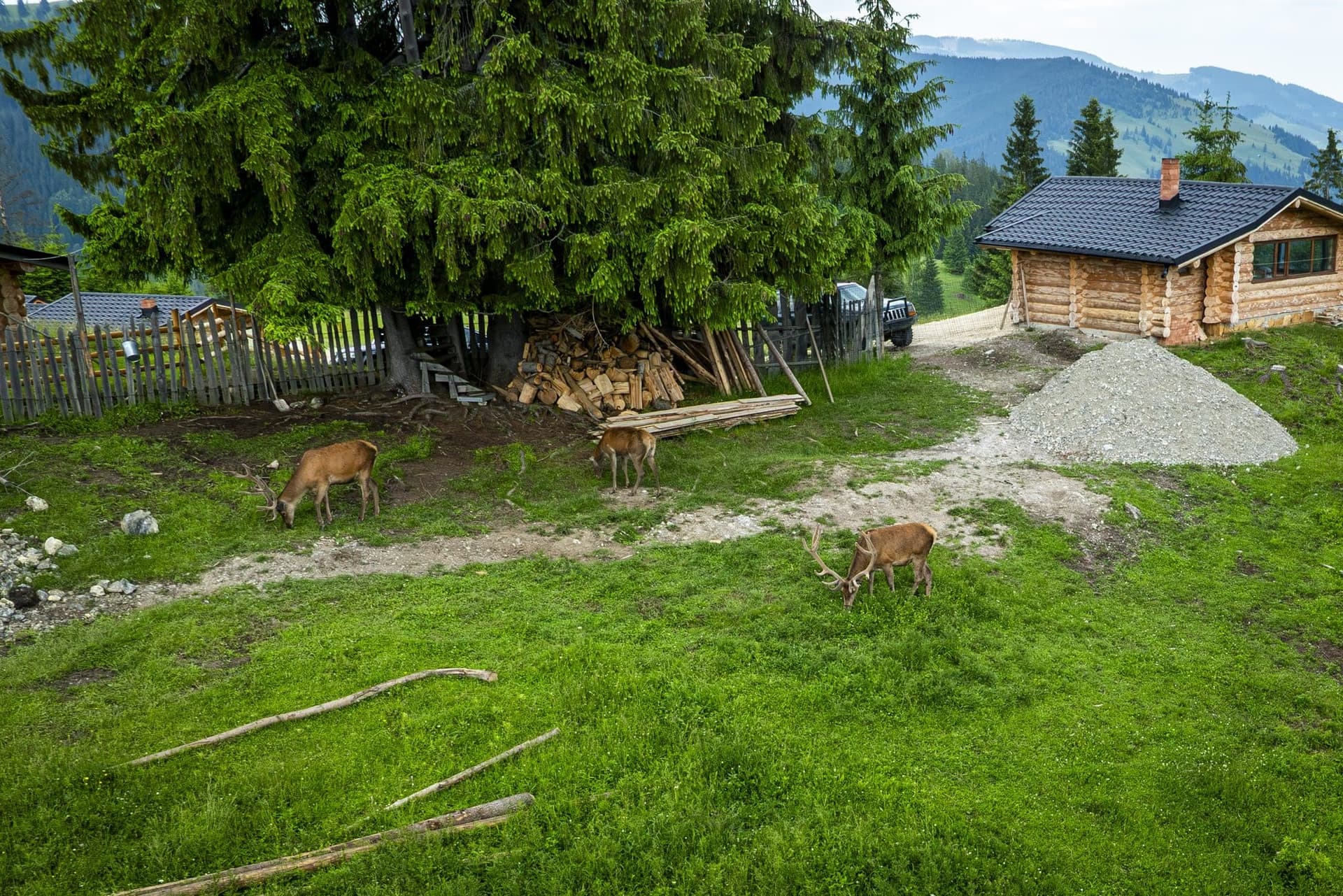
The accommodation is up here too — log cabins placed so that the windows open straight onto the deer enclosure. Not "mountain views", as the guesthouses promise: deer views. You wake, draw back the curtain and, a few metres away, a stag of more than two hundred kilograms is parading his crown through the wet grass.
Gentlemen in velvet
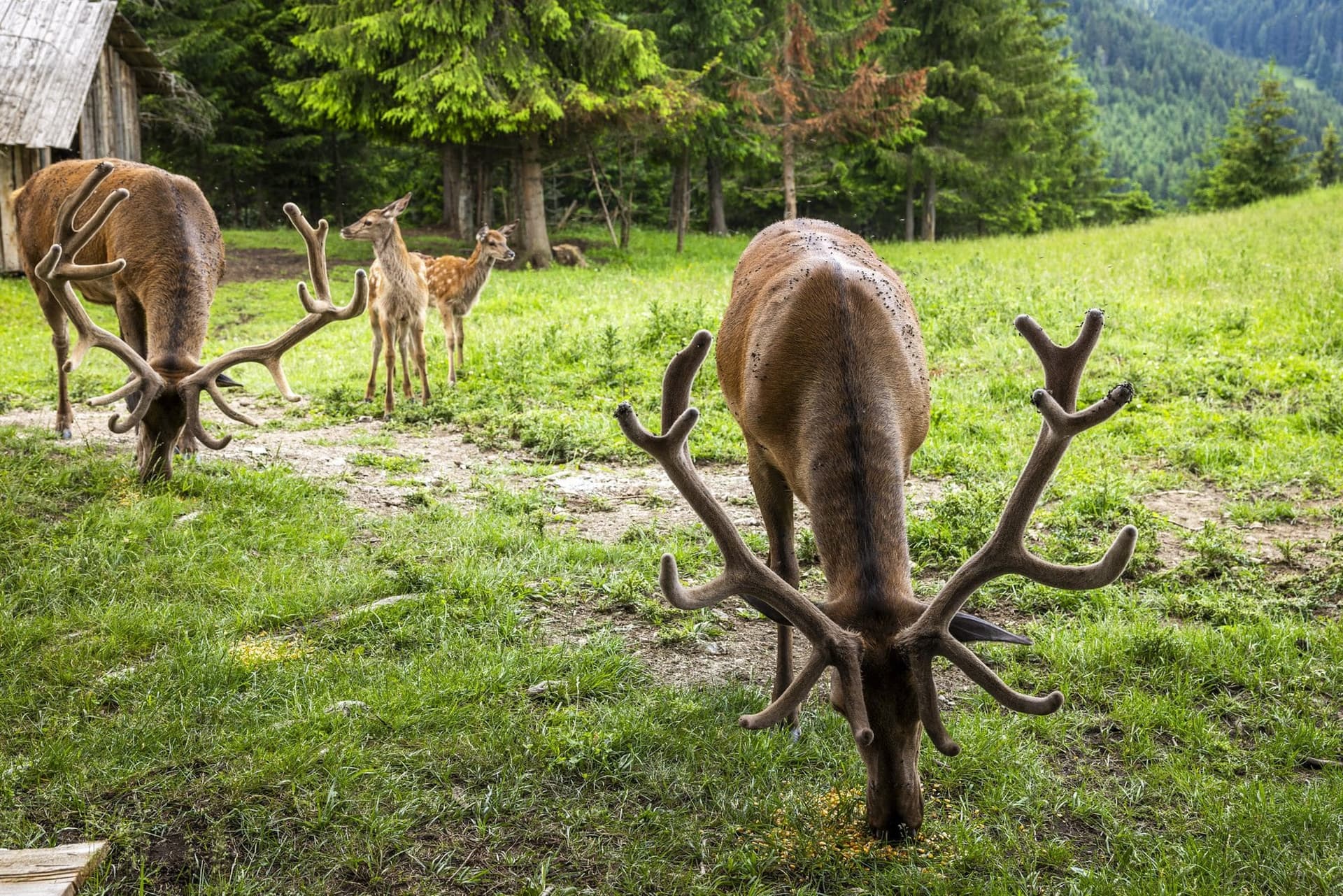
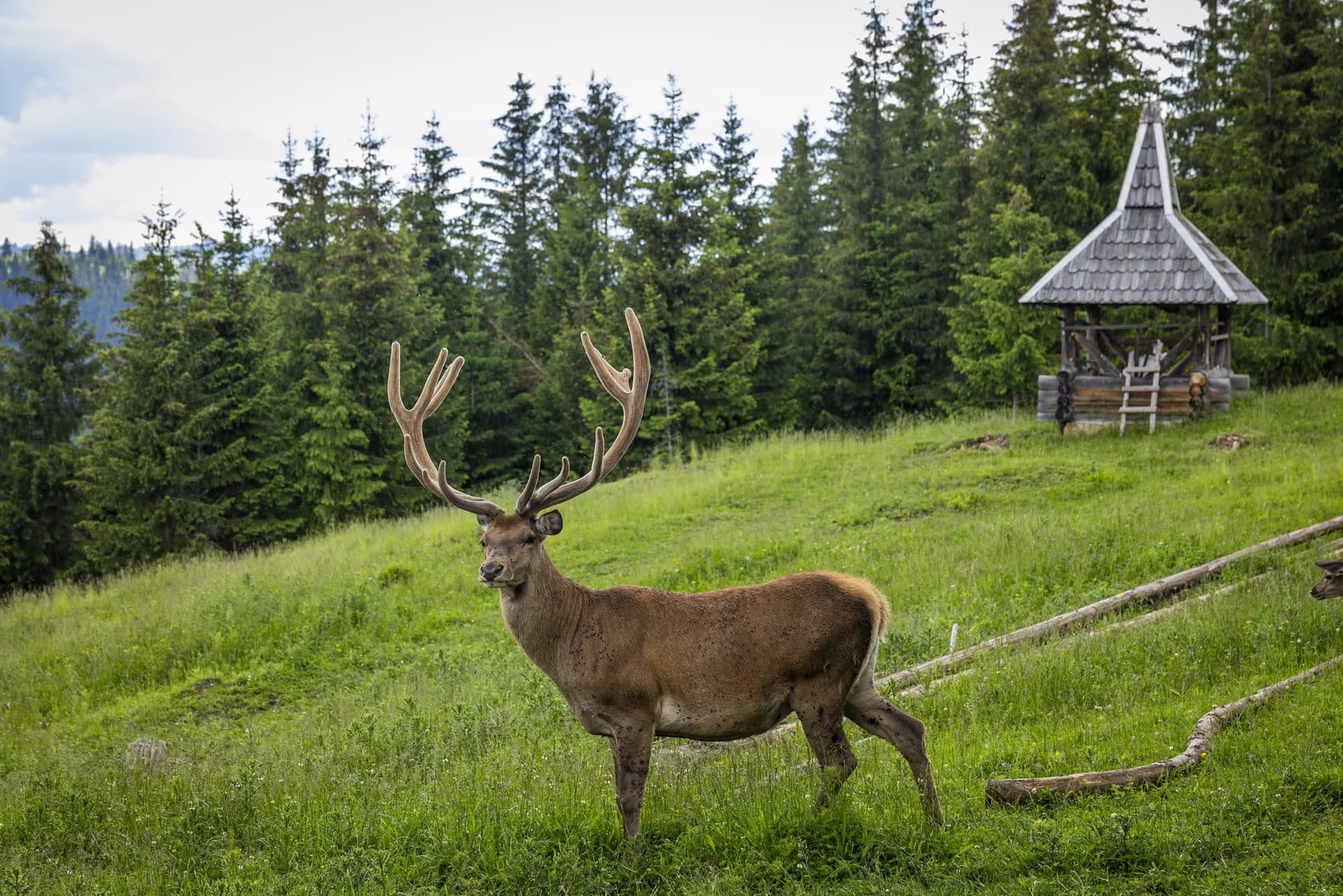
The deer keep no one waiting, because they have no reason to: the grass is theirs, the clearing is theirs, and the visitor a passing curiosity. In June the stags carry their new antlers, grown since spring, still wrapped in that soft, fawn-brown velvet that gives them an almost domestic air — like good furniture, freshly upholstered. Only towards autumn, when the velvet falls away and the bone polishes to a shine, do the crowns become the weapons we know from photographs of the rut.
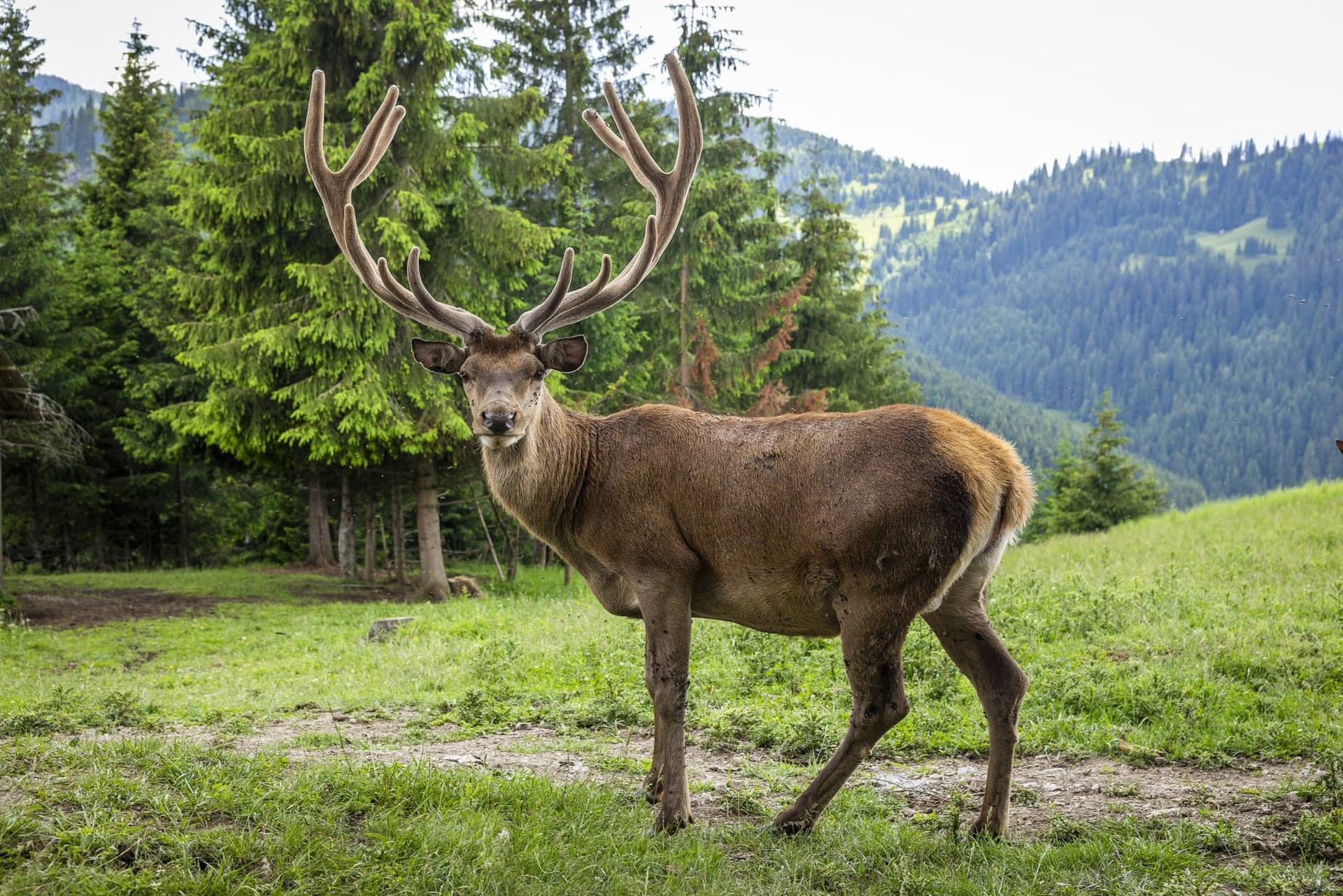
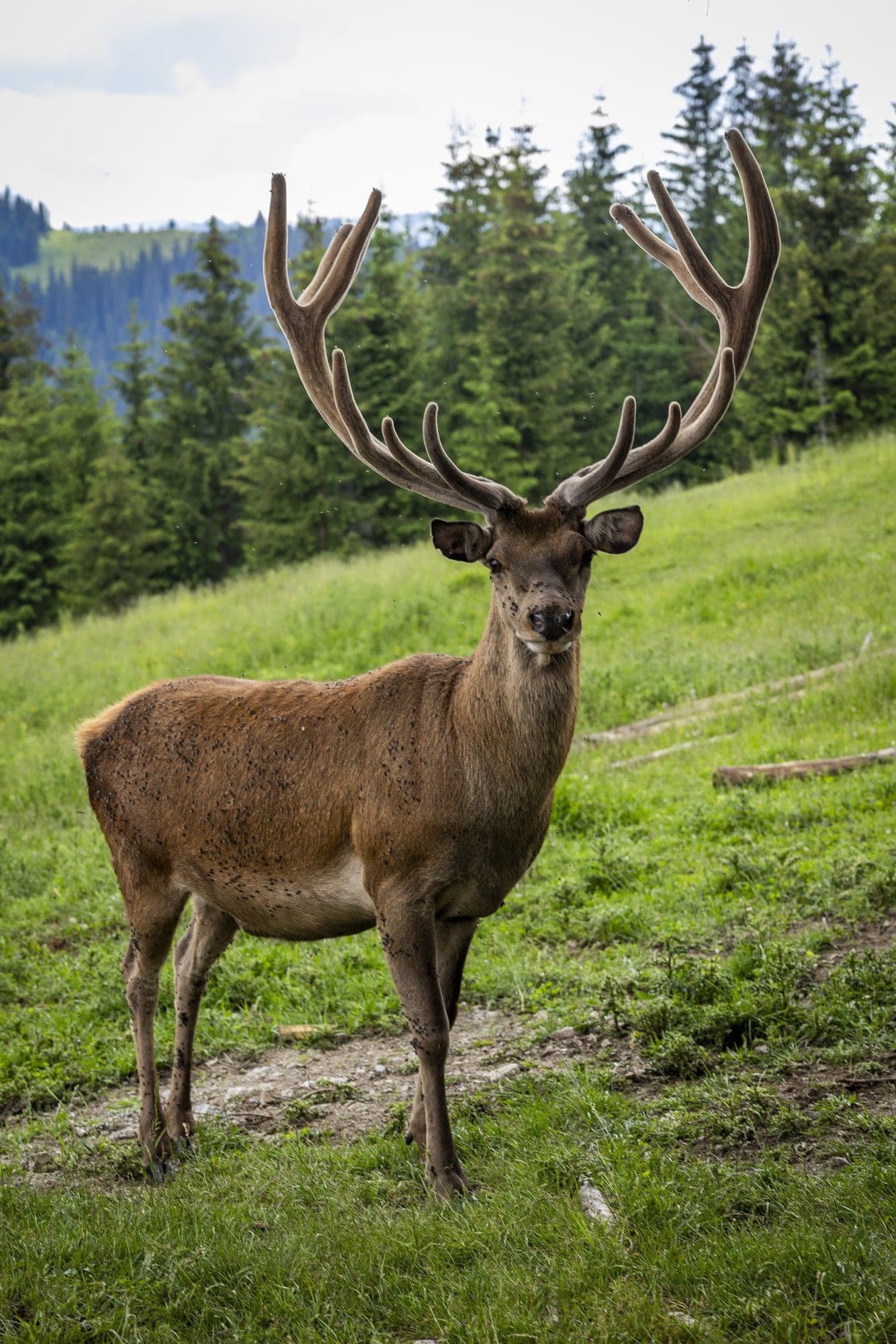
Alongside the stags, hinds and calves move through the grass — dappled with white, as all red deer calves are in their first months, like shadows of light through foliage. They stay close to their mothers, but curiosity draws them towards the fence: they stop, stare at length, then decide you are not interesting and return to the grass. It is a lesson in humility delivered, free of charge, by an animal a few weeks old.
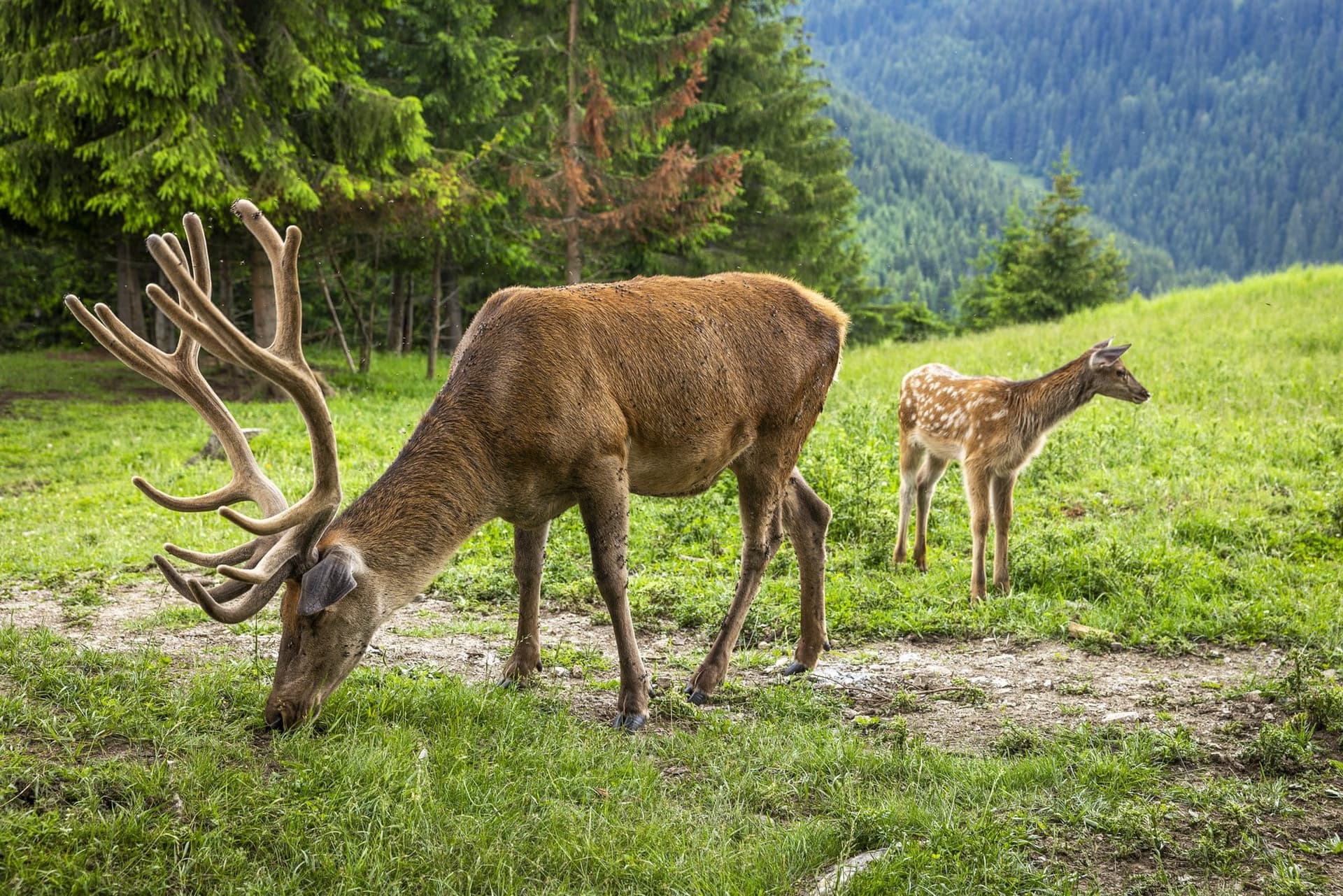
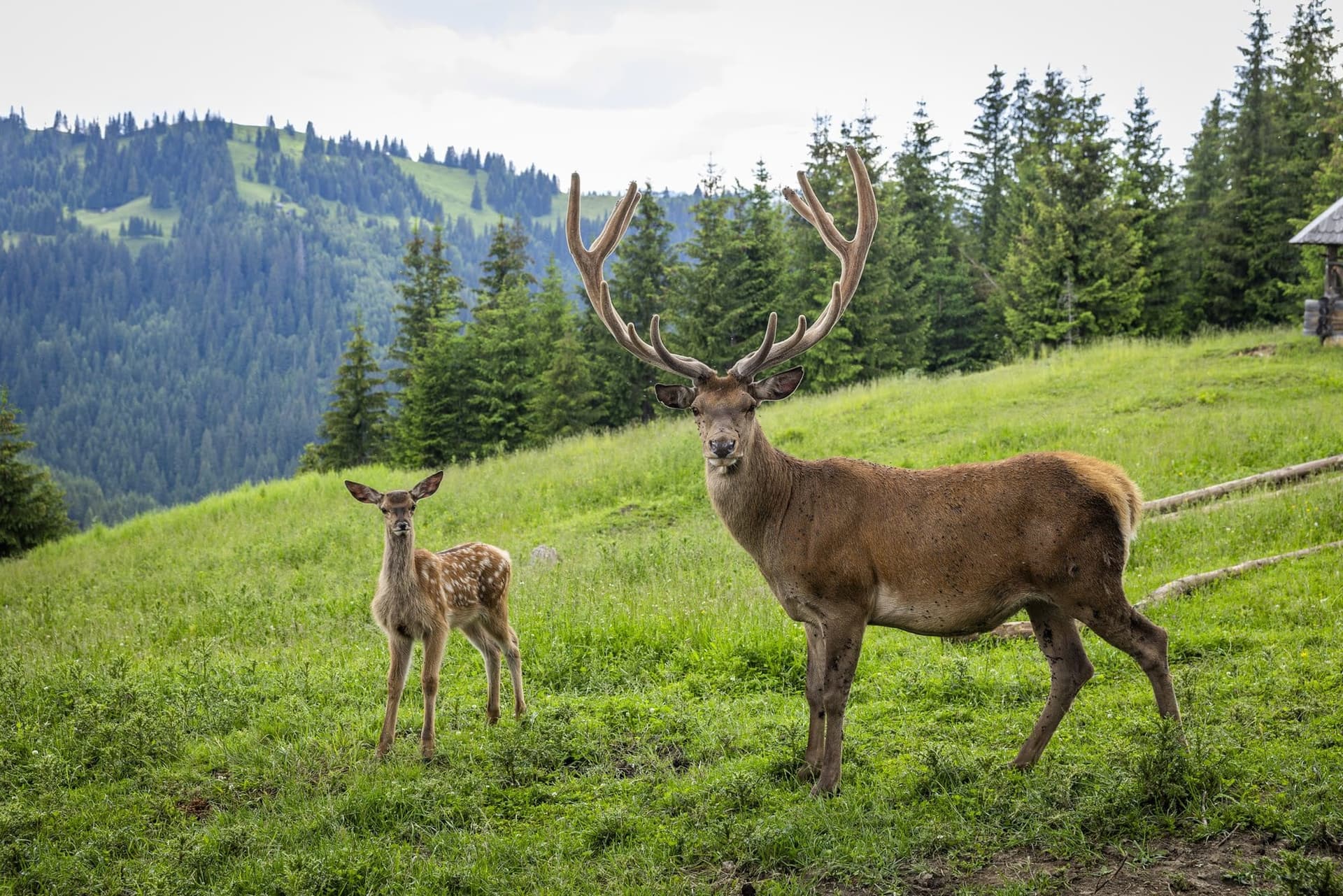
One detail reveals itself only at a second glance: the fence around the estate is electrified. Not to keep the deer in — to keep the wilderness out. Bears and wolves live in the surrounding forests, and at Broșteni that is no abstraction: as far back as the days when Ion Creangă himself went to school here, in the village on the Bistrița, he wrote that "the wolf and the bear were not ashamed to show themselves in broad daylight". At the Dârmoxa farm, the electric wire is the border between two worlds — on one side, deer with names, who eat from the hand; on the other, their relatives in the forest, for whom an enclosure full of plump herbivores would be an invitation to dinner.
The place behind the place
The farm is the story of a local family — Mircea and Niculina Păcuraru began it some ten years ago, with four young deer bought from a licensed breeder in Sibiu County, on their own land up the mountain; today the next generation carries it forward. According to press accounts, there are no employees: they mow, feed, clear the snow and put up the relatives — "godparents, in-laws, cousins, aunts", as the family recounted in an interview. The water comes from a spring two and a half kilometres away; in winter they clear the road themselves. In 2022 the place received the "Margareta de Aur" (Golden Daisy) award of the National Association of Rural Tourism — a distinction whose name suits a mountain clearing rather well.
And below, in the valley, flows the context: Broșteni, the most sprawling town in Romania and one of its most isolated, a former estate of the Crown Domains, the place of Creangă's school years — and, since July 2025, the site of a wound still open, after the flash flood that took three lives and struck half the town's households. The waters that come down from these mountains reach, a little further downstream, the sea among the mountains at Bicaz. Up at 1,250 metres, all of this feels a century away: here there is only grass, velvet and silence.
I drove down towards evening, another thirty minutes of stone, with the windows open. Behind me remained a place that asks nothing of you — not haste, not much money, not even company. Only that you climb up to it. Five lei and a bad road: rarely has something so whole cost so little.
Reportage by Adi Coco · RomâniaFrumoasă — A country, seen slowly · Photographs taken on 25 June 2026 at Dârmoxa, town of Broșteni, Suceava County.
Sources:
Formula AS — "The Deer Farm at Dârmoxa" (interview with the Păcuraru family, Jan. 2024)
Adevărul — "The Deer Tamer" (2019)
Radio Romania International — Dârmoxa Village, Broșteni: the "Golden Daisy" Award (2022)