A small Dobrogea village nestled between hills and the Danube, with a Roman-Byzantine fortress on the riverbank, the most complete eucharistic set ever found in Romania, and memories of actor Toma Caragiu.
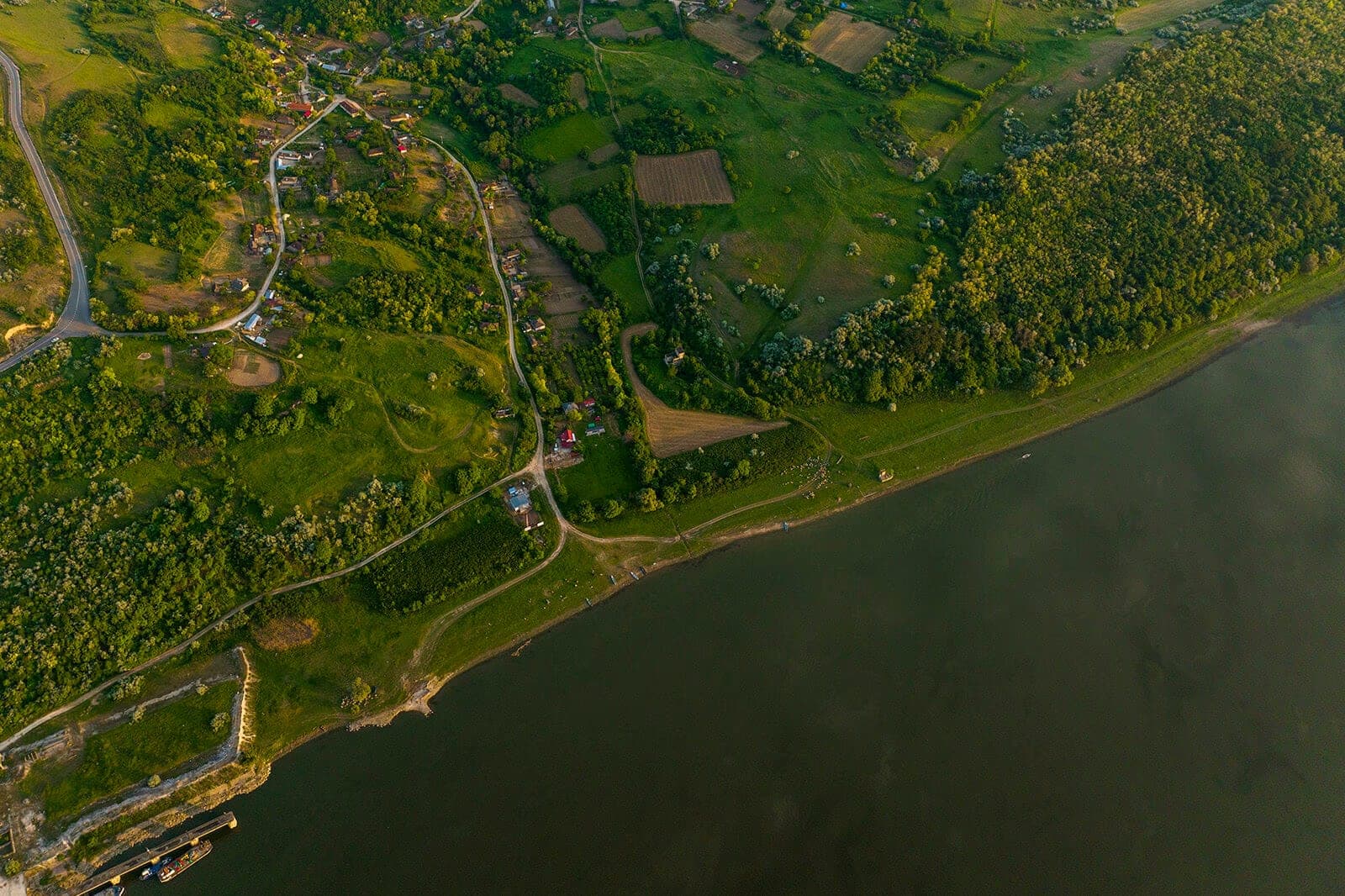
Izvoarele (formerly Pârjoaia), tucked along the Dobrogea bank of the Danube. Photo: AdiCoco.com
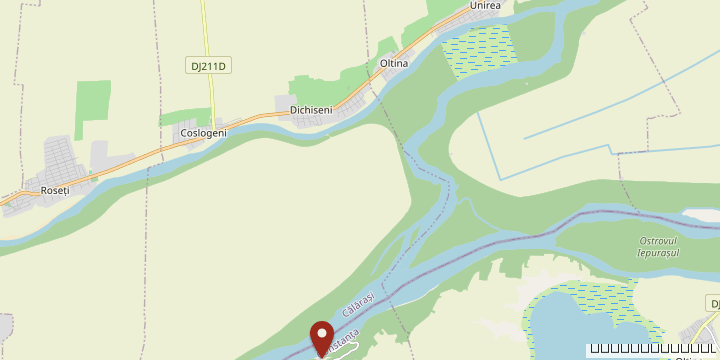
At the southwestern tip of Dobrogea, where the Danube divides Romania from Bulgaria, lies a village that few people know by its current name: Izvoarele. Locals still call it Pârjoaia, as it was known until 1968. It had 162 inhabitants at the 2002 census, and more recent figures point to a decline toward around one hundred. It is often described, in local and tourist writing, as a village with a mountain-village feel, nestled between hills on the Danube's edge — with views that explain why it has always drawn fishermen, scholars, and actors.
A Roman fort at the Danube crossing
About 3 km from the village, on the riverbank, lie the ruins of a Roman-Byzantine fortress identified by specialists as the Dobrogea Sucidava, built in the early fourth century AD. Archaeologist Petre Diaconu proposed that this may in fact have been Constantiniana Daphne — a name known from coins but not securely attested in documents. The site was no accident: a ford used since antiquity for crossing the Danube existed here, and Sucidava was one of two Danubian towns through which the Goths were permitted to trade with the Roman world.
A treasure washed out by the Danube
The most remarkable find to emerge from the village's soil appeared in the spring of 1984, when a bank collapse exposed a hoard of 17 pieces: spoons, bowls, a jug, a patera, a strainer, and a reliquary. The vessels had been crafted in Constantinople and in workshops in Syria, Palestine, and Egypt; several are engraved with the Greek words phos and zoe — "light" and "life". Specialists regard the Sucidava-Izvoarele hoard as the most complete eucharistic set discovered to date in Romania. It is now held at the National History and Archaeology Museum in Constanța.
Fishermen, scholars, and an actor
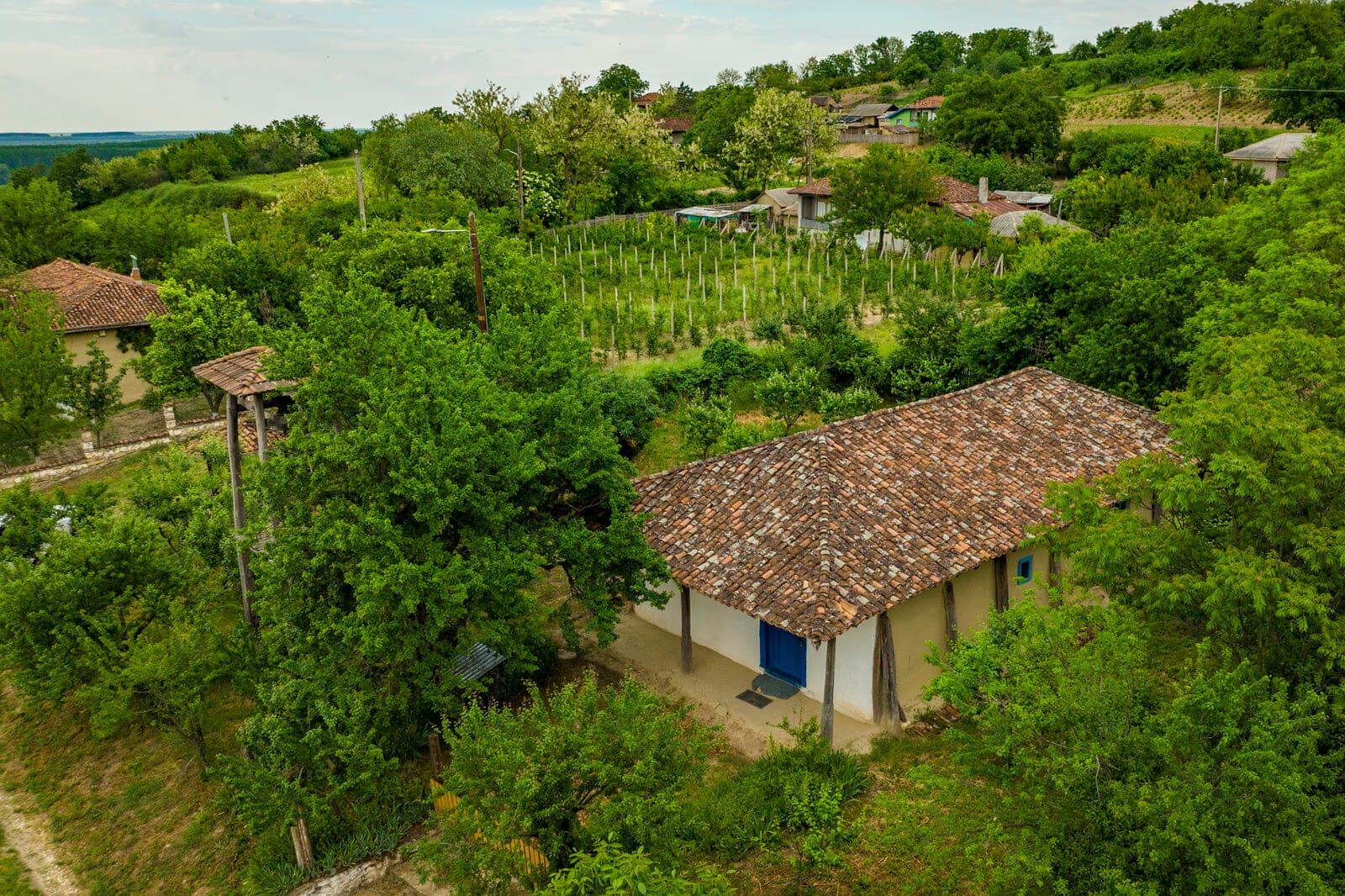
A traditional Dobrogea house in Izvoarele. Photo: AdiCoco.com
The beauty of the place has drawn notable figures over the years. In 1880 the village was visited by Teodor T. Burada, one of the first collectors of Dobrogea folklore. Later, according to published accounts, Pârjoaia was one of the favorite fishing spots of actors Toma Caragiu and Octavian Cotescu. The commune of Lipnița, of which the village is part, remains a corner of multi-ethnic Dobrogea, with a Romanian majority and a significant Turkish (Muslim) community.
Old faith and new
The deep roots of Christianity in Dobrogea — one of the earliest Christianized regions on what is now Romanian territory — are felt here too, from the eucharistic treasure to religious life today. In the commune, an Orthodox majority lives alongside a local Muslim community, and the village preserves a small wooden church, built on posts with wattle walls.
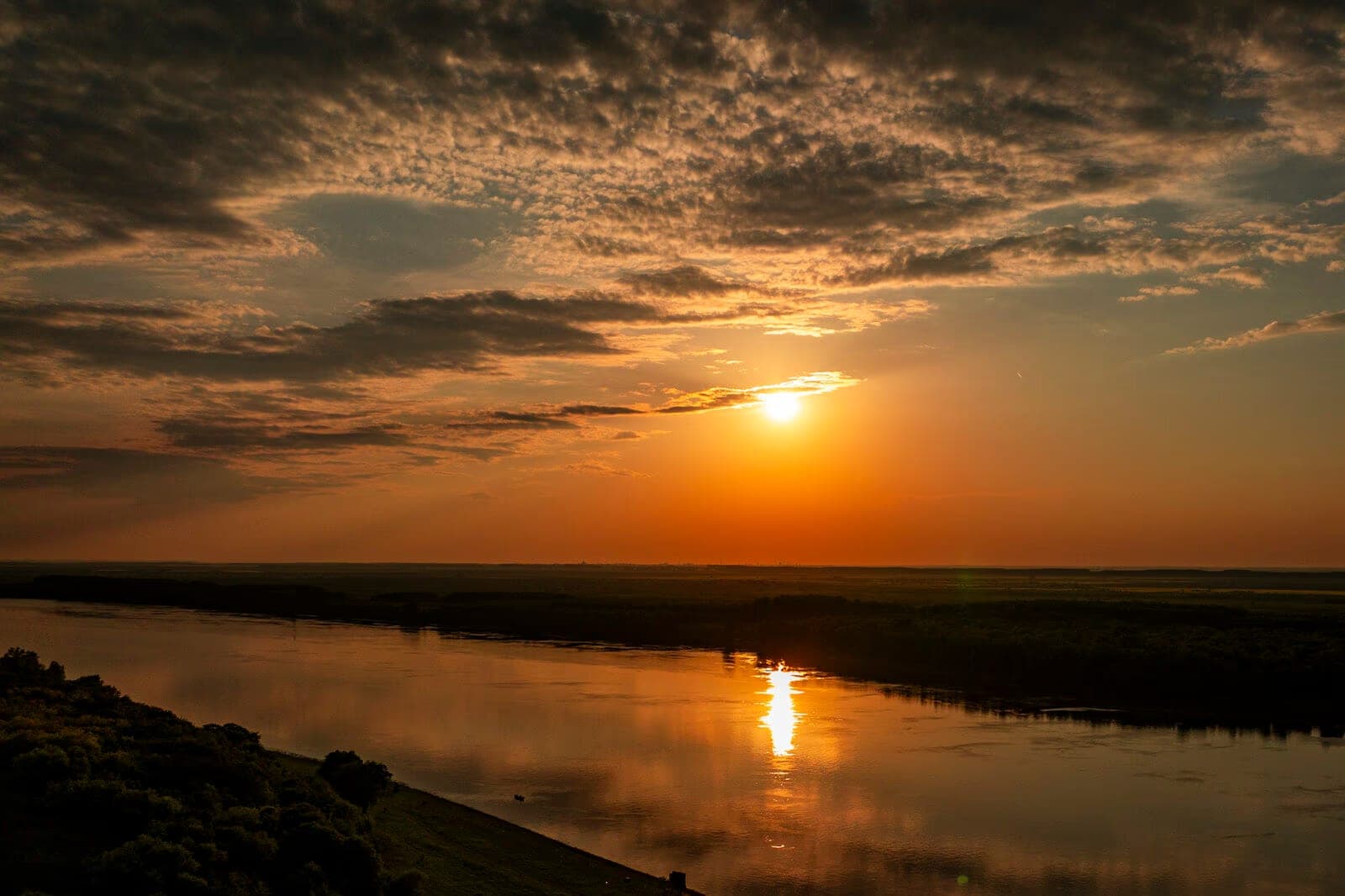
Sunset over the Danube at Izvoarele. Photo: AdiCoco.com
Sources
— Izvoarele, Constanța — Wikipedia
— The Sucidava Fortress at Izvoarele-Pârjoaia — Descoperă Dobrogea
— The Sucidava–Izvoarele Treasure: Art and Faith — Descoperă Dobrogea / MINAC
— Pârjoaia, the Dobrogea Village Beloved by Toma Caragiu — Republica