
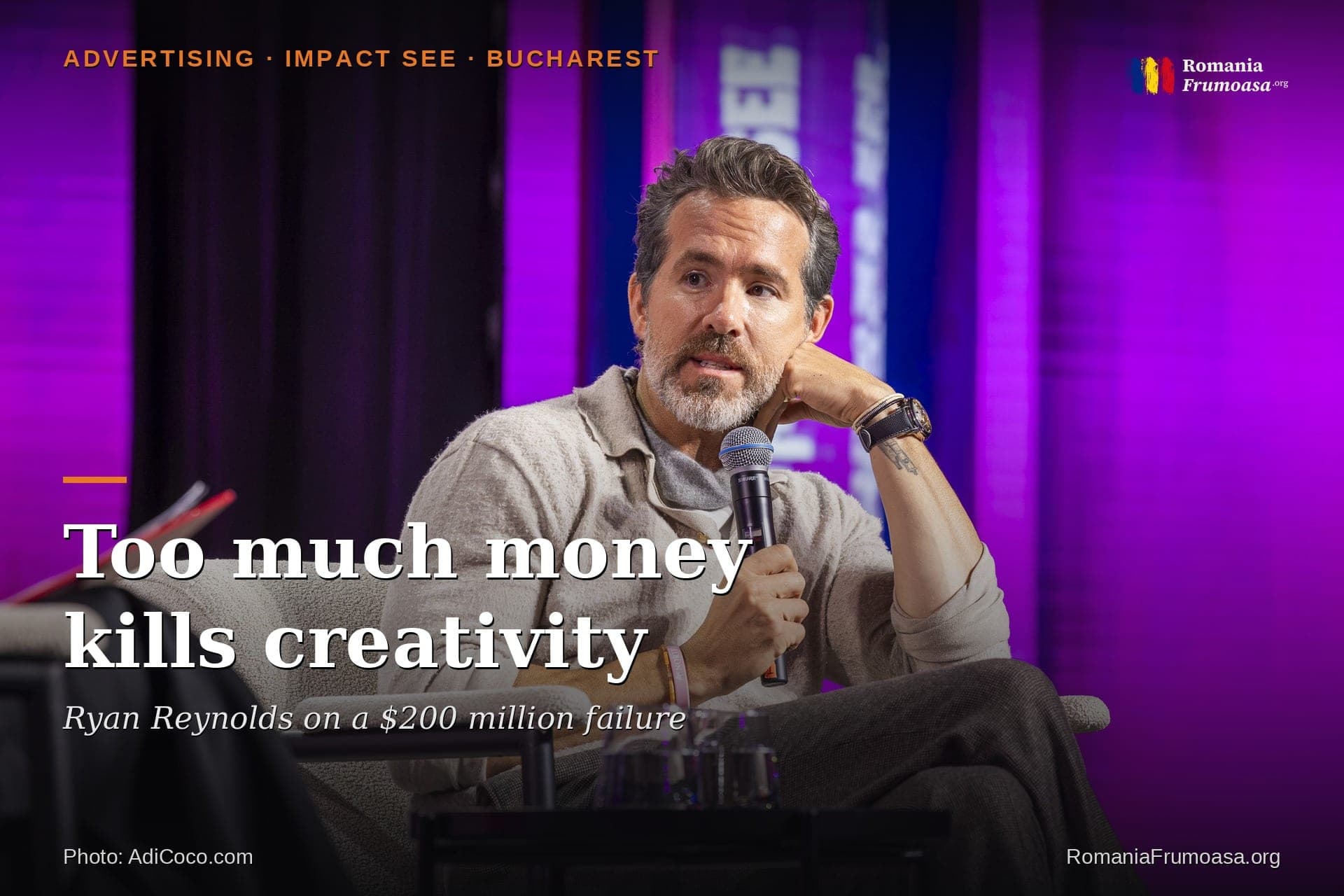
Before 20th Century Fox would greenlight "Deadpool," it gave the team 48 hours to cut $7 million from the budget. Ryan Reynolds says that cut saved the film. In Bucharest on Wednesday, he explained the method that grew out of it, and why a big company can't copy it.

$7 million, 48 hours
"Deadpool" went into development in 2004 and wasn't greenlit until a decade later, after test footage leaked online without the studio's blessing. Fox had one more condition before signing off: $7 million had to come out of a budget that was already modest. The team had 48 hours.
A motorcycle chase went, part of the final battle went, and three villains were folded into one. Rhett Reese, who co-wrote the film, later said it was that last, "lean and mean" chop that finally got Fox to make it.
The studio didn't want the writers on set. Reynolds paid them himself, out of what was left of his salary, so they could be with him for the entire shoot. It looks less like generosity than arithmetic. On that budget, the script was the one thing left that could still make the film better.
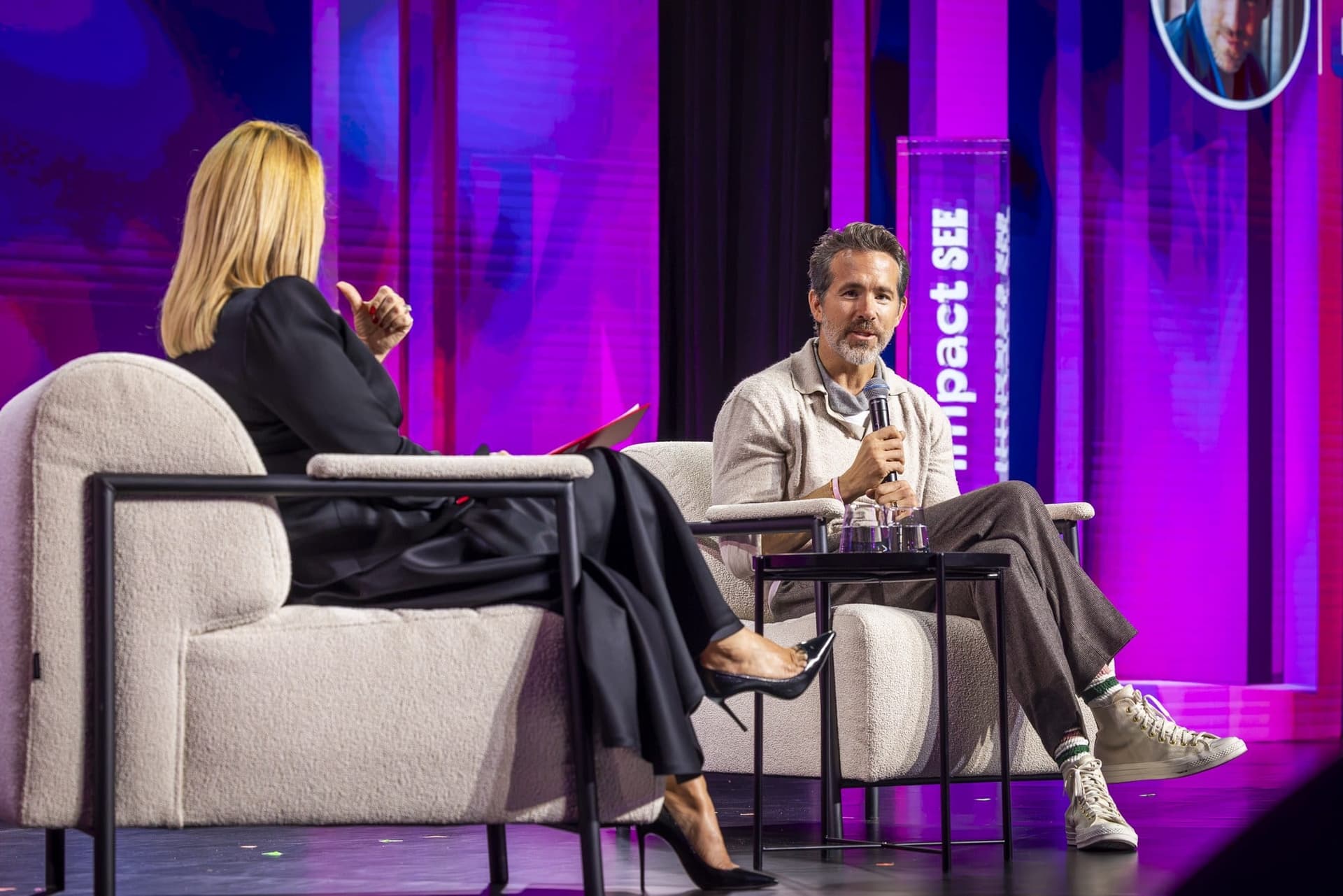
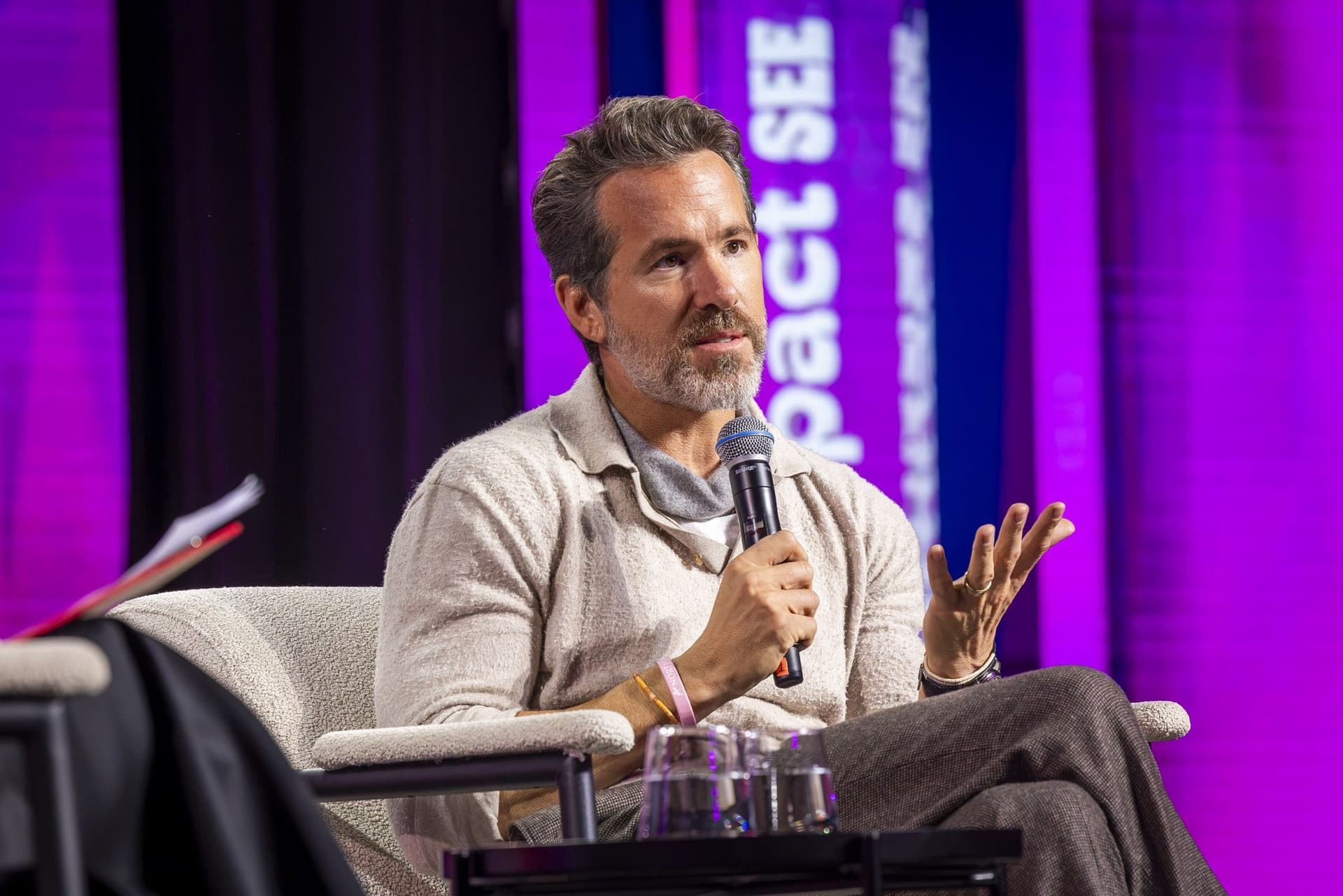
On Wednesday, on the main stage of the Impact SEE business conference at Romexpo, Bucharest's exhibition center, Reynolds told a room full of executives what he took away from it: "If you spend too much time and too much money on a creative project, you kill the creativity." Earlier, he had given the practical version: "When you give me very little money, I immediately start thinking asymmetrically." For him, asymmetric means character instead of spectacle.
The conversation was moderated by Andreea Esca, who has anchored the main evening newscast on the Romanian channel Pro TV since 1995.
The $200 million film and the $58 million film
This is not theory for him. He learned it the expensive way.
In 2011 he starred in "Green Lantern," a film with a $200 million production budget that grossed about $220 million worldwide. Bomb Report estimates the loss at roughly $75 million, even after merchandising. In an earlier interview he described where it went wrong: whenever a problem came up, more money went into special effects instead of someone stopping to think about the character. On stage he put it more briefly: "They were throwing money at every problem, and that was the problem." And on failure in general: "Mistakes are fertilizer."
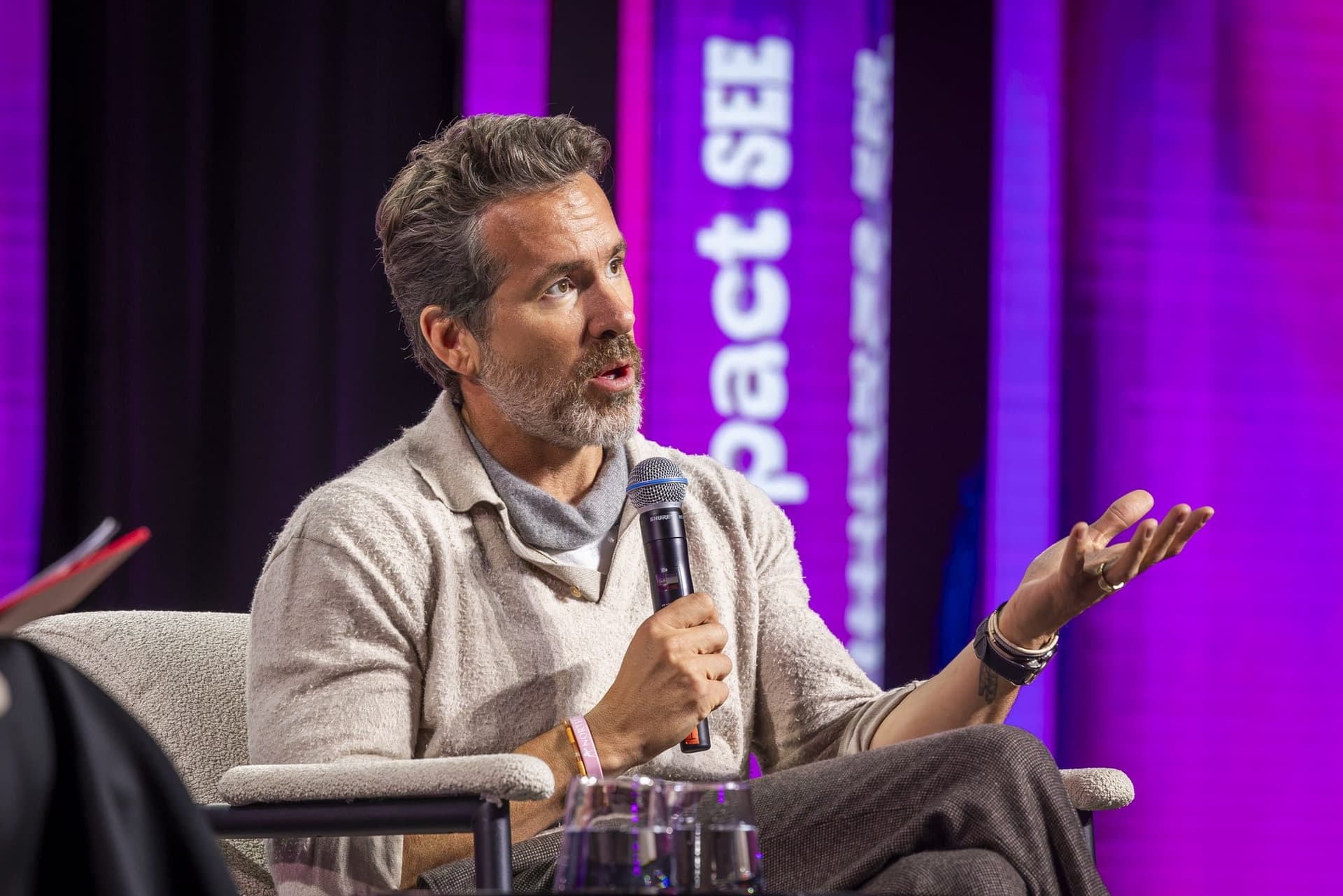
Five years later, "Deadpool" cost $58 million. "That sounds like a lot, but for a Marvel film it's nothing." Then, laughing: "That's the Avengers' cocaine budget."
It grossed about $783 million worldwide, more than 13 times its budget.
The comparison doesn't prove that cheap films are better; there are plenty of counterexamples both ways. What it shows is narrower: the lack of money forced him to shift the weight from spectacle to character, and the bet on character is what paid off.
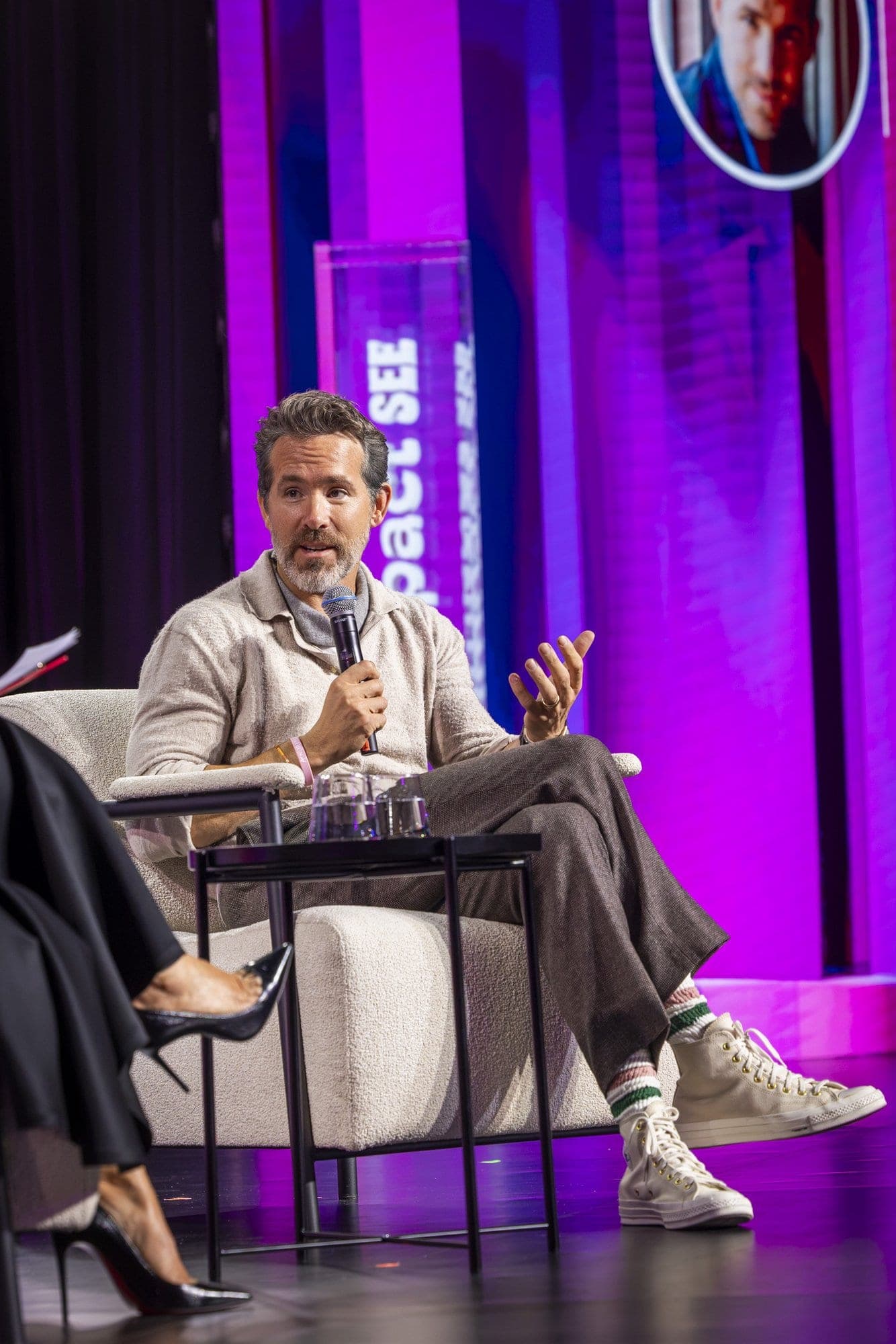
Fifteen days, then nine
In November 2019, Peloton ran a holiday ad in which a husband gives his wife an exercise bike and she films her workouts for a year to show him her progress. Much of the internet read it as sexist: a gift that looked like a hint to lose weight, and a wife who seems more anxious with every clip. The "Black Mirror" comparisons followed, Peloton's stock fell, and the company lost more than $1 billion in market value within days. The actress, Monica Ruiz, became a punchline overnight.
For anyone who missed it at the time: TODAY aired both ads and spoke to Monica Ruiz about what came next.
The response came on Dec. 7, 15 days after the Peloton ad, from Aviation Gin, a brand in which Reynolds held a minority stake at the time. The spot brings back the same actress, as if picking up where the first ad left off: in a bar with two friends, staring into space. No wedding ring, no husband. Her friends reassure her ("You're safe here"), they toast "to new beginnings," she downs her drink, and a voice off-camera adds: "You look great, by the way." Exactly one line is about gin. The rest is about somebody else's commercial.
Peloton took it well: two years later it hired his agency, Maximum Effort, for a crisis ad of its own.
Six years later, the turnaround was even faster. On July 16, 2025, at a Coldplay concert at Gillette Stadium in Massachusetts, the kiss cam landed on a man and a woman in an embrace. When they saw themselves on the big screen, they tried to hide their faces. From the stage, Chris Martin joked: "Either they're having an affair or they're just very shy." The clip went viral and the two were identified: Andy Byron, CEO of the U.S. software company Astronomer, and Kristin Cabot, its head of HR. Byron resigned on July 19, Cabot on July 24.
The next day, July 25, Astronomer released a video starring Gwyneth Paltrow — an actress and, the detail the whole joke rests on, Chris Martin's ex-wife. She explains that she has been hired "on a very temporary basis" to speak for the company's more than 300 employees, then takes questions from the internet. The first: "OMG! What the actual f…" Her answer: "Yes, Astronomer is the best place to run Apache Airflow." The embrace is never mentioned directly. The video was made by Maximum Effort. Nine days from incident to campaign.
For anyone who hasn't seen it: TODAY on Astronomer's campaign with Gwyneth Paltrow.
What the two cases share isn't the jokes, or the celebrity. The attention was already there, in quantities no one can buy, fixed on one person. The only move was to redirect it.
The first bottle and the second
Asked what he looks for before getting into a business, he didn't talk about numbers. "Emotion," he said. "Can this thing make people feel something?" And a little later: "I look at the emotional investment, not the financial one."
What came next was the most concrete marketing lesson of the whole conversation: "I can sell the first bottle of gin. The gin has to sell the second, the third, the fourth."
Celebrity gets you the first sale, and only the first. The rest depends on the product, and no ad budget can buy that. "Consumers know they're being sold something," he added. "Don't talk down to them. Tell them you're making an ad."
The part a big company can't copy
He named the method's limits himself. He described a client who wanted the same kind of fast reaction, riding a wave that was already underway, but scheduled six months out: "They said yes, but in six months. And I told them that in six hours it's all over."
"Six hours" is an exaggeration; his ads came out 15 and nine days after the fact. But the gap between that and a normal campaign calendar is real, and it isn't just about talent. It's structural: an agency without layers of approval, where the person who decides is also the person who signs. In a company with shareholders, a legal department and a brand committee, the same decision passes through several offices, and by the third one the story has already died online.
For a room full of executives, the conclusion is less comfortable than the method: the method doesn't transfer. What does transfer is the question that comes before it: who is allowed to say "yes" on their own, and how fast.
The conversation
Reynolds is a difficult interviewee for a reason you only notice if you watch closely: he instinctively takes over. He answers with a joke, comments on the joke, comments on the question, suggests the next topic. Esca let him finish, then went back to her question every time.

Asked about his most expensive mistake, he said "my kids," then went on: "My job now is to make you uncomfortable enough to move on to the next section." Her reply: "I'm not uncomfortable, because I understand you."
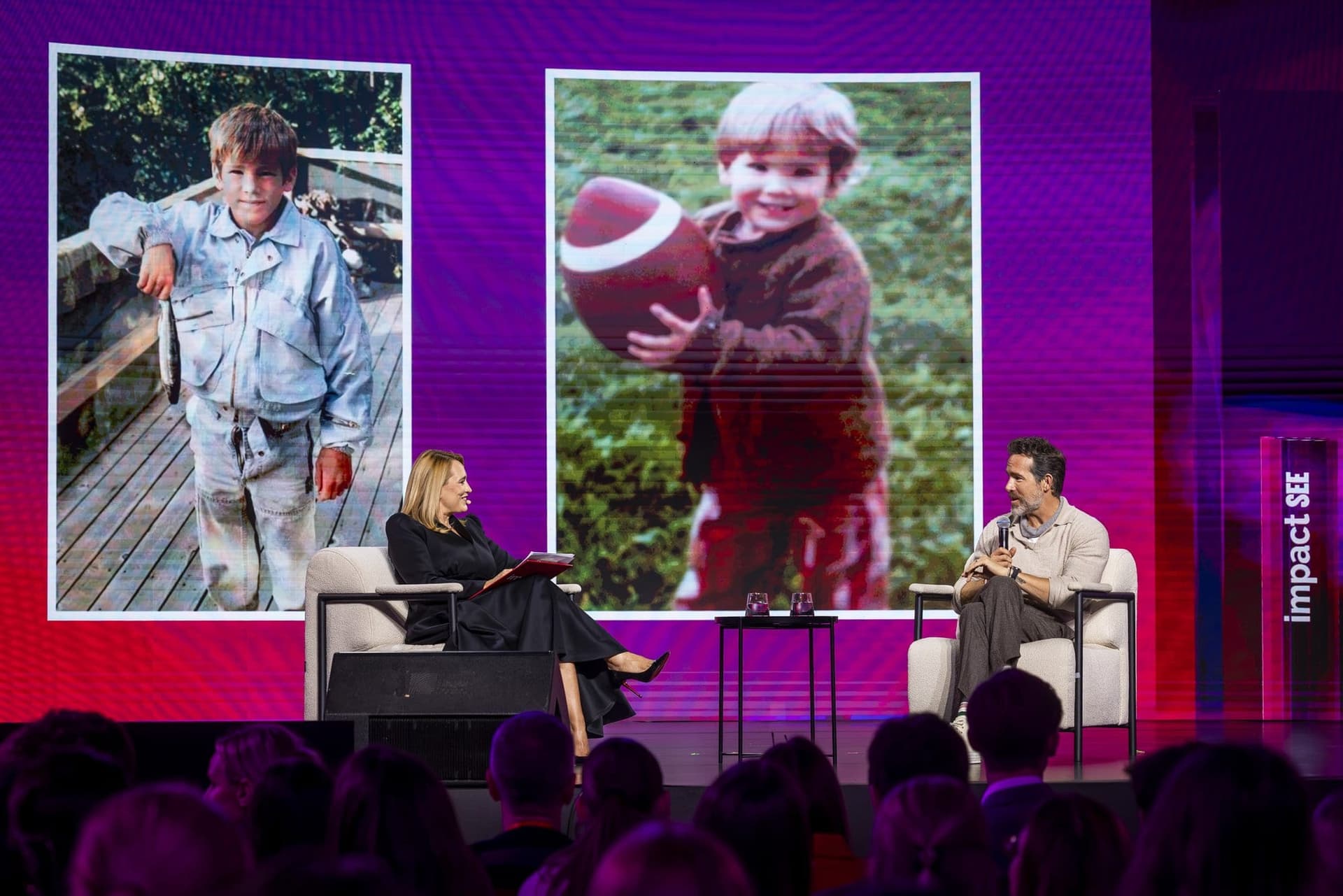
When the questions turned to his father: "Now you're getting into it. You're not going to make me cry, Andrea, don't try." She got into it anyway.
After a joke about what his brothers would have done if he'd gotten a nipple piercing, Esca cut in: "Let's move on with our story. Don't be so intimate." The conversation moved on exactly as far as she took it.
Near the end, Reynolds paid her a compliment that explains the hour: "I know the work you've done for many years, and I know you've seen things much harder than I have."
A man who came to explain how to take control of a moment, in an hour he never controlled.
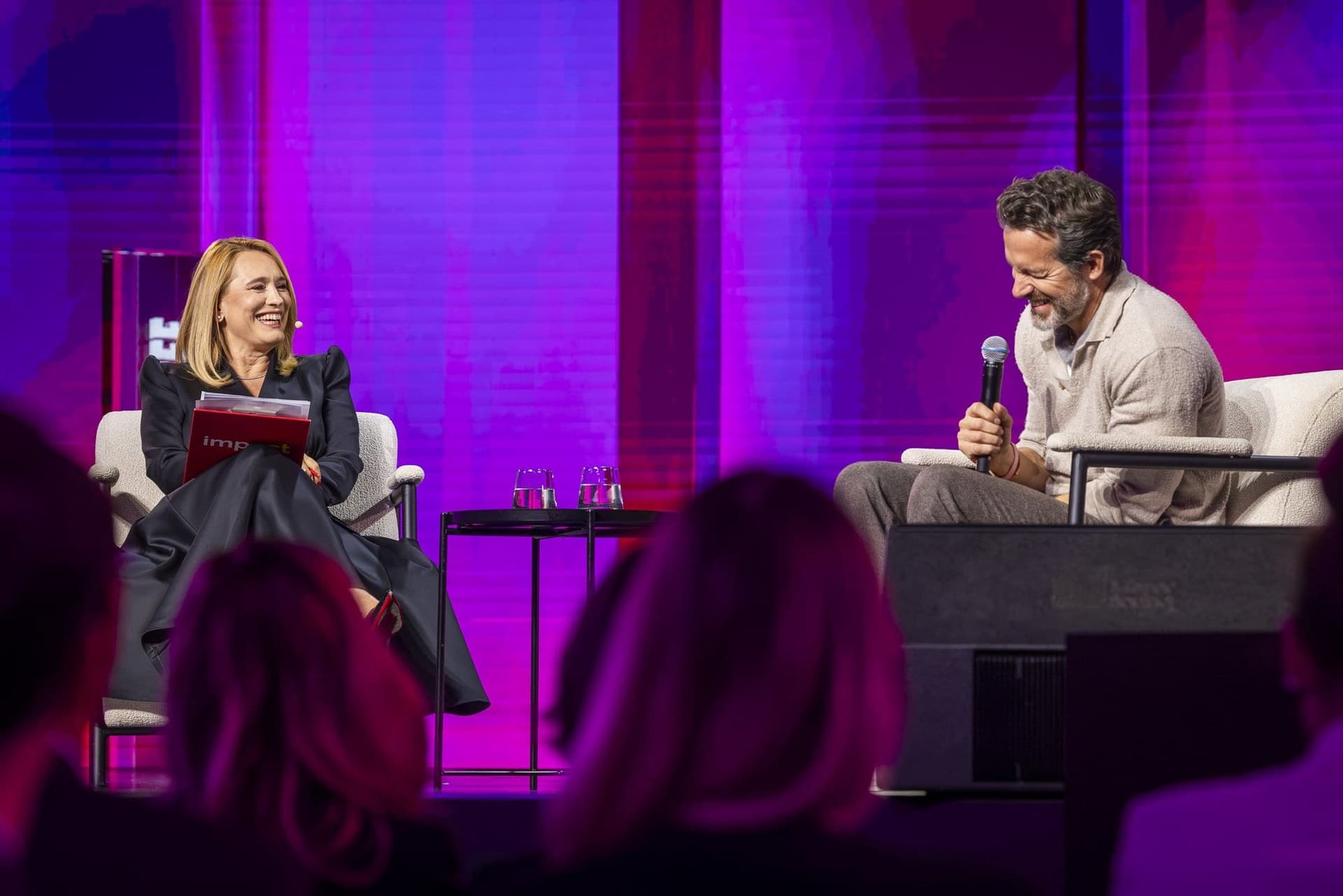
The conversation took place on Wednesday, Sept. 30, 2026, on the main stage of the Impact SEE conference at Romexpo, Bucharest. Photography was allowed only during the first few minutes; all images are from that window, taken from the edge of the stage and from the audience. Quotes are transcribed from our own recording. Figures on the films and campaigns come from the sources below.