At RomanianWorkplaceManagementForum2026, the message was unambiguous: the future of work is about experience, community, and purpose — and the local market still needs to change a mindset, not just square footage.
"What would make people want to come back to the office tomorrow?"
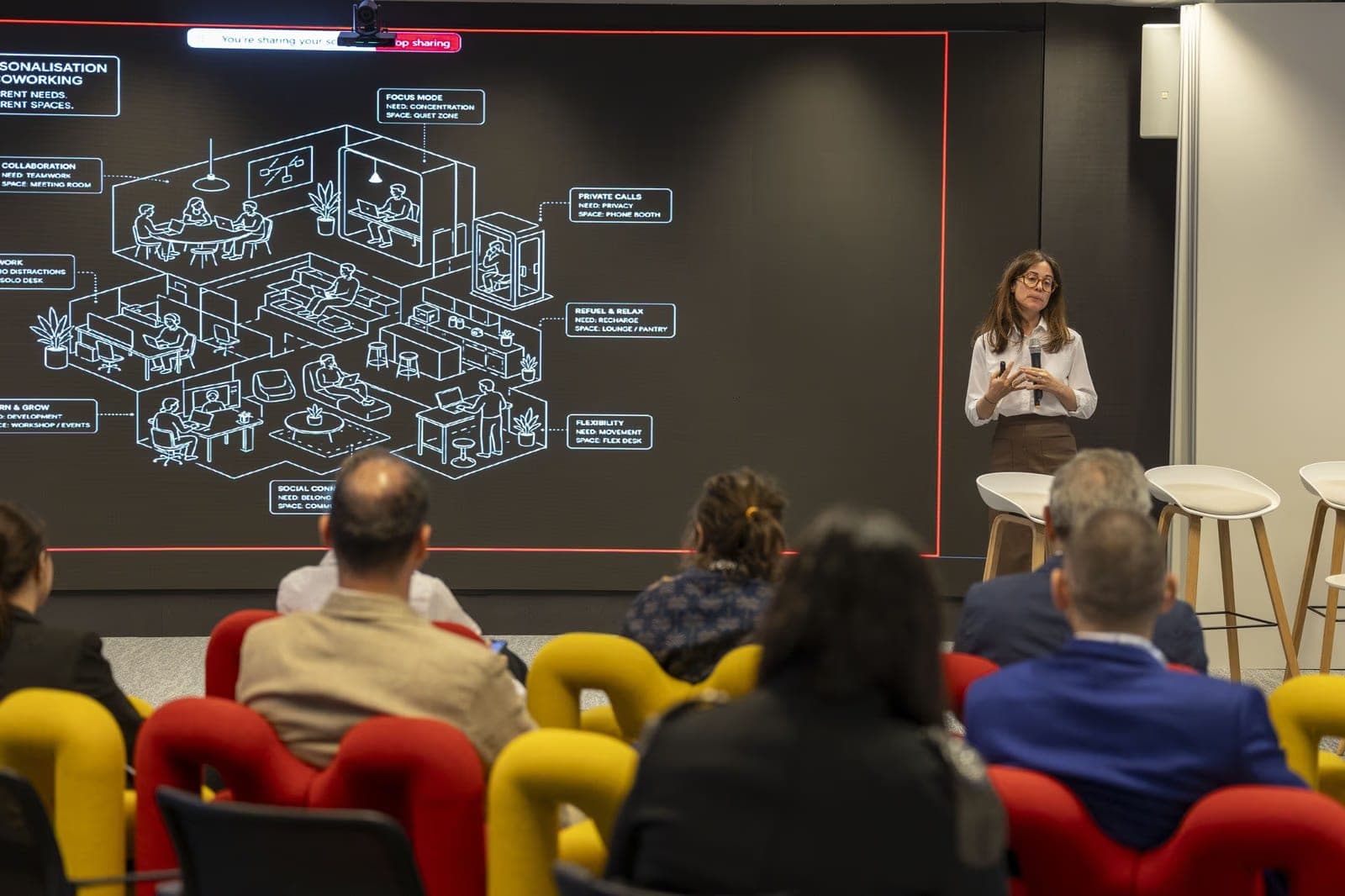
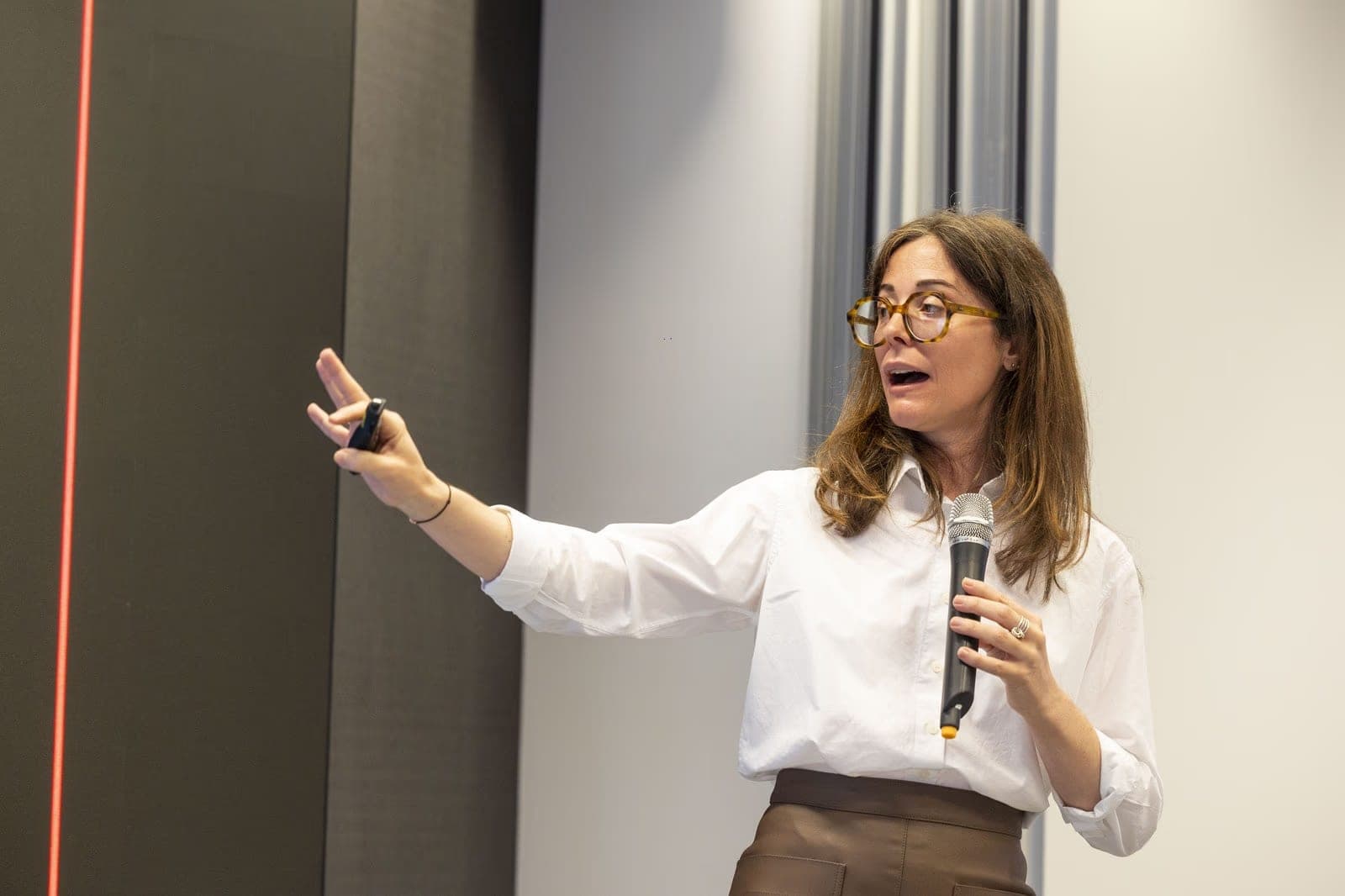
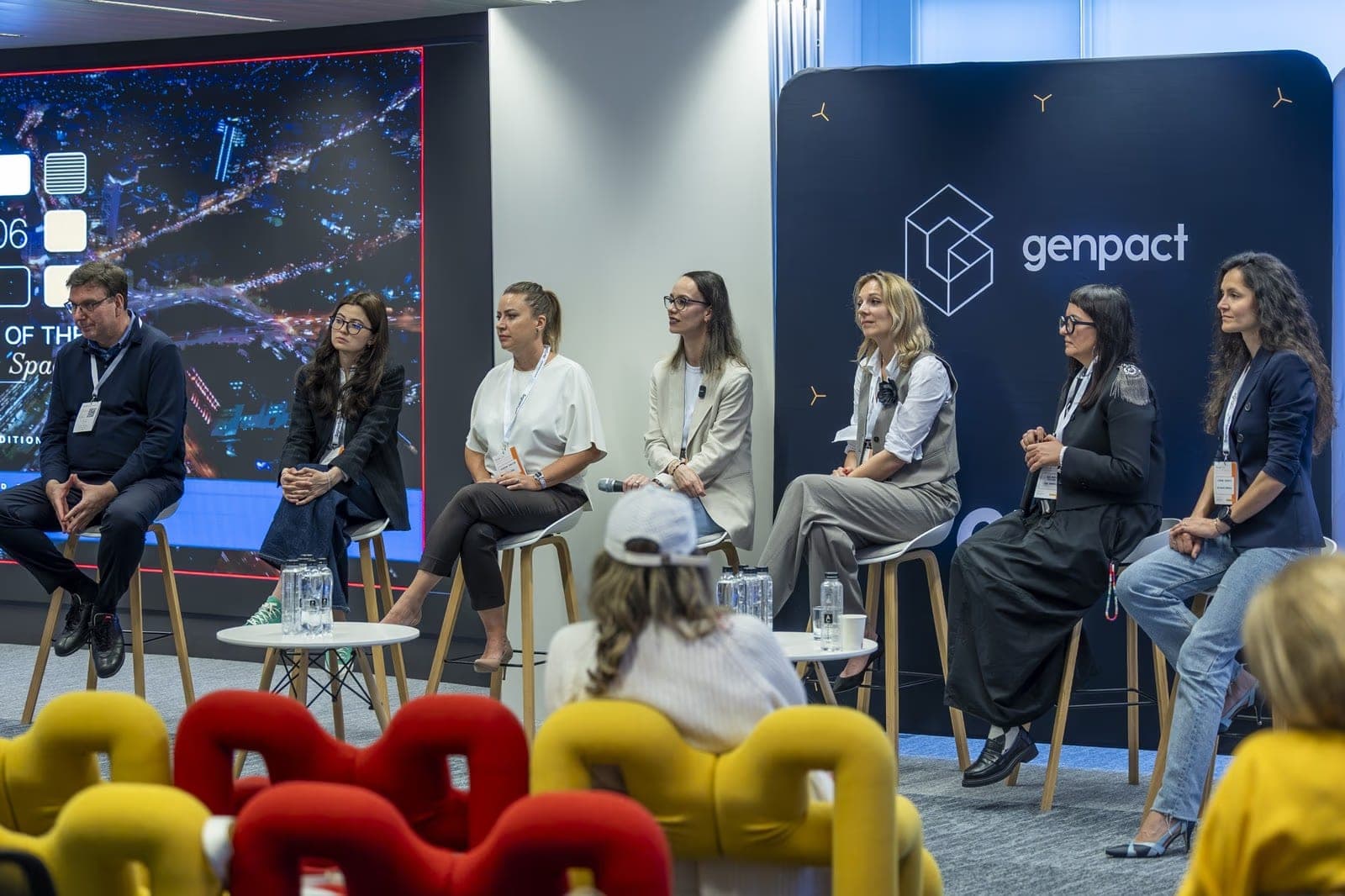
That question opened the framing discussion of the seventh edition of the #RomanianWorkplaceManagementForum2026 ( 21–22 May 2026, at the GENPACT AI Innovation Center in Bucharest) and, across two days of panels, became the lens through which almost everything else was examined. It was posed by Pauline Roussel — CEO of the Berlin-based platform Coworkies and co-author of "Around the World in 250 Coworking Spaces", after visiting more than 500 flexible workspaces across 50 cities worldwide. Her conclusion, presented in Bucharest, is simple in formulation and disruptive in its implications: the workplace is no longer a functional space. It is an experience that people choose — or don't — to be part of.
For an office market like Bucharest's, still largely organized around the classic grammar of five-to-ten-year leases and steel towers with marble lobbies, that observation carries real consequences.
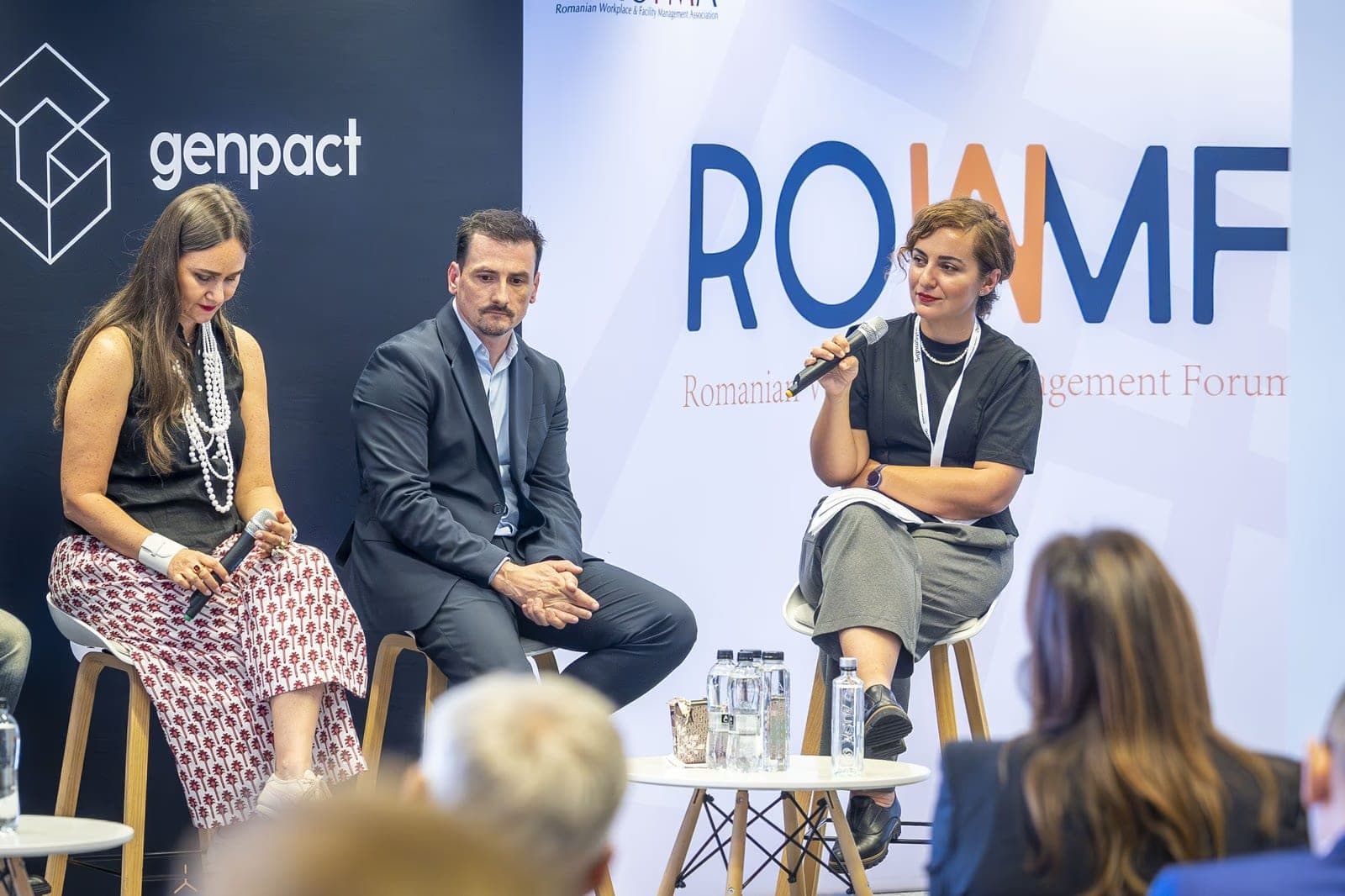
The four panels of this edition — Designing for the Next Workforce: Creating Workplaces for Generation Z and Beyond, Workplace Transformation & Adaptive Reuse: Aligning Design, Ownership, and Operation, The Corporate Shift: The Future of Flexible Workspaces Inside Organizations and Workplace Value Equation: Balancing Cost, Performance, and Business Impact — each revisited, on its own terms, the same core question: how do you translate "experience" into concrete decisions about buildings, contracts, operations, and culture? The summaries below follow the thematic threads that emerged, reassembled across panels.
Offices Have Started Competing With Netflix and Airbnb
For younger generations, the benchmark for a workday is no longer another office. It's the best experiences they already have in their lives — Netflix, Spotify, Airbnb, good cafés, boutique hotels, online communities that deliver a sense of purpose. If the office can't hold up to that comparison, people vote with their feet — or, more precisely, stay home.
This is the paradigm shift Roussel named in her panel: the workplace is becoming hospitality + community + data + behavioral design. Four elements that, until recently, were nowhere in the vocabulary of building managers.
Building an efficient office is no longer enough. The ones that work in 2026 offer flexibility in working modes (from solitary focus to spontaneous meetings), personalized experiences, real communities (not just clusters of departments), wellbeing translated into practice and — the hardest part — a genuine reason for someone to want to come back.
Technical Quality Has Overtaken Aesthetics
One of the most concrete shifts flagged at the forum comes from tenants. For companies signing leases today, technical building quality has become more important than finishes. Air quality, HVAC systems, natural and artificial lighting, energy efficiency — all weigh more heavily in leasing decisions than a marble lobby or a panoramic view.
In practice: companies are increasingly requesting independent technical audits before signing, to understand the real impact of a space on employee wellbeing. Location and price remain important, but they can no longer mask an outdated ventilation system.
The implication for the Romanian market is twofold. On one hand, older buildings — the stock built between 2008 and 2015, now 10–15 years old technically — are becoming candidates for adaptive reuse. Where occupancy is low, conversion to residential or mixed-use appeared across multiple panels as a realistic option. On the other hand, new buildings that fail the technical test — however good they look — will lose ground.
Facility Management Is No Longer About Pipes
A recurring theme at the forum was the evolution of the Facility Manager role. From a technical and operational function, FM has become, in large companies, a strategic role centered on the user's experience in the workplace.
In concrete terms: the FM team and Workplace strategy need to be integrated from the concept and design phase of a building — not invited to the table after the architects have filed their drawings. The numbers that matter are no longer those from handover, but those that emerge 12–24 months into operations: energy consumption, real maintenance costs, measurable user satisfaction.
It is a professional redefinition with one structural consequence: a building's success is read over the long term, in data — not in renderings.
Flex Spaces — The Alternative That Has Stopped Being Niche
A second strong thread running through the forum was the maturation of the flexible workspace market. Coworking is no longer the exclusive domain of freelancers and startups. Large corporations are using it — for hybrid teams, for fixed-term projects, for entering a new market without locking capital into long leases.
Behind this adoption lies, according to Roussel and other speakers, the break with the traditional 5–10 year contract model. Flex space delivers what companies learned, through five years of pandemic and post-pandemic reality, to value: optionality. And the additional edge flex operators hold, beyond contractual terms, is community — organic networking, ad-hoc collaborations, access to an ecosystem.
The Mental Block of Romanian Property Owners
This is where the specific problem of the local market comes in: the rigidity of traditional landlords. Many of Bucharest's major landlords still view flex spaces with skepticism — either as competition or as a niche. The shift from classic lease contracts to partnership models — revenue sharing, management contracts with flex operators — remains marginal.
The discussions surfaced what one panelist called "a mental block": a market where many floors sit empty, yet where the owner prefers the rigidity of an unoccupied space to a partnership that would generate flow. It is an attitude that, in other European markets, the 2020–2023 crisis shattered. Here, it persists.
This is what part of the room described as the "workplace mindset challenge": good buildings are not in short supply. What is partly missing is the willingness to use them differently.
AI, ESG, and the Final Code Change
Underpinning everything discussed, two themes cut across all sessions. Artificial intelligence — already deployed for optimizing energy consumption, predicting maintenance needs, and personalizing the user experience — will reshape, over the coming years, how buildings are operated. And sustainability, translated through ESG standards, has stopped being a PR chapter and become a criterion for both financing and leasing. Buildings that underperform on environmental and community impact will, within a few years, find it genuinely difficult to attract major tenants.
What This Means, Plainly, for Romania
Reframed for the local context, the forum's conclusions can be summed up in four points:
The workplace is no longer an operating cost. It is a competitive advantage — for recruitment, for retention, for shaping organizational culture.
- The comparison is no longer with other offices. Offices compete with Netflix, Airbnb, and cafés. Those who don't understand this will lose young talent before they even get to hire them.
- Technical quality beats aesthetics. Air quality, light, and climate systems matter more than the lobby. Independent technical audits are becoming the standard.
- The future of Facility Management is designing a human experience — hospitality, community, data, behavioral design. Not managing a surface area.
For a market that, five years after the pandemic, is still asking "when are people coming back to the office," the forum ultimately offered a more useful question: what would you do with your offices to make people want to come in tomorrow?
The answer requires more than square footage. It requires a change of mindset. And mindset, as someone in the room observed — borrowing an old cliché for a new context — "eats strategy for breakfast."
 1 / 34