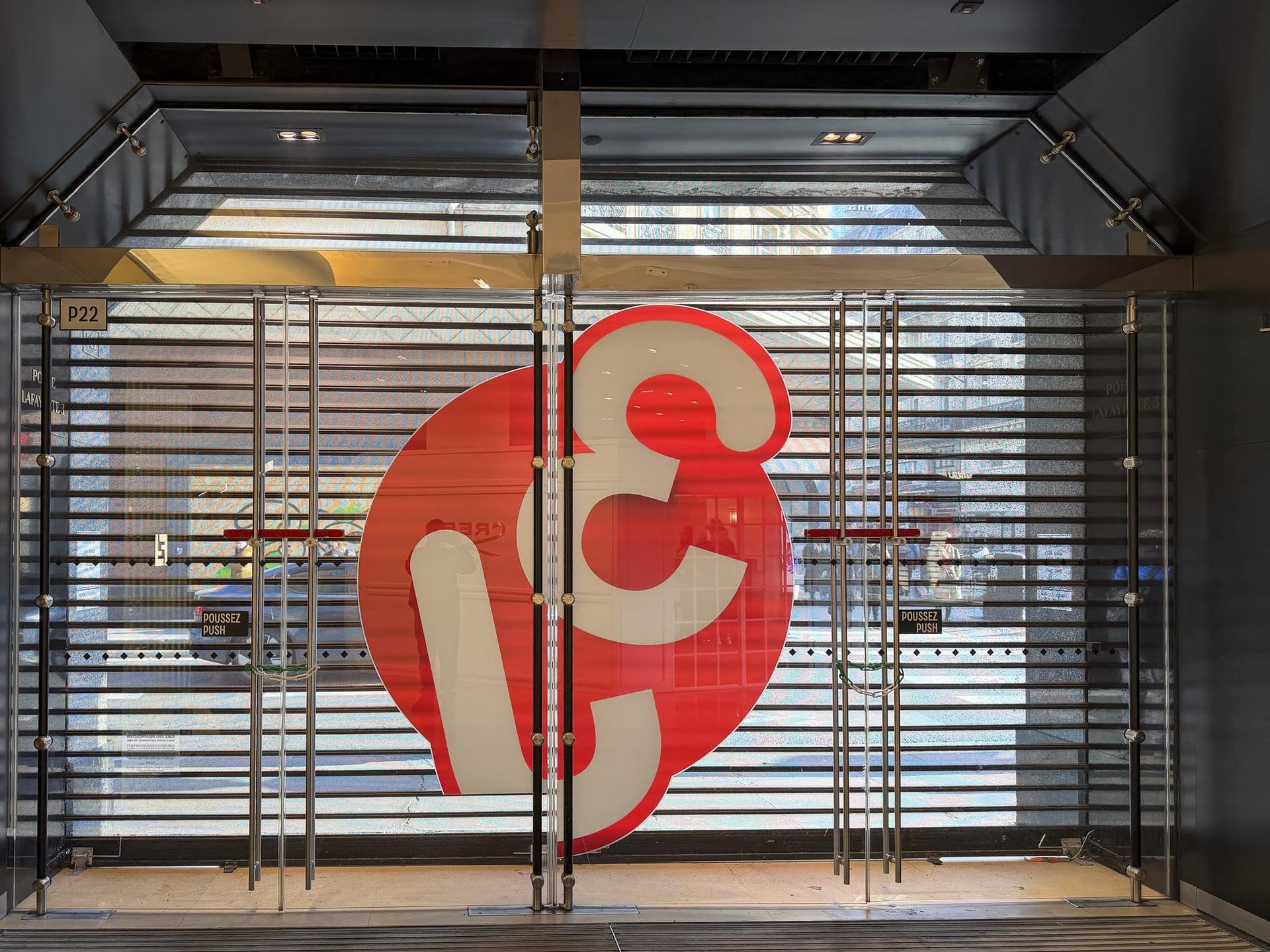
A white-and-green plastic chain, the kind used to close off a parking lot, hangs from the door handles at Porte Lafayette 3. Behind the glass, the metal shutter is pulled all the way down. The door still says "Poussez / Push."
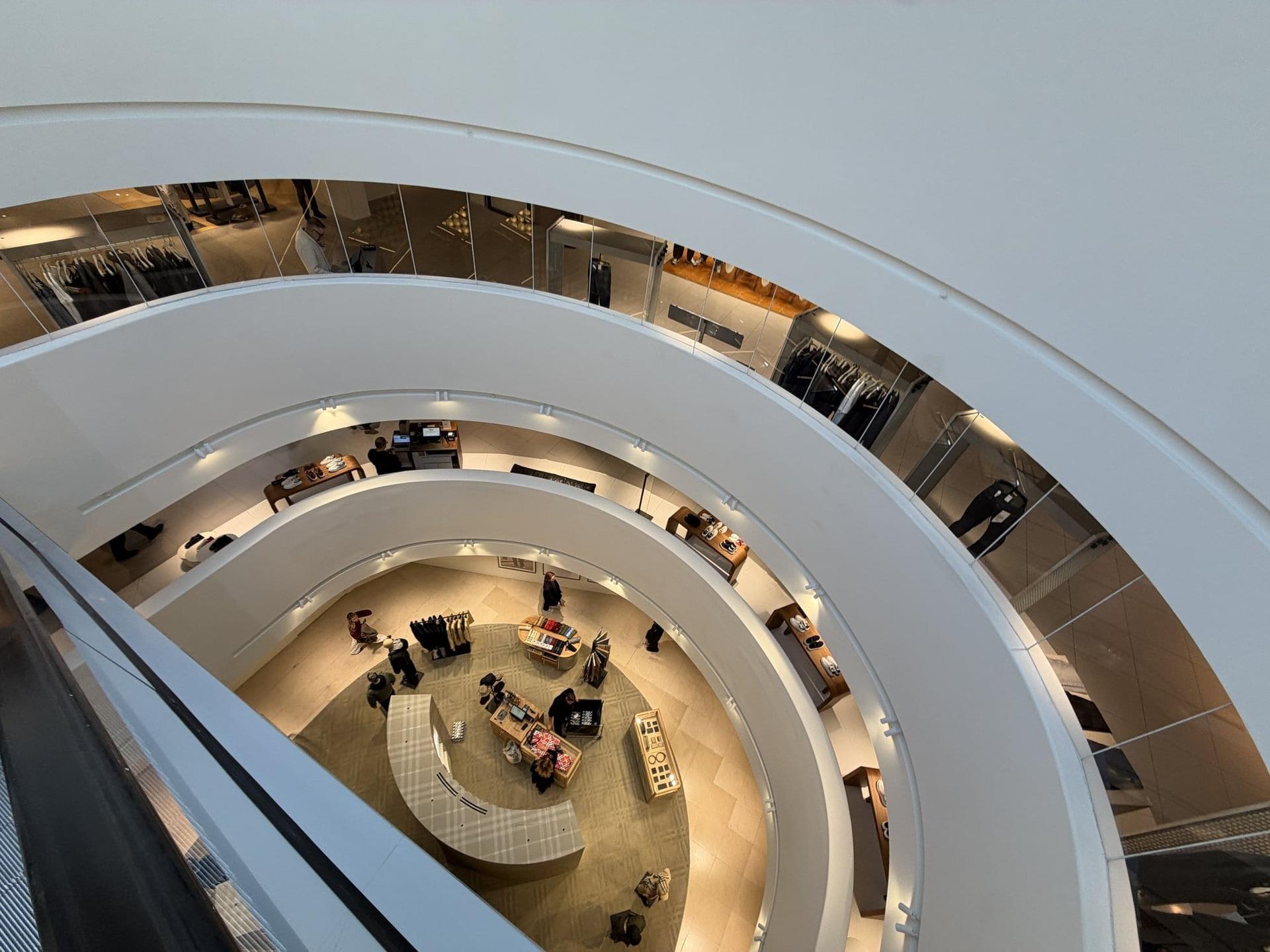
It is Saturday, Nov. 7, a little after 11 a.m., and Galeries Lafayette is open. There is one way in, the main door, narrowed. Security guards stand beside it; I didn't see them check a single bag. Inside, music is playing, a few shops already have their Christmas trees up, and Prada and Louis Vuitton are ready to sell. There aren't many people at this hour. Of the shops I walked past, one was closed: the jeweler Graff, with two beige screens across its doorway and a guard in an overcoat beside them.
Outside, on Boulevard Haussmann, the sun is out and the sky is clear, but the windows are gone from view. They are covered in sheets of OSB — wood chips pressed into board, the color of honey — fastened from the sidewalk up to the awning. It smells of freshly cut wood. On one sheet, someone has spray-painted a face with big eyes in blue.
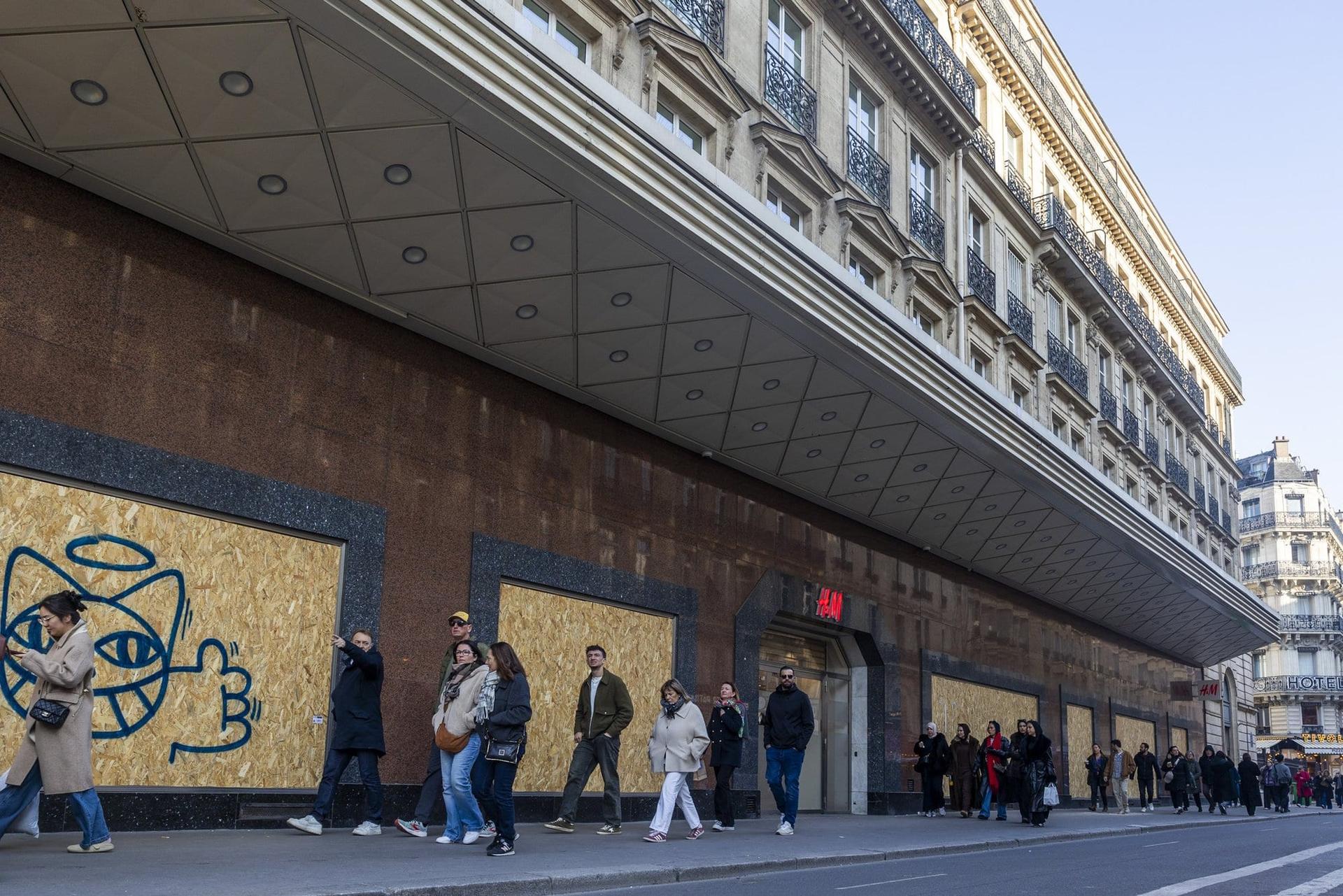
The Paris I found this weekend has three rows of people on the same sidewalk. The tourist came for the windows and photographs the plywood. The luxury store keeps selling behind it and has written on the wood that it is open. The Parisian walks past them both; to him, the wood has become scenery.
The plywood has a birthday: Oct. 17. That Saturday, protests over rising prices, which began in high schools, ended in Paris with smashed windows and looted stores. At Galeries Lafayette, dozens of young people broke windows with fire extinguishers and went in after merchandise, Franceinfo reported. The French government counted 450 stores damaged or looted in the capital. Today is the fourth straight Saturday of demonstrations.
The window, from the other side
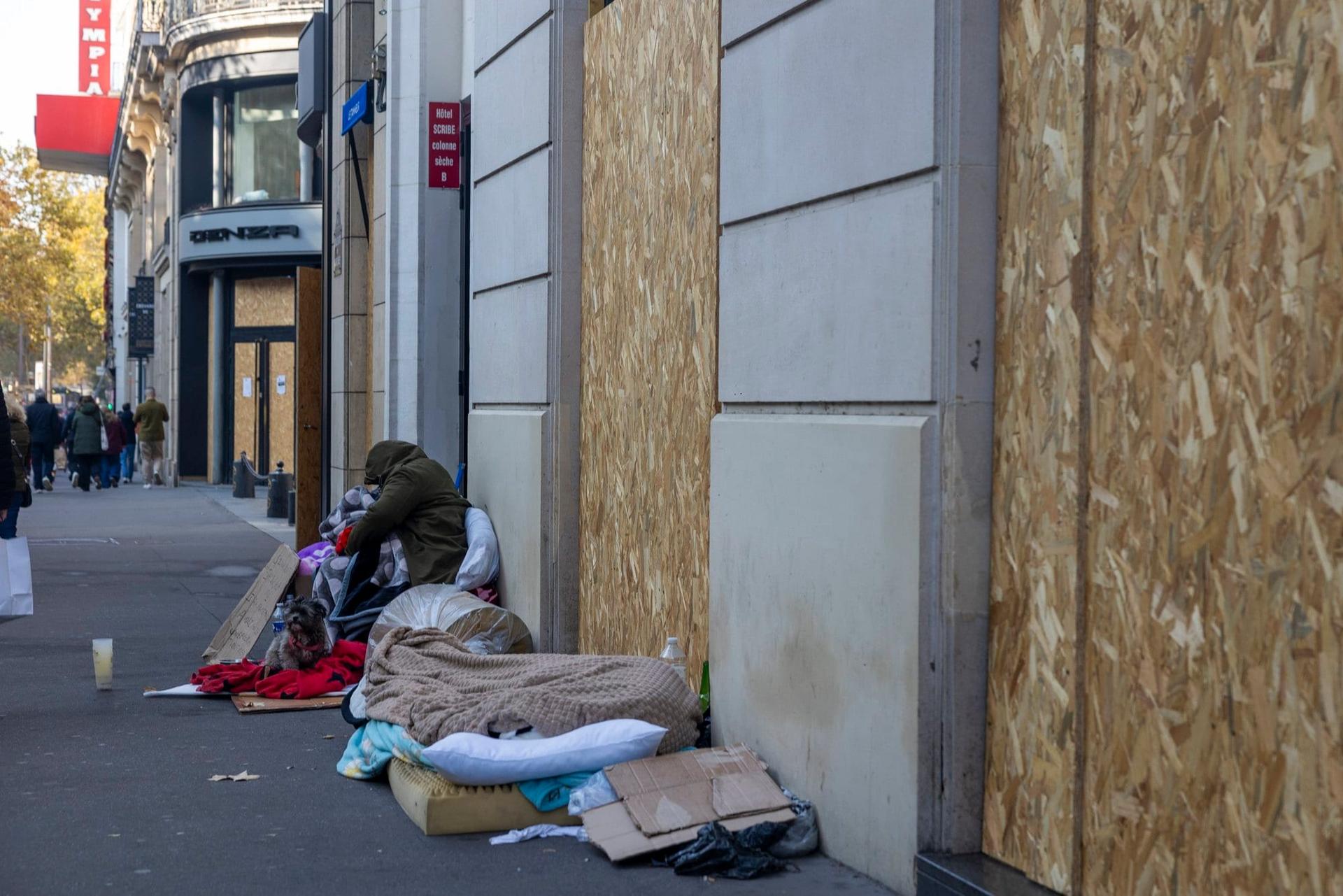
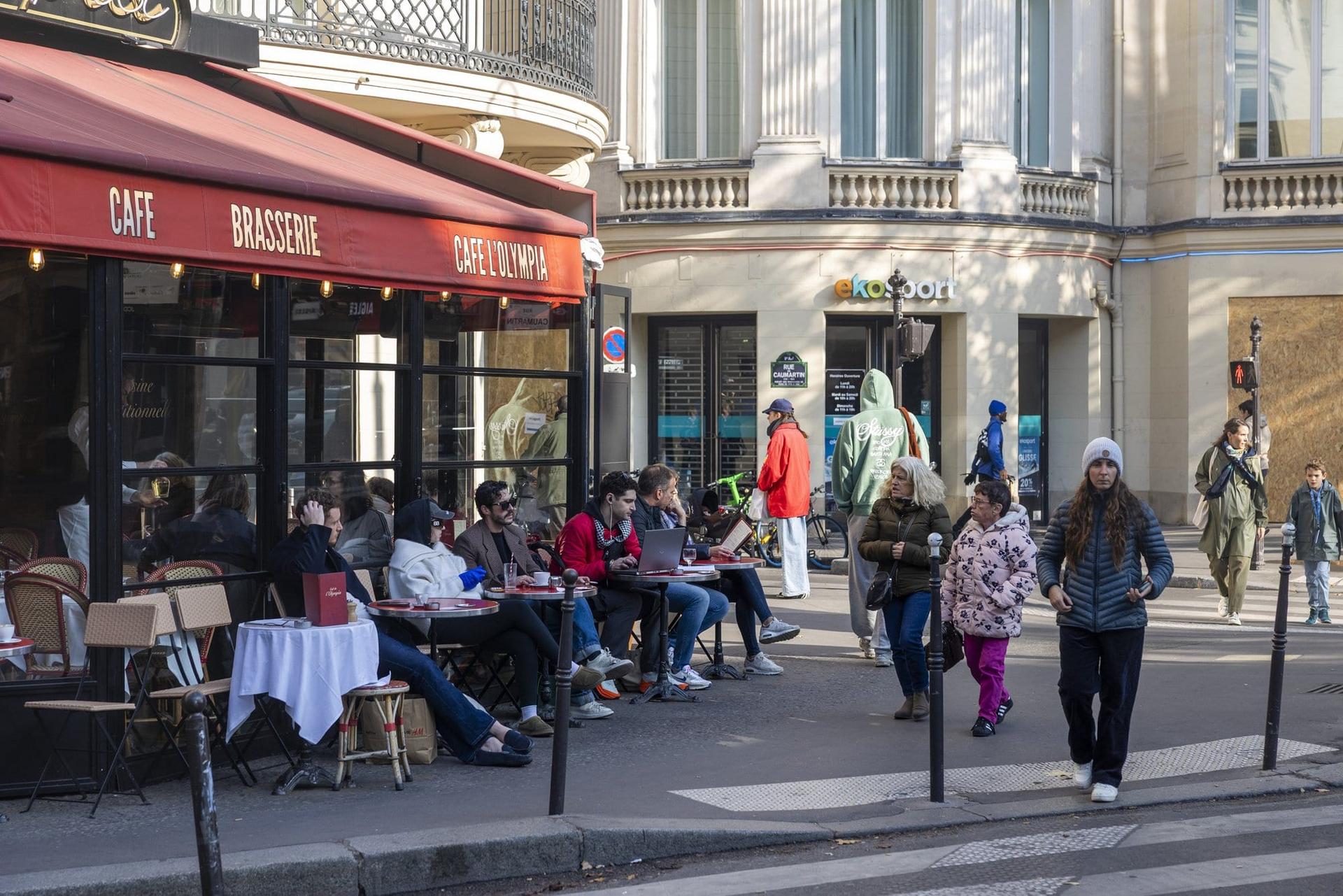
From Galeries Lafayette I walked toward the Madeleine. On Boulevard des Capucines, at the foot of a boarded-up wall, someone sat huddled among blankets, a small dog alongside and a cup set out in the middle of the sidewalk. A little farther on, the terrace at Café de l'Olympia was full, a few steps from a boarded-up window. A mountain gear store had its door open and, next to it, a wall of OSB with a pink cat drawn on it.
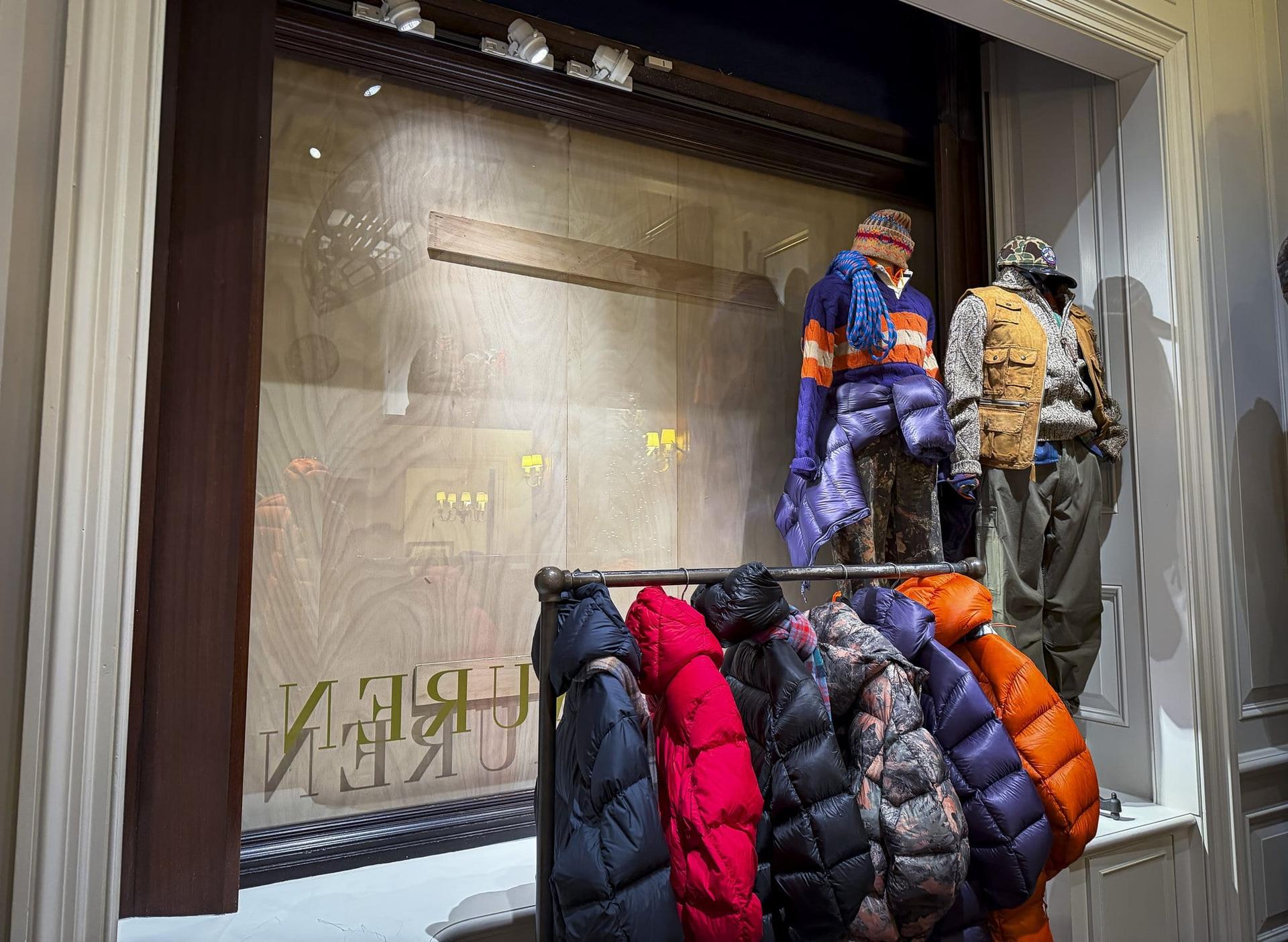
Near the Madeleine I went into Ralph Lauren to see what a barricaded window looks like from the other side. It looks like a wall. The spotlights still shine on the plywood, the brand's name reads backward through the glass, and in front of it stands a rack of down jackets: black, red, purple, orange.
Sirens on the Champs-Élysées
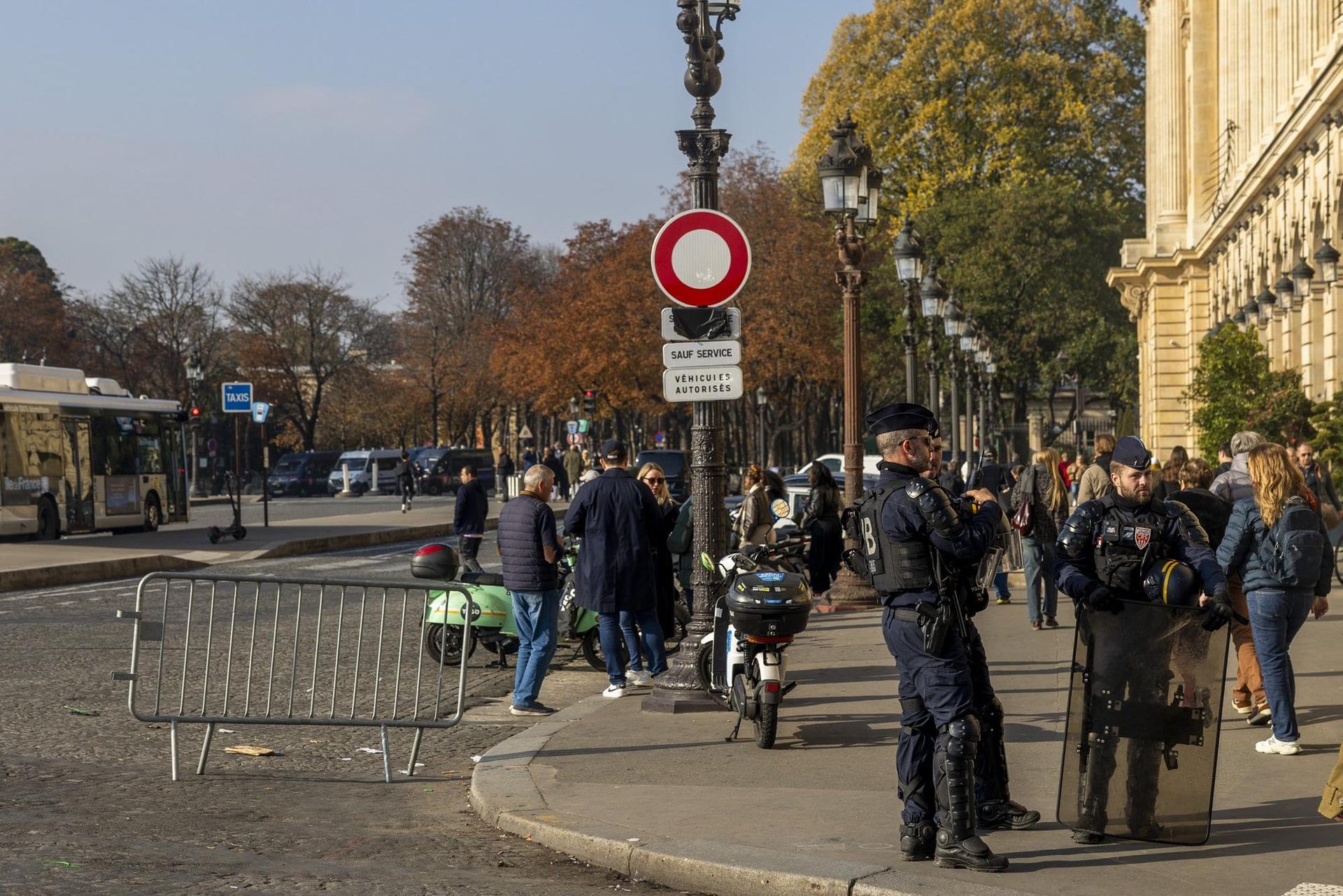
At Place de la Concorde, at a quarter to 1, officers from the CRS, France's riot police, stood with their shields beside them along a metal barrier. The police prefecture had banned a "yellow vest" gathering here. What came next I know from the French press: In the afternoon, about 30 people sat down on the ground anyway, were surrounded and were fined 135 euros each. The authorized march was on the other side of the city, between Place de la République and Place de la Nation: 46,000 people by the police count, 75,000 by the organizers'. By then I was on the Champs-Élysées.
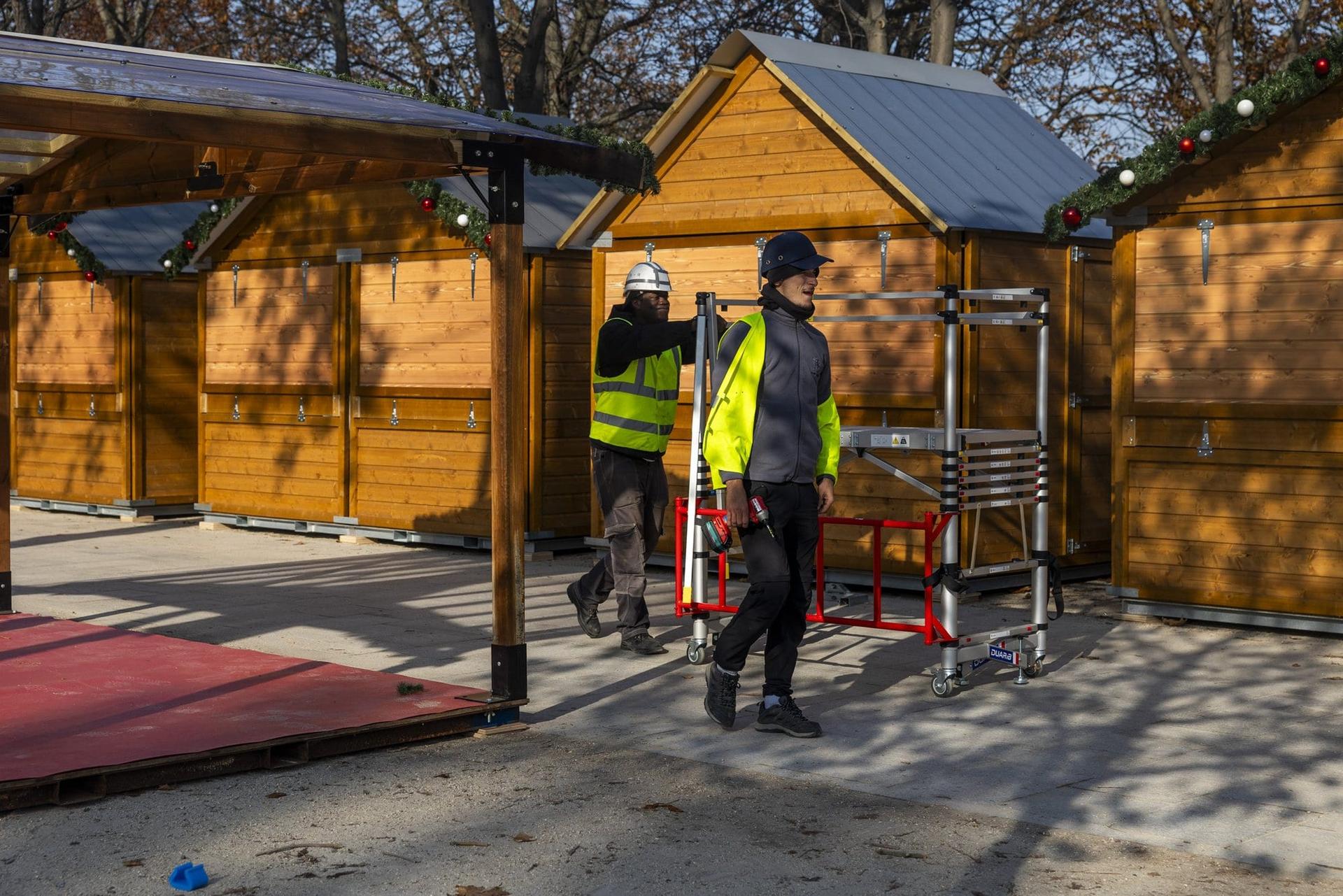
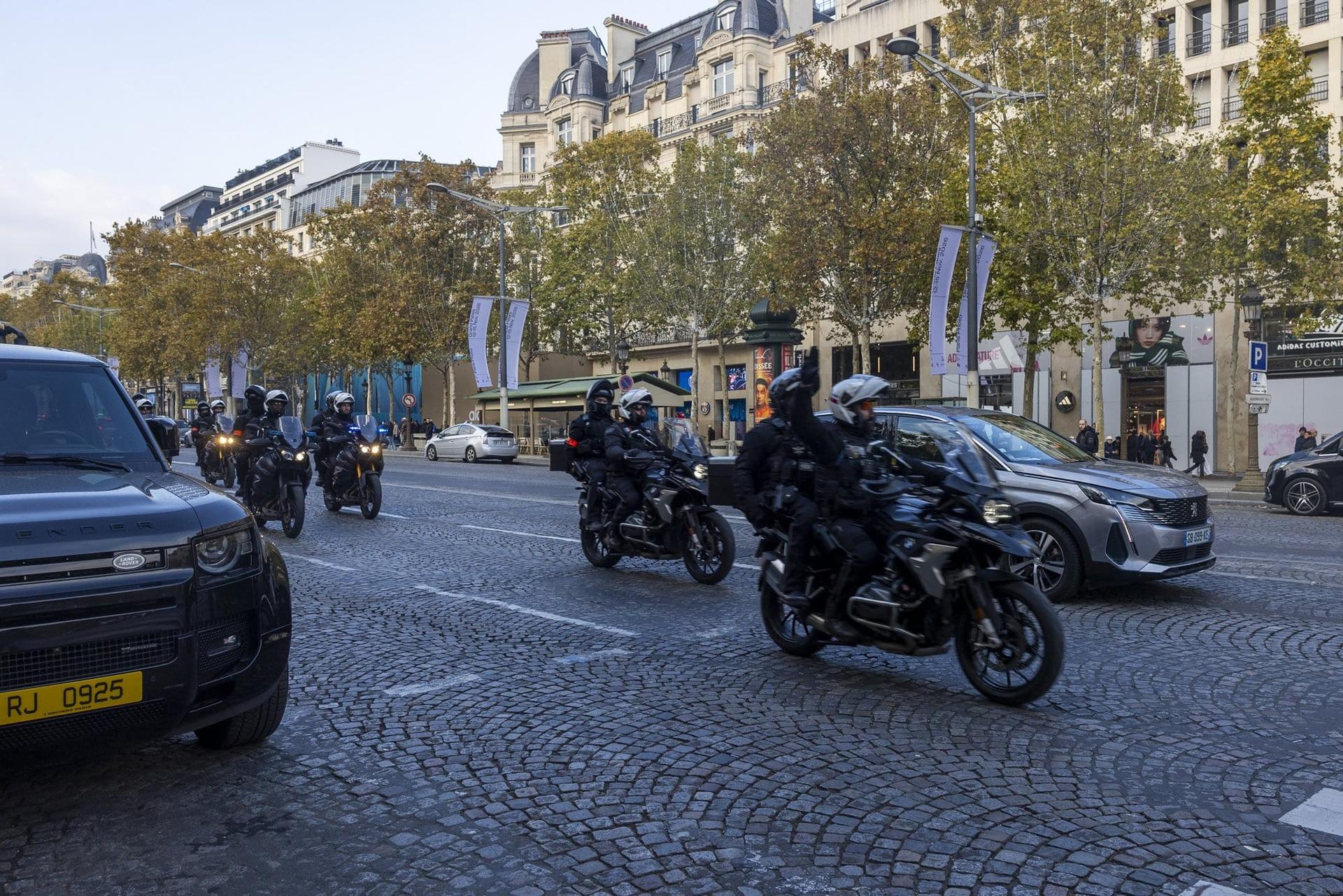
The lower end of the avenue was empty of cars. Under the trees, two workers in reflective vests pushed a scaffold between wooden huts strung with garlands. Farther up, traffic was moving. Every two or three minutes there was a police siren and, overhead, a helicopter. Now and then an ambulance went by. Around 2 p.m., a column of police officers on motorcycles, close to a hundred of them, came down from the Arc de Triomphe with their sirens on, not stopping at the lights.
I never once felt in danger. Only the police, the sirens and the wood reminded me it was a protest day.
"Open," written on wood
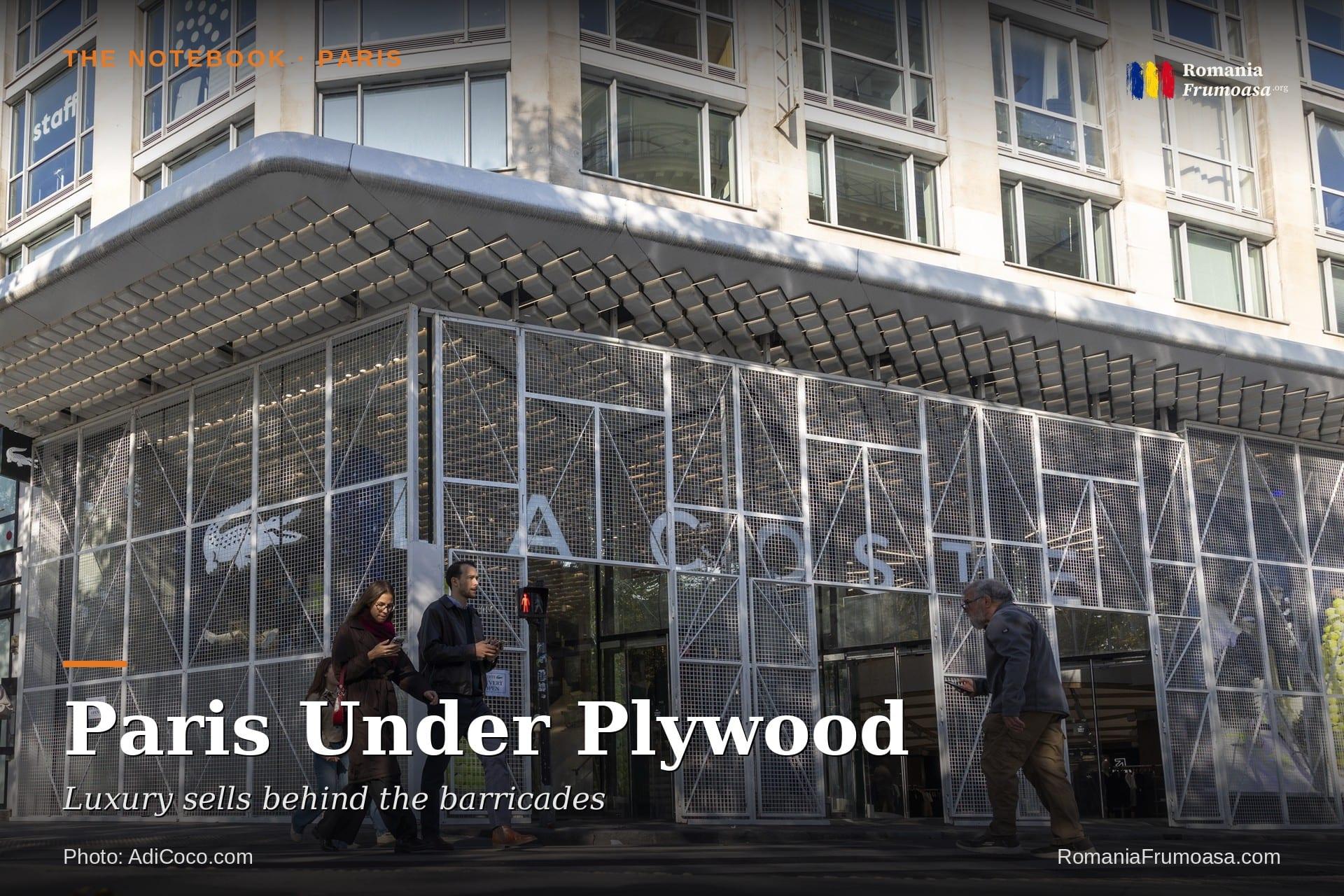
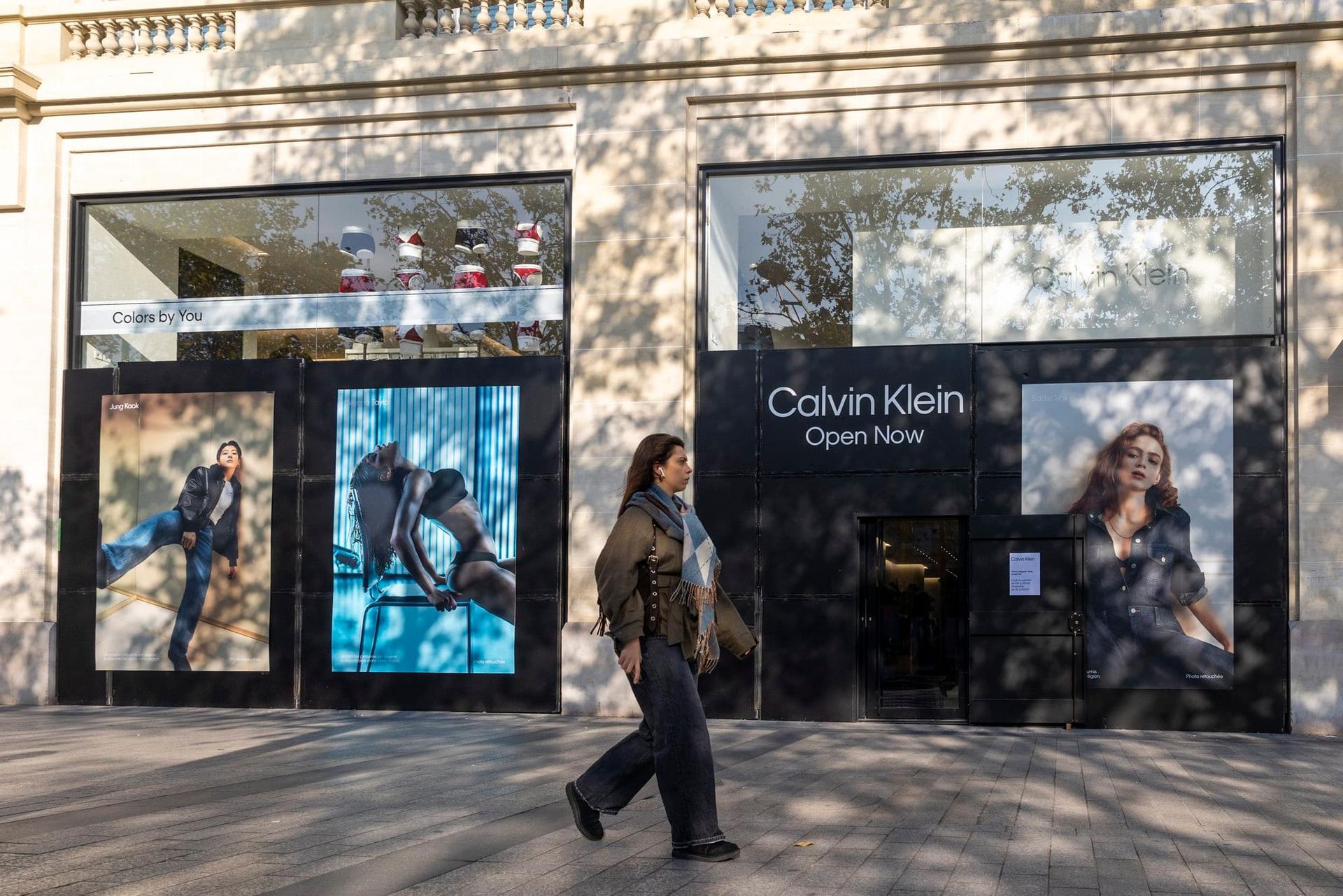
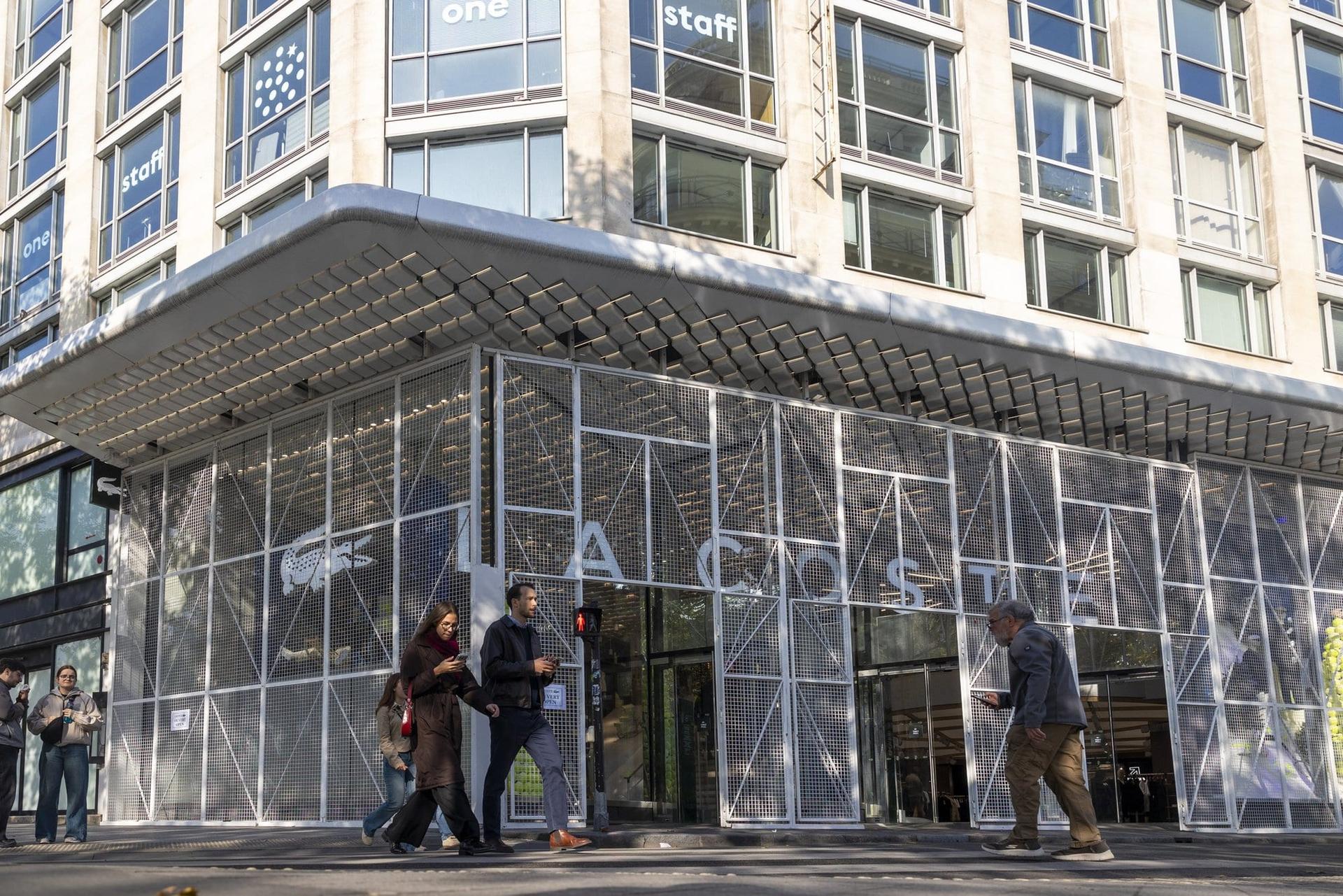
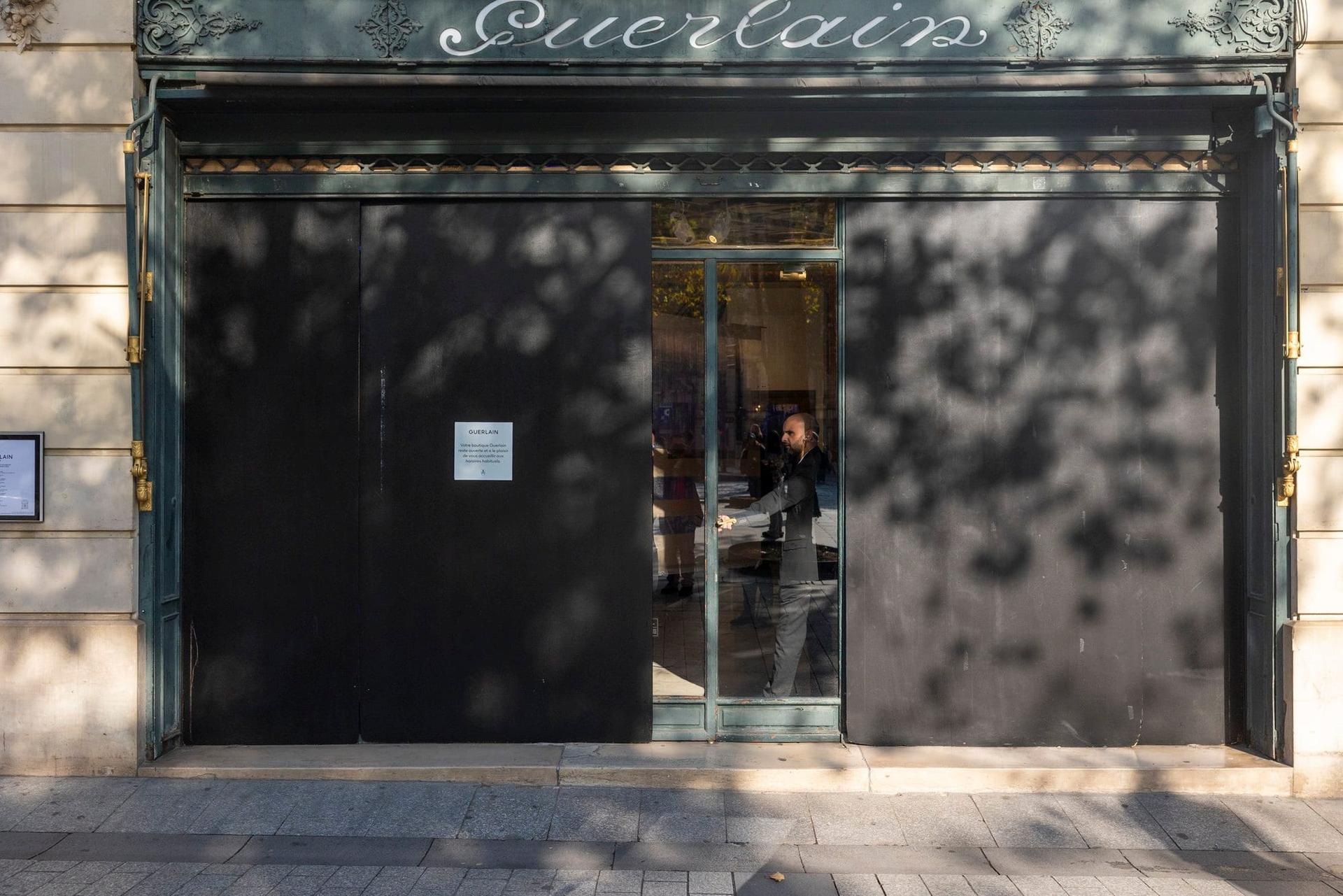
Nearly every panel I saw said the same thing: The store is open. Without a sign, a barricade suggests the opposite. On the Champs-Élysées, Monoprix covered its windows in ribbed sheet metal and put an arrow above them: "Magasin ouvert." Calvin Klein painted its panels black and wrote on them, in white letters, "Open Now." Lacoste chose steel: a white mesh as tall as the whole ground floor, with the name legible through it. Guerlain has black panels on either side of its door and, on one of them, a white sheet of paper: The boutique remains open, at its usual hours. In the doorway, a man in a suit holds the handle. At a few stores, workers were still putting up the boards as I passed.
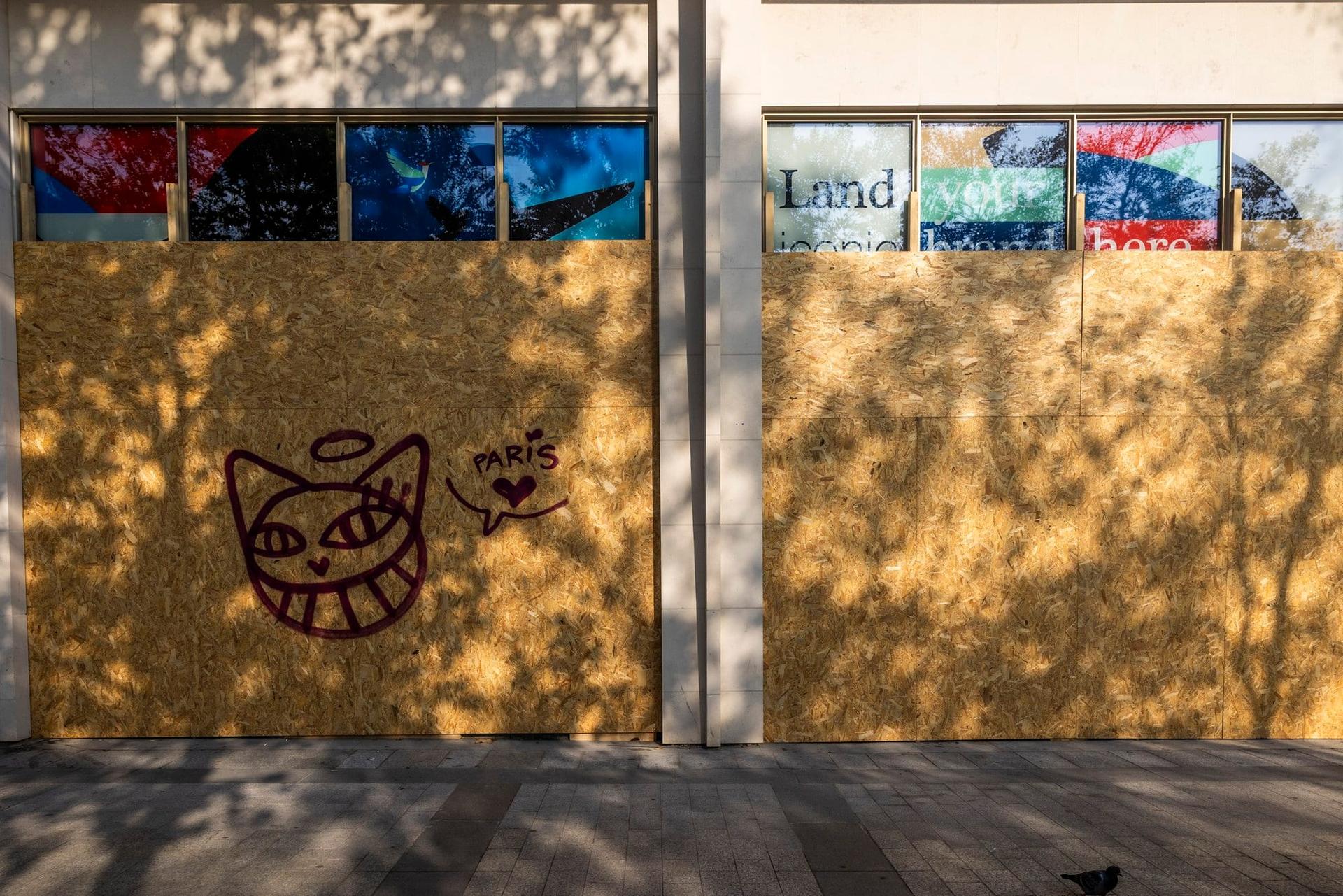
On a wall of OSB, in the shade of the plane trees, someone drew a cat with a halo. Next to it they wrote "Paris" and added two hearts.
"What could happen to him?"
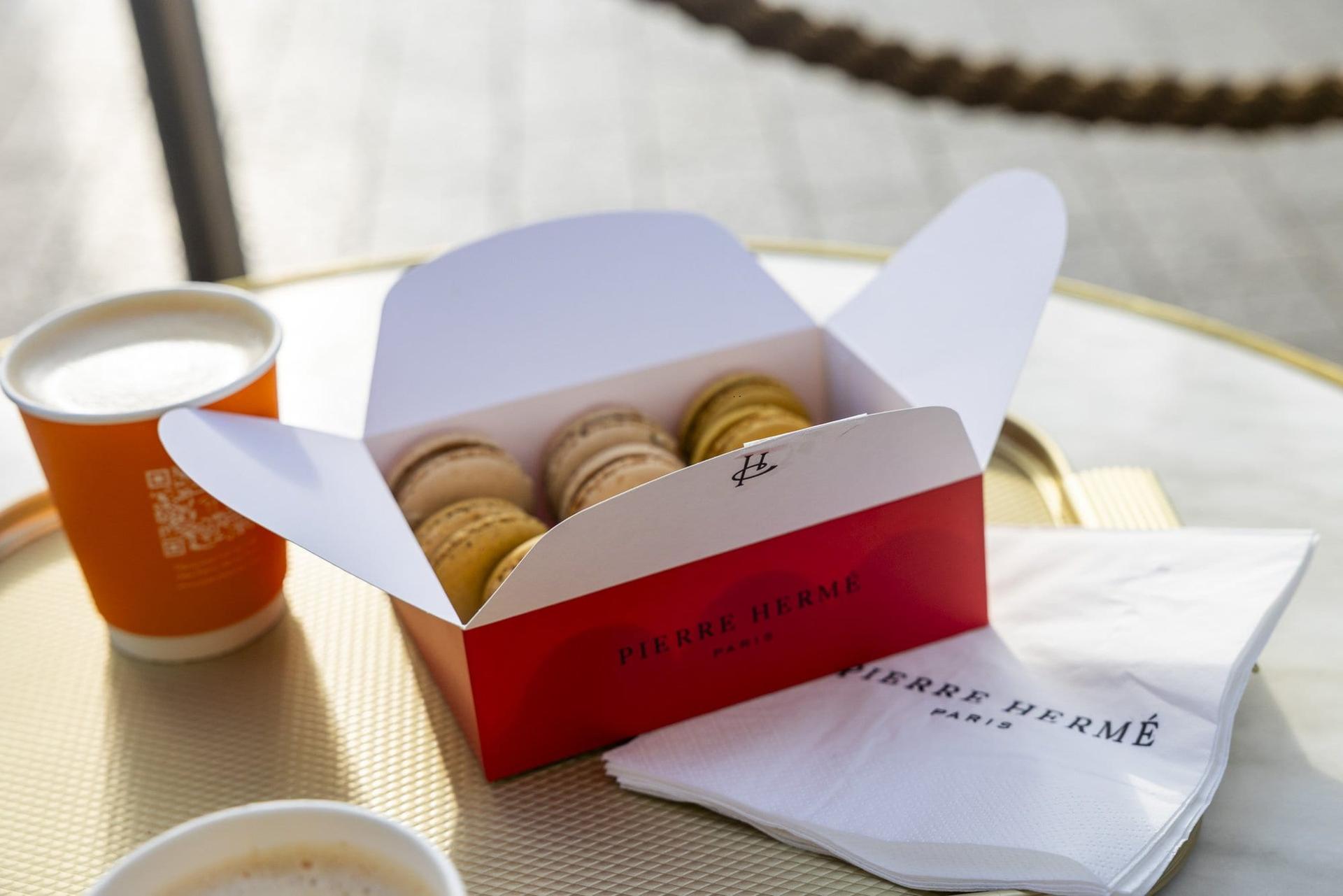
I did what tourists do: I bought a box of macarons at Pierre Hermé, about 30 euros. Of the three flavors, only the pistachio stood out. It was 1:28 p.m.
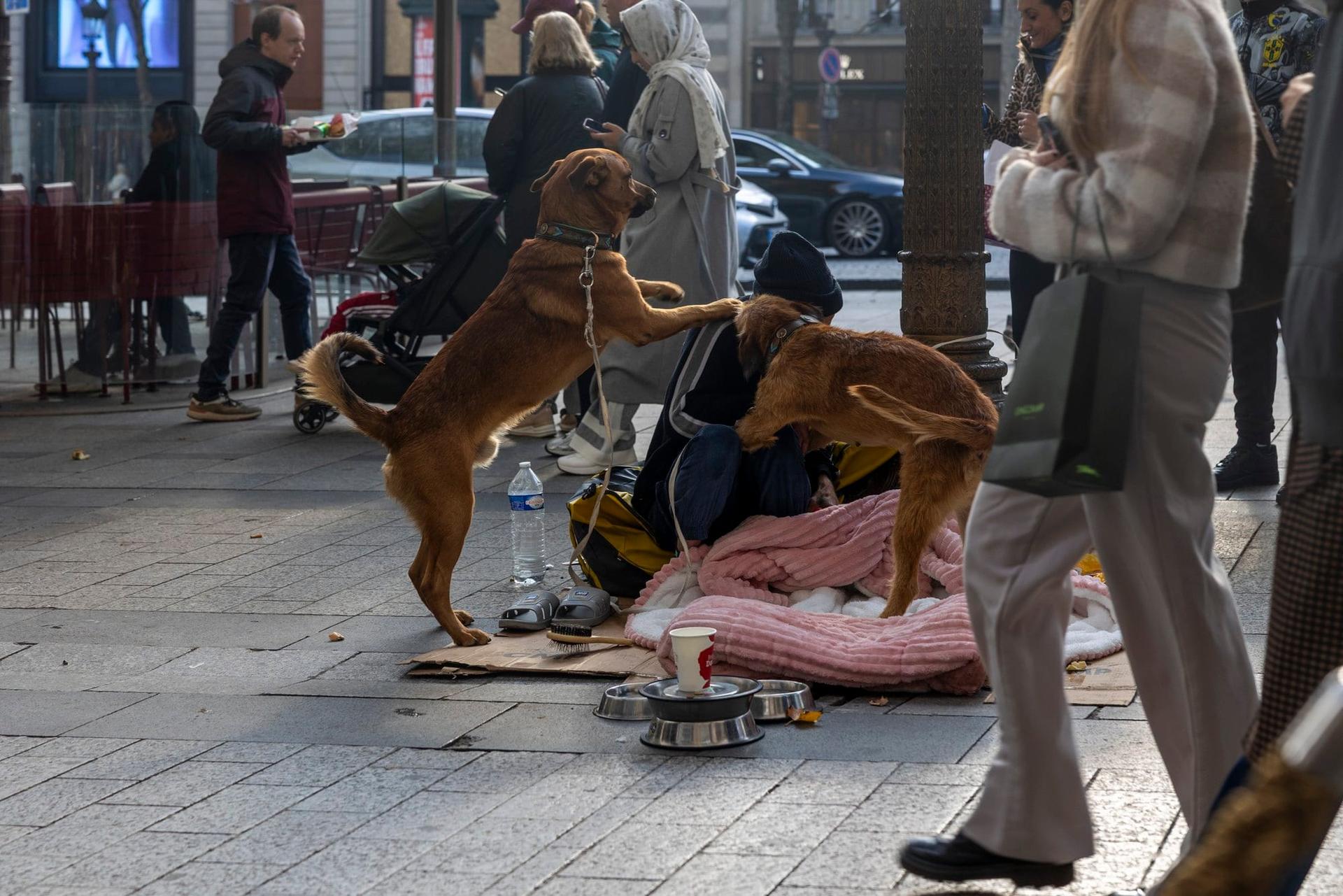
Seven minutes later, between Lacoste and McDonald's, next to the Paris Saint-Germain club store, a man sat on the sidewalk with his back against a lamppost. Beside him, on a piece of cardboard, two dogs slept under a pink blanket. Pigeons wandered around them.
I spoke with him through someone who translated into French. About himself he said nothing. He talked about the dogs, who are his life. One was hit by a car and has been sick ever since. The treatment is expensive, and the money he gets from begging goes to medicine. A nearby bistro helps him with food and sometimes with cash.
The protests have nothing to do with him, he says. He's with the dogs. They don't scare him. "What could happen to him?" came the translation.
I felt bad, but I gave him nothing. Since cards moved onto phones, I rarely have cash in my pocket.
Across the Seine and back
At the Arc de Triomphe, around 2:40 p.m., people were taking pictures of each other in the middle of the roadway, next to a double-decker tour bus.
In the afternoon I took an Uber across the Seine to Le Bon Marché. There, too, were metal grilles: From outside it looked closed. Inside there were far more people than I had found that morning at Galeries Lafayette.
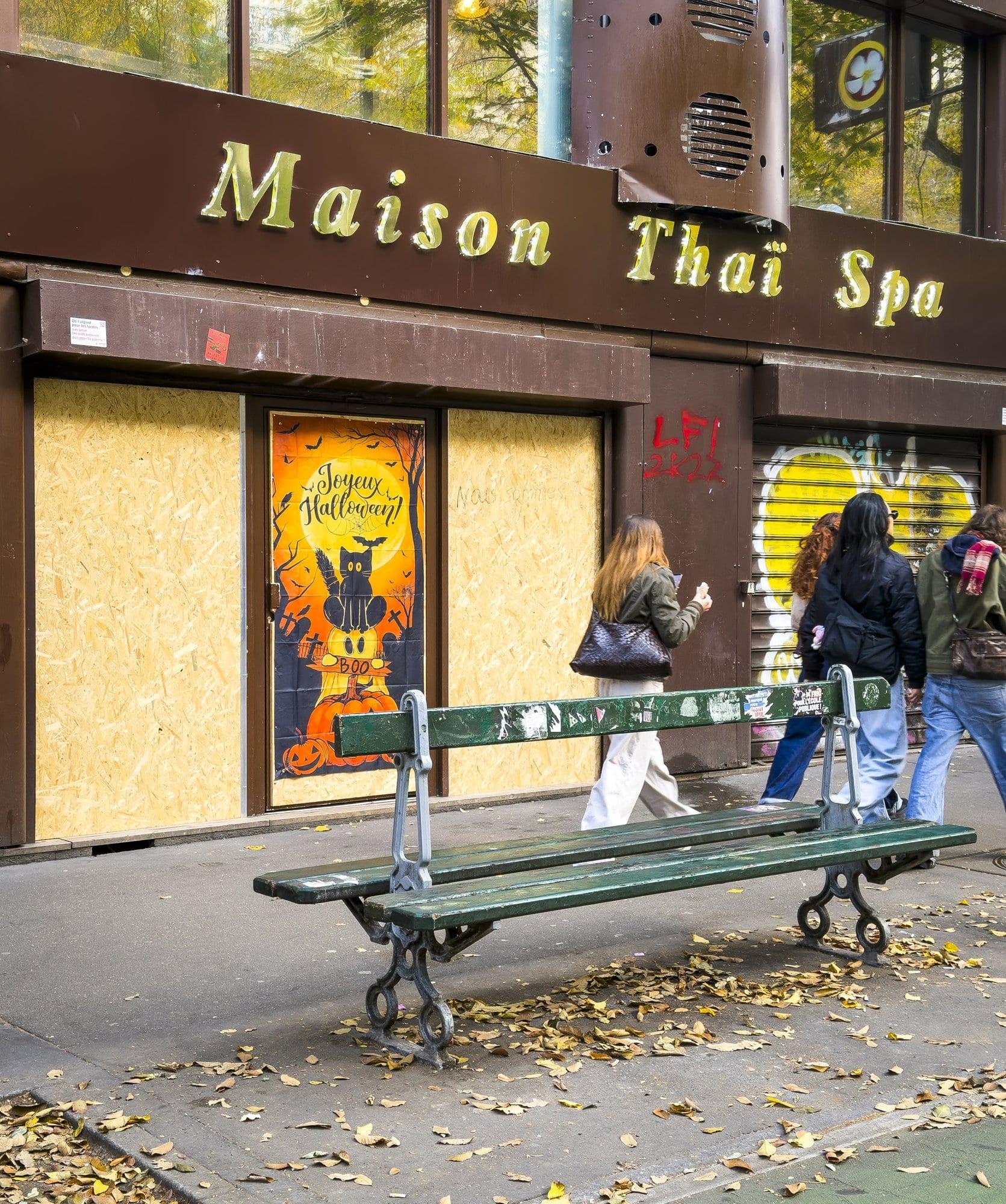
Cristi Corchiș, a colleague, was in the part of the city where the march began. He got into Place de la République, he told me, only after police scanned his ID. Then he walked up Boulevard de Magenta with his phone, a few hundred yards from the square. I wasn't there; I know only what his photographs show: shutters covered top to bottom in graffiti and a Thai spa with plywood where its window should be and a leftover Halloween poster on the door. On the sidewalk, two women walk past the plywood without stopping.
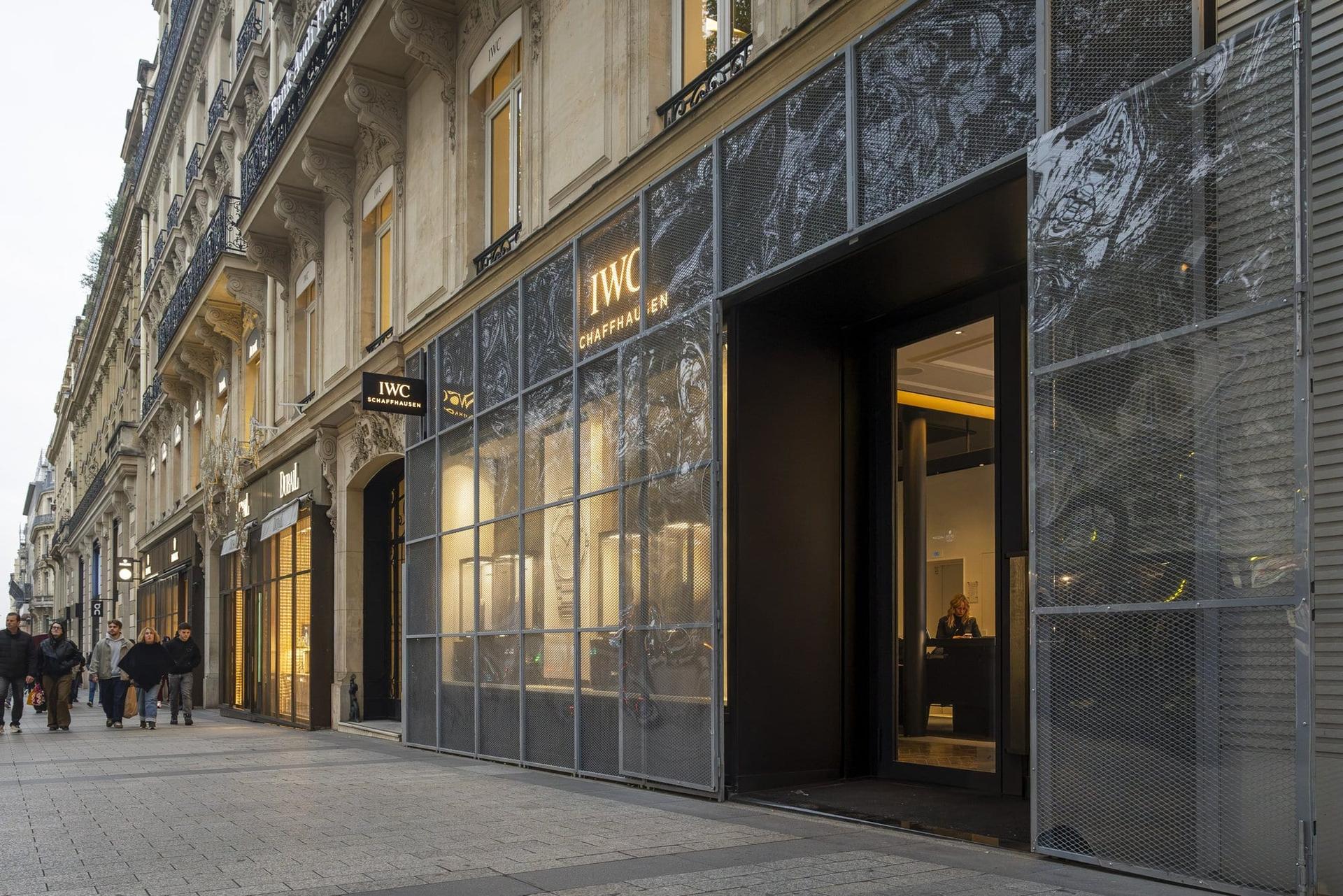
I came back to the Champs-Élysées at 5. Evening was falling and the windows were lit. At IWC, you see the watches through steel mesh.
Sunday, two drivers
The next day, Sunday, I had several trips to make. I chose Uber. Two of the drivers support the protests, each with a reservation.
Mimoun took me to my hotel. He is somewhere between 40 and 45, drives a Tesla Model Y he is very happy with and speaks good English with a thick, musical Parisian accent. I told him so and he laughed. He came from Morocco to study, fell in love with a Parisian classmate and stayed. They have been married for 20 years and have two children.
The protests do a lot of damage to tourism, he says. He understands the demands, even supports them; the destruction he does not accept. He thinks of a small shopkeeper, with a store where the whole family works, who finds years of work wiped out one morning. And who has to start over, if he has anything to start with.
Sébastien picked me up at the Eiffel Tower. He is about 25 and speaks broken English, but fast and with relish.
He lives far from the center, in a neighborhood with a bad reputation. It's cheaper, he says, by way of apology. He pays about 700 euros a month for two rooms, meaning one bedroom. He has cockroaches, and the hot water and the heat come when they come. I almost told him it's the same back home, in Drumul Taberei, my neighborhood in Bucharest.
He talks about the protests with anger. He agrees with them: You can't live like this anymore, and he sees no future for himself. I asked whether he had gone to one. No. It's dangerous; he has heard of people maimed, of eyes lost.
He isn't exaggerating. Prosecutors in Mulhouse opened an investigation after a 17-year-old girl lost an eye at the Oct. 17 demonstration. The same day, in Saint-Étienne, a young man lost a hand. Agence France-Presse has counted at least 20 people seriously injured since mid-September by police projectiles and grenades.
Monday
On Monday, Nov. 9, I walked into a Creed perfume shop. The glass is cracked in several places. Behind it is plywood. In front of the plywood, the perfume bottles are stacked in a pyramid.
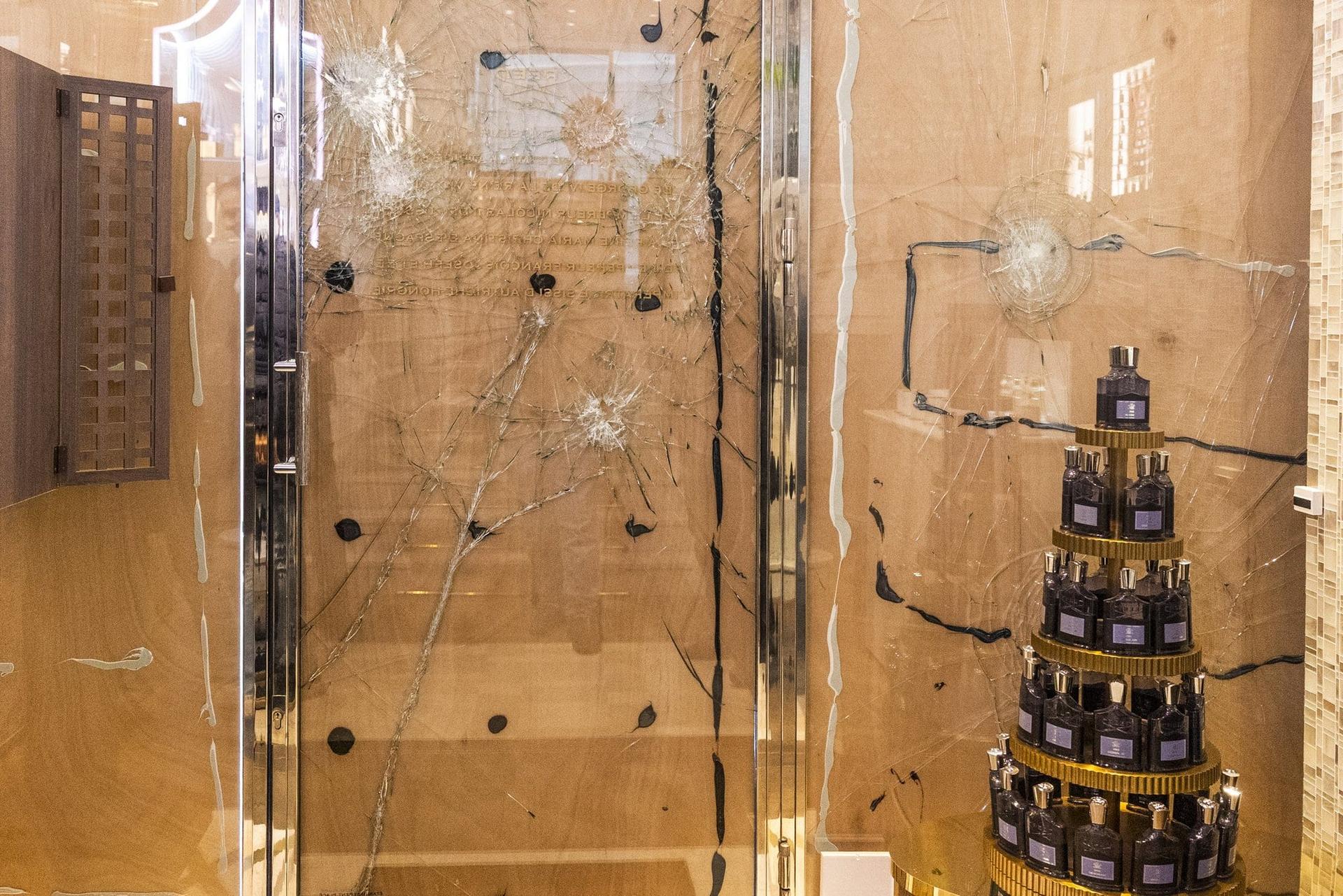
Field observations are from Saturday, Nov. 7, 2026, along the route Galeries Lafayette – Madeleine – Concorde – Champs-Élysées – Le Bon Marché, and from Monday, Nov. 9 (the Creed perfume shop). I spoke with the two drivers on Sunday, Nov. 8, in English; they appear by first name only. The photograph from Boulevard de Magenta is by Cristi Corchiș. Figures on the protests and the injured come from the French press and the news agencies cited below.
This English version is an automatic translation of the Romanian original.