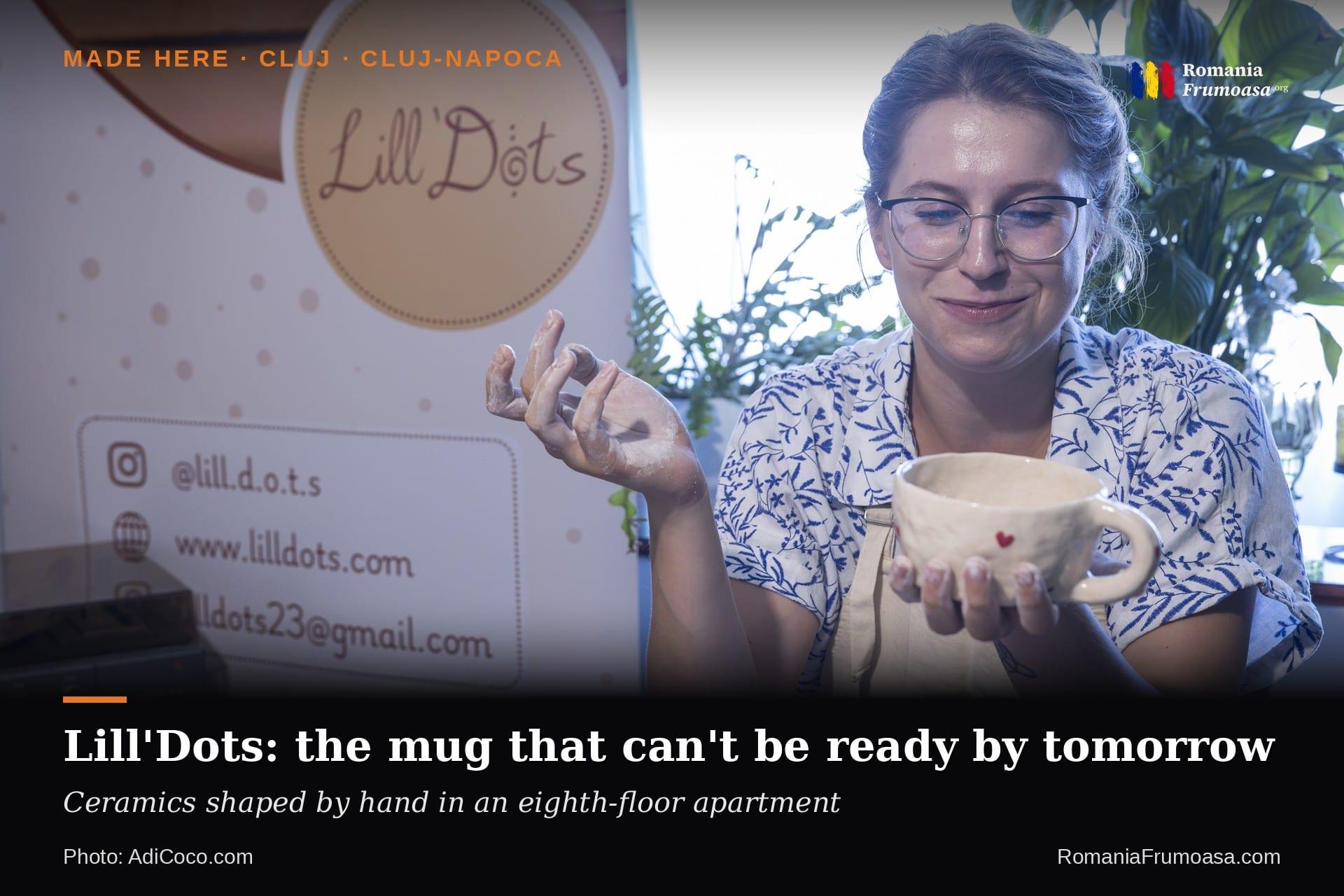
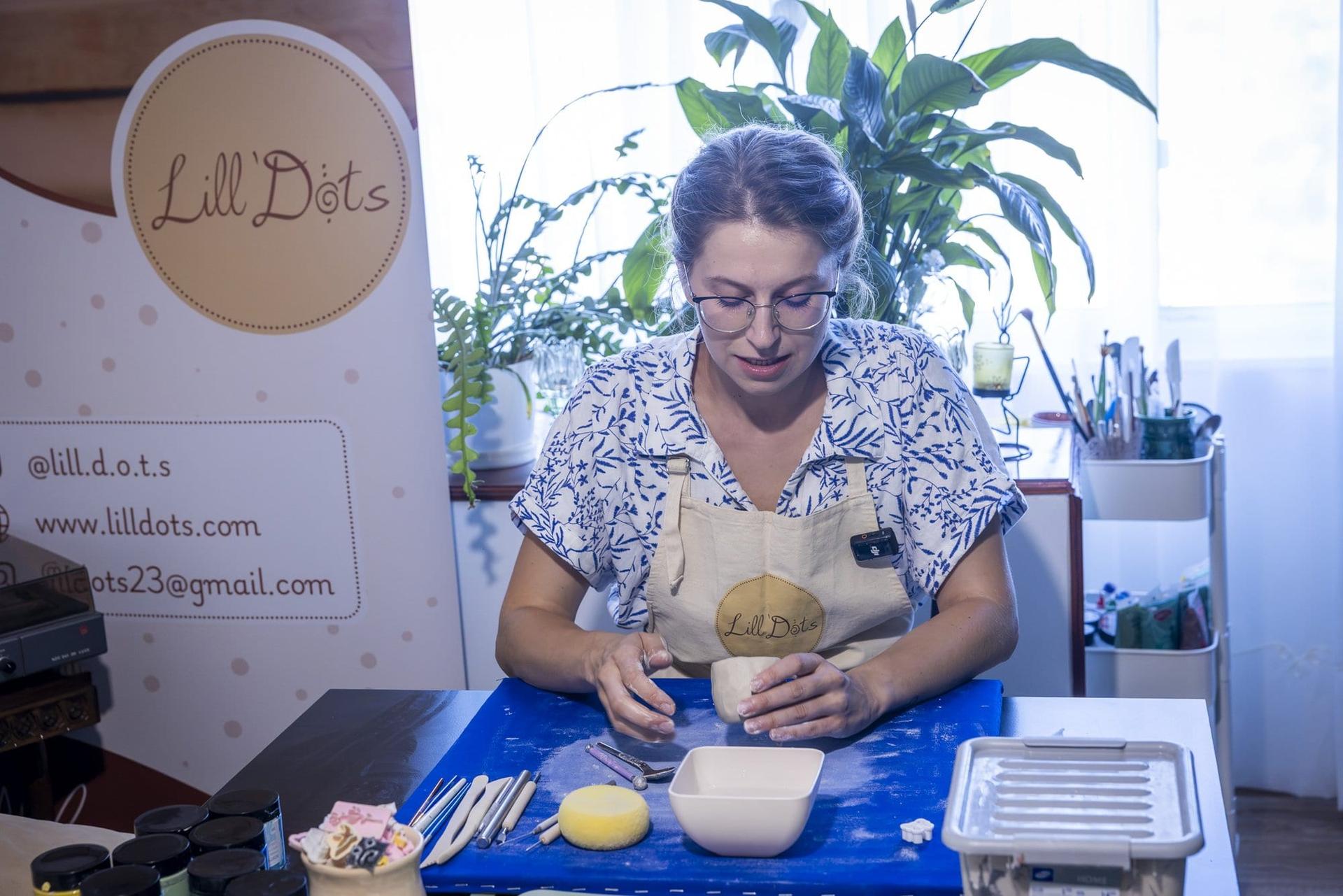
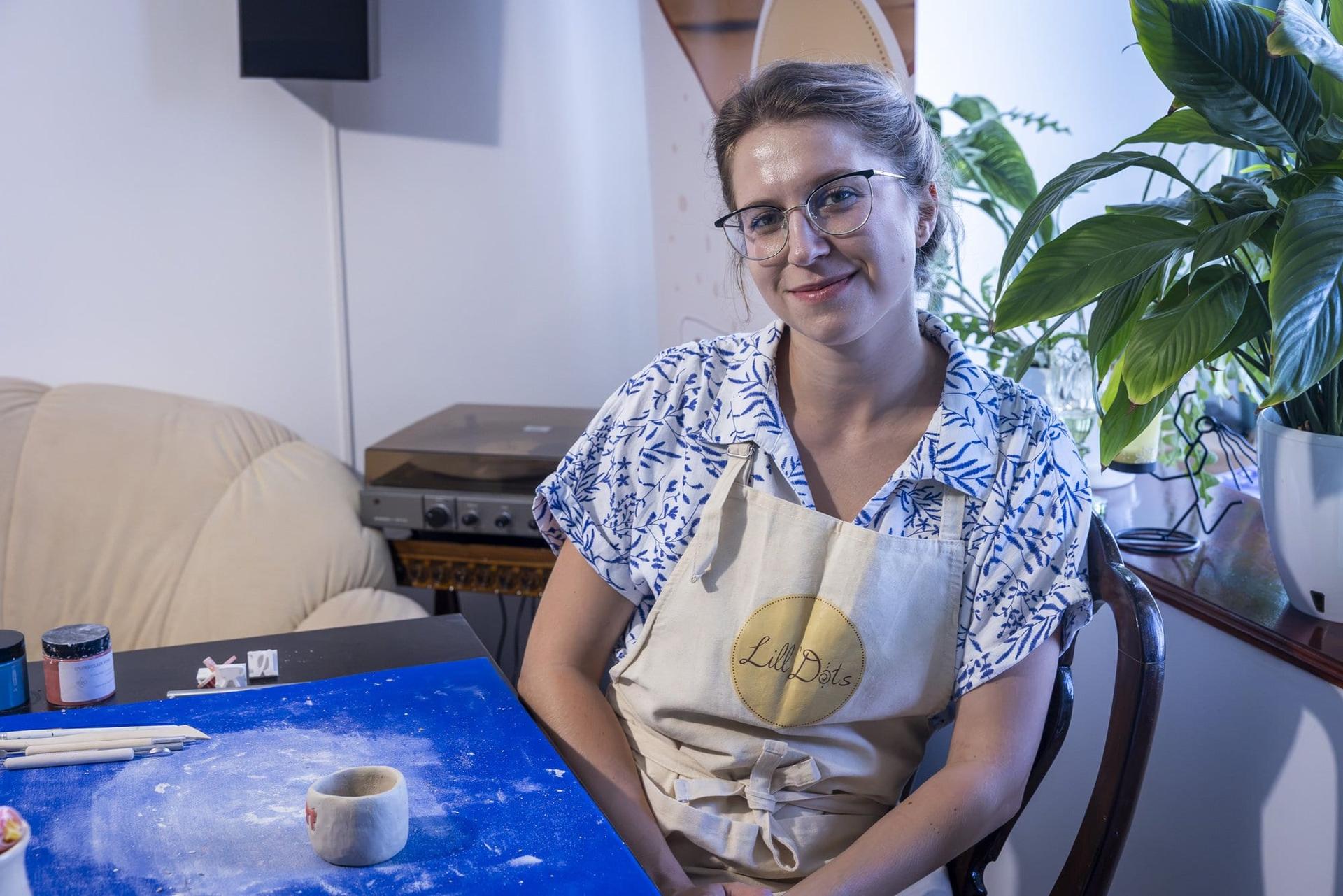
The espresso cup fits in the hollow of a palm. Lilla Siklodi holds it in one hand and smooths the rim with the fingers of the other, on a blue cloth spread over the table, between a yellow sponge and a row of wooden tools. She talks while she works, which she says isn't like her: "Usually, when I'm working or making something, I don't really talk ... I concentrate very hard, I like being there."
This cup won't be ready tomorrow, or next week. First it dries, then it goes into the kiln twice, with painting and glazing between the two firings. "When someone tells me they need a mug by tomorrow, well, unfortunately that's not possible," she says, laughing.
Siklodi is 27 and from Cluj-Napoca. Lill'Dots is the name she works under, and her studio is her apartment, on the eighth floor of a building in the city. This is where she shapes, paints and glazes. It's also where she sets out from, tools packed, for the workshops she holds elsewhere for people who want to make their own mug. Asked how a city where everything moves fast squares with something made by hand, she says that's exactly what people are after: "People have started looking again for activities, and going back to them, where you have to be there, be present, not rush."
Lilla and the dots
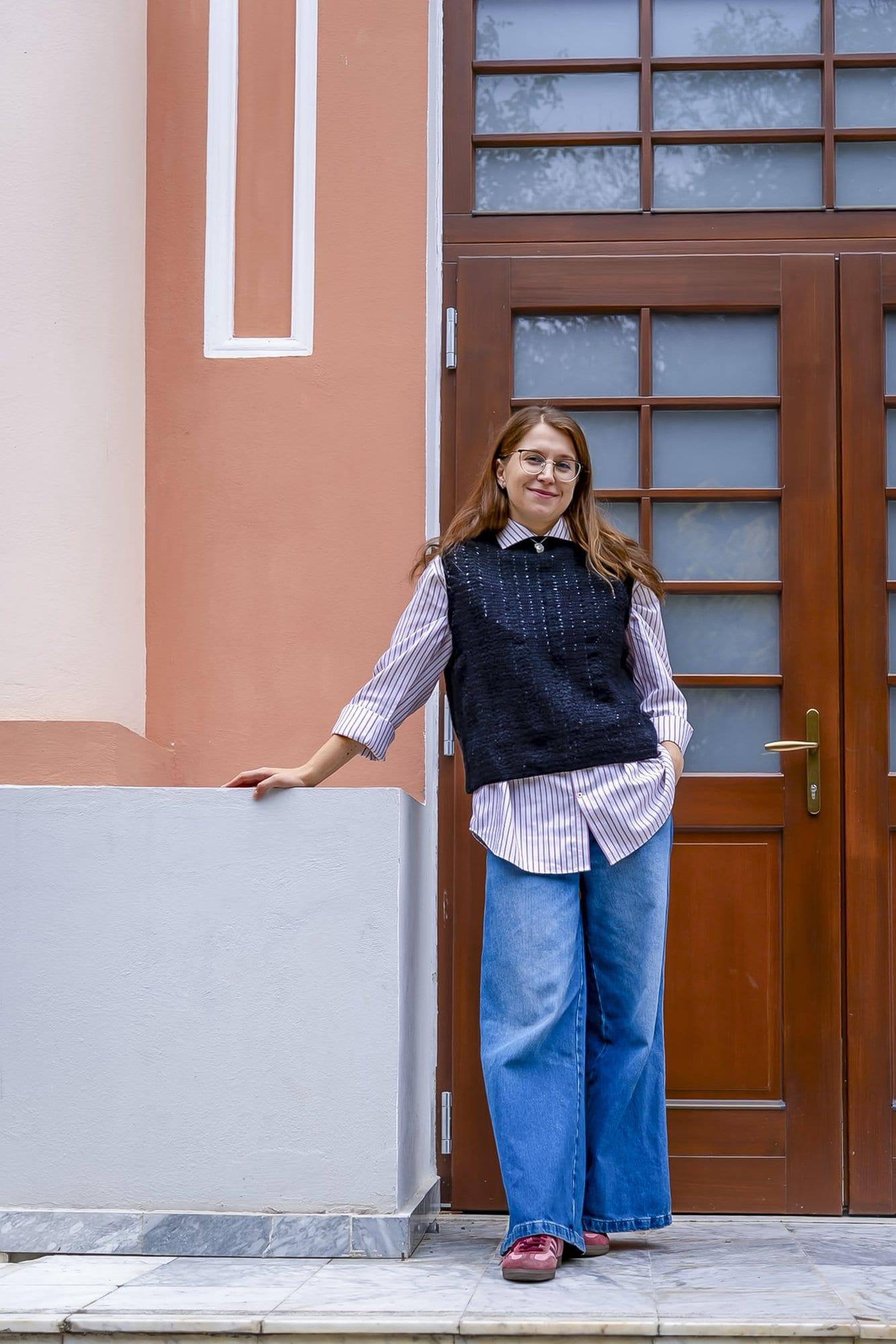
The name doesn't come from "little dots," as anyone reading it for the first time would guess. "No, it's from Lilla, because my name is Lilla, and I have these little dots on my hands," she says. She means a tattoo of four dots on her forearm, one the rest of her family has too. She wanted a name that tied her hands to work done by hand, and she wanted something else: "I didn't want it to be necessarily a Hungarian name, because I wanted ... to reach as many communities, as many cities as possible." She had long been waiting for someone to ask where the name came from. "People don't really ask."
She wanted to try ceramics during the pandemic, but back then there was nowhere to take a class. She came back to the idea in 2023, when she enrolled in a master's program, found a class in Cluj at GeosPottery and liked it right away. She decided to make a few pieces for family and friends for Christmas. That's when she realized, she says, that "it's not as easy as it looks": The glaze has to match the clay, the temperature and the way the piece is fired.
She studied environmental science, then agronomy. Apart from that class, she has no training in ceramics. What she does have is a memory from kindergarten or school, she no longer knows which: modeling clay, which she would sit with for a long time, working in great detail. The rest came from practice, from reading and from what she calls "a lot of trying and a lot of failing." "Somehow it all connects. Nature, and clay, and this work," she says.
White clay, no potter's wheel
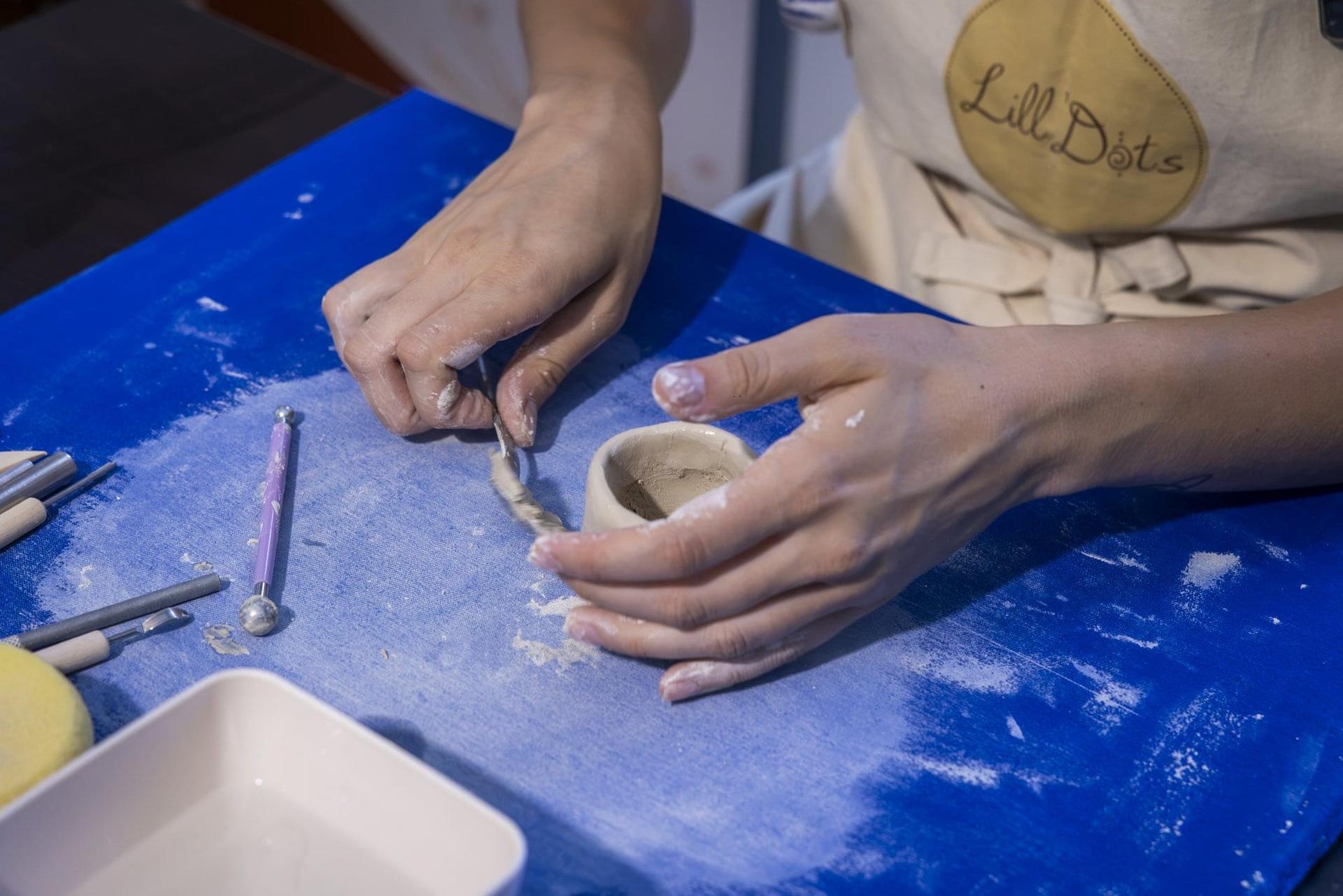
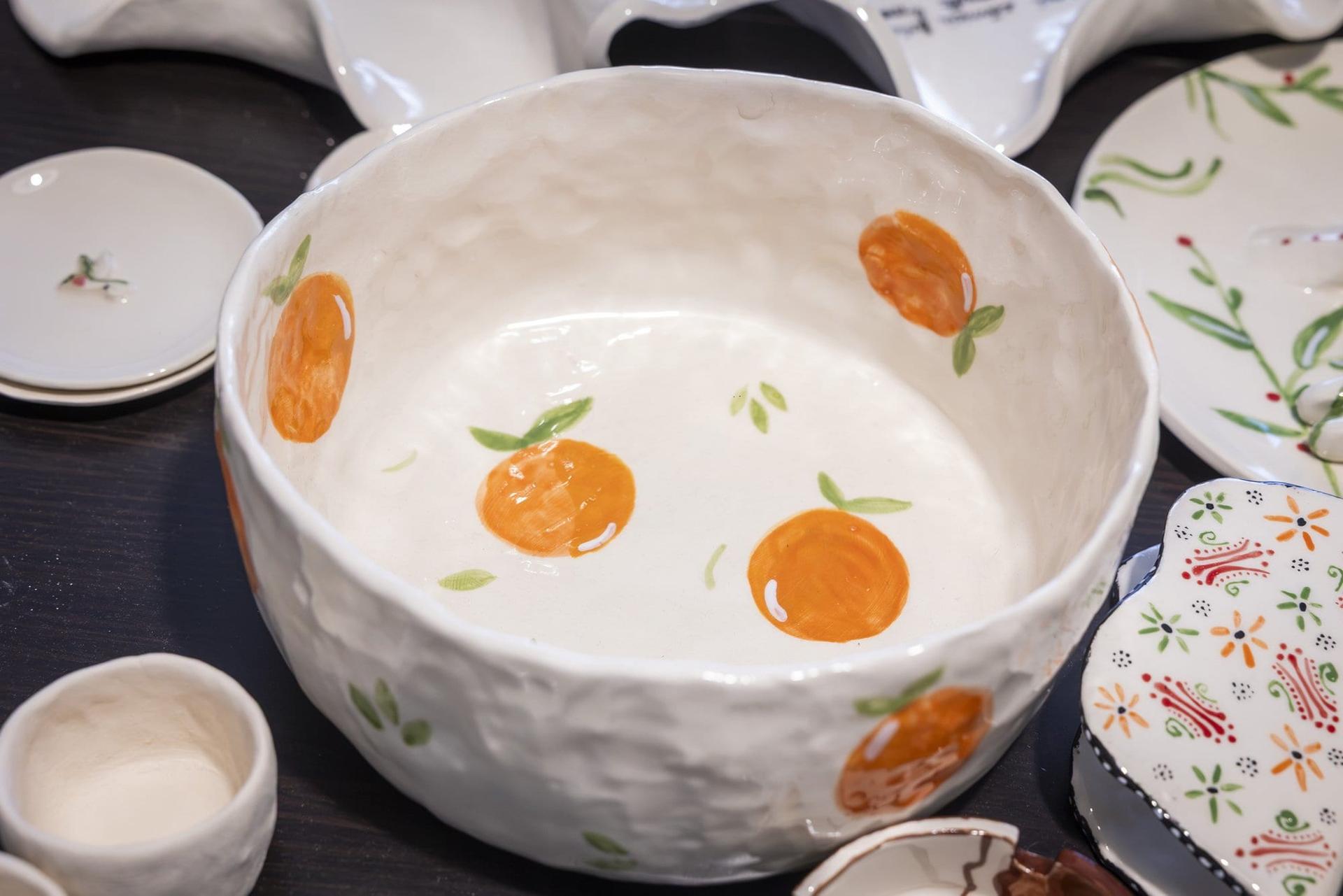
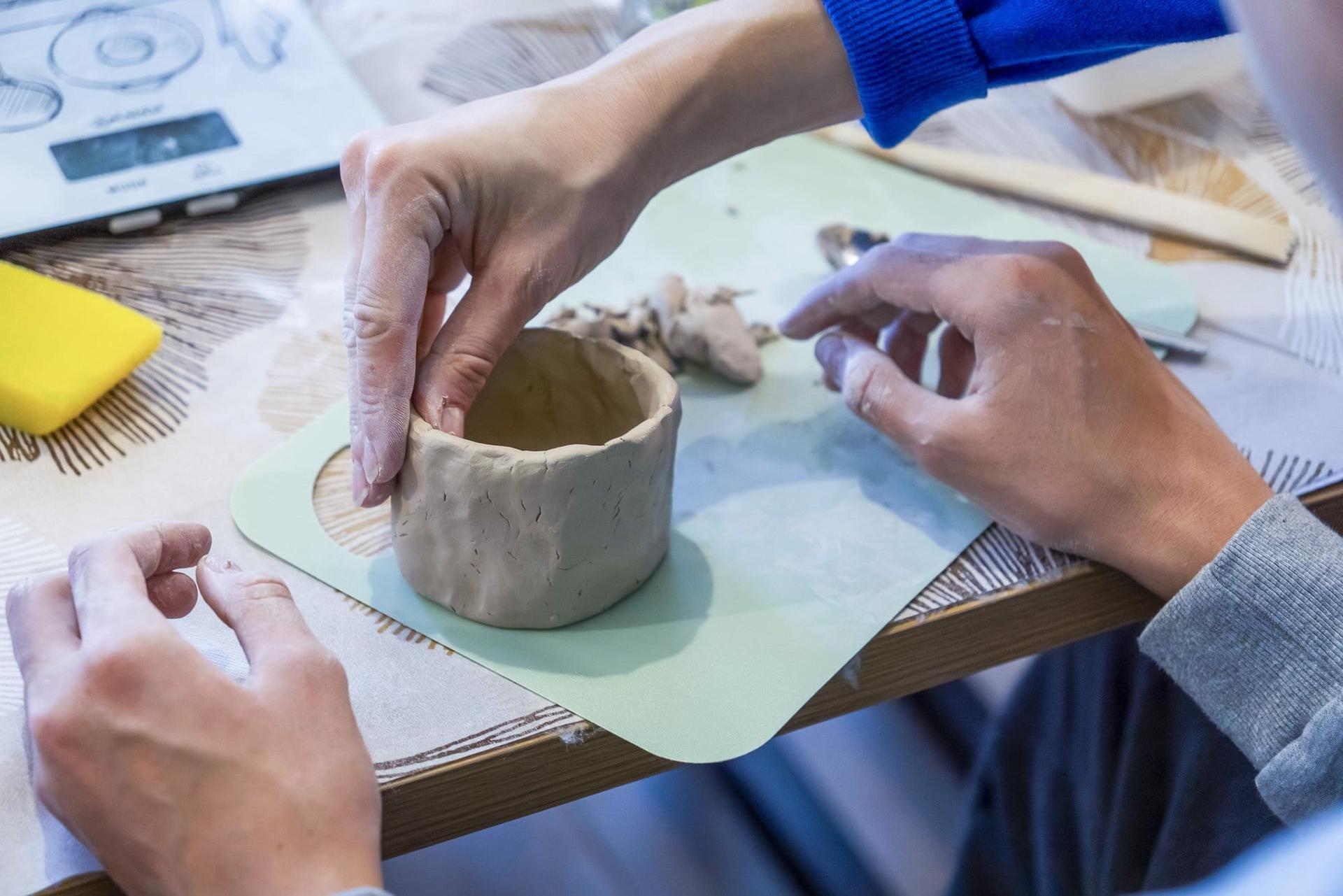
She tried the potter's wheel, too. She stuck with hand-building because that way, she believes, every piece comes out different from the next. She chose white clay. She buys the clay, tools, paints and glaze from Interceram, a company in Sighișoara that sells raw materials and equipment for ceramics.
She doesn't feel tied to folk pottery, the kind made in Corund, for instance: She uses neither red nor black clay, nor the traditional motifs and symbols. What she makes is, in her words, "a modern strand of the tradition of the past."
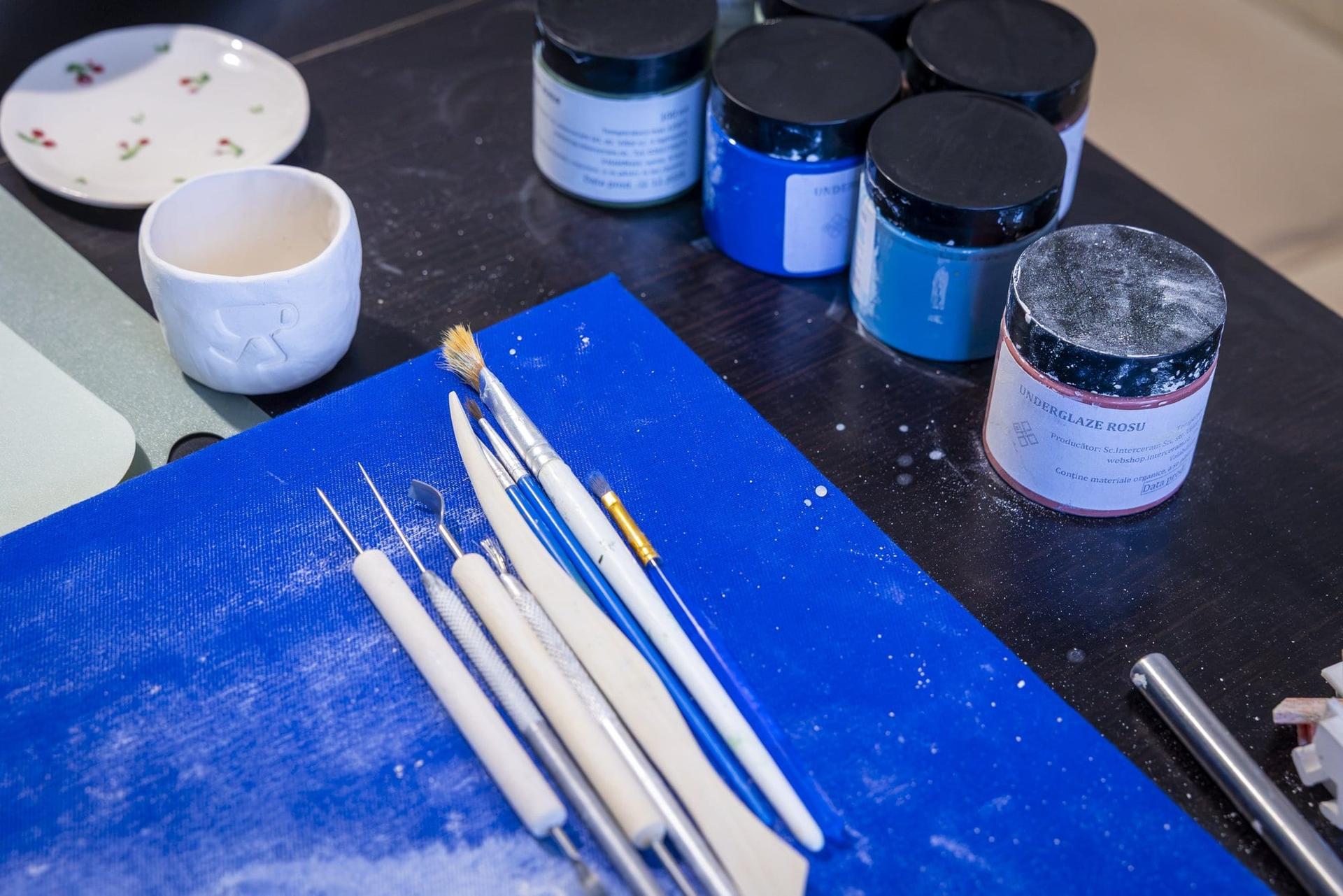
The part she likes is the shaping. She doesn't consider herself "super talented" at painting, so she looks for patterns online, and sometimes paints alongside friends or collaborators. The shape, though, stays hers even when a client asks for a particular text or drawing: "I have my own style in how I work."
No two pieces come out alike. She tells that to the people who show up with a photo and ask for exactly the mug in it: She'll try, but it won't be the same. No flower she paints, she says, comes out like the one in the picture.
There are also things she can't pull off. Very large bowls crack as they dry, and tall vases can't be raised from the palms: "Gravity and technique don't allow it." Those would take a wheel.
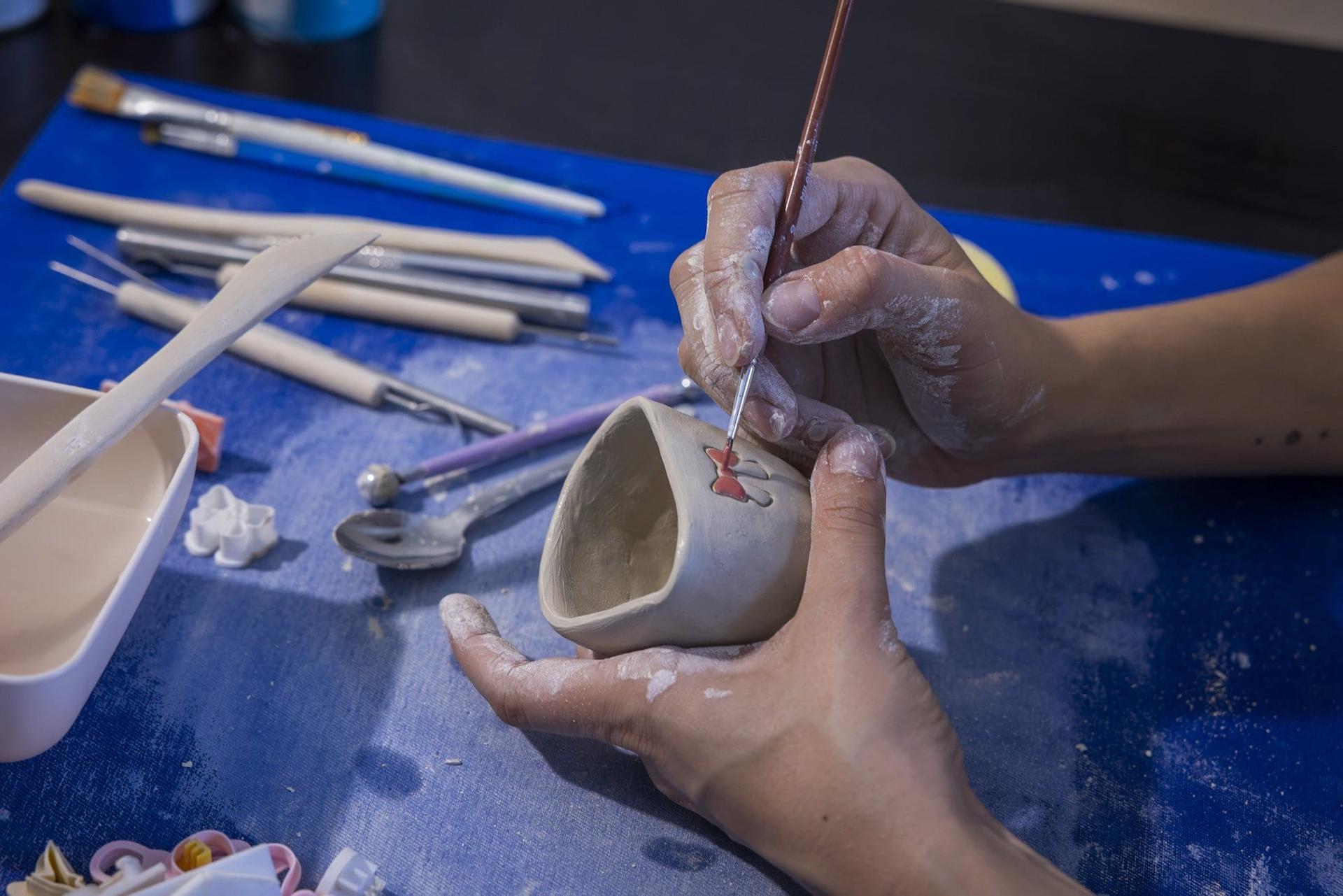
How a ceramic mug gets made, day by day
After shaping, a piece dries for about a week, until the water evaporates; in summer heat, less. Then comes the first firing, the bisque firing, which leaves the clay white and hard. The piece goes back home, gets painted and glazed, then leaves for the second firing. Each time it spends two days in the kiln, at a temperature Siklodi puts at 1,000 degrees Celsius (about 1,800 Fahrenheit), so that it holds water and can be used for food and drink.
The kiln isn't in the apartment and isn't hers. A kiln gives off a lot of heat, so it's somewhere else, and she collects several pieces before each trip. Counting step by step, a single mug could be done in about 10 days, if there happened to be room in the kiln. She tells people two to three weeks.
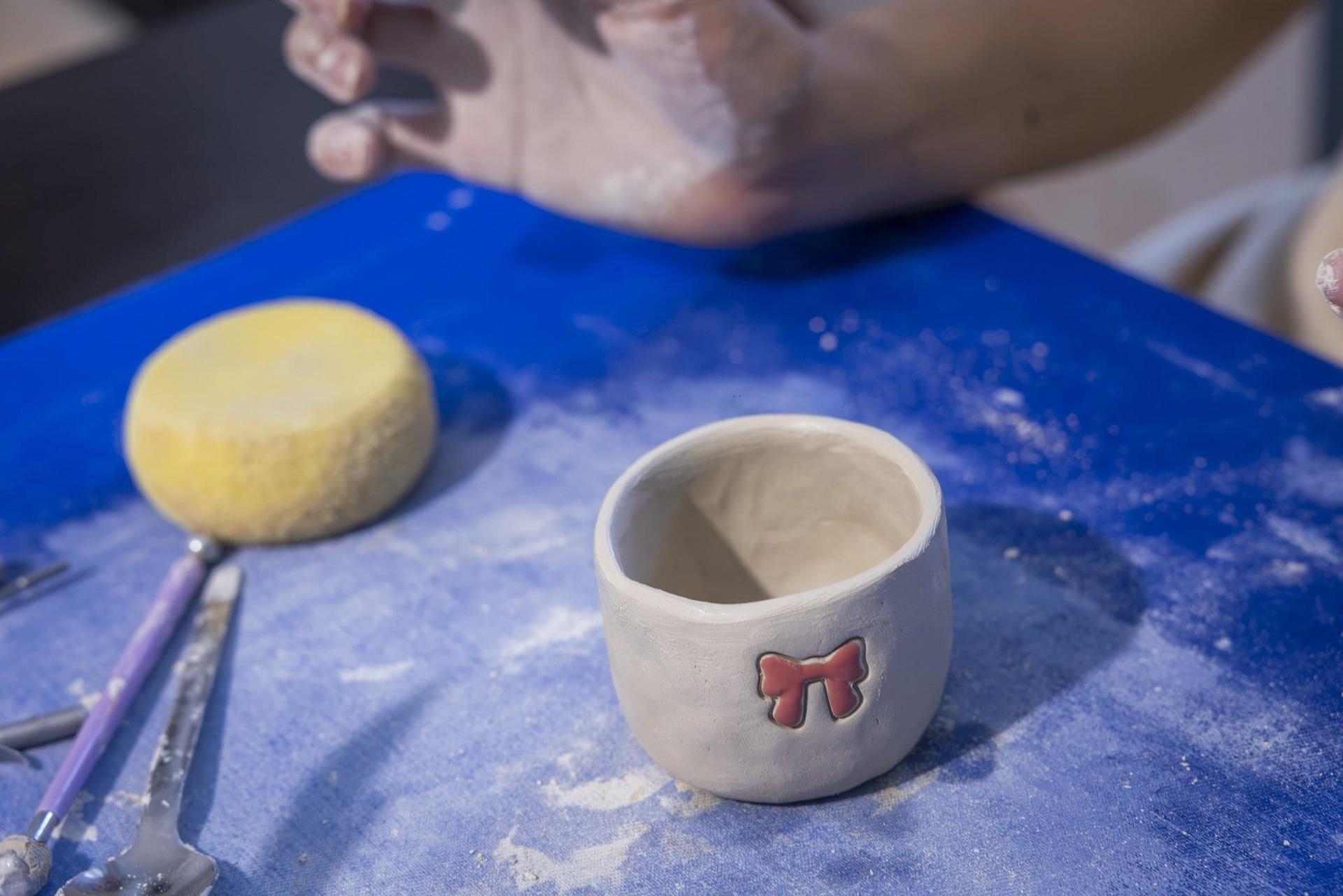
The hardest part, she says, is glazing. Up to that point almost anything can still be fixed: The clay can be dampened again, and a fine crack can be sanded out even after the first firing. With glaze there's no going back. "If ... you've left a spot and there's no glaze there, all the work is gone, the whole process is gone." A bare patch soaks up water, and the piece can no longer be used.
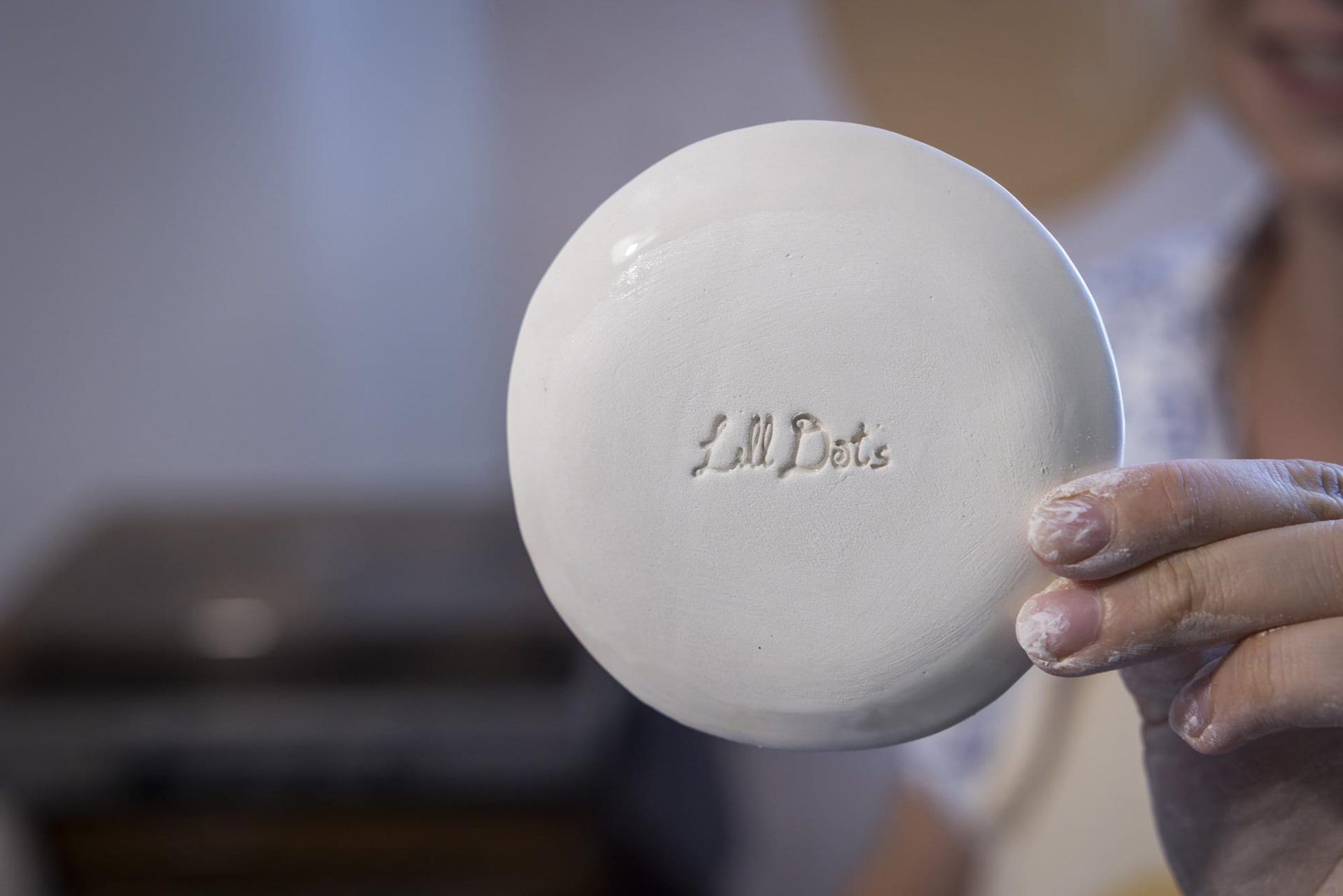
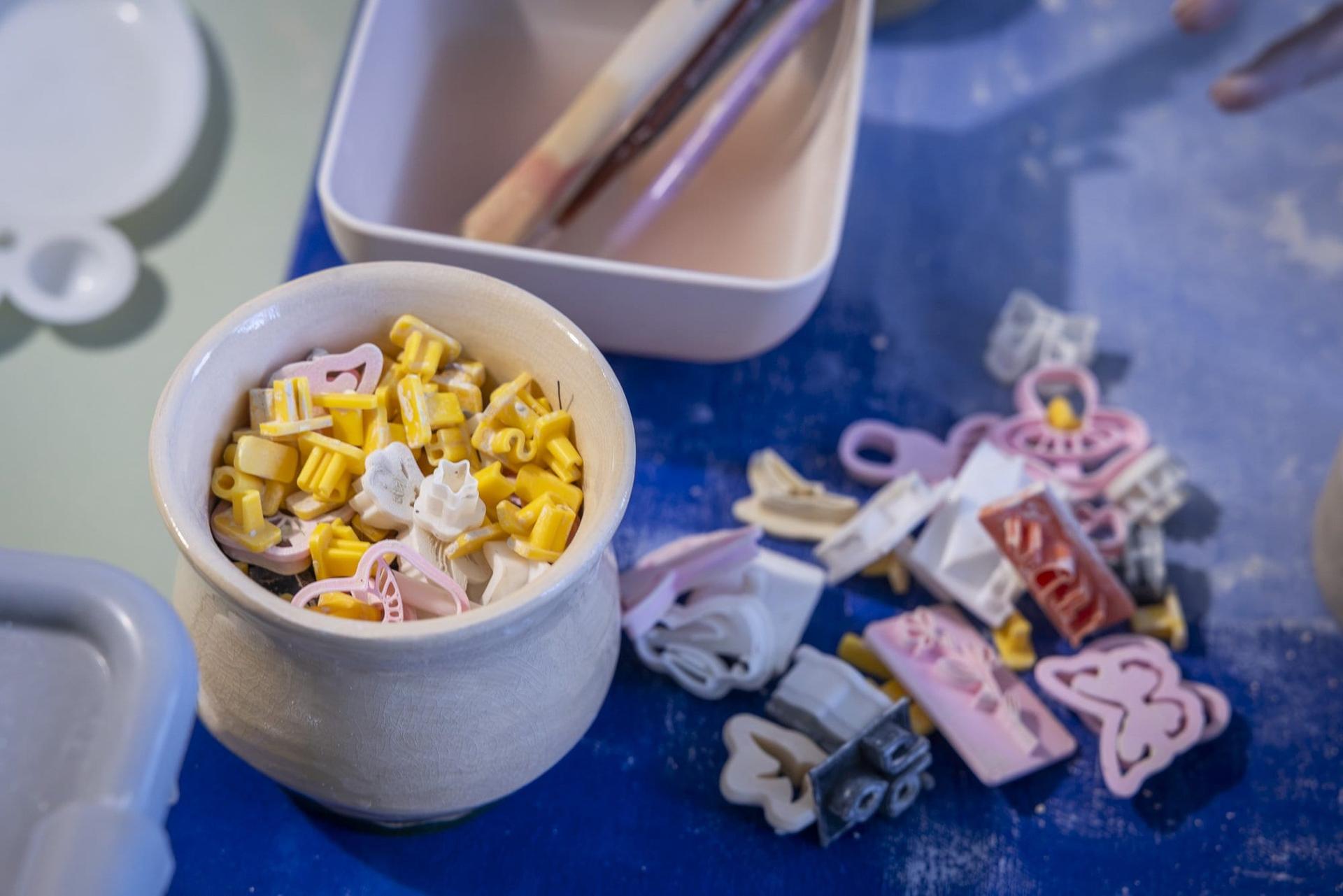
She presses a stamp with the Lill'Dots name into every piece. "When I don't forget," she adds. For company orders she asks for the logo, orders a 3D-printed stamp and presses it into the clay.
What you don't see in the price of a mug
Orders come in through private messages on Instagram and Facebook. Most are gifts. A cafe asked her for espresso cups, and companies bring her in for team-building events. She has been invited to craft fairs but hasn't made it to one yet: A fair takes inventory, and she has orders, workshops and, on top of those, a job. She also works at the Ministry of Agriculture and Rural Development.
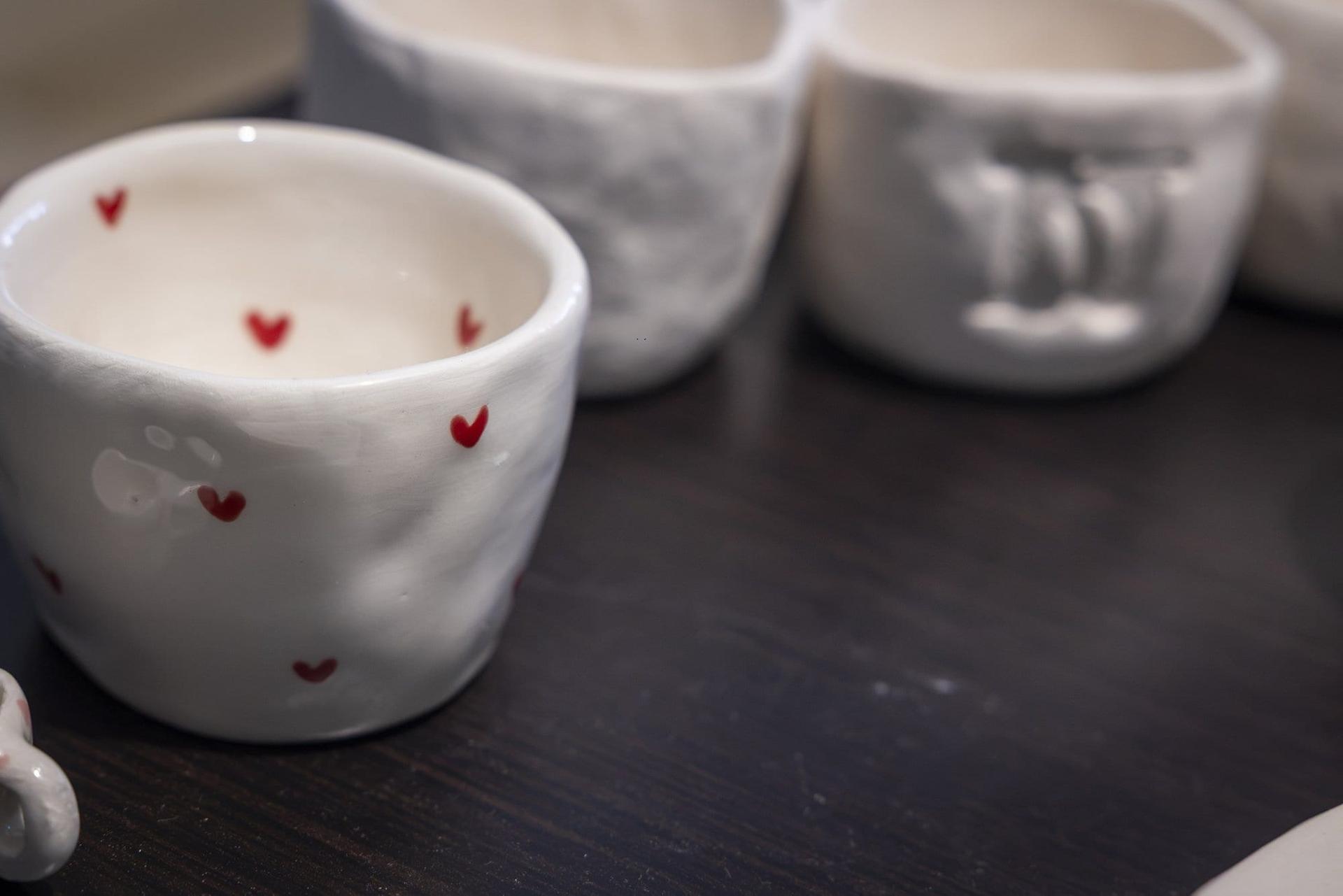
A mug costs from 45 lei to about 100, depending on size, volume and complexity. Nobody has complained about the price, she says; people who think it's too much don't buy. She tries to keep it affordable because she wants the pieces to reach people. What someone comparing her mug with a store-bought one doesn't see is the road it travels: "I go two or three weeks without being paid for my work, until they receive it."
Many people learn only from her how long it takes. They thought, she says, "that it's just like on TikTok, how pretty, how fast." She thought the same at first: that she would get some clay and fire it in the oven at home.
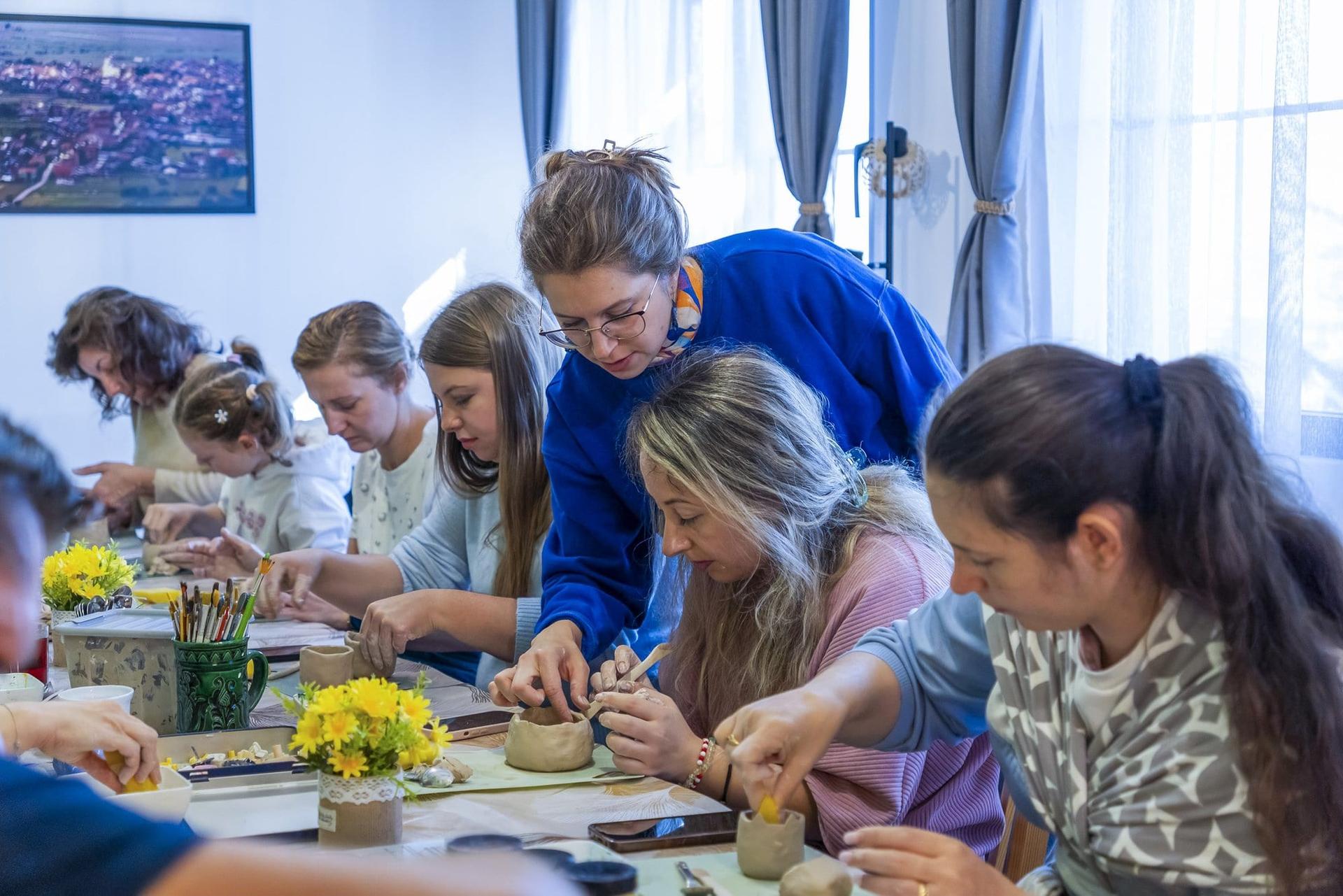
At the workshops, which usually run two hours, people shape their own mugs. She then takes the pieces, fires them and brings them back. A private workshop costs 200 to 250 lei per person, depending on what the person wants to make and how many sessions it takes. Many tell her it's like therapy, and her explanation is practical: Clay doesn't wait. "You can't say, 'I'll leave it for tomorrow,' because it hardens."
Her friends and family help her with painting or with large orders, but she doesn't want to grow beyond that. She makes about 40 pieces a month, more or fewer depending on the time of year. She also holds at least two or three workshops a month. "I don't want ... to have a team of 10 people to fill orders with. I want to make them myself."
The full interview with Lilla Siklodi, filmed while she shaped the espresso cup (in Romanian):
The full interview with Lilla Siklodi, on YouTube
The studio that packs up when friends come over
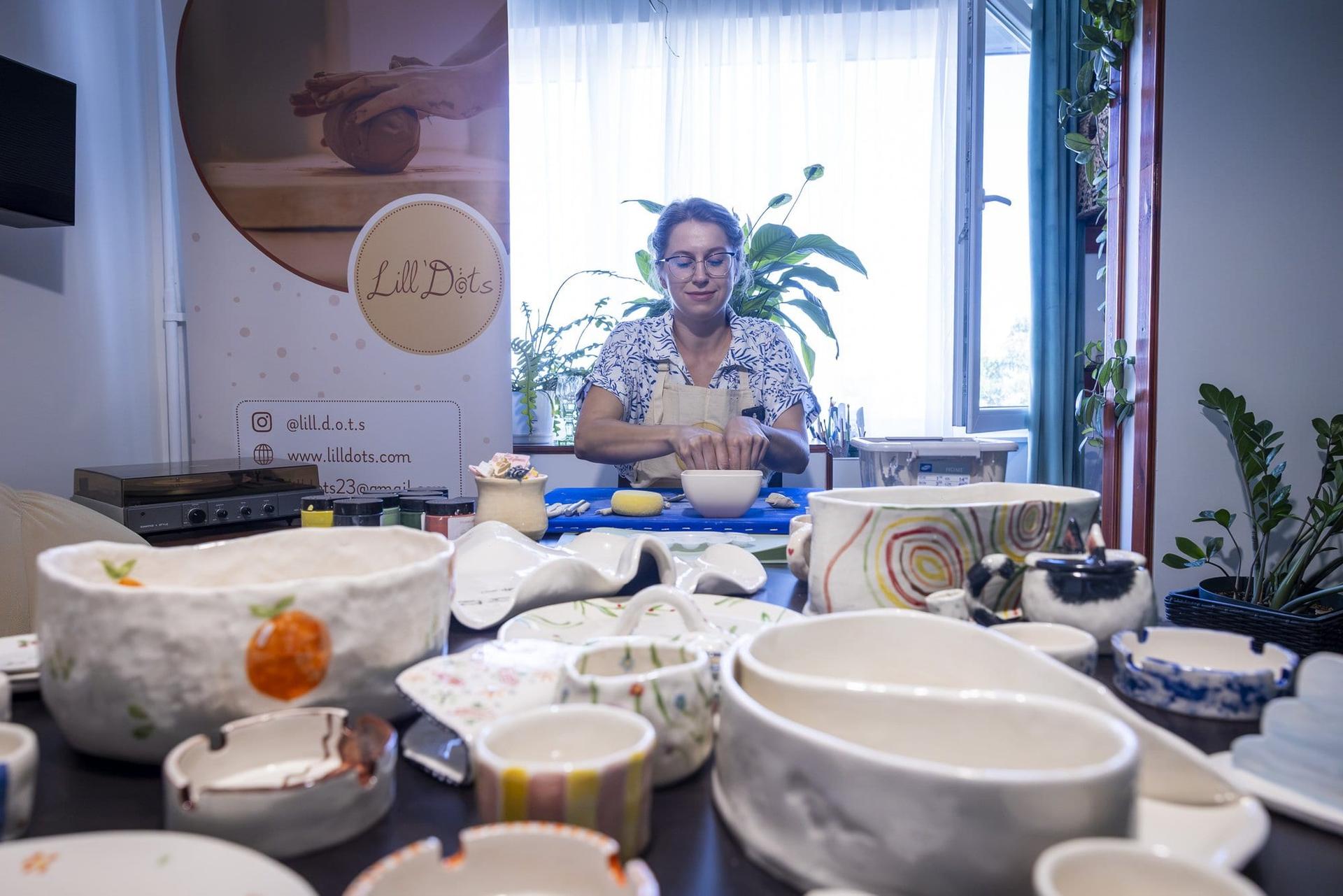
The studio doesn't actually take up a room. The cloth, tools and jars get gathered up and put away when friends visit, then come back out. "It's more the finished pieces that take up a lot of space," Siklodi says. Someday she'd like a separate studio, in the city or somewhere in the countryside, closer to nature. For now, it's here.
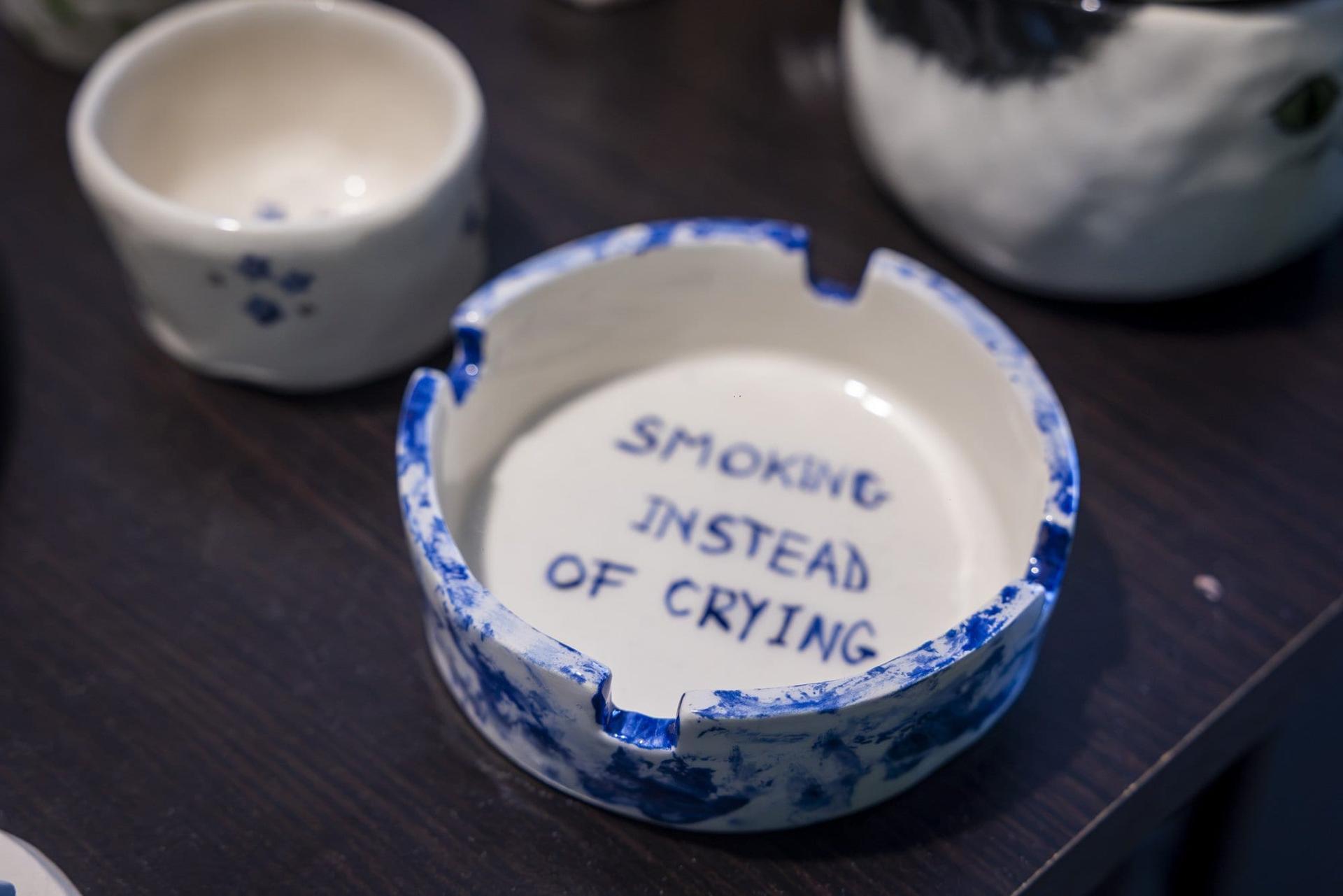
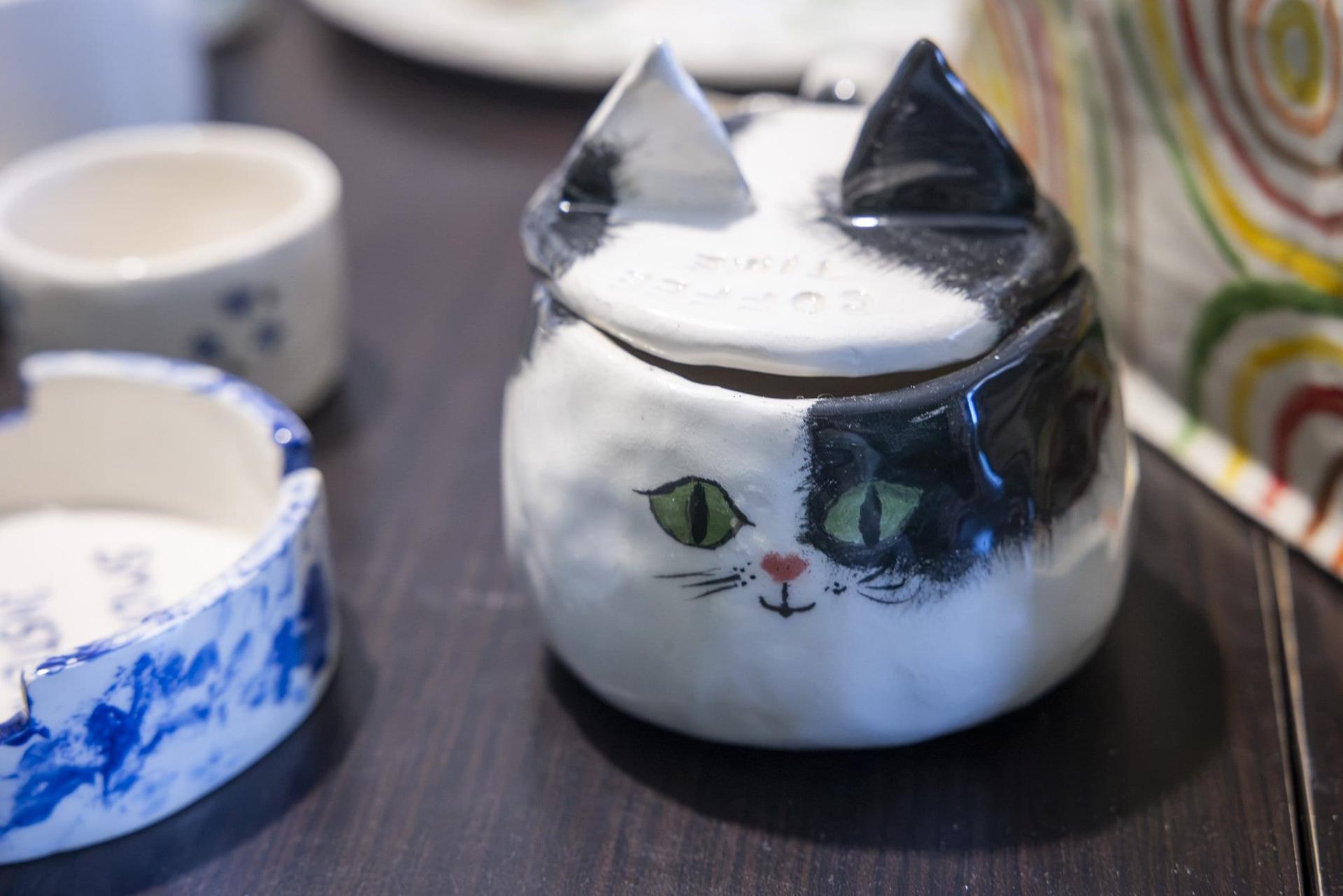
On the day of the visit the table was full: espresso cups, plates painted with tiny flowers, an ashtray that reads "Smoking instead of crying," a jar with a cat's head.
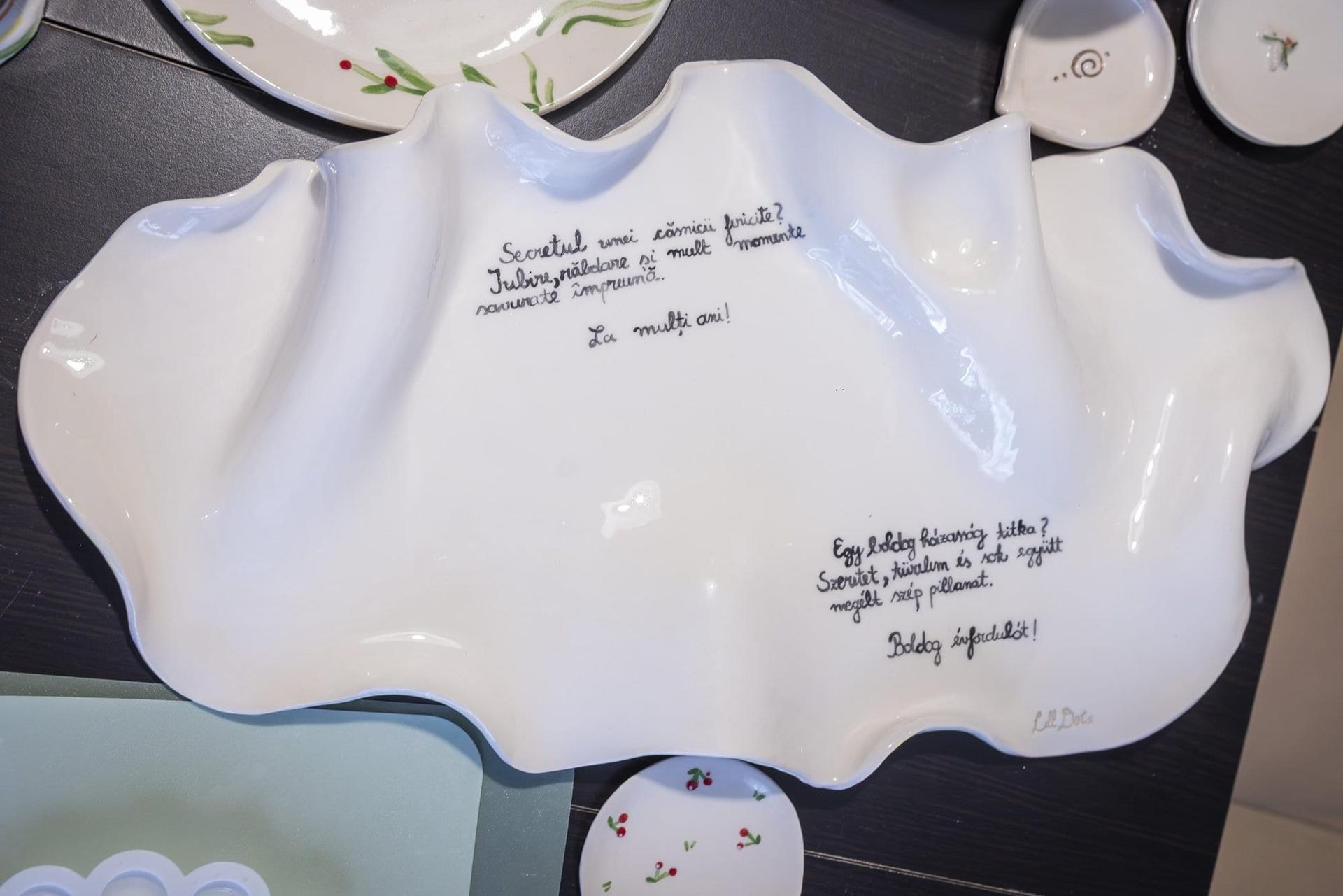
On a platter with a wavy edge, a wedding anniversary wish is handwritten twice, once in Romanian and once in Hungarian.
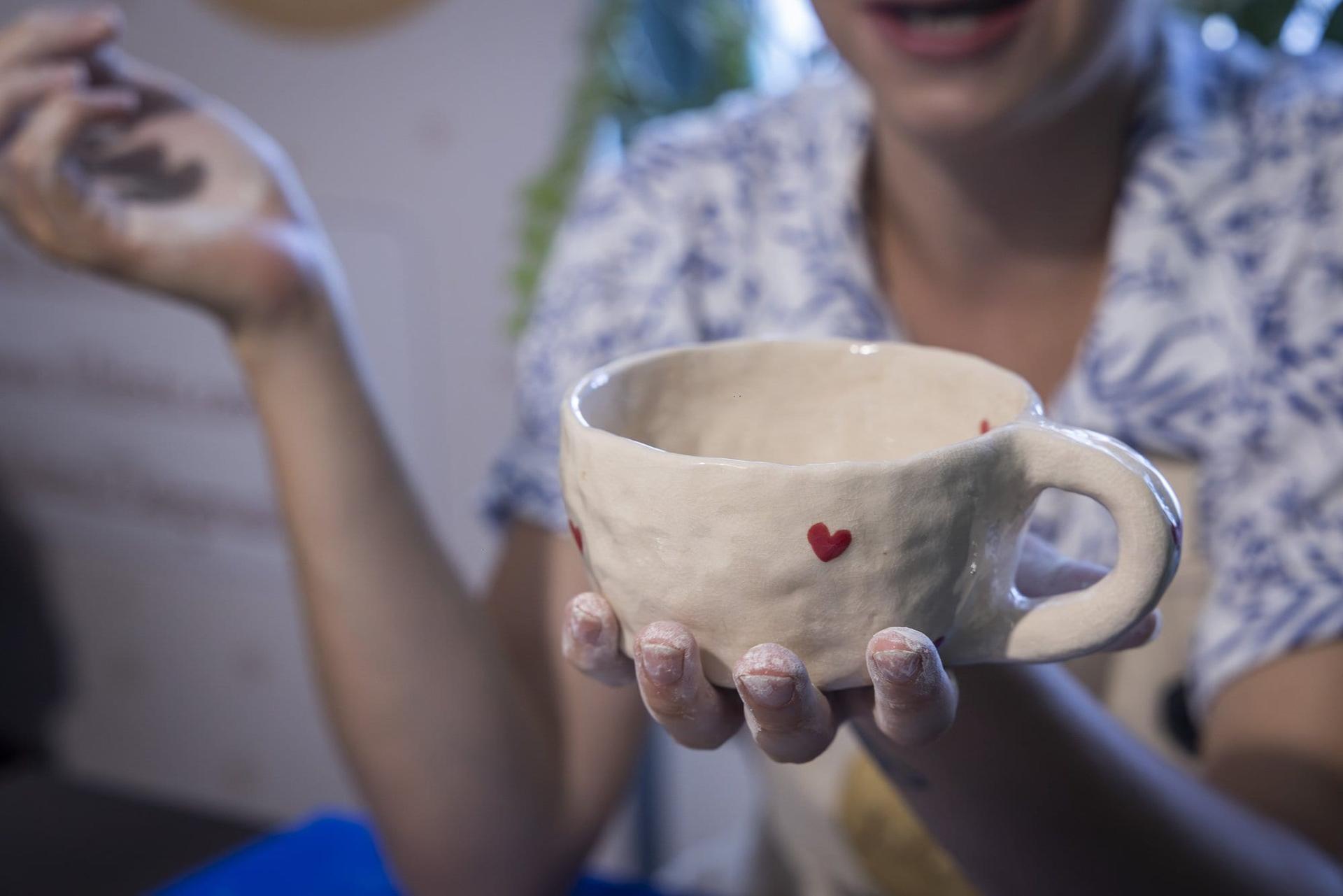
People imagine her home is full of ceramics. What she has, she says, is mostly prototypes and the pieces that were "a total failure," with something wrong in the glaze. Of all of them she uses one: the first mug she made on her own, the one with cracks in the glaze. She doesn't drink coffee. She drinks tea.
The espresso cup stays on the blue cloth, a red bow on one side. It has a week of drying ahead.
Interview and photographs from Aug. 24, 2026, in the apartment in Cluj-Napoca that doubles as a studio. The interview was conducted in Romanian; quotes were transcribed from our own recording and translated into English. Siklodi supplied her age, her job, the name of the class, the prices and the number of pieces afterward, in writing. I did not attend a workshop with participants and did not see the kiln; the two workshop photographs and the standing portrait are from the Lill'Dots archive.
This English version is an automatic translation of the Romanian original.