On the outskirts of Murfatlar, in a garden with a walnut tree and a pergola, we ate a sturgeon storceag in a green ceramic bowl, and papanași collapsed under the weight of wild blueberries. Seventy-one lei, the entire meal. Narcisa, the waitress with the black cap and „La Povești" embroidered on her chest, served us with that warmth nobody teaches in hospitality courses.
In Dobrogea, half an hour from Constanța, Murfatlar doesn't push itself too insistently onto the tourism map — a few vineyards on the left, a road that rises gently toward the limestone plateau, and then the town: small, calm, wrapped in the scent of linden trees. La Povești opens onto a courtyard with tall trees: an old walnut, two acacias, two quince trees. The pergola is a simple structure — white-painted wooden posts, a red-tile roof over a three-sided open deck.
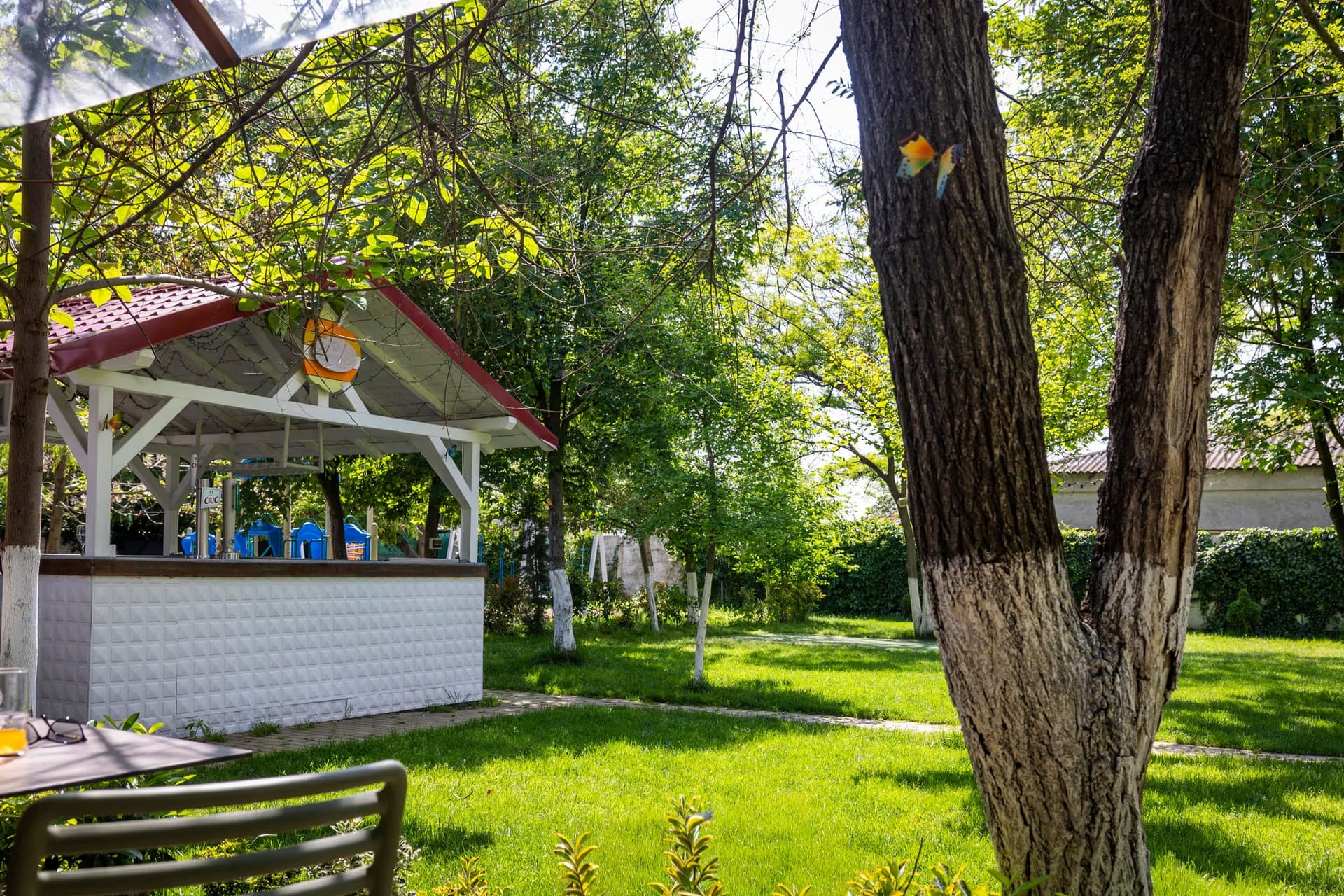
It's Saturday, lunchtime. Two occupied tables on the terrace — a family with a small child, two men with a glass of white wine. The tables wear green tablecloths with geometric patterns, thick glass tumblers, triangular folded paper napkins. No music plays. Just the wind brushing through the walnut tree.
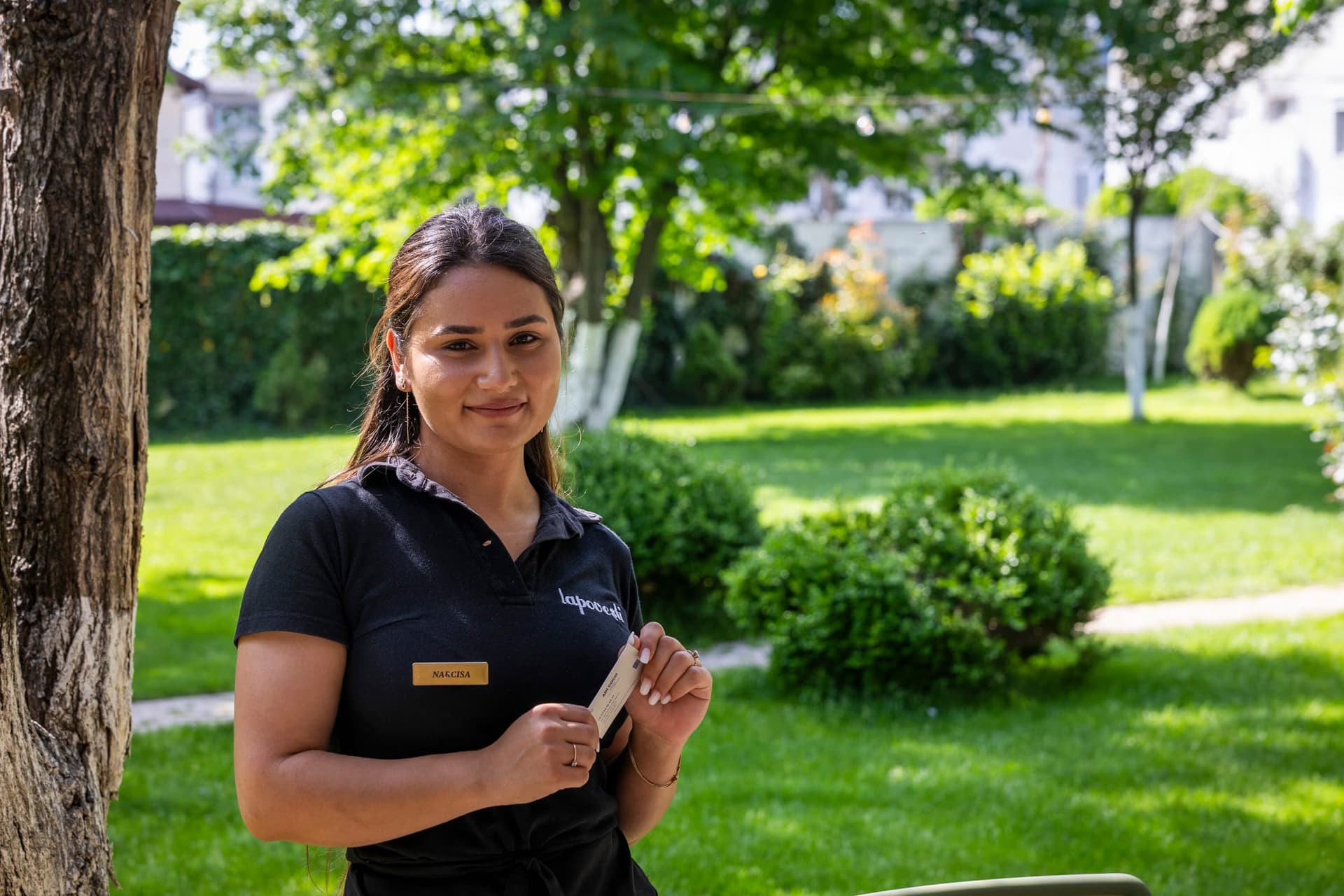
Narcisa arrives with a plasticised menu and the kind of smile they don't teach in „how to interact with the customer" courses. She's in her mid-twenties, the black cap on her head with the la povești logo embroidered in white thread, a small name tag. She speaks calmly and deliberately, like someone who enjoys her work. She recommends the sturgeon storceag — „if you haven't eaten with us before" — and pronounces storceag with the correct Dobrogean accent, an open „e". And she smiles, keeps smiling. There's a serenity about her that's rare in tourist-heavy zones. She seems to do her job with enthusiasm.
The storceag
It's a sturgeon soup. Cooked long, like a ciorbă, but not sour — instead, yellowed with egg yolk beaten into sour cream, with a green thread of lovage floating among the white fragments of fish. It isn't served in a deep plate — at La Povești, it comes in a green ceramic bowl, walls moulded with a spiral pattern, set on a large white plate with a gold rim. The spoon is plain steel.
The first spoonful is good. The fish is tender, sweet — as only sturgeon can be; the sour cream doesn't drown, it dresses; the lovage arrives later, around the second or third sip. The base appears to be a clear fish broth, cooked with onion and carrot, over which the sour-cream-and-egg mixture has been added. At the end comes a drop of melted butter — visible in small yellow circles floating on the surface.
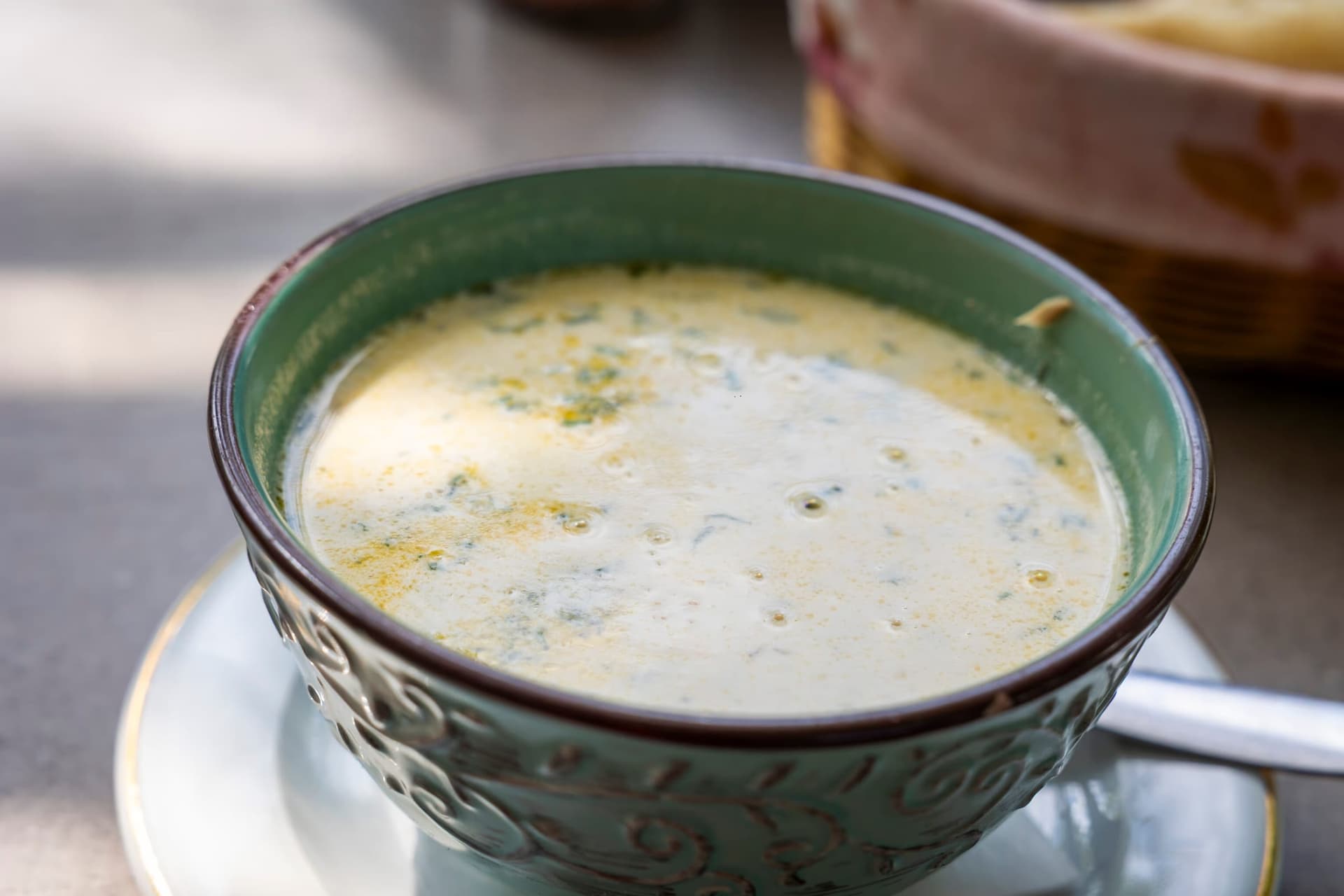
Four hundred and fifty grams. Thirty-six lei. You eat it slower than you expected — not because you don't like it, but because you don't want it to end. By the walnut tree, three men who'd been talking earlier fell quiet too. Nobody speaks any more at „La Povești". It's a meal the atmosphere around you arranges that respect for.
The papanași
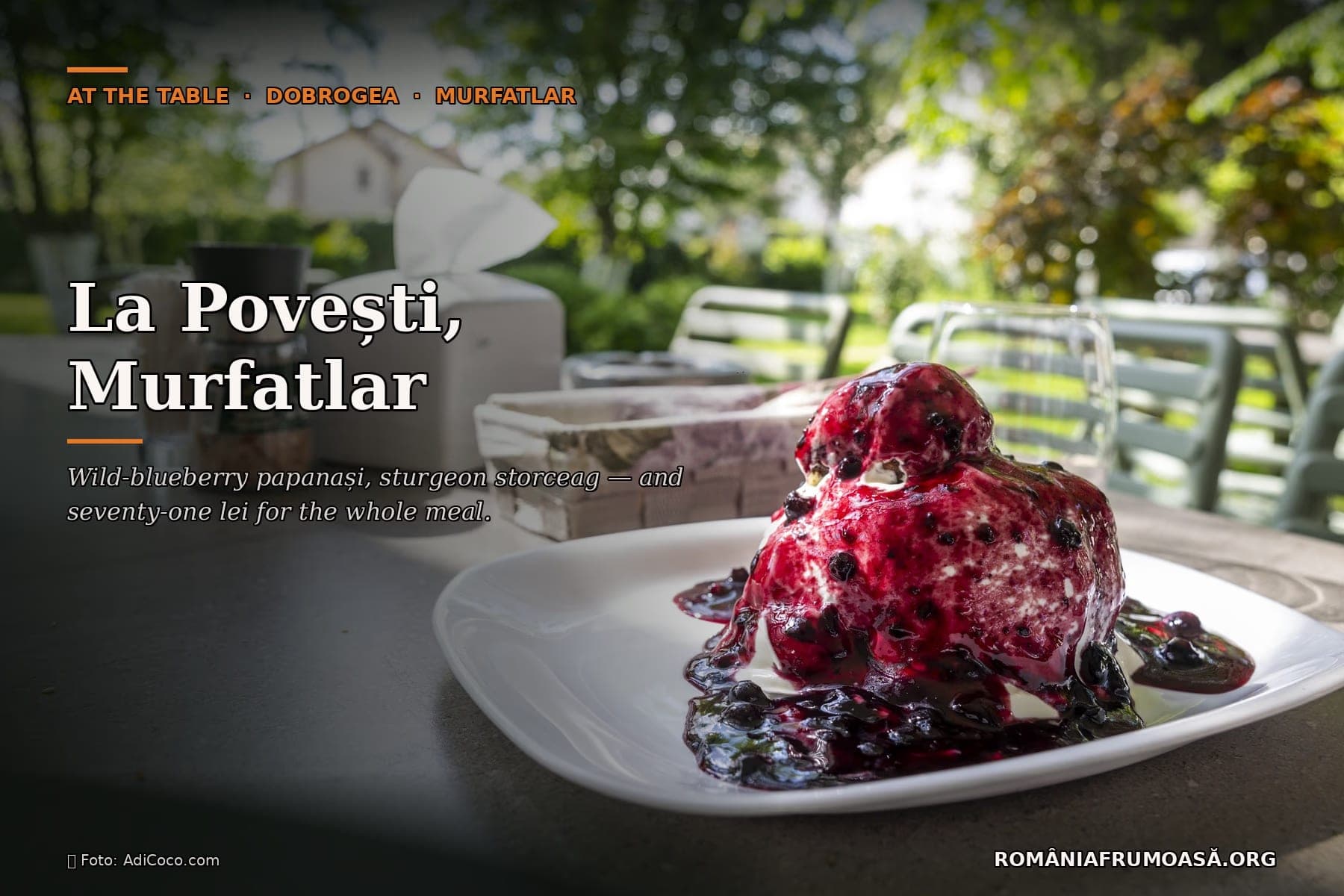
A rectangular white plate arrives. A single papanaș in the centre, slightly collapsed under a mountain of wild blueberries. Beneath it, a pillow of sour cream barely visible. The blueberries in the compote have been cooked with a light hand of sugar, keep their shape, leave a thick, dark juice — nearly black in places, violet in others.
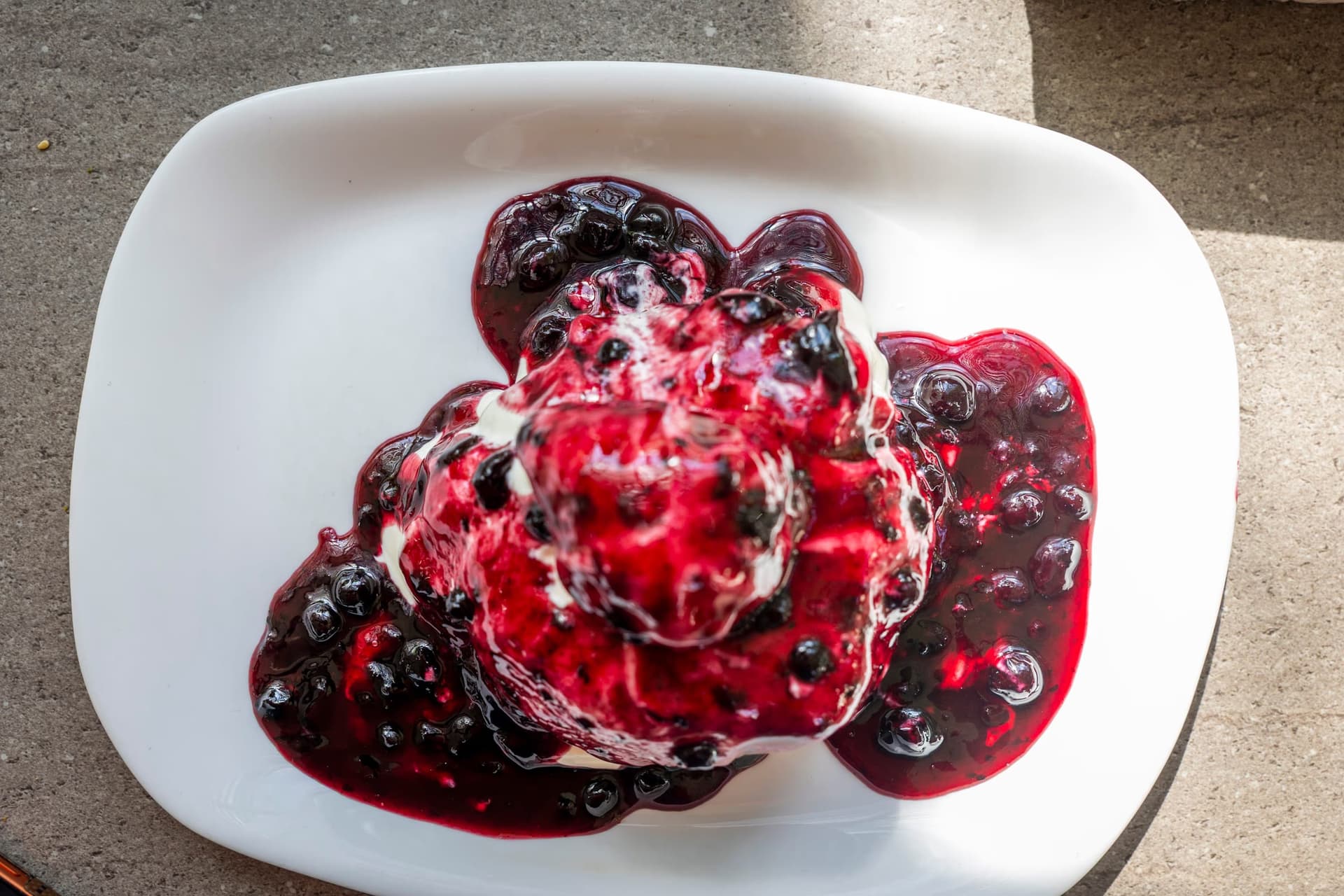
The crust is good — tender on the bottom, slightly crisp at the edges. The composition — sweet cow's curd cheese with fine semolina — is properly bound; you don't taste the flour. Three hundred and sixty grams, the bill says — honestly a portion for two adults, if they're patient. But if you're a gourmand, you won't struggle to finish it alone.
The blueberries in the compote — and this is the detail — have a concentrated juice, the living aroma of fresh fruit, not over-sweetened. „This year's, from the forest," Narcisa says when I ask. Murfatlar isn't a wild-blueberry region, so they're brought in from elsewhere — likely from the Carpathians.
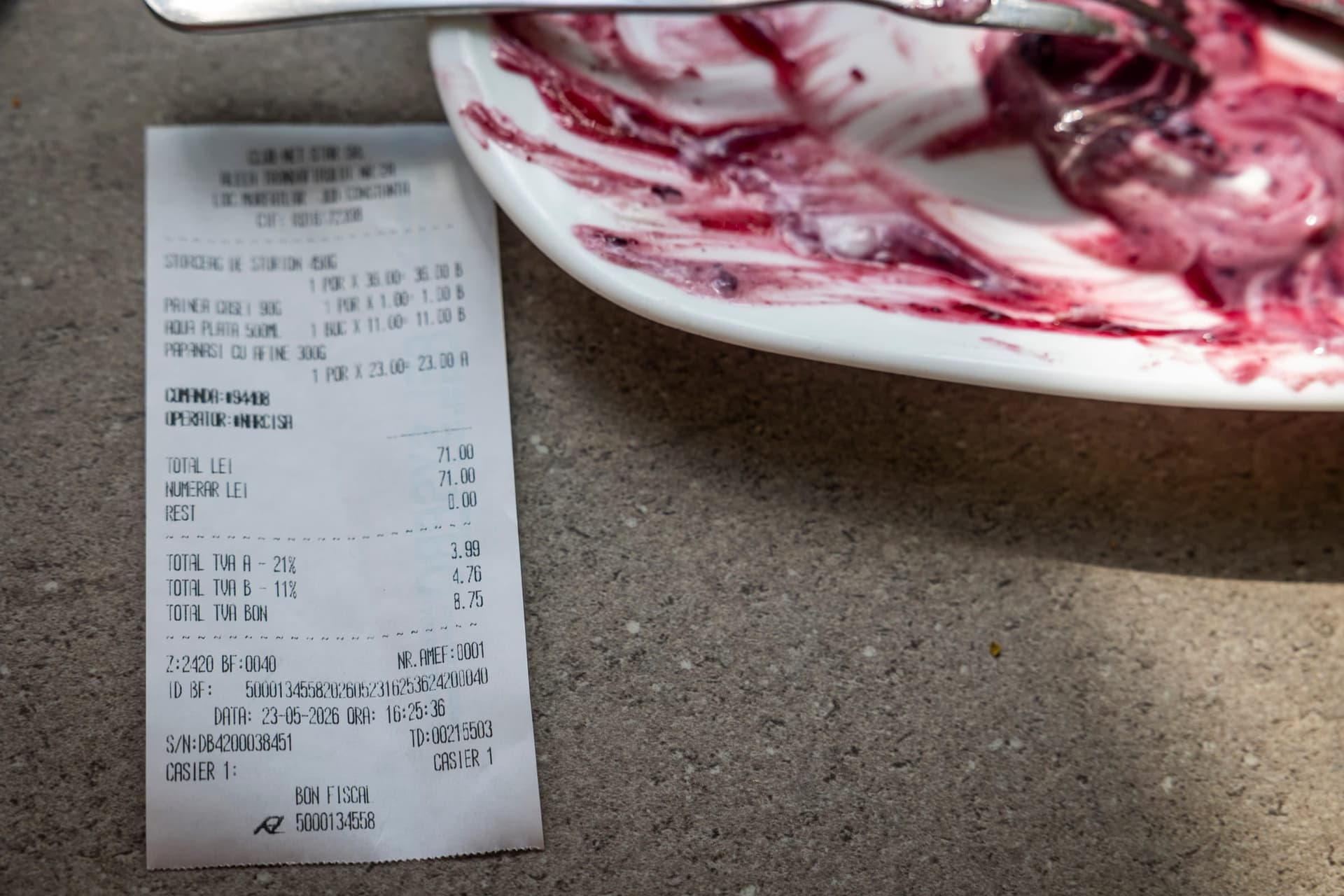
Sturgeon storceag 450 g — 36 lei. Papanași with wild blueberries 360 g — 23 lei. Still water 500 ml — 11 lei. Total: 71 lei.
Seventy-one lei (about €14) for a complete meal, in a quiet garden, with a soup you won't find in other parts of the country and a serious dessert. In Constanța, the equivalent would be 100-130 lei. In Bucharest, for the same quality, up to 150. Murfatlar keeps its prices reasonable for locals, but the meal isn't „cheap" through lower quality — it's cheap through context. That's the differentiator.
Coda
La Povești doesn't shine through anything. No stars, no listing in international travel guides, no Instagram account with tens of thousands of followers. It has an old walnut, a pergola, green tables, a young woman — Narcisa — who speaks calmly, and two dishes that aren't made quite the same way anywhere else.
This may be exactly what you're looking for. In fact, this is what everyone should look for when entering a new place: not „the best restaurant", but the one that's „exactly what it is". La Povești is exactly what it is. And that, in 2026, is a virtue rarely encountered.
Storceag — also called „cauldron-cooked sturgeon broth" in Dobrogean culinary literature — is a soup specific to the Danube Delta and the Dobrogean fishing tradition; it differs from „fisherman's borș" by the sour cream and eggs that give it a creamy consistency, without being sour. Boiled-and-fried papanași is Romania's flagship dessert, present on menus from Maramureș to Dobrogea, but the wild-blueberry variations (as opposed to jar jam) are most often associated with the sub-Carpathian zones.