
Report · Bucharest · May 2026
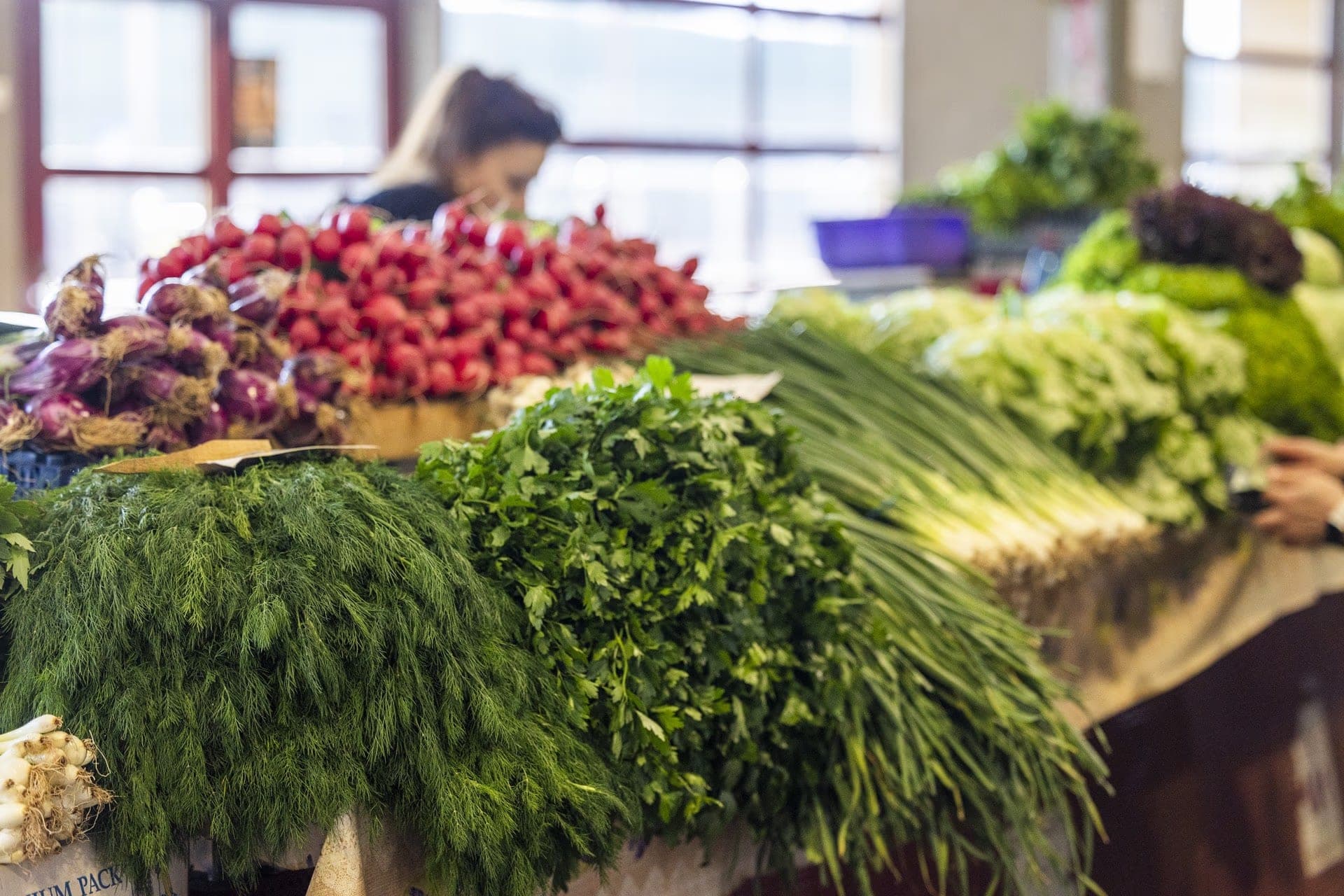
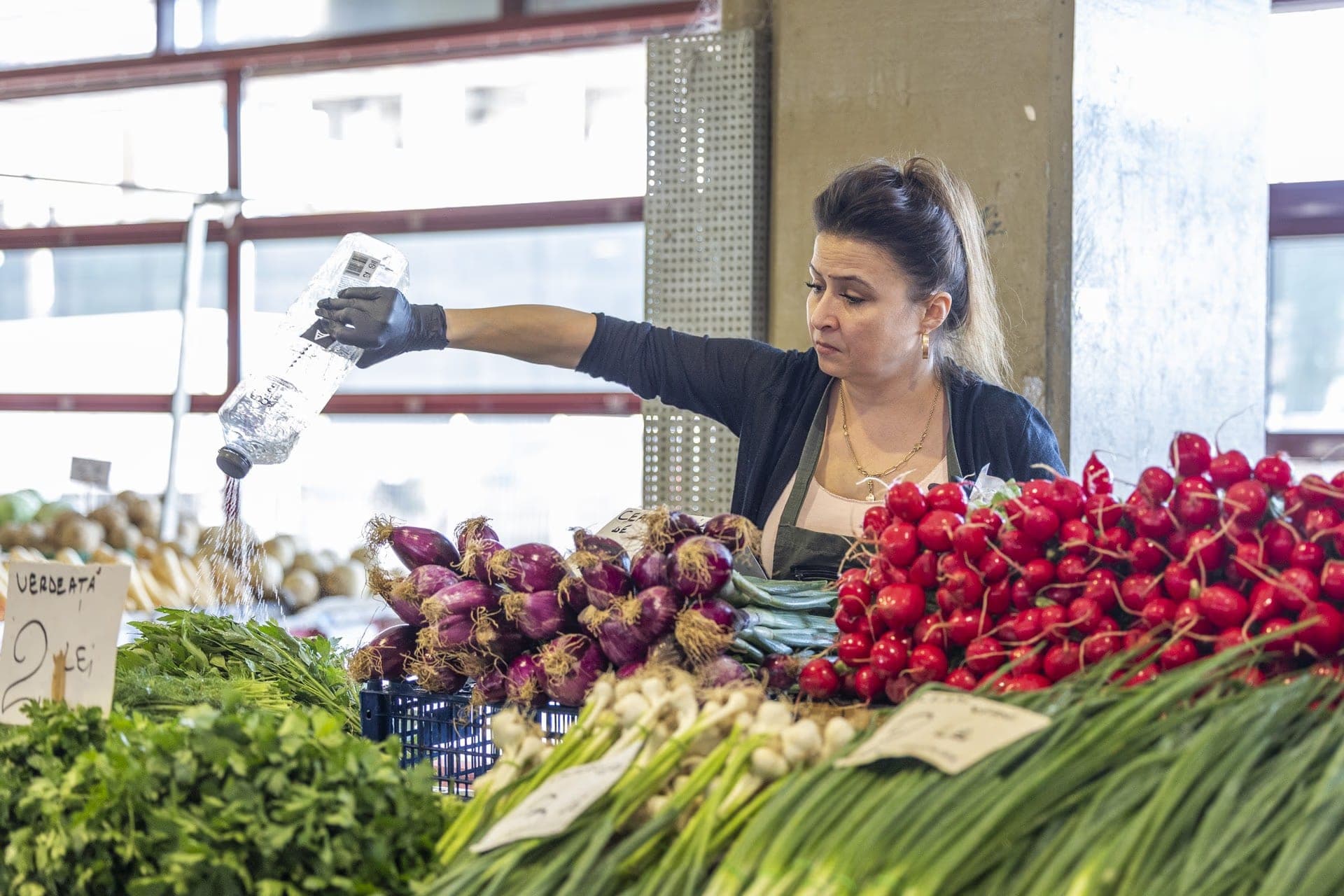
A woman in black rubber gloves holds a two-liter plastic bottle with a punctured cap above a mound of red radishes. She squeezes gently. A fine spray falls over the green tops, over the red onions beside them, over the white tips of new garlic. She says nothing. She mists methodically, every three seconds, like someone who has done this thousands of times. At her feet, a crate of parsley. Behind her, the May light enters the hall without casting shadows. The radishes gleam. They were picked from her family's farm in Adunații Copăceni, thirty kilometers to the south, and arrived here, in Hala Obor, by van, early that morning.
It is nine o'clock. The market has been open for a while.
A City That Comes to Eat
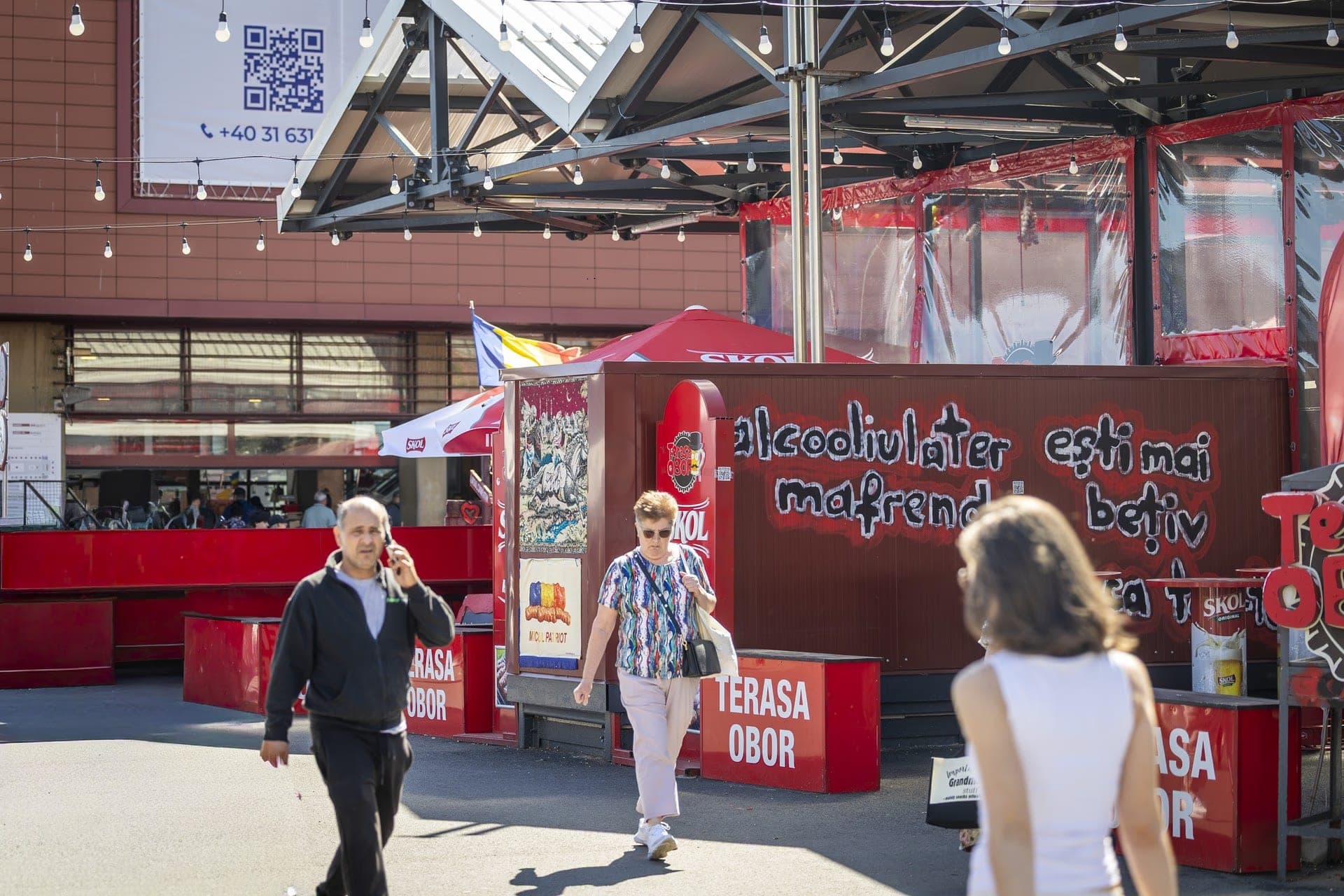
Bucharest has around thirty food markets. Obor contains them all in one. Not because it is the largest — but because it is the one that never quit. On the ground floor, the hall. Along the lanes surrounding it, hundreds of stalls selling textiles, footwear, clothing. At the edge of the complex, Terasa Obor — red facade, flags and garlands, a motto painted in crooked letters on the street canopies: "alcohol makes you better. The drunk friend." An old joke, never updated.
This place is documented from around 1800, under the name "Târgul de Afară" — the Outer Market — in the records of Stelea Monastery, somewhere on the edge of the city as it was then, hemmed in by neighborhoods and the road to Moldova. Every May, the Moșilor Fair was held here, the Christian feast of the summer ancestors. Four hundred years later, Obor is still there in May, with merchants and people who come to buy what their parents had on the table — with one difference: nobody leaves with live cattle anymore.
The Hall
The large hall we are walking into now is recent. It was inaugurated on October 2, 2010. It has a concrete ceiling seven meters high, massive columns, cold fluorescent lights. Before it, on this same spot, stood Horia Creangă's Central Hall, a modernist building designed in 1936 and inaugurated only in 1950, after the war. It was demolished in 2008. Many Bucharest residents still speak of it like a relative they lost.
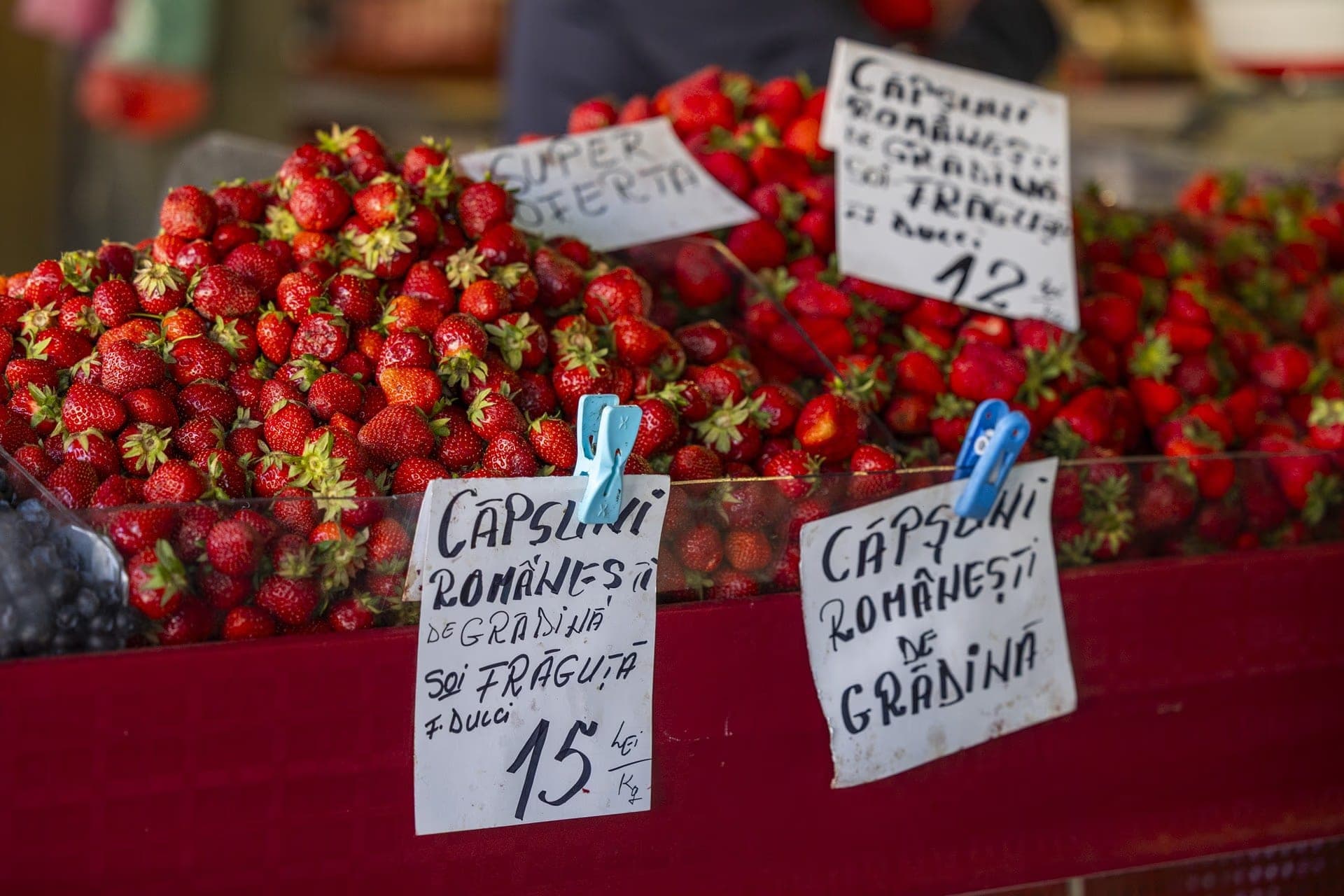
In its place, a functional building, without emotion: stalls in long rows, electronic scales, power outlets every two meters, handwritten paper labels sealed in plastic. "ROMANIAN GARDEN STRAWBERRIES. FRAGUA VARIETY. VERY SWEET. 15 lei / kg." "WILD BLACKBERRIES 50 lei." "CARROT 7 / kg." At one end of the hall, the honey shelf — forty small jars, labels listing pollen, bee bread (pasture), propolis, evening primrose oil. At the other end, crates of new potatoes, still dusted with soil.
Cherries at Twice the Discount
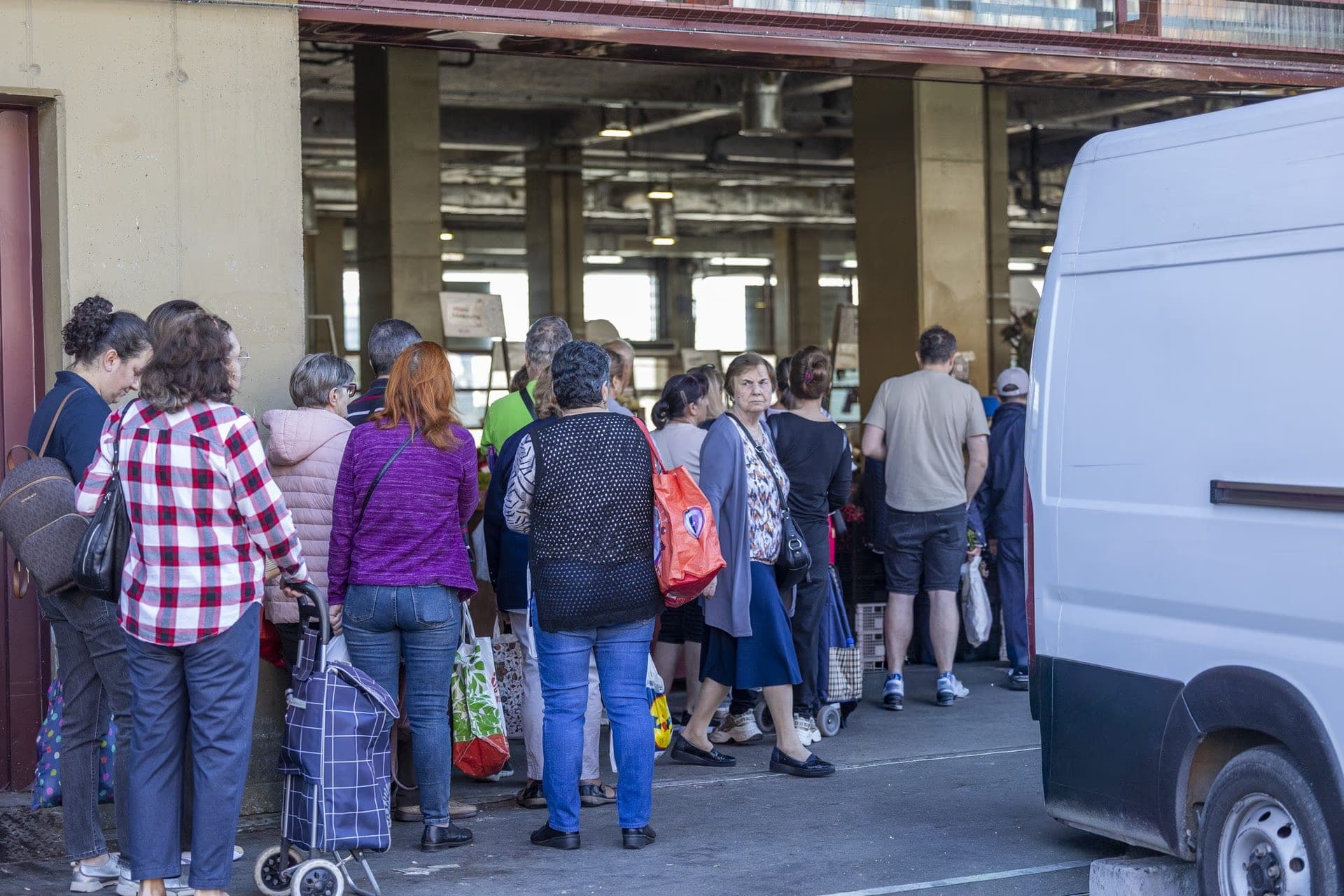
In early May, cherries were going for 90 lei a kilogram — enough to spark a wave of jokes online.
There's a queue for cherries. The fruit comes from Călărași, delivered by van and unloaded straight onto the stall in crates with yellow labels. The price, written in ballpoint pen on a piece of cardboard: 20 lei a kilogram. Two meters away, another vendor is asking 30. The difference is significant — a third more. People feel it in their wallets. They queue. Two women talk loudly:
— Did you gain three kilos? — Four. — And where does it show?
Behind them, more shoppers arrive clutching empty bags and sacks. Someone asks if there are any left. Yes — two more pallets. The queue doesn't shrink. The vendor weighs with one hand, holds the bags with the other. No smile, no rush. It sells itself.
The Terrace Mici
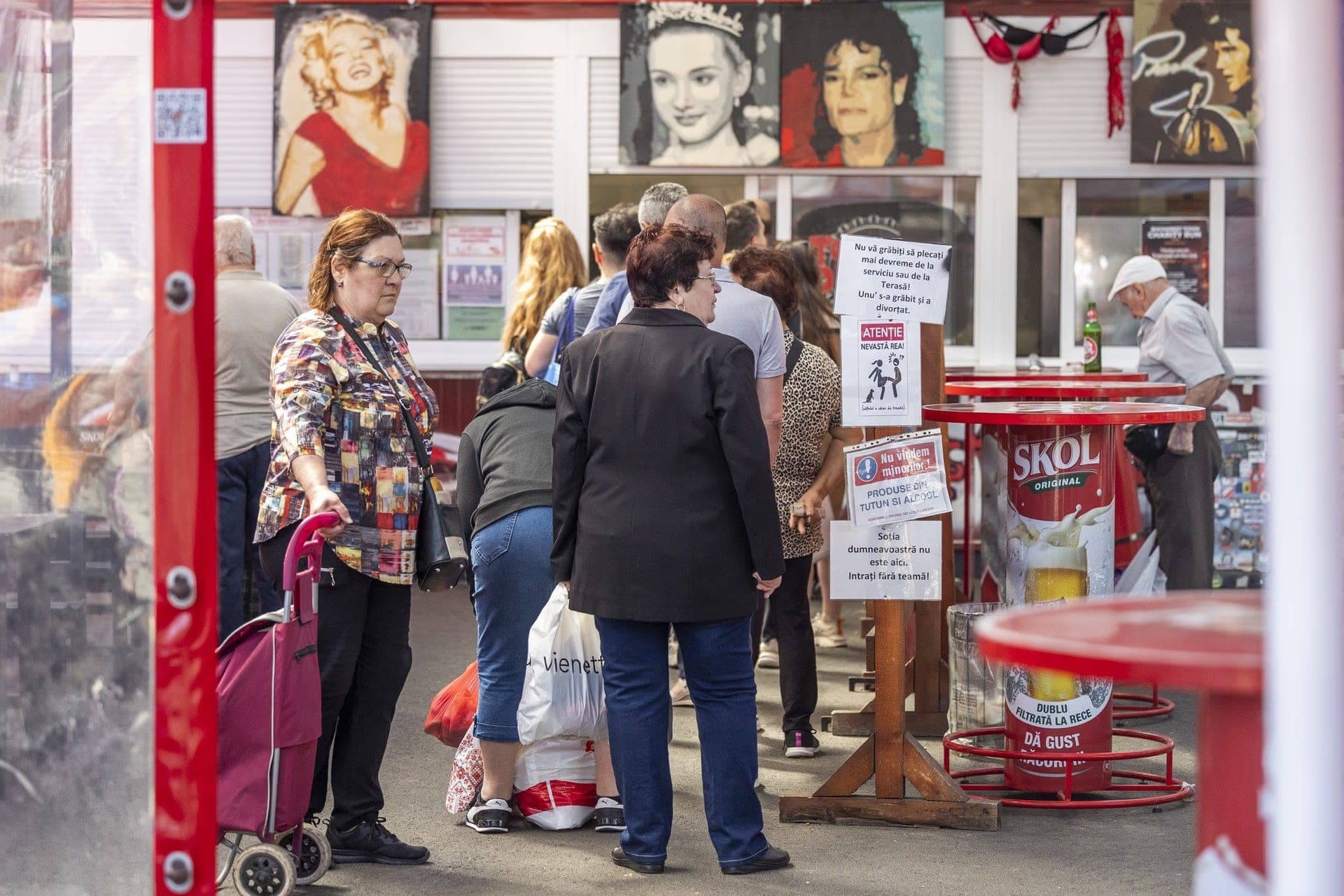
On the southern side of the complex sits Terasa Obor. The queue here has a more festive feel: people up from the provinces on errands in Bucharest, young couples with dogs, two men in suits (at eleven in the morning), a woman resting her feet on the wheel of a fabric trolley. Everyone is waiting in line for mici (grilled minced-meat rolls). A notice printed in capital letters, taped to a pallet wall: "MICI SANA IN CORPORE SANO!" Next to it, a smaller one: "WHERE THERE'S MICI, THERE'S STRENGTH." These are the terrace's advertising posters. They've got the marketing angle covered.
Framed portraits of American pop culture icons line the terrace walls: Marilyn Monroe, James Dean, Michael Jackson, Freddie Mercury. By the entrance, a yellow-lettered sign reads:
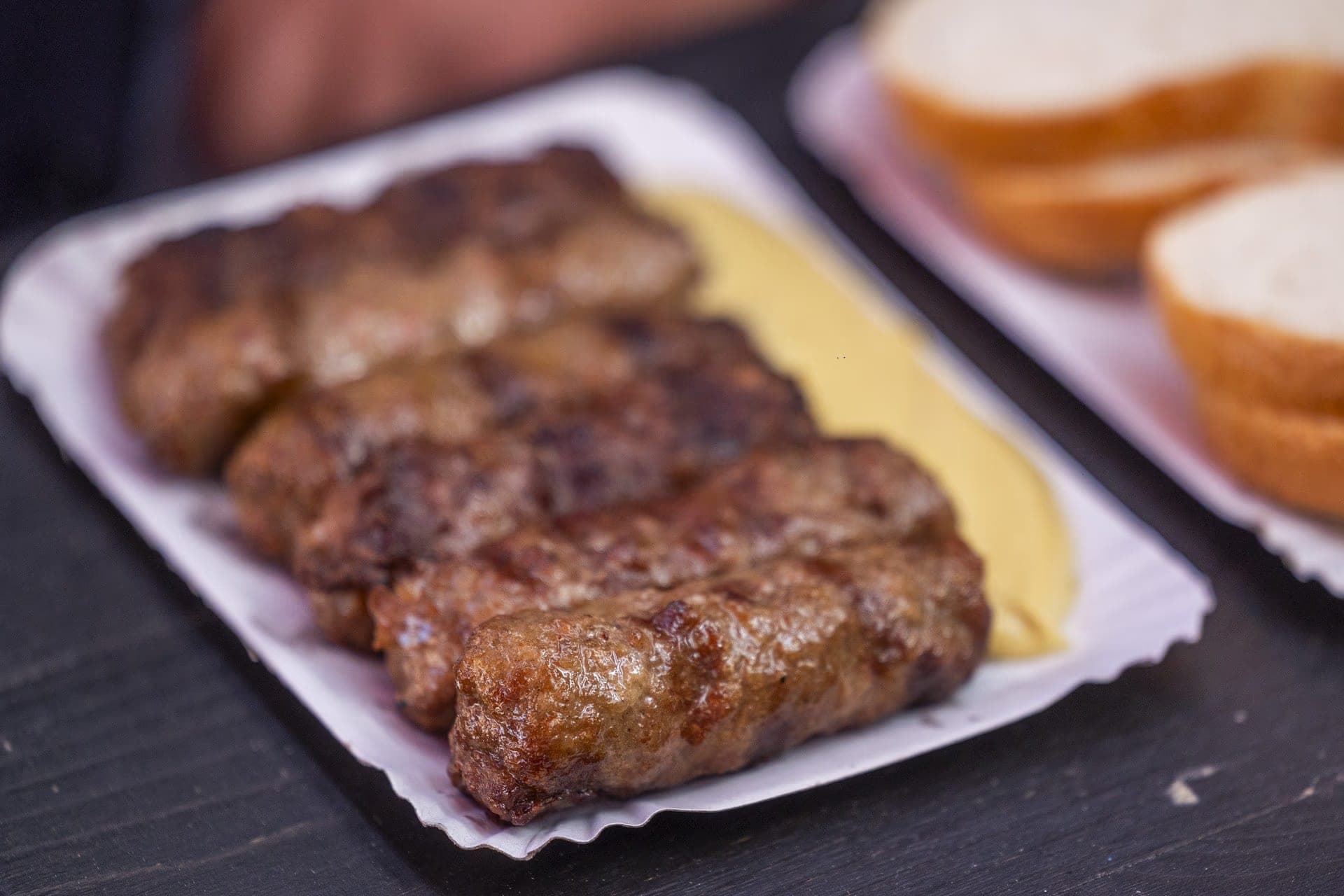
The order arrives on a white cardboard tray: six mici lined up perfectly on a thick layer of sweet mustard. Beside them, four slices of white bread, pressed flat with a palm. The bread is slightly darkened at the edges — a sign it had been placed under the mici. The man had covered the tray of mici with the tray of bread, then flipped them over so the fat would soak through.
Two generations around the same round tin table — SKOL tables, painted red. The grandmother opens a bag of dill bought inside. The little boy has sticky fingers. The father pays for his beer with polymer banknotes. The décor hasn't changed in fifteen years. Neither has the taste.
The Alleys
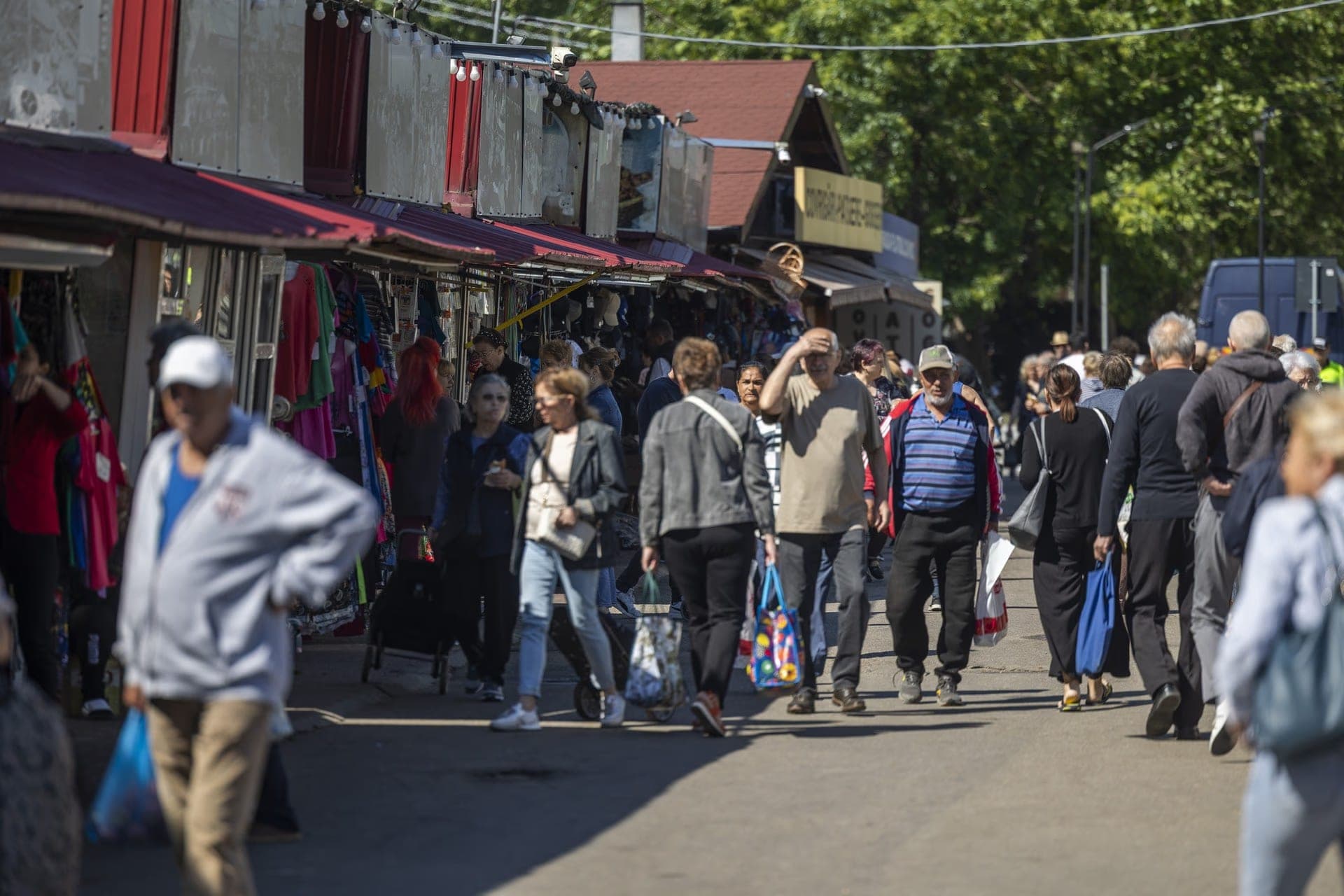
Between the market hall and the terrace, the lanes of stalls stretch on — hundreds of them. Street canopies in red and blue tarpaulin. Modest goods: T-shirts printed with butterflies, rubber boots, pyjamas, towels, soaps, sweets heaped in a large plastic tub. This is where you buy everything you forgot. Schoolchildren pass by, picking out shoes; pensioners drag wheeled trolleys loaded with radishes and garlic; delivery riders in helmets weave through. A young woman in bare legs and sandals lingers over a rack of earrings. She doesn't buy anything. She leaves.
Toward the far end of the lane, one fixed point — a vendor selling old posters in plastic frames. And there, unexpectedly, a portrait of one of interwar Vienna's beloved faces, pink neon on glass. People walk past. Nobody stops.
Adunații Copăceni
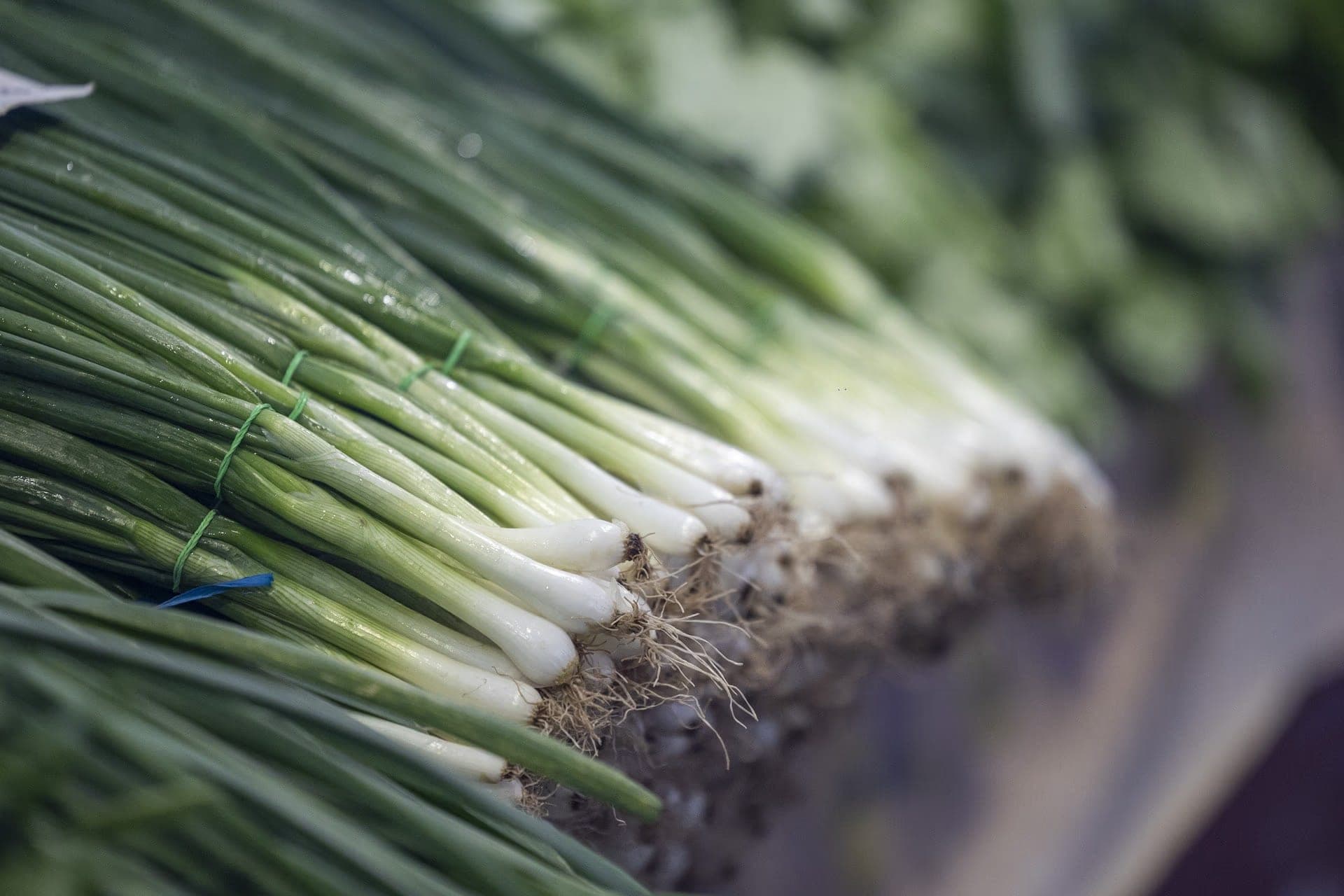
The woman in rubber gloves doesn't stop spraying. She is nearly forty, hair pulled back tight, a thin chain at her throat. She sells for the family: radishes, spring onions, red onions, dill, parsley, curly lettuce, fresh garlic. Everything coming up now, in May — she sells it from the greenhouse and garden in Adunații Copăceni, a commune in Giurgiu County, some thirty-odd kilometres south of here on the DN5 road, an hour away by van.
She comes every day before sunrise. She leaves home at five in the morning. By eight she is already spraying the produce for the third time. Toward evening, when the crates empty out, she loads the rest back in and heads home.
In a city of four million people who order two-thirds of their food online, she still comes to the market. And in this city, people still buy from her.
One o'clock
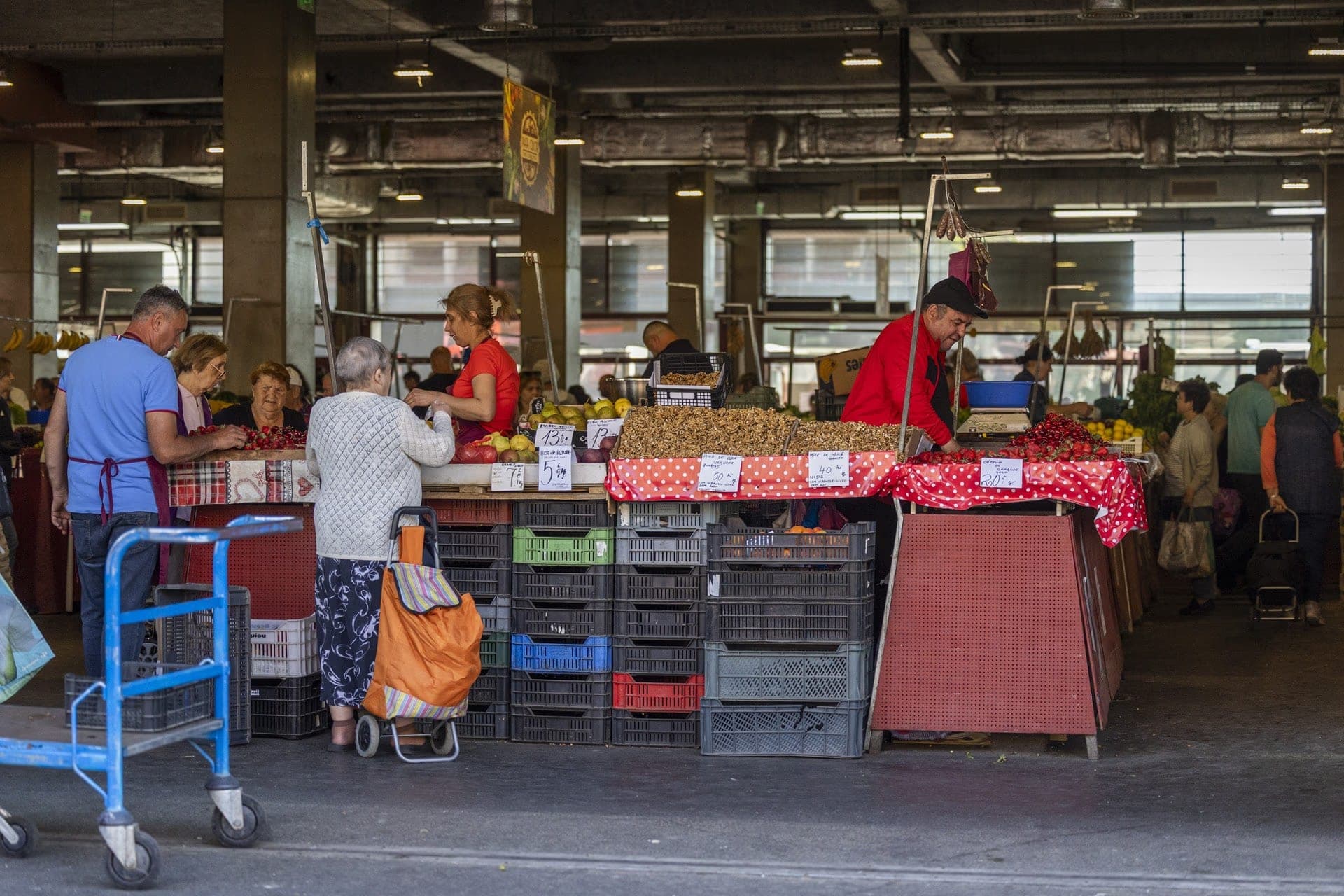
By one in the afternoon the market hall is even more crowded. The queue for the twenty-lei cherries persists. A vendor who drove up from Giurgiu has sold out — he shut the metal crate and left. At Terasa Obor people are still working their way through grilled minced-meat rolls (mici). The pleasure of the taste shows on their faces. It's Friday; mici and beer seem to go together.
The woman with the gloves sprays one more time. Then she wraps four bunches of spring onions and two of radishes, tucks them into a raffia bag for an elderly lady. The conversation flows easily and warmly, as if they know each other. She talks about the work on the farm. About rising before dawn…
Tomorrow she'll be back.
 1 / 26
The entrance to the new Market Hall.Foto: AdiCoco.com
Photo: AdiCoco.com · romaniafrumoasa.org