At the first edition of Coworking Spaces Night, eighteen spaces across the capital opened their doors on the same evening. Behind the numbers: an industry redefining itself, shifting from real estate to hospitality — and a Bucharest lesson in community.
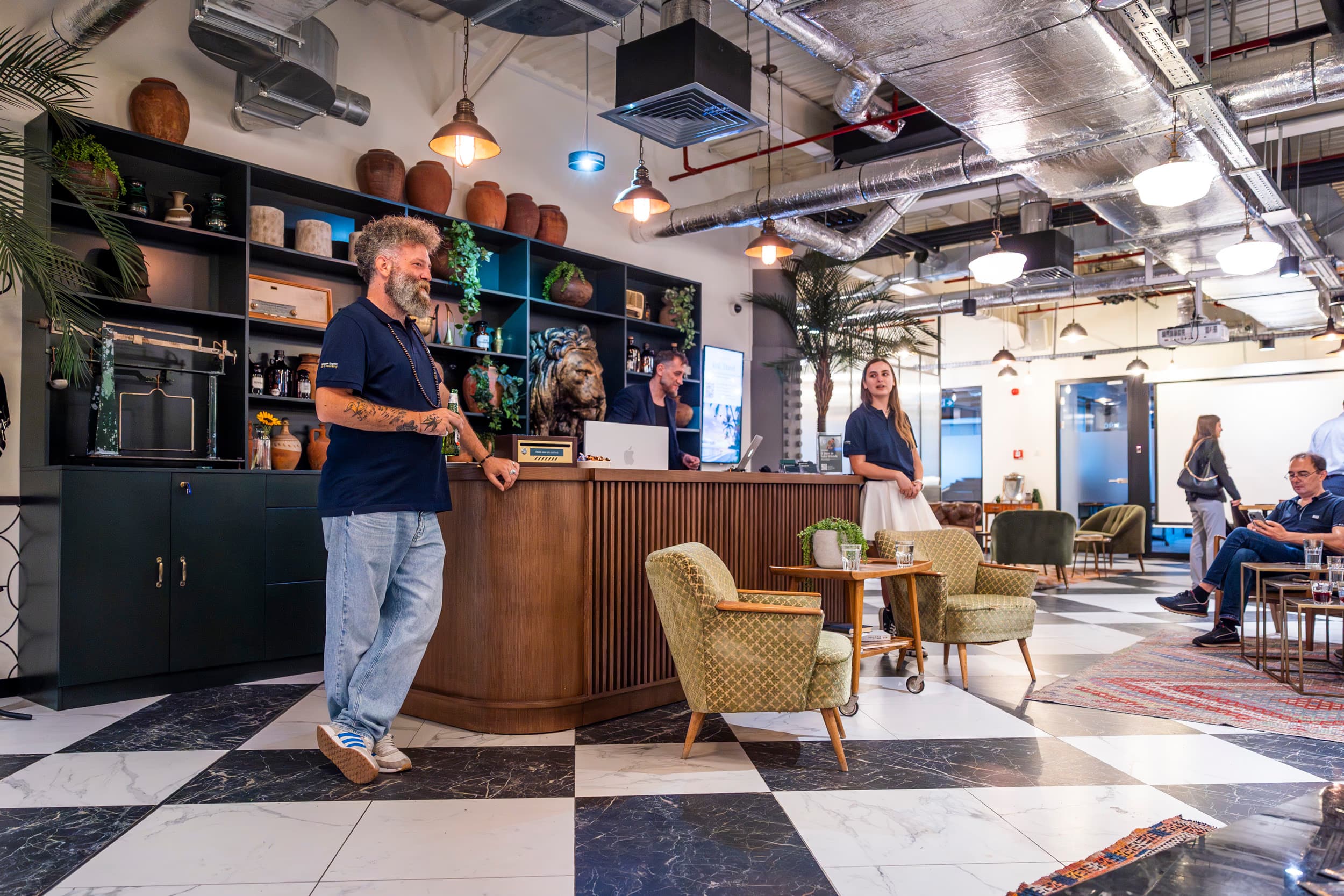
At four in the afternoon, in the lobby of Spaces on Bulevardul Corneliu Coposu, an orange neon sign above the reception desk lights up a panel that reads "The Executive Guide / Choosing a Coworking." It's an LED projection in the marble hallway of one of the buildings Bucharest residents had simply known as "Unirii View." A few dozen people, mostly in suits or smart casual attire, stand around drinking coffee. On the floor, an orange banner announces the three names behind the evening: ROFMA, Beyond Space, and Cushman & Wakefield Echinox.
This is the first edition of the Coworking Spaces Night. Eighteen spaces across Bucharest — from giants like Regus and Spaces to boutique operators with five hundred square metres — simultaneously open their doors to an audience that, until now, didn't know it could walk in.
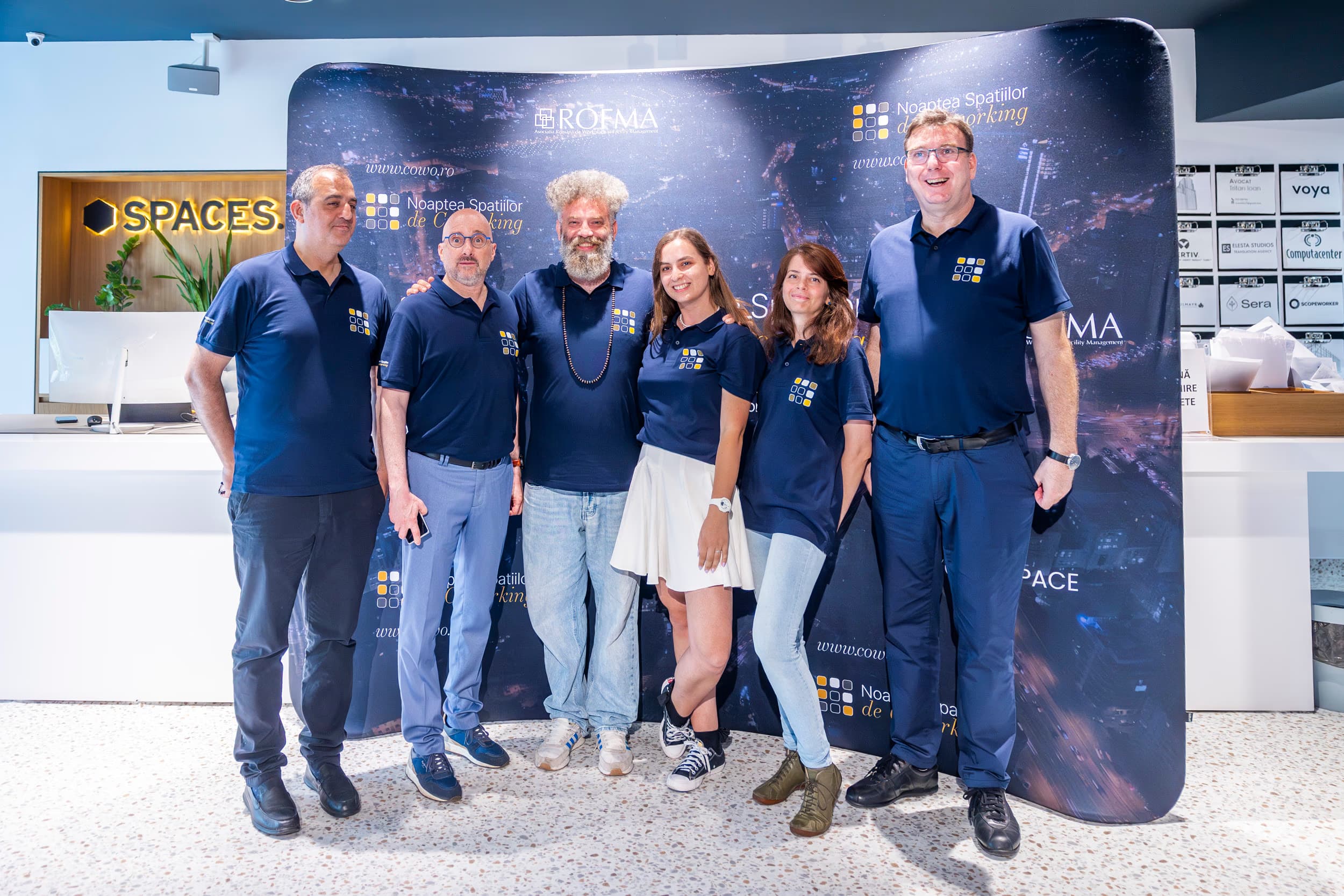
Cristian Vasiliu, president of the Romanian Association for Workplace and Facility Management (ROFMA), steps onto a small improvised stage in the middle of the lobby. His voice is calm, and he seems somewhat surprised by the event's success, even at this first edition.
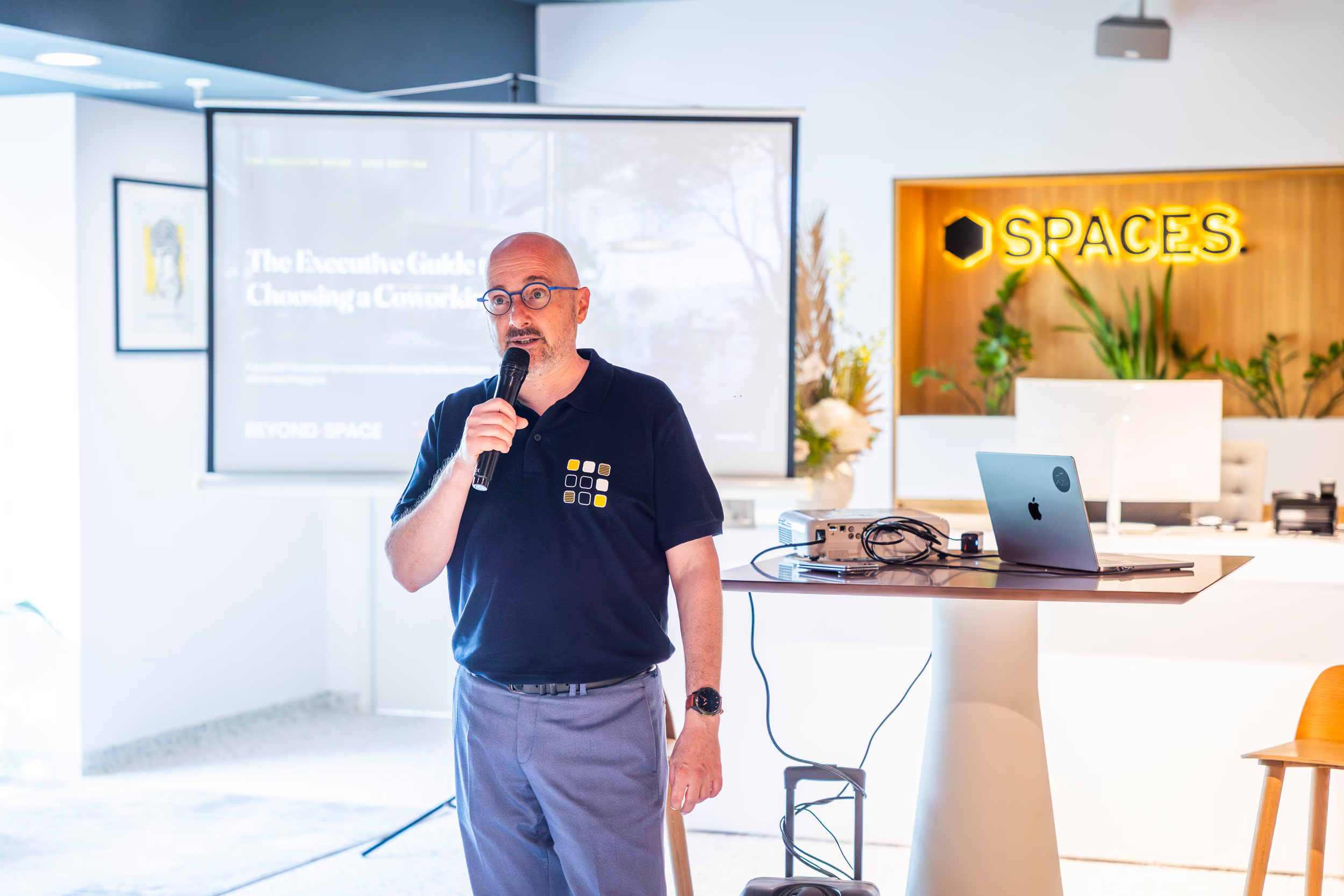
"Barely two months ago, after a conversation with Tudor Popp about the evolution of flex spaces, an idea came to us: what if we created an event to bring these concepts — coworking, flex space — into the everyday vocabulary of the business world, which is less familiar with them, and of end users?" says Vasiliu. "With a great deal of courage, and perhaps some recklessness, we've arrived at this first edition."
Laughter in the room. Tudor Popp — founder of Beyond Spaces, the specialized consultancy he founded a year ago — confirms from a corner of the room. Two people managed to bring an entire industry together at a single event, in a single evening.
The Guide
Tudor Popp takes the microphone. Tall, wearing a navy polo shirt bearing the event's colorful logo — a series of squares arranged like a pocket-sized Mondrian — he speaks with an engineer's cadence, not a marketer's.Beyond Spaceshas just released a guide with a matter-of-fact title:Coworking for Companies. Fifteen chapters, dozens of pages, downloadable as a PDF, navigable online.
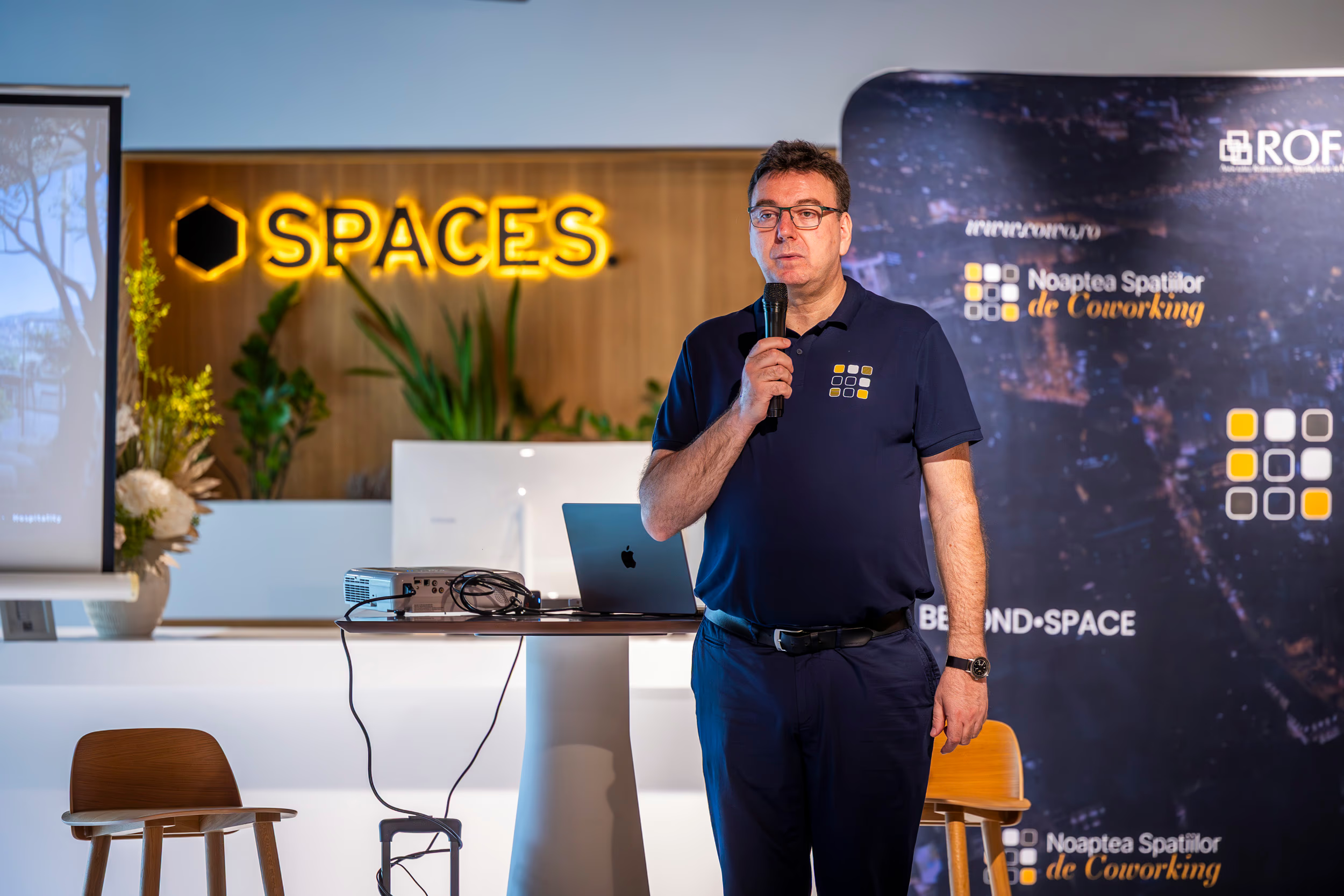
It is aimed at the user, not the operator. "Operators are hoping to understand how they need to position themselves to appeal to clients — but the guide is for decision-makers, HR teams, the people who sign the contract."
Popp opens a presentation that, half an hour later, we'll find reprinted as a scorecard inside a package. The guide proposes a taxonomy of five types of coworking —"from bean bags with wi-fi to business center". And an evaluation system with four dimensions:
- economic efficiency (35% weighting — not yet the dominant factor);
- vibe index (14 elements: micro-location, transport, green spaces, nearby cafés);
- space quality (air, light, acoustics, emissions);
- systems and hospitality (community manager, events, user experience).
Sentence by sentence, Popp builds toward the statement that will stick in any summary note: "I came from 20 years in consulting offices, working on everything from boutique fit-outs to massive projects. I thought this was an office business. It is a hospitality business. This is the surprise."
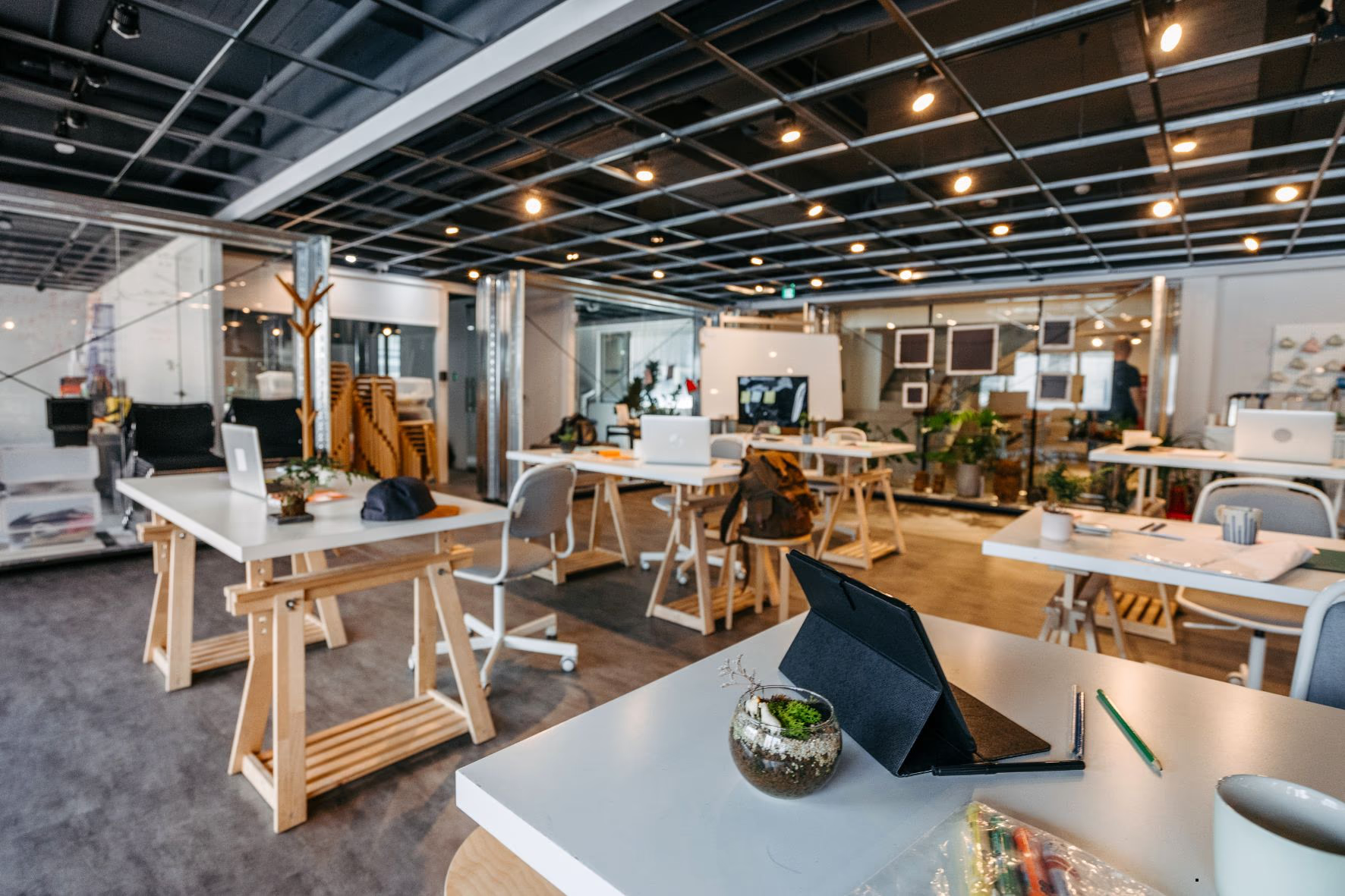
The twenty years she references were spent in traditional consulting — design, project management, and fit-out for companies relocating their headquarters. Now, speaking from a flex office, it sounds different. Coworking spaces aren't built the way offices are built. They're built the way good hotels are built: with someone at the front desk who knows your name.
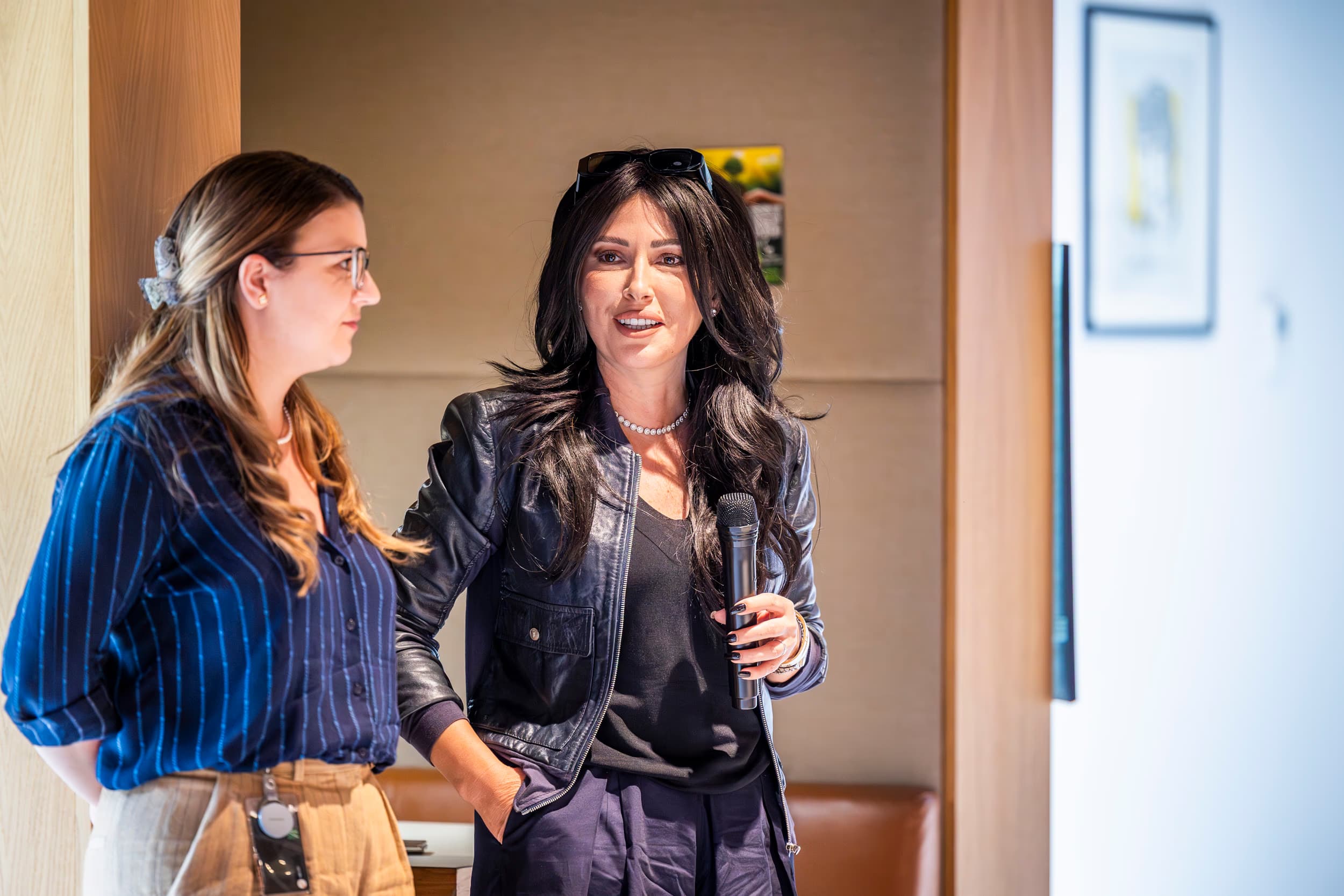
The argument carries the weight of the obvious. Just a few steps from where Popp is sitting, Alina Gomotirceanu-Dumitrascu, CEO of IWG Romania — the global operator behind Spaces, the brand more fancyof the group, after Regus — takes the microphone and confirms. Spaces Unirii spreads across two more floors above the lobby where we're standing. Shared kitchen,club loungeon the main floor, meeting rooms that, at this hour, are already occupied.
Then it's time to leave. Toward Opera Center.
V7
The route from Unirii to Opera Center — the office building on Calea Plevnei that Bucharest's architectural community of the 2010s describes as"one of the first and most iconic office buildings in the city"— is relatively short.
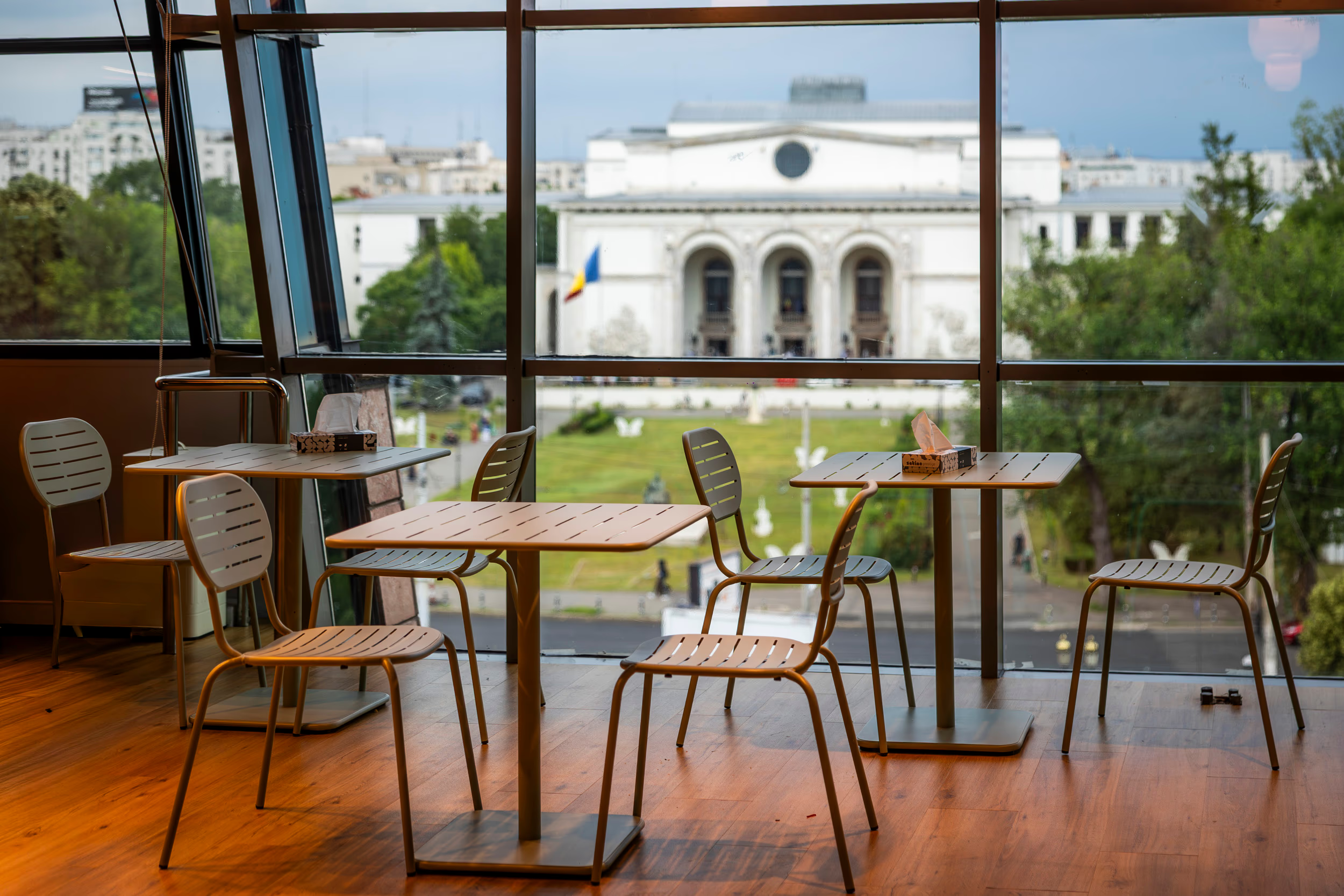
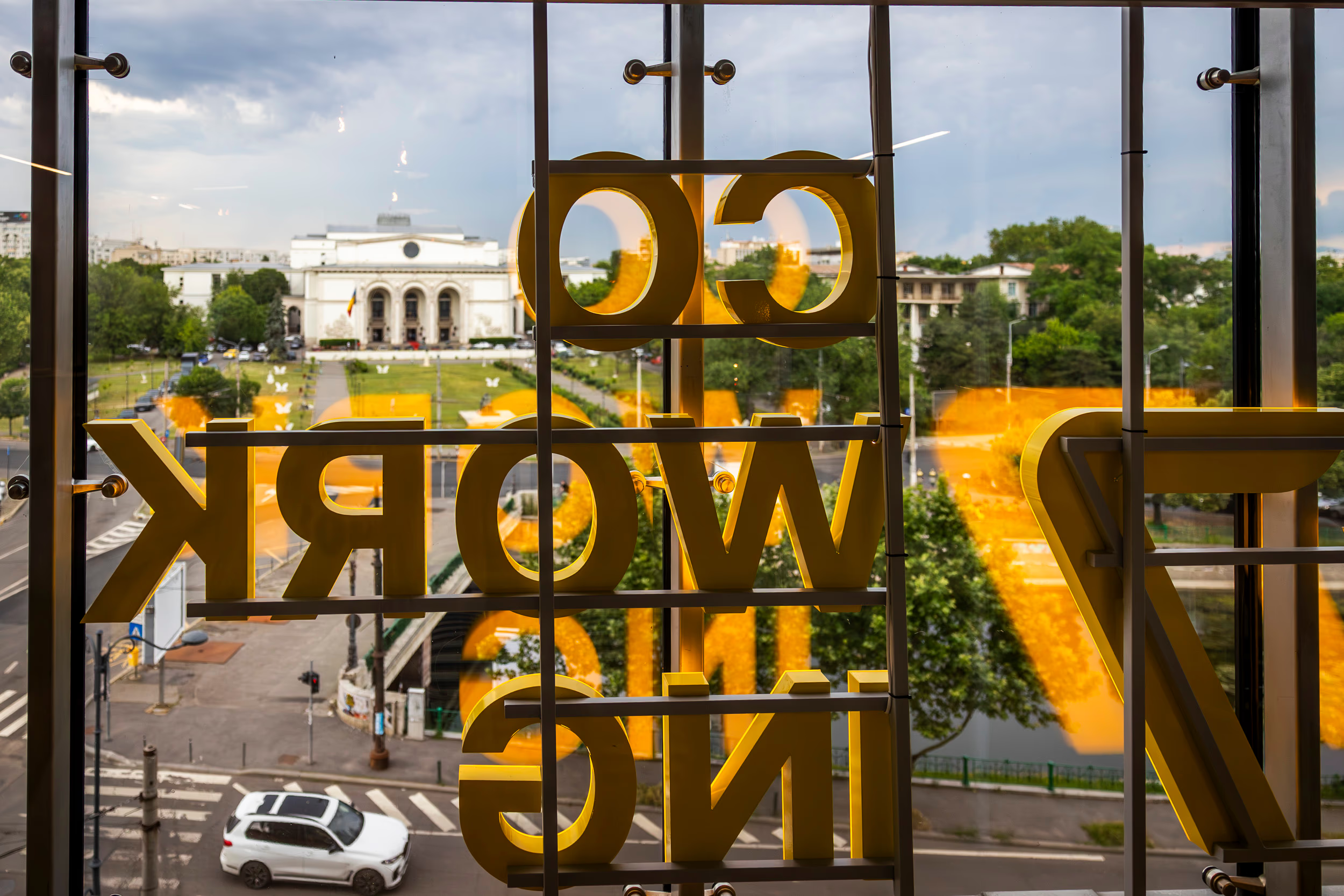
At V7, on the fifth floor of Opera Center, we are greeted byTudor Ilie— the representative of Powell Holding, the building's owner. V7 is the boutique operator that, if you hadn't read the guide, you'd simply call "coworking." It's anything but simple. It spans 1,400 square metres here, plus a recently opened 400-square-metre extension, and is run by Edoardo Roman. It has locations in București (Romană, two floors, 600 sq m) and Iași (UBC 3, next to Palas, 800 sq m). "What a stunning view from up here!", someone says from the back of the room, genuinely surprised — the panorama looks out over the dome of the National Opera and the grey rooftops of Cotroceni.
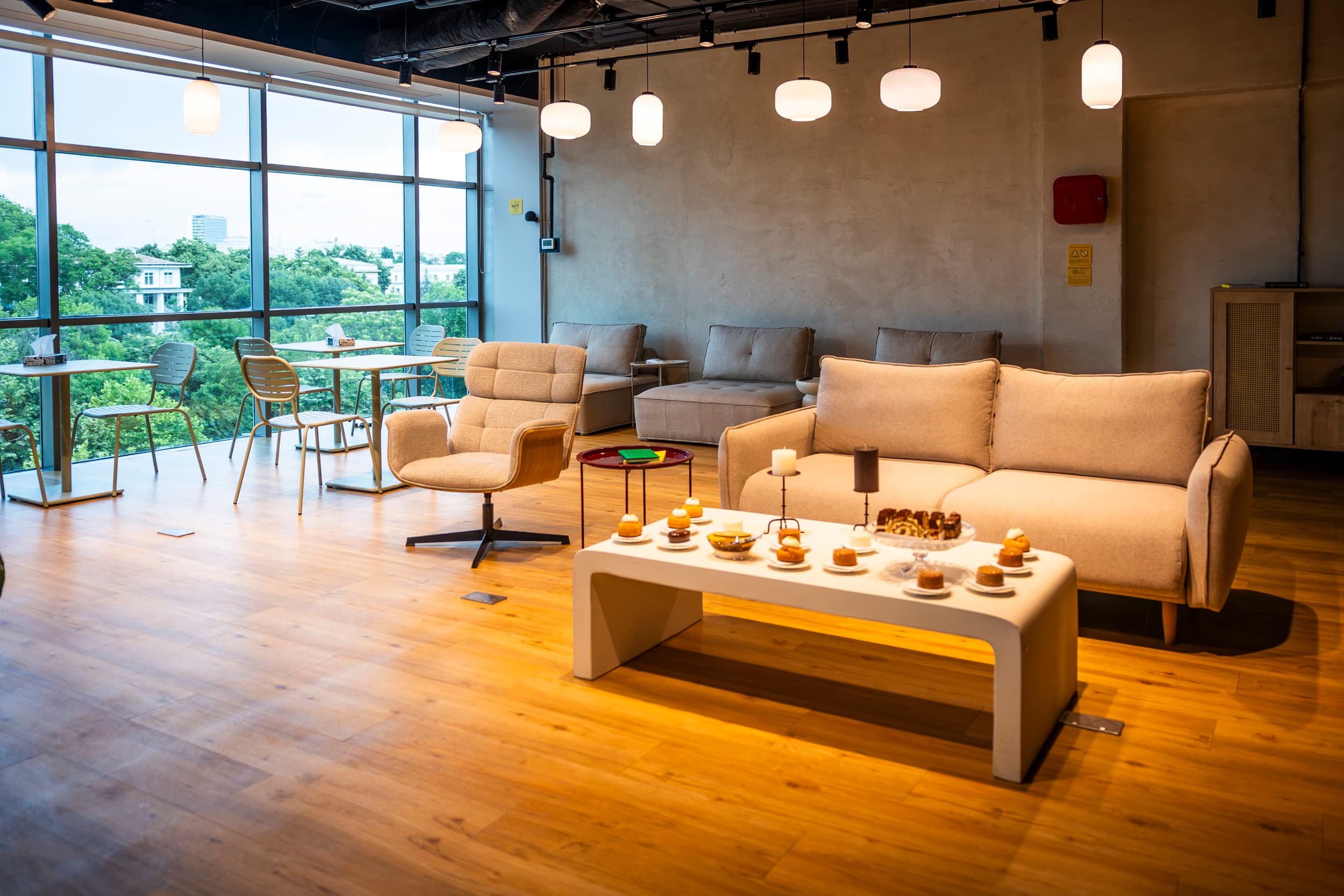
V7 is pet-friendly. At first glance, that doesn't seem like an editorial virtue. But in conversation with community manageron the floor becomes clear: until four years ago, the malls where coworking spaces were renting units did not allow dogs on the premises. "Only at Romană were we able to be pet-friendly from day one,"one of the project manager ladies explains. "In Iași, we weren't allowed into any mall with animals. So we fought for it. Now, largely because of us, they've broadened those policies."
Another participant — a woman who works at a multinational, friends with a senior officer at a bank who has been trying, for two years, to introduce pet-friendlypet-friendly policies at headquarters — confirms from across the table. Even the big banks are learning from small coworking spaces.
The conversation turns to community manager. It's the key position in the industry — but, and this is one of the things you won't read in a Cushman report, it isn't officially recognized in Romania yet. "We're working toward getting it added to the COR, the national occupations registry," Cristian Vasiliu replies.
Every day, hundreds of people move through Bucharest's workspaces in 2026, welcomed, organized, and handed their coffee by someone who doesn't officially exist in the statistics.
Mindspace
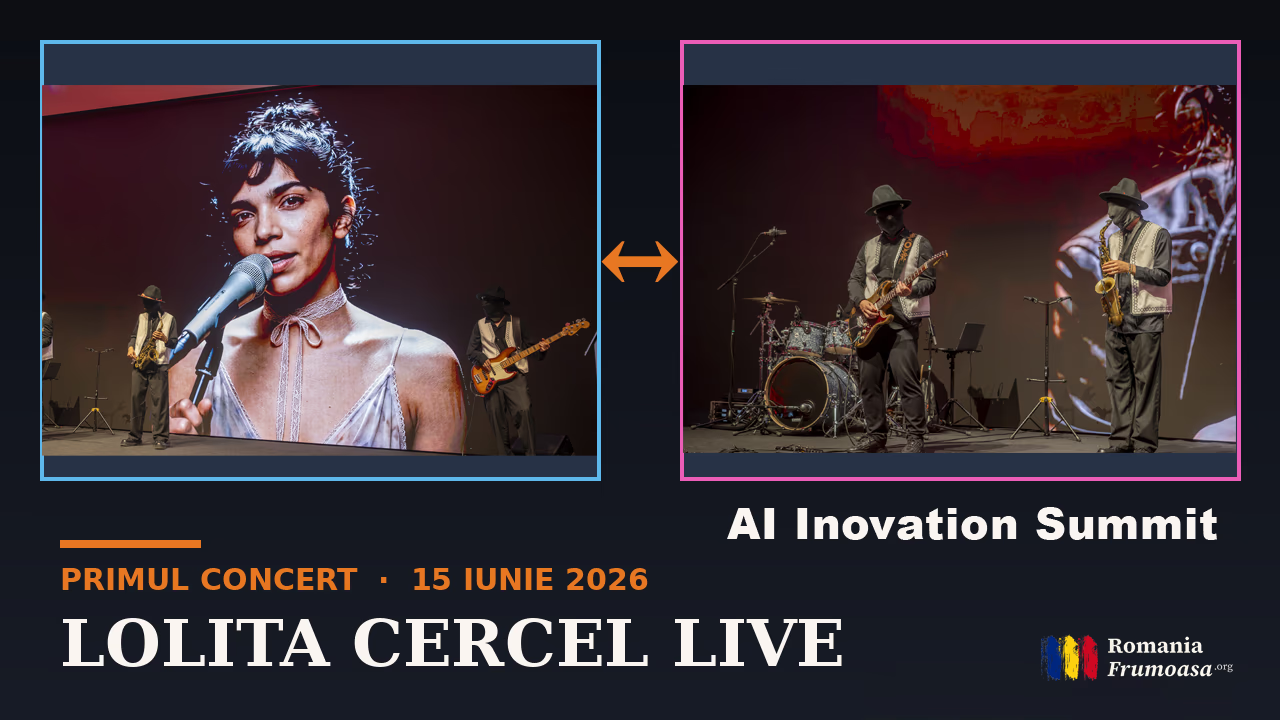
We move on to Mindspace, in Piața Victoriei, around eight in the evening. The lighting is lower here, the volume higher. At the entrance, a DJ in headphones — the same one I'll recognize the next day in my photos numbered 0240 — spins a light, crowd-friendly techno-house set from a laptop. People drink craft beer from blue plastic cups. The atmosphere isn't conference. It's party.
Here I meet Endi Ungureanu.
Coincidence… I didn't know him, but I had heard about "Sunday Ride" he had been thinking of contacting the organizer to arrange a photo essay. He finds out who that is after Ana and Robert introduce him to and Mihai Cucu-Dumitrescu from Social Seeds: "Endi is the man behind the Sunday Ride."
The Sunday Ride. For readers who haven't come across the name before: it's a quiet mass movement that grew, over fourteen months, from an idea tossed onto LinkedIn into a community that — according to the latest public figures — drew more than a thousand participants in a single weekend, across more than ten Romanian cities.
Endi posted the idea on December 15, 2024. It looked like a joke: come for a walk in the park on Sunday. No agenda, no sign-ups, no advertising."The idea was that loneliness had become a silent epidemic. And that Bucharest, with all its parks, has everything it needs to cure it. We just have to decide to go."
Within four months, the walks that started in Herăstrău had spread to IOR. Within eight, to Tineretului. Within twelve, to Lacul Morii. Then to Cluj, Timișoara, Iași, Brașov.
It wasn't a panel — it was an open conversation between Endi and Mihai that lasted maybe forty minutes. Not too long, but long enough for me to realize his story deserves its own article, not three paragraphs tacked onto the end of a coworking reportage.Vom reveni. With photos from a real Sunday Walk — not a craft beer in hand.
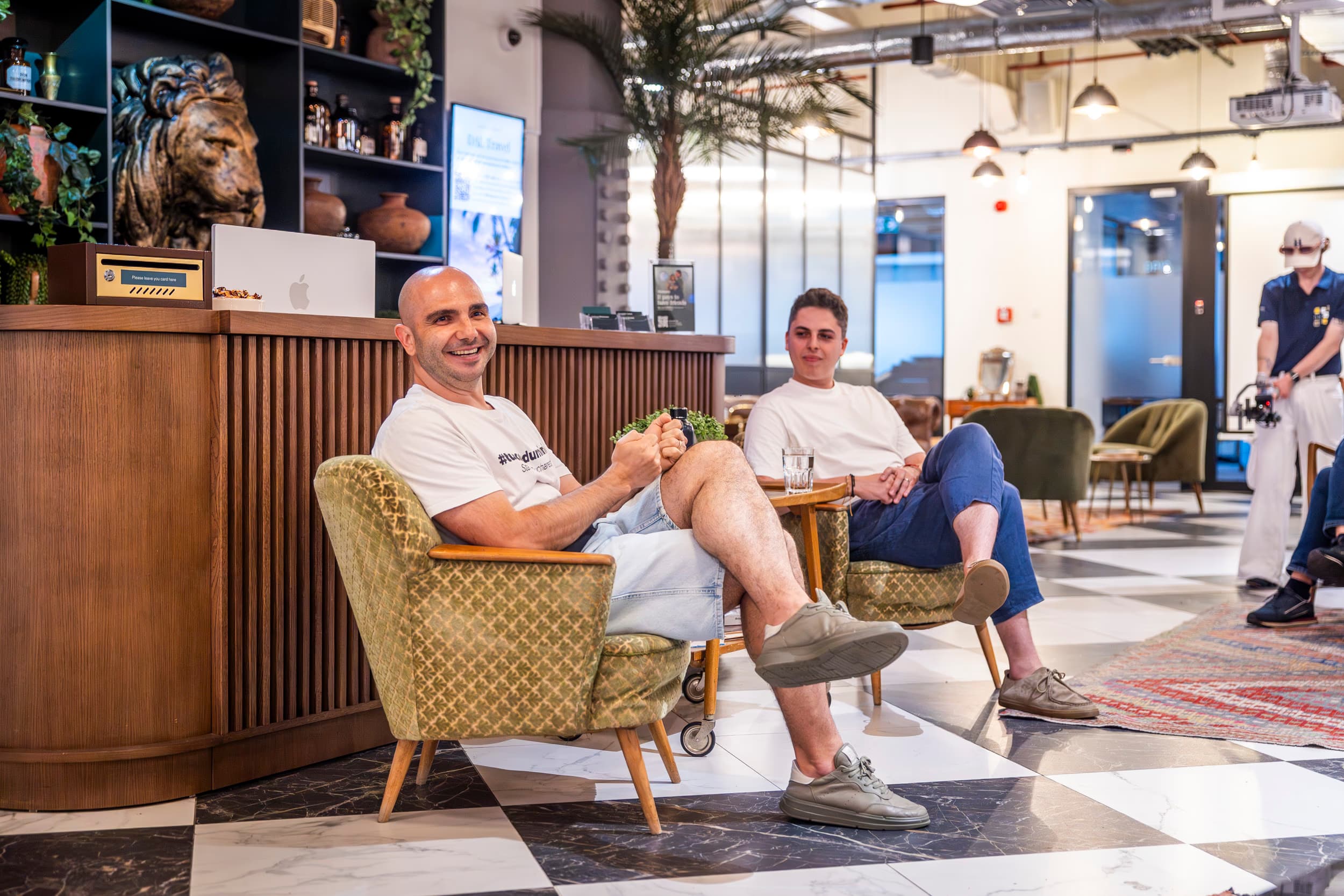
What matters for tonight, though: Endi didn't build his community inside a coworking space. He built it in the parks of Bucharest. But he's at Mindspace tonight because the coworking world has recognized him — rightly, I think — as a specialist in the very thing the entire industry is trying, with Tudor Popp's scorecard and ROFMA's COR, to measure:community. That's not something you learn from a guide.
The closing party is on Dorobanți. I stop by briefly and leave around ten.
Coda — Bucharest Learns to Count Its Offices
What does The Night of Coworking Spaces tell us about this city? Three things.
One, the market has matured enough to be inventoried. Five years ago, Bucharest had fewer than twenty comparable coworking spaces. Today the number is close to one hundred and fifty, if you set the threshold at "professional operator, service contracts" . Eighteen decided it was worth paying the participation fee for an evening of collective promotion. Two-thirds of them have been open for less than three years.
Two, definitions are still fluid. Tudor Popp's guide is the first serious attempt to propose a taxonomy. The five types —bean bag with wi-fi at one extreme, business center at the other, with three intermediate tiers — will likely become the industry's common vocabulary over the next two years. Or they'll be overwritten by someone else, which is also a win.
Three, that the real differentiator is neither location, nor price, nor premium furniture, nor the club lounge. It's the person at the front desk. The community manager who, in Romania, still doesn't exist in the official occupations registry (COR). This industry, as Tudor Popp puts it, is hospitality, not real estate. And hospitality, as any good hotelier in Brașov knows, means people who remember the client's name.
Endi Ungureanu — who is not part of any coworking space and has no scorecard, but has a community of thousands of people who have walked with him through Romania's parks on a Sunday — demonstrated tonight, without ever taking the microphone, what it means to stay consistent with a simple idea.That is the raw material of the coworking market. Everything else is just square footage.
 1 / 22