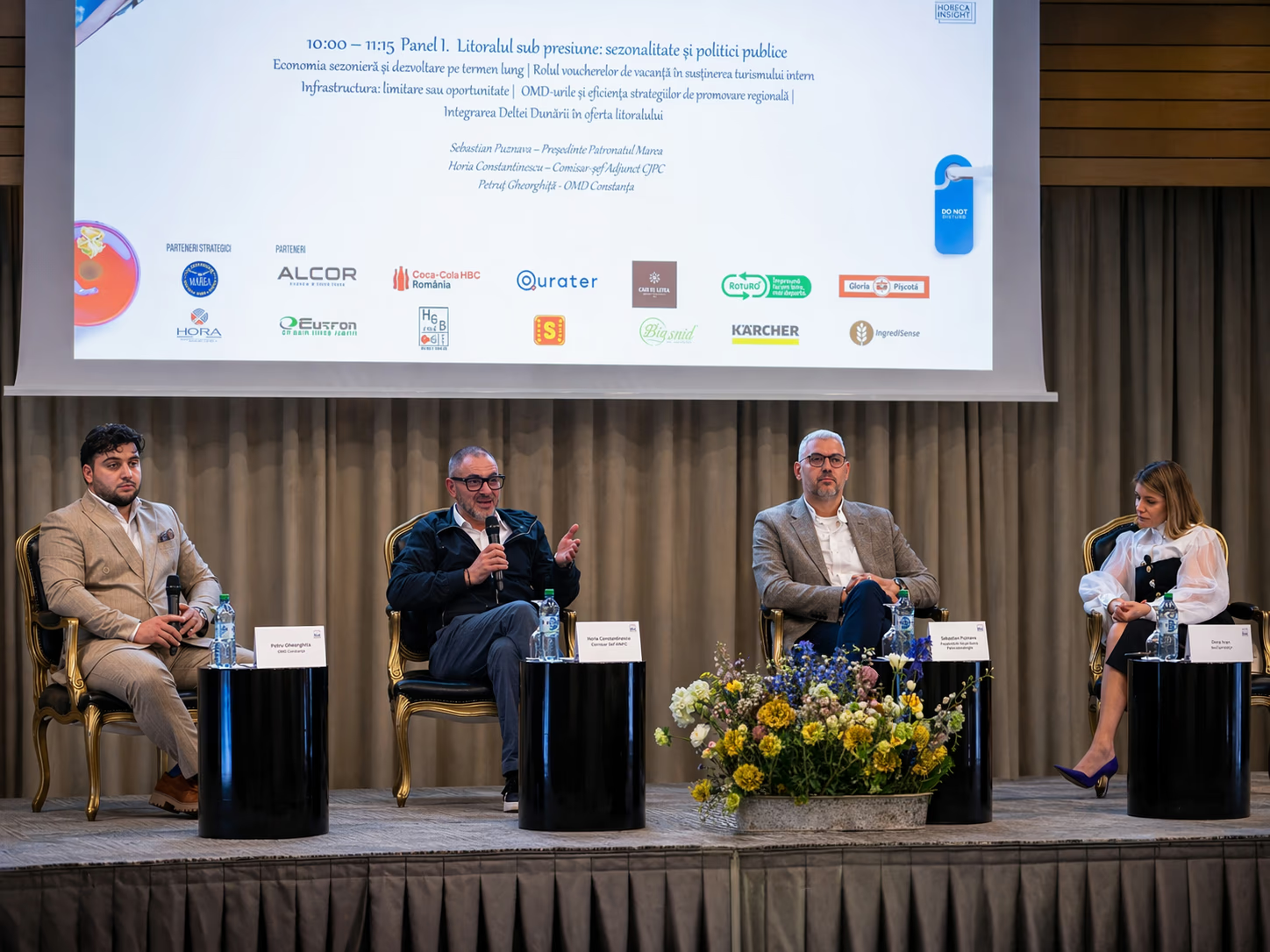
The Horeca Next Level Constanța 2026 conference, held on April 21 at the Ana Hotels Europa Hotel, brought into focus some of the most pressing issues facing Romanian seaside tourism. Beyond the business jargon and the natural optimism of an industry searching for solutions, the debates highlighted two realities that are hard to ignore: the tourist season remains too short, and local infrastructure continues to hold back development.
In its current form, Romania's seaside still operates on a vulnerable model, in which the bulk of revenue, tourist traffic, and commercial pressure is concentrated in a very narrow window. For HoReCa operators, this dependence on a few peak weeks means costs that are difficult to recover, heavy pressure on profitability, and real difficulties in building a stable long-term strategy. In other words, the coast is forced to produce a great deal, very quickly, in too little time.
The first panel, devoted to the relationship between seasonality and public policy, was perhaps the most relevant for understanding the underlying bottlenecks. The discussion covered the seasonal economy, the role of holiday vouchers, infrastructure, the effectiveness of DMOs (OMD), and the possibility of a smarter integration of the Danube Delta into the seaside offering. Beyond the diplomatic phrasing, the main idea was clear: the coast can no longer be conceived solely as a two-month destination.
Participants stressed that, without a genuine extension of the season, the economic pressure on operators remains very high. Investments are growing, tourist expectations are rising as well, but the time in which these investments must be recouped remains too short. This gives rise to one of the great contradictions of the Romanian seaside: ambitions for modernization keep multiplying, yet they are supported by a seasonal structure that itself limits long-term consolidation.
Another topic that drew real interest at the conference was the Nibiru project in Costinești, seen as one of those big bets capable of influencing not only the image of a single resort but also the broader conversation about the future of the coast. The level of interest in this project made it clear that the market is closely watching any initiative that can bring a different kind of energy, a new audience profile, and a more ambitious repositioning of the destination. In a context where the seaside is searching for ways to become more attractive and more diversified, such investments are seen not merely as standalone developments but as possible indicators of where the entire region could be heading.
The second major theme was infrastructure, viewed not as a technical backdrop but as a decisive factor in the tourist experience. Access, mobility, urban functionality, and the alignment between private and public investment were all cited as elements that can directly influence the competitiveness of the coast. The message was simple and hard to dispute: it is not enough to have better hotels, more thoughtfully designed restaurants, or new entertainment concepts if the general infrastructure remains below the expectations of a modern destination.
The panel on expanding the visitor experience also opened up a more constructive direction. The conversation touched on the repositioning of resorts, hotel investments, wine tourism in Dobrogea, private and corporate events, the differentiation between mass tourism and the premium segment, as well as full packages and integrated offerings. In essence, the idea was that the coast must offer more than just a beach and a peak season. It needs additional reasons to attract visitors outside the classic summer months.
The final part of the conference shifted the focus to what the organizers called the real engine of the coast's appeal: beach bars, clubs, festivals, gastronomy, cocktail culture, and, more broadly, the building of a destination brand. Here, too, the conclusion was telling: Romania's seaside is starting to understand that it is no longer enough to sell volume alone. To become more competitive, it must build recognizable experiences, a clearer identity, and a more coherent product.
Overall, the Constanța conference revealed a sector actively searching for solutions but still running up against long-standing structural problems. The short season, deficient local infrastructure, and the need for projects truly capable of reshaping the destination's profile remained at the heart of every serious discussion about the future of the Romanian coast. There is interest, there is investment, there is a desire for repositioning. But until these weaknesses are addressed in a coherent way, development will continue to advance on fragile ground, balanced between real potential and limits that are hard to ignore.